
Alnico
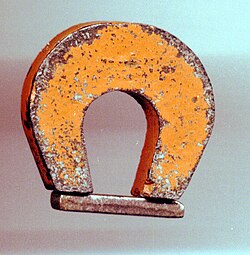
Alnico is a family of ironalloys which, in addition to iron, are composed primarily of aluminium (Al), nickel (Ni), and cobalt (Co), hence the acronym[1]al-ni-co. They also include copper, and sometimes titanium. Alnico alloys are ferromagnetic, and are used to make permanent magnets. Before the development of rare-earth magnets in the 1970s, they were the strongest permanent magnet type. Other trade names for alloys in this family are: Alni, Alcomax, Hycomax, Columax, and Ticonal.[2]
The composition of alnico alloys is typically 8–12% Al, 15–26% Ni, 5–24% Co, up to 6% Cu, up to 1% Ti, and the rest is Fe. The development of alnico began in 1931, when T. Mishima in Japan discovered that an alloy of iron, nickel, and aluminum had a coercivity of 400 oersteds (32 kA/m), double that of the best magnet steels of the time.[3]
Properties
โลหะผสมอัลนิโกสามารถทำให้เป็นแม่เหล็กได้ ทำให้เกิดสนามแม่เหล็ก ที่แรง และมีความต้านทานต่อการลดอำนาจแม่เหล็กสูง (coercivity) จึงทำให้เป็นแม่เหล็กถาวรที่แข็งแรง ในบรรดาแม่เหล็กที่หาได้ทั่วไป มีเพียงแม่เหล็กหายากเช่นนีโอไดเมียมและซาแมเรียม-โคบอลต์ เท่านั้น ที่แข็งแรงกว่า แม่เหล็กอัลนิโกสร้างความแรงของสนามแม่เหล็กที่ขั้วได้สูงถึง 1500 เกาส์ (0.15 เทสลา ) หรือประมาณ 3000 เท่าของความแรงของสนามแม่เหล็กโลกอัลนิโกบางยี่ห้อเป็นแบบไอโซโทรปิกและสามารถทำให้เป็นแม่เหล็กได้อย่างมีประสิทธิภาพในทุกทิศทาง ส่วนชนิดอื่นๆ เช่น อัลนิโก 5 และอัลนิโก 8 เป็น แบบ แอนิโซโทรปิกโดยแต่ละชนิดจะมีทิศทางการทำให้เป็นแม่เหล็กหรือทิศทางการวางตัวที่เฉพาะเจาะจง โดยทั่วไปแล้วโลหะผสมแบบแอนิโซโทรปิกจะมีกำลังแม่เหล็กในทิศทางการวางตัวที่เฉพาะเจาะจงมากกว่าแบบไอโซโทรปิกค่าความคงเหลือของ สนามแม่เหล็ก ( Br ) ของอัลนิโกเกิน 12,000 G (1.2 T ) ค่าความต้านทานต่อการเปลี่ยนแปลงสนามแม่เหล็ก ( )อาจสูงถึง 1000 โอเออร์สเตด (80 kA/m) และ ค่า พลังงานสูงสุด ( BHmax ) อาจสูงถึง 5.5 MG·Oe (44 T·kA/m) ดังนั้น อัลนิโกจึงสามารถสร้างฟลักซ์แม่เหล็กที่แรงในวงจรแม่เหล็กปิดได้ แต่มีความต้านทานต่อการลดอำนาจแม่เหล็กค่อนข้างต่ำ ความแรงของสนามแม่เหล็กที่ขั้วของแม่เหล็กถาวรใดๆ ขึ้นอยู่กับรูปร่างเป็นอย่างมาก และโดยทั่วไปแล้วจะต่ำกว่าความแรงของค่าความคงเหลือของวัสดุมาก
โลหะผสมอัลนิโกมี อุณหภูมิคูรีสูงที่สุดในบรรดาวัสดุแม่เหล็กทั้งหมด ประมาณ800 °C (1,470 °F)แม้ว่าอุณหภูมิใช้งานสูงสุดโดยทั่วไปจะจำกัดอยู่ที่ประมาณ538 °C (1,000 °F)ก็ตาม[ 4 ]พวกมันเป็นแม่เหล็กเพียงชนิดเดียวที่มีคุณสมบัติแม่เหล็กที่ใช้งานได้แม้ในขณะที่ร้อนจนแดง[ 5 ]คุณสมบัตินี้ รวมถึงความเปราะและจุดหลอมเหลวสูง เป็นผลมาจากแนวโน้มที่แข็งแกร่งในการเรียงตัวอย่างเป็นระเบียบเนื่องจาก พันธะ โลหะระหว่างอะลูมิเนียมและส่วนประกอบอื่นๆ พวกมันยังเป็นแม่เหล็กที่มีเสถียรภาพมากที่สุดชนิดหนึ่งหากจัดการอย่างเหมาะสม แม่เหล็กอัลนิโกเป็นตัวนำไฟฟ้า ซึ่งแตกต่างจากแม่เหล็กเซรามิกอัลนิโก 3 มีอุณหภูมิหลอมเหลว 1200 - 1450 °C [ 6 ]
| ชั้นเรียนMMPA | รหัสอ้างอิงIEC | ส่วนประกอบตามน้ำหนัก(เหล็กเป็นส่วนประกอบที่เหลือ) | คุณสมบัติทางแม่เหล็ก | คุณสมบัติทางกายภาพ | คุณสมบัติทางความร้อน | |||||||||||||||||||||||||
|---|---|---|---|---|---|---|---|---|---|---|---|---|---|---|---|---|---|---|---|---|---|---|---|---|---|---|---|---|---|---|
| ผลิตภัณฑ์พลังงานสูงสุด(BH) | การเหนี่ยวนำ ตกค้าง, B | แรง บีบบังคับ, H | แรง บีบบังคับภายใน, H | ความหนาแน่น | ความแข็งแรงดึง | โมดูลัสการแตกหักตามขวาง | เอชอาร์ซี | สัมประสิทธิ์การขยายตัวทางความร้อน(10 −6ต่อ °C) | ความต้านทานไฟฟ้าที่อุณหภูมิ 20 °C (μΩ·cm) | ค่าสัมประสิทธิ์อุณหภูมิผันกลับ(% ต่อ °C) | อุณหภูมิคิวรี | อุณหภูมิใช้งานสูงสุด | ||||||||||||||||||
| อัล | นี | บริษัท | คู | ที | (เอ็มจีโออี) | (กิโลจูล/ ลบ.ม. ) | (เกาส์) | (มิลลิเทสลา) | (โอ) | (กิโลแอมป์/เมตร) | (โอ) | (กิโลแอมป์/เมตร) | (ปอนด์/นิ้ว³ ) | (กรัม/ซม³ ) | (psi) | (MPa) | (psi) | (MPa) | ใกล้B | ใกล้ระดับการผลิตพลังงาน สูงสุด | ใกล้H | (°C) | (°F) | (°C) | (°F) | |||||
| การหล่อแบบไอโซโทรปิก AlNiCo | ||||||||||||||||||||||||||||||
| อัลนิโก 1 | อาร์1-0-1 | 12 | 21 | 5 | 3 | - | 1.4 | 11.1 | 7200 | 720 | 470 | 37 | 480 | 38 | 0.249 | 6.9 | 4000 | 28 | 14000 | 97 | 45 | 12.6 | 75 | |||||||
| อัลนิโก 2 | อาร์1-0-4 | 10 | 19 | 13 | 3 | - | 1.7 | 13.5 | 7500 | 750 | 560 | 45 | 580 | 46 | 0.256 | 7.1 | 3000 | 21 | 7000 | 48 | 45 | 12.4 | 65 | -0.03 | -0.02 | -0.02 | 810 | 1490 | 450 | 840 |
| อัลนิโก 3 | อาร์1-0-2 | 12 | 25 | - | 3 | - | 1.35 | 10.7 | 7000 | 700 | 480 | 38 | 500 | 40 | 0.249 | 6.9 | 12000 | 83 | 23000 | 158 | 45 | 13.0 | 60 | |||||||
| AlNiCo หล่อแบบแอนไอโซโทรปิก | ||||||||||||||||||||||||||||||
| อัลนิโก 5 | อาร์1-1-1 | 8 | 14 | 24 | 3 | - | 5.5 | 43.8 | 12800 | 1280 | 640 | 51 | 640 | 51 | 0.264 | 7.3 | 5400 | 37 | 10500 | 72 | 50 | 11.4 | 47 | -0.02 | -0.015 | +0.01 | 860 | 1580 | 525 | 975 |
| อัลนิโก 5DG | อาร์1-1-2 | 8 | 14 | 24 | 3 | - | 6.5 | 57.7 | 13300 | 1330 | 670 | 53 | 670 | 53 | 0.264 | 7.3 | 5200 | 36 | 9000 | 62 | 50 | 11.4 | 47 | |||||||
| อัลนิโก 5-7 | อาร์1-1-3 | 8 | 14 | 24 | 3 | - | 7.5 | 59.7 | 13500 | 1350 | 740 | 59 | 740 | 59 | 0.264 | 7.3 | 5000 | 34 | 8000 | 55 | 50 | 11.4 | 47 | |||||||
| อัลนิโก 6 | อาร์1-1-4 | 8 | 16 | 24 | 3 | 1 | 3.9 | 31.0 | 10500 | 1050 | 780 | 62 | 800 | 64 | 0.265 | 7.3 | 23000 | 158 | 45000 | 310 | 50 | 11.4 | 50 | -0.02 | -0.015 | +0.03 | 860 | 1580 | 525 | 975 |
| อัลนิโก 8 | อาร์1-1-5 | 7 | 15 | 35 | 4 | 5 | 5.3 | 42.2 | 8200 | 820 | 1650 | 131 | 1860 | 148 | 0.262 | 7.3 | 10000 | 59 | 30000 | 207 | 55 | 11.0 | 53 | -0.025 | -0.01 | +0.01 | 860 | 1580 | 550 | 1020 |
| อัลนิโก 8HC | อาร์1-1-7 | 8 | 14 | 38 | 3 | 8 | 5.0 | 39.8 | 7200 | 720 | ปี ค.ศ. 1900 | 151 | 2170 | 173 | 0.262 | 7.3 | 10000 | 59 | 30000 | 207 | 55 | 11.0 | 54 | -0.025 | -0.01 | +0.01 | 860 | 1580 | 550 | 1020 |
| อัลนิโก 9 | อาร์1-1-6 | 7 | 15 | 35 | 4 | 5 | 9.0 | 71.6 | 10600 | 1060 | 1500 | 119 | 1500 | 119 | 0.262 | 7.3 | 7000 | 48 | 8000 | 55 | 55 | 11.0 | 53 | -0.025 | -0.01 | +0.01 | 860 | 1580 | 550 | 1020 |
| ไอโซโทรปิก ซินเทอร์ดัล AlNiCo | ||||||||||||||||||||||||||||||
| อัลนิโก 2 | อาร์1-0-4 | 10 | 19 | 13 | 3 | - | 1.5 | 11.9 | 7100 | 710 | 550 | 44 | 570 | 45 | 0.246 | 6.8 | 65000 | 448 | 70000 | 483 | 45 | 123.4 | 68 | |||||||
| AlNiCo เผาผนึกแบบไม่เป็นเนื้อเดียวกัน | ||||||||||||||||||||||||||||||
| อัลนิโก 5 | อาร์1-1-10 | 8 | 14 | 24 | 3 | - | 3.9 | 31.0 | 10900 | 1090 | 620 | 49 | 630 | 50 | 0.250 | 6.9 | 50000 | 345 | 55000 | 379 | 45 | 11.3 | 50 | |||||||
| อัลนิโก 6 | อาร์1-1-11 | 8 | 15 | 24 | 3 | 1 | 2.9 | 23.1 | 9400 | 940 | 790 | 63 | 820 | 65 | 0.250 | 6.9 | 55000 | 379 | 100000 | 689 | 45 | 11.4 | 54 | |||||||
| อัลนิโก 8 | อาร์1-1-12 | 7 | 15 | 35 | 4 | 5 | 4.0 | 31.8 | 7400 | 740 | 1500 | 119 | 1690 | 134 | 0.252 | 7.0 | 50000 | 345 | 55000 | 379 | 45 | 11.0 | 54 | |||||||
| อัลนิโก 8HC | อาร์1-1-13 | 7 | 14 | 38 | 3 | 8 | 4.5 | 35.8 | 6700 | 670 | 1800 | 143 | 2020 | 161 | 0.252 | 7.0 | 55000 | 379 | 45 | 11.0 | 54 | |||||||||
ณ ปี 2018 แม่เหล็ก Alnico มีราคาประมาณ 44 USD /กก. (20 ดอลลาร์สหรัฐ/ปอนด์) หรือ 4.30 ดอลลาร์สหรัฐ/BH [ 7 ]
การจำแนกประเภท
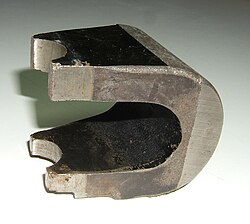
แม่เหล็กอัลนิโกได้รับการจำแนกประเภทตามธรรมเนียมโดยใช้หมายเลขที่กำหนดโดยสมาคมผู้ผลิตวัสดุแม่เหล็ก (MMPA) เช่น อัลนิโก 3 หรืออัลนิโก 5 การจำแนกประเภทเหล่านี้บ่งบอกถึงองค์ประกอบทางเคมีและคุณสมบัติทางแม่เหล็ก (หมายเลขการจำแนกประเภทเองไม่ได้เกี่ยวข้องโดยตรงกับคุณสมบัติของแม่เหล็ก ตัวอย่างเช่น หมายเลขที่สูงกว่าไม่ได้หมายความว่าแม่เหล็กจะแข็งแกร่งกว่าเสมอไป) [ 8 ]
These classification numbers, while still in use, have been deprecated in favor of a new system by the MMPA, which designates alnico magnets based on maximum energy product in megagauss-oersteds and intrinsic coercive force as kilo oersted, as well as an IEC classification system.[8]
Manufacturing process

Alnico magnets are produced by casting or sintering processes.[9] Cast alnico is produced by conventional methods using resin bonded sand molds, which can be intricate and detailed, thereby allowing for complex shapes to be produced.[10] The produced alnico magnet typically has a rough surface.[11] This process has higher initial tooling costs for mold creation.[12] Sintered alnico magnets are formed using powdered metal manufacturing methods. While sintering can also produce a range of shapes, it may not be as suitable for extremely intricate or detailed designs compared to casting.[10][13]
Most alnico produced is anisotropic, meaning that during manufacturing the grains are precipitated with their magnetic axes parallel. Anisotropic alnico magnets are oriented by heating above a critical temperature and cooling in the presence of a magnetic field. Both isotropic and anisotropic alnico require proper heat treatment to develop optimal magnetic properties. Without it, alnico's coercivity is about 10 Oe, comparable to technical iron, a soft magnetic material. After the heat treatment alnico becomes a composite material, named "precipitation material"—it consists of iron- and cobalt-rich[14] precipitates in a rich-NiAl matrix.

Alnico's anisotropy is oriented along the desired magnetic axis by applying an external magnetic field to it during the precipitate particle nucleation, which occurs when cooling from 900 °C (1,650 °F) to 800 °C (1,470 °F), near the Curie point. There are local anisotropies of different orientations without an external field due to spontaneous magnetization. The precipitate structure is a "barrier" against magnetization changes, as it prefers few magnetization states requiring much energy to get the material into any intermediate state. Also, a weak magnetic field shifts the magnetization of the matrix phase only and is reversible.
Uses
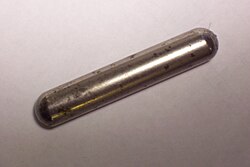
Alnico magnets are widely used in industrial and consumer applications where strong permanent magnets are needed. Examples are electric motors, electric guitar pickups, microphones, sensors, loudspeakers, magnetron tubes, and cow magnets. In many applications they are being superseded by rare-earth magnets, whose stronger fields (B) and larger energy products (B·H) allow smaller-size magnets to be used for a given application.
The high-temperature resistance of alnico magnets leads to many uses that cannot be filled by less resistant magnets, such as in magnetic stirring hotplates.
Further reading
- MMPA 0100-00, Standard Specifications for Permanent Magnet Materials