
Artyom Vesyoly
Artyom Vesyoly | |
|---|---|
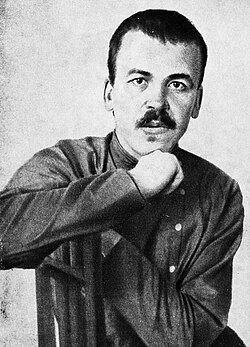 | |
| Born | Nikolai Ivanovich Kochkurov September 17, 1899 |
| Died | April 8, 1938 (aged 38) |
| Occupation | Writer, poet, prose writer, journalist |
| Language | Russian |
| Notable works | Russia Washed in Blood |
Artyom Vesyoly (Russian: Артём Весёлый; 17 September 1899 – 8 April 1938) was the pseudonym of Nikolai Ivanovich Kochkurov, a Soviet writer and poet.
Biography
He was born into a poor working family and was himself a worker at the age of fourteen.
Vesyoly became a bolshevik after the February Revolution. He joined the Red Army in the Russian Civil War and was active in the Cheka. In the early 1920s, Vesyoly studied for some time at the Institute of Literature and Moscow State University, but did not graduate. He belonged to the Pereval group of writers and, from 1929, to the All-Russian Association of Proletarian Writers.[1]
Vesyoly as known as the early illustrator of the Russian Civil War, representing the “ornamental” prose of the Pilnyak school. His main work is a novel about the Civil War, Russia, Washed in Blood 1924–1932. The author has also written the historical novel Yermak, about his conquest of Siberia.
In the late 1930s, Vesyoly who was in the past a supporter of the United Opposition, fell victim to the Great Purge. In a private report from Nikolai Yezhov to Stalin, he claimed that Vesyoly had terrorist sentiments against the Soviet leadership.[2]
He was arrested in October 1937 and executed on charges of involvement in the activities of a counter-revolutionary terrorist organization. His wife and three daughters were also sentenced to prison.[1]
On April 15 of the same year, his third wife, Lyudmila Iosifovna Borisevich, was sentenced to eight years. In 1948, his first wife, Gitya Grigoryevna Lukatskaya, was repressed. In 1949, his daughters from his first marriage, Zayara and Gayra, were arrested and sentenced to five years each. In 1956, his daughters and he himself were rehabilitated. As his granddaughter Elena Govor recalled: “Even 30 and 40 years after the camp, my grandmother could not remember it without crying.”[3]
Artyom Vesyoly and his family were rehabilitated in 1956.[4]
ลูกๆ ของเขา—ไกรา, ซายารา, เลฟ และฟานตา—ได้มารวมตัวกันเป็นครั้งแรกในปี 1961 ไกราและซายาราได้เขียนบันทึกความทรงจำมากมายเกี่ยวกับพ่อและปู่ของพวกเขา[ 5 ]ซายาราเสียชีวิตในปี 2010 และถูกฝังที่สุสานนิว ดอนสคอย[ 6 ] [ 7 ]ไกรา (24 มีนาคม 1924 – 30 ธันวาคม 2023) ยังคงทำงานเกี่ยวกับบรรณานุกรมของอาร์ทยอม เวสโยลีจนถึงวันสุดท้ายของชีวิต[ 8 ]
แกลเลอรี่
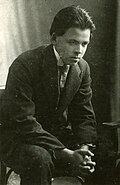 อาร์ทยอม เวสโยลี ในปี 1919
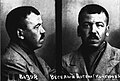 ภาพถ่ายของ NKVD ของเวซิโอลีหลังการจับกุม