
อ่าน 6 นาที
Avaricum
Avaricum was an oppidum in ancient Gaul, near what is now the city of Bourges.
Avaricum
| Avaricum | |
|---|---|
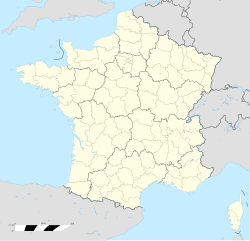  Location of Avaricum in France | |
| 47°05′04″N2°23′47″E / 47.0844°N 2.3964°E | |
| Location | France |
| Region | Centre-Val de Loire |
Avaricum was an oppidum in ancient Gaul, near what is now the city of Bourges. Avaricum, situated in the lands of the Bituriges Cubi, was the largest and best-fortified town within their territory, situated on very fertile lands. The terrain favored the oppidum, as it was flanked by a river and marshland, with only a single, narrow entrance. By the time of the Roman conquest in 52 BC, the city, according to Julius Caesar, had a population of 40,000 people who were then almost all killed.[1]
Siege of Avaricum

| Siege of Avaricum | |||||||
|---|---|---|---|---|---|---|---|
| Part of the Gallic Wars | |||||||
| |||||||
| Belligerents | |||||||
| Vercingetorix's coalition | |||||||
| Commanders and leaders | |||||||
| Gaius Julius Caesar | Vercingetorix | ||||||
| Strength | |||||||
| |||||||
The siege occurred during the Great Gallic Revolt of 52 BC, when most Gallic tribes united under the Arvernian chieftain Vercingetorix in an uprising against Roman domination. After suffering defeat at Vellaunodunum, Cenabum, and Noviodunum, Vercingetorix changed tactics. He proposed avoiding battle with the far superior Roman army and enacting a scorched-earth policy; his new plan was to starve Caesar's army by destroying all towns, crops and supplies in their path.[note 1] The Gallic council agreed, and the policy was enacted across most of central Gaul. The Bituriges, however, pleaded with Vercingetorix to spare their capital, the heavily fortified oppidum of Avaricum, arguing it was impregnable. Vercingetorix reluctantly agreed, making Avaricum the only major town and supply centre left in the region.[4][5]
Caesar, after winning minor victories at Vellaunodunum, Cenabum, and Noviodunum, had arrived at Avaricum in the winter of 52 BC, intent on confiscating the supplies stored in the town's warehouses. The oppidum was indeed a more daunting prospect than the towns Caesar had taken thus far. Surrounded by rivers and marches on most sides there was only one route for assault, and it was nigh on impossible to create an effective blockade. Caesar's army camped at the foot of the slope leading to the town and began a siege.[2]
Upon Caesar's appearance at the gates of Avaricum, Vercingetorix moved his army to a distance 15 miles from the opidum, perfectly situated to harass the Roman foraging parties. Caesar could not leave without a battle, nor could he forage at will. Caesar had brought eight legions, most were probably understrength, so he had perhaps 25,000–30,000 legionaries, along with thousands of auxiliaries, allies, mercenaries, slaves and camp followers. It was very difficult to keep these fed while on the march and living off the land. When settled down to besiege a town like Avaricum the task of supplying them with food became almost impossible. Caesar's allies, the Aedui and the Boii, were unable to supply him, the former because they had quietly joined Vercingetorix in his rebellion, the latter because they simply did not have any food to spare. The shortage of grain was so acute that the men ate only meat, which was rare for a Roman field army.[note 2] In spite of the shortages, and the proximity of the Gallic army, the legionaries were willing to continue the siege.[6]
ซีซาร์พอใจและสั่งให้วิศวกรออกแบบงานล้อมเมือง และกองทัพก็เริ่มสร้างเครื่องมือล้อมเมืองที่น่าประทับใจ เริ่มจากพื้นที่สูง สร้างกำแพง/ทางลาดสองด้าน พร้อมด้วยหอคอยสองแห่งที่มีเครื่องกระทุ้งประตู ซึ่งจะถูกนำไปสร้างเมื่อเสร็จสมบูรณ์ ระหว่างกำแพงมีการสร้างระเบียงล้อมเมืองกว้าง 330 ฟุต สูง 80 ฟุต กำแพง/ทางลาดมีช่องสำหรับพลซุ่มยิงเพื่อป้องกันคนงานชาวโรมัน ซีซาร์ยังส่งพลปืนกลไปยิงคุ้มกันขณะที่งานล้อมเมืองคืบหน้า[หมายเหตุ 3 ] [ 8 ]
ขณะที่การก่อสร้างลานล้อมเมืองดำเนินต่อไป เวอร์ซิงเกโทริกซ์ได้เคลื่อนทหารม้าและทหารราบเบาเข้าใกล้ค่ายโรมันมากขึ้น โดยตั้งใจจะซุ่มโจมตีทหารหาเสบียงของซีซาร์ ซีซาร์รู้ทันและตอบโต้ด้วยการเดินทัพเข้าโจมตีค่ายหลักของศัตรูในยามค่ำคืน ชาวกอลตั้งแถวเพื่อต่อสู้นอกค่าย แต่พวกเขามีตำแหน่งที่แข็งแกร่งเกินกว่าที่โรมันจะโจมตีได้ ซีซาร์จึงสั่งให้ทหารของเขาถอยกลับ เมื่อค่ายหลักของเขาถูกคุกคาม เวอร์ซิงเกโทริกซ์จึงถอนกำลังโจมตีกลับไปยังค่ายหลักของเขา ซีซาร์ก็ถอนกำลังเช่นกัน เป้าหมายของเขาสำเร็จแล้ว[ 9 ]
หลังจากก่อสร้างอย่างหนักหน่วงเป็นเวลา 25 วัน ต้องเผชิญกับการโจมตีจากเมืองโอปปิดัม ความพยายามในการบ่อนทำลาย และความพยายามที่จะจุดไฟเผาทางลาดและระเบียง กำแพงเมืองก็สร้างเสร็จสมบูรณ์ ซีซาร์สั่งให้เคลื่อนหอคอยไปข้างหน้า โชคดีของเขาที่เกิดพายุรุนแรงขึ้น ทำให้ทหารยามชาวกอลต้องหาที่กำบังแทนที่จะเฝ้ายาม ซีซาร์จึงฉวยโอกาสจากความไร้ระเบียบวินัยนี้ เคลื่อนทหารของเขาเข้าไปในหอคอยและบนระเบียงล้อมเมืองอย่างเงียบๆ แล้วโจมตี กำแพงพังทลายลงอย่างรวดเร็ว และชาวกอลที่รอดชีวิตก็ถอยกลับไปยังใจกลางเมือง จัดรูปขบวนเป็นลิ่ม และมุ่งมั่นที่จะต่อสู้จนถึงที่สุด อย่างไรก็ตาม ทหารโรมันไม่ได้ลงมาจากกำแพง พวกเขาเพียงแค่ยืนดูชาวกอลอย่างสบายๆ ความตื่นตระหนกเข้าครอบงำผู้ป้องกันชาวกอล ทุกคนต่างหนีไปยังที่ใดก็ตามที่พวกเขาคิดว่าเป็นทางหนี[ 10 ]
กองทัพของซีซาร์ไม่มีอารมณ์ที่จะไว้ชีวิตชาวกอล 40,000 คนในอาวาริคัมเลย โดยเฉพาะอย่างยิ่งหลังจากอดอาหารมา 25 วันและประสบกับความคับข้องใจอย่างมาก[ 11 ]มีเพียง 800 คนเท่านั้นที่รอดพ้นจากการสังหารหมู่ที่เกิดขึ้นตามมา หลังจากเลี้ยงดูและพักผ่อนทหารของเขาที่อาวาริคัมจนถึงต้นเดือนมิถุนายน ซีซาร์ก็เคลื่อนทัพไปยังเกอร์โกเวียโดยตั้งใจที่จะล่อเวอร์ซิงเกโทริกซ์เข้าสู่การรบในแคมเปญที่จะจบลงด้วยยุทธการที่อาเลเซียใน ที่สุด
แหล่งที่มา

- จูเลียส ซีซาร์, บันทึกเกี่ยวกับสงครามกอล , เล่มที่ 7
- โกลด์สเวิร์ธ, เอเดรียน , ซีซาร์: ชีวิตของยักษ์ใหญ่, ไวเดนเฟลด์ แอนด์ นิโคลสัน สำนักพิมพ์ในเครือโอไรออน บุ๊คส์ จำกัด, 2007. ISBN 978-0-7538-2158-9
47°05′04″N2°23′47″E / 47.0844°N 2.3964°E
สรุปเนื้อหา
ข้อมูลสำคัญจากบทความ
ข้อมูลสำคัญเกี่ยวกับ Avaricum
Avaricum was an oppidum in ancient Gaul, near what is now the city of Bourges.
Siege of Avaricum
The siege occurred during the Great Gallic Revolt of 52 BC, when most Gallic tribes united under the Arvernian chieftain Vercingetorix in an uprising against Roman domination.
แหล่งที่มา
47°05′04″N 2°23′47″E / 47.0844°N 2.3964°E / 47.0844; 2.3964