
บ็อกโน
บ็อกโน | |
|---|---|
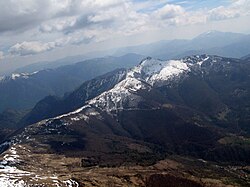 | |
 ธง 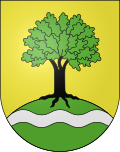 ตราแผ่นดิน | |
 ที่ตั้งของเมืองบ็อกโน | |
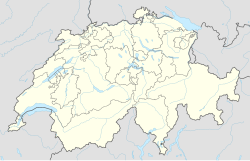  บ็อกโน 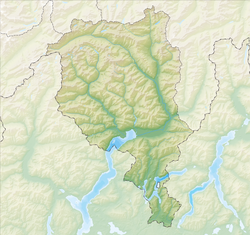 บ็อกโน | |
| พิกัด: 46°05′เหนือ9°04′ตะวันออก / 46.083°N 9.067°E | |
| ประเทศ | สวิตเซอร์แลนด์ |
| แคนตัน | ติชิโน |
| เขต | ลูกาโน่ |
| พื้นที่ | |
• ทั้งหมด | 4.2 ตารางกิโลเมตร( 1.6 ตารางไมล์) |
| ระดับความสูง | 960 เมตร (3,150 ฟุต) |
| ประชากร (ธันวาคม 2554) | |
• ทั้งหมด | 144 |
| • ความหนาแน่น | 34/กม. (89/ตร.ไมล์) |
| เขตเวลา | UTC+01:00 ( CET ) |
| • ฤดูร้อน ( เวลาออมแสง ) | UTC+02:00 ( CEST ) |
| รหัสไปรษณีย์ | 6951 |
| หมายเลข SFOS | 5155 |
| รหัส ISO 3166 | เอช-ที |
| ล้อมรอบด้วย | กาวาร์ญา (IT-CO), เซอร์ทารา , วัลโกล่า , วัล เรซโซ (IT-CO) |
| เว็บไซต์ | สถิติ SFSO |
Bognoเป็นอดีตเทศบาลในเขตLuganoในรัฐ Ticinoประเทศ ส วิตเซอร์แลนด์เมื่อวันที่ 14 เมษายน 2556 อดีตเทศบาล Bogno, Cadro , Carona , Certara , Cimadera , ValcollaและSonvicoได้รวมเข้ากับเทศบาลLugano [ 1 ]
ประวัติศาสตร์
Bogno ถูกกล่าวถึงครั้งแรกในศตวรรษที่ 13 ในชื่อBonio [ 2 ] ต่อ มาได้กลายเป็นที่ตั้งถาวรจากค่ายเลี้ยงสัตว์ตามฤดูกาลรอบทุ่งหญ้าบนเทือกเขาแอลป์ เดิมทีทุ่งหญ้าเหล่านี้ถูกใช้โดยผู้อยู่อาศัยในชุมชน Sonvico, Colla, Insone, Scareglia, Signora และ Piandera [ 2 ]
โบสถ์ S. Rocco ได้รับการกล่าวถึงครั้งแรกในปี ค.ศ. 1591 ได้รับการบูรณะและขยายในปี ค.ศ. 1780 ในปี ค.ศ. 1811 โบสถ์แห่งนี้ถูกรื้อถอนโดยเขตแพริช Colla [ 2 ]
ชุมชนเกษตรกรรมรักษาความสัมพันธ์ใกล้ชิดกับ หมู่บ้าน อิตาลี ใกล้เคียง ในหุบเขาวัลคาวาร์ญา ซึ่งสามารถเดินทางไปถึงได้โดยการข้ามช่องเขาเซาธ์ลูซิโอที่ มีความสูง 1,541 เมตร (5,056 ฟุต) ตลอดประวัติศาสตร์ส่วนใหญ่ หมู่บ้านนี้ถูกตัดขาดจากส่วนอื่นๆ ของประเทศเป็นส่วนใหญ่ จนกระทั่งในปี 1854 เมื่อมีการสร้างถนนสายแรกเข้าไปในหุบเขา ประมาณสามทศวรรษต่อมา ในปี 1886 ถนนอีกสายหนึ่งก็สร้างเสร็จสมบูรณ์ ถนนสายใหม่เหล่านี้เชื่อมโยงหมู่บ้านกับเมืองลูกาโน อย่างใกล้ชิดยิ่งขึ้น ในศตวรรษที่ 20 ประชากรลดลงอย่างมากเนื่องจากงานเกษตรกรรมลดลง ทำให้ชาวบ้านต้องอพยพไปยังลูกาโน บ้านหลายหลังถูกดัดแปลงเป็นบ้านพักตากอากาศและบ้านสำหรับพักผ่อน ธุรกิจหลักในเทศบาลคือช่างไม้และโรงแรม[ 2 ]
ภูมิศาสตร์
Bogno is located in the upper Val Colla, at the confluence of the streams that make up the Cassarate River, and below the San Lucio Pass.
Before the merger, Bogno had a total area of 4.2 km2 (1.6 mi2).[3] Of this area, 0.27 km2 (0.10 sq mi) or 6.4% is used for agricultural purposes, while 2.26 km2 (0.87 sq mi) or 53.7% is forested. Of the rest of the land, 0.13 km2 (32 acres) or 3.1% is settled (buildings or roads) and 0.28 km2 (0.11 sq mi) or 6.7% is unproductive land.
Of the built up area, housing and buildings made up 1.2% and transportation infrastructure made up 1.7%. Out of the forested land, 49.6% of the total land area is heavily forested and 2.1% is covered with orchards or small clusters of trees. Of the agricultural land, 5.2% is used for growing crops and 1.2% is used for alpine pastures. Of the unproductive areas, 6.4% is unproductive vegetation and .[4]
Coat of arms
The blazon of the municipal coat of arms is Or an oak vert trunked sable issuant from a mount of the second with a bar wavy argent.[5]
Demographics
Bogno had a population (as of 2011) of 144.[3] As of 2008, 12.9% of the population are resident foreign nationals.[6] Over the last 10 years (1997–2007) the population has changed at a rate of 8.4%.
Most of the population (as of 2000) speaks Italian (84.9%), with German being second most common (11.8%) and French being third (1.1%).[3] Of the Swiss national languages (as of 2000), 11 speak German, 1 person speaks French, 79 people speak Italian. The remainder (2 people) speak another language.[7]
As of 2008, the gender distribution of the population was 55.0% male and 45.0% female. The population was made up of 63 Swiss men (48.1% of the population), and 9 (6.9%) non-Swiss men. There were 50 Swiss women (38.2%), and 9 (6.9%) non-Swiss women.[8]
In 2008 there was 1 live birth to Swiss citizens and . Ignoring immigration and emigration, the population of Swiss citizens increased by 1 while the foreign population remained the same. There was 1 Swiss woman who emigrated from Switzerland. At the same time, there was 1 non-Swiss man and 2 non-Swiss women who immigrated from another country to Switzerland. The total Swiss population change in 2008 (from all sources, including moves across municipal borders) was an increase of 3 and the non-Swiss population change was a decrease of 8 people. This represents a population growth rate of -3.9%.[6]
The age distribution, as of 2009, in Bogno is; 10 children or 7.6% of the population are between 0 and 9 years old and 15 teenagers or 11.5% are between 10 and 19. Of the adult population, 15 people or 11.5% of the population are between 20 and 29 years old. 19 people or 14.5% are between 30 and 39, 18 people or 13.7% are between 40 and 49, and 16 people or 12.2% are between 50 and 59. The senior population distribution is 18 people or 13.7% of the population are between 60 and 69 years old, 14 people or 10.7% are between 70 and 79, there are 6 people or 4.6% who are over 80.[8]
As of 2000, there were 41 private households in the municipality, and an average of 2.2 persons per household.[3] In 2000 there were 105 single family homes (or 93.8% of the total) out of a total of 112 inhabited buildings. There were 3 two family buildings (2.7%) and 2 multi-family buildings (1.8%). There were also 2 buildings in the municipality that were multipurpose buildings (used for both housing and commercial or another purpose).[9]
The vacancy rate for the municipality, in 2008, was 0%. In 2000 there were 117 apartments in the municipality. The most common apartment size was the 4 room apartment of which there were 38. There were 10 single room apartments and 26 apartments with five or more rooms.[10] Of these apartments, a total of 41 apartments (35.0% of the total) were permanently occupied, while 75 apartments (64.1%) were seasonally occupied and 1 apartment (0.9%) was empty.[10] As of 2007, the construction rate of new housing units was 0 new units per 1000 residents.[3]
The historical population is given in the following table:[2]
| year | population |
|---|---|
| 1591 | 20 Hearths |
| 1786 | 254 |
| 1828 | 250 |
| 1850 | 261 |
| 1871 | 412 |
| 1900 | 225 |
Politics
ในการเลือกตั้งรัฐบาลกลางปี 2550พรรคที่ได้รับความนิยมมากที่สุดคือพรรค Ticino Leagueซึ่งได้รับคะแนนเสียง 27.75% พรรคที่ได้รับความนิยมรองลงมา 3 อันดับแรก ได้แก่ พรรคCVP (23.7%) พรรค FDP (21.1%) และพรรคSP (16.76%) ในการเลือกตั้งรัฐบาลกลาง มีการลงคะแนนเสียงทั้งหมด 44 ครั้ง และมีผู้มาใช้สิทธิ์เลือกตั้ง 42.7% [ 11 ]
ใน การเลือกตั้ง Gran Consiglio ปี 2550 มีผู้มีสิทธิลงคะแนนเสียงทั้งหมด 92 คนในเมือง Bogno โดยมีผู้มาใช้สิทธิ 59 คน หรือ 64.1% พรรคที่ได้รับความนิยมมากที่สุดคือพรรคLEGAซึ่งได้รับคะแนนเสียง 16 คน หรือ 27.1% พรรคที่ได้รับความนิยมรองลงมา 3 อันดับแรก ได้แก่ พรรคPLRTและพรรค PPD + GenGiova (ทั้งสองพรรคได้รับคะแนนเสียง 10 คน หรือ 16.9%) และพรรคPS (ได้รับคะแนนเสียง 9 คน หรือ 15.3%) [ 12 ]
ในการ เลือกตั้ง Consiglio di Stato ปี 2550 มีบัตรลงคะแนนเป็นโมฆะ 1 ใบ ทำให้มีบัตรลงคะแนนที่ถูกต้อง 58 ใบ พรรคที่ได้รับความนิยมมากที่สุดคือพรรค LEGA ซึ่งได้รับ 20 หรือ 34.5% ของคะแนนเสียง พรรคที่ได้รับความนิยมรองลงมา 3 อันดับแรก ได้แก่ พรรค PPD (12 หรือ 20.7%) พรรค PLRT (10 หรือ 17.2%) และพรรค PS (8 หรือ 13.8%) [ 12 ]
เศรษฐกิจ
ณ ปี 2550 บ็อกโนมีอัตราการว่างงานอยู่ที่ 4.82% ณ ปี 2548 มีคนทำงานในภาคเศรษฐกิจขั้นต้นจำนวนหนึ่งและมีธุรกิจที่เกี่ยวข้องในภาคนี้ประมาณ 2 แห่ง มีคนทำงานในภาคอุตสาหกรรม 2 คน และมีธุรกิจในภาคนี้ 2 แห่ง มีคนทำงานในภาคบริการ 11 คน และมีธุรกิจในภาคนี้ 5 แห่ง[ 3 ] มีผู้อยู่อาศัยในเทศบาลจำนวน 37 คนที่ทำงานในตำแหน่งใดตำแหน่งหนึ่ง โดยผู้หญิงคิดเป็น 40.5% ของแรงงาน
ในปี 2000 มีคนงาน 7 คนที่เดินทางเข้ามาทำงานในเขตเทศบาล และคนงาน 22 คนที่เดินทางออกไปทำงานนอกเขตเทศบาล เขตเทศบาลนี้เป็นผู้ส่งออกแรงงานสุทธิ โดยมีคนงานออกจากเขตเทศบาลประมาณ 3.1 คนต่อคนงานที่เข้ามา 1 คน[ 13 ] ในบรรดาประชากรวัยทำงาน 0% ใช้ระบบขนส่งสาธารณะในการเดินทางไปทำงาน และ 78.4% ใช้รถยนต์ส่วนตัว[ 3 ] ณ ปี 2009 ไม่มีโรงแรมในเมืองบ็อกโน[ 14 ]
ศาสนา
จากการสำรวจสำมะโนประชากรปี 2000 พบว่า 78 คน หรือ 83.9% นับถือศาสนาโรมันคาทอลิกขณะที่ 3 คน หรือ 3.2% นับถือศาสนาคริสต์นิกายปฏิรูปสวิสมี 10 คน (หรือประมาณ 10.75% ของประชากร) ที่นับถือศาสนาอื่น (ไม่ได้ระบุไว้ในการสำรวจสำมะโนประชากร) และ 2 คน (หรือประมาณ 2.15% ของประชากร) ไม่ได้ตอบคำถาม[ 7 ]
การศึกษา
The entire Swiss population is generally well educated. In Bogno about 58.3% of the population (between age 25 and 64) have completed either non-mandatory upper secondary education or additional higher education (either university or a Fachhochschule).[3]
In Bogno there were a total of 15 students (as of 2009). The Ticino education system provides up to three years of non-mandatory kindergarten and in Bogno there were children in kindergarten. The primary school program lasts for five years. In the municipality, 2 students attended the standard primary schools. In the lower secondary school system, students either attend a two-year middle school followed by a two-year pre-apprenticeship or they attend a four-year program to prepare for higher education. There were 8 students in the two-year middle school, while 0 students were in the four-year advanced program.
The upper secondary school includes several options, but at the end of the upper secondary program, a student will be prepared to enter a trade or to continue on to a university or college. In Ticino, vocational students may either attend school while working on their internship or apprenticeship (which takes three or four years) or may attend school followed by an internship or apprenticeship (which takes one year as a full-time student or one and a half to two years as a part-time student).[15] There was 1 vocational student who was attending school full-time and 4 who attend part-time.[16]
As of 2000, there were 4 students from Bogno who attended schools outside the municipality.[13]
ลิงก์ภายนอก

- คำว่า "Bogno" ใน ภาษาเยอรมันฝรั่งเศสและอิตาลี ใน พจนานุกรมประวัติศาสตร์ออนไลน์ ของสวิ ต เซอร์แลนด์