
เอเรฟ
 | |
| ผู้เขียน | อีไล เชคท์แมน |
|---|---|
| ชื่อเรื่องเดิม | ערב |
| ภาษา | ภาษายิดดิช |
| สำนักพิมพ์ | Farlag Yisroel-bukh Tel Aviv |
| วันที่เผยแพร่ | พ.ศ. 2526 |
| สถานที่ตีพิมพ์ | อิสราเอล |
| หน้า | 1222 |
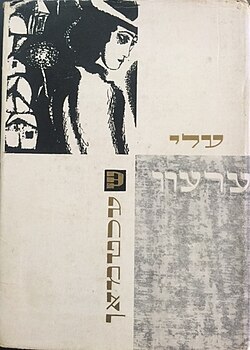 | |
| ผู้เขียน | อีไล เชคท์แมน |
|---|---|
| ชื่อเรื่องเดิม | ערעוו |
| ภาษา | ภาษายิดดิช |
| สำนักพิมพ์ | โซเวตสกี พิซาเทล |
| วันที่เผยแพร่ | พ.ศ. 2508 |
| สถานที่ตีพิมพ์ | สหภาพโซเวียต |
| หน้า | 236 |
เอเรฟ (ภาษาอิดิช : ערעוו ,แปลตรงตัวว่า ' อีฟ' ) เป็นนวนิยายที่เขียนโดยอีไล เชคท์มัน ในปี 1983ฉบับพิมพ์ครั้งแรกของเอเรฟเป็นจุดเริ่มต้นของนวนิยายที่อีไล เชคท์มันเขียนขึ้นในสหภาพโซเวียตและประกอบด้วยสี่เล่มนวนิยายเรื่องนี้ได้รับการตีพิมพ์ใน นิตยสาร เฮย์มแลนด์ของโซเวียตตั้งแต่ปี 1961 ถึง 1968 และในรูปแบบหนังสือในปี 1965 เนื้อหาบรรยายถึงชีวิตของชาวยิวรัสเซียในช่วงต้นศตวรรษที่ 20 ส่วน "เอเรฟฉบับ สมบูรณ์ " ซึ่งเขียนและตีพิมพ์ในอิสราเอลในปี 1983 นั้น ประกอบด้วยเจ็ดเล่ม และบรรยายถึงชีวิตของชาวยิวรัสเซียในช่วงต้นศตวรรษที่ 20 จนถึงสิ้นสุดสงครามโลกครั้งที่สอง
ภาพรวมและประวัติการตีพิมพ์
Erev เป็นผลงานวรรณกรรมชิ้นสำคัญของ Schechtman และเป็น นวนิยายภาษายิดดิชเรื่องแรก ที่ตีพิมพ์ใน สหภาพโซเวียตหลังจากการเสียชีวิตของสตาลิน[ 1 ] [ 2 ]นวนิยายสี่ตอนแรกได้รับการตีพิมพ์เป็นตอนๆในHeymland ของโซเวียตตั้งแต่ปี 1961 ถึง 1968 [ 3 ] [ 4 ]และมีเพียงสองตอนเท่านั้นที่ได้รับการตีพิมพ์ในรูปแบบที่ถูกเซ็นเซอร์เป็นหนังสือในมอสโกในปี 1965 ในปี 1964 นวนิยายสองเล่มแรกได้รับการแปลเป็นภาษาฝรั่งเศสโดย Rachel Ertel ในชื่อÀ la vielle de...ในปี 1967 นวนิยายสองเล่มเดียวกันนี้ได้รับการแปลเป็นภาษาอังกฤษโดย Joseph Singer [ 5 ]ในชื่อErevซึ่งผู้เขียนได้รับการเปรียบเทียบในด้านสถานะกับFyodor DostoevskyและAnton Chekhov [ 6 ] นวนิยายสี่เล่มได้รับการแปลเป็นภาษาฮีบรูในอิสราเอลในปี 1975 โดย Zvi Arad ในชื่อBeterem [ 1 ] [ 7 ]
นวนิยาย Erevซึ่งเริ่มต้นหลังจาก Eli Schechtman ได้รับการปล่อยตัวจากเรือนจำในปี 1953 ได้รับการเขียนเสร็จสมบูรณ์หลังจากสามสิบปีในปี 1983 และตีพิมพ์ในอิสราเอล นวนิยายเรื่องนี้ได้รับการแปลเป็นภาษารัสเซียโดยAlma Shin และตีพิมพ์ในปี 2005 ส่วนฉบับแปลภาษาฝรั่งเศสโดยRachel Ertelตีพิมพ์ในปี 2018 [ 8 ]
เรื่องย่อ
The novel tells the story of a Jewish family in Eastern Europe over four centuries, from its escape from a blood libel in medieval Germany to Russia in the early twentieth century.[9] On the example of the Boyar's family history, author tells us about the fate of Jewish people throughout the 20th century – from the end of the Russo-Japanese War until the end of World War II and the creation of Israel|the state of Israel. The novel paints a rich and intricate gallery of characters facing consistent persecution, while ideology ranges from Tsarist autocracy to Stalinism and Nazism. The Boyar family, although it suffered heavy losses in the brutal upheavals of the era, never stopped fighting for its spiritual and physical survival.
Critical reception
Professor Shlomo Bikel has said: "Erev is one of the most important works that Soviet-Yiddish literature has given us."[10] Gennady Estraikh has described Erev as "one of the most accomplished novels in postwar Yiddish literature".[7] Writing in the Jewish Quarterly in 1978, Elias Schulman argued that "If Soviet Yiddish literature could still produce a novel of the stature and quality of Erev and [Nathan] Zabare's two-part masterpiece [Unter der heyser zun fun Provans and its sequel S'iz nokh groys der tog], we can assuredly assume that Russian Jewry has not yet exhausted its resources, and that Soviet Yiddish culture can yet be revived."[11]\
Translations of novel Erev
Eli Schechtman
 Name: a la vielle de...Language: French Translator : R. Ertel Date: 1964
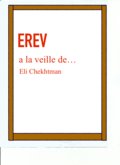 Name: Erev, a la vielle de...Language: French Translator : R. Ertel Date: 2018 ISBN 978-2-283-02859-9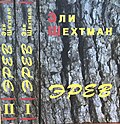
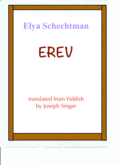 Language: English Translator : J. Singer Date: 1967Congress Catalog : 67-17706
 Language: Hebrew Translator : Zvi Arad Date: 1975
อ่านเพิ่มเติม
- อิตเช โกลด์เบิร์ก, "Eli Shekhtman, 1908-1996," Yidishe kultur 11–12, (1996)
ลิงก์ภายนอก
- Erev (ในภาษายิดดิช)ที่ Internet Archive