
Urda (cheese)
Urda (Albanian: urdha, indefiniteform: urdhë;[1]Bulgarian: урда, извара, romanized: urda, izvara; Macedonian: урда, изварка, romanized: urda, izvarka; Romanian: urdă; Serbian: вурда / vurda; Ukrainian: вурда, romanized: vurda; Hungarian: orda, zsendice) is a whey cheese commonly produced in Southeast Europe,[2][3][4][5][6] and Hungary.[7][8]
Etymology
The name derives from Albanianurdhë/urdha, from Proto-Albanian*wurdā, from an earlier form *urdā or *uordā, ultimately derived from Proto-Indo-European*uer- "to boil, to burn". It is cognate to Old Armenianվառիմ (vaṙim, "to burn"), Lithuanianvìrti ("to cook, to boil"). It is semantically relevant that this cheese is produced by boiling whey. The Albanian term urdhë/urdha has been borrowed to other Balkan and Carpathian languages, notably Romanianurdă,[1] but also Bulgarian, Hungarian, Serbian, Slovak, Rusyn, Polish, Czech, and Russian languages.
Production
Urda is made from whey of sheep, goat or cow milk. Urda is produced by heating the whey resulting from the draining of any type of cheese. It is often made into molds to the shape of a half sphere. The paste is finely grained, silky and palatable. It contains 18 grams of protein per 100 grams.
ชีสอูร์ดามีลักษณะคล้ายกับชีสริคอตต้าในแง่ของวิธีการผลิต
การใช้งานทั่วไป
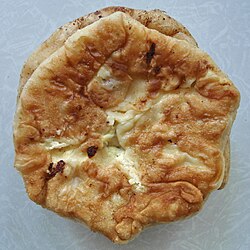
ในโรมาเนีย urda ถูกนำมาใช้ในการเตรียมของหวานหลายชนิด เช่นclătităและplăcintă Urda เป็นที่นิยมมากในภาคตะวันออกเฉียงเหนือของเซอร์เบีย — Banat
ตามธรรมเนียมแล้ว ชาวฮังกาเรียนใช้เป็นส่วนผสมในขนมหวาน โดยมักทำเป็นบุคตา (ordás bukta) และ ออร์ดาส ปาลัคซินตา