
Marktkirche, Hanover
| มาร์คท์เคียร์เช่ | |
|---|---|
| Marktkirche St. Georgii และ Jacobi | |
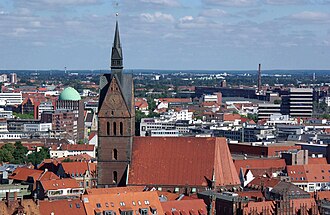 โบสถ์ Market Church มองเห็นได้จากจุดชมวิวของศาลาว่าการเมืองใหม่ | |
 โบสถ์ Market Church และตำแหน่งโดยประมาณของกำแพงป้องกัน เมืองเก่าในศตวรรษที่ 13 ( ● ) ซึ่งเติบโตขึ้นรอบโบสถ์และตลาดที่อยู่ติดกัน | |
| 52°22′18″N 9°44′07″E / 52.371789°N 9.735329°E / 52.371789; 9.735329 | |
| ที่ตั้ง | ฮันโนเวอร์ |
| ประเทศ | เยอรมนี |
| นิกาย | ลูเธอรานิสม์ |
นิกายก่อนหน้า | โรมันคาทอลิก |
| เว็บไซต์ | www.marktkirche-hannover.de |
| ประวัติศาสตร์ | |
| สถานะ |
|
| ความทุ่มเท | |
| ได้รับการอุทิศ | ~ 1360 [ 1 ] |
| สถาปัตยกรรม | |
สถานะการทำงาน | คล่องแคล่ว |
ประเภทสถาปัตยกรรม | โบสถ์ฮอลล์ |
| สไตล์ | อิฐโกธิค |
| การวางรากฐาน | 1347 [ 1 ] |
| สมบูรณ์ | 1366 ( 1366 ) [ 1 ] |
| ข้อกำหนด | |
| ความยาว | 61.5 เมตร (202 ฟุต) |
| ความกว้าง | 26.6 เมตร (87 ฟุต) |
| วัสดุ | อิฐ |
| การบริหาร | |
| คณบดี | ฮาโนเวอร์ ซิตี้(สตัดท์เคียร์เชนเวอร์บานด์) |
| ตำบล | Marktkirchengemeinde, Hanover |
โบสถ์ตลาด ( ภาษาเยอรมัน: Marktkircheหมายถึง 'โบสถ์ที่ตลาด') เป็น โบสถ์ ลูเทอร์ หลัก ในเมืองฮันโนเวอร์ประเทศเยอรมนี สร้างขึ้นในศตวรรษที่ 14 และในปี 1342 ได้มีการกล่าวถึงโบสถ์แห่งนี้ว่าเป็นโบสถ์นักบุญเจมส์และจอร์จ ( ภาษาละติน: ecclesia sanctorum Jacobi et Georgii ) เพื่ออุทิศแด่นักบุญเจมส์ผู้เฒ่าและ นักบุญ จอร์จ [ 1 ] โบสถ์แห่งนี้สร้างขึ้นแทนที่โบสถ์เก่าขนาดเล็กกว่าที่ตั้งอยู่ในสถานที่เดียวกัน ซึ่งสร้างขึ้นในปี 1125 และเป็นที่ทราบกันว่ามีชื่อว่าเซนต์จอร์จ (ตามชื่อนักบุญจอร์จ) ในปี 1238 [ 1 ] [ 2 ]เมืองฮันโนเวอร์เติบโตขึ้นรอบๆ โบสถ์แห่งนี้และตลาดซึ่งตั้งอยู่ทางทิศใต้ของโบสถ์และก่อตั้งขึ้นในช่วงเวลาเดียวกัน[ 3 ] : 3ปัจจุบันชื่อทางการของโบสถ์คือ โบสถ์ตลาดนักบุญจอร์จและเจมส์ ( Marktkirche St. Georgii et Jacobi ) และร่วมกับศาลากลางเก่า ที่อยู่ใกล้เคียง ถือเป็นตัวอย่างทางใต้สุดของสถาปัตยกรรมโกธิกอิฐ แบบเยอรมันเหนือ ( norddeutsche Backsteingotik )
A hall church with a monumental saddleback roof that rises above the nave and two aisles, the roof and the vaults of the naves were restored in 1952 after being destroyed in an air raid in 1943. Its tower, situated on its western side and a symbol of the power and wealth of the citizens of the town when built, is both a landmark of Hanover and, 638 years after its roof was first constructed, one of the highest towers in Lower Saxony.
Altar
The main altar was carved of linden wood around 1480. Its front depicts the Passion of Christ in 21 scenes following models of Martin Schongauer,[4] while its back shows scenes from the lives of the two patron saints, Saint George and Saint James. Moved to the Aegidienkirche in 1663 to make room for a Baroque altar, the altar was taken to the Welfenmuseum in 1856 and thus spared destruction during World War II when the Aegidienkirche was bombed. It was returned to the Market Church in 1952.
Organ
An organ was installed in the tower room (Turmraum) in 1893, which included parts of an instrument of the 17th century. This organ was destroyed in World War II.
Today's main organ is at the back wall of the southern aisle. The first instrument in that location was built in 1953 and 1954 by the organ builders Emil Hammer Orgelbau and Rudolf von Beckerath. It had 61 stops, four manuals and pedal. The casing (Prospekt) was designed by Dieter Oesterlen and is a protected monument.
From 2007 to 2009, the instrument was rebuilt by Orgelbau Goll in Lucerne. The casing and about half of the pipes were kept. The new organ has 64 stops, 39 of them mostly using the older material.[5]
Bells
The tower has 11 bells hung on a steel frame including 2 bourdon bells.[6] Among them is a bourdon called the Christus-und Friedensglocke, 'Christ and Peace bell'. It is the biggest bell in Lower Saxony, and is used on special occasions only. The second bourdon, called Großer David, 'Big David', was originally donated by Pastor David Meyer for the Church of the Cross and only came to the Market Church after the Second World War. In Germany, the bells are always numbered from largest to smallest; bell 1 is always the tenor or bourdon.
| No. | Name (German) | Name (English) | Casting year | Foundry, casting site | Weight (kg) |
| 1 | Christus-und Friedensglocke | Christ and Peace bell (Bourdon) | 1960 | Friedrich Wilhelm Schilling, Heidelberg | 10360 |
| 2 | Großer David | Big David (2nd Bourdon) | 1650 | Ludolph Siegfriedt, Hanover | 3800 |
| 3 | Marienglocke | Mary's bell | 1951 | Friedrich Wilhelm Schilling, Heidelberg | 2462 |
| 4 | Georgenglocke | George's bell | 1653 | Ludolph Siegfriedt, Hanover | 1800 |
| 5 | Vaterunserglocke | Lord's Prayer bell | 1951 | Friedrich Wilhelm Schilling, Heidelberg | 1380 |
| 6 | Morgenglocke | Morning bell | 1959 | 1050 | |
| 7 | Jakobusglocke | St. James' bell | 1951 | 623 | |
| 8 | Taufglocke | Baptismal bell | 358 | ||
| 9 | Ewigkeitsglocke | Eternity bell | 1959 | 340 | |
| 10 | Liedglocke | Song bell | 1951 | 237 | |
| 11 | Thomasglocke | Thomas bell | 1733 | Thomas Riedeweg, Hanover | 140 |
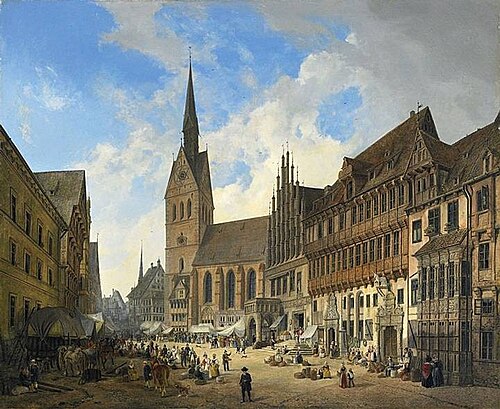 Early 19th century
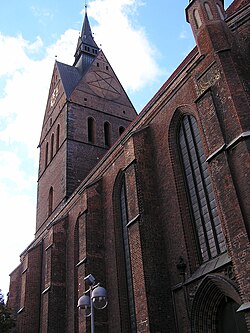 Exterior, 2004
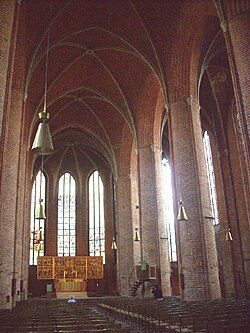 Interior, 2007
External links
- Official website
- MarktkircheArchived 9 January 2015 at the Wayback Machine at MyTravelGuide
- Kurze Kirchengeschichte der Altstadt – short history of the churches in the Old Town, kirche-hannover.de (in German)