
มัชฮัด อาร์เดฮาล
มัชฮัด อาร์เดฮาล مشهداردهال | |
|---|---|
หมู่บ้าน | |
 | |
  มัชฮัด อาร์เดฮาล | |
| พิกัด: 34°02′21″เหนือ51°03′05″ตะวันออก / 34.03917°N 51.05139°E | |
| ประเทศ |  อิหร่าน อิหร่าน |
| จังหวัด | อิสฟาฮาน |
| เขต | คาชาน |
| บัคช์ | เนยาสาร |
| เขตชนบท | เนยาสาร |
| ประชากร (2006) | |
• ทั้งหมด | 2,000 |
| เขตเวลา | UTC+3:30 ( IRST ) |
| • ฤดูร้อน ( เวลาออมแสง ) | UTC+4:30 ( IRDT ) |
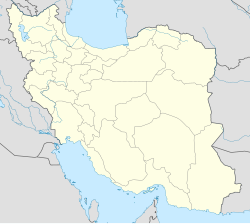
Mashhad Ardehal ( ภาษาเปอร์เซีย : مشهداردهال , เขียนเป็นภาษาโรมันว่าMashhad ĀrdahālและMashhad Ardahal ) [ 1 ]เป็นเมืองในเขตชนบทเนยาซาร์อำเภอเนยาซาร์จังหวัดคาชานจังหวัดอิสฟาฮาน ประเทศอิหร่านประชากรในปี 2017 มีประมาณ 2,000 คน
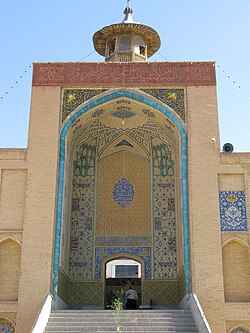
ตั้งอยู่ห่างจากเมืองคาชาน ไปทางทิศตะวันตก 40–45 กิโลเมตร ในเขตตะวันออกของภูเขาอาร์เดฮาลแห่งคาชาน ซึ่งเป็นยอดเขาที่สูงที่สุดทางตะวันตกของคาชาน เมืองนี้เป็นที่ตั้งของสุสานของสุลต่านอาลี (บุตรชายของอิหม่ามองค์ที่ห้ามูฮัมหมัด อัล-บาเกียร์ ) และโซห์ราบ เซเปห์รี กวี และจิตรกรชาวเปอร์เซียสมัยใหม่ผู้มีชื่อเสียง และเป็นที่รู้จักจากพิธีซักพรมประจำปี[ 2 ] [ 3 ]สุสานของโซห์ราบ เซเปห์รี ตั้งอยู่ในปีกตะวันออกของศาลเจ้าสุลต่านอาลี ซึ่งตั้งอยู่บนเนินเขาสูง ศาลเจ้ามีลานกว้างที่งดงามสองแห่ง ระเบียงที่สวยงามสองแห่ง และหอคอยสูงที่ประดับด้วยกระเบื้องเซรามิก อาคารทั้งหมดเป็นสถาปัตยกรรมสมัยเซลจุก[ 4 ] [ 5 ]
พิธีซักพรม
พิธีซักพรม (Ghali Shuyan) ซึ่งเป็นหนึ่งในพิธีกรรมทางศาสนาที่น่าสนใจที่สุดของชาวชีอะห์ จัดขึ้นที่เมืองมัชฮัดอาร์เดฮาล เป็นพิธีไว้อาลัยตามประเพณี/ศาสนา/ประวัติศาสตร์[ 6 ]
The origin of the ceremony can be traced back to the time when Sultan Ali (who was invited from Medina to Mashhad Ardehal more than 12 centuries ago) was killed in the city by his enemies. After his followers from the area arrived too late to help him they wrapped his body in a carpet. They then washed his body in a stream 150 meters away, before burying him. So for hundreds of years people in their thousands from the surrounding area and beyond (including Qom, Kashan, Nashlaj, Khomein, Mahallat, Saveh, Delijan, Golpayegan, Yazd, and many other towns) have flocked to Mashhad Ardehal to mourn and represent this event each year on the second Friday of the Iranian month of Mehr (early October), since this was the day Sultan Ali was killed. Some pilgrims even walk to the shrine from places that are large distances away. The crowd of pilgrims then leave the shrine carrying the remains of the same sacred carpet (that was used to wrap the body of Sultan Ali) on their shoulders, and while mourning, symbolically beat the remains of the carpet with long sticks to show their hatred towards the enemies of Sultan Ali and to demand revenge for his martyrdom, and also as a means to clean the carpet. Throughout the ceremony no outsider is allowed to touch the remains of the carpet. The pilgrims wear black clothes, sing religious songs, cry and beat their chests (as a sign of grief and mourning) and rotate their sticks in the air and rotate the carpet around the yard of the shrine. They then wash the carpet in a special stream of water near the shrine. The people believe the water then becomes holy, with many pilgrims applying the stream water upon their bodies and also bottling the water to take home with them. The pilgrims then return the carpet back to the shrine and the mourning ends at noon with a giant feast, where thousands are fed for free, before finally returning to their homes.[7][8][9][10]
In 2009, there were 200,000 pilgrims gathered in Mashhad Ardehal for the Carpet Washing Ceremony.[11]
See also
ลิงก์ภายนอก

- ศาลเจ้าอิหม่ามซาเดห์ สุลต่าน อาลี ในเมืองมาชาด-เอ อาร์เดฮาล
- แกลอรี่ภาพ: พิธีซักพรมในเมืองมัชฮัด-เอ อาร์เดฮาล