
ปฏิบัติการคูเกลบลิทซ์
| ปฏิบัติการคูเกลบลิทซ์ | |||||||
|---|---|---|---|---|---|---|---|
| ส่วนหนึ่งของสงครามโลกครั้งที่สองในยูโกสลาเวีย | |||||||
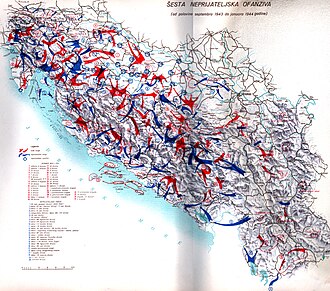 แผนที่แสดงการเคลื่อนไหวของกองกำลังพลพรรคระหว่างการรุก แผนที่แสดงการเคลื่อนไหวของกองกำลังพลพรรคระหว่างการรุก | |||||||
| |||||||
| คู่กรณี | |||||||
กองกำลัง ฝ่ายอักษะและฝ่ายร่วมมือ: เยอรมนีโครเอเชียเชตนิกส์   |  พรรคพวกยูโกสลาเวีย พรรคพวกยูโกสลาเวีย | ||||||
| ผู้บัญชาการและผู้นำ | |||||||
| อเล็กซานเดอร์ เลอร์ โลธาร์โลธาร์ เรนดูลิช อาร์เทอร์ เฟลปส์ คาร์ล ฟอน โอเบอร์แคมป์ ออกัส ชมิดฮูเบอร์โวยิสลาฟ ลูกาเชวิช | เปโก ดาปเชวิช | ||||||
| ความแข็งแกร่ง | |||||||
| ทหาร เยอรมันทหารNDHและทหารเชตนิคประมาณ 30,000 นาย | ค.ประมาณ 12,000 นาย | ||||||
| การบาดเจ็บและการสูญเสีย | |||||||
| ผู้เสียชีวิต 6,700 ราย | ผู้เสียชีวิต 9,000 ราย | ||||||
ปฏิบัติการคูเกลบลิทซ์ ( ภาษาเยอรมัน : Unternehmen Kugelblitz ) เป็น ปฏิบัติการ ปราบปรามการก่อความไม่สงบ ครั้งใหญ่ โดยกองทัพยานเกราะที่ 2 ของเยอรมัน ร่วมกับกองกำลังที่ให้ความร่วมมือกับฝ่ายศัตรูเพื่อต่อต้านกองกำลังพลพรรคยูโกสลาเวียในบริเวณบอสเนียตะวันออกของรัฐอิสระโครเอเชียในช่วงสงครามโลกครั้งที่ 2 ปฏิบัติการ นี้เริ่มขึ้นเมื่อวันที่ 3 ธันวาคม 1943 โดยมีเป้าหมายเพื่อล้อมและทำลายตำแหน่งของกองกำลังพลพรรคในบริเวณทางตะวันออกของรัฐอิสระโครเอเชีย ซึ่งวางแผนที่จะรวมตัวกันใหม่ในเซอร์เบียที่ถูกยึดครองเหตุการณ์ในปฏิบัติการคูเกลบลิทซ์มีความเกี่ยวข้องกับปฏิบัติการรุกของข้าศึกครั้งที่ 6 ( ภาษาเซอร์โบ-โครเอเชีย : Šesta neprijateljska ofenziva )
ปฏิบัติการนี้แบ่งออกเป็นสองเฟสตามรหัสปฏิบัติการว่า คูเกลบลิทซ์ (ภาษาเยอรมัน: ลูกบอลสายฟ้า) เฟสแรก (ลูกบอล) คือการโจมตีและล้อมกองกำลังข้าศึกอย่างรวดเร็ว และเฟสที่สอง (สายฟ้า) คือการทำลายกองกำลังพลพรรค กองกำลังภาคพื้นดินประกอบด้วยกองพลเวห์มาคท์และวาฟเฟนเอสเอสโดยเฉพาะอย่างยิ่งกองทัพยานเกราะที่ 2และกองพลภูเขาอาสาสมัครเอสเอสที่ 7 พรินซ์ ออยเกนรวมถึง กองกำลัง พิทักษ์บ้านเกิด ของรัฐเอกราช แห่งเวียดนามเหนือ (NDH) และเชตนิกส์ฝ่ายอักษะสามารถยึด เมือง ทูซลาและบิฮาชคืนได้ แต่กองกำลังพลพรรคสามารถหลีกเลี่ยงการถูกล้อมได้แม้จะสูญเสียกำลังพลจำนวนมาก ปัจจัยหลายประการที่ทำให้ปฏิบัติการล้มเหลว ได้แก่ การเคลื่อนไหวอย่างรวดเร็วของกองกำลังพลพรรคและการต่อต้านอย่างดุเดือดในบริเวณนั้น
การต่อสู้

ปฏิบัติการคูเกลบลิทซ์

ปฏิบัติการคูเกลบลิทซ์ ซึ่งเป็นการโจมตีครั้งแรกจากสองครั้ง ดำเนินการโดยกองทัพภูเขาเอสเอสที่ 5จุดมุ่งหมายของปฏิบัติการนี้คือการทำลายหน่วยพาร์ติซานในบอสเนีย ตะวันออก ปฏิบัติการนี้ล้มเหลวในที่สุด เนื่องจากกองกำลังเยอรมันไม่สามารถทำลายกองกำลังพาร์ติซานทั้งหมดได้ เนื่องจากภูมิประเทศ พื้นที่กว้างใหญ่ และกำลังพลของฝ่ายอักษะไม่เพียงพอที่จะคุ้มกันการล้อม กองกำลังพาร์ติซานจึงหลบเลี่ยงการถูกทำลายอย่างสิ้นเชิงได้โดยการแทรกซึมผ่านช่องว่างขนาดใหญ่ในการล้อมที่แคบลง อย่างไรก็ตาม พาร์ติซานก็ยังคงได้รับความสูญเสียอย่างหนัก
ปฏิบัติการชไนสตูร์ม

Operation Schneesturm was initiated immediately upon the completion of Operation Kugelblitz. This operation included twin drives from the Bosnia area. One drive headed westwards towards the Adriatic Sea. The other headed to the northwest and towards the border with Italy. While this operation ended late in December and the Partisans once again survived, the cost was high. The Partisans suffered about 2,000 additional casualties. Although badly battered, the majority of the Partisan units retained their cohesion. Tito's army, in the opinion of some, could still be considered an effective fighting force.
Results
Such in general outline was the sixth offensive on liberated territory in Yugoslavia. The fact that British observers were by this time plentiful on the ground meant that the fighting was adequately reported abroad—as it had never been before—and the conclusion of the campaign coincided with a great wave of publicity for the partisans in England and the United States.[1]
For the Germans their sixth offensive was entirely inconclusive. They had failed to do more than merely interrupt the free development of the resistance movement, and although they burnt large numbers of villages and killed whomever they laid hands on they scarcely reduced the numbers of those who were fighting, and they laid the basis, indeed, for a great increase in those numbers. No reliable estimates of partisan casualties are available; and similarly it is impossible to do more than guess at German casualties. The only statement that can be made without fear of contradiction is that the ratio was heavily in favour of the partisans.[2]
Gallery

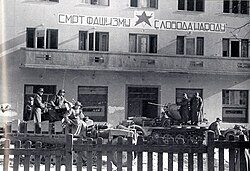 Shortly before Operation Kugelblitz, 11 November 1943 German troops of the 1. Gebirgs-Division mounted on (flak armed) half-tracks in front of the former partisan HQ (Hotel "Čajniče") in Tuzla after the city's capture. The partisan slogan "Death to fascism – freedom to the people" is written on the hotel facade.
 Fighters of the 4th Battalion of the 3rd Sandžak Brigade fighting with the Germans near Prijepolje during the counter-insurgency, late 1943
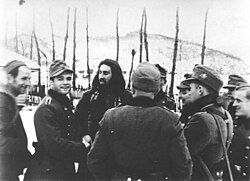 Chetnik leader Stevan Damjanović conversing with German mountain troops during the operations
 German motocycles traverse rough terrain during 'Kugelblitz'
 A December 15, 1943 London News Report on the capture of Kladanj by the 16th Muslim Brigade of the Yugoslav partisans from the Germans during Operation 'Kugelblitz', as published in The Indian Express
Sources
- เดวิดสัน, บาซิล (1946). ภาพของกลุ่มผู้ต่อต้าน . เบดฟอร์ด: เบดฟอร์ดบุ๊คส์ จำกัด.