
ČSD Class E 499.1
Class E 499.1 was an electric locomotive constructed and built by Škoda Works in Plzeň for use in Czechoslovakia by the Czechoslovak State Railways (ČSD).[1] They were also used outside Czechoslovakia in Poland as class EP05 and in the Soviet Union as ЧС3 (ChS3). In North Korea, licence built copies were used (100 series).
After the fall of the iron curtain and consequent upheavals in railway operations they remain in use with a number of railways. Still in the 1980s ČSD locomotives were renumbered to the class 141. After dividing Czechoslovakia in 1993 all locos of this class have remained in Czech Republic.
History
The locomotive was produced in the years 1957–1960 in three types. 20E, the prototype, different from serial production, 30E and 30E. 61 engines were built in those series.
The prototype (E499.101) came into service on February 29, 1959. Most of locomotives stationed in Prague, but some of them were sent to Ústí nad Labem and Česká Třebová. Currently the whole series is being systematically withdrawn with last units used in Prague, Olomouc and Ústí nad Labem.[2]
Technical data
Class E499.1 electric locomotives are used to pull both passenger and freight trains. They have driving cabs on either end of the box. This engine was not suited for multiple steering and shunting purposes. On a straight, horizontal track it could pull 600 t. passenger trains with the speed of up to 120 km/h and 1000 t. freight trains with the speed of 80 km/h.
Service in other countries
Poland
EU05
In need of modern electric locomotives for passenger trains, and unable to get timely delivery of EU06 locomotives from England, Poland bought 30 locomotives Type 44E from its southern neighbours. In 1961 it was the most modern locomotive running on Polish rail tracks. EU05 locomotives pulled fast passenger trains and were based in Warszawa Odolany and later in Warszawa Olszynka Grochowska depots. Those locomotives serviced chiefly connections from Warsaw to Poznań and Katowice.
EP05
ในปี 1969 PKPเริ่มทดสอบการเปลี่ยนแปลงหลายอย่างเพื่อให้หัวรถจักร EU05 สามารถวิ่งด้วยความเร็วได้ถึง 160 กม./ชม. ปรากฏว่าสามารถทำได้ด้วยการเปลี่ยนระบบส่งกำลัง และเป็นผลให้ภายในปี 1977 หัวรถจักรเกือบทั้งหมดได้รับการปรับปรุงใหม่เป็น รุ่น EP05ยกเว้นหัวรถจักรหมายเลข 09, 12 และ 19 ซึ่งถูกปลดระวางไปก่อนหน้านี้ เพื่อให้แตกต่างจากรุ่นก่อนหน้า สีของหัวรถจักรจึงเปลี่ยนจากสีเขียวสองโทนเป็นสีส้ม
ปัจจุบัน
ปัจจุบันเหลือหัวรถจักร EU05/EP05 ที่ยังคงใช้งานอยู่ 2 คัน ได้แก่ หัวรถจักร EP05-22 ที่ได้รับการทาสีใหม่ในปี 2003 ซึ่งจัดแสดงอยู่ที่เมืองคราคอฟและหัวรถจักร EP05-23 ที่บริษัท PKP Intercity ซื้อมาและทาสีใหม่เป็นสีส้มในปี 2017 โดยมีแผนจะนำ EP05-23 กลับมาใช้งานในฐานะสิ่งจัดแสดงอีกด้วย
สหภาพโซเวียตและรัสเซีย
ЧС3 ( ChS3 )
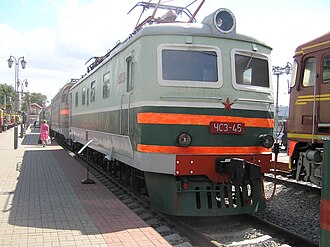
ในปี พ.ศ. 2503 และ พ.ศ. 2504 มีการสร้างรถจักรประเภท 29E ที่คล้ายกันจำนวน 87 คันสำหรับ ทางรถไฟ ของสหภาพโซเวียต รถจักรเหล่านี้ เหมาะสมที่จะวิ่งบน ราง กว้างและได้รับการกำหนดรหัสเป็น ЧС3 ( ChS3 ) รถจักรหลายคันยังคงใช้งานอยู่โดยการรถไฟรัสเซียโดยส่วนใหญ่ใช้ลากรถไฟโดยสาร ในรัสเซียรถจักร ЧС3 มักถูกใช้เป็นคู่ หน่วยปฏิบัติการสุดท้ายถูกดัดแปลงเป็นรถรางซ่อมบำรุง[ 3 ] (กำหนดรหัสเป็น EM หรือ PEM) และปลดประจำการภายในปี พ.ศ. 2555 [ 4 ]
เกาหลีเหนือ
หลังจากซื้อหัวรถจักร Škoda Type 22E ที่ผลิตในเชโกสโลวาเกียจำนวนหนึ่งเพื่อขยายกองรถจักรไฟฟ้าการรถไฟแห่งรัฐเกาหลีของเกาหลีเหนือได้รับใบอนุญาต รวมถึงการถ่ายโอนเทคโนโลยี เพื่อผลิต Type 30E โรงงานผลิตหัวรถจักรไฟฟ้าคิมชองแทได้สร้างType 30E ขึ้นหลายคัน เพื่อเก็บเกี่ยวประสบการณ์เกี่ยวกับการออกแบบเพื่อเตรียมการผลิตรถจักรคลาสธงแดง 1ซึ่งมีพื้นฐานการออกแบบมาจาก Type 30E [ 5 ]
ที่ผลิตโดยเกาหลีเหนือซึ่งมีหมายเลขอยู่ใน ซีรีส์ 100แต่มีอย่างน้อยหนึ่งคัน (หมายเลข 114) ที่ยังคงใช้งานได้อยู่
ชื่อเล่น
- ภาษาเช็กในภาษาโปแลนด์ - จากประเทศต้นกำเนิด
- Piątka (ภาษาอังกฤษ: The Five ) ในโปแลนด์ - มาจากหมายเลขหัวรถจักร
- โบบินาในสาธารณรัฐเช็ก - จากการจัดเรียงล้อ Bo'Bo'