พิโคอิดส์
| พิโคอิดส์ | |
|---|---|
 | |
 | |
| นกหัวขวานสามนิ้วยูเรเซีย ( P. tridactylus ) ตัวผู้โตเต็มวัย และเท้าสามนิ้วที่ขาดนิ้วแรก | |
การจำแนกทางวิทยาศาสตร์ | |
| อาณาจักร: | แอนิมอลเลีย |
| ไฟลัม: | คอร์ดาต้า |
| ระดับ: | อเวส |
| คำสั่ง: | พิกิฟอร์มส์ |
| ตระกูล: | พิซิดา |
| เผ่า: | เมลาเนอร์พินี |
| ประเภท: | Picoides Lacépède , 1799 |
| ชนิดต้นแบบ | |
| Picus tridactylus [ 1 ] ลินเนียส, 1758 | |
| สายพันธุ์ | |
ดูรายละเอียดในเนื้อหา | |
Picoidesเป็นสกุลของนกหัวขวาน (วงศ์ Picidae ) ที่มีถิ่นกำเนิดในยูเรเซียและอเมริกาเหนือโดยทั่วไปรู้จักกันในชื่อนกหัวขวานสามนิ้ว
อนุกรมวิธาน
สกุลPicoidesได้รับการแนะนำโดยนักธรรมชาติวิทยาชาวฝรั่งเศสBernard Germain de Lacépèdeในปี 1799 [ 2 ]ต่อมาชนิดต้นแบบได้รับการกำหนดให้เป็นนกหัวขวานสามนิ้วยูเรเซีย ( Picoides tridactylus ) โดยนักสัตววิทยาชาวอังกฤษGeorge Robert Grayในปี 1840 [ 3 ] [ 4 ]ชื่อสกุลนี้รวมคำภาษาละตินPicus ซึ่งหมาย ถึงนกหัวขวาน และคำ ภาษา กรีก-oidēsซึ่งหมายถึง "คล้ายคลึง" [ 5 ] เดิมที สกุลPicoidesประกอบด้วยประมาณ 12 ชนิด ในปี 2015 การวิเคราะห์ ทางวิวัฒนาการระดับโมเลกุลของลำดับดีเอ็นเอในนิวเคลียสและไมโท คอนเดรีย จากนกหัวขวานลายจุดพบว่าสกุลที่มีอยู่สามสกุล ( Picoides , VeniliornisและDendropicos ) เป็น กลุ่มโพ ลีไฟเลติก หลังจากการฟื้นฟูสกุล โมโนฟิ เลติก ห้า สกุลและการจัดเรียงใหม่ในภายหลังซึ่งสมาชิกเดิมส่วนใหญ่ของPicoidesถูกย้ายไปยังLeuconotopicusและDryobatesเหลือเพียงสามชนิดดั้งเดิมเท่านั้น[ 6 ] [ 7 ]
คำอธิบาย
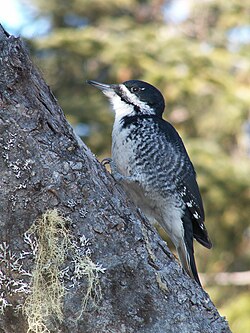
The males of all three species have yellow on the crown, though this feature is also present in some other pied woodpeckers, namely brown-fronted and yellow-crowned. The remaining color pattern of the plumage, structural features, and life habits are very similar to related woodpeckers of the Dryobates and Leuconotopicus genera.[8] The foot of all three species show an extreme adaptation to arboreal living by lacking the first digit, or hallux. It has been pointed out however that various species of pied woodpecker are similar in having a short first digit.[8] Two species of woodpecker in genus Sasia (not closely related) also lack the first digit.
Habits
As opposed to the genera Dryobates and Leuconotopicus, the three species of Picoides obtain most (some 85%) of their insect prey by pecking live or dead wood. The hairy woodpecker (Leuconotopicus villosus) for instance, obtains only 45% of its food by pecking wood, 30% from the surface of trunks and 25% at other places.[8]
Species
The genus contains the following three species:[7]
| Common name | Scientific name and subspecies | Range | Size and ecology | IUCN status and estimated population |
|---|---|---|---|---|
| Eurasian three-toed woodpecker
| Picoides tridactylus(Linnaeus, 1758) Eight subspecies
| across northern Eurasia from Norway to Korea. | Size: Habitat: Diet: | LC |
| American three-toed woodpecker
| Picoides dorsalisBaird, 1858 Two subspecies
| western Canada, Alaska and the western United States | Size: Habitat: Diet: | LC |
| Black-backed woodpecker
| Picoides arcticus(Swainson, 1832) | Canada, Alaska, the north-western United States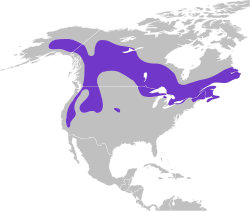 | Size: Habitat: Diet: | LC |