
ปอร์ติอุนคูลา

โบสถ์ปอร์ติอุนคูลา ( ภาษาอิตาลี : Porziuncola ) เป็นโบสถ์เก่าแก่ในเมืองซานตามาเรียเดกลีอันเจลีใกล้กับเมืองอัสซีซีประเทศอิตาลี โบสถ์แห่งนี้มีความเกี่ยวข้องอย่างใกล้ชิดกับฟรานซิสแห่งอัสซีซีและคณะภิกษุณีผู้น้อยซึ่งใช้โบสถ์แห่งนี้เป็นสำนักงานใหญ่ หลังจากที่ฟรานซิสเสียชีวิตในปี 1226 โบสถ์แห่งนี้ก็กลายเป็นสถานที่แสวงบุญที่สำคัญ ในศตวรรษที่ 16 มหาวิหารขนาดใหญ่ คือ มหาวิหารเซนต์แมรีแห่งเหล่าทูตสวรรค์ได้ถูกสร้างขึ้นล้อมรอบโบสถ์ปอร์ติอุนคูลา
ประวัติศาสตร์
ตามตำนานซึ่งมีหลักฐานยืนยันได้อย่างแน่นอนเพียงว่าเกิดขึ้นในปี ค.ศ. 1645 โบสถ์เล็กๆ แห่งปอร์ติอุนคูลาถูกสร้างขึ้นในสมัยของสมเด็จพระสันตะปาปาลิเบริอุส (352–366) โดยฤๅษีจากหุบเขาโจซาฟัตผู้ซึ่งนำพระธาตุจากสุสานของพระแม่มารี มาด้วย ตำนานเดียวกันนี้กล่าวว่าโบสถ์แห่งนี้ตกเป็นของเบเนดิกต์แห่งนูร์เซียในปี ค.ศ. 516 โบสถ์แห่งนี้เป็นที่รู้จักในชื่อ พระแม่แห่งหุบเขาโจซาฟัต หรือแห่งเหล่าทูตสวรรค์ โดยชื่อหลังนี้ บางคนเชื่อว่าหมายถึงการเสด็จขึ้นสวรรค์ของพระแม่มารีพร้อมกับเหล่าทูตสวรรค์ ความคิดเห็นที่น่าเชื่อถือกว่านั้นกล่าวว่าชื่อนี้มาจากตำนานที่กล่าวถึงการขับร้องของเหล่าทูตสวรรค์ที่ได้ยินบ่อยครั้งในที่แห่งนั้น[ 1 ]
โบสถ์ตั้งอยู่บนที่ดินผืนเล็ก ๆ ("Portiuncula") ซึ่งเป็นของคณะนักบุญเบเนดิกต์แห่งมอนเตซูบาซิโอต่อมาชื่อของที่ดินก็ตกทอดมาถึงโบสถ์เล็ก ๆ แห่งนี้[ 2 ]โบสถ์อยู่ในสภาพทรุดโทรม ถูกทิ้งร้างอยู่ในป่าต้นโอ๊ก
After a pilgrimage to Rome, where he begged at the church doors for the poor, Francis said he had had a mystical vision of Jesus Christ in the wayside chapel of San Damiano, about two miles outside of Assisi, in which the Icon of Christ Crucified came alive and said to him three times, "Francis, Francis, go and repair My house which, as you can see, is falling into ruins". Francis took this literally to mean the ruined church in which he was presently praying, and so sold his horse and some cloth from his father's store, to assist the priest there for this purpose. His father Pietro, highly indignant, sought restitution. After a final interview in the presence of the bishop, Francis renounced his father and his patrimony, laying aside even the garments he had received from him. For the next couple of months he lived as a beggar in the region of Assisi. Returning to the town for two years this time, he restored several ruined churches, among them the Portiuncula, little chapel of St Mary of the Angels, just outside the town.[3]
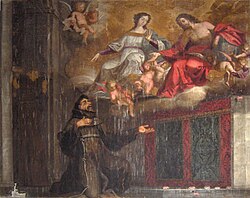
Francis built himself a small hut near the Chapel of Our Lady of the Angels and was soon joined by others. Here he founded the Franciscans. Around 1211 the small chapel was given to Francis by the abbot of Saint Benedict of Monte Subasio on condition of making it the mother house of his religious family. On Palm Sunday 1211 St Francis received in this church Clare of Assisi and founded the Second Order of the Poor Ladies Poor Clares. Adjoining this humble sanctuary, already dear to Francis, the first Franciscan convent was formed by the erection of a few small huts or cells of wattle, straw, and mud, and enclosed by a hedge.[3]
The General Chapters, the annual meetings of the friars, were held in this church usually during Pentecost (months of May – June).
Feeling his end approaching, St Francis asked to be brought back to the Portiuncula in September 1226. On his death-bed St Francis recommended the chapel to the faithful protection and care of his brethren. He died, in his cell, not fifteen yards from the church, at sunset on Saturday, 3 October 1226.
However this may be, here or in this neighbourhood was the cradle of the Franciscan Order. After the death of Francis, the spiritual value and the charisma of the Portiuncula became even greater. St Francis himself pointed out the Portiuncula as a primary source of inspiration and a model for all his followers.
Later developments
Shortly after 1290, the chapel, which measured only about 5.5 by 3.2 m, became entirely inadequate to accommodate the throngs of pilgrims. The altar piece, an Annunciation, was painted by the priest Hilarius of Viterbo in 1393. The monastery was at most the residence, only for a short time, of the ministers-general of the order after St Francis. In 1415 it first became associated with the Regular Observance, in the care of which it remains to the present day.
Decorations of the Portiuncula
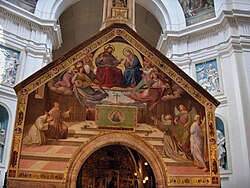
This tiny church is exquisitely decorated by artists from different periods. On the façade, above the entrance outside, is a fresco by Johann Friedrich Overbeck (1829), depicting St Francis receiving from Christ and the Virgin the indulgence, known as the "Pardon of Assisi". The German painter Overbeck was a member of the Nazarene movement, a group of painters who aimed to revive honesty and spirituality in Christian art. At the base of this fresco is a small rectangular fresco beneath which are the Latin words Haec est porta vitae aeternae ("This is the gate to eternal life").
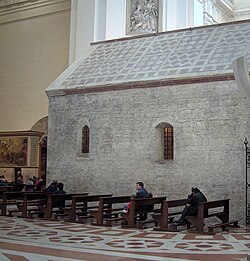
The outside wall to the right of the entrance shows fragments of two frescoes by unknown Umbrian artists. In the 19th century a door was opened in the same wall, to control the flow of pilgrims. The left outside wall includes the tombstone of Pietro Cattani, who died on 10 March 1221. (St Francis was still alive at the time of his death). At the back, above the entrance, is the fresco Crucifixion by Perugino, painted around 1485. It was badly damaged during the construction of the basilica. The 15th century door is decorated with floral motifs. On top of the Portiuncula stands a small Gothic belfry.
The interior is austere and simple. Some of the rough, squared stones, taken from Mount Subasio, were put in place by the saint himself while repairing this little church. It is decorated in a simple Gothic style with frescoes from the 14th and the 15th century. But the masterpiece is the six-part fresco in the apse of this little church, painted by the priest Ilario da Viterbo (1393):
- The Annunciation (middle)
- St Francis Throws Himself into the Thorny Brambles (right)
- St Francis Accompanied by Two Angels (right)
- Apparition of Christ and the Virgin, Accompanied by 60 Angels, with St Francis Offering Roses (top)
- St Francis imploring pope Honorius III the Confirmation of the Indulgence (left)
- St Francis Promulgates the Indulgence, Accompanied by the Bishops of Umbria (left)
The pavement on the floor is now restored to its original appearance by the restorations following the earthquake of 1997.
Basilica of Santa Maria degli Angeli
The buildings which had been gradually added to the shrine were taken down by order of Pope Pius V (1566–1572), except the cell in which St Francis had died, and were replaced by a large basilica in contemporary style. The new edifice was erected over the cell just mentioned and over the Portiuncula chapel, which is situated immediately under the cupola. The basilica, which has three naves and a circle of chapels extending along the entire length of the aisles, was completed (1569–78) according to the plans of Giacomo Barozzi da Vignola, assisted by Galeazzo Alessi.
In the night of 15 March 1832, the arch of the three naves and of the choir fell in, in consequence of an earthquake, the cupola sporting a big crack. Gregory XVI had all restored in 1836-1840, and on 8 September 1840 the basilica was reconsecrated by Cardinal Lambruschini. By Brief of 11 April 1909, Pope Pius X raised it to a "patriarchal basilica and papal chapel". The high altar was therefore immediately rebuilt at the expense of the Franciscan province of the Holy Cross (also known as the Saxon province), and a papal throne added. Under the bay of the choir, resting against the columns of the cupola, is still preserved the cell in which St Francis died, while, a little behind the sacristy, is the spot where the saint, during a temptation, is said to have rolled in a briar-bush, which was then changed into thornless roses. During this same night the saint received the Portiuncula Indulgence.
Feast Day and Portiuncula Indulgence
Franciscans continue to celebrate the feast of Our Lady of the Angels of the Porzioncula on August 2,[4] which marks the dedication of the church.[5]
ในตอนแรก การได้รับอภัยบาป ที่ปอร์ ติอุนคูลาสามารถทำได้เฉพาะในโบสถ์ปอร์ติอุนคูลา ระหว่างช่วงบ่ายของวันที่ 1 สิงหาคม และพระอาทิตย์ตกดินของวันที่ 2 สิงหาคม[ 6 ]ในวันที่ 5 สิงหาคม ค.ศ. 1480 (หรือ 1481) สมเด็จพระสันตะปาปาซิ๊กซ์ตุสที่ 4 ได้ขยายสิทธินี้ไปยังโบสถ์ทั้งหมดของคณะฟรานซิสกันลำดับที่หนึ่งและสอง ในวันที่ 4 กรกฎาคม ค.ศ. 1622 สมเด็จพระสันตะปาปาเกรกอรีที่ 15 ได้ขยายสิทธินี้ไปยังผู้ศรัทธาทุกคนที่หลังจากสารภาพบาปและรับศีลมหาสนิทแล้ว ไปเยี่ยมชมโบสถ์ดังกล่าวในวันที่กำหนด ในวันที่ 12 ตุลาคม ค.ศ. 1622 สมเด็จพระสันตะปาปาเกรกอรีที่ 15 ได้มอบสิทธิเดียวกันนี้ให้กับโบสถ์ทั้งหมดของคณะคาปูชินสมเด็จพระสันตะปาปาเออร์บันที่ 8ได้มอบสิทธินี้ให้กับโบสถ์ทั้งหมดของคณะที่สามในวันที่ 13 มกราคม ค.ศ. 1643 และสมเด็จพระสันตะปาปาเคลเมนต์ที่ 10มอบ สิทธินี้ ให้กับโบสถ์ทั้งหมดของคณะคอนเวนชวลในวันที่ 3 ตุลาคม ค.ศ. 1670
แม้ว่าคำประกาศของพระสันตะปาปาจะทำให้การอภัยโทษปอร์ติอุนคูลาเป็นที่ยอมรับอย่างไม่มีข้อโต้แย้งในแง่กฎหมายและศาสนจักร แต่ความถูกต้องทางประวัติศาสตร์ (เช่น ต้นกำเนิดจากนักบุญฟรานซิส) ยังคงเป็นที่สงสัย ตำนานเก่าแก่ของนักบุญฟรานซิสไม่ได้กล่าวถึงการอภัยโทษนี้เลย และไม่มีเอกสารร่วมสมัยใดกล่าวถึงเช่นกัน เอกสารที่เก่าแก่ที่สุดที่กล่าวถึงการอภัยโทษนี้คือเอกสารของทนายความเมื่อวันที่ 31 ตุลาคม ค.ศ. 1277 ซึ่งบุญญานุภาพเบเนดิกต์แห่งอาเรซโซ (ซึ่งนักบุญฟรานซิสรับเข้าเป็นสมาชิกในคณะ) ได้ให้การยืนยันว่าเขาได้รับการแจ้งจากภราดามาสเซโอ (สหายของนักบุญฟรานซิส) ว่าสมเด็จพระสันตะปาปาโฮโนริอุสที่ 3ได้พระราชทานการอภัยโทษที่เมืองเปรูจา พยานหลักฐานในยุคต่อมา ได้แก่ พยานของจาคอบ คัปโปลีเกี่ยวกับภราดาเลโอ , อ็อดโดแห่งอัคควาสปาร์ตา , ปีเตอร์ ซัลฟานี , ปีเตอร์ จอห์น โอลิวี (ผู้เขียนบทความทางวิชาการเพื่อปกป้องการยกโทษบาปนี้ราวปี 1279), จอห์นแห่งลาเวอร์นา , อูเบอร์ติโน ดา กาซาเลและฟรานซิสแห่งฟาบริอาโน (ซึ่งพยานหลักฐานของเขาย้อนกลับไปถึงปี 1268)
ต่อมาพระสันตะปาปาได้ขยายสิทธิพิเศษนี้ไปยังคริสตจักรทั้งหมดที่เกี่ยวข้องกับคณะฟรานซิสกันไม่ว่าในทางใดก็ตาม แม้กระทั่งคริสตจักรที่คณะที่สามจัดการประชุม (รวมถึงโบสถ์ประจำเขต ฯลฯ) โดยมีเงื่อนไขว่าต้องไม่มีคริสตจักรฟรานซิสกันในเขตนั้น และคริสตจักรดังกล่าวต้องอยู่ห่างออกไปเกินหนึ่งไมล์อิตาลี (1,000 ก้าว) แม้แต่เขตและประเทศก็อาจได้รับสิทธิพิเศษเช่นกัน
สมเด็จพระสันตะปาปาปอลที่ 6ทรงปฏิรูปการให้การอภัยโทษอย่างสมบูรณ์หลังจากการประชุมสภาวาติกันครั้งที่สองพระราชบัญญัติ การอภัยโทษ Indulgentiarum Doctrina (1967) ของพระองค์ได้ยืนยันการอภัยโทษในวันปอร์ติอุนคูลาอีกครั้ง ตามคู่มือ การอภัยโทษ ( Enchiridion Indulgentiarum ) ผู้ศรัทธาชาวคาทอลิกสามารถได้รับอภัยโทษอย่างสมบูรณ์ในวันที่ 2 สิงหาคม (วันปอร์ติอุนคูลา) หรือในวันอื่นใดที่กำหนดโดยพระสังฆราชท้องถิ่นเพื่อประโยชน์ของผู้ศรัทธา ภายใต้เงื่อนไขปกติ (การสารภาพบาป การรับศีลมหาสนิท และการสวดภาวนาเพื่อพระประสงค์ของพระสันตะปาปา) โดยการไปโบสถ์ประจำเขตด้วยความศรัทธา และสวดบทภาวนาของพระเจ้าและบทเชื่ออย่างน้อยที่สุด การอภัยโทษนี้ใช้ได้กับโบสถ์ประจำสังฆมณฑล และโบสถ์ร่วมกับสังฆมณฑล (ถ้ามี) แม้ว่าโบสถ์เหล่านั้นจะไม่ใช่โบสถ์ประจำเขต และยังใช้ได้กับโบสถ์กึ่งประจำเขตด้วย เพื่อให้ได้รับสิ่งนี้ เช่นเดียวกับการอภัยโทษอย่างสมบูรณ์ ผู้ศรัทธาต้องปราศจากความผูกพันกับบาป แม้แต่บาปเล็กน้อย หากขาดความผูกพันโดยสิ้นเชิง การอภัยโทษก็จะเป็นเพียงบางส่วน[ 2 ]
เมืองปอร์ติอุนคูลาในสหรัฐอเมริกา
ในซานฟรานซิสโก รัฐแคลิฟอร์เนีย มีโบสถ์จำลองของ Portiuncula Chapel อัครสังฆมณฑลซานฟรานซิสโกได้สร้างโบสถ์จำลองขนาด 78% ของโบสถ์ดั้งเดิมในโรงยิมเก่าที่อยู่ติดกับโบสถ์National Shrine of St. Francis of Assisiในย่าน North Beach ของเมือง เปิดทำการในเดือนกันยายน พ.ศ. 2551 และในปี พ.ศ. 2553 ได้อยู่ภายใต้การดูแลของคณะฟรานซิสกันคาปูชินแห่งมณฑลอเมริกาตะวันตก[ 7 ]
ยังมีแบบจำลองอื่นๆ อีกในสหรัฐอเมริกา ได้แก่:
- โรงเรียนคาร์ดินัล คูชิงเมืองฮาโนเวอร์ รัฐแมสซาชูเซตส์
- มหาวิทยาลัยฟรานซิสกันแห่งสตูเบนวิลล์แบบจำลองที่สร้างขึ้นในปี 1987
- คฤหาสน์ Mayslake Peabodyในเมือง Oak Brook รัฐอิลลินอยส์
- อารามฟรานซิสกันภูเขาเซนต์เซพัลเคอร์ในกรุงวอชิงตัน ดี.ซี.
- สร้างโดยคณะฟรานซิสกันแห่งอัสสัม ชัญ บีเอ็มวี ในเมืองเบอร์ลิงตัน รัฐวิสคอนซินในปี 1940
- มหาวิทยาลัยลูร์เดสในเมืองซิลวาเนีย รัฐโอไฮโอ[ 8 ]
นอกจากนี้ เมืองลอสแอนเจลีสยังได้รับการตั้งชื่อตามเมืองนี้ (ทางอ้อม) ว่า "El Pueblo de Nuestra Señora la Reina de los Ángeles del Río de Porciúncula" [ 9 ]ดูแม่น้ำลอสแองเจลีส § อัลตาแคลิฟอร์เนียเพื่อเป็นข้อมูลพื้นหลัง
ลิงก์ภายนอก

- เว็บไซต์อย่างเป็นทางการของ Portiuncula