
อ่าน 7 นาที
Siege of Chaves
การล้อมเมืองชาเวสหมายถึงการล้อมและยึดป้อมเซาฟรานซิสโกและเมืองชาเวสประเทศโปรตุเกส โดยกองทัพฝรั่งเศส ระหว่างวันที่ 10 ถึง 12 มีนาคม พ.ศ.
Siege of Chaves
| Siege of Chaves | |||||||
|---|---|---|---|---|---|---|---|
| Part of the Peninsular War | |||||||
 Monument to commemorate the recapture of Chaves by the Portuguese forces. Monument to commemorate the recapture of Chaves by the Portuguese forces. | |||||||
| |||||||
| Belligerents | |||||||
 Portugal Portugal |  French Empire French Empire | ||||||
| Commanders and leaders | |||||||
| First siege:Francisco PizarroSecond siege:Francisco Silveira | First siege:Marshal SoultSecond siege: Major Messeger | ||||||
| Strength | |||||||
| Second siege:6,000 men | First siege:23,000 men[3]50 cannons Second siege:1,800 men[4]12 cannons[4] | ||||||
| Casualties and losses | |||||||
| First siege:3,500 men captured50 cannons capturedSecond siege:4 to 5 men killed[5] | First siege:No casualtiesSecond siege:300 dead[4]1,500 captured[4]12 cannons captured[4]More than 1,000 rifles captured[4] | ||||||
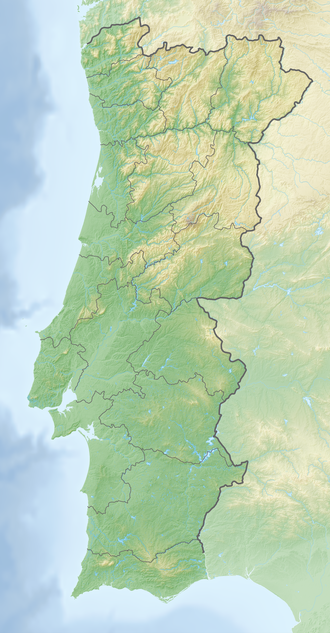


การล้อมเมืองชาเวสหมายถึงการล้อมและยึดป้อมเซาฟรานซิสโกและเมืองชาเวสประเทศโปรตุเกส โดยกองทัพฝรั่งเศส ระหว่างวันที่ 10 ถึง 12 มีนาคม พ.ศ. 2452 และการล้อมและยึดป้อมคืนโดย กองทัพ โปรตุเกสในวันที่ 21 ถึง 25 มีนาคม พ.ศ. 2452 ระหว่างการรุกรานโปรตุเกสครั้งที่สองของฝรั่งเศสในสงครามคาบสมุทร[ 6 ]
การรุกรานของฝรั่งเศส (ค.ศ. 1807-1811)
โปรตุเกสถูกกองทัพฝรั่งเศสรุกรานถึงสามครั้งในช่วงสงครามคาบสมุทร ภูมิภาคทางเหนือของทราส-โอส-มอนเตสเช่นเดียวกับทั่วทั้งประเทศ ตกอยู่ภายใต้ การปกครองของจักรพรรดินโป เลียน ภายใต้การนำ ของฌอง-อังโดช จูโนต์ทันทีที่ข่าวการขึ้นฝั่งของกองทัพอังกฤษในเอสเตรมาดูราของโปรตุเกส มา ถึง การกบฏก็ปะทุขึ้นบรากังซาและต่อมาไม่นานชาเวสก็ประกาศอิสรภาพ
นโปเลียนกังวลเกี่ยวกับสิ่งที่เกิดขึ้นในสเปนและผิดหวังกับความล้มเหลวของการส่งกองกำลังของเขา จึงตัดสินใจเดินทางมายังคาบสมุทรไอบีเรียด้วยตนเอง และในที่สุดก็สามารถยึดครองได้สำเร็จด้วยกำลังพล 300,000 นาย กองทัพอังกฤษซึ่งขึ้นฝั่งที่กาลิเซีย ในปี 1807 ภายใต้การบัญชาการของนายพลจอห์น มัวร์มีจำนวนไม่เกิน 30,000 นาย นโปเลียนจึงสั่งให้ฌอง-เดอ-ดิเยอ ซูลต์ไล่ตามกองทัพอังกฤษในกาลิเซีย กองทัพของมัวร์พ่ายแพ้และถูกไล่ล่าไปทั่วเทือกเขาลูโกนายพลอังกฤษเองก็ถูกสังหารในการสู้รบครั้งสุดท้ายรอบอ่าวโครูญาซึ่งเป็นที่ที่กองกำลังที่เหลือของเขาขึ้นฝั่งอีกครั้ง
หลายเดือนต่อมา ซูลต์ได้รับคำสั่งให้บุกโปรตุเกสจากทางเหนือและขับไล่กองทัพอังกฤษออกจากดินแดนโปรตุเกส อย่างไรก็ตาม การดำเนินการตามคำสั่งนั้นถูกขัดขวางอย่างมากจากฤดูหนาว ซึ่งทำให้แม่น้ำมินโญแทบจะข้ามไม่ได้ และจากการต่อต้านของกองกำลังโปรตุเกสที่ตั้งมั่นอยู่ระหว่างเซร์เวียราและวาเลนซาจากนั้นนายพลซูลต์จึงตัดสินใจอ้อมชายแดนที่เป็นภูเขาของมินโญตอนบนและข้ามกำแพงแห้งแล้งของทราส-โอส-มอนเตส กองกำลังของเขามีจำนวนประมาณ 23,000 นาย (ในจำนวนนี้เป็นทหารม้า 4,000 นาย) และปืนใหญ่ 50 กระบอก ทหารบางส่วนมีประสบการณ์เนื่องจากเคยเข้าร่วมในยุทธการฟรีดแลนด์และออสเตอลิทซ์การข้ามพรมแดนเกิดขึ้นในวันที่ 7 มีนาคม ค.ศ. 1809
การโจมตีชาเวส
การป้องกันชายแดนของ Trás-os-Montes อยู่ในมือของพลตรีFrancisco Silveiraซึ่งกองกำลังของเขามีจำนวน 2,800 นายทหารประจำการ 2,500 นายทหารอาสาสมัคร และทหารม้าเพียง 50 นาย[ 7 ]ซึ่งกระจุกตัวอยู่รอบป้อมปราการ Chaves ป้อมปราการซึ่งอยู่ในสภาพย่ำแย่[ 1 ]ได้รับการป้องกันโดยปืนใหญ่ 50 กระบอก แต่มีเพียงไม่กี่กระบอกเท่านั้นที่ใช้งานได้[ 2 ]อยู่ภายใต้การบังคับบัญชาของพันโท Francisco Pizarro หลังจากมีการปะทะกันเล็กน้อยในช่วงแรกใกล้ชายแดน กองกำลังโปรตุเกสก็ถอยกลับไปยัง Chaves จากนั้น Silveira ก็สั่งให้ละทิ้งป้อมปราการ
การตัดสินใจนี้ก่อให้เกิดความไม่สงบอย่างมากในหมู่กองกำลังติดอาวุธและประชาชน ด้วยความรอบคอบ นายพลจัตวาจึงนำกองกำลังของเขาไปทางใต้ หลีกเลี่ยงความเสี่ยงใดๆ ต่อกองกำลังที่เหนือกว่า ภายใต้แรงกดดันจากประชาชนและกองกำลังติดอาวุธ พันโทฟรานซิสโก ปิซาร์โรไม่เชื่อฟังคำสั่งและยอมรับการบัญชาการกองกำลังประชาชน เตรียมพร้อมที่จะต่อต้านกองกำลังที่รุกรานด้วยทหาร 500 นาย (แนวที่ 1) กองกำลังติดอาวุธ 2,000 นาย (แนวที่ 2) และกองกำลังออร์เดนันซา 1,200 นาย (แนวที่ 3) [ 8 ]ซิลเวียราพยายามเปลี่ยนใจเขา แม้กระทั่งเรียกประชุมสภาสงครามเพื่อหารือเกี่ยวกับปัญหา แต่เขาก็ไม่สามารถได้รับการตัดสินใจอย่างเป็นทางการ โดยเฉพาะอย่างยิ่งเนื่องจากชาวฝรั่งเศสที่มาถึงในวันที่ 10 มีนาคม กำลังเตรียมที่จะโจมตีป้อมเซาเนอูเต ลทางเหนือ ปิซาร์โรยืนหยัดอยู่กับที่ และเคานต์ในอนาคตก็จากไปพร้อมกับเจ้าหน้าที่ของเขาเพื่อเข้าร่วมกองกำลังของเขา ซึ่งได้ยึดครองที่ราบสูงทางใต้ของชาเวส
Soult summoned Chaves's stronghold to surrender, but no answer was given.[1] But soon, it was evident in the fort that defense was useless. Although fire from the artillery and muskets persisted since the French arrival,[2] the defenders ultimately recognized that Silveira's retreat was the most sensible one. Soult sent a second message calling for the surrender of the stronghold, and it was accepted on 12 March. Chaves surrendered, and the French troops marched into the town on 13 March.[1] Soult, with so many prisoners on his hands, released the civilians of the militias and ordenanças, under oath of not taking up arms against the French and tried to recruit 500 of the line troops, who soon deserted.[7] These actions by Marshal Soult were strongly criticized by several of his officers, especially those who had participated in the first French invasion of Portugal of the previous year under Junot, as they preferred that the stronghold had been taken by assault and the garrison put to the sword.
This wise and gentle proceeding was much blamed by some of his officers, especially those who had served under Junot. They desired that Chaves might be assaulted and the garrison put to the sword, for they were embued with a personal hatred of the Portuguese and, being adverse to serve in the present expedition, endeavored, as it would appear, to thwart their general (...). (Napier, 1828.)[2]
Portuguese counterattack
Meanwhile, the Portuguese forces had left their positions near Vidago and retreated farther south to a low pass between Vila Pouca and Vila Real. Soult, though, had decided to make his way south by way of the Barroso, due west instead of south. He left a small garrison of a few hundred men in Chaves under the command of Major Messenger, and the hospital he had transferred from Monterey, Galicia, with many wounded or sick.[7] As soon as Silveira knew that the main French army had gone away, he decided to attack Chaves. For some days, a French detachment had approached Vila Pouca to force the entrenched Portuguese forces to retreat. But soon, it was discovered that these forces had gone to Boticas to join up with the main French army already on its way west. Soult's army went on to win the First Battle of Porto.
Once again, Silveira entered the Tâmega River valley and attacked the Chaves stronghold on 21 March. The small French garrison tried to resist, but the Portuguese knew the town well and could penetrate the walls through the "Opening of the Butchershops." There was hand-to-hand combat in the streets, and the French, leaving almost 300 dead, retreated into the São Francisco Fort. Some 200 French fell prisoners into the hands of the Portuguese. The Portuguese, having no artillery, blockaded the French for four days. On the fifth day, when all was ready for the final assault to be carried out by escalating the fort, Silveira gave Messenger an ultimatum, under which he should surrender without conditions. Messenger then requested an hour of truce to take a decision. After the time given had ended, and still without a response, Silveira issued a final request, warning Messenger that if he did not surrender in five minutes, he would give orders to storm the fort. The French commander immediately surrendered without conditions.[4] 25 officers, 23 civilians and surgeons, and about 1,300 soldiers were captured and escorted to Vila Real.[4] The 114 Spanish left in Chaves as prisoners by Soult were restored to liberty.[9]
This skillful maneuver by Silveira seriously upset Soult's plans, obliging him to wait, for lack of supply lines, between the Douro and the Vouga. After the Second Battle of Porto, the French army was obliged by Wellesley to retreat quickly to its starting point, the city of Ourense in Galicia, Spain. In the final phase of this retreat, Silveira could almost intercept the French troops near Montealegre. Some of his detachments even saw the rearguard crossing the border near the rugged mountains of Larouco. Beresford had come up to Chaves and let the opportunity to destroy the French slip away. Once the danger had passed, Beresford, under the insistence of Silveira, called a court martial for Francisco Pizarro. This War Council occurred in Lisbon in 1809 and found the reckless lieutenant colonel innocent of the charges.
This successful defeat of the French by the poorly equipped Portuguese army gave the town of Chaves an essential place in Portuguese history. It, together with the defeat of pro-Royalist forces in 1912, gave Chaves the deserved title of the Heroic City of Chaves (Cidade Heróica de Chaves), the name of many streets and avenues in Portugal.
See also
- History of Portugal
- John VI of Portugal
- Napoleonic Wars
- Timeline of the Peninsular War
- Transfer of the Portuguese Court to Brazil
Notes
- ^ a b c d Napier 1828b , หน้า 181.
- ^ a b c d Napier 1828b , หน้า 182.
- ^เซาธ์ตี้, หน้า 175
- ^ a b c d e f g h Soriano 1834 , หน้า 201–202.
- ^เมเนเซส 1814 , หน้า 131.
- ^ Esdaile 2003 , หน้า 178.
- ^ a b c Southey 1828b , หน้า 167.
- ^โซริอาโน 1834 , หน้า 123.
- ^ Southey 1828b , หน้า 195.
อ่านเพิ่มเติม
- เนเปียร์, วิลเลียม (1828a). ประวัติศาสตร์ของสงครามในคาบสมุทรและทางตอนใต้ของฝรั่งเศสเล่มที่ 1 ลอนดอน: T. & W. Boone สืบค้นเมื่อ 19 พฤษภาคม 2021
- เนเปียร์, วิลเลียม (ค.ศ. 1828). ประวัติศาสตร์ของสงครามในคาบสมุทรไอบีเรียและทางตอนใต้ของฝรั่งเศสเล่มที่ 3 ลอนดอน: ที. แอนด์ ดับเบิลยู. บูนสืบค้นเมื่อ19 พฤษภาคม 2021
ลิงก์ภายนอก
 สื่อที่เกี่ยวข้องกับการล้อมเมืองชาเวสในวิกิมีเดียคอมมอนส์


สรุปเนื้อหา
ข้อมูลสำคัญจากบทความ
ข้อมูลสำคัญเกี่ยวกับ Siege of Chaves
การล้อมเมืองชาเวสหมายถึงการล้อมและยึดป้อมเซาฟรานซิสโกและเมืองชาเวสประเทศโปรตุเกส โดยกองทัพฝรั่งเศส ระหว่างวันที่ 10 ถึง 12 มีนาคม พ.ศ.
การรุกรานของฝรั่งเศส (ค.ศ. 1807-1811)
โปรตุเกสถูกกองทัพฝรั่งเศสรุกรานถึงสามครั้งในช่วง สงครามคาบสมุทร ภูมิภาค ทางเหนือของ ทราส-โอส-มอนเตส เช่นเดียวกับทั่วทั้งประเทศ ตกอยู่ภายใต้ การปกครองของจักรพรรดินโป เลียน ภายใต้การนำ ของ ฌอง-อังโดช จูโนต์ ทันทีที่ข่าวการขึ้นฝั่งของกองทัพอังกฤษใน...
การโจมตีชาเวส
การป้องกันชายแดนของ Trás-os-Montes อยู่ในมือของพลตรี Francisco Silveira ซึ่งกองกำลังของเขามีจำนวน 2,800 นายทหารประจำการ 2,500 นายทหารอาสาสมัคร และทหารม้าเพียง 50 นาย [ 7 ] ซึ่งกระจุกตัวอยู่รอบป้อมปราการ Chaves ป้อมปราการซึ่งอยู่ในสภาพย่ำแย่ [ 1 ]...
Portuguese counterattack
Meanwhile, the Portuguese forces had left their positions near Vidago and retreated farther south to a low pass between Vila Pouca and Vila Real . Soult, though, had decided to make his way south by way of the Barroso, due west instead of south.