
อ่าน 4 นาที
Yangambi
Yangambi is a town in Isangi territory of Tshopo province, Democratic Republic of the Congo .
Yangambi
Yangambi | |
|---|---|
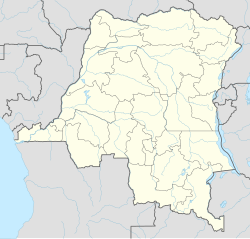  Yangambi | |
| Coordinates: 0°46′03″เหนือ24°26′29″ตะวันออก/0.767475°N 24.441404°E | |
| Country |  DR Congo DR Congo |
| Province | Tshopo |
| Territory | Isangi |
| Time zone | UTC+2 (CAT) |
| Climate | Af |
| National language | Lingala |
Yangambi is a town in Isangi territory of Tshopo province, Democratic Republic of the Congo.
Location
Yangambi is on the north side of the Congo River and lies on the R408 road which connects it to Kisangani 100 kilometers to the east.[1] This road is unpaved, rarely used in the rainy season and difficult to use at all times of the year. The roads linking Yangambi to Weko and Isangi are also very poor. The river provides an alternative transport route. The town was once served by the small Yangambi Airport.[2]
Weather
Mean annual rainfall is 1,835 millimetres (72.2 in).[3] August is the wettest month and February the driest. The skies tend to be partly cloudy even during the drier seasons.
Yangambi Biosphere Reserve
235,000 hectares of forest around Yangambi were declared a Biosphere Reserve in 1976,[4] part of UNESCO’s Man and the Biosphere Programme (MAB).
The Yangambi Biosphere Reserve comprises secondary forests with Pycnanthus angolensis and Fagara macrophylla, semi deciduous secondary rain forests, rain forests with Gilbertiodendron dewevrei, climax forests with Brachystegia laurentii and marshland forests.[4]
The site is very important from a biodiversity point of view since it hosts endangered tree species, such as Afrormosia (Pericopsis elata). It was also once home to elephants (Loxodonta africana cyclotis), but they have now disappeared locally.[5] In 2018, a study confirmed the presence of Common Chimpanzees (Pan troglodytes) in the area.[6]
Research center

During the colonial era, Yangambi was home to the Institut national pour les études agronomiques du Congo belge (INEAC), one of the world's most important tropical agriculture and forestry research centers.
พื้นที่ทดลองและห้องปฏิบัติการของ INEAC ถูกสร้างขึ้นตามถนนที่ขนานกับฝั่งเหนือของแม่น้ำคองโก และตามถนนที่ทอดยาวไปทางเหนือจากแม่น้ำเป็นระยะทางประมาณ25 กิโลเมตร (16 ไมล์) [ 7 ] ใน ช่วงทศวรรษ 1930 นักวิจัยที่ INEAC พบความสัมพันธ์ระหว่างต้นปาล์มน้ำมันเทเนราดูราและพิซิเฟรา[ 3 ] ต้นปาล์มน้ำมันมีผลผลิตค่อนข้างต่ำในบริเวณรอบๆ ยางัมบีเมื่อเทียบกับบริเวณชายฝั่ง ซึ่งดูเหมือนจะเป็นผลมาจากอุณหภูมิกลางคืนที่ต่ำกว่าในพื้นที่ภายในทวีป ซึ่งมีอุณหภูมิต่ำสุดเฉลี่ยที่ยางัมบีอยู่ที่ประมาณ20 °C (68 °F ) [ 8 ]
ศูนย์ฯ ได้พัฒนาถั่วเหลืองหลายสายพันธุ์เพื่อใช้ในพื้นที่ต่างๆ ของประเทศ[ 9 ] สายพันธุ์ที่สุกเร็วให้ผลผลิต ถั่วเหลืองมากกว่า 1,200 กก./เฮกตาร์[ 10 ] การทดลองภาคสนามแสดงให้เห็นว่าการฉีดวัคซีนสามารถเพิ่มผลผลิตได้ 80% ถึง 300% [ 11 ] ในช่วงทศวรรษ 1950 นักวิจัยของ INEAC ได้ค้นพบกล้วยหอมพันธุ์ 'Yangambi km 5' (AAA) พันธุ์นี้ให้ผลขนาดเล็กจำนวนมาก มีรสชาติเยี่ยม ให้ผลผลิตดีแม้ในดินที่ไม่ดี และทนทานต่อโรคใบจุดดำ[ 7 ] มีหลักฐานบางอย่างที่บ่งชี้ว่าพันธุ์นี้อาจมีต้นกำเนิดในภาคใต้ของประเทศไทย นำเข้ามาใน ภูมิภาค Kilo-Motoทางตะวันออกเฉียงเหนือของคองโก และนำมายัง Yangambi ก่อนสงครามโลกครั้งที่ 2 [ 12 ]
หลังได้รับเอกราช INEAC ได้เปลี่ยนชื่อเป็นสถาบันวิจัยและศึกษาด้านการเกษตรแห่งชาติ (INERA) ซึ่งเป็นสถาบันของคองโก อย่างไรก็ตาม ความขัดแย้งและความไม่มั่นคงทางการเมืองที่ยืดเยื้อมานานหลายทศวรรษ ส่งผลให้สถานีวิจัยของยางัมบีเสื่อมถอยลงเรื่อยๆ
ความคืบหน้าล่าสุด
ตั้งแต่ปี 2017 ด้วยเงินทุนจากสหภาพยุโรป [ 13 ]ศูนย์วิจัยป่าไม้ระหว่างประเทศ( CIFOR) และพันธมิตรระหว่างประเทศและคองโกหลายรายกำลังดำเนินการเพื่อให้ภูมิทัศน์ของ Yangambi เป็นศูนย์กลางระดับโลกสำหรับการพัฒนา วิทยาศาสตร์ และการอนุรักษ์[ 14 ]โครงการริเริ่มล่าสุด ได้แก่ การฟื้นฟูพื้นที่เสื่อมโทรม[ 15 ]โครงสร้างพื้นฐานใหม่ การวิจัยเกี่ยวกับพืชและสัตว์ที่ใกล้สูญพันธุ์ การสนับสนุนผู้ประกอบการท้องถิ่น และการฝึกอบรมผู้เชี่ยวชาญด้านป่าไม้ในท้องถิ่น[ 16 ]
ในปี 2018 สวนพฤกษศาสตร์ MeiseและINERAได้ปรับปรุงหอพรรณไม้ของ Yangambi ซึ่งมีตัวอย่างพืชแห้งจำนวน 150,000 ตัวอย่าง[ 17 ]
ในปี 2019 พิพิธภัณฑ์หลวงแห่งแอฟริกากลาง (RMCA) ได้เปิดห้องปฏิบัติการชีววิทยาไม้แห่งใหม่ในเมืองยังกัมบี ซึ่งเป็นแห่งแรกในแอฟริกาใต้ทะเลทรายซา ฮารา [ 18 ]
ตั้งแต่ปี 2020 Yangambi เป็นที่ตั้งของหอวัดฟลักซ์ Eddy covarianceแห่งแรกในลุ่มน้ำคองโกซึ่งติดตั้งโดยมหาวิทยาลัย Ghent [ 19 ]
แหล่งที่มา
- "Carte des Districts และ Territoires de l'ORIENTALE" (PDF ) เว็บบรรเทาทุกข์ ตุลาคม 2545 . สืบค้นเมื่อ2011-10-08 .
- Corley, RHV; Tinker, PBH (2008). ต้นปาล์มน้ำมัน . สำนักพิมพ์ John Wiley & Sons. ISBN 978-0-470-75036-0.
- เดอ ลังเก, เอ็ดมอนด์ (มิถุนายน 2548). "เรื่องราวเบื้องหลังชื่อ 'ยางาบี กม. 5'"" . อินโฟมูซา: วารสารนานาชาติเกี่ยวกับกล้วยและกล้วยหอม . 14 (1). ISSN 1023-0076 .
- แฟรงแฮม, ริชาร์ด; บัลลู, โจนาธาน ดี.; บริสโค, เดวิด แอนโทนี (2004). คู่มือเบื้องต้นเกี่ยวกับพันธุศาสตร์เพื่อการอนุรักษ์ . สำนักพิมพ์มหาวิทยาลัยเคมบริดจ์. ISBN 978-0-521-53827-5.
- ลิตเทลล์, เอลิอาคิม; ลิตเทลล์, โรเบิร์ต เอส. (1889). ยุคสมัยที่ยังมีชีวิตอยู่... เล่มที่ 181.ลิตเทลล์, ซัน แอนด์ คอมพานี.
- Shurtleff, William; Aoyagi, Akiko (2009). ประวัติศาสตร์ของถั่วเหลืองและผลิตภัณฑ์จากถั่วเหลืองในแอฟริกา (1857-2009): บรรณานุกรมและแหล่งข้อมูลที่มีคำอธิบายอย่างละเอียด . Soyinfo Center. ISBN 978-1-928914-25-9.
- Tshibaka, Tshikala B. (1989). การผลิตอาหารในเศรษฐกิจที่มีที่ดินเหลือเฟือและแรงงานขาดแคลน: ลุ่มน้ำซาอีร์ เล่ม 1สถาบันวิจัยนโยบายอาหารระหว่างประเทศISBN 978-0-89629-076-1.
- Tshibaka, Tshikala B. (1992). แรงงานในเศรษฐกิจครัวเรือนชนบทของลุ่มน้ำซาอีร์ สถาบันวิจัยนโยบายอาหารระหว่างประเทศISBN 978-0-89629-093-8.
- van Vliet, Nathalie; Muhindo, Jonas; Kambale Nyumu, Jonas; Mushagalusa, Olivier; Nasi, Robert (2018). "กระบวนการลดจำนวนสัตว์เลี้ยงลูกด้วยนมตามหลักฐานจากความรู้เชิงนิเวศวิทยาในท้องถิ่นที่ระบุตำแหน่งและเวลาอย่างชัดเจน" Tropical Conservation Science . 11 . 1940082918799494. doi : 10.1177/1940082918799494 . ISSN 1940-0829 .
ลิงก์ภายนอก
 สื่อที่เกี่ยวข้องกับYangambi ที่วิกิมีเดียคอมมอนส์
สรุปเนื้อหา
ข้อมูลสำคัญจากบทความ
ข้อมูลสำคัญเกี่ยวกับ Yangambi
Yangambi is a town in Isangi territory of Tshopo province, Democratic Republic of the Congo .
Location
Yangambi is on the north side of the Congo River and lies on the R408 road which connects it to Kisangani 100 kilometers to the east. [ 1 ] This road is unpaved, rarely used in the rainy season and difficult to use at all times of the year.
Weather
Mean annual rainfall is 1,835 millimetres (72.2 in) . [ 3 ] August is the wettest month and February the driest. The skies tend to be partly cloudy even during the drier seasons.
Yangambi Biosphere Reserve
235,000 hectares of forest around Yangambi were declared a Biosphere Reserve in 1976, [ 4 ] part of UNESCO ’s Man and the Biosphere Programme (MAB).