
อ่าน 33 นาที
Anti-spam techniques
Various anti-spam techniques are used to prevent email spam (unsolicited bulk email).
Anti-spam techniques
Various anti-spam techniques are used to prevent email spam (unsolicited bulk email).
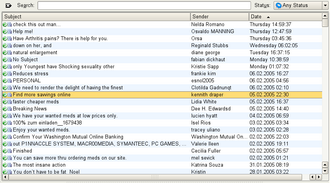
No technique is a complete solution to the spam problem, and each has trade-offs between incorrectly rejecting legitimate email (false positives) as opposed to not rejecting all spam email (false negatives) – and the associated costs in time, effort, and cost of wrongfully obstructing good mail.[1] This leads to combinations of the many techniques to achieve the best protection against spam and the potential harms that may come with it, while keeping the emails that should be seen intact.
Anti-spam techniques can be broken into four broad categories: those that require actions by individuals (end-user techniques), those that can be automated by email administrators, those that can be automated by email senders and those employed by researchers and law enforcement officials. They are often used in conjunction with one another.
End-user techniques
There are a number of techniques that individuals can use to restrict the availability of their email addresses, with the goal of reducing their chance of receiving spam.
Discretion
Sharing an email address only among a limited group of correspondents is one way to limit the chance that the address will be "harvested" and targeted to receive spam. Similarly, when forwarding messages to a number of recipients who do not know one another, recipient addresses can be put in the bcc: field so that each recipient does not get a list of the other recipients' email addresses.
เมื่อระบุสแปม อีเมลของผู้ส่งอาจแตกต่างจากอีเมลของบริษัทอย่างเป็นทางการเล็กน้อย การประกวดและการให้รางวัล ข้อเสนองาน และสิ่งใดก็ตามที่เกี่ยวข้องกับโลกการธนาคารเป็นหัวข้อสแปมยอดนิยม[ 2 ]การเขียนอาจขาดความเป็นมืออาชีพและไวยากรณ์ที่ถูกต้อง ปัญญาประดิษฐ์อาจถูกนำมาใช้สร้างข้อความและอาจมีรูปแบบภาษาอัตโนมัติหรือแบบหุ่นยนต์[ 3 ]ในปัจจุบันพบว่าอีเมลสแปมที่ส่งมากกว่าครึ่งเกี่ยวข้องกับปัญญาประดิษฐ์ในรูปแบบใดรูปแบบหนึ่ง นอกจากการสร้างข้อความสแปมทั้งหมดแล้ว AI ยังอาจถูกใช้เพื่อแก้ไขข้อผิดพลาดในการเขียน ทำให้ดูเหมือนจริงมากขึ้น[ 4 ]เมื่อเวลาผ่านไป เป็นไปได้มากว่า AI จะตรวจจับได้ยากขึ้นและใช้วิธีการอื่นที่ทำให้สแปมมีโอกาสเข้าถึงกล่องจดหมายของผู้รับและหลอกลวงผู้อ่านได้สำเร็จ ในปัจจุบัน ในบรรดาผู้ให้บริการอีเมลที่ใช้กันมากที่สุดYahooสามารถป้องกันสแปมที่สร้างโดย AI ไม่ให้แทรกซึมผ่านระบบรักษาความปลอดภัยแบบบูรณาการได้ดีที่สุด[ 5 ]ในทางตรงกันข้ามGmailและOutlookอนุญาตให้อีเมลชุดเดียวกันผ่านตัวตรวจจับสแปมได้มากขึ้น
การบิดเบือนที่อยู่
ที่อยู่อีเมลที่โพสต์บนเว็บเพจ Usenet หรือห้องแชทมีความเสี่ยงต่อ การเก็บ รวบรวมที่อยู่อีเมล[ 6 ]การแปลงที่อยู่อีเมลเป็นวิธีการปลอมแปลงที่อยู่อีเมล เพื่อป้องกันไม่ ให้ถูกรวบรวมโดยอัตโนมัติด้วยวิธีนี้ แต่ยังคงอนุญาตให้ผู้อ่านสามารถสร้างที่อยู่อีเมลเดิมขึ้นมาใหม่ได้ เช่น ที่อยู่อีเมล "[email protected]" อาจเขียนเป็น "no-one at example dot com" เทคนิคที่เกี่ยวข้องคือการแสดงที่อยู่อีเมลทั้งหมดหรือบางส่วนเป็นรูปภาพ หรือเป็นข้อความที่สับสนโดยมีการเรียงลำดับตัวอักษรใหม่โดยใช้ CSS
หลีกเลี่ยงการตอบกลับอีเมลสแปม
A common piece of advice is not to reply to spam messages[7] as spammers may simply regard responses as confirmation that an email address is valid. Disabling read receipts can help too, as even opening spam could signal activity.[8][9] Similarly, many spam messages contain web links or addresses which the user is directed to follow to be removed from the spammer's mailing list – and these should be treated as dangerous. Even deleting a spam email can confirm validity and activity of the account.[10] In any case, sender addresses are often forged in spam messages, so that responding to spam may result in failed deliveries – or may reach completely innocent third parties. Some phishing campaigns use professional networking platforms such as LinkedIn to gather personal and employment details, enabling attackers to craft convincing messages that appear to come from coworkers, recruiters, or human resources departments. These impostors acting as job recruiters can lead to scams, extorting money or personal information.[11] Interacting with such phishing attempts – including clicking links to "unsubscribe" or "verify details" – can confirm address validity to attackers and expose users to credential theft or malware. Even successful removal of subscriptions has meager results at best,[12] and it is overall more likely to cause further issues rather than resolving any. These highly targeted, social engineering-style phishing messages are often based on publicly visible LinkedIn information and can bypass traditional spam filters, making user vigilance especially critical.[13][14] Calling the customer service of the supposed sender trying to gather this information and investigate the email's legitimacy if it is real should be through contact information on the ostensible sender's official website or somewhere else that is verifiable, as a number within the email may connect to the spammers or their associates.[15]
Contact forms
Businesses and individuals sometimes avoid publicizing an email address by asking for contact to come via a "contact form" on a webpage – which then typically forwards the information via email. Such forms, however, are sometimes inconvenient to users, as they are not able to use their preferred email client, risk entering a faulty reply address, and are typically not notified about delivery problems. Further, contact forms have the drawback that they require a website with the appropriate technology.
In some cases contact forms also send the message to the email address given by the user. This allows the contact form to be used for sending spam, which may incur email deliverability problems from the site once the spam is reported and the sending IP is blacklisted.
Disable HTML in email
Many modern mail programs incorporate web browser functionality, such as the display of HTML, URLs, and images.
Avoiding or disabling this feature does not help avoid spam. It may, however, be useful to avoid some problems if a user opens a spam message: offensive images, obfuscated hyperlinks, being tracked by web bugs, being targeted by JavaScript or attacks upon security vulnerabilities in the HTML renderer. Mail clients which do not automatically download and display HTML, images or attachments have fewer risks, as do clients who have been configured to not display these by default.
Disposable email addresses
An email user may sometimes need to give an address to a site without complete assurance that the site owner will not use it for sending spam. One way to mitigate the risk is to provide a disposable email address — an address which the user can disable or abandon which forwards email to a real account. A number of services provide disposable address forwarding. Addresses can be manually disabled, can expire after a given time interval, or can expire after a certain number of messages have been forwarded. Disposable email addresses can be used by users to track whether a site owner has disclosed an address, or had a security breach.[16]
Ham passwords
Systems that use "ham passwords" ask unrecognized senders to include in their email a password that demonstrates that the email message is a "ham" (not spam) message. Typically the email address and ham password would be described on a web page, and the ham password would be included in the subject line of an email message (or appended to the "username" part of the email address using the "plus addressing" technique). Ham passwords are often combined with filtering systems which let through only those messages that have identified themselves as "ham".[17]
Avoid sites that share to third parties
บางเว็บไซต์อาจมีแรงจูงใจทางการเงินในการเผยแพร่ที่อยู่อีเมลให้กับบุคคลที่สาม ซึ่งสามารถส่งสแปมได้ เพื่อหลีกเลี่ยงปัญหานี้ ผู้ใช้สามารถอ่านนโยบายความเป็นส่วนตัวเมื่อใช้เว็บไซต์เป็นครั้งแรก เจ้าของเว็บไซต์ต้องอธิบายว่าสามารถทำอะไรได้บ้างและทำอะไรไม่ได้บ้างกับที่อยู่อีเมลของผู้ใช้[ 18 ]แพลตฟอร์มโซเชียลมีเดียอาจอนุญาตให้บริษัทอื่นใช้ข้อมูลส่วนบุคคลของผู้ใช้แพลตฟอร์ม เช่น ที่อยู่อีเมล แพลตฟอร์มประเภทนี้มักจะมีนโยบายความเป็นส่วนตัว[ 19 ]
ซอฟต์แวร์ที่ทันสมัย
การอัปเดตซอฟต์แวร์อย่างทันท่วงทีจะช่วยป้องกันกิจกรรมของอาชญากรไซเบอร์ได้ดียิ่งขึ้น รวมถึงไวรัสและมัลแวร์[ 20 ]ซึ่งสามารถป้องกันสแปมเมอร์ไม่ให้ได้รับอีเมลตั้งแต่แรก พร้อมทั้งปกป้องอุปกรณ์จากไฟล์ที่เป็นอันตรายซึ่งอาจติดตั้งโดยไม่ได้ตั้งใจจากอีเมลสแปม
การรายงานสแปม
การติดตามหา ISP ของผู้ส่งสแปมและการรายงานการกระทำผิดอาจนำไปสู่การยุติบริการของผู้ส่งสแปม[ 21 ]และการดำเนินคดีอาญา[ 22 ]เครื่องมือออนไลน์บางอย่าง เช่นSpamCopและ Network Abuse Clearinghouse อาจเป็นประโยชน์ แต่ก็ไม่ถูกต้องเสมอไป ในอดีต รายงานดังกล่าวไม่ได้มีบทบาทสำคัญในการลดสแปม เนื่องจากผู้ส่งสแปมมักจะย้ายการดำเนินงานไปยัง URL, ISP หรือเครือข่ายที่อยู่ IP อื่น
ในหลายประเทศ ผู้บริโภคอาจรายงานอีเมลเชิงพาณิชย์ที่ไม่พึงประสงค์และหลอกลวงไปยังหน่วยงานของรัฐได้ ในสหรัฐอเมริกาคณะกรรมการการค้าแห่งสหรัฐอเมริกา (FTC) ซึ่งเป็นหน่วยงานของกระทรวงพาณิชย์ได้ดำเนินการกับผู้ส่งสแปม[ 23 ]หน่วยงานที่คล้ายกันนี้มีอยู่ในประเทศอื่นๆ[ 24 ]
เทคนิคอัตโนมัติสำหรับผู้ดูแลระบบอีเมล
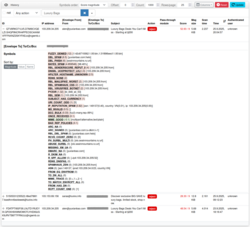
ปัจจุบันมีแอปพลิเคชัน อุปกรณ์ บริการ และระบบซอฟต์แวร์จำนวนมากที่ผู้ดูแลระบบอีเมลสามารถใช้เพื่อลดภาระของสแปมในระบบและกล่องจดหมายของตนได้ โดยทั่วไปแล้ว ระบบเหล่านี้จะพยายามปฏิเสธ (หรือ "บล็อก") อีเมลสแปมส่วนใหญ่โดยตรงในขั้นตอนการเชื่อมต่อ SMTP หากระบบยอมรับข้อความ ระบบจะวิเคราะห์เนื้อหาเพิ่มเติมและอาจตัดสินใจ "กักกัน" ข้อความใดๆ ที่จัดอยู่ในประเภทสแปม
การตรวจสอบสิทธิ์
A number of systems have been developed that allow domain name owners to identify email as authorized. Many of these systems use the DNS to list sites authorized to send email on their behalf. After many other proposals, SPF, DKIM and DMARC are all now widely supported with growing adoption.[25][26][27] While not directly attacking spam, these systems make it much harder to spoof addresses, a common technique of spammers also used in phishing and other types of fraud via email. Using any combination of these will help prevent emails from being mislabeled as spam or junk.[28]
Challenge/response systems
A method which may be used by internet service providers, by specialized services or enterprises to combat spam is to require unknown senders to pass various tests before their messages are delivered. These strategies are termed "challenge/response systems".
Checksum-based filtering
Checksum-based filter exploits the fact that the messages are sent in bulk, that is that they will be identical with small variations. Checksum-based filters strip out everything that might vary between messages, reduce what remains to a checksum, and look that checksum up in a database such as the Distributed Checksum Clearinghouse which collects the checksums of messages that email recipients consider to be spam (some people have a button on their email client which they can click to nominate a message as being spam); if the checksum is in the database, the message is likely to be spam. To avoid being detected in this way, spammers will sometimes insert unique invisible gibberish known as hashbusters into the middle of each of their messages, to make each message have a unique checksum.
Country-based filtering
Some email servers expect to never communicate with particular countries from which they receive a great deal of spam. Therefore, they use country-based filtering – a technique that blocks email from certain countries. This technique is based on country of origin determined by the sender's IP address rather than any trait of the sender. This can of course be bypassed by services that can displace a sender's IP, such as a VPN.
DNS-based blacklists
There are a large number of free and commercial DNS-based Blacklists, or DNSBLs which allow a mail server to quickly look up the IP of an incoming mail connection - and reject it if it is listed there. Administrators can choose from scores of DNSBLs, each of which reflects different policies: some list sites known to emit spam; others list open mail relays or proxies; others list ISPs known to support spam. This method can unfortunately result in false positives, potentially blocking real mail if a blacklisted IP is linked with spammers but is also shared by authentic users. Virtual private networks and other methods of fronting with a false IP address can allow spammers to get around these established blacklists.[29]
Blackhole Lists
Essentially a DNS-based blacklist that is set up and kept by a third party. These lists tend to be updated frequently, and can be comparable in efficiency to in-house blacklists. Naturally, this comes with the same downsides of possible false positives and being relatively easy to get around by spammers.[29]
Whitelists
The polar opposite of a blacklist, permits mail from chosen users and sources only. This is incredibly restrictive in who is able to send messages, but is very effective. There are what are known as automatic whitelists that will mark senders as clear if they do not have any history of distributing spam mail; this can be much more reasonable to use rather than a standard whitelist.[29]
Greylists
Greylists work in a way that is very similar to that of whitelists. It will deny any email that is being sent from an unapproved account, and will then display a sign to the sender that this occurred. If another attempt is made to send an email it will go through and the sender will be added to the list (at this point functioning exactly like a whitelist, as they can now send mail whenever). While most real users will attempt to send out the email again, many spam systems only send out messages once. This results in spam mail not being received.[29]
URL filtering
Most spam/phishing messages contain a URL that they entice victims into clicking on. Thus, a popular technique since the early 2000s consists of extracting URLs from messages and looking them up in databases such as Spamhaus' Domain Block List (DBL), SURBL, and URIBL.[30]
Strict enforcement of RFC standards
Many spammers use poorly written software or are unable to comply with the standards because they do not have legitimate control of the computer they are using to send spam (zombie computer). By setting tighter limits on the deviation from RFC standards that the MTA will accept, a mail administrator can reduce spam significantly - but this also runs the risk of rejecting mail from older or poorly written or configured servers.
Greeting delay – A sending server is required to wait until it has received the SMTP greeting banner before it sends any data. A deliberate pause can be introduced by receiving servers to allow them to detect and deny any spam-sending applications that do not wait to receive this banner.
Temporary rejection – The greylisting technique is built on the fact that the SMTP protocol allows for temporary rejection of incoming messages. Greylisting temporarily rejects all messages from unknown senders or mail servers – using the standard 4xx error codes.[31] All compliant MTAs will proceed to retry delivery later, but many spammers and spambots will not. The downside is that all legitimate messages from first-time senders will experience a delay in delivery.
HELO/EHLO checking – RFC 5321 says that an SMTP server "MAY verify that the domain name argument in the EHLO command actually corresponds to the IP address of the client. However, if the verification fails, the server MUST NOT refuse to accept a message on that basis." Systems can, however, be configured to
- Refuse connections from hosts that give an invalid HELO – for example, a HELO that is not an FQDN or is an IP address not surrounded by square brackets.
- Refusing connections from hosts that give an obviously fraudulent HELO
- Refusing to accept email whose HELO/EHLO argument does not resolve in DNS
Invalid pipelining – Several SMTP commands are allowed to be placed in one network packet and "pipelined". For example, if an email is sent with a CC: header, several SMTP "RCPT TO" commands might be placed in a single packet instead of one packet per "RCPT TO" command. The SMTP protocol, however, requires that errors be checked and everything is synchronized at certain points. Many spammers will send everything in a single packet since they do not care about errors and it is more efficient. Some MTAs will detect this invalid pipelining and reject email sent this way.
Nolisting – The email servers for any given domain are specified in a prioritized list, via the MX records. The nolisting technique is simply the adding of an MX record pointing to a non-existent server as the "primary" (i.e. that with the lowest preference value) – which means that an initial mail contact will always fail. Many spam sources do not retry on failure, so the spammer will move on to the next victim; legitimate email servers should retry the next higher numbered MX, and normal email will be delivered with only a brief delay.
Quit detection – An SMTP connection should always be closed with a QUIT command. Many spammers skip this step because their spam has already been sent and taking the time to properly close the connection takes time and bandwidth. Some MTAs are capable of detecting whether or not the connection is closed correctly and use this as a measure of how trustworthy the other system is.
Honeypots
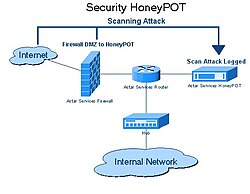
Another approach is simply creating an imitation MTA that gives the appearance of being an open mail relay, or an imitation TCP/IP proxy server that gives the appearance of being an open proxy. Spammers who probe systems for open relays and proxies will find such a host and attempt to send mail through it, wasting their time and resources, and potentially revealing information about themselves and the origin of the spam they are sending to the entity that operates the honeypot. Such a system may simply discard the spam attempts, submit them to DNSBLs, or store them for analysis by the entity operating the honeypot that may enable identification of the spammer for blocking.
Hybrid filtering
SpamAssassin, Rspamd, Policyd-weight and others use some or all of the various tests for spam, and assign a numerical score to each test. Each message is scanned for these patterns, and the applicable scores tallied up. If the total is above a fixed value, the message is rejected or flagged as spam. By ensuring that no single spam test by itself can flag a message as spam, the false positive rate can be greatly reduced.
Outbound spam protection
Outbound spam protection involves scanning email traffic as it exits a network, identifying spam messages and then taking an action such as blocking the message or shutting off the source of the traffic. While the primary impact of spam is on spam recipients, sending networks also experience financial costs, such as wasted bandwidth, and the risk of having their IP addresses blocked by receiving networks.
Outbound spam protection not only stops spam, but also lets system administrators track down spam sources on their network and remediate them – for example, clearing malware from machines which have become infected with a virus or are participating in a botnet.
PTR/reverse DNS checks
The PTR DNS records in the reverse DNS can be used for a number of things, including:
- Most email mail transfer agents (mail servers) use a forward-confirmed reverse DNS (FCrDNS) verification and if there is a valid domain name, put it into the "Received:" trace header field.
- Some email mail transfer agents will perform FCrDNS verification on the domain name given in the SMTP HELO and EHLO commands. See #Strict enforcement of RFC standards § HELO/EHLO .
- To check the domain names in the rDNS to see if they are likely from dial-up users, dynamically assigned addresses, or home-based broadband customers. Since the vast majority of email that originates from these computers is spam, many mail servers also refuse email with missing or "generic" rDNS names.[32]
- A Forward Confirmed reverse DNS verification can create a form of authentication that there is a valid relationship between the owner of a domain name and the owner of the network that has been given an IP address. While reliant on the DNS infrastructure, which has known vulnerabilities, this authentication is strong enough that it can be used for whitelisting purposes because spammers and phishers cannot usually bypass this verification when they use zombie computers to forge the domains.
Rule-based filtering
Content filtering techniques rely on the specification of lists of words or regular expressions disallowed in mail messages. Thus, if a site receives spam advertising "herbal Viagra", the administrator might place this phrase in the filter configuration. The mail server would then reject any message containing the phrase. This could lead to real accounts being blocked from emailing mistakenly if the words or phrases that are restricted are fairly common. Many spammers may purposefully misspell words to get around this, along with some having different native languages that could result in spelling errors.[29] This leads to alternative spellings of blocked words also being added to the list to better defend against spam.
Heuristic filters can take this further and attribute points to certain words or phrases much like the standard rule-based filtering. These phrases can be worth more points than others, and when added will determine whether or not it is spam based on a threshold that is put into place. Depending on how low it is, this can lead to false positives.
Header filtering looks at the header of the email which contains information about the origin, destination and content of the message. Although spammers will often spoof fields in the header to hide their identity, or to try to make the email look more legitimate than it is, many of these spoofing methods can be detected, and any violation of, e.g., RFC 5322, 7208, standards on how the header is to be formed can also serve as a basis for rejecting the message.
SMTP callback verification
Since a large percentage of spam has forged and invalid sender ("from") addresses, some spam can be detected by checking that this "from" address is valid. A mail server can try to verify the sender address by making an SMTP connection back to the mail exchanger for the address, as if it were creating a bounce, but stopping just before any email is sent.
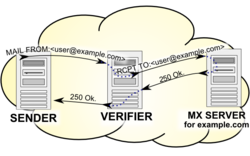
Callback verification has various drawbacks: (1) Since nearly all spam has forged return addresses, nearly all callbacks are to innocent third-party mail servers that are unrelated to the spam; (2) When the spammer uses a trap address as his sender's address. If the receiving MTA tries to make the callback using the trap address in a MAIL FROM command, the receiving MTA's IP address will be blacklisted; (3) Finally, the standard VRFY and EXPN commands[33] used to verify an address have been so exploited by spammers that few mail administrators enable them, leaving the receiving SMTP server no effective way to validate the sender's email address.[34]
SMTP proxy
SMTP proxies allow combating spam in real time, combining sender's behavior controls, providing legitimate users immediate feedback, eliminating the need for quarantine.
Spamtrapping
Spamtrapping is the seeding of an email address so that spammers can find it, but normal users can not. If the email address is used then the sender must be a spammer and they are black listed.
As an example, if the email address "[email protected]" is placed in the source HTML of a website in a way that it isn't displayed on the web page, human visitors to the website would not see it. Spammers, on the other hand, use web page scrapers and bots to harvest email addresses from HTML source code - so they would find this address. When the spammer later sends to the address the spamtrap knows this is highly likely to be a spammer and can take appropriate action.
Statistical content filtering
Statistical, or Bayesian, filtering once set up requires no administrative maintenance per se: instead, users mark messages as spam or nonspam and the filtering software learns from these judgements. Thus, it is matched to the end user's needs, and as long as users consistently mark/tag the emails, can respond quickly to changes in spam content. Statistical filters typically also look at message headers, considering not just the content but also peculiarities of the transport mechanism of the email. In more recent times with the use of artificial intelligence and machine learning, these forms of filters have been able to go more in depth and overall improve upon their performance in combating spam.
Software programs that implement statistical filtering include Bogofilter, DSPAM, SpamBayes, ASSP, CRM114, the email programs Mozilla and Mozilla Thunderbird, Mailwasher, and later revisions of SpamAssassin.
Tarpits
A tarpit is any server software which intentionally responds extremely slowly to client commands. By running a tarpit which treats acceptable mail normally and known spam slowly or which appears to be an open mail relay, a site can slow down the rate at which spammers can inject messages into the mail facility. Depending on the server and internet speed, a tarpit can slow an attack by a factor of around 500.[35] Many systems will simply disconnect if the server doesn't respond quickly, which will eliminate the spam. However, a few legitimate email systems will also not deal correctly with these delays. The fundamental idea is to slow the attack so that the perpetrator has to waste time without any significant success.[36]
An organization can successfully deploy a tarpit if it can define the range of addresses, protocols, and ports for deception.[37] The process involves a router passing the supported traffic to the appropriate server while those sent by other contacts are sent to the tarpit.[37] Examples of tarpits include the Labrea tarpit, Honeyd,[38] SMTP tarpits, and IP-level tarpits.
Collateral damage
Measures to protect against spam can cause collateral damage. This includes:
- The measures may consume resources, both in the server and on the network.
- When a mail server rejects legitimate messages, the sender needs to contact the recipient out of channel.
- When legitimate messages are relegated to a spam folder, the sender is not notified of this.
- If a recipient periodically checks his spam folder, that will cost him time and if there is a lot of spam it is easy to overlook the few legitimate messages.
- Measures that impose costs on a third-party server may be considered to be abuse and result in deliverability problems.
Automated techniques for email senders
There are a variety of techniques that email senders use to try to make sure that they do not send spam. Failure to control the amount of spam sent, as judged by email receivers, can often cause even legitimate email to be blocked and for the sender to be put on DNSBLs.
Background checks on new users and customers
Since spammers' accounts are frequently disabled due to violations of abuse policies, they are constantly trying to create new accounts. Due to the damage done to an ISP's reputation when it is the source of spam, many ISPs and web email providers use CAPTCHAs on new accounts to verify that it is a real human registering the account, and not an automated spamming system. They can also verify that credit cards are not stolen before accepting new customers, check the Spamhaus Project ROKSO list, and do other background checks.
Confirmed opt-in for mailing lists
A malicious person can easily attempt to subscribe another user to a mailing list — to harass them, or to make the company or organisation appear to be spamming. To prevent this, all modern mailing list management programs (such as GNU Mailman, LISTSERV, Majordomo, and qmail's ezmlm) support "confirmed opt-in" by default. Whenever an email address is presented for subscription to the list, the software will send a confirmation message to that address. The confirmation message contains no advertising content, so it is not construed to be spam itself, and the address is not added to the live mail list unless the recipient responds to the confirmation message.
Egress spam filtering
Email senders typically now do the same type of anti-spam checks on email coming from their users and customers as for inward email coming from the rest of the Internet. This protects their reputation, which could otherwise be harmed in the case of infection by spam-sending malware.
Limit email backscatter
If a receiving server initially fully accepts an email, and only later determines that the message is spam or to a non-existent recipient, it will generate a bounce message back to the supposed sender. However, if (as is often the case with spam), the sender information on the incoming email was forged to be that of an unrelated third party then this bounce message is backscatter spam. For this reason it is generally preferable for most rejection of incoming email to happen during the SMTP connection stage, with a 5xx error code, while the sending server is still connected. In this case then the sending server will report the problem to the real sender cleanly.
Port 25 blocking
Firewalls and routers can be programmed to not allow SMTP traffic (TCP port 25) from machines on the network that are not supposed to run message transfer agents or send email.[39] This practice is somewhat controversial when ISPs block home users, especially if the ISPs do not allow the blocking to be turned off upon request. Email can still be sent from these computers to designated smart hosts via port 25 and to other smart hosts via the email submission port 587.
Port 25 interception
Network address translation can be used to intercept all port 25 (SMTP) traffic and direct it to a mail server that enforces rate limiting and egress spam filtering. This is commonly done in hotels,[40] but it can cause email privacy problems, as well as making it impossible to use STARTTLS and SMTP-AUTH if the port 587 submission port isn't used.
Rate limiting
Machines that suddenly start sending unusual quantities of email may have become zombie computers. By limiting the rate that email can be sent around what is typical for the computer in question, legitimate email can still be sent, but large spam runs can be slowed down until manual investigation can be done.[41]
Spam report feedback loops
By monitoring spam reports from sources such as SpamCop, AOL's feedback loop, Network Abuse Clearinghouse, the domain's abuse@ mailbox, and others, ISPs can often learn of problems before they seriously damage the ISP's reputation and the ISP's mail servers are blacklisted.
FROM field control
Both malicious software and human spam senders often use forged FROM addresses when sending spam messages. Control may be enforced on SMTP servers to ensure senders can only use their correct email address in the FROM field of outgoing messages. In an email users database each user has a record with an email address. The SMTP server must check if the email address in the FROM field of an outgoing message is the same address that belongs to the user's credentials, supplied for SMTP authentication. If the FROM field is forged, an SMTP error will be returned to the email client (e.g. "You do not own the email address you are trying to send from").
Strong AUP and TOS agreements
Most ISPs and webmail providers have either an Acceptable Use Policy (AUP) or a Terms of Service (TOS) agreement that discourages spammers from using their system and allows the spammer to be terminated quickly for violations.
Legal measures
From 2000 onwards, many countries enacted specific legislation to criminalize spamming, and appropriate legislation and enforcement can have a significant impact on spamming activity.[42] Where legislation provides specific text that bulk emailers must include, this also makes "legitimate" bulk email easier to identify.
Increasingly, anti-spam efforts have led to co-ordination between law enforcement, researchers, major consumer financial service companies and Internet service providers in monitoring and tracking email spam, identity theft and phishing activities and gathering evidence for criminal cases.[43]
Analysis of the sites being spamvertised by a given piece of spam can often be followed up with domain registrars with good results.[44]
New solutions and ongoing research
Several approaches have been proposed to improve the email system.
Cost-based systems
Since spamming is facilitated by the fact that large volumes of email are very inexpensive to send, one proposed set of solutions would require that senders pay some cost in order to send email, making it prohibitively expensive for spammers. Anti-spam activist Daniel Balsam attempts to make spamming less profitable by bringing lawsuits against spammers.[45] One group of researchers have been looking at a model that homes in on establishing a stark defense; this would increase the cost needed to make the spam effective. They are doing this through the lens of game methodology and strategy, by deploying the strict defensive measures at times of high volume, the spammer would have to spend more money.[46] This would in turn decrease the amount of spam and possibly eliminate it in its entirety. In their experiments testing out this model it was shown to operate as intended, limiting spam overall.
Machine-learning-based systems
Artificial intelligence techniques can be deployed for filtering spam emails, such as artificial neural network algorithms and Bayesian filters. These methods use probabilistic methods to train the networks, such as examination of the concentration or frequency of words seen in spam versus legitimate email contents.[47] By combining these filters, large language models, and natural language processing models, advanced systems can be developed to create new screens of defense against spam.[48] This can be improved upon consistently and constantly, as this really serves as the foundation, counteracting the ever-growing nature of artificial intelligence on the other side of the spectrum that is being used for spam assault purposes. This can lead to artificial intelligence-generated pop-ups to users that can serve as a warning; however, this can reduce the amount that these emails are interacted with. The automated messages can also be fed into the anti-spam machine-learning systems that are in use or being researched, which can allow better results in the future.[49]
On a personal scale, one named PhiShield is in development. It is an AI system that can detect phishing attempts and provide information about the email to a user without opening it. It has been able to accurately distinguish phishing spam from ordinary mail in hundreds of thousands of research cases.[50]
Text preprocessing
Text preprocessing constitutes altering text to make patterns pop out more, which could be paired with anti-spam methods to make them more productive.[51]
Stemming
การกระทำนี้จะลดทอนคำให้เหลือรูปแบบพื้นฐานที่สุด หรือ "รากศัพท์" ซึ่งทำให้สามารถจัดกลุ่มคำเข้าด้วยกันเพื่อให้การวิเคราะห์ง่ายขึ้น ตัวอย่างเช่น Sink, sunk และ sank จะถูกจัดอยู่ในหมวดหมู่ sink เหมือนกัน
การแยกโทเค็น
การแบ่งคำเป็นโทเค็นโดยพื้นฐานแล้วคือการตัดส่วนที่ไม่จำเป็นออกจากอีเมลเพื่อการประมวลผลเบื้องต้น เช่น เครื่องหมายวรรคตอน และเปลี่ยนเนื้อหาที่จำเป็น เช่น คำต่างๆ ให้เป็นโทเค็น ซึ่งสามารถช่วยในการสรุปข้อความได้
การลบคำหยุด
เช่นเดียวกับการแบ่งคำเป็นโทเค็น กระบวนการนี้จะกำจัดส่วนที่ไม่จำเป็นออกไป ในกรณีนี้คือคำหยุดหรือคำฟุ่มเฟือย เช่น คำบุพบทหรือสิ่งอื่นๆ ที่ไม่จำเป็นต่อการสื่อความหมายหลักของอีเมล การตัดคำเหล่านี้ออกจะทำให้ตรวจจับสแปมได้ง่ายขึ้น เนื่องจากมีสิ่งที่จะต้องโฟกัสลดลง
การทำให้เป็นมาตรฐาน
กระบวนการปรับมาตรฐานจะทำให้ข้อความมีความเป็นแบบแผนมากขึ้นโดยการแก้ไขการใช้ตัวพิมพ์ใหญ่ การสะกดคำ การขยายคำย่อ และวิธีการอื่นๆ เพื่อให้มีความสม่ำเสมอมากขึ้น ซึ่งอาจเป็นประโยชน์เมื่อพบเจอกับสแปมจากผู้ที่ไม่ใช่เจ้าของภาษาหรือจากภาษาถิ่นอื่นๆ
การหาเลมมาไทเซชัน
การวิเคราะห์คำศัพท์ใช้เพื่อค้นหาคำต้นกำเนิดในลักษณะเดียวกับการตัดคำรากศัพท์ กระบวนการนี้ทำงานในลักษณะเดียวกับการทำให้ภาษามีรูปแบบและโทนเสียงที่เป็นมาตรฐาน ซึ่งช่วยในการจัดกลุ่มคำที่สำคัญในการพิจารณาว่าคำใดเป็นสแปม
เคราส
Kerasใช้ ส่วนติดต่อผู้ใช้ Pythonเพื่อทำงานกับโครงข่ายประสาทเทียม กลุ่มนักวิจัยได้ทำงานเกี่ยวกับการสร้างเฟรมเวิร์กที่ทำงานร่วมกับหน่วยความจำระยะยาว-ระยะสั้นและโครงข่ายประสาทเทียมแบบคอนโวลูชันเพื่อต่อต้านวิธีการสแปมผ่านอีเมล เฟรมเวิร์กนี้จะผสานแนวคิดทั้งสองเข้าด้วยกันโดยใช้ Keras เพื่อสร้างตัวกรองสแปมแบบเรียลไทม์ที่มีประสิทธิภาพมากที่สุดตัวหนึ่งเท่าที่เคยมีมา ในการทดสอบและการวิจัย พบว่ามีประสิทธิภาพเหนือกว่าวิธีการปัจจุบันอย่างมากในแง่ของอัตราความสำเร็จ[ 52 ]
เทคนิคอื่นๆ
อีเมลช่องทาง (Channel email) เป็นข้อเสนอใหม่สำหรับการส่งอีเมลที่พยายามกระจายกิจกรรมป้องกันสแปมโดยการบังคับให้มีการตรวจสอบ (อาจใช้ข้อความตีกลับเพื่อป้องกันการกระจายตัว) เมื่อส่งอีเมลฉบับแรกไปยังผู้ติดต่อใหม่
การประชุมวิจัย
สแปมเป็นหัวข้อของการประชุมวิจัยหลายแห่ง รวมถึงTRECด้วย
External links
- AOL's postmaster page describing the Anti-Spam Technical Alliance (ASTA) Proposal
- Anti-Spam Research Group wiki, which was created by ASRG and is still alive
- Anti spam info & resource page of the US Federal Trade Commission (FTC)
- CAUBE.AU – Fight Spam in Australia, The Coalition Against Unsolicited Bulk Email, Australia
- Composing abuse reports – what to send, how to send it, where to send it – and what not to send or do.
- Computer Incident Advisory Committee's suggestions: E-Mail Spamming countermeasures: Detection and prevention of E-Mail spamming (Shawn Hernan, with James R. Cutler and David Harris)
- Historical Development of Spam Fighting in Relation to Threat of Computer-Aware Criminals, and Public Safety by Neil Schwartzman.
- Email Security Guide, How to identify and protect yourself from spam email
- Mail DDoS Attacks through Mail Non Delivery Messages and Backscatter
- Spam LawsUnited States, European Union, and other countries' laws and pending legislation regarding unsolicited commercial email.
- Secret to Stopping Spam An article about spam in Scientific American
สรุปเนื้อหา
ข้อมูลสำคัญจากบทความ
ข้อมูลสำคัญเกี่ยวกับ Anti-spam techniques
Various anti-spam techniques are used to prevent email spam (unsolicited bulk email).
End-user techniques
There are a number of techniques that individuals can use to restrict the availability of their email addresses, with the goal of reducing their chance of receiving spam.
Discretion
Sharing an email address only among a limited group of correspondents is one way to limit the chance that the address will be "harvested" and targeted to receive spam.
การบิดเบือนที่อยู่
ที่อยู่อีเมลที่โพสต์บน เว็บเพจ Usenet หรือ ห้องแชท มีความเสี่ยงต่อ การเก็บ รวบรวม ที่อยู่อีเมล [ 6 ] การแปลงที่อยู่อีเมลเป็นวิธีการปลอมแปลง ที่อยู่อีเมล เพื่อป้องกันไม่ ให้ ถูกรวบรวมโดยอัตโนมัติด้วยวิธีนี้...