
Ardagh Hoard
The Ardagh Hoard, best known for the Ardagh Chalice, is a hoard of metalwork from the 8th and 9th centuries. Found in 1868 by two young local boys, Jim Quin and Paddy Flanagan, it is now on display in the National Museum of Ireland in Dublin. It consists of the chalice, a much plainer stemmed cup in copper-alloy, and four brooches – three elaborate pseudo-penannular ones, and one a true pennanular brooch of the thistle type; this is the latest object in the hoard, and suggests it may have been deposited around 900 AD.[1]
The chalice ranks with the Book of Kells as one of the finest known works of metal Insular art, indeed of Celtic art in general, and is thought to have been made in the 8th century AD. Elaborate brooches, essentially the same as those worn by important laypeople, appear to have been worn by monastic clergy to fasten vestments of the period.
Find

The hoard was found in late September 1868 by two boys, Jim Quin and Paddy Flanagan, digging in a potato field on the south-western side of a rath (ring fort) called Reerasta, beside the village of Ardagh, County Limerick, Ireland. Flanagan remained in Ireland and is buried in the Pauper's Graveyard in Newcastle West. Quin imigrated to Australia, spending his later years in Melbourne. He is buried in Fawkner Memorial Park in the city following his death there in 1934.
The chalice held the other items, covered merely by a slab of stone; the pieces must have been interred in a hurry, probably temporarily, as though the owner probably intended to return for them at a later time. The age of the brooches found with the chalice is evidence that it was not buried until the Viking period. It was sold to George Butler, Catholic Bishop of Limerick, by Quin's mother.
Chalice
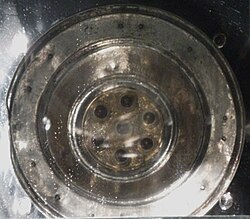
The chalice is a large, two-handled beaten silver cup, decorated with gold, gilt bronze, brass, lead pewter and enamel, which has been assembled from 354 separate pieces; this complex construction is typical of early Christian Irish metalwork. The main body of the chalice is formed from two hemispheres of sheet silver joined with a rivet hidden by a gilt-bronze band and sits at 7 inches high.[2] The width across its rim is 7.5 inches (190 mm).[3] The names of the apostles are incised in a frieze around the bowl, below a girdle bearing inset gold wirework panels of animals, birds, and geometric interlace.[4] Techniques used include hammering, engraving, lost-wax casting, filigreeapplique, cloisonné and enamel. Even the underside of the chalice is decorated (photo above).
According to the art historian Lawrence Stone (writing before the discovery of the Derrynaflan Hoard): "Here the Irish artist has shown a capacity for classical restraint by a deliberate decision to prevent the ornamentation from spreading so copiously as to blur the proportions... contrasting markedly with the lavish ornamental spread of the almost contemporary Tara Brooch and the still more elaborate systems of the later period. The bulk of the decoration consists of exquisitely drawn spiral or interlace patterns, given depth by the soldering of two layers of gold thread one on top of the other. At intervals are set cloisonné enamel bosses of blue and red, the complicated manufacture of which shows direct continuity with the Anglo-Saxon jewelers' craft of the preceding century. But apart from the extraordinary perfection of execution of this elaborate decoration, what gives to the Ardagh Chalice its outstanding position in Irish metalwork is the strictness of the relationship between the simple swelling lines of the cup and its base and the arrangement of the glittering studs, bands, and roundels that adorn its surface."[5] The standard monograph is L.S. Gógan, The Ardagh Chalice.
ถ้วยศักดิ์สิทธิ์นี้มีลักษณะคล้ายกับตัวอย่างสำคัญอื่นๆ ของไอร์แลนด์ยุคต้นที่ยังหลงเหลืออยู่ คือถ้วยศักดิ์สิทธิ์เดอร์รีนาฟลาน ซึ่ง พบในเคาน์ตีทิปเปอเรรีที่อยู่ใกล้เคียง ถ้วย ศักดิ์สิทธิ์ นั้นถูกพบพร้อมกับจานรองและที่กรองสำหรับพิธีกรรม ในเวลานั้น ราชวงศ์ที่ปกครองในทิปเปอเรรีและส่วนใหญ่ของมุนสเตอร์คือราชวงศ์เอโอแกนัคตาในขณะที่พันธมิตรและญาติที่เป็นไปได้ของพวกเขาคือ ราชวงศ์ อูอีฟิดเจนติปกครองในพื้นที่ลิเมอริก (ดู Byrne 2001; Begley 1906) แม้ว่าข้อเสนอแนะในยุคแรกๆ ที่ว่าถ้วยศักดิ์สิทธิ์นี้ถูกสร้างขึ้นที่คลอนแม็กนอยส์และถูกขโมยไปจากที่นั่นโดยชาวเดนมาร์กจากลิเมอริกจะแพร่หลาย แต่ก็ไม่สามารถพิสูจน์ได้ ต้นกำเนิดจากมุนสเตอร์มีความเป็นไปได้พอๆ กันหรืออาจมากกว่าด้วยซ้ำ เมื่อพิจารณาจากการค้นพบสมบัติเดอร์รีนาฟลานที่เป็นญาติกันในปี 1980 ไม่มีการกล่าวถึงต้นกำเนิดจากคลอนแม็กนอยส์ในเว็บไซต์ของพิพิธภัณฑ์แห่งชาติไอร์แลนด์[ 6 ]
ถ้วยศักดิ์สิทธิ์นี้ปรากฏอยู่บนแสตมป์ไปรษณีย์ มูลค่า 1 ปอนด์ ที่ออกโดยAn Postระหว่างปี 1990 ถึง 1995 ซึ่งเป็นส่วนหนึ่งของชุดมรดกและสมบัติของไอร์แลนด์ที่ออกแบบโดย Michael Craig [ 7 ] ถ้วยรางวัล ของสมาคมกีฬาเกลิกสองรายการมีรูปแบบตามถ้วยศักดิ์สิทธิ์นี้ ได้แก่ถ้วย O'Duffyและถ้วย Sam Maguire
หมายเหตุ
- ↑ NMI, 185
- ↑ "ถ้วยอาร์ดาห์ งานศิลปะเซลติกของชาวไอริช ความสูง 7 นิ้ว"คอลเลกชันดิจิทัลของห้องสมุดสาธารณะนิวยอร์กสืบค้นเมื่อ24 กุมภาพันธ์ 2025
- ↑ O'Brien, Máire ; O'Brien, Conor Cruise (1999) [1972]. "ศาสนาคริสต์จนถึงการมาถึงของชาวนอร์มัน" ไอร์แลนด์: ประวัติศาสตร์ฉบับย่อ (ฉบับพิมพ์ครั้ง ที่ 3 (แก้ไข) และฉบับพิมพ์ซ้ำ) นิวยอร์ก, NY: Thames and Hudsonหน้า34 ISBN 0-500-27379-0.
- ↑ De Breffny, Brian (1983). Ireland: A Cultural Encyclopedia . London: Thames and Hudson. หน้า35.
- ↑สโตน, 18
- ↑ถ้วยอาร์ดาห์; หมายเลขวัตถุ: IA:1874.99พิพิธภัณฑ์แห่งชาติไอร์แลนด์
- ↑ Flannery, Maria (3 กุมภาพันธ์ 2018). "ตราประทับรับรองว่าถ้วยอาร์ดาห์เป็นโบราณวัตถุได้รับการดำเนินการอย่างเป็นทางการจาก An Post" . www.limerickleader.ie . สืบค้นเมื่อ24 กุมภาพันธ์ 2025 .
อ่านเพิ่มเติม
- เบกลีย์, จอห์น, เขตปกครองลิเมอริก ยุคโบราณและยุคกลาง . ดับลิน: บราวน์ แอนด์ โนแลน. 1906.
- Bhreathnach, Edel , "สภาพแวดล้อมทางวัฒนธรรมและการเมืองของการฝังและการผลิตสมบัติที่ค้นพบที่ Reerasta Rath, Ardagh, Co. Limerick" ใน Mark Redknap (บรรณาธิการ), Pattern and Purpose in Insular Art . Oxbow Books. 2001.
- ไบรน์, ฟรานซิส เจ. , กษัตริย์และกษัตริย์ชั้นสูงแห่งไอร์แลนด์ . สำนักพิมพ์โฟร์คอร์ทส์. ฉบับพิมพ์ครั้งที่ 2, 2001.
- ดัฟฟี่, ฌอน (บรรณาธิการ), ไอร์แลนด์ยุคกลาง: สารานุกรม . รูทเลดจ์. 2005.
- โกแกน, เลียม เอส., The Ardagh Chalice . ดับลิน. 2475.
ลิงก์ภายนอก
- ถ้วยอาร์ดาห์ ณ พิพิธภัณฑ์แห่งชาติไอร์แลนด์
- การค้นพบ Ardagh Chalice , Raghnall Ó Floinn , พอดแคสต์ 2019
- ถ้วยศักดิ์สิทธิ์อาร์ดาห์โครงการมรดกสังฆมณฑลลิเมอริก
- แอลเอส โกแกน
- สมบัติล้ำค่าแห่งศิลปะไอริชยุคต้น ตั้งแต่ปี 1500 ก่อนคริสต์ศักราช ถึง 1500 หลังคริสต์ศักราช แคตตาล็อกนิทรรศการจากพิพิธภัณฑ์ศิลปะเมโทรโพลิแทน (มีให้ดาวน์โหลดออนไลน์ในรูปแบบ PDF) ซึ่งมีเนื้อหาเกี่ยวกับขุมทรัพย์อาร์ดาห์ (หมายเลขแคตตาล็อก 33, 34, 40)