
อ่าน 3 นาที
Audio mixing
Audio mixing is the process by which multiple sounds are combined into one or more audio channels.
Audio mixing


Audio mixing is the process by which multiple sounds are combined into one or more audio channels. In the process, a source's volume level, frequency content, dynamics, and panoramic position are manipulated or enhanced. This practical, aesthetic, or otherwise creative treatment is done in order to produce a finished version that is appealing to listeners.
Audio mixing is practiced for music, film, television and live sound. The process is generally carried out by a mixing engineer operating a mixing console or digital audio workstation.
Recorded music


Before the introduction of multitrack recording, all the sounds and effects that were to be part of a recording were mixed together at one time during a live performance. If the sound blend was not satisfactory, or if one musician made a mistake, the selection had to be performed over until the desired balance and performance was obtained. However, with the introduction of multitrack recording, the production phase of a modern recording has radically changed into one that generally involves three stages: recording, overdubbing, and mixdown.[1]
Film and television

During production dialogue recording of actors is done by a person variously known as location sound mixer, production sound or some similar designation. That person is a department head with a crew consisting of a boom operator and sometimes a cable person.
Audio mixing for film and television is a process during the post-production stage of a moving image program by which a multitude of recorded sounds are combined. In the editing process, the source's signal level, frequency content, dynamics, and panoramic position are commonly manipulated and effects added. In video production, this is called sweetening.
กระบวนการนี้เกิดขึ้นบนเวทีผสมเสียง ซึ่งโดยทั่วไปจะอยู่ในสตูดิโอ หรือ โรงภาพยนตร์ที่สร้างขึ้นโดยเฉพาะ หลังจากที่องค์ประกอบภาพได้รับการตัดต่อเป็นเวอร์ชันสุดท้ายแล้ว โดยปกติแล้ววิศวกรจะผสมองค์ประกอบเสียงหลักสี่อย่างที่เรียกว่า สเต็ม ได้แก่ เสียงพูด (บทสนทนา, ADR , เสียงพากย์ฯลฯ) เสียงบรรยากาศ (หรือเสียงประกอบ) เอฟเฟกต์เสียงและดนตรี เมื่อเทคโนโลยีการซิงโครไนซ์หลายเครื่องเริ่มใช้งานได้ ผู้สร้างภาพยนตร์จึงสามารถแบ่งองค์ประกอบออกเป็นหลายม้วนได้ ด้วยการถือกำเนิดของเวิร์กสเตชันดิจิทัลและความซับซ้อนที่เพิ่มขึ้น จำนวนแทร็กที่มากกว่า 100 จึงกลายเป็นเรื่องปกติ
ความเข้าใจบทสนทนา
ตั้งแต่ทศวรรษ 2010 เป็นต้นมา นักวิจารณ์และผู้ชมต่างรายงานว่าบทสนทนาในภาพยนตร์มักจะเข้าใจยากขึ้นเรื่อยๆ เมื่อเทียบกับภาพยนตร์เก่าๆ จนถึงขั้นที่ผู้ชมต้องพึ่งคำบรรยายเพื่อทำความเข้าใจสิ่งที่พูด Ben Pearson จากSlashFilmระบุว่าสาเหตุนี้เกิดจากปัจจัยหลายประการ ซึ่งมีเพียงบางส่วนเท่านั้นที่สามารถแก้ไขได้ด้วยการผสมเสียง: [ 2 ]
- ความไม่ชัดเจนในฐานะทางเลือกเชิงสไตล์ของผู้สร้างภาพยนตร์ โดยเฉพาะอย่างยิ่งของคริสโตเฟอร์ โนแลนและผู้ที่ได้รับอิทธิพลจากเขา
- การพูดบทเบาๆ กระซิบกระซาบโดยนักแสดง ซึ่งเป็นวิธีการที่ได้รับความนิยมเป็นพิเศษในหมู่นักแสดงรุ่นใหม่ แตกต่างจากการพูดบทที่ชัดเจนและดุดันแบบที่เคยใช้ในอดีต
- การบันทึกเสียงในกองถ่ายมีความสำคัญต่ำ โดยให้ความสำคัญกับด้านภาพของงานสร้างมากกว่า
- ความก้าวหน้าทางเทคโนโลยี รวมถึงในขั้นตอนหลังการผลิต ทำให้ผู้สร้างภาพยนตร์ไม่จำเป็นต้องบันทึกภาพให้ได้คุณภาพที่ดีที่สุดในกองถ่ายอีกต่อไป
- ความคุ้นเคยของทีมงานถ่ายทำกับบทสนทนาอาจทำให้พวกเขาประเมินความเข้าใจง่ายของบทสนทนาสูงเกินไป
- โรงภาพยนตร์มักเปิดภาพยนตร์ด้วยระดับเสียงที่ต่ำกว่าระดับที่แนะนำ เพื่อหลีกเลี่ยงการร้องเรียนเรื่องเสียงดังเกินไปจากผู้ชม
- แพลตฟอร์มสตรีมมิ่งต่างๆ ใช้มาตรฐานการบีบอัดและการปรับสมดุลระดับเสียงที่แตกต่างกัน
- การปรับแต่งเสียงที่ไม่เหมาะสมสำหรับภาพยนตร์ที่ฉายใน ระบบ โฮมเธียเตอร์หรือบนอุปกรณ์พกพา ซึ่งความสามารถในการเล่นเสียงของอุปกรณ์ต่างๆ แตกต่างกันอย่างมาก ทั้งในแง่ของประสิทธิภาพและคุณภาพเสียง และเมื่อเปรียบเทียบกับการฉายในโรงภาพยนตร์
เสียงสด
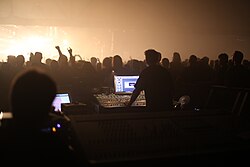
การผสมเสียงสดคือกระบวนการผสมแหล่งกำเนิดเสียงหลายแหล่งเข้าด้วยกันทางไฟฟ้าในงานแสดงสดโดยใช้คอนโซลผสมเสียง เสียงที่ใช้รวมถึงเสียงจากเครื่องดนตรี เสียงร้อง และวัสดุที่บันทึกไว้ล่วงหน้า แหล่งกำเนิดเสียงแต่ละแหล่งอาจได้รับการปรับสมดุลและส่งไปยังตัวประมวลผลเอฟเฟกต์เพื่อขยายเสียงและเล่นซ้ำผ่านลำโพงใน ที่สุด [ 3 ]วิศวกรเสียงสดจะปรับสมดุลแหล่งกำเนิดเสียงต่างๆ ในลักษณะที่เหมาะสมที่สุดกับความต้องการของงาน[ 4 ]
อ่านเพิ่มเติม
- โรส, เจย์, การสร้างเสียงที่ยอดเยี่ยมสำหรับภาพยนตร์และวิดีโอ สำนักพิมพ์ Focal Press ฉบับพิมพ์ครั้งที่ 4 ปี 2014 ข้อมูลหนังสือISBN 978-0-415-72207-0
- Davis, G. และ Davis, GD และ Jones, R. และ Corporation, YI (1989). คู่มือการเสริมกำลังเสียง . ชุดเทคโนโลยีการบันทึกเสียงและเสียง. Hal Leonard. ISBN 9780881889000.
{{cite book}}: CS1 maint: multiple names: authors list ( link ) - Izhaki, R. (2013). การผสมเสียง: แนวคิด การปฏิบัติ และเครื่องมือ . Taylor & Francis. ISBN 9781136114229.
สรุปเนื้อหา
ข้อมูลสำคัญจากบทความ
ข้อมูลสำคัญเกี่ยวกับ Audio mixing
Audio mixing is the process by which multiple sounds are combined into one or more audio channels.
Recorded music
Before the introduction of multitrack recording , all the sounds and effects that were to be part of a recording were mixed together at one time during a live performance.
Film and television
During production dialogue recording of actors is done by a person variously known as location sound mixer, production sound or some similar designation. That person is a department head with a crew consisting of a boom operator and sometimes a cable person.
ความเข้าใจบทสนทนา
ตั้งแต่ทศวรรษ 2010 เป็นต้นมา นักวิจารณ์และผู้ชมต่างรายงานว่าบทสนทนาในภาพยนตร์มักจะเข้าใจยากขึ้นเรื่อยๆ เมื่อเทียบกับภาพยนตร์เก่าๆ จนถึงขั้นที่ผู้ชมต้องพึ่ง คำบรรยาย เพื่อทำความเข้าใจสิ่งที่พูด Ben Pearson จาก SlashFilm ระบุว่าสาเหตุนี้เกิดจากปัจจัยหลายประการ...