
Austin A90 Atlantic
| Austin A90 Atlantic | |
|---|---|
 Austin A90 Atlantic Sports Saloon | |
| Overview | |
| Manufacturer | Austin |
| Production | 1949–1952 |
| Body and chassis | |
| Body style | 2-door coupé 2-door convertible |
| Layout | FR layout |
| Powertrain | |
| Engine | 2660 cc I4 |
| Dimensions | |
| Wheelbase | 96 in (2,438 mm)[1] |
| Length | 177 in (4,496 mm)[1] |
| Width | 70 in (1,778 mm)[1] |
| Height | 60 in (1,524 mm)[2] |
The Austin A90 Atlantic is a British car produced by the Austin Motor Company from 1949 until 1952. It was launched initially as a four-seat convertible, making its début at the 1948 Earls Court Motor Show in London, with production models built between early 1949 and late 1950. A two-door coupé, marketed as the A90 Atlantic sports saloon, followed a year later. It had been previewed at the 1949 Motor Show and was in production at Longbridge between 1950 and 1952.
Development
The Atlantic was one of the first post-war cars engineered from scratch by Austin, and was said to be styled from a thumbnail sketch by Leonard Lord, chairman of Austin and later the British Motor Corporation (BMC) — though the styling was more likely the work of resident Argentine Austin stylist Dick Burzi. The car was almost certainly influenced by a 1946 Pininfarina-bodied Alfa Romeocabriolet, which just happened to end up at the Longbridge factory in mid-1947, a few months before the light blue 16 hp sports prototype made its first appearance in the experimental department and on nearby roads around the factory.
A coachbuilt 1950 Austin A90 Atlantic Estate was produced by E.D. Abbott Ltd for the manager of the Frensham Estate in Farnham, UK. This estate was modified from a 1950 Austin A90 Atlantic DHC and designed by Abbott of Farnham designer Peter Woodgate. The wooden coachwork was so complex that the foreman of the workshop did all the woodwork by himself. The car had a lifting rear door and sported unusual curved perspex roof panels. Regularly seen in the 1950s used by a convent in Leith, Scotland. This car has not been seen or heard of in over 40 years.[3]
ด้วย นโยบาย ของรัฐบาลที่ว่า "ส่งออกหรือไม่ก็ตาย" และการจัดสรรเหล็กให้เฉพาะผู้ที่สร้างรายได้ที่จำเป็นอย่างมากเท่านั้น รถยนต์รุ่น Atlantic จึงได้รับการออกแบบมาโดยเฉพาะเพื่อดึงดูดรสนิยมของชาวอเมริกาเหนือ รถคันนี้มีรายละเอียดที่ทันสมัยที่สุดในยุคนั้น ด้วยกระจกบังลมแบบโค้งมน ประกอบด้วยส่วนกลางที่เป็นกระจกแบนราบและแผงด้านข้างโค้งเล็กน้อย บังโคลนหน้ามีสัญลักษณ์ " ตัว A บินได้ " คู่ และลาดลงสู่ท้ายรถที่โค้งมน พร้อมแผ่นปิดล้อหลัง ไฟหน้าดวงที่สามที่ติดตั้งอยู่ตรงกลาง ซึ่งจริงๆ แล้วเป็นไฟตัดหมอก ถูกสร้างไว้ในกระจังหน้าแบบช่องจดหมาย และความหรูหราที่ไม่เคยมีมาก่อนในขณะนั้น เช่น กระจกและฝากระโปรงหน้าแบบไฮดรอลิก (หลังคาเปิดประทุน) "ไฟเลี้ยวแบบกระพริบ" แทนไฟสัญญาณ(อย่างน้อยก็สำหรับตลาดสหรัฐอเมริกา) และ วิทยุ EKCOหรือ HMV Autocrat ให้เลือก
รถยนต์ Austin รุ่นท็อปสุดมีให้เลือกในหลากหลายสีสันที่ "เปล่งประกาย" เช่น "สีเขียวฟองทะเล" และ "สีทองทะเลทราย" แต่สีเมทัลลิกใหม่เหล่านี้ขายได้น้อยมากในตลาดสหราชอาณาจักร (ตามคำบอกเล่าของ John Cleaver ผู้ฝึกงานใน แผนกออกแบบของ Ricardo Burzi Burzi ต้องการให้เขาทำแบบหล่อปูนปลาสเตอร์จากแผ่นดินเหนียวรูปไข่ของ Austin A90 ที่เขาทำขึ้นในระหว่างขั้นตอนต้นแบบ Burzi ต้องการให้ทำแบบหล่อหกชิ้นเพื่อที่เขาจะได้ทาสีให้แตกต่างกัน) [ 4 ]
รถเปิดประทุนแบบคูเป้สามหน้าต่าง มีหลังคาผ้าเรียบง่าย ไม่มีกระจกข้างด้านหลัง (โอเปร่า) ซึ่งต่อชิดกับรางด้านบนของกระจกบังลมที่ค่อนข้างหนา ส่วนรถเก๋งสปอร์ตแบบหลังคาแข็งห้าหน้าต่าง สามารถเลือกได้ว่าจะให้หลังคาทำสีหรือหุ้มด้วยผ้า ทำให้ได้รูปลักษณ์แบบ "เปิดประทุน" หรือ "คาบริโอเลต์" ที่ได้รับความนิยม มีสไตล์โดยไม่มีปัญหาเรื่องน้ำรั่วซึม และจุดเด่นสุดท้ายคือ ส่วนตรงกลางของกระจกหลังแบบสามชิ้นที่โค้งรอบตัวรถ สามารถเลื่อนลงไปในห้องเก็บสัมภาระด้านหลังได้ เพื่อเพิ่มการระบายอากาศ โดยใช้คันโยกควบคุมระยะไกลที่อยู่เหนือกระจกบังลมด้านหน้า
น้อยคนนักในประเทศอังกฤษซึ่งเป็นถิ่นกำเนิดของรถยนต์รุ่นนี้ที่จะเคยเห็นรถยนต์ที่มีดีไซน์ล้ำยุคอย่าง Atlantic มาก่อน และแน่นอนว่าคงไม่ใช่จากผู้ผลิตรถยนต์กระแสหลักที่อนุรักษ์นิยมอย่าง Austin อย่างไรก็ตาม Atlantic ที่มีดีไซน์สุดล้ำกลับต้องพ่ายแพ้ให้กับJaguar XK120 รุ่นใหม่ ที่เปิดตัวในงานมอเตอร์โชว์ปี 1948 เช่นกัน
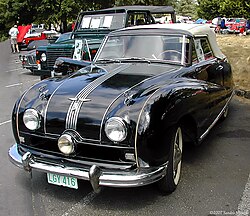
 รถเปิดประทุน Austin A90 Atlantic (ขณะเปิดหลังคา)
 ภายใน (รถเปิดประทุน)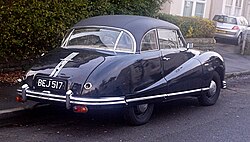
การส่งออก
จากการผลิตทั้งหมด 7,981 คัน[ 5 ]มีการส่งออก 3,597 คัน โดย 350 คันส่งไปยังสหรัฐอเมริกา[ 6 ]ยอดขายในสหรัฐอเมริกาอยู่ในระดับต่ำเช่นนี้ แม้ว่าออสตินจะให้ความสำคัญอย่างมาก รวมถึงความพยายามที่ประสบความสำเร็จในการทำลายสถิติรถยนต์สต็อกคาร์ 63 รายการที่สนามแข่งรถอินเดียนา โพลิส ในเดือนเมษายน พ.ศ. 2492 [ 6 ]โดยอลัน เฮสส์ชาร์ลส์ กู๊ดเอเคอร์และเดนนิส บักลีย์และการลดราคา 1,000 ดอลลาร์สหรัฐในปี พ.ศ. 2492 เครื่องยนต์สี่สูบ 2.7 ลิตรไม่สามารถเทียบได้กับเครื่องยนต์ V8 ดั้งเดิมในด้านกำลังขับแม้ว่า สำหรับยุคนั้นแล้ว ประสิทธิภาพจะถือว่าแข็งแกร่ง เครื่องยนต์ A90 จำนวนเล็กน้อยยังถูกนำไปใช้ในรถยนต์ Austin Champรุ่นพลเรือนอีกด้วย[ 7 ]
รถยนต์รุ่นนี้ประสบความสำเร็จมากกว่าในอดีตอาณานิคมของอังกฤษยุโรป สแกนดิเนเวีย และออสเตรเลีย
ผลงาน
Atlantic ใช้เครื่องยนต์ที่พัฒนามาจาก เครื่องยนต์ Austin A70 OHV ที่ได้รับการพิสูจน์แล้ว แต่เพิ่มขนาดเป็น2,660 ซีซี (162 ลูกบาศก์นิ้ว) เครื่องยนต์ สี่สูบขนาดใหญ่นี้ผลิตกำลัง88 แรงม้า (66 กิโลวัตต์)ที่ 4000 รอบต่อนาที[ 6 ]และต่อมาได้ถูกนำไปใช้ในAustin-Healey 100
รถเปิดประทุนที่ทดสอบโดยนิตยสารThe Motor ของอังกฤษ ในปี 1948 มีความเร็วสูงสุด91 ไมล์ต่อชั่วโมง (146 กิโลเมตรต่อชั่วโมง)และสามารถเร่งความเร็วจาก0-60 ไมล์ต่อชั่วโมง (97 กิโลเมตรต่อชั่วโมง)ใน 16.6 วินาที อัตราการสิ้นเปลืองเชื้อเพลิงอยู่ที่21.7 ไมล์ต่อแกลลอน (13.0 ลิตร/100 กิโลเมตร; 18.1 ไมล์ ต่อแกลลอน )รถทดสอบคันดังกล่าวมีหลังคาและกระจกไฟฟ้าแบบไฮดรอลิกเป็นอุปกรณ์เสริม (เพิ่ม 40 ปอนด์) ราคา 824 ปอนด์ รวมภาษีแล้ว[ 2 ]
The handling was average, but adequate for the era, with coil independent suspension at the front and leaf springs at the rear, employing lever arm shock absorbers or 'dampers' which, when worn, resulted in a characteristic 'wave motion' over undulating surfaces. The underpinnings were somewhat less exotic than the all-enveloping bodywork: the chassis and running gear were based on that of the well-proven 1949 Austin A70 Hampshiresaloon (not to be confused with the smaller entry level A40 Devon). Brakes were initially a mix of hydraulic (front) and mechanical (rear) with 11 in (279 mm) drums,[2] replaced by a fully hydraulic brake setup from 1951 onwards on the hardtop coupe (saloon) with large diameter finned drums and vented wheels. This made for efficient anti-fade braking for the time, necessary to bring the 26 long cwt (1,321 kg) vehicle to rest.
Longevity
The lack of factory rust proofing and styling that produced a multitude of mud traps led to rapid corrosion commonplace among many rushed post-war British designs. As a consequence of this and many Atlantics being broken up to provide spares for the Austin-Healey 100 very few examples survived into the 1970s, let alone the next century.
External links

- Austin Counties Car Club
- Austin A90 Atlantic at Austin Memories
- บทความเกี่ยวกับ A90 Atlantic ที่ Motorbase ถูกเก็บถาวรไว้เมื่อวันที่ 3 กรกฎาคม 2014 ในWayback Machine
- รถยนต์รุ่นพิเศษคันเดียวในโลกที่ดัดแปลงมาจาก A90โดยJensen