
Autapomorphy
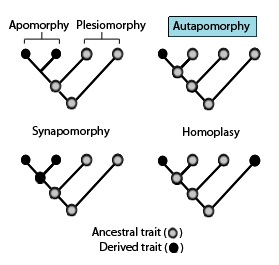
In phylogenetics, an autapomorphy is a distinctive feature, known as a derived trait, that is unique to a given taxon. That is, it is found only in one taxon, but not found in any others or outgrouptaxa, not even those most closely related to the focal taxon (which may be a species, family or in general any clade).[2] It can therefore be considered as an apomorphy in relation to a single taxon.[3] The word autapomorphy, introduced in 1950 by German entomologistWilli Hennig, is derived from the Ancient Greek words αὐτός (autós), meaning "self"; ἀπό (apó), meaning "away from"; and μορφή (morphḗ), meaning "shape, form".[4]
Background
Because autapomorphies are present only in a single taxon, they do not convey information about relationship. Therefore, autapomorphies are not useful to infer phylogenetic relationships. However, autapomorphy, like synapomorphy and plesiomorphy is a relative concept depending on the taxon in question. An autapomorphy at a given level may well be a synapomorphy at a less-inclusive level.[5] An example of an autapomorphy can be described in modern snakes. Snakes have lost the two pairs of legs that characterize all of Tetrapoda, and the closest taxa to Ophidia – as well as their common ancestors – all have two pairs of legs. Therefore, the Ophidia taxon presents an autapomorphy with respect to its absence of legs.[3]
แนวคิดเรื่องชนิดที่มีลักษณะเฉพาะตัว (autapomorphic species)เป็นหนึ่งในหลายวิธีที่นักวิทยาศาสตร์อาจใช้ในการกำหนดและจำแนกชนิดต่างๆออกจากกัน คำจำกัดความนี้กำหนดชนิดโดยอาศัยปริมาณความแตกต่างที่เกี่ยวข้องกับความไม่เข้ากันในการสืบพันธุ์ ซึ่งวัดโดยพื้นฐานจากจำนวนลักษณะเฉพาะตัว[ 6 ]วิธีการจัดกลุ่มนี้มักเรียกว่า " แนวคิดชนิด โมโนฟิเลติก " หรือ "แนวคิดฟิโลสปีชีส์" และได้รับความนิยมจาก DE Rosen ในปี 1979 ภายใต้คำจำกัดความนี้ ชนิดจะถูกมองว่าเป็น "กลุ่มโมโนฟิเลติกที่ครอบคลุมน้อยที่สุดที่สามารถกำหนดได้โดยลักษณะเฉพาะตัวอย่างน้อยหนึ่งอย่าง" [ 7 ]แม้ว่าแบบจำลองการเกิดสปีชีส์นี้จะมีประโยชน์ในการหลีกเลี่ยงกลุ่มที่ไม่ใช่โมโนฟิเลติก แต่ก็มีข้อวิจารณ์เช่นกัน ตัวอย่างเช่น NI Platnick เชื่อว่าแนวคิดเรื่องชนิดที่มีลักษณะเฉพาะตัวนั้นไม่เพียงพอ เพราะมันอนุญาตให้มีความเป็นไปได้ของการแยกตัวในการสืบพันธุ์และการเกิดสปีชีส์ในขณะที่เพิกถอนสถานะ "สปีชีส์" ของประชากรแม่ กล่าวอีกนัยหนึ่ง หากประชากรชายขอบแยกตัวออกไปและเกิดการแยกตัวทางการสืบพันธุ์ ก็เป็นไปได้ว่าประชากรนั้นจะต้องพัฒนาลักษณะเฉพาะอย่างน้อยหนึ่งอย่างเพื่อที่จะได้รับการยอมรับว่าเป็นสายพันธุ์ที่แตกต่างออกไป หากสิ่งนี้สามารถเกิดขึ้นได้โดยที่ประชากรแม่ขนาดใหญ่ ไม่พัฒนาลักษณะเฉพาะใหม่ ด้วยประชากรแม่ก็จะไม่สามารถคงสถานะเป็นสายพันธุ์ภายใต้แนวคิดสายพันธุ์ที่มีลักษณะเฉพาะได้อีกต่อไป เพราะจะไม่มีลักษณะเฉพาะใด ๆ ที่สายพันธุ์ลูกไม่มีร่วมด้วย[ 8 ]
ความคล้ายคลึงทางวิวัฒนาการ:คำศัพท์ทางวิวัฒนาการเหล่านี้ใช้เพื่ออธิบายรูปแบบที่แตกต่างกันของลักษณะบรรพบุรุษและลักษณะที่ได้มา ตาม ที่ระบุไว้ในแผนภาพข้างต้นโดยเชื่อมโยงกับลักษณะร่วม[ 1 ]
- โฮโมพลาซีในระบบอนุกรมวิธานทางชีววิทยาคือเมื่อลักษณะ หนึ่ง ได้รับหรือสูญเสียไปอย่างอิสระในสายพันธุ์ที่แยกจากกันในระหว่างวิวัฒนาการวิวัฒนาการแบบลู่เข้า นี้ ทำให้สปีชีส์ต่างมีลักษณะร่วมกันโดยอิสระซึ่งแตกต่างจากลักษณะที่สันนิษฐานว่ามีอยู่ในบรรพบุรุษร่วมกัน[ 9 ] [ 10 ] [ 11 ]
- โฮโมพลาซีคู่ขนาน– ลักษณะที่ได้มาซึ่งปรากฏในสองกลุ่มหรือสองสปีชีส์ที่ไม่มีบรรพบุรุษร่วมกันเนื่องจากวิวัฒนาการแบบลู่เข้า[ 12 ]
- โฮโมพลาซีแบบย้อนกลับ– ลักษณะที่พบในบรรพบุรุษแต่ไม่พบในลูกหลานโดยตรง แต่ปรากฏขึ้นอีกครั้งในลูกหลานรุ่นหลัง[ 13 ]
- ลักษณะเฉพาะที่ได้มา (Apomorphy) – ลักษณะที่ได้มา ลักษณะเฉพาะที่ได้มาร่วมกันในสองกลุ่มอนุกรมวิธานขึ้นไปและสืบทอดมาจากบรรพบุรุษร่วมกันเรียกว่า synapomorphy ลักษณะเฉพาะที่ได้มาเฉพาะในกลุ่มอนุกรมวิธานใดกลุ่มหนึ่งเรียกว่า autapomorphy [ 14 ] [ 15 ] [ 16 ] [ 17 ]
- ลักษณะร่วม ที่สืบทอดมา / ความเหมือนกันทางวิวัฒนาการ – ลักษณะที่ได้มาใหม่ซึ่งพบในกลุ่มปลายสุดบางกลุ่มหรือทั้งหมดของกลุ่มสายพันธุ์ และได้รับการสืทอดมาจากบรรพบุรุษร่วมกัน ซึ่งเป็นลักษณะเฉพาะตัวของบรรพบุรุษ นั้น (กล่าวคือ ไม่พบในบรรพบุรุษโดยตรง)
- ลักษณะร่วมที่แฝงอยู่ – ลักษณะร่วมที่สูญหายไปอีกครั้งในสมาชิกหลายตัวของกลุ่ม หากสูญหายไปในทุกตัวยกเว้นเพียงตัวเดียว อาจแยกแยะได้ยากจากลักษณะเฉพาะตัว
- ลักษณะเฉพาะตัว – ลักษณะเฉพาะที่ได้มาซึ่งเป็นเอกลักษณ์เฉพาะของกลุ่มหรืออนุกรมวิธานที่กำหนด[ 3 ]
- ซิมเพิลซิโอเมอร์ฟี – ลักษณะดั้งเดิมที่พบร่วมกันในสิ่งมีชีวิตสองกลุ่มขึ้นไป
- ลักษณะดั้งเดิม (Plesiomorphy) – ลักษณะดั้งเดิมร่วม (symplesiomorphy) ที่กล่าวถึงในบริบทของลักษณะที่พัฒนาไปมากกว่าเดิม
- Pseudoplesiomorphy คือลักษณะที่ไม่สามารถระบุได้ว่าเป็นทั้ง plesiomorphy หรือ apomorphy ซึ่งเป็นลักษณะที่กลับกัน[ 18 ]
- การกลับลักษณะ – คือการสูญเสียลักษณะที่ได้มาจากบรรพบุรุษ และการกลับมาของลักษณะดั้งเดิม
- การบรรจบกัน – วิวัฒนาการอิสระของลักษณะที่คล้ายคลึงกันในสิ่งมีชีวิตสองกลุ่มขึ้นไป
- เฮมิพลาซี[ 19 ] [ 20 ]