
เศรษฐกิจของบาห์เรน
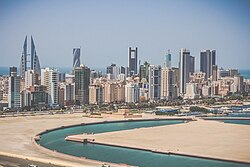 เส้นขอบฟ้าเมืองมานามา | |
| สกุลเงิน | ดีนาร์บาห์เรน (BHD) |
|---|---|
| ปีปฏิทิน | |
องค์กรการค้า | องค์การการค้าโลกและกลุ่มประเทศ GCC |
กลุ่มประเทศ | |
| สถิติ | |
| ประชากร |  1,588,670 (2024) [ 3 ] 1,588,670 (2024) [ 3 ] |
| จีดีพี | |
| อันดับ GDP | |
| |
ผลิตภัณฑ์มวลรวมภายในประเทศต่อหัว | |
อันดับ GDP ต่อหัว | |
ผลิตภัณฑ์มวลรวมภายในประเทศ (GDP) แยกตามภาคส่วน |
|
 0.3% (2025) [ 4 ] 0.3% (2025) [ 4 ] | |
ประชากรที่อยู่ต่ำกว่า เส้นความยากจนระดับชาติ | ไม่มีข้อมูล[ 6 ] |
กำลังแรงงาน | |
กำลังแรงงานจำแนกตามอาชีพ |
|
| |
อุตสาหกรรมหลัก | การธนาคารนอกประเทศและการธนาคารอิสลาม , การถลุงอะลูมิเนียม , การแปรรูปและการกลั่นปิโตรเลียม , การผลิตเม็ดเหล็ก , ปุ fertilizers , ประกันภัย , การซ่อมเรือ, การท่องเที่ยว |
| ภายนอก | |
| การส่งออก | 41.303 พันล้านดอลลาร์สหรัฐ (ประมาณการปี 2024) |
สินค้าส่งออก | อะลูมิเนียม , ปิโตรเลียมและผลิตภัณฑ์ปิโตรเลียม, สิ่งทอ , ทองคำ , เครื่องประดับ , ชีส |
คู่ค้าส่งออกหลัก |
|
| Imports | $33.044 billion (2024 est.) |
Import goods | Crude Oil, Machinery, Chemicals, Gold, Jewellery |
Main import partners |
|
Gross external debt |  $60.58 billion (2024 est.)[4] $60.58 billion (2024 est.)[4] |
| Public finance | |
| 142.5% of GDP (2025 est.)[4] | |
 $8.479 billion (2023) $8.479 billion (2023) | |
| $10.532 billion (2023) | |
| |
All values, unless otherwise stated, are in US dollars. | |


The economy of Bahrain has significantly diversified in recent years to be less dependent on oil and gas, although they remain an important part of the economy.[14] As of 2024, the extraction of oil and natural gas is the third largest sector in the economy.[15] Bahrain advocates for a mixed economy system.[16][17] Two examples of Bahrain’s advocacy for this system in the late 20th century are heavily investing in the banking and tourism sectors.[18] In 2008, Bahrain was ranked highly in the Global Financial Centres Index (GFCI), which evaluates financial centres using survey responses and quantitative indicators.[19][20] Bahrain's banking and financial services sector, particularly Islamic banking, have benefited from the regional boom driven by demand for oil.[21]Petroleum is Bahrain's most exported product, accounting for 60% of export receipts, 70% of government revenues, and 11% of GDP.[22]Aluminum is the second most exported product, followed by finance and construction materials.[22]
ตามดัชนีเสรีภาพทางเศรษฐกิจ ฉบับปี 2020 บาห์เรนมีเศรษฐกิจที่เสรีที่สุดเป็นอันดับสี่ใน ภูมิภาค ตะวันออกกลางและแอฟริกาเหนือและเป็นเศรษฐกิจที่เสรีที่สุดเป็นอันดับที่ 40 ของโลก[ 23 ]ดัชนีทางเลือกอีกฉบับหนึ่งที่ให้สถิติเดียวกันจัดให้บาห์เรนอยู่ในอันดับที่ 70 [ 24 ]บาห์เรนได้รับการยอมรับจากธนาคารโลกว่าเป็น เศรษฐกิจ ที่มีรายได้สูง [ 25 ]
ภาพรวมเศรษฐกิจ
น้ำมันและก๊าซธรรมชาติมีบทบาทสำคัญในเศรษฐกิจของบาห์เรน แม้จะมีความพยายามในการกระจายเศรษฐกิจ แต่จากข้อมูลของ CIA World Fact Book [ 26 ]น้ำมันยังคงคิดเป็น 85% ของรายได้งบประมาณของบาห์เรน ซึ่งหมายความว่าในช่วงไม่กี่ปีที่ผ่านมา ราคาน้ำมันโลกที่ลดลงได้ก่อให้เกิดการขาดดุลงบประมาณจำนวนมาก ซึ่งคิดเป็นประมาณ 10% ของ GDP ในปี 2017 เพียงปีเดียว[ 27 ]เศรษฐกิจของบาห์เรนขึ้นอยู่กับน้ำมันและก๊าซ การธนาคารระหว่างประเทศ และการท่องเที่ยว[ 18 ]
ในปี 2546 และ 2547 ดุลการชำระเงินดีขึ้นเนื่องจากราคาน้ำมันที่สูงขึ้นและรายรับจากภาคบริการที่เพิ่มขึ้น ส่งผลให้ดุลบัญชีเดินสะพัดเกินดุล 219 ล้านดอลลาร์สหรัฐในปี 2546 และเกินดุล 442 ล้านดอลลาร์สหรัฐในปี 2547 เมื่อเทียบกับการขาดดุล 35 ล้านดอลลาร์สหรัฐในปี 2545 นอกจากนี้ เงินสำรองระหว่างประเทศของบาห์เรนเพิ่มขึ้นอย่างมากในปี 2547 เป็น 1.6 พันล้านดอลลาร์สหรัฐ จาก 1.4 พันล้านดอลลาร์สหรัฐในช่วงสามปีที่ผ่านมา (2544-2546)
ประวัติศาสตร์
แม้ว่า GDP ต่อหัวในปัจจุบัน[ 28 ]จะหดตัวลง 2.4% ในช่วงทศวรรษ 1980 แต่ก็ฟื้นตัวกลับมาเติบโตถึง 36% ในช่วงทศวรรษ 1990 อันเป็นผลมาจากโครงการริเริ่มการกระจายความหลากหลายทางเศรษฐกิจ ความเร่งด่วนของบาห์เรนในการยอมรับการเปิดเสรีทางเศรษฐกิจนั้นเกิดจากความต้องการที่จะกระจายเศรษฐกิจออกไปจากแหล่งน้ำมันที่มีจำกัด ต่างจากประเทศเพื่อนบ้านในอ่าวเปอร์เซีย บาห์เรนมีน้ำมันน้อย และเศรษฐกิจได้ขยายตัวไปสู่ภาคการธนาคารอุตสาหกรรมหนักการค้าปลีกและการท่องเที่ยวราชอาณาจักรเป็นศูนย์กลางการธนาคารหลักของอ่าวเปอร์เซียและเป็นศูนย์กลางการเงินอิสลาม ซึ่งดึงดูดโดยกรอบการกำกับดูแลที่แข็งแกร่งสำหรับอุตสาหกรรมนี้ จาก การประเมินเสถียรภาพระบบการเงินของบาห์เรนโดย กองทุนการเงินระหว่างประเทศ (IMF)ซึ่งเผยแพร่เมื่อวันที่ 6 มีนาคม 2549 พบว่า:
- ระบบการเงินกำลังอยู่ในช่วงขาขึ้นภายใต้สถานการณ์ที่เอื้ออำนวย และมีแนวโน้มที่จะยังคงเป็นปัจจัยสำคัญต่อการเติบโตโดยรวม ความเสี่ยงหลักมาจากภาวะเศรษฐกิจที่ร้อนแรงเกินไปในภูมิภาค แต่ระบบควรจะมีความยืดหยุ่นต่อภาวะช็อกที่อาจเกิดขึ้นได้
- Prudential regulations are modern and comprehensive, and supervision is generally effective, especially in the dominant banking sector. Supervisory capacity needs to be expanded in line with new regulations and to keep up with the growth and increasing sophistication of financial institutions.
- The further expansion of the Islamic banking sector, the development of housing finance, and the deepening of securities markets are important for the future growth of the financial system. The banking and insurance sectors will eventually undergo consolidation. [1]
In 2005, Bahrain signed the US-Bahrain Free Trade Agreement, becoming the first Persian Gulf state to sign such a bilateral trade agreement with the United States. A large-scale privatization program is underway to sell off key government assets: utilities, banks, financial services, and telecommunications have started to come under the control of the private sector.
As a result, the economy has been well-positioned to capitalize on the extra revenues generated in the region, due to the sustained high oil prices since 2002. In January 2006, the United Nations Economic and Social Commission for Western Asia cited Bahrain as the fastest-growing economy in the Arab world.
Between 1981 and 1993, the Bahrain Government's expenditures increased by 64%. During that same time, government revenues continued to be largely dependent on the oil industry and increased by only 4%. Bahrain has at times received significant budgetary support and project grants from Saudi Arabia, Kuwait, and the United Arab Emirates.[29]
The government has used its oil revenues to build an advanced transportation and telecommunications infrastructure. Bahrain is a regional financial and business center. Tourism, especially from the region, has proved another significant source of income.
Bahrain has benefited from the oil boom since 2001, with economic growth of 5.5%. It has succeeded in attracting investment from other Persian Gulf states partly because it used the revenues of the 1970s-early 80s boom to invest in infrastructure development and other projects to improve the standard of living; healthcare, education, public services, and roads have seen improvement.
The success of ventures such as the Bahrain Grand Prix has raised the Kingdom's international profile, and combined with the boom in Islamic banking, has encouraged major airlines to resume services to the country, with Lufthansa announcing on 14 March 2006 that it would schedule three flights a week to Muharraq from Frankfurt.[30]
Bahrain has initiated a series of labor reforms under Minister of Labor Majeed Al Alawi to bring the labor market in line with international standards.
In 2009, it was announced that the Bahraini Government would be developing land next to the Bahrain International Circuit. The project has been titled @bahrain. @bahrain is part of the Mumtalakat group of companies and will dedicate more than 1 million square meters to business, entertainment, and educational services, with a value in excess of $2bn (BD 850 million).[31]
In July 2023, Bahrain's national origin exports decreased by 23%, valued at BD323 million, while imports fell by 6% to BD441 million, resulting in a trade deficit of BD68 million, according to the Information & Government Authority (iGA) report.[32]
Overall, during 2023, Bahrain's GDP grew by 2.45%, with the non-oil sector increasing by 4.48%.[33]
Macro-economic trend
This is a chart of the trend of gross domestic product of Bahrain at market prices estimated by the International Monetary Fund, with figures in millions of Bahraini Dinars.
| Year | Gross Domestic Product | US Dollar Exchange | Inflation Index (year 2000=100) |
|---|---|---|---|
| 1980 | 1,354 | 0.377 Bahraini Dinars | 74 |
| 1985 | 1,609 | 0.377 Bahraini Dinars | 90 |
| 1990 | 1,867 | 0.377 Bahraini Dinars | 89 |
| 1995 | 2,552 | 0.377 Bahraini Dinars | 98 |
| 2000 | 3,408 | 0.377 Bahraini Dinars | 100 |
| 2005 | 6,004 | 0.377 Bahraini Dinars | 105 |
| 2010 | 9,668 | 0.377 Bahraini Dinars | 120 |
| 2015 | 11,675 | 0.377 Bahraini Dinars | 133 |
| 2020 | 13,058 | 0.377 Bahraini Dinars | 139 |
For purchasing power parity comparisons, the US Dollar is exchanged at 0.30 Bahraini Dinars. Mean wages were $19.81 per man-hour in 2009.
The following table shows the main economic indicators from 1980–2024. Inflation below 5% is in green.[34]
| Year | GDP (in bil. US$ PPP) | GDP per capita (in US$ PPP) | GDP (in bil. US$ nominal) | GDP growth (real) | Inflation (in Percent) | Government debt (in % of GDP) |
|---|---|---|---|---|---|---|
| 1980 | 7.3 | 20,779 | 3.6 |  7.5 % 7.5 % | 3.8 % | n/a |
| 1985 | 11.4 | 27,186 | 4.3 | −0.9 % | −2.4 % | n/a |
| 1990 | 14.7 | 30,044 | 5.0 | 3.5 % | 1.3 % | 8 % |
| 1995 | 20.5 | 36,705 | 6.8 | 1.9 % | 3.1 % | 14 % |
| 2000 | 28.0 | 43,920 | 9.1 | 7.0 % | −0.7 % | 26 % |
| 2005 | 40.4 | 45,440 | 16.0 | 6.8 % | 2.6 % | 24 % |
| 2010 | 58.2 | 47,117 | 25.7 | 4.3 % | 2.0 % | 30 % |
| 2011 | 60.6 | 50,673 | 28.8 | 2.0 % | −0.3 % | 33 % |
| 2012 | 65.9 | 54,489 | 30.7 | 3.7 % | 2.8 % | 36 % |
| 2013 | 67.7 | 54,035 | 32.5 | 5.4 % | 3.3 % | 44 % |
| 2014 | 68.3 | 51,938 | 33.4 | 4.4 % | 2.6 % |  44 % 44 % |
| 2015 | 62.5 | 45,627 | 31.1 | 2.5 % | 1.8 % | 66 % |
| 2016 | 63.8 | 44,834 | 32.2 | 3.8 % | 2.8 % | 81 % |
| 2017 | 71.3 | 47,486 | 35.5 | 4.9 % | 1.4 % | 88 % |
| 2018 | 74.5 | 48,424 | 37.8 | 2.0 % | 2.1 % | 90 % |
| 2019 | 77.5 | 50,118 | 38.7 | 2.0 % | 1.0 % | 97 % |
| 2020 | 78.7 | 48,166 | 34.6 | −5.9 % | −2.3 % | 126 % |
| 2021 | 82.7 | 48,357 | 39.3 | 4.3 % | −0.6 % | 122 % |
| 2022 | 93.9 | 49,482 | 44.4 | 6.0 % | 3.6 % | 111 % |
| 2023 | 100.1 | 57,213 | 46.1 | 3.0 % | 0.1 % | 123 % |
| 2024 | 105.6 | 57,503 | 47.8 | 3.0 % | 1.4 % | 126 % |
Hydrocarbon industry

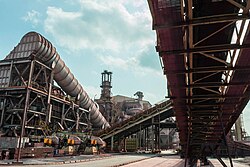
น้ำมันและก๊าซธรรมชาติเป็นทรัพยากรธรรมชาติที่สำคัญเพียงอย่างเดียวในบาห์เรน เนื่องจากมีปริมาณสำรองจำกัด บาห์เรนจึงพยายามกระจายเศรษฐกิจในช่วงทศวรรษก่อนปี 2004 บาห์เรนรักษาระดับการผลิตน้ำมันไว้ที่ประมาณ 40,000 บาร์เรล (6,400 ลูกบาศก์เมตร) ต่อวัน และคาดว่าปริมาณสำรองจะใช้ได้อีก 10 ถึง 15 ปี โรงกลั่น น้ำมันของบริษัท Bahrain Petroleum Company สร้างขึ้นในปี 1935 มีกำลังการผลิตประมาณ 250,000 บาร์เรล (40,000 ลูกบาศก์เมตร) ต่อวัน และเป็นโรงกลั่นแห่งแรกในอ่าวเปอร์เซียที่อยู่นอกประเทศอิหร่าน หลังจากขายหุ้น 60% ของโรงกลั่นให้กับ บริษัท Bahrain National Oil Companyซึ่งเป็นของรัฐในปี 1980 ปัจจุบันบริษัท Caltexของสหรัฐฯ เป็นเจ้าของ 40% ซาอุดีอาระเบียจัดหาน้ำมันดิบส่วนใหญ่สำหรับการดำเนินงานของโรงกลั่นผ่านทางท่อส่ง นอกจากนี้ บาห์เรนยังได้รับผลผลิตสุทธิและรายได้ส่วนใหญ่จากแหล่งน้ำมันนอกชายฝั่ง Abu Saafa ของซาอุดีอาระเบียด้วย
บริษัท ก๊าซแห่งชาติบาห์เรน ( Bahrain National Gas Company) ดำเนินงานโรงงานผลิตก๊าซเหลวโดยใช้ก๊าซที่ส่งตรงจากแหล่งน้ำมันของบาห์เรน ปริมาณก๊าซสำรองคาดว่าจะเพียงพอสำหรับการใช้งานประมาณ 50 ปี หากอัตราการบริโภคยังคงเป็นเช่นปัจจุบันบริษัทอุตสาหกรรมปิโตรเคมีแห่งอ่าว (Gulf Petrochemical Industries Company หรือ GPIC)เป็นกิจการร่วมทุนระหว่างอุตสาหกรรมปิโตรเคมีของคูเวต บริษัทอุตสาหกรรมพื้นฐานแห่งซาอุดีอาระเบีย (Saudi Basic Industries Corporation) และรัฐบาลบาห์เรน โรงงานแห่งนี้สร้างเสร็จในปี 1985 และผลิตแอมโมเนียเมทานอลและยูเรียเพื่อการส่งออก
อุตสาหกรรมอื่นๆ ของบาห์เรน ได้แก่ การทำเหมืองแร่ธรรมชาติ บริษัทขนาดใหญ่บางแห่ง ได้แก่ บริษัท อลูมิเนียม บาห์เรนซึ่งดำเนินกิจการบริษัท บาห์เรน อะลูมิเนียม เอ็กซ์ทรูชั่น และบริษัท กัลฟ์ อะลูมิเนียม โรลลิ่ง มิลล์ (GARMCO) โรงงานอื่นๆ ได้แก่ โรงงานผลิตเม็ดแร่เหล็กของบริษัท อาราบ ไอรอน แอนด์ สตีล (4 ล้านตันต่อปี) และอู่ต่อเรือและซ่อมเรือ
สถาบันการเงินระหว่างประเทศดำเนินงานในบาห์เรน ทั้งในประเทศและต่างประเทศ โดยไม่มีอุปสรรคใดๆ ในปี 2544 ธนาคารกลางของบาห์เรนได้ออกใบอนุญาตใหม่ 15 ใบ มีหน่วยงานธนาคารนอกประเทศและสำนักงานตัวแทนมากกว่า 100 แห่งตั้งอยู่ในบาห์เรน รวมถึงบริษัทอเมริกันอีก 65 แห่งสนามบินนานาชาติของบาห์เรนให้บริการขนส่งสินค้าทางอากาศโดยตรงและบ่อยครั้งไปยังสหรัฐอเมริกา ยุโรป และตะวันออกไกล บริษัทบาห์เรนที่มีชื่อเสียง ได้แก่Investcorp บริษัทลงทุนระดับโลกที่ ก่อตั้ง ขึ้นในปี 2525 และมีสำนักงานใหญ่ในมานามา ซึ่งลงทุนในแบรนด์ระดับนานาชาติต่างๆ เช่นGucci
การเก็บภาษี
กฎหมาย ภาษีและการนำเข้ามีผลบังคับใช้กับบริษัทในประเทศและบริษัทต่างชาติอย่างเท่าเทียมกัน นอกจากนี้นักลงทุนต่างชาติจะต้องปฏิบัติตามข้อกำหนดและกฎหมายเช่นเดียวกับบริษัทในประเทศ[ 35 ]
บริษัท น้ำมันและก๊าซต้องเสียภาษีร้อยละ 46 จากรายได้ที่ได้จากการขายไฮโดรคาร์บอนและผลิตภัณฑ์อนุพันธ์[ 36 ]
บาห์เรนไม่เก็บภาษีเงินได้บุคคลธรรมดา อย่างไรก็ตาม บุคคลที่ได้รับการว่าจ้างจากบุคคลธรรมดาหรือนิติบุคคลหรือองค์กรธุรกิจในราชอาณาจักรบาห์เรนจะต้องจ่ายเงินสมทบให้กับองค์กรประกันสังคม (SIO) ตามกฎในบาห์เรน[ 36 ] [ 37 ]
นายจ้างและลูกจ้างต้องจ่ายเงินสมทบประกันสังคมดังต่อไปนี้: (1) สำหรับการคุ้มครองผู้สูงอายุ ความพิการ และผู้รอดชีวิต: สำหรับลูกจ้างชาวบาห์เรน ตั้งแต่เดือนพฤษภาคม 2022 นายจ้างจ่าย 14% ของเงินเดือนบวกค่าเบี้ยเลี้ยงคงที่ โดยเปอร์เซ็นต์จะเพิ่มขึ้น 1% ทุกปี (สูงสุด 20% ในปี 2028) [ 38 ]ลูกจ้างจ่าย 7% บวกค่าเบี้ยเลี้ยงคงที่ สำหรับลูกจ้างที่ไม่ใช่ชาวบาห์เรน นายจ้างจ่าย 3% ของเงินเดือนบวกค่าเบี้ยเลี้ยงคงที่ (โดยมีสิทธิ์ได้รับเฉพาะผลประโยชน์จากการบาดเจ็บจากการทำงานเท่านั้น) (2) สำหรับประกันการว่างงาน: ตั้งแต่วันที่ 1 มิถุนายน 2007 ค่าจ้างทั้งหมดอยู่ภายใต้ภาษี 2% ซึ่งนายจ้างและลูกจ้างจ่ายเท่าๆ กัน ใช้ได้ทั้งกับพลเมืองและไม่ใช่พลเมือง และเสริมด้วยเงินสมทบจากรัฐบาล 1% ทำให้บาห์เรนเป็นประเทศแรกในกลุ่มGCCที่นำระบบประกันการว่างงานมาใช้
ดูเพิ่มเติม
ลิงก์ภายนอก
- เดลีสตาร์ (เบรุต), 6 มกราคม 2549, 'ความซื่อสัตย์' ของบาห์เรนทำให้เศรษฐกิจของประเทศเสรีที่สุดในภูมิภาคเก็บถาวรเมื่อ 30 กรกฎาคม 2552 ที่Wayback Machine
- กัลฟ์นิวส์, 7 มกราคม 2549, บาห์เรนได้รับการจัดอันดับให้เป็นประเทศที่มีเศรษฐกิจเสรีที่สุดในบรรดาประเทศอาหรับ
- มหาวิทยาลัยบาห์เรนเก็บถาวรเมื่อ 2014-02-26 ที่Wayback Machine
- แผนที่โครงสร้างพื้นฐานน้ำมันและก๊าซในบาห์เรน[2] เก็บถาวรเมื่อ 2021-12-05 ที่Wayback Machine