
Dozaleh
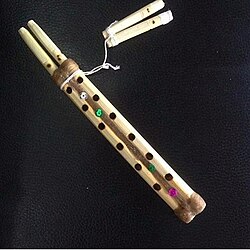 Iranian instrument with reed body | |
| Woodwind instrument | |
|---|---|
| Other names |
|
| Classification | Aerophone |
| Hornbostel–Sachs classification | 422.221.2 single-reed aerophones, with a regular bore and fingerholes, sets of clarinets(The pipe has a single 'reed' consisting of a percussion lamella) |
| Playing range | |
| One to two octaves | |
| Related instruments | |
The Dozaleh (Persian: دوزَله) is an Iranian folk instrument.[1][2] The dozaleh is made of two pipes.[2] One of them produces melody and the other harmony.[2] It sounds like a Ney-anbān and it is very dynamic.
The instrument is played in the Middle East among the Kurdish people, and further east it is included in the music traditions of the Tajik and Uzbek peoples.
Names
The instrument is called Dozaleh (دو زَله) in Iran, from zal (زَل), the Persian word for the stem of the zal reed.
The instrument goes by a variety of names in Iran. It is known as Jannati (Persian, "pair": جفتی) in Hormozgan, Do Ney (Persian, "two reeds": دو نی) in Lorestan, Do Sazeh (Persian, "two structures": دو سازه) in South Khorasan Province, and Ghoshmeh (Persian: قوشمه) among Khorasan's Kurdish people.
Ghoshmeh may have come from the tradition of making the instruments from the bones of birds, although one linguist suggests other possibilities, including "pair."[3]
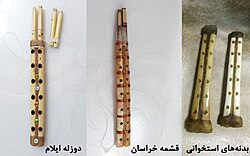
Ghoshmeh
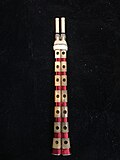 Ghoshmeh. (قشمه استخوانی "Bone ghoshmeh"). Instrument made from bird bones
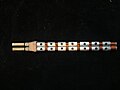 Aluminum-bodied instrument (قوشمه از جنس آلمینیوم "Ghoshmeh made of aluminum")
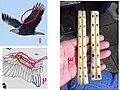 Image showing location of eagle bones used to make the Ghoshmeh and the bones in the polishing stage.
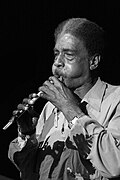 Musician Ghanbar Rastgoo playing Hormozgan's version of the "Saz" (instrument, ساز) + "gifti" (paired, جفتی). (Saz gifti, paired instrument, ساز جفتی).
 Musician from Russian Turkestan, about 1872, playing the koshnai (variation of the word ghoshmeh).
History
โดซาเลห์ (หรือ โดเนย์ ในภาษาเคิร์ด) เป็นเครื่องดนตรีโบราณชนิดหนึ่ง ซึ่งเป็นหนึ่งในเครื่องดนตรีเป่าลมชนิดแรกๆ ของอิหร่าน
ในพื้นที่ของชาวเคิร์ด เครื่องดนตรีชนิดนี้ทำจากพืชชนิดหนึ่งที่เรียกว่า ซาเลห์ ซึ่งเติบโตอยู่ใกล้แม่น้ำ
ในยุคปัจจุบัน ตัวเครื่องดนตรียังทำจากท่ออลูมิเนียมหรือทองแดงอีกด้วย[ 2 ]
เครื่องดนตรีนี้ถือว่ามีความสำคัญต่อวัฒนธรรมและประวัติศาสตร์ของอิหร่านมากพอที่จะกระตุ้นให้เกิดความสนใจ โดยได้รับการบรรจุอยู่ในรายชื่อมรดกแห่งชาติของอิหร่าน โดยได้รับการบรรจุ อยู่ในผลงานของนอร์ทโคราซานใน "สาขามรดกทางวัฒนธรรมที่จับต้องไม่ได้" รายการที่ 1543: เทคนิคและทักษะในการทำเครื่องดนตรีพื้นเมือง Ghoshmeh [ 4 ]
เล่น
เครื่องดนตรีชนิดนี้มีรู 5 ถึง 7 รูในแต่ละลิ้น[ 5 ]เล่นโดยใช้นิ้วกลางสามนิ้วของทั้งสองมือวางบนรูของเครื่องดนตรี[ 2 ] นิ้วหัวแม่มือจับเครื่องดนตรีจากด้านหลัง[ 2 ]นักดนตรีนำลิ้นของเครื่องดนตรีเข้าไปในปากและเป่าลมเข้าไป[ 2 ]
ดูเพิ่มเติม
- โกชเมห์ในภาษาเปอร์เซีย
- Qoşme Kurdish
ลิงก์ภายนอก
- บทสัมภาษณ์ อาลี ข่าน ยาซดานี (เกิดในจังหวัดนอร์ทโคราซาน) ผู้ผลิตและเล่นเครื่องดนตรีชนิดกอชเมห์ เขาอธิบายถึงเหตุผลที่เลือกใช้กระดูกในการทำเครื่องดนตรี (บทความเป็นภาษาเปอร์เซีย)