
อ่าน 4 นาที
Gittith
A gittith ( Hebrew : גתית ) is a musical term of uncertain meaning found in the Bible , most likely referring to a type of musical instrument.
Gittith
 An Ancient Egyptian band carrying several types of harps and lyres, instruments similar to what a gittith is proposed to be | |
| Classification | String instrument |
|---|---|
| Related instruments | |
| Lyre, Kinnor, Nevel (instrument) | |
A gittith (Hebrew: גתית) is a musical term of uncertain meaning found in the Bible, most likely referring to a type of musical instrument.
Mention in the Bible
The term "gittith" is used only three times in the Bible: at the beginnings of Psalm 8, Psalm 81, and Psalm 84. These psalms open with "למנצח על-הגיתית" (“for the Leader, upon the gittith”), a direction to the chief musician. Further elaboration or explanation of the meaning of the word is not given.
Later exegesis
Rashi cites Menahem ben Saruq in his claim that a gittith is a type of musical instrument. He then connects the term gittith to the city of Gath, meaning that a gittith would have been made by a Gittite, or a person from Gath.[1] In 1 Samuel 21, David stays with Achish, king of Gath, and could be understood to have taken back with him a musical instrument from Gath.[2]
Ibn Ezra makes a similar connection, explaining a gittith to be an instrument made for the Levite descendents of Obed-Edom, who was a Gittite. However, he also explains that the Psalms opening with למנצח על-הגיתית (“for the Leader, upon the gittith”) are meant to be sung to a tune of a then-popular song opening with the words "the Gittite boasts" (הגתית מתפארת).[3]
Strong's Concordance lists 'gittith' as its 1665th entry, defining it as a Gittite harp.[4]Brown–Driver–Briggs translates 'gittith' directly to mean a type of lyre.[5]
Link to winepresses in Christian and Jewish sources
ฉบับเซปตัวจินต์แปลעל-הגיתית (“บน gittith”) เป็นhyper ton lenonหรือ “สำหรับ/บนโรงบีบองุ่น” โดยอิงจากภาษาฮีบรู גת ('โรงบีบองุ่น') เป็นไปได้ว่าการแปลนี้มาจากการแทนที่ גתית ด้วย גתות ซึ่งจะเป็นพหูพจน์ปกติของ גת อิบนุ เอซราปฏิเสธแนวคิดนี้อย่างชัดเจน โดยอ้างถึงมันว่าเป็นמהבלים (ความว่างเปล่า, ความไร้สาระ) [ 6 ]เป็นไปได้มากว่าไม่ขึ้นอยู่กับฉบับเซปตัวจินต์ คำอธิบายของรับบีจำนวนมากในมิดราชเทฮิลลิมก็ตีความ gittith ว่าหมายถึงโรงบีบองุ่นเช่นกัน[ 7 ]
แรบไบ แซมซัน ราฟาเอล ฮิร์ช ชาวเยอรมันในศตวรรษที่ 19 ก็มีการตีความเช่นนี้เช่นกัน และมองว่าการเหยียบองุ่นเป็นการสะท้อนถึงแนวคิดเรื่องความทุกข์ยากของพระเจ้าในฐานะที่เป็นการช่วยเหลือในการพัฒนาทางศีลธรรม เนื่องจากต้องใช้แรงกดและการทำลายในลักษณะเดียวกันเพื่อสกัดน้ำจากองุ่น เขายังเชื่อมโยงสิ่งนี้เข้ากับเนื้อหาของบทเพลงสดุดีทั้งสามบทโดยใช้คำนำעל-הגיתיתโดยยืนยันว่าบทเพลงสดุดีทั้งสามบทที่มีคำนำนี้เกี่ยวข้องกับแนวคิดของการยกระดับจิตใจเพื่อตอบสนองต่อภัยพิบัติ[ 8 ]
การตีความสมัยใหม่
มีการเสนอแนะในการแปลพระคัมภีร์หลายฉบับว่าบทเพลงสดุดีที่ขึ้นต้นด้วยคำกำหนดเดียวกัน (ในที่นี้คือעל-הגיתית ) มีเจตนาให้มีทำนองที่คล้ายคลึงกัน อย่างไรก็ตาม มีการอ้างว่าความเป็นไปได้นี้ลดลงเนื่องจากไม่มีความคล้ายคลึงกันในจังหวะของบทเพลงสดุดีที่ขึ้นต้นด้วยעל-הגיתיתเช่น บทเพลงสดุดี 8 และ 81 มีจังหวะที่แตกต่างกันอย่างเห็นได้ชัด[ 9 ]
ศิลปินและนักวิชาการ Moshe Frumin ได้สร้างเครื่องดนตรีในพระคัมภีร์หลายชิ้นขึ้นใหม่ รวมถึง gittith ซึ่งจัดแสดงอยู่ที่พิพิธภัณฑ์ศิลปะยิว Sherwin Millerในเมืองทัลซารัฐโอคลาโฮมา[ 10 ]
การใช้งานอื่นๆ
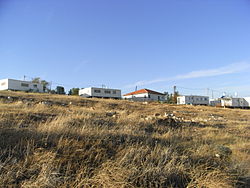
หมู่บ้านGitit ซึ่งก่อตั้งขึ้นในปี 1972 ได้รับการตั้งชื่อตาม gittith เนื่องจากรูปร่างของพื้นที่ซึ่งถือว่าคล้ายกับเครื่องดนตรีชนิดนี้[ 11 ]
คำว่า Gittit ยังได้รับความนิยมในฐานะชื่อเด็กผู้หญิงชาวอิสราเอลอีกด้วย[ 12 ]
ดูเพิ่มเติม
สรุปเนื้อหา
ข้อมูลสำคัญจากบทความ
ข้อมูลสำคัญเกี่ยวกับ Gittith
A gittith ( Hebrew : גתית ) is a musical term of uncertain meaning found in the Bible , most likely referring to a type of musical instrument.
Mention in the Bible
The term "gittith" is used only three times in the Bible: at the beginnings of Psalm 8 , Psalm 81 , and Psalm 84 . These psalms open with " למנצח על-הגיתית " (“for the Leader, upon the gittith”), a direction to the chief musician.
Later exegesis
Rashi cites Menahem ben Saruq in his claim that a gittith is a type of musical instrument. He then connects the term gittith to the city of Gath , meaning that a gittith would have been made by a Gittite, or a person from Gath.
Link to winepresses in Christian and Jewish sources
ฉบับ เซปตัวจินต์ แปล על-הגיתית (“บน gittith”) เป็น hyper ton lenon หรือ “สำหรับ/บนโรงบีบองุ่น” โดยอิงจากภาษาฮีบรู גת ('โรงบีบองุ่น') เป็นไปได้ว่าการแปลนี้มาจากการแทนที่ גתית ด้วย גתות ซึ่งจะเป็นพหูพจน์ปกติของ גת อิบนุ เอซรา ปฏิเสธแนวคิดนี้อย่างชัดเจน...