
King Boxer
| King Boxer | |||||||||||
|---|---|---|---|---|---|---|---|---|---|---|---|
 | |||||||||||
| Chinese name | |||||||||||
| Traditional Chinese | 天下第一拳 | ||||||||||
| Simplified Chinese | 天下第一拳 | ||||||||||
| Literal meaning | Number One Fist in the World | ||||||||||
| |||||||||||
| Directed by | Jeong Chang-hwa | ||||||||||
| Screenplay by | Chiang YangJeong Chang-hwa | ||||||||||
| Produced by | Run Run Shaw | ||||||||||
| Starring | Lo LiehWang PingWang Chin-fengFang MianTien Feng | ||||||||||
| Cinematography | Wang Yung-lung | ||||||||||
| Edited by |
| ||||||||||
| Music by | Chen Yung-yuFrankie Chan | ||||||||||
Productioncompany | |||||||||||
| Distributed by |
| ||||||||||
Release date |
| ||||||||||
Running time | 97 minutes | ||||||||||
| Country | Hong Kong | ||||||||||
| Language | Mandarin | ||||||||||
| Box office | US$10 million(rentals) | ||||||||||
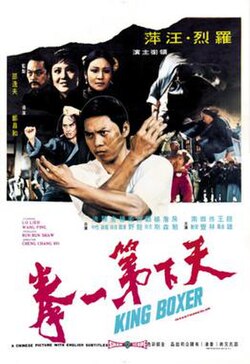
King Boxer (Chinese: 天下第一拳; pinyin: Tiān xià dì yī quán; lit. 'Number One Fist in the World', released in the United States as Five Fingers of Death) is a 1972 Hong Kongmartial arts film produced by Shaw Brothers Studio, directed by Jeong Chang-hwa, starring Lo Lieh, and featuring fight choreography by Lau Kar-wing.[1]
Released in the United States by Warner Bros. in March 1973, the film capitalized on the success of Warner's TV series Kung Fu[2] and was responsible for beginning the North American kung fu film craze of the 1970s, with over 30 similar films being released in the U.S. in 1973 alone. Warner followed it with the first U.S.-Hong Kong martial arts co-production Enter the Dragon released later that same year, which was the most successful of the chopsocky films of 1973.[3]
Plot
A promising young martial arts student named Chao Chi-hao has spent most of his life studying under his master Sung Wu-yang, and has fallen in love with the master's daughter Ying-ying. After Master Sung fails to properly fight off a group of thugs, he sends Chi-hao to study under a superior master, Shen Chin-pei. He instructs Chi-hao to learn from Chin-pei and defeat the local martial arts tyrant, Meng Tung-shan, in an upcoming tournament in order to earn Ying-ying's hand.
ระหว่างทางไปเมือง ฉีฮ่าวได้พบกับนักร้องสาวชื่อเยน และช่วยเธอจากพวกอันธพาลของเมิ่ง เธอตกหลุมรักเขา แต่เขาพยายามปฏิเสธความรักของเธออย่างยากลำบาก เมื่อเขาไปถึงเมือง เขาเริ่มเรียนกับซุนชินเป่ย หลังจากถูกฮั่นหลง ลูกศิษย์คนเก่งของชินเป่ยทำร้ายในตอนแรก ฉีฮ่าวก็พัฒนาฝีมืออย่างรวดเร็ว วันหนึ่ง เฉินหลาง "หัวเหล็ก" อันธพาลอีกคนของเมิ่ง บุกเข้ามาในโรงเรียนและทำร้ายนักเรียนของชินเป่ยทั้งหมด ในที่สุดชินเป่ยก็มาถึงและต่อสู้กับเขา แต่ถูกโจมตีอย่างไม่ยุติธรรมและได้รับบาดเจ็บ ฉีฮ่าวตามหาเฉินหลางจนเจอและเอาชนะเขาได้ เมื่อชินเป่ยได้ยินเรื่องนี้ เขาจึงเลือกฉีฮ่าวให้รับเอาความลับที่ร้ายกาจที่สุดของเขา นั่นคือหมัดเหล็ก
หานหลงรู้ว่าฉีฮ่าวได้รับเลือกให้เป็นผู้สืบทอดตำแหน่งของชินเป่ยจึงเกิดความอิจฉาริษยาอย่างรุนแรง เขาจึงวางแผนกับตงซานเพื่อทำให้ฉีฮ่าวพิการ เขาหลอกล่อฉีฮ่าวเข้าไปในป่า ที่ซึ่งนักเลงชาวญี่ปุ่นสามคนใหม่ของตงซาน ได้แก่ โอคาดะ โอชิมะ และซาเอมอน ดักซุ่มโจมตีเขา พวกเขาเอาชนะเขาและหักมือของเขา ต่อมา พวกเขาไปที่โรงเรียนของอาจารย์ซ่งและฆ่าเขาด้วย เยนช่วยฉีฮ่าวพักฟื้นและพยายามเกี้ยวพาราสีเขาอีกครั้ง แต่เขาปฏิเสธเธอ ในที่สุด เพื่อนร่วมชั้นของฉีฮ่าวก็พบเขาและให้กำลังใจเขาให้กลับมามีจิตวิญญาณนักสู้ เขาเริ่มฝึกฝนและในไม่ช้าก็หายจากบาดแผล อิงอิงมาถึง แต่ปกปิดข่าวการตายของพ่อของเธอ ฉีฮ่าวที่ฟื้นคืนพลังแล้วสามารถเอาชนะนักเรียนคนอื่นๆ ได้ทั้งหมดและเป็นตัวแทนของชินเป่ยในการแข่งขันที่จะมาถึง หานหลงกลับไปหาถงซานพร้อมข่าว แต่ลูกชายของถงซานกลับทำให้เขาตาบอดและขับไล่เขาออกไป
ในวันแข่งขัน เฉินหลางรู้สึกผิดจึงเตือนฉีฮ่าวถึงพวกอันธพาลชาวญี่ปุ่นสามคนที่ซุ่มโจมตีอยู่บนถนนสู่สนามประลอง ฉีฮ่าวต่อสู้กับพวกอันธพาลและฆ่าไปสองคน จากนั้นเฉินหลางก็มาถึงและยับยั้งหัวหน้าของพวกอันธพาลชาวญี่ปุ่นไว้เพื่อให้ฉีฮ่าวไปถึงสนามประลองได้ทันเวลา เขาไปถึงทันเวลาและเอาชนะลูกชายของตงซานเพื่อคว้าชัยชนะในการแข่งขัน ตงซานแทงและฆ่าชินเป่ยท่ามกลางการเฉลิมฉลองและจากไป เมื่อตงซานกลับถึงบ้าน เขาพบว่าไฟดับหมด หานหลงปรากฏตัวในห้องที่มืดมิดและตามคำแนะนำของเยน เขาต่อสู้กับตงซานและลูกชาย หานหลงทำให้ลูกชายตาบอด จากนั้นพ่อของเขาก็แทงเขาในความสับสน ตงซานพุ่งออกมาจากห้องมืดและเรียกสมุนของเขามาฆ่าหานหลง และตัวเขาเองก็ฆ่าเยน
ฉีฮ่าวมาถึงบ้านของตงซุน แต่ตงซานหนีไปและฆ่าตัวตายด้วยการแทงตัวเองก่อนที่ฉีฮ่าวจะทันได้ต่อสู้กับเขา ขณะที่เขากำลังจะจากไป หัวหน้าอันธพาลชาวญี่ปุ่นก็มาถึงพร้อมกับหัวของเฉินหลาง เขาและฉีฮ่าวเผชิญหน้ากัน ฉีฮ่าวใช้พลังหมัดเหล็ก ทำให้มือของเขาส่องแสงสีแดง และชกอย่างรุนแรงหลายครั้งจนทำให้อันธพาลกระเด็นไปกระแทกกำแพงอิฐ เมื่ออันธพาลพ่ายแพ้และตายไปแล้ว ฉีฮ่าว อิงอิง และต้าหมิงก็จากไป
หล่อ
- Lo Liehรับบทเป็น Chao Chi-hao ( จีน :趙志豪; พินอิน : Zhào Zhìháo )
- Wang Pingรับบทเป็น Sung Ying-ying (宋瑩瑩; Sòng Yíngyíng )
- Wang Chin-feng รับบทเป็น Ms. Yen (燕姑娘; Yàn Gūniáng )
- Tien Fengรับบทเป็น ปรมาจารย์ Meng Tung-shan (孟公yama ; Mèng Gōngshān )
- ตุงลัม รับบทเป็น Meng Tien-siung (孟天雄; Mèng Tiānxióng )
- ฟาง เมี่ยน รับบทเป็น อาจารย์ซวนซินเป่ย
- Ku Wen-Chung รับบทเป็น ปรมาจารย์ Sung Wu-yang
- นัม ซอกฮุน รับบทเป็น ฮัน ลุง
- เหยาหลง รับบทเป็น ตูเหว่ย
- เฉิน เชิน รับบทเป็น หวัน หงเจี๋ย
- Jin Bong-jin รับบทเป็น Lu Ta-ming
- Kim Ki-joo รับบทเป็น "Iron Head" Chen Lang
- เฉาซง รับบทเป็น อาจารย์โอคาดะ
- ยูกิโอะ โซเมโนะ รับบทเป็น มาซาทาโระ โอชิมะ
- เจียงชวน รับบทเป็น แซ่มอน
- โบโล หยางรับบทเป็น “มองโกล” บาตาร์
- หยาง เจ๋อหลิน รับบทเป็น กาน
ดนตรี
เพลงธีมจากซีรีส์โทรทัศน์อเมริกันเรื่องIronsideซึ่งประพันธ์โดยQuincy Jonesถูกนำมาใช้เป็นแก่นเรื่องหลักส่วนดนตรีประกอบดั้งเดิมนั้นประพันธ์โดย Chen Yung-yu และFrankie Chan
ปล่อย
ภาพยนตร์ เรื่อง King Boxerเข้าฉายในฮ่องกงเมื่อวันที่ 28 เมษายน พ.ศ. 2515 [ 4 ]เมื่อภาพยนตร์เรื่องนี้เข้าฉายในเกาหลีใต้ซึ่งเป็นบ้านเกิดของ ผู้กำกับ จอง ชางฮ วา ภาพยนตร์เรื่องนี้ได้เปลี่ยนชื่อเป็น The Iron Manผู้จัดจำหน่ายชิน ซังโอ๊กขายภาพยนตร์เรื่องนี้โดยอ้างว่าเป็นภาพยนตร์ร่วมทุนสร้างของเกาหลีใต้เพื่อหลีกเลี่ยงการจ่ายภาษีนำเข้า ภาพยนตร์เวอร์ชั่นนี้ถูกตัดออกไป 10 นาที โดยลบฉากที่โหดร้ายทั้งหมดออก[ 5 ]
ภาพยนตร์เรื่องนี้ออกฉายในเดือนมีนาคม พ.ศ. 2516 ในสหรัฐอเมริกาในชื่อFive Fingers of Death และเมื่อนำกลับมาฉายใหม่ในสหรัฐอเมริกา จะใช้ชื่อว่าThe Invincible Boxer [ 4 ]
ในเดือนธันวาคม 2021 ภาพยนตร์เรื่องนี้ได้รับการวางจำหน่ายในรูปแบบบลูเรย์ในสหราชอาณาจักร โดยเป็นส่วนหนึ่งของ ชุดบ็อกซ์เซ็ต Shawscope: Volume 1ของArrow Filmsซึ่งรวมถึงคำบรรยายเสียงโดยDavid Desser [ 6 ]
แผนกต้อนรับ
รายได้จากบ็อกซ์ออฟฟิศ
In the United States and Canada, the film repeated its success in Europe.[3] It earned US$4 million in American and Canadian rentals, the second highest-grossing film of the genre in the U.S. in 1973 after Enter the Dragon with rentals of US$4.25 million.[7]Five Fingers of Death exceeded US$10 million in worldwide rentals by October 1973,[8] and went on to earn US$4.6 million in North American rentals.[9]
Critical reception
In a contemporary review for The New York Times, Roger Greenspun wrote, "I don't know much about karate, but I know what I like. And the karate in 'Five Fingers of Death,' for all its slow-motion high leaps, its grunts, its whooshing fists, has the look of the bottom of the barrel. It is all too extravagant, too gratuitously wild—as if composed for show, rather than for attack, defense or any real purpose."[10]Variety called it "a Chinese actioner glossed with all the explosive trappings that make for a hit in its intended market ... Exquisitely-filmed and packed with colorful production values, direction by Cheng Chang Ho is powerful and direct and he gets top performances from cast headed by Lo Lieh, as the student, and Wang Ping as his beloved."[11]Gene Siskel of the Chicago Tribune gave the film 2 stars out of 4 and called it "a shoddy, poorly dubbed melodrama stuffed with insane dialog," though he acknowledged "the genuine excitement generated by the fight sequences, providing you can get excited at the sight of a karate chop that splits a forehead."[12] Fredric Milstein wrote in the Los Angeles Times, "Director Chen Chang Ho, who has a definite sense of style, keeps the pace fast and the action spectacular ... Dubbing is awful, but you don't come to this one to hear people talk."[13] In a review for the Monthly Film Bulletin, John Gillett found that the trick effect in which characters leap into the air to land either in a tree or on the opposite side of an opponent become "somewhat tedious as the film progresses." However, "...the sheer panache of the staging and apparent enjoyment of the participants keep the narrative moving swiftly".[14]
In a retrospective review, AllMovie gave the film three stars out of five, stating the film was "not the best Kung fu movie the Shaw Brothers put out, but as an early entry it holds up surprisingly well for a genre getting its legs." The review noted that "a more unfortunate stereotype perpetuated by this and future films is the Japanese as primitive ape-like villains" and that the film "drags a bit on what are now tired Kung fu clichés, but the punchy spirit that made it popular still survives".[15]
Quentin Tarantino ranked the movie among his 11 favorite films of all time.[16]
In popular culture
Quentin Tarantino includes several references to King Boxer in his martial arts duology Kill Bill: Volume 1 and Kill Bill: Volume 2.[17] Notably, the use of the "Ironside Theme" as a musical motif, and Tien-siung's eye-gouging move.[17]
Unofficial sequel
The 1977 film Bruce and the Shaolin Bronzemen was retitled in some territories as King Boxer 2.
See also
ลิงก์ภายนอก
- King Boxerที่ IMDb
- บทความเกี่ยวกับชุง ชาง-ฮวา และบทวิจารณ์ภาพยนตร์ที่ "ติดตามเกี๊ยวมังกรฟ้า" ( ลิงก์ถูกปิดใช้งานแล้ว ถูกเก็บถาวรเมื่อวันที่ 16 มิถุนายน 2550 ที่archive.today)