
Lithophyte
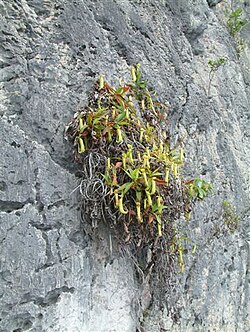
Lithophytes are plants that grow in or on rocks. Epilithic (or epipetric) lithophytes grow on the surfaces of rocks, while endolithic (or chasmophytes) lithophytes grow in the cracks or crevices of rocks.[1]Obligate lithophytes grow solely on rocks, while facultative lithophytes will grow partially on a rock and on another substrate simultaneously.[2]
Nutrients
Lithophytes that grow on land feed off nutrients from rain water and nearby decaying plants, including their own dead tissue. It is easier for chasmophytes to acquire nutrients because they grow in fissures in rocks where soil or organic matter has accumulated.
For most lithophytes, nitrogen is only available through interactions with the atmosphere. The most readily available form of nitrogen in the atmosphere is the gaseous state of ammonia (NH). Lithophytes consume atmospheric ammonia through a concentration gradient that allows the compound to traverse the plants' apoplast. Once free in the apoplast, gaseous ammonia is absorbed into metabolic cells by the enzyme glutamine synthetase.[3]
To be able to absorb the few nutrients available on rocks or rocky substrates efficiently, lithophytes have evolved certain adaptations. They possess decreased numbers of root hairs and larger root diameters in comparison to other plant species. To add to this nutrient uptake efficiency, lithophytic plants have increased their relationship with arbuscular mycorrhizal fungi and dark septate endophyte fungi. These two types of fungi live inter- and intracellularly with the roots of lithophytes and a wide variety of other plant species. They increase the uptake of nutrients and water and have been found in greater concentrations in lithophytes.[2]
Walls colonised as artificial cliffs by lithophytes
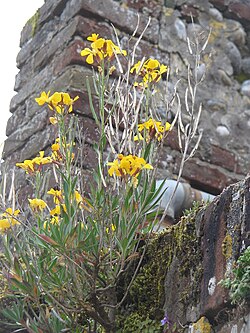
กำแพงและโครงสร้างหินที่เปิดโล่งอื่นๆ มักถูกพืชเข้ายึดครองในลักษณะเดียวกับการเข้ายึดครองหน้าผาและเศษหินลักษณะทางธรรมชาติเหล่านี้พบได้ไม่บ่อยนัก โดยเฉพาะในพื้นที่ราบต่ำ ดังนั้นกำแพงจึงมีความสำคัญต่อการอนุรักษ์พืชซึ่งอาจจะอยู่โดดเดี่ยวได้หากไม่มีกำแพง พืชบางชนิดที่ขึ้นบนกำแพงยังมีคำว่า 'wall' หรือ 'muralis' เป็นส่วนหนึ่งของชื่อสามัญหรือชื่อวิทยาศาสตร์ เช่น wall-flower ( Erysimum cheiri ) หรือ ivy-leaved toadflax ( Cymbalaria muralis ) ซึ่งแสดงให้เห็นถึงความสัมพันธ์อันยาวนานของพวกมันกับโครงสร้างที่มนุษย์สร้างขึ้นเหล่านี้หมายเหตุคำแนะนำด้านภูมิทัศน์ของ English Heritage : พืชพรรณบนกำแพง [ 4 ]
ตัวอย่าง
ตัวอย่างของพืชที่ขึ้นบนหิน ได้แก่กล้วยไม้ หลายชนิด เช่นDendrobiumและPaphiopedilum , บรอมิเลียดเช่นTillandsiaรวมถึงเฟิร์นสาหร่าย และลิเวอร์เวิร์ต จำนวนมาก นอกจากนี้ยังพบพืช ที่ ขึ้นบนหินในวงศ์พืชอื่นๆ อีกหลาย วงศ์เช่นLiliaceae , Amaryllidaceae , Begoniaceae , Caprifoliaceae , Crassulaceae , PiperaceaeและSelaginellaceae [ 5 ]
พืชกินแมลง
เนื่องจากสารอาหารมักมีให้ลิโทไฟต์หรือแชสโมไฟต์ได้ยากพืชกินแมลง หลายชนิด จึงอาจถือได้ว่าปรับตัวเข้ากับชีวิตบนหินได้ดี โดยการกินเหยื่อ พืชเหล่านี้สามารถสะสมสารอาหารได้มากกว่าลิโทไฟต์ที่ไม่กินแมลง[ 6 ]ตัวอย่างเช่นพืชหม้อข้าวหม้อแกงลิงNepenthes campanulataและHeliamphora exappendiculata , Pinguicula หลายชนิด และ Utriculariaหลายชนิด
บทกวีของเทนนีสันที่ได้รับแรงบันดาลใจจากพืชหิน
ในปี พ.ศ. 2306 อัลเฟรด ลอร์ด เทนนีสันได้แต่งบทกวีสั้นๆ กระชับ เกี่ยวกับการ คาดเดา เชิงอภิปรัชญาเรื่อง ดอกไม้ในกำแพงที่แตกเป็นรอยเมื่อพิจารณาถึงพืชหินที่ไม่ระบุชื่อที่เติบโตออกมาจากกำแพงหินของบ่อน้ำอธิษฐานที่แวกโกเนอร์สเวลส์[ 7 ]
ดอกไม้ในผนังที่แตกเป็นร่อง ฉันเด็ดเจ้าออกมาจากร่อง ฉันถือเจ้าไว้ตรงนี้ ทั้งรากและทั้งหมด ในมือของฉัน ดอกไม้น้อย—แต่ถ้าฉันสามารถเข้าใจว่า เจ้าคืออะไร ทั้งรากและทั้งหมด และทั้งหมดโดยรวม ฉันก็จะรู้ว่าพระเจ้าและมนุษย์คืออะไร[ 8 ]
แกลเลอรี
 Erinus alpinusหรือดอกฟ็อกซ์โกลฟนางฟ้า งอกออกมาจากรอยแตกในปูนของกำแพงหิน
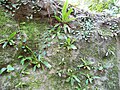 เฟิร์นหินเฟลต์เฟิร์นเขากวางเฟิร์นรังนกและมอสที่ขึ้นอยู่บนหินทรายฮอว์กส์เบอรีที่แชทส์วูดเวสต์ประเทศออสเตรเลีย
 Asarina procumbensหรือดอกสแนปดรากอนเลื้อย กำลังเจริญเติบโตในรอยแตกของกำแพงโบสถ์หินทรายในเบอร์วิกเชียร์ เช่นเดียวกับที่มันจะเจริญเติบโตบนหน้าผาหิน ซิลิกาในถิ่นกำเนิดของมันในเทือกเขาพิเรนีส
ดูเพิ่มเติม
- เอพิไบออนต์คือสิ่งมีชีวิตที่เจริญเติบโตบนสิ่งมีชีวิตอื่น
- เอพิไฟต์
- เอนโดซิมไบออนท์
- เชื้อราเกาะอาศัย
- แบคทีเรียเกาะอาศัย
- โฟลิโคลัส