
May 1985 lunar eclipse
| Total eclipse | |||||||||||||||||
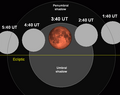
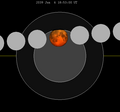
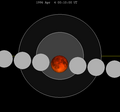
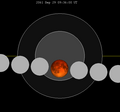
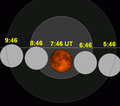
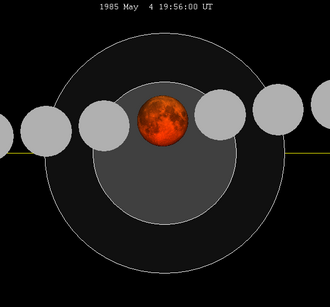 The Moon's hourly motion shown right to left | |||||||||||||||||
| Date | May 4, 1985 | ||||||||||||||||
|---|---|---|---|---|---|---|---|---|---|---|---|---|---|---|---|---|---|
| Gamma | 0.3520 | ||||||||||||||||
| Magnitude | 1.2369 | ||||||||||||||||
| Saros cycle | 121 (54 of 84) | ||||||||||||||||
| Totality | 67 minutes, 41 seconds | ||||||||||||||||
| Partiality | 198 minutes, 56 seconds | ||||||||||||||||
| Penumbral | 310 minutes, 14 seconds | ||||||||||||||||
| |||||||||||||||||
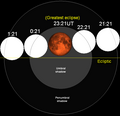
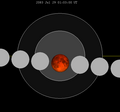
A total lunar eclipse occurred at the Moon's descending node of orbit on Saturday, May 4, 1985,[1] with an umbral magnitude of 1.2369. A lunar eclipse occurs when the Moon moves into the Earth's shadow, causing the Moon to be darkened. A total lunar eclipse occurs when the Moon's near side entirely passes into the Earth's umbral shadow. Unlike a solar eclipse, which can only be viewed from a relatively small area of the world, a lunar eclipse may be viewed from anywhere on the night side of Earth. A total lunar eclipse can last up to nearly two hours, while a total solar eclipse lasts only a few minutes at any given place, because the Moon's shadow is smaller. Occurring only about 13.5 hours after perigee (on May 4, 1985, at 6:20 UTC), the Moon's apparent diameter was larger.[2]
This lunar eclipse was the first of a tetrad, with four total lunar eclipses in series, the others being on October 28, 1985; April 24, 1986; and October 17, 1986.
Visibility
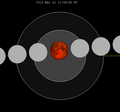
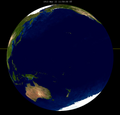
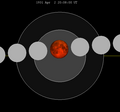
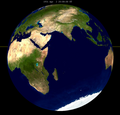
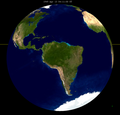
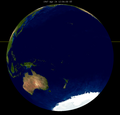
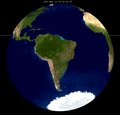
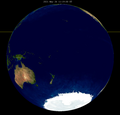
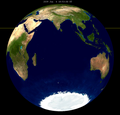
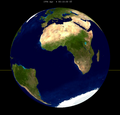
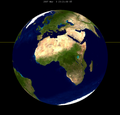
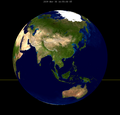
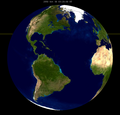
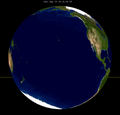
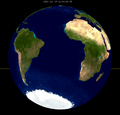
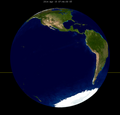
The eclipse was completely visible over central and east Africa, eastern Europe, the western half of Asia, western Australia, and Antarctica, seen rising over much of South America, west Africa, and western Europe and setting over east and northeast Asia and much of Australia.[3]
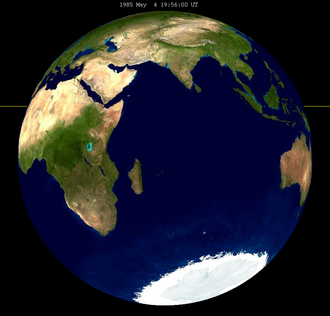 |
Eclipse details
Shown below is a table displaying details about this particular solar eclipse. It describes various parameters pertaining to this eclipse.[4]
| Parameter | Value |
|---|---|
| Penumbral Magnitude | 2.18702 |
| Umbral Magnitude | 1.23687 |
| Gamma | 0.35197 |
| Sun Right Ascension | 02h47m17.2s |
| Sun Declination | +16°07'37.7" |
| Sun Semi-Diameter | 15'51.5" |
| Sun Equatorial Horizontal Parallax | 08.7" |
| Moon Right Ascension | 14h47m52.0s |
| Moon Declination | -15°47'45.9" |
| Moon Semi-Diameter | 16'41.4" |
| Moon Equatorial Horizontal Parallax | 1°01'15.3" |
| ΔT | 54.5 s |
Eclipse season
สุริยุปราคาครั้งนี้เป็นส่วนหนึ่งของฤดูกาลสุริยุปราคาซึ่งเป็นช่วงเวลาประมาณทุก ๆ หกเดือน ที่จะเกิดสุริยุปราคาขึ้น ในแต่ละปีจะมีฤดูกาลสุริยุปราคาเกิดขึ้นเพียงสอง (หรือบางครั้งสาม) ครั้ง และแต่ละฤดูกาลจะกินเวลาประมาณ 35 วัน และจะเกิดขึ้นซ้ำอีกครั้งในเวลาไม่ถึงหกเดือน (173 วัน) ดังนั้นจึงมีฤดูกาลสุริยุปราคาเต็มดวงสองฤดูกาลเกิดขึ้นเสมอในแต่ละปี ในแต่ละฤดูกาลจะมีสุริยุปราคาเกิดขึ้นสองหรือสามครั้ง ในลำดับด้านล่างนี้ สุริยุปราคาแต่ละครั้งจะห่างกันสองสัปดาห์
| 4 พฤษภาคมจุดตัดวงโคจรลง (พระจันทร์เต็มดวง) | 19 พฤษภาคมจุดโคจรขึ้น (จันทร์ดับ) |
|---|---|
 | 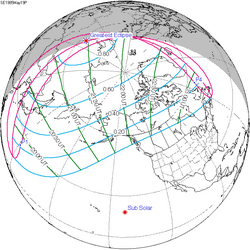 |
| จันทรุปราคาเต็มดวงจันทรศรอส 121 | สุริยุปราคาบางส่วน Solar Saros 147 |
สุริยุปราคาที่เกี่ยวข้อง
ปรากฏการณ์สุริยุปราคาในปี 1985
- จันทรุปราคาเต็มดวงในวันที่ 4 พฤษภาคม
- สุริยุปราคาบางส่วนในวันที่ 19พฤษภาคม
- จันทรุปราคาเต็มดวงในวันที่ 28ตุลาคม
- สุริยุปราคาเต็มดวงในวันที่ 12พฤศจิกายน
เมโทนิก
- ก่อนหน้า: จันทรุปราคาเมื่อวันที่ 17 กรกฎาคม 2524
- ตามมาด้วย: จันทรุปราคา วันที่ 20 กุมภาพันธ์ พ.ศ. 2532
ทซอลคิเน็กซ์
- ก่อนหน้า: จันทรุปราคาเมื่อวันที่ 24 มีนาคม 2521
- ตามมาด้วย: จันทรุปราคา วันที่ 15 มิถุนายน 2535
ฮาล์ฟ-ซารอส
- ก่อนหน้า: สุริยุปราคาเมื่อวันที่ 29 เมษายน 2519
- ตามมาด้วย: สุริยุปราคาเมื่อวันที่ 10 พฤษภาคม 2537
ทริทอส
- ก่อนหน้า: จันทรุปราคาเมื่อวันที่ 4 มิถุนายน 1974
- ตามมาด้วย: จันทรุปราคา วันที่ 4 เมษายน 2539
จันทราซารอส 121
- ก่อนหน้า: จันทรุปราคาเมื่อวันที่ 24 เมษายน 2510
- ตามมาด้วย: จันทรุปราคา วันที่ 16 พฤษภาคม 2546
อินเน็กซ์
- ก่อนหน้า: จันทรุปราคาเมื่อวันที่ 24 พฤษภาคม 1956
- ตามมาด้วย: จันทรุปราคา วันที่ 15 เมษายน 2557
ไตรแอด
- ก่อนหน้า: จันทรุปราคาเมื่อวันที่ 3 กรกฎาคม พ.ศ. 2441
- ตามมาด้วย: จันทรุปราคา วันที่ 4 มีนาคม พ.ศ. 2515
จันทรุปราคาในปี 1984–1987
สุริยุปราคาครั้งนี้เป็นส่วนหนึ่งของชุดสุริยุปราคาแบบรายภาคเรียนสุริยุปราคาในชุดจันทรุปราคาแบบรายภาคเรียนจะเกิดขึ้นซ้ำประมาณทุกๆ 177 วัน 4 ชั่วโมง (หนึ่งภาคเรียน) ที่จุด ตัดสลับกัน ของวงโคจรของดวงจันทร์[ 5 ]
จันทรุปราคาแบบเงามัวในวันที่13 มิถุนายน 1984เกิดขึ้นในชุดจันทรุปราคาของปีจันทรคติก่อนหน้า
| ชุดภาพจันทรุปราคา ตั้งแต่ปี 1984 ถึง 1987 | ||||||||
|---|---|---|---|---|---|---|---|---|
| โหนดลง | โหนดขาขึ้น | |||||||
| ซารอส | วันที่ดูข้อมูล | แผนภูมิประเภท | แกมมา | ซารอส | วันที่ดูข้อมูล | แผนภูมิประเภท | แกมมา | |
| 111 | 15 พฤษภาคม 1984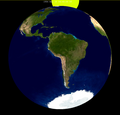 | เงามัว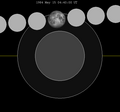 | 1.1131 | 116 | 8 พฤศจิกายน 1984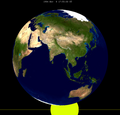 | เงามัว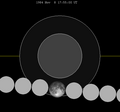 | −1.0900 | |
| 121 | 4 พฤษภาคม 1985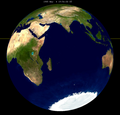 | ทั้งหมด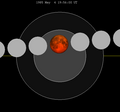 | 0.3520 | 126 | 28 ตุลาคม 1985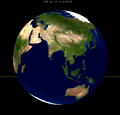 | ทั้งหมด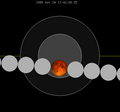 | −0.4022 | |
| 131 | 24 เมษายน 1986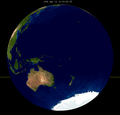 | ทั้งหมด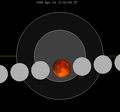 | −0.3683 | 136 | 17 ตุลาคม 1986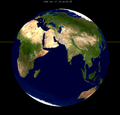 | ทั้งหมด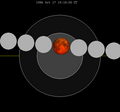 | 0.3189 | |
| 141 | 14 เมษายน 1987 | เงามัว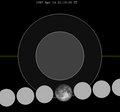 | −1.1364 | 146 | 7 ตุลาคม 1987 | เงามัว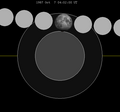 | 1.0189 | |
อนุกรมเมโทนิก
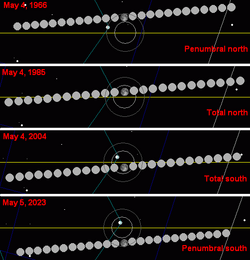
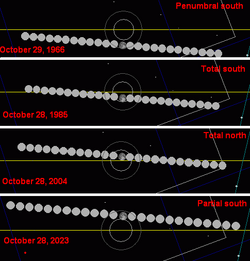
วัฏจักรเมโทนิกเกิดขึ้นซ้ำเกือบจะทุก 19 ปี และเทียบเท่ากับวัฏจักรซารอสบวกกับหนึ่งปีจันทรคติ เนื่องจากเกิดขึ้นในวันเดียวกันตามปฏิทิน เงาของโลกจึงจะอยู่ในตำแหน่งเกือบเดียวกันเมื่อเทียบกับดวงดาวพื้นหลัง
| เหตุการณ์สำคัญ: 4 พฤษภาคม และ 28 ตุลาคม | |
|---|---|
| โหนดลง | โหนดขาขึ้น |
|
|
 |  |
ซารอส 121
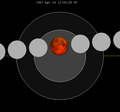
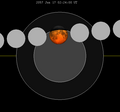
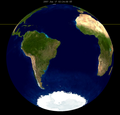
สุริยุปราคาครั้งนี้เป็นส่วนหนึ่งของชุดซารอสที่ 121ซึ่งเกิดขึ้นซ้ำทุก 18 ปี 11 วัน และประกอบด้วยเหตุการณ์ทั้งหมด 82 ครั้ง ชุดนี้เริ่มต้นด้วยจันทรุปราคาแบบเงามัวในวันที่ 6 ตุลาคม ค.ศ. 1047 ประกอบด้วยสุริยุปราคาบางส่วนตั้งแต่วันที่ 10 พฤษภาคม ค.ศ. 1408 ถึงวันที่ 3 กรกฎาคม ค.ศ. 1498; สุริยุปราคาเต็มดวงตั้งแต่วันที่ 13 กรกฎาคม ค.ศ. 1516 ถึงวันที่26 พฤษภาคม ค.ศ. 2021 ; และชุดสุริยุปราคาบางส่วนชุดที่สองตั้งแต่วันที่ 6 มิถุนายน ค.ศ. 2039ถึงวันที่ 11 สิงหาคม ค.ศ. 2147 ชุดนี้สิ้นสุดที่สมาชิกหมายเลข 82 ด้วยจันทรุปราคาแบบเงามัวในวันที่ 18 มีนาคม ค.ศ. 2508
สุริยุปราคาเต็มดวงที่มีระยะเวลานานที่สุดเกิดขึ้นกับสมาชิกหมายเลข 43 ที่ 100 นาที 29 วินาที ในวันที่ 18 ตุลาคม พ.ศ. 2303 สุริยุปราคาทั้งหมดในชุดนี้เกิดขึ้นที่จุดตัดวงโคจรลงของดวง จันทร์ [ 6 ]
| ยิ่งใหญ่ที่สุด | อันดับแรก | |||
|---|---|---|---|---|
| สุริยุปราคาครั้งที่ใหญ่ที่สุดในชุดนี้เกิดขึ้นเมื่อวันที่ 18 ตุลาคม พ.ศ. 2303ซึ่งกินเวลานาน 100 นาที 29 วินาที[ 7 ] | เงามัว | บางส่วน | ทั้งหมด | กลาง |
| 1047 ต.ค. 06 | 10 พฤษภาคม 1408 | 13 กรกฎาคม 1516 | 15 ส.ค. 1570 | |
| ล่าสุด | ||||
| กลาง | ทั้งหมด | บางส่วน | เงามัว | |
13 เมษายน 1949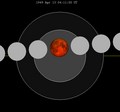 | 26 พฤษภาคม 2564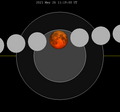 | 11 ส.ค. 2147 | 18 มีนาคม 2508 | |
การเกิดสุริยุปราคาจะถูกบันทึกไว้ในสามคอลัมน์ โดยสุริยุปราคาครั้งที่สามในคอลัมน์เดียวกันจะห่างกันหนึ่งเอ็กซิลิกมอสดังนั้นเงาของพวกมันจึงตกกระทบลงบนส่วนต่างๆ ของโลกโดยประมาณเท่ากัน
| สมาชิกในอนุกรมที่ 43–64 ปรากฏในช่วงระหว่างปี 1801 ถึง 2200: | |||||
|---|---|---|---|---|---|
| 43 | 44 | 45 | |||
| 15 มกราคม พ.ศ. 2448 | 26 มกราคม 1823 | 6 กุมภาพันธ์ 1841 | |||
| 46 | 47 | 48 | |||
| 17 กุมภาพันธ์ พ.ศ. 2492 | 27 กุมภาพันธ์ 1877 | 11 มีนาคม 1895 | |||
| 49 | 50 | 51 | |||
| 22 มีนาคม 1913 | 2 เมษายน 1931 | 13 เมษายน 1949 | |||
 |  |  |  | |  |
| 52 | 53 | 54 | |||
| 24 เมษายน 1967 | 4 พฤษภาคม 1985 | 16 พฤษภาคม 2546 | |||
 |  | | |  |  |
| 55 | 56 | 57 | |||
| 26 พฤษภาคม 2564 | 6 มิถุนายน 2039 | 17 มิถุนายน 2057 | |||
|  |  |  |  |  |
| 58 | 59 | 60 | |||
| 28 มิถุนายน 2075 | 8 กรกฎาคม 2093 | 21 กรกฎาคม 2111 | |||
| 61 | 62 | 63 | |||
| 2129 31 ก.ค. | 11 ส.ค. 2147 | 21 ส.ค. 2165 | |||
| 64 | |||||
| 2 กันยายน 2183 | |||||
ซีรี่ส์ Tritos
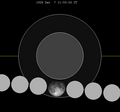
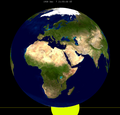
สุริยุปราคาครั้งนี้เป็นส่วนหนึ่งของ วัฏจักร ไตรทอสซึ่งจะเกิดขึ้นซ้ำที่จุดตัดสลับกันทุกๆ 135 เดือนสุริยคติ (≈ 3986.63 วัน หรือ 11 ปี ลบ 1 เดือน) การปรากฏและลองจิจูดของสุริยุปราคาเหล่านี้ไม่สม่ำเสมอเนื่องจากขาดการซิงโครไนซ์กับเดือนอะโนมา ลิสติก (ช่วงเวลาใกล้โลกที่สุด) แต่กลุ่มของวัฏจักรไตรทอส 3 รอบ (≈ 33 ปี ลบ 3 เดือน) จะใกล้เคียงกัน (≈ 434.044 เดือนอะโนมาลิสติก) ดังนั้นสุริยุปราคาในกลุ่มเหล่านี้จึงคล้ายคลึงกัน
| Series members between 1801 and 2200 | |||||||||
|---|---|---|---|---|---|---|---|---|---|
| 1810 Sep 13(Saros 105) | 1821 Aug 13(Saros 106) | 1832 Jul 12(Saros 107) | 1843 Jun 12(Saros 108) | 1854 May 12(Saros 109) | |||||
| 1865 Apr 11(Saros 110) | 1876 Mar 10(Saros 111) | 1887 Feb 08(Saros 112) | 1898 Jan 08(Saros 113) | 1908 Dec 07(Saros 114) | |||||
 |  | ||||||||
| 1919 Nov 07(Saros 115) | 1930 Oct 07(Saros 116) | 1941 Sep 05(Saros 117) | 1952 Aug 05(Saros 118) | 1963 Jul 06(Saros 119) | |||||
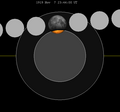 |  | 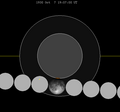 |  | 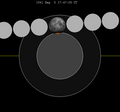 | 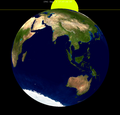 | 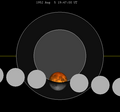 | 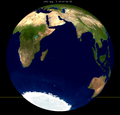 |  |  |
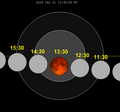
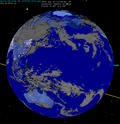
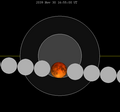
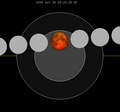
| 1974 Jun 04(Saros 120) | 1985 May 04(Saros 121) | 1996 Apr 04(Saros 122) | 2007 Mar 03(Saros 123) | 2018 Jan 31(Saros 124) | |||||
 |  | | |  |  |  |  |  |  |
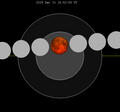
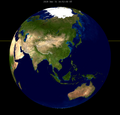
| 2028 Dec 31(Saros 125) | 2039 Nov 30(Saros 126) | 2050 Oct 30(Saros 127) | 2061 Sep 29(Saros 128) | 2072 Aug 28(Saros 129) | |||||
 |  |  |  |  |  |  |  |  |  |
| 2083 Jul 29(Saros 130) | 2094 Jun 28(Saros 131) | 2105 May 28(Saros 132) | 2116 Apr 27(Saros 133) | 2127 Mar 28(Saros 134) | |||||
 |  |  |  | ||||||
| 2138 Feb 24(Saros 135) | 2149 Jan 23(Saros 136) | 2159 Dec 24(Saros 137) | 2170 Nov 23(Saros 138) | 2181 Oct 22(Saros 139) | |||||
| 2192 Sep 21(Saros 140) | |||||||||
Inex series
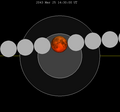
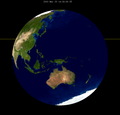
This eclipse is a part of the long period inex cycle, repeating at alternating nodes, every 358 synodic months (≈ 10,571.95 days, or 29 years minus 20 days). Their appearance and longitude are irregular due to a lack of synchronization with the anomalistic month (period of perigee). However, groupings of 3 inex cycles (≈ 87 years minus 2 months) comes close (≈ 1,151.02 anomalistic months), so eclipses are similar in these groupings.
| Series members between 1801 and 2200 | |||||
|---|---|---|---|---|---|
| 1811 Sep 02(Saros 115) | 1840 Aug 13(Saros 116) | 1869 Jul 23(Saros 117) | |||
| 1898 Jul 03(Saros 118) | 1927 Jun 15(Saros 119) | 1956 May 24(Saros 120) | |||
 |  |  |  | ||
| 1985 May 04(Saros 121) | 2014 Apr 15(Saros 122) | 2043 Mar 25(Saros 123) | |||
| |  |  |  |  |
| 2072 Mar 04(Saros 124) | 2101 Feb 14(Saros 125) | 2130 Jan 24(Saros 126) | |||
| 2159 Jan 04(Saros 127) | 2187 Dec 15(Saros 128) | ||||
Half-Saros cycle
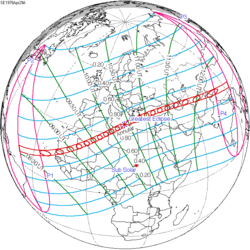
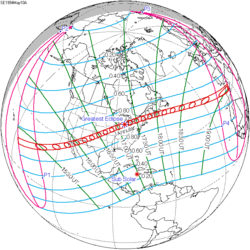
A lunar eclipse will be preceded and followed by solar eclipses by 9 years and 5.5 days (a half saros).[8] This lunar eclipse is related to two annular solar eclipses of Solar Saros 128.
| April 29, 1976 | May 10, 1994 |
|---|---|
 |  |
See also
Notes
- ↑"May 4–5, 1985 Total Lunar Eclipse (Blood Moon)". timeanddate. Retrieved 6 January 2025.
- ↑"Moon Distances for London, United Kingdom, England". timeanddate. Retrieved 6 January 2025.
- ↑"Total Lunar Eclipse of 1985 May 04"(PDF). NASA. Retrieved 6 January 2025.
- ↑"Total Lunar Eclipse of 1985 May 04". EclipseWise.com. Retrieved 6 January 2025.
- ↑van Gent, R.H. "Solar- and Lunar-Eclipse Predictions from Antiquity to the Present". A Catalogue of Eclipse Cycles. Utrecht University. Retrieved 6 October 2018.
- ↑"NASA - Catalog of Lunar Eclipses of Saros 121". eclipse.gsfc.nasa.gov.
- ↑Listing of Eclipses of series 121
- ↑Mathematical Astronomy Morsels, Jean Meeus, p.110, Chapter 18, The half-saros
External links
- 1985 May 04 chart Eclipse Predictions by Fred Espenak, NASA/GSFC