
ชามิ้นต์มาเกรบ

ชามิ้นต์ Maghrebi ( Maghrebi Arabic : اتاي , ʾatāy ; [ 1 ]อาหรับ: الشاي بالنعناع , อักษรโรมัน : aš-šāy bin-naʿnāʿ [ 2 ] ) หรือที่รู้จักในชื่อชามิ้นต์ตูนิเซีย , ชามิ้นต์แอลจีเรีย , [ 3 ] [ 4 ] [ 5 ]หรือมิ้นต์โมร็อกโก ชา[ 6 ] [ 7 ]เป็นการเตรียมชาเขียวดินปืนจากแอฟริกาเหนือพร้อม ใบ สเปียร์มินต์และน้ำตาล
เป็นอาหารดั้งเดิมของ ภูมิภาคมา เกร็บใหญ่ (ประเทศในแอฟริกาตะวันตกเฉียงเหนือ ได้แก่ แอลจีเรีย [ 8 ] [ 9 ] [ 10 ]ตูนิเซียโมร็อกโกลิเบียและมอริเตเนีย)การบริโภคได้แพร่กระจายไปทั่วแอฟริกาเหนือบางส่วนของซาเฮลฝรั่งเศสสเปนโลกอาหรับและตะวันออกกลาง
Mint tea is central to social life in the Maghreb[11] and is very popular among the Tuareg people of Algeria, Libya, Niger and Mali.[12] The serving can take a ceremonial form, especially when prepared for a guest. The tea is traditionally made by the head male in the family and offered to guests as a sign of hospitality. Typically, at least three glasses of tea are served.[13] The tea is consumed throughout the day as a social activity.[11][14][15] The native spearmint naʿnāʿ (نعناع) possesses a clear, pungent, mild aroma, and is the mint that is traditionally used in Maghrebi mint tea. Other hybrids and cultivars of spearmint, including yerba buena, are occasionally used as substitutes for nana mint. In Morocco, mint tea is sometimes perfumed with herbs, flowers, or orange blossom water. In the cold season, they add many warming herbs like marjoram, sage, verbena, and wormwood.[11] Mint has been used as an infusion, decoction, and herbal medicine throughout the Mediterranean since antiquity.
Name
In Mauritania, Morocco and Algeria, the word for tea is tay, atay or lātāy; while in Tunisia it's et-tey.[16] These diverge from the typical Arabic word for tea, shai (شاي). According to Van Driem, ʾit-tāī originates from the Dutch language thee.[17]
History
Gunpowder tea was introduced into North Africa by the British in the 18th and 19th centuries via Morocco and Algeria.[18]
According to food historian Helen Saberi, the drinking of green tea infused with mint spread from Morocco to Algeria, Tunisia, Libya, Egypt and to nomadic tribes of Berbers and Tuareg in the Sahara.[19]
Sugar and tea would arrive from Europe to the port of Essaouira, where Jewish merchants who had started migrating to coastal cities in the 19th century managed their passing through the interior of Morocco.[20]James Richardson recorded a description of a Moroccan tea ceremony in the 1840s, and said that during his travels tea was drunk widely and all day long.[14]
Tea consumption became associated with power and prestige in Morocco, and Ahmed Bin Mubarek, officer of Sultan Suleiman (r. 1792–1822), became the first mūl atay (مول أتاي "master of tea") in the Makhzen.[21] In the twenty years after the Anglo-Moroccan Treaty of 1856, and after the British East India Company diverted tea meant for the Baltic states to Morocco during the Crimean War,[11] tea imports quadrupled but tea consumption remained an urban practice.[22] Among urban populations, partaking in the tea ceremony became a symbol of status and savoir faire, while among rural farmers it was a way to emulate the urban class they both envied and resented.[22] Tea consumption spread through wider segments of the population as a result of the famines of the 1880s, when it became an emergency calorie substitute, appetite suppressant, and mode of performing acculturation for rural populations flooding the cities in search of opportunities.[22]
Another factor in the spread of atay consumption in Morocco was the comparative scarcity of coffee.[22] Whereas Algerian cities had been introduced to coffee culture under the influence of the Ottomans, Moroccan cities would only be introduced to coffee later.[22] Oral traditions in the Algerian city of Tlemcen distinguish between "Fassi tea drinkers and Tlemceni coffee drinkers".[22]
In the late 19th century, Sufi orders led by figures such as Muhammad Bin Abdul-Kabir Al-Kattani told their adherents not to drink tea, attempting to boycott sugar and tea imported by Europeans.[23]
By the early 20th century, mint tea had become well established in Morocco.[15]
Preparation
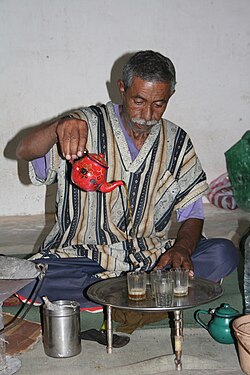
ส่วนผสมพื้นฐานของชาประกอบด้วยชาเขียว ใบสะระแหน่สด น้ำตาล และน้ำเดือด[ 11 ]สัดส่วนของส่วนผสมและเวลาในการชงอาจแตกต่างกันไปอย่างมาก ในภูมิภาคมาเกร็บจะใช้น้ำเดือด แทนที่จะใช้น้ำเย็นที่ใช้ในเอเชียตะวันออกเพื่อหลีกเลี่ยงรสขม ใบชาจะถูกทิ้งไว้ในกาขณะดื่ม ทำให้รสชาติเปลี่ยนไปในแต่ละแก้ว ชาจะถูกเทลงในแก้วจากที่สูงเพื่อหมุนใบชาที่หลวมลงไปที่ก้นแก้ว ในขณะเดียวกันก็ค่อยๆ เติมอากาศให้กับชาเพื่อปรับปรุงรสชาติ
ในฤดูหนาว หากใบสะระแหน่หายาก บางครั้งจะใช้ใบของต้นเวิร์มวูด ( الشيبة shībaในภาษาอาหรับโมร็อกโก ) แทน (หรือใช้เสริม) ใบสะระแหน่ ทำให้ชามีรสขมอย่างชัดเจน[ 24 ] นอกจากนี้ยังใช้ เลมอนเวอร์บีนา ( لويزة lwizaในภาษาอาหรับโมร็อกโก ) เพื่อเพิ่มรสชาติเลมอน สมุนไพรอื่นๆ ที่ใช้ปรุงแต่งรสชาติชา ได้แก่ ออริกาโน เสจ และไทม์[ 22 ]บางครั้งชาจะถูกขายเป็นส่วนผสมของชาและสะระแหน่แห้งที่พร้อมปรุง ซึ่งเก็บรักษาและเตรียมได้ง่ายกว่า แต่รสชาติจะลดลง
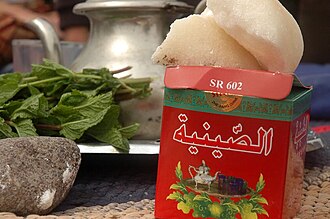 วัตถุดิบ
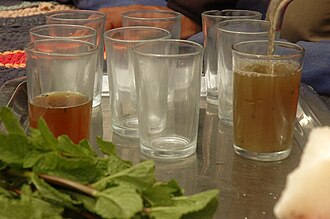 การทำความสะอาดชา
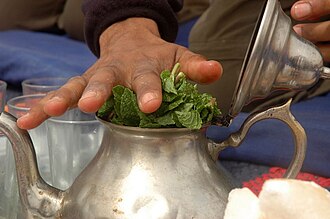 ใส่ใบสะระแหน่
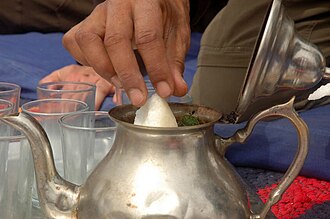 เติมน้ำตาล
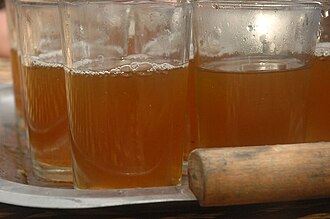 พร้อมดื่ม
วัฒนธรรม
ตามธรรมเนียมแล้ว ชาจะเสิร์ฟสามครั้ง ระยะเวลาในการแช่ชาจะทำให้ชาแต่ละแก้วมีรสชาติที่เป็นเอกลักษณ์ ซึ่งอธิบายไว้ในสุภาษิตมาเกรบที่มีชื่อเสียงนี้:
แก้วแรกขมขื่นเหมือนชีวิต แก้วที่สองเข้มข้นเหมือนความรักแก้วที่สามปลอบประโลมเหมือนความตาย[ 11 ]
ใน เพลง Es-Siniya ( الصينية ) ซึ่งเป็นหนึ่งใน เพลงยอดนิยมของNass El Ghiwaneถาดน้ำชาถูกใช้เป็นอุปมาอุปไมยเพื่อพูดถึงความยากลำบากในการอพยพจากชนบทไปยังเมืองใหญ่ เช่นคาซาบลังกา[ 22 ]