
สถานีริมถนน
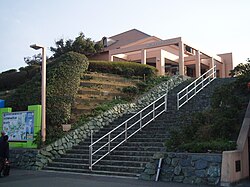
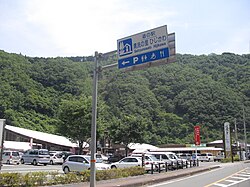
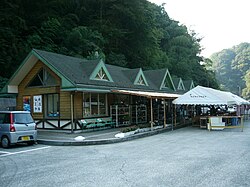
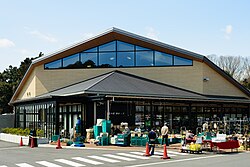
สถานี พัก รถริมทาง(道の駅, Michi no eki )คือพื้นที่พักรถ ที่ รัฐบาลกำหนดไว้ตามถนนและทางหลวงในประเทศญี่ปุ่นแตกต่างจากจุดบริการและที่จอดรถตรงที่ไม่ได้อยู่บนทางด่วนเก็บค่าผ่านทาง และทุกคนสามารถเข้าใช้บริการได้
นอกจากจะเป็นสถานที่พักผ่อนสำหรับนักเดินทางแล้ว ยังมีจุดประสงค์เพื่อส่งเสริมการท่องเที่ยวและการค้าในท้องถิ่นด้วย ร้านค้าอาจจำหน่ายผลผลิตในท้องถิ่น ขนมขบเคี้ยว ของที่ระลึก และสินค้าอื่นๆ สถานีริมทางทุกแห่งให้บริการที่จอดรถ ห้องน้ำสาธารณะข้อมูลเส้นทางและการท่องเที่ยว และสิ่งอำนวยความสะดวกอื่นๆ ตลอด24 ชั่วโมง[ 1 ]
ณ เดือนสิงหาคม พ.ศ. 2567 มีสถานีริมทาง 1,221 แห่งทั่วประเทศญี่ปุ่น ได้แก่ 128 แห่งในฮอกไกโด 175 แห่งในภูมิภาคโทโฮคุ 188 แห่งในภูมิภาคคันโต 84 แห่งในภูมิภาคโฮคุริคุ 136 แห่งใน ภูมิภาคชูบุ 158 แห่งในภูมิภาคคันไซ (คินกิ) 108 แห่งในภูมิภาคชูโกกุ 91 แห่งในชิโกกุและ 153 แห่งทั่วทั้งคิวชูและโอกินาวา [ 2 ]
ประวัติศาสตร์
แนวคิดเรื่องสถานีริมถนนมาจากงานสัมมนาในเดือนมกราคม พ.ศ. 2533 ที่จัดโดยสำนักงานก่อสร้างภูมิภาคชูโกกุกระทรวงการก่อสร้าง : [ 3 ]ผู้เข้าร่วมคนหนึ่งเสนอว่าถนนสามารถมีสถานีได้เช่นเดียวกับทางรถไฟ[ 4 ]การทดลองเริ่มขึ้นในเดือนตุลาคม พ.ศ. 2534 ในจังหวัดยามากุจิจังหวัดโทจิกิและจังหวัดกิฟุและระบบสถานีริมถนนได้รับการจัดตั้งอย่างเป็นทางการในวันที่ 23 กุมภาพันธ์ พ.ศ. 2536 [ 5 ]การลงทะเบียนครั้งแรกเกิดขึ้นในเดือนเมษายน พ.ศ. 2536 ส่งผลให้มีสถานีริมถนนเริ่มต้น 103 แห่ง[ 3 ]
เมื่อวันที่ 1 เมษายน พ.ศ. 2557 คำสั่งเกี่ยวกับป้ายจราจร เส้นจราจร และเครื่องหมายบนพื้นผิวถนนได้รับการแก้ไขให้รวมป้ายจราจรที่มีเครื่องหมายบอกทิศทางสำหรับสถานีริมถนน[ 6 ]
On January 30, 2015, a system for "priority roadside stations" was established.[7] The purpose of the system is to provide priority support to roadside stations that are deemed excellent in order to assist with regional revitalization. Priority roadside stations are divided into three categories:
- National Model Roadside Stations: roadside stations which continuously demonstrate outstanding regional revitalization abilities;
- Priority Roadside Stations: roadside stations that have excellent plans for regional revitalization, and are expected to be effective in the future with the assistance of priority support;
- Priority Roadside Station Candidates: roadside stations with the potential to become priority roadside stations.
Initially, 6 stations were designated National Model Roadside Stations, 35 were designated Priority Roadside Stations, and 49 were designated Priority Roadside Station Candidates.
Registered roadside stations by year
| Year[5] | Total number of roadside stations | Registrations (deregistrations) | Change |
|---|---|---|---|
| 1993 | 115 | 115 (0)[notes 1] | |
| 1994 | 175 | 60 (0) | +60 |
| 1995 | 233 | 58 (0) | +58 |
| 1996 | 313 | 80 (0) | +80 |
| 1997 | 390 | 77 (0) | +77 |
| 1998 | 470 | 80 (0) | +80 |
| 1999 | 551 | 81 (0) | +81 |
| 2000 | 610 | 59 (0) | +59 |
| 2001 | 649 | 49 (0) | +49 |
| 2002 | 701 | 52 (0) | +52 |
| 2003 | 743 | 42 (0) | +42 |
| 2004 | 785 | 43 (1) | +42 |
| 2005 | 830 | 45 (0) | +45 |
| 2006 | 845 | 15 (0) | +15 |
| 2007 | 868 | 23 (0) | +23 |
| 2008 | 887 | 42 (0) | +42 |
| 2009 | 917 | 30 (0) | +30 |
| 2010 | 952 | 35 (0) | +35 |
| 2011 | 977 | 25 (0) | +25 |
| 2012 | 996 | 19 (0) | +19 |
| 2013 | 1,014 | 19 (1) | +18 |
| 2014 | 1,040 | 26 (0) | +26 |
| 2015 | 1,079 | 39 (0) | +39 |
| 2016 | 1,107 | 67 (0) | +67 |
| 2017 | 1,134 | 36 (0) | +36 |
| 2018 | 1,145 | 11 (0) | +11 |
| 2019 | 1,160 | 15 (0) | +15 |
| 2020 | 1,180 | 20 (0) | +20 |
| 2021 | 1,193 | 13 (0) | +13 |
| 2022 | 1,198 | 7 (2) | +5 |
| 2023 | 1,209 | 11 (0) | +11 |
| 2024 | 1,221 | 12 (0) | +12 |
Notes
- ^In addition to the initial 103 roadside stations, 12 more stations were registered in the first year
External links

- (in Japanese)National Michi-no-Eki Association website
- (in English)Japan Road Bureau website
- Flickr photos 道の駅 (Michi-no-eki)
 | This article relating to the roads and highways in Japan is a stub. You can help Wikipedia by adding missing information. |
 | This article related to the culture of Japan is a stub. You can help Wikipedia by adding missing information. |