
อ่าน 11 นาที
ปลาโกบี้กลม
ปลาโกบี้กลม ( Neogobius melanostomus ) เป็นปลาที่อาศัยอยู่ก้น ทะเล ในวงศ์Gobiidae ซึ่งสามารถอาศัยอยู่ในน้ำที่ มีความเค็มปานกลางถึงสูง มีถิ่นกำเนิดใน
ปลาโกบี้กลม
| ปลาโกบี้กลม | |
|---|---|
 | |
การจำแนกทางวิทยาศาสตร์ | |
| อาณาจักร: | แอนิมอลเลีย |
| ไฟลัม: | คอร์ดาต้า |
| ระดับ: | แอคติโนปเทอริจี |
| คำสั่ง: | โกบีฟอร์ม |
| ตระกูล: | โกบีอิดา |
| ประเภท: | นีโอโกเบียส |
| สายพันธุ์: | เอ็น. เมลาโนสโตมัส |
| ชื่อทวินาม | |
| นีโอโกเบียส เมลาโนสโตมัส ( พัลลาส , 1814) | |
 | |
| ขอบเขตการกระจายพันธุ์และแหล่งแพร่พันธุ์ของปลาโกบี้กลม | |
| คำพ้องความหมาย[ 2 ] [ 3 ] | |
| |

ปลาโกบี้กลม ( Neogobius melanostomus ) เป็นปลาที่อาศัยอยู่ก้น ทะเล ในวงศ์Gobiidae ซึ่งสามารถอาศัยอยู่ในน้ำที่ มีความเค็มปานกลางถึงสูง มีถิ่นกำเนิดใน เอเชียกลางรวมถึงทะเลดำและทะเลแคสเปียนปลาโกบี้กลมได้แพร่กระจายไปยังทะเลบอลติกแม่น้ำสายหลักหลายสายในทวีปยูเรเซีย และทะเลสาบใหญ่ ใน ทวีป อเมริกาเหนือ [ 4 ]
ลักษณะเฉพาะ
ปลาโกบี้กลมเป็นปลาขนาดเล็ก ลำตัวอ่อนนุ่ม มีลักษณะเด่นคือจุดสีดำบนครีบหลังอันแรก ตาโตและโปนออกมาเล็กน้อยจากส่วนบนของหัว และเช่นเดียวกับปลาโกบี้ส่วนใหญ่ ครีบเชิงกรานจะเชื่อมติดกันเป็นแผ่นเดียว (รูปร่างคล้ายถ้วยดูด) บนท้อง ปลาโกบี้กลมมีความยาวตั้งแต่ 10 ถึง 25 เซนติเมตร (4 ถึง 10 นิ้ว) โดยมีขนาดใหญ่ที่สุด 24.6 เซนติเมตร (9.7 นิ้ว) น้ำหนักระหว่าง 5.0 ถึง 79.8 กรัม (0.176 ถึง 2.816 ออนซ์) น้ำหนักจะเพิ่มขึ้นตามอายุ ปลาโกบี้กลมตัวผู้มีขนาดใหญ่กว่าตัวเมีย ปลาโกบี้กลมวัยอ่อน (อายุน้อยกว่าหนึ่งปี) มีสีเทา เมื่อโตเต็มวัย ปลาโกบี้กลมจะมีลายด่างสีเทา ดำ น้ำตาล และเขียวมะกอก ปลาโกบี้กลมตัวผู้ที่โตเต็มวัยจะเปลี่ยนเป็นสีดำสนิทในช่วงฤดูวางไข่และมีแก้มบวมขึ้น ปลาโกบี้กลมตัวผู้และตัวเมียสามารถแยกแยะได้ง่ายจากรูปร่างของติ่งอวัยวะสืบพันธุ์ ซึ่งในตัวผู้จะมีสีขาวถึงเทา ยาวและแหลม ในขณะที่ตัวเมียจะมีสีน้ำตาล สั้น และปลายทู่
การกระจายตัวและถิ่นที่อยู่
Round gobies are widespread in the Sea of Marmara and in the rivers of its basin and can also be found in the Black Sea and the Sea of Azov, along all coasts and fresh waters of their basins as well as in the coastal lakes and lagoons. They are also found in the rivers of Crimea and the Caucasus (Mezib, Pshada, Vulan, Kodori, and Çoruh) and in the Caspian Sea, represented by subspeciesNeogobius melanostomus affinis.
Since 1990, the round goby has been registered as introduced in the North American Great Lakes, in parts of Europe, and in the Baltic Sea as an invasive species.[5] The first catch in North America was documented by Jude et al. 1992 and Crossman et al. 1992, caught by an angler in Sarnia, Ontario, fishing the St. Clair River on June 28, 1990. The studies of Jude, Crossman, together with Jude et al. 1995 found a range of sizes between 29 and 180 millimetres (1+1⁄8 and 7+1⁄8 in) in the St. Clair.[6] Round gobies are also rapidly expanding into tributaries of the Great Lakes in North America and were recently discovered in at least one of the Finger Lakes in New York State (Cayuga Lake). The first round goby in the Hudson River was discovered by the state of New York in 2021.
Round gobies are euryhaline (salt-tolerant) and live in both freshwater and marine ecosystems, up to a mineralization of 18–24%. They are commonly found on continental shelves with sandy and rocky bottoms with low silting at depths from 1–2 m (3.3–6.6 ft) to 10–17 m (33–56 ft).
Feeding
ปลาโกบี้กลมออกหากินทั้งกลางวันและกลางคืนและเชื่อกันว่าสามารถตรวจจับเหยื่อได้เฉพาะขณะอยู่นิ่งเท่านั้น อาหารหลักของปลาโกบี้กลม ได้แก่หอย , กุ้ง , หนอน , ไข่ปลา, หอยม้าลาย , ปลาขนาดเล็ก, ตัวอ่อนแมลง และสัตว์ไม่มีกระดูกสันหลังขนาดเล็กอื่นๆ (แมลงและแอมฟิพอด) ที่อาศัยอยู่ก้นทะเลสาบและลำธาร[ 4 ]ในฤดูใบไม้ผลิ องค์ประกอบหลักของอาหารของพวกมันในทะเลสาบ SasykคือHydrobia , CerastodermaและAbra [ 7 ] ในฤดูเดียวกัน ใกล้ชายฝั่งทะเลดำของโรมาเนียปลา โกบี้กลมกิน หนอนทะเล , กุ้ง ( Idotea balthica , Pachygrapsus marmoratus , Xantho poressaเป็นต้น) และปลาโกบี้วัยอ่อน[ 8 ]ใกล้เมืองเซวาสโตโพลปลาโกบี้กลมกินหอย ( Mytilaster lineatusและAbra sp.) [ 9 ]ในทะเลบอลติกพวกมันส่งผลกระทบต่อประชากรหอยแมลงภู่ Mytilus edulis [ 10 ]
ในอ่าวโอเดสซามีการระบุรายการอาหาร 23 รายการในอาหารของปลาโกบี้กลม[ 11 ] Mytilus galloprovincialis , Setia pulcherrima , Mytilaster lineatus , Lentidium mediterraneum , Idotea balthicaและAlitta (Nereis) succineaเป็นอาหารหลักในฤดูใบไม้ผลิ ในขณะที่ในฤดูร้อน อาหารส่วนใหญ่ประกอบด้วยSphaeroma pulchellumและL. mediterraneumหอยแมลงภู่M. galloprovincialisและM. lineatusมีความสำคัญในทุกฤดูกาล
ในทะเลสาบเกรตเลคส์ซึ่งเป็นพื้นที่รุกราน พวกมันล่าDreissena polymorphaซึ่งเป็นพืชต่างถิ่นในทะเลสาบเกรตเลคส์อีกชนิดหนึ่งจากถิ่นกำเนิดเดียวกัน ระบบเส้นข้างลำตัวที่สมบูรณ์ช่วยให้พวกมันสามารถหาอาหารได้ในความมืดสนิท ในทะเลสาบเกรตเลคส์ พวกมันยังกินลูกอ่อนและไข่ของCottus bairdii , Percina caprodes , Etheostoma spp. และSalvelinus namaycushรวมถึงสายพันธุ์อื่นๆ ทำให้พวกมันเป็นภัยคุกคามต่อประชากรพื้นเมืองเหล่านั้น[ 12 ]
การสืบพันธุ์

ปลาโกบี้กลมเพศเมียจะเข้าสู่วัยเจริญพันธุ์เมื่ออายุ 1-2 ปี ในขณะที่เพศผู้จะเข้าสู่วัยเจริญพันธุ์เมื่ออายุ 3-4 ปี โดยทั่วไปแล้ว ปลาโกบี้ในทะเลสาบใหญ่ลอเรนเชียนจะเข้าสู่วัยเจริญพันธุ์เร็วกว่าในถิ่นกำเนิดในยุโรปถึง 1 ปี เพศเมียสามารถวางไข่ได้มากถึง 6 ครั้งในช่วงฤดูวางไข่ ซึ่งส่วนใหญ่กินเวลาตั้งแต่เดือนเมษายนถึงกันยายน
ในช่วงเริ่มต้นฤดูผสมพันธุ์ ปลาตัวผู้จะอพยพจากน้ำลึกซึ่งเป็นที่จำศีลในฤดูหนาว เข้าสู่แหล่งผสมพันธุ์ที่ตื้นกว่า จากนั้นพวกมันจะปล่อยฟีโรโมนเพศประเภทสเตียรอยด์เพื่อดึงดูดปลาตัวเมียเข้ามาในอาณาเขตของตน ปลาตัวผู้ยังใช้การแสดงออกทางสายตา รวมถึงการวางท่าทางและการเปลี่ยนสีจากสีเบจเป็นสีดำในช่วงฤดูผสมพันธุ์ และสามารถส่งเสียงได้ในระหว่างการเกี้ยวพาราสี ปลาตัวเมียจะวางไข่ในรอยแตกของหินที่ปลาตัวผู้คอยเฝ้ารักษา ไข่มีขนาด 4 x 2.2 มิลลิเมตร (0.16 x 0.087 นิ้ว) ในขณะที่กลุ่มไข่สามารถมีไข่ได้มากถึงห้าพันฟอง ปลาตัวผู้มีอาณาเขตและจะปกป้องไข่จากผู้ล่า รวมถึงพัดไข่อย่างต่อเนื่องเพื่อให้น้ำที่มีออกซิเจนแก่ตัวอ่อนที่กำลังเจริญเติบโต ส่งผลให้อัตราการฟักไข่ประสบความสำเร็จสูงถึง 95%
ชนิดพันธุ์รุกราน
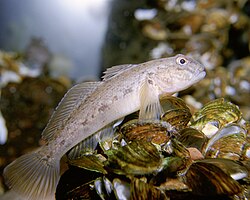
ปลาชนิดนี้ถูกนำเข้ามาในทะเลสาบใหญ่ของอเมริกาเหนือโดยไม่ได้ตั้งใจผ่านทางน้ำอับเฉาในเรือบรรทุกสินค้า ปลาโกบี้กลมถูกค้นพบครั้งแรกในอเมริกาเหนือในแม่น้ำเซนต์แคลร์ในปี 1990 และถือเป็นชนิดพันธุ์รุกรานที่มีผลกระทบทางนิเวศวิทยาและเศรษฐกิจอย่างมาก[ 13 ]ผลที่ตามมาจากการนำเข้ามานั้นค่อนข้างซับซ้อน เนื่องจากปลาชนิดนี้แข่งขันกับชนิดพันธุ์พื้นเมืองและเป็นแหล่งอาหารที่อุดมสมบูรณ์สำหรับพวกมัน ในขณะเดียวกันก็กินชนิดพันธุ์รุกรานอื่นๆ ด้วย[ 14 ]กล่าวอีกนัยหนึ่ง ปลาโกบี้กลมมีพฤติกรรมคล้ายกับการควบคุมการรุกรานทางชีวภาพส่วนใหญ่ ปลาโกบี้กลมเป็นปลาที่ก้าวร้าว แย่งชิงอาหาร (เช่นหอยทากและหอยแมลงภู่ ) ที่ พักพิงและ แหล่ง ทำรัง จากชนิดพันธุ์พื้นเมือง เช่น ปลาสกั ลปินและปลาล็อกเพิร์ช ทำให้จำนวนของพวกมันลดลงอย่างมาก ปลาโกบี้กลมยังเป็นนักล่าไข่ของปลาพื้นเมืองอย่างตะกละตะกลาม ซึ่งหลายชนิดมีความสำคัญต่ออุตสาหกรรมการตกปลา ความสามารถที่แข็งแกร่งของปลาโกบี้ในการเอาชีวิตรอดในสภาพแวดล้อมที่เสื่อมโทรมช่วยเพิ่มความได้เปรียบในการแข่งขันเมื่อเทียบกับชนิดพันธุ์พื้นเมือง
Many native predatory fish such as smallmouth bass, largemouth bass, walleye, salmon, and trout have begun to prey on round gobies. The incorporation of the round goby into native foodwebs, coupled with the goby's ability to consume large numbers of invasive mussels (zebra and quagga), may result in greater bioaccumulation of toxins such as PCBs higher in the food chain, since these mussels filter-feed and are known to accumulate persistent contaminants. However, this is partly beneficial because even though they do not reduce the population of zebra mussels, they do control their population. Hence, it prevents a large-scale spread of the zebra mussel, which is also an invasive species in the Great Lakes. Another unintended benefit of the round goby's introduction is that the Lake Erie watersnake, once listed as a threatened species, has found the goby to be a highly favorable addition to its diet. A recent study found the introduced fish now accounts for up to 90% of the snake's prey. The new food supply means that the water snake is now staging a comeback.[15] Round gobies also serve as food for a variety of predatory fishes in the Great Lakes, including bass, lake trout, lake whitefish, burbot, lake sturgeon, and walleye.[16]
The round goby is also considered invasive in parts of Europe. This process was started by its introduction to the Gulf of Gdańsk (southern Baltic Sea) in 1990.[17] Locations recently invaded by round gobies include the Aegean Sea,[18] different parts of the Baltic Sea,[19] the North Sea basin,[20] and the Danube and Rhine basins.[21][22] In the German part of the Baltic Sea this fish was first noted near Rügen Island.[23] It is now distributed all along the southwestern Baltic Sea coast, including Stettiner Haff (Szczecin Lagoon), the Unterwarnow (Warnow river estuary), the mouth of the Trave, and the Nord-Ostsee (Kiel) Canal.
As of 2010, the westernmost site of round goby occurrence in Europe was the lower Scheldt, including the tidal zone in the river mouth, and Albert Canal, Belgium.[24] In 2011, the round goby began invading the fresh waters of France; the species appeared in the Rhine River (on the border between France and Germany) and in the French part of the Moselle River.[25]
Parasites
In total, fifty-two parasite species are registered in the round goby in its native area.[26] The most abundant parasites of the Black Sea round goby are metacercariae of trematodes of the Heterophyidaefamily, such as Cryptocotyle concavum, C. lingua, and Pygidiopsis genata.[27] The trematodes C. lingua and P. genata can infest humans.[28][29] In the 1950s, along the coast of the Gulf of Taganrog (Sea of Azov), the round goby was registered as a host of epizooticnematodesTetrameres fissispina and Streptocara crassicauda, which were fatal to ducklings.[30]
In the Gulf of Gdańsk, Baltic Sea, the parasites of the invasive round goby consist of twelve species.[31] The core of the parasite fauna comprises two species of trematodemetacercariae: C. concavum and Diplostomum spathaceum. Also in the Baltic Sea, the round goby is a paratenic host of the invasive nematode Anguillicoloides crassus.[32] In the Vistula Lagoon, the most abundant parasites of the round goby are nematodesHysterothylacium aduncum and Anguillicoloides crassus.[33]
มีการบันทึกปรสิต 25 ชนิดในปลาโกบี้กลมในทะเลสาบใหญ่ของอเมริกา[ 34 ] [ 35 ] [ 36 ] [ 37 ]พยาธิใบไม้D. spathaceumเป็นชนิดหลักที่พบมากที่สุดโดยรวม ในขณะที่พยาธิเส้นแบนProteocephalus sp. และพยาธิใบไม้Neochasmus umbellusก็มีจำนวนมากเช่นกัน ปลาโกบี้กลมอาจป้องกันไม่ให้เมตาเซอร์คาเรียของN. umbellus บางส่วนเจริญ เติบโตจนครบวงจรชีวิตได้[ 38 ]ปริมาณปรสิตในปลาโกบี้ที่รุกรานในทะเลสาบใหญ่ดูเหมือนจะค่อนข้างต่ำเมื่อเทียบกับถิ่นที่อยู่ดั้งเดิม ซึ่งสนับสนุนสมมติฐาน "การปลดปล่อยศัตรู"
ลิงก์ภายนอก

- ปลาโกบี้กลม ซึ่งเป็นสายพันธุ์ต่างถิ่นที่รุกรานในทะเลสาบทั้งห้า
- ชนิดพันธุ์ต่างถิ่นรุกรานในแหล่งน้ำ - โครงการ Minnesota Sea Grant เก็บถาวรเมื่อ 3 มกราคม 2017 ที่Wayback Machine
- ฐานข้อมูลชนิดพันธุ์ต่างถิ่นรุกรานทั่วโลก
- สิ่งมีชีวิตในน้ำที่เป็นอันตรายที่ติดมากับเรือ
- กรมทรัพยากรธรรมชาติแห่งรัฐมินนิโซตา
- InvadingSpecies.com , กระทรวงทรัพยากรธรรมชาติแห่งรัฐออนแทรีโอ และสมาคมนักตกปลาและนักล่าแห่งรัฐออนแทรีโอ
- ชนิดพันธุ์ต่างถิ่นของ USGS
- ข้อมูลเกี่ยวกับสายพันธุ์ - ปลาโกบี้กลม ( Neogobius melanostomus )จากศูนย์ข้อมูลชนิดพันธุ์ต่างถิ่นรุกรานแห่งชาติห้องสมุดการเกษตรแห่งชาติสหรัฐอเมริการวบรวมข้อมูลทั่วไปและแหล่งข้อมูลเกี่ยวกับปลาโกบี้กลม
- พิพิธภัณฑ์สัตว์วิทยา มหาวิทยาลัยมิชิแกน เว็บไซต์ความหลากหลายของสัตว์Neogobius melanostomus
- เอกสารข้อมูลสายพันธุ์ GLANSISจากสำนักงานสำรวจทางธรณีวิทยาแห่งสหรัฐอเมริกา
สรุปเนื้อหา
ข้อมูลสำคัญจากบทความ
ข้อมูลสำคัญเกี่ยวกับ ปลาโกบี้กลม
ปลาโกบี้กลม ( Neogobius melanostomus ) เป็นปลาที่อาศัยอยู่ก้น ทะเล ในวงศ์Gobiidae ซึ่งสามารถอาศัยอยู่ในน้ำที่ มีความเค็มปานกลางถึงสูง มีถิ่นกำเนิดใน
ลักษณะเฉพาะ
ปลาโกบี้กลมเป็นปลาขนาดเล็ก ลำตัวอ่อนนุ่ม มีลักษณะเด่นคือจุดสีดำบนครีบหลังอันแรก ตาโตและโปนออกมาเล็กน้อยจากส่วนบนของหัว และเช่นเดียวกับปลาโกบี้ส่วนใหญ่ ครีบเชิงกรานจะเชื่อมติดกันเป็นแผ่นเดียว (รูปร่างคล้ายถ้วยดูด) บนท้อง ปลาโกบี้กลมมีความยาวตั้งแต่ 10 ถึง 25...
การกระจายตัวและถิ่นที่อยู่
Round gobies are widespread in the Sea of Marmara and in the rivers of its basin and can also be found in the Black Sea and the Sea of Azov , along all coasts and fresh waters of their basins as well as in the coastal lakes and lagoons .
Feeding
ปลาโกบี้กลมออกหากินทั้ง กลางวัน และ กลางคืน และเชื่อกันว่าสามารถตรวจจับเหยื่อได้เฉพาะขณะอยู่นิ่งเท่านั้น อาหารหลักของปลาโกบี้กลม ได้แก่ หอย , กุ้ง , หนอน , ไข่ปลา, หอยม้าลาย , ปลาขนาดเล็ก, ตัวอ่อน แมลง และสัตว์ไม่มีกระดูกสันหลังขนาดเล็กอื่นๆ (แมลงและแอมฟิพอด)...