
อ่าน 5 นาที
วันโอนย้าย
วันโอนถ่ายอำนาจ (Transfer Day)เป็นวันหยุดที่เฉลิมฉลองในหมู่เกาะเวอร์จินของสหรัฐอเมริกาในวันที่ 31 มีนาคม...
วันโอนย้าย
| ประวัติศาสตร์ของหมู่เกาะเวอร์จินของสหรัฐอเมริกา |
|---|
 |
 พอร์ทัลสหรัฐอเมริกา พอร์ทัลสหรัฐอเมริกา |

วันโอนถ่ายอำนาจ (Transfer Day)เป็นวันหยุดที่เฉลิมฉลองในหมู่เกาะเวอร์จินของสหรัฐอเมริกาในวันที่ 31 มีนาคม เพื่อรำลึกถึงการโอนถ่ายอำนาจของหมู่เกาะจากเดนมาร์กไปยังสหรัฐอเมริกาซึ่งเกิดขึ้นในปี 1917 เดิมทีหมู่เกาะเหล่านี้อยู่ภายใต้การปกครองของประเทศต่างๆ ในยุโรป และอยู่ภายใต้การควบคุมของเดนมาร์กแต่เพียงผู้เดียวในปี 1754 วันโอนถ่ายอำนาจอาจเกิดขึ้นได้หลายปีก่อนหน้านั้น แต่เนื่องจากการก่อสร้างและการจัดหาเงินทุนสำหรับคลองปานามาวุฒิสภาสหรัฐอเมริกาจึงปฏิเสธการเจรจา หลังจากภาวะขาดแคลนเงินทุนเนื่องจากสงครามและการรุกรานเดนมาร์กที่อาจเกิดขึ้นจากเยอรมนี ทั้งสองฝ่ายจึงเห็นว่าการแลกเปลี่ยนเป็นประโยชน์ร่วมกันและให้สัตยาบันสนธิสัญญาหมู่เกาะอินเดียตะวันตกของเดนมาร์กปัจจุบันวันโอนถ่ายอำนาจมีการเฉลิมฉลองในหมู่เกาะด้วยวิธีการต่างๆ เช่น ขบวนพาเหรด งานเลี้ยง และการจำลองเหตุการณ์วันโอนถ่ายอำนาจดั้งเดิม
การควบคุมของเดนมาร์ก
ชาวตะวันตกคนแรกที่ขึ้นฝั่งที่หมู่เกาะเวอร์จินคือคริสโตเฟอร์ โคลัมบัส ในปี ค.ศ. 1493 ต่อมาหลายประเทศในยุโรปได้ปกครองหมู่เกาะเวอร์จิน ได้แก่ ฝรั่งเศส อังกฤษ สเปน และเดนมาร์ก
หลังจากที่เดนมาร์กเข้าควบคุมเกาะทั้งหมดผ่านการซื้อจากบริษัทเดนมาร์กเวสต์อินเดีย ในปี 1754 เดนมาร์กได้ก่อตั้งอุตสาหกรรมน้ำตาลในท้องถิ่นซึ่งพึ่งพาแรงงานทาส เมื่ออุตสาหกรรมน้ำตาลทำกำไรได้น้อยลง หมู่เกาะอินเดียตะวันตกของเดนมาร์กก็ยังคงเฟื่องฟูทางการค้าตลอดศตวรรษที่ 19 ในฐานะท่าเรือเสรีและสถานีเติมถ่านหินสำหรับเรือใบและเรือกลไฟ[ 1 ]
ในขณะที่สหรัฐอเมริกาซื้อหมู่เกาะอินเดียตะวันตกของเดนมาร์กในปี 1917 อาณานิคมไม่ได้รวมเกาะวอเตอร์ซึ่งเดนมาร์กได้ขายให้กับบริษัทอีสต์เอเชียติกซึ่งเป็นบริษัทเดินเรือเอกชน ในปี 1905 บริษัทดังกล่าวขายเกาะนี้ให้กับสหรัฐอเมริกาในปี 1944 ในช่วงที่เยอรมนีเข้ายึดครองเดนมาร์กรัฐบาลกลางได้ใช้เกาะนี้เพื่อวัตถุประสงค์ทางทหารจนถึงปี 1950 ก่อนที่จะโอนกรรมสิทธิ์ให้กับรัฐบาลท้องถิ่น ในที่สุด ในปี 1996 [ 2 ]
วันโอนย้าย
The Virgin Islands were of long interest of the United States, "…but as far back as the Civil War the U.S. was aware of their value as a possible U.S. Naval depot, commanding as they do the most important sea approaches from the Atlantic to the Caribbean".[3] Following the decline of the sugar industry, the Danish began to have interest in selling the islands, but the United States senate was disinterested in the deal because of the building of the Panama Canal which significantly affect global trade and specifically United States Trade. Years later, there was mutual interest due to the fact that Denmark was struggling financially from war with Prussia and Austria, the United States had interest because Denmark was under threat of German invasion which caused fear that the Germans would then inhabit the Virgin Islands. In January 1917, the United States would agree to purchase the Virgin Islands for "$25 million ($295 per acre), then regarded as an exorbitant sum for land that amounted to hardly more than a tenth of the size of Rhode Island, the smallest state" as well as a recognition of Danish sovereignty over the whole island of Greenland.[1][4] The first Transfer Day celebration/ceremony occurred on March 31, 1917.
The news was immediately telegraphed to New York, then cabled to San Juan, Puerto Rico, flashed by wireless to the cruiser Hancock in the harbor at Charlotte Amalie, and carried ashore to St. Thomas via rowboat. There, Danish and American honor guards in white uniforms stood in formation on opposite sides of the parade ground before red-walled Fort Christian. Once the message had been delivered, at 4:48 p.m, the Danish honor guard presented arms, the Danish national anthem was played, and a cannon boomed 21 times as the red and white Danish flag was slowly lowered for the final time after 251 years of Danish rule. At 4:53 p.m. the American honor guard presented arms, a band played the "Star-Spangled Banner," and to the roar of the cannon the American flag was raised. As a last gesture, Admiral Henri Konow of Denmark and Admiral Edwin T. Pollock of the United States Navy drew their ceremonial swords.[1]
The Virgin Islands now have annual celebrations in honor of transfer day. According to a St. Croix website, "Transfer Day is commemorated annually with a military parade and various ceremonies and cultural events across all of the islands".[5] The celebration varies by year, for example in 1987, "A reenactment of the transfer will begin at 4 p.m. Tuesday on the lawns of the 1874 lime-green, white-shuttered Legislature building. That's the precise time the event originally occurred on March 31, 1917".[6] In addition to reenacting the transfer, the Danish also replicated their departure, "The 196-foot-long, three-masted, full-rigged Danish government training ship Danmark has sailed here from Copenhagen especially for the celebration. The Danmark's 80 cadets and 18 officers will represent the officers and crew of the Danish cruiser Valkyrien which in 1917 carried back to Denmark the last Danish governor and his official party".[6]
Key actors
Constantin Brun, a Danish royal administrator and merchant, was in Washington, D.C., on Transfer Day as representative of Denmark accepting payment for the Virgin Islands on behalf of President Woodrow Wilson. Following payment, various telegraphs were sent to the islands in order to inform them of the sale. As mentioned previously, a final act of respect would be displayed by Admiral Henri Konow of Denmark and Admiral Edwin T. Pollock of the United States Navy.
Gallery
 1917 money transfer after the Treaty of the Danish West Indies
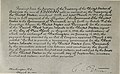 $25,000,000 receipt for the Treaty of the Danish West Indies


External links
- Transfer Day, Royal Danish Consulate, U.S. Virgin Islands
- Article and video concerning Transfer Day (in Danish)
สรุปเนื้อหา
ข้อมูลสำคัญจากบทความ
ข้อมูลสำคัญเกี่ยวกับ วันโอนย้าย
วันโอนถ่ายอำนาจ (Transfer Day)เป็นวันหยุดที่เฉลิมฉลองในหมู่เกาะเวอร์จินของสหรัฐอเมริกาในวันที่ 31 มีนาคม...
การควบคุมของเดนมาร์ก
ชาวตะวันตกคนแรกที่ขึ้นฝั่งที่หมู่เกาะเวอร์จินคือคริสโตเฟอร์ โคลัมบัส ในปี ค.ศ. 1493 ต่อมาหลายประเทศในยุโรปได้ปกครองหมู่เกาะเวอร์จิน ได้แก่ ฝรั่งเศส อังกฤษ สเปน และเดนมาร์ก
วันโอนย้าย
The Virgin Islands were of long interest of the United States, "…but as far back as the Civil War the U.S. was aware of their value as a possible U.S. Naval depot, commanding as they do the most important sea approaches from the Atlantic to the Caribbean".
Key actors
Constantin Brun, a Danish royal administrator and merchant, was in Washington, D.C., on Transfer Day as representative of Denmark accepting payment for the Virgin Islands on behalf of President Woodrow Wilson .