
อ่าน 9 นาที
เวสเทิร์น นิวเซาท์เวลส์
WNSW (1430 AM ) เป็น สถานีวิทยุ ที่ออกอากาศ รายการเกี่ยว กับศาสนา ได้รับใบอนุญาตจาก เมืองนวร์ก รัฐนิวเจอร์ซีย์ และให้บริการครอบคลุมพื้นที่ มหานครนิวยอร์ก
เวสเทิร์น นิวเซาท์เวลส์
| |
พื้นที่ออกอากาศ | เขตมหานครนิวยอร์ก |
|---|---|
| ความถี่ | 1430 kHz |
| การสร้างแบรนด์ | วิทยุที่เกี่ยวข้อง |
| การเขียนโปรแกรม | |
| รูปแบบ | วิทยุคาทอลิก |
| เครือข่าย | วิทยุที่เกี่ยวข้อง |
| กรรมสิทธิ์ | |
| เจ้าของ |
|
| ประวัติศาสตร์ | |
วันที่ออกอากาศครั้งแรก | 1941 |
รหัสเรียกขานเดิม |
|
| ข้อมูลทางเทคนิค[ 2 ] | |
หน่วยงานออกใบอนุญาต | เอฟซีซี |
| 73332 | |
| ระดับ | บี |
| พลัง |
|
พิกัดเครื่องส่งสัญญาณ | 40°50′59″เหนือ74°10′59″ตะวันตก / 40.84972°เหนือ 74.18306°ตะวันตก |
| ลิงก์ | |
ข้อมูลใบอนุญาตสาธารณะ |
|
| การถ่ายทอดสดทางเว็บ | ฟังสด |
| เว็บไซต์ | www.relevantradio.com |
WNSW (1430 AM ) เป็น สถานีวิทยุ ที่ออกอากาศรายการเกี่ยวกับศาสนาได้รับใบอนุญาตจากเมืองนวร์ก รัฐนิวเจอร์ซีย์และให้บริการครอบคลุมพื้นที่ มหานครนิวยอร์ก
สถานีวิทยุ WNSW อยู่ภายใต้การเป็นเจ้าของและบริหารงานโดยRelevant Radioซึ่ง เป็นเครือข่ายวิทยุ โรมันคาทอลิกตั้งแต่ปี 2014 โดยออกอากาศจากเสาอากาศสี่ต้นที่เช่ามาจากWPAT (AM)ในคลิฟตัน
ประวัติศาสตร์ยุคแรก
จุดกำเนิดของ WNSW เกิดจากการรวมตัวของสถานีวิทยุหลายแห่งในเขตนครนิวยอร์ก ซึ่งเริ่มขึ้นในช่วงกลางทศวรรษ 1920
หลังจากที่คณะกรรมการวิทยุแห่งสหพันธรัฐ (FRC) ก่อตั้งขึ้นในปี 1927 ไม่นานนักก็พบว่ามีสถานีวิทยุที่ดำเนินการอยู่ในพื้นที่นครนิวยอร์กมากกว่าจำนวนสถานีที่จะได้รับการจัดสรรคลื่นความถี่แบบผูกขาด ในวันที่ 11 พฤศจิกายน 1928 FRC ได้ทำการจัดสรรคลื่นความถี่ใหม่ทั่วประเทศครั้งใหญ่ภายใต้คำสั่งทั่วไปฉบับที่ 40และกำหนดให้สถานีวิทยุในพื้นที่นิวยอร์ก 4 สถานี ได้แก่ WCGU, WSGH-WSDA, WLTH และ WBBC ใช้คลื่นความถี่ 1400 kHz ร่วมกัน [ 3 ] (WSDA ซึ่งดำเนินการร่วมกับ WSGH เป็นสถานีที่เก่าแก่ที่สุดในบรรดาสถานีเหล่านี้ โดยได้รับใบอนุญาตครั้งแรกในปี 1923 ในชื่อ WSAP) [ 4 ]
ในเดือนมีนาคม พ.ศ. 2484 สถานีทั้งสี่แห่ง ได้แก่ WARD (เดิมคือ WCGU), WBBC, WVFW (เดิมคือ WSGH-WSDA และ WFOX) และ WLTH ได้รับการกำหนดให้ใช้ความถี่ 1430 kHz ซึ่งเป็นส่วนหนึ่งของการดำเนินการตาม ข้อ ตกลงการออกอากาศระดับภูมิภาคอเมริกาเหนือ[ 5 ]

ดับเบิลยูบีเอ็น
ต่อมาในปี 1941 ได้มีการตกลงกันเพื่อรวมสถานีทั้งสี่แห่งเข้าด้วยกันเป็นหน่วยงานร่วม โดยจัดตั้งเป็น Unified Broadcasting Corporation คณะกรรมการบริหารของหน่วยงานร่วมนี้ประกอบด้วย Samuel Gellard อดีตประธานและผู้จัดการทั่วไปของ WLTH, Aaron Kronenberg ประธานและผู้จัดการทั่วไปของ WARD, Slavatore di Angelo กรรมการผู้จัดการของ WVFW และ Peter Testan ผู้จัดการของ WBBC [ 7 ]แผนเดิมคือการออกอากาศต่อไปโดยใช้รหัสเรียกขานของ WARD แต่สถานีร่วมนี้กลับใช้รหัสเรียกขาน WBYN แทน ตั้งแต่ปี 1944 สถานีได้ออกอากาศรายการต้นแบบที่ไม่ประสบความสำเร็จในรูปแบบข่าวทั้งหมด[ 8 ]

ดับเบิลยูเอ็นอาร์
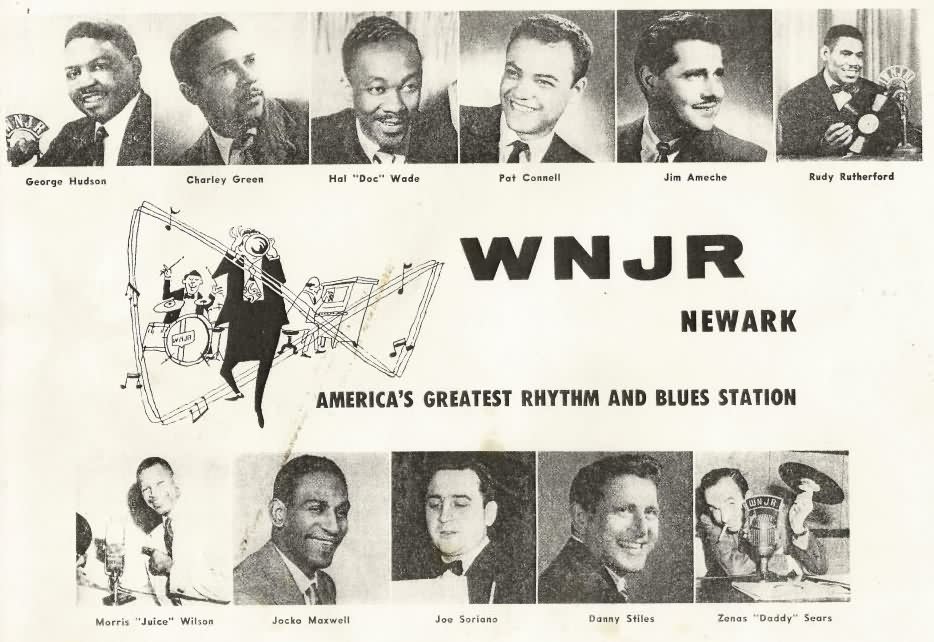
ในที่สุดสถานีวิทยุแห่งนี้ก็ได้รับอนุญาตให้ทำการออกอากาศด้วยกำลังส่ง (TPO) 5,000 วัตต์ ซึ่งเป็นกำลังส่งสูงสุดที่อนุญาตในขณะนั้นสำหรับสถานีที่ออกอากาศในความถี่ "ระดับภูมิภาค" ในปี 1946 หนังสือพิมพ์ The Newark Sunday Callได้ซื้อ WBYN ผ่านบริษัทในเครือ North Jersey Radio ในขณะนั้นThe Newark Sunday Callกำลังถูกซื้อโดยNewark Evening Newsในปี 1947 สัญญาณเรียกขานถูกเปลี่ยนเป็น WNJR และชุมชนที่ได้รับใบอนุญาตก็เปลี่ยนเป็นนิวอาร์ก สถานีได้ปรับเปลี่ยนรายการให้หลากหลายมากขึ้น โดยมีการออกอากาศเพลงแจ๊ส เพลง R&Bรายการทอล์คโชว์ และเพลงละติน ในปี 1953 บริษัท Rollins Broadcasting ได้ซื้อสถานีแห่งนี้
เมื่อประชากรในเมืองนิวอาร์กมีชาวแอฟริกันอเมริกันเพิ่มมากขึ้นในช่วงทศวรรษ 1960 สถานีวิทยุ WNJR จึงเปลี่ยนไปออกอากาศเพลงอาร์แอนด์บีอย่างเต็มรูปแบบ ดีเจบางส่วนที่เคยร่วมงานด้วย ได้แก่ Hal Wade, Danny Stiles , Bobby Jay และ Hal Jackson ในปี 1967 หลังจากเกิดข้อพิพาทกับทีมงานออกอากาศ บริษัท Rollins Broadcasting ได้ปรับโครงสร้างใหม่เป็น Continental Broadcasting ในช่วงทศวรรษ 1950 และ 1960 สถานีนี้ได้นำเสนอรายการเพลงร็อกแอนด์โรล ยุคแรกๆ ในพื้นที่นิวยอร์ก รวมถึงการอ้างว่าเป็นสถานีแรกที่ออกอากาศเพลงของAlan Freedในภูมิภาคนั้น แม้ว่าจะได้รับใบอนุญาตให้ตั้งอยู่ในเมืองนิวอาร์ก แต่ตั้งแต่ปลายทศวรรษ 1950 จนถึงทศวรรษ 1970 สถานีได้ออกอากาศจากสตูดิโอในเมือง ยูเนียน
เสาอากาศกระจายเสียงแบบมีสายยึดสองต้นของสถานี สูง 344 ฟุต (105 เมตร) เป็นที่รู้จักกันดีในหมู่ผู้อยู่อาศัยในย่าน College Estates ที่เพิ่งพัฒนาขึ้นใหม่ในเมืองยูเนียน WNJR ประสบปัญหาเรื่องสัญญาณครอบคลุมไม่ดีในเวลากลางคืน เนื่องจากรูปแบบการรับสัญญาณเสาอากาศแบบทิศทางตามข้อกำหนดของ FCC นอกจากนี้ การออกแบบเสาอากาศแบบหมวกความจุยังส่งสัญญาณขึ้นฟ้ามากเกินไป และส่งสัญญาณลงพื้นน้อยเกินไป ซึ่งเป็นที่อยู่ของผู้ฟัง ทำให้เกิดการหักล้างของสัญญาณและการลดทอนของสัญญาณ การรบกวนจากช่องสัญญาณเดียวกันยังจำกัดการครอบคลุมสัญญาณในเวลากลางคืนอีกด้วย
การเพิกถอนใบอนุญาต
In 1968 the FCC denied Continental Broadcasting's license renewal, after finding that the former manager, Leonard Mireison, had committed "gross mismanagement and fraud on the commission",[10] although it was allowed to continue to run the station, which was profitable, while this decision was being appealed. The soul format continued as well. As Newark became predominantly African-American during the 1970s, WNJR switched to a black-oriented music and news format.
Interim Operation assignments
In July 1971 WNJR's license was officially revoked and the station went off the air on July 21. It signed back on a week later, still as WNJR, after the FCC authorized the City of Newark to run the station under an Interim Operation authorization. However, the next year the city informed the FCC that it could no longer afford to run the station, and a new Interim Operation authorization, again still as WNJR, was assigned to a three-member consortium operating as the WNJR Radio Company.[11]
WNJR continued with an urban contemporary format and became the flagship station of Unity Broadcasting's National Black Network (now Sheridan Broadcasting's American Urban Radio Networks) in 1973. WNJR evolved into more of an urban adult contemporary (AC) format by 1978. Also, the station played gospel music and sermons on Sunday mornings and evenings.
While WNJR was being run under Interim Operation authorizations, the FCC held hearings to determine a new permanent licensee, and in 1977 Sound Radio received the grant for the WNJR replacement.[12] Under the new owners the WNJR call sign was retained and the format stayed much the same. Initially the station was profitable, but by 1988 it began to lose money as its core audience switched to New York City's two FM urban powerhouses, WBLS and WRKS (98.7 Kiss FM). In 1989, Sound Radio filed for Chapter 7 bankruptcy.
Brokered format
In 1991 American Radio Associates bought the station and attempted to keep the urban AC format, but also had financial problems, and sold the station to Douglas Broadcasting in 1992. At that point the station dropped its urban AC format in favor of gospel music mornings and late afternoons, ethnic brokered shows mid-days and nights, and gospel music and teaching on Sundays.
In 1995, Multicultural Broadcasting bought the station and shifted its programming to include more Asian shows. They kept some gospel music programming on Sundays. The station was then profitable.
WNSW
Sunny 1430
After WQEW in New York City became Radio Disney on December 28, 1998, WNJR began playing adult standards. Julius LaRosa was the morning host, while Johnny Michaels hosted during the afternoon.[13] In March 1999, Multicultural decided to fill the hole and put a standards format on 1430. WNJR changed its callsign to WNSW on June 8, 1999.[1] The station became known as Sunny 1430. They originally planned to switch to this format full-time except for Sunday mornings, but initially would run this format from 6 a.m. to 7 p.m. weekdays and 10 a.m. to midnight Saturdays and not at all on Sundays. The rest of the time they ran ethnic programming that was brokered. On Sundays they played gospel music and preaching.
During the week though they played a standards format with artists like Frank Sinatra and Neil Diamond. The format was similar to 1560 WQEW's old format. They mixed in baby boomer pop in moderation. Still they focused on the standards. Some of the airpeople included Johnny Knox (who was program director and operations manager the first year of operation), John Von Soosten, Chuck Leonard, Danny Stiles, Julius LaRosa, among others.
Standards demise
It was decided that once advertising grew enough to support standards that they would drop the weekend brokered shows that were still the main source of revenue for WNSW. This never happened. The station was unable to sell even a moderate amount of commercial time but held on to the format during daytime in the week and Saturdays. Brokered shows were the only source of substantial income for WNSW, but it was not enough to keep the station profitable. In 2000 the station moved toward a Big Band focus and dropped the Neil Diamond and Elvis cuts.
Finally on February 28, 2001, WNSW dropped the format altogether with the playing of Frank Sinatra's Softly, as I Leave You. The format, however, continued with a few evening hours with Danny Stiles. The rest of the day reverted to brokered programming.
In early 2007, WNSW applied to move their transmitter from Hillside, New Jersey,[14] to Clifton, New Jersey. In 2008, the Hillside Township towers were dismantled.
Voice of Russia
In January 2011, WNSW converted to a 24-hour simulcast of the English language service of the Voice of Russia and maintained this format until April 2014, when owner Multicultural Broadcasting sold the station.
Relevant Radio
In April 2014, the station was sold to Starboard Broadcasting for $10 million and switched to religious Catholic programming with the branding of Relevant Radio.[15]
ลิงก์ภายนอก
- รายละเอียดสถานที่สำหรับรหัสสถานที่ 73332 (WNSW) ในระบบการออกใบอนุญาตและการจัดการของ FCC
- WNSWในฐานข้อมูลสถานีวิทยุ AM ของNielsen Audio
- ดับเบิลยูเอ็นอาร์
- โปสเตอร์ WNJR ยุค 1950
- สถานีเพลงรำลึก AM 1430 WNJR
- ประวัติวิทยุของไพเรทจิม
- คู่มือวิทยุ NYC
- พิพิธภัณฑ์ดนตรีเสมือนจริง แดนนี่ สไตลส์
- ประวัติโดยย่อของ WNJR
สรุปเนื้อหา
ข้อมูลสำคัญจากบทความ
ข้อมูลสำคัญเกี่ยวกับ เวสเทิร์น นิวเซาท์เวลส์
WNSW (1430 AM ) เป็น สถานีวิทยุ ที่ออกอากาศ รายการเกี่ยว กับศาสนา ได้รับใบอนุญาตจาก เมืองนวร์ก รัฐนิวเจอร์ซีย์ และให้บริการครอบคลุมพื้นที่ มหานครนิวยอร์ก
ประวัติศาสตร์ยุคแรก
จุดกำเนิดของ WNSW เกิดจากการรวมตัวของสถานีวิทยุหลายแห่งในเขตนครนิวยอร์ก ซึ่งเริ่มขึ้นในช่วงกลางทศวรรษ 1920
ดับเบิลยูบีเอ็น
ต่อมาในปี 1941 ได้มีการตกลงกันเพื่อรวมสถานีทั้งสี่แห่งเข้าด้วยกันเป็นหน่วยงานร่วม โดยจัดตั้งเป็น Unified Broadcasting Corporation คณะกรรมการบริหารของหน่วยงานร่วมนี้ประกอบด้วย Samuel Gellard อดีตประธานและผู้จัดการทั่วไปของ WLTH, Aaron Kronenberg...
ดับเบิลยูเอ็นอาร์
ในที่สุดสถานีวิทยุแห่งนี้ก็ได้รับอนุญาตให้ทำการออกอากาศด้วยกำลังส่ง (TPO) 5,000 วัตต์ ซึ่งเป็นกำลังส่งสูงสุดที่อนุญาตในขณะนั้นสำหรับสถานีที่ออกอากาศในความถี่ "ระดับภูมิภาค" ในปี 1946 หนังสือพิมพ์ The Newark Sunday Call ได้ซื้อ WBYN ผ่านบริษัทในเครือ North...