
วันเดรจิเซล
นักบุญแวนเดรจิเซล | |
|---|---|
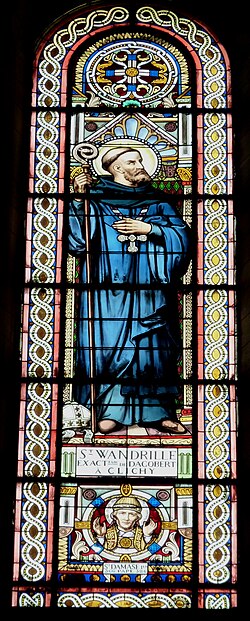 St.Wandregisel, โบสถ์ St. Vincent-de-Paul, Clichy | |
| เจ้าอาวาส | |
| เกิด | ประมาณ ค.ศ. 600 ใกล้เมืองแวร์ดัน |
| เสียชีวิต | ค.ศ. 668 |
| ได้รับการเคารพนับถือ ใน | คริสตจักรโรมันคาทอลิกคริสตจักรออร์โธดอกซ์[ 1 ] |
| งานเลี้ยง | 22 กรกฎาคม |
| ความขัดแย้ง | เริ่มใช้ศีลมหาสนิทแบบไร้เชื้อ |
นักบุญแวนเดรจิเซล ( ภาษาฝรั่งเศส: Wandrille ) (ค.ศ. 605–668) เป็น ขุนนาง ชาวแฟรงก์ พระภิกษุ และเจ้าอาวาส[ 2 ]
ชีวิต
บุตรชายของวาลคิซัส ญาติของเปแปงแห่งแลนเดน [ 3 ] เขาเกิดราวปี 605 ใกล้แวร์ดันในภูมิภาคที่รู้จักกันในชื่อออสทราเซียเขาได้รับการศึกษาที่ราชสำนักแฟรงก์ในเมตซ์
Wandregisel เป็นส่วนหนึ่งของกลุ่มข้าราชบริพารหนุ่ม ซึ่งรวมถึงAudoinและDidier แห่ง Cahorsที่รับใช้Dagobert Iแต่ในปี 629 เขาได้ลาออกจากราชสำนักเพื่อบวชเป็นพระภิกษุที่Montfauconภายใต้การดูแลของนักบุญ Balderic Wandregisel ได้รับการโกนผมโดยไม่ได้รับอนุญาตตามปกติสำหรับข้าราชบริพาร และถูกเรียกตัวเข้าราชสำนักเพื่ออธิบายความผิดพลาดที่เห็นได้ชัดนี้ Dagobert จึงอนุมัติคำขอของเขา[ 4 ]
ใน ไม่ช้า Wandregisel ก็ปลีกตัวไปใช้ชีวิตเป็นฤๅษีอย่างโดดเดี่ยวที่Saint-UrsanneในJura [ 3 ] Wandregisel ยึดมั่นในหลักการของColumbanusและศิษย์ของเขาSaint Ursicinusซึ่งทั้งสองได้ก่อตั้งอารามหลายแห่งในภูมิภาคนี้ ในปี 635 Wandregisel ใช้เวลาอยู่ที่อารามของ Saint Columban ที่Bobbioทางตอนเหนือของอิตาลี[ 2 ] จากที่นั่น เขาปรารถนาที่จะเดินทางไปยังไอร์แลนด์ แต่ในปี 642 ไปได้ไกลเพียงอาราม Romainmôtier [ 5 ]ซึ่งตั้งอยู่ริมฝั่งแม่น้ำIsèreในหุบเขาTarentaise
Wandregisel ได้รับการบวชเป็นพระและจากนั้นได้ก่อตั้งอาราม Fontenelleในนอร์มังดี [ 2 ]บนที่ดินที่ได้รับจากErchinoaldผ่านอิทธิพลของอาร์คบิชอป Audoin แห่ง Rouen เพื่อนของเขาFontenelleปฏิบัติตามกฎของนักบุญ Columbanus และอารามแห่งนี้กลายเป็นศูนย์กลางการเรียนรู้ที่สำคัญ ใกล้กับซากปรักหักพังของอารามมีหมู่บ้านSaint-Wandrille-Rançonตั้ง อยู่
Wandregisel เสียชีวิตเมื่อวันที่ 22 กรกฎาคม ค.ศ. 668 [ 6 ]
Originator of the Unleavened Eucharist
The West's use of an unleavened Eucharist can be traced to Wandregisel.[7] The practice of using flat wafers began to spread throughout France. The change was not without controversy. In 798, Alcuin of York spoke in favour of it. To provide further support for the new custom, Rabanus Maurus pointed to the Old Testament's prohibition on leavened sacrifices. However, as late as the 11th century, traditionalist monks such as Eccard IV of St Gallen (in modern Switzerland) continued to protest the innovation.[8]
Veneration
During the Viking invasions, Wandregisel's relics were dispersed to various locations and shared between various churches, including the abbey of Saint-Pierre-au-Mont-Blandin in Ghent (now in Belgium). Wandregisel's cult was celebrated in England prior to the Norman Conquest of 1066.[2]
In the 19th century one of his relics remained: his skull was found in Liège. It was brought back to the Abbey, when the new church was dedicated in 1967. It can be seen today in a modern reliquary.
Primary sources
- ปาฏิหาริย์ Sancti Wandregisili abbatis Fontanellensis . ในอักตาสถานศักดิ์สิทธิ์ 32 (5 กรกฎาคม) ปารีส: วิกเตอร์ ปาลเม 1868 281–91
- แปล Sancti Wandregisili ใน montem Blandinium . ในอักตาสถานศักดิ์สิทธิ์ 32 (5 กรกฎาคม) 291–302.
- Vita Sancti Wandregisili abbatis Fontanellensis I . ในอักตาสถานศักดิ์สิทธิ์ 32 (5 กรกฎาคม) 265–71.
- Vita Sancti Wandregisili abbatis Fontanellensis II . ในอักตาสถานศักดิ์สิทธิ์ 32 (5 กรกฎาคม) 272–81.
- Vita Wandregiseli abbatis Fontanellensis , เอ็ด. บี.ครุสช์. ในPassiones vitaeque sanctorum aevi Merovingici 3 , ed. วิลเฮล์ม เลวิสัน, 1-24. MGH SS อีกครั้ง เมรอฟ 5. ฮาโนเวอร์ 1910. 1-24. มีจำหน่ายจาก Digital MGH