
Édouard Manet
Édouard Manet | |
|---|---|
 Portrait photograph by Nadar, c. 1866–1867 | |
| Born | 23 January 1832 Paris, France |
| Died | 30 April 1883 (aged 51) Paris, France |
Resting place | Passy Cemetery, Paris |
| Known for | Painting, printmaking |
| Notable work |
|
| Movement | Realism, Impressionism |
| Spouse | |
| Signature | |
 | |
Édouard Manet (UK: /ˈmæneɪ/, US: /mæˈneɪ,məˈ-/;[1][2]French:[edwaʁmanɛ]; 23 January 1832 – 30 April 1883) was a French modernist painter. He was one of the first 19th-century artists to paint modern life, as well as a pivotal figure in the transition from Realism to Impressionism.
Born into an upper-class household with strong political connections, Manet rejected the naval career originally envisioned for him; he became engrossed in the world of painting. His early masterworks, The Luncheon on the Grass (French: Le Déjeuner sur l'herbe) and Olympia, premiering in 1863 and '65, respectively, caused great controversy with both critics and the Academy of Fine Arts, but soon were praised by progressive artists as the breakthrough acts to the new style, Impressionism. These works, along with others, are considered watershed paintings that mark the start of modern art. The last 20 years of Manet's life saw him form bonds with other great artists of the time; he developed his own simple and direct style that would be heralded as innovative and serve as a major influence for future painters.
Early life

เอ็ดวาร์ด มาเนต์ เกิดที่ปารีสเมื่อวันที่ 23 มกราคม ค.ศ. 1832 ในคฤหาสน์ ประจำตระกูล บนถนน Rue des Petits Augustins (ปัจจุบันคือ Rue Bonaparte ) ในครอบครัวที่ร่ำรวยและมีเส้นสายดี[ 3 ]เขามีน้องชายสองคน คือเออแฌน (เกิด ค.ศ. 1833) และกุสตาฟ (เกิด ค.ศ. 1835) แม่ของเขา เออแฌนี-เดซิเร ฟูร์นิเยร์ เป็นลูกสาวของนักการทูตและเป็นลูกทูนหัวของเจ้าชายชาร์ลส์ แบร์นาดอตต์ มกุฎราชกุมาร แห่งสวีเดน ซึ่งเป็นผู้สืบเชื้อสายมาจากกษัตริย์สวีเดน พ่อของเขา ออกุสต์ มาเนต์ เป็นผู้พิพากษาชาวฝรั่งเศสที่คาดหวังว่าเอ็ดวาร์ดจะประกอบอาชีพด้านกฎหมาย[ 4 ]ลุงของเขา เอ็ดมอนด์ ฟูร์นิเยร์ สนับสนุนให้เขาวาดภาพและพามาเนต์วัยเยาว์ไปที่พิพิธภัณฑ์ลูฟร์[ 5 ]ในปี พ.ศ. 2487 เขาเข้าเรียนที่โรงเรียนมัธยมCollège Rollinซึ่งเขาพักอาศัยอยู่จนถึงปี พ.ศ. 2491 [ 4 ]เขาแสดงให้เห็นถึงพรสวรรค์ทางวิชาการเพียงเล็กน้อยและโดยทั่วไปแล้วไม่มีความสุขที่โรงเรียน[ 6 ]ในปี พ.ศ. 2488 ตามคำแนะนำของลุงของเขา มาเนต์ได้ลงทะเบียนเรียนหลักสูตรการวาดภาพพิเศษ ซึ่งเขาได้พบกับอันโตนิน พรูสต์ รัฐมนตรีว่าการกระทรวงวิจิตรศิลป์ในอนาคตและเพื่อนสนิทตลอดชีวิตของเขา[ 7 ]
ตามคำแนะนำของบิดา ในปี พ.ศ. 2491 เขาได้เดินทางไปริโอเดจาเนโร ด้วยเรือฝึก หลังจากที่เขาสอบไม่ผ่านสองครั้งเพื่อเข้าร่วมกองทัพเรือ [ 8 ]บิดาของเขาจึงยอมตามใจเขาให้เรียนศิลปะ ตั้งแต่ปี พ.ศ. 2493 ถึง พ.ศ. 2499 มาเนต์ได้เรียนกับโทมัส กูตูร์ จิตรกรแนววิชาการ [ 4 ] กูตูร์สนับสนุนให้นักเรียนของเขาวาดภาพชีวิตร่วมสมัย แม้ว่าในที่สุดเขาจะตกใจกับการเลือกวาดภาพชนชั้นล่างและ "เสื่อมทราม" ของมาเนต์ เช่น ภาพคนดื่มเหล้าแอ็บซินท์[ 9 ] ในเวลาว่าง มาเนต์มักคัดลอกผลงานของปรมาจารย์ยุคเก่าเช่นดิเอโกเวลาสเกซและทิเชียนในพิพิธภัณฑ์ลูฟร์[ 4 ]
ระหว่างปี พ.ศ. 2496 ถึง พ.ศ. 2499 มาเนต์ได้เดินทางไปเยือนเยอรมนี อิตาลี และเนเธอร์แลนด์เป็นช่วงสั้นๆ ซึ่งในช่วงเวลานั้นเขาได้รับอิทธิพลจากจิตรกรชาวดัตช์ฟรานส์ ฮาลส์[ 10 ]และศิลปินชาวสเปน เวลาสเกซ และฟรานซิสโก โฮเซ เด โกยา[ 11 ]
อาชีพ
In 1856, Manet opened a studio. His style in this period was characterised by loose brush strokes, simplification of details, and the suppression of transitional tones. Adopting the current style of realism initiated by Gustave Courbet, he painted The Absinthe Drinker (1858–59) and other contemporary subjects such as beggars, singers, Romani, people in cafés, and bullfights. After his early career, he rarely painted religious, mythological, or historical subjects; religious paintings from 1864 include his Jesus Insulted by the Soldiers and The Dead Christ with Angels.[12]
Manet had two canvases accepted at the Salon in 1861. A portrait of his mother and father (Portrait of Monsieur and Madame Manet), the latter of whom at the time was paralysed by a stroke or advanced syphilis, was ill-received by critics.[13] The other, The Spanish Singer, was admired by Théophile Gautier, and placed in a more conspicuous location as a result of its popularity with Salon-goers.[14] Manet's work, which appeared "slightly slapdash" when compared with the meticulous style of so many other Salon paintings, intrigued some young artists and brought new business to his studio.[14] According to one contemporary source, The Spanish Singer, painted in a "strange new fashion[,] caused many painters' eyes to open and their jaws to drop."[a]
Music in the Tuileries

In 1862, Manet exhibited Music in the Tuileries (probably painted in 1860),[5][16] one of his first masterpieces. With its portrayal of a crowd of subjects at the Tuileries Garden (Jardin des Tuileries), the painting shows the outdoor leisure of contemporary Paris, which would be a lifelong subject of Manet's.[17] Among the figures in the gardens are the poet Charles Baudelaire, the musician Jacques Offenbach, and others of Manet's family and friends, including a self-portrait of the artist.[16]
ภาพวาด Music in the Tuileriesได้รับความสนใจจากนักวิจารณ์และสาธารณชนอย่างมาก ส่วนใหญ่เป็นไปในเชิงลบ[ 5 ]นักเขียนชีวประวัติของมาเนต์คนหนึ่งกล่าวว่า "เป็นเรื่องยากที่เราจะจินตนาการถึงความโกรธแค้นที่ภาพวาดMusic in the Tuileriesก่อให้เกิดเมื่อมีการจัดแสดง" [ 18 ]การที่ภาพวาดนี้แสดงภาพบุคคลในแวดวงสังคมของมาเนต์แทนที่จะเป็นวีรบุรุษคลาสสิก ไอคอนทางประวัติศาสตร์ หรือเทพเจ้า อาจทำให้ตีความได้ว่าภาพวาดนี้ท้าทายคุณค่าของบุคคลเหล่านั้น หรือเป็นการพยายามยกระดับคนร่วมสมัยของเขาให้เท่าเทียมกัน[ 19 ]สาธารณชนที่คุ้นเคยกับฝีแปรงที่ละเอียดประณีตของจิตรกรในอดีต เช่นเออร์เนสต์ เมสโซนิเยร์คิดว่าฝีแปรงหนาๆ ของมาเนต์ดูหยาบและไม่เสร็จสมบูรณ์ ด้วยความโกรธเคืองต่อเนื้อหาและเทคนิค ผู้เข้าชมหลายคนถึงกับขู่ว่าจะทำลายภาพวาด[ 5 ] [ 20 ]ยูจีน เดลาครัวซ์ หนึ่งในไอดอลของมาเนต์เป็นหนึ่งในผู้ปกป้องภาพวาดนี้เพียงไม่กี่คน[ 5 ]แม้จะมีปฏิกิริยาเชิงลบเป็นส่วนใหญ่ แต่ความขัดแย้งนี้ทำให้มาเนต์กลายเป็นชื่อที่รู้จักกันดีในปารีส[ 20 ]
งานเลี้ยงอาหารกลางวันบนพื้นหญ้า ( Le Déjeuner sur l'herbe )

ผลงานชิ้นสำคัญในช่วงแรกอีกชิ้นหนึ่งคือThe Luncheon on the Grass ( ภาษาฝรั่งเศส : Le Déjeuner sur l'herbe ; เรียกสั้นๆ ว่าThe Luncheon ) ซึ่งเดิมทีคือ Le Bainงานแสดงศิลปะปารีสปฏิเสธที่จะจัดแสดงในปี 1863 แต่มาเนต์ตกลงที่จะจัดแสดงที่Salon des Refusés ('งานแสดงศิลปะของผู้ถูกปฏิเสธ') [ 20 ]งานแสดงศิลปะคู่ขนานนี้ริเริ่มโดยจักรพรรดินโปเลียนที่ 3เพื่อแก้ปัญหาเสียงวิพากษ์วิจารณ์จากสาธารณชนหลังจากที่คณะกรรมการคัดเลือกของงานแสดงศิลปะอย่างเป็นทางการรับภาพวาดเพียง 2,217 ภาพจากผลงานที่ส่งเข้ามามากกว่า 5,000 ภาพ งานนี้เปิดโอกาสให้ศิลปินที่ถูกปฏิเสธได้แสดงภาพวาดของตนหากต้องการ[ 5 ]
The painting's juxtaposition of fully dressed men and a nude woman was controversial, as was its abbreviated, sketch-like handling, an innovation that distinguished Manet from Courbet. One critic stated that the brushwork appeared to have been done with a "floor mop".[5] However, others such as his friend Antonin Proust celebrated the painting, and novelist Émile Zola was so affected by the experience of viewing it that he later based the title painting in his novel L'Œuvre ('The Work of Art') on Le Déjeuner sur l'herbe.[21]
At the same time, Manet's composition reveals his study of the old masters, as the disposition of the main figures is derived from Marcantonio Raimondi's engraving of the Judgement of Paris (c. 1515) based on a drawing by Raphael.[5] Two additional works cited by scholars as important precedents for Le Déjeuner sur l'herbe are Pastoral Concert (c. 1510) and The Tempest, both of which are attributed variously to Italian Renaissance masters Giorgione or Titian.[22]
The Luncheon and James McNeill Whistler's Symphony in White, No. 1: The White Girl were the two most discussed works of the Salon des Refusés, which itself would become one of the most famous art exhibitions of all time.[21] Following the Salon, Manet became yet more notorious and widely discussed.[23] However, The Luncheon and Manet's other paintings still failed to sell, and Manet continued living off of his inheritance from his recently deceased father.[5]
Olympia

As he had in The Luncheon on the Grass, Manet again paraphrased a respected work by a Renaissance artist in the painting Olympia (1863), a nude portrayed in a style reminiscent of early studio photographs, but whose pose was based on Titian's Venus of Urbino (1538). The painting is also reminiscent of Francisco Goya's painting The Nude Maja (1800).
มาเนต์เริ่มวาดภาพบนผืนผ้าใบหลังจากถูกท้าให้วาดภาพเปลือยเพื่อจัดแสดงในงานซาลอน ภาพวาดที่ตรงไปตรงมาอย่างเป็นเอกลักษณ์ของเขาที่แสดงถึงหญิงขายบริการ ผู้มั่นใจในตัวเอง ได้รับการยอมรับจากปารีสซาลอนในปี 1865 ซึ่งก่อให้เกิดเรื่องอื้อฉาว ตามที่อันโตนิน พรูสต์ กล่าวไว้ว่า "มีเพียงมาตรการป้องกันที่ทางฝ่ายบริหารดำเนินการเท่านั้นที่ป้องกันไม่ให้ภาพวาดถูกเจาะและฉีกขาด" โดยผู้ชมที่ไม่พอใจ[ 24 ]ภาพวาดนี้เป็นที่ถกเถียงกันส่วนหนึ่งเพราะหญิงขายบริการสวมใส่เสื้อผ้าเพียงเล็กน้อย เช่น ดอก กล้วยไม้ในผม สร้อยข้อมือ ริบบิ้นรอบคอ และรองเท้าแตะ ซึ่งทั้งหมดนี้เน้นย้ำถึงความเปลือยเปล่า ความเป็นเพศ และวิถีชีวิตที่สะดวกสบายของหญิงขายบริการ ดอกกล้วยไม้ ผมที่ยกขึ้นแมวดำและช่อดอกไม้ล้วนเป็นสัญลักษณ์ของความเป็นเพศที่ได้รับการยอมรับในเวลานั้น ร่างกายของวีนัสสมัยใหม่นี้ผอมบาง ซึ่งขัดกับมาตรฐานที่แพร่หลาย การขาดอุดมคติของภาพวาดทำให้ผู้ชมไม่พอใจ ความเรียบของภาพวาด ซึ่งได้รับแรงบันดาลใจจาก ศิลปะภาพ พิมพ์ไม้ของญี่ปุ่นช่วยทำให้ภาพเปลือยดูเป็นมนุษย์มากขึ้นและลดความเย้ายวนลง มีคนรับใช้ผิวดำที่แต่งกายเต็มยศปรากฏอยู่ ซึ่งเป็นการใช้ประโยชน์จากทฤษฎีในขณะนั้นที่ว่าคนผิวดำมีความต้องการทางเพศสูง[ 5 ]การที่เธอสวมเสื้อผ้าของคนรับใช้ของโสเภณีในที่นี้ยิ่งเพิ่มความตึงเครียดทางเพศให้กับชิ้นงานนี้
ร่างกายและสายตาของโอลิมเปียแสดงออกถึงการเผชิญหน้าอย่างไม่เกรงใจ เธอมองออกไปอย่างท้าทายขณะที่คนรับใช้นำดอกไม้จากชายผู้มาขอแต่งงานมาให้ แม้ว่ามือของเธอจะวางอยู่บนขาเพื่อปกปิดบริเวณอวัยวะเพศ แต่การอ้างอิงถึงคุณธรรมของผู้หญิงแบบดั้งเดิมนั้นกลับเป็นการประชดประชัน แนวคิดเรื่องความสุภาพเรียบร้อยนั้นแทบจะไม่มีให้เห็นในงานชิ้นนี้เลย นักวิจารณ์ร่วมสมัยประณามมือซ้ายของโอลิมเปียที่ "เกร็งอย่างไม่ละอาย" ซึ่งในสายตาของเขาดูเหมือนเป็นการเยาะเย้ยมือที่ผ่อนคลายและปกป้องวีนัสของทิเชียน[ 25 ]ในทำนองเดียวกัน แมวดำที่ตื่นตัวอยู่ที่ปลายเตียงก็แสดงออกถึงการกบฏทางเพศที่ตรงกันข้ามกับสุนัขที่กำลังนอนหลับในภาพวาดของเทพีวีนัสแห่งอูร์บิโนของทิเชียน
ภาพวาดโอลิมเปียเป็นเป้าหมายของการ์ตูนล้อเลียนในสื่อสิ่งพิมพ์ทั่วไป แต่ได้รับการยกย่องจากกลุ่มศิลปะแนวหน้าของฝรั่งเศส และความสำคัญของภาพวาดนี้ได้รับการชื่นชมจากศิลปิน เช่นกุสตาฟ กูร์เบต์ , ปอล เซซานน์ , โคลด โมเนต์และต่อมาคือปอล โกแกง
เช่นเดียวกับThe Luncheonภาพวาดนี้ได้หยิบยกประเด็นการค้าประเวณีในฝรั่งเศสยุคปัจจุบันและบทบาทของผู้หญิงในสังคมขึ้นมา[ 5 ]
ชีวิตและกาลเวลา


After the death of his father in 1862, Manet married Suzanne Leenhoff in 1863 at a Protestant church.[26] Leenhoff was a Dutch-born piano teacher two years Manet's senior with whom he had been romantically involved for approximately ten years. Leenhoff initially had been employed by Manet's father, Auguste, to teach Manet and his younger brother piano. She also may have been Auguste's mistress. In 1852, Leenhoff gave birth, out of wedlock, to a son, Léon Koëlla Leenhoff.
Manet painted his wife in The Reading, among other paintings. Her son, Léon Leenhoff, whose father may have been either of the Manets, "posed for Manet eighteen times in paintings that date between 1859 and 1872".[27] Most famously, he is the subject of the Boy Carrying a Sword (1861) and the Boy Blowing Bubbles (1867). He also appears as the boy carrying a tray in the background of The Balcony (1868–69).[28]
Manet became friends with the ImpressionistsEdgar Degas, Claude Monet, Pierre-Auguste Renoir, Alfred Sisley, Paul Cézanne, and Camille Pissarro through another painter, Berthe Morisot, who was a member of the group and drew him into their activities. They later became widely known as the Batignolles group (Le groupe des Batignolles).
The supposed grand-niece of the painter Jean-Honoré Fragonard, Morisot had her first painting accepted in the Salon de Paris in 1864, and she continued to show in the salon for the next ten years.
Manet became the friend and colleague of Morisot in 1868. She is credited with convincing Manet to attempt plein air painting, which she had been practicing since she was introduced to it by another friend of hers, Camille Corot. They had a reciprocating relationship and Manet incorporated some of her techniques into his paintings. In 1874, she became his sister-in-law when she married his brother, Eugène. It has been speculated that there was a repressed love between Manet and Morisot, exemplified by the numerous portraits he did of her before she married his brother.[29][30]

แตกต่างจากกลุ่มอิมเพรสชันนิสต์หลัก มาเนต์ยืนยันว่าศิลปินสมัยใหม่ควรแสวงหาการจัดแสดงผลงานที่ปารีสซาลอนมากกว่าที่จะละทิ้งมันไปเพื่อจัดแสดงผลงานอิสระ อย่างไรก็ตาม เมื่อมาเนต์ไม่ได้รับเลือกให้เข้าร่วมงานนิทรรศการนานาชาติในปี 1867 เขาจึงจัดนิทรรศการของตัวเองขึ้น แม่ของเขากังวลว่าเขาจะใช้มรดกทั้งหมดไปกับโครงการนี้ ซึ่งมีค่าใช้จ่ายสูงมาก แม้ว่านิทรรศการจะได้รับคำวิจารณ์ที่ไม่ดีจากนักวิจารณ์ชั้นนำ แต่ก็เป็นจุดเริ่มต้นที่ทำให้เขามีโอกาสได้รู้จักกับจิตรกรอิมเพรสชันนิสต์ในอนาคตหลายคน รวมถึงเดอกาส์ด้วย
แม้ว่าผลงานของเขาเองจะมีอิทธิพลและเป็นต้นแบบของศิลปะอิมเพรสชันนิสต์ แต่มาเนต์ก็ปฏิเสธที่จะเข้าร่วมในนิทรรศการอิมเพรสชันนิสต์ ส่วนหนึ่งเป็นเพราะเขาไม่ต้องการถูกมองว่าเป็นตัวแทนของกลุ่ม และอีกส่วนหนึ่งเป็นเพราะเขาชอบที่จะจัดแสดงผลงานในงานซาลอนมากกว่าอีวา กอนซาเลสบุตรสาวของนักเขียนนวนิยายเอ็มมานูเอล กอนซาเลสเป็นลูกศิษย์อย่างเป็นทางการเพียงคนเดียวของเขา
เขาได้รับอิทธิพลจากกลุ่มอิมเพรสชันนิสต์ โดยเฉพาะโมเนต์และโมริโซต์ อิทธิพลเหล่านั้นปรากฏให้เห็นในการใช้สีที่สว่างขึ้นของมาเนต์: หลังจากช่วงต้นทศวรรษ 1870 เขาลดการใช้พื้นหลังสีเข้มลง แต่ยังคงรักษาการใช้สีดำอันเป็นเอกลักษณ์ของเขาไว้ ซึ่งเป็นลักษณะที่ไม่พบในภาพวาดอิมเพรสชันนิสต์ทั่วไป เขาเขียนภาพกลางแจ้ง (plein air) จำนวนมาก แต่ก็กลับมาทำงานที่เขาถือว่าเป็นงานที่จริงจังในสตูดิโอเสมอ
มาเนต์มีความสัมพันธ์ฉันท์มิตรที่ดีกับนักแต่งเพลงเอ็มมานูเอล ชาบริเยร์โดยวาดภาพเหมือนของเขา 2 ภาพ นักดนตรีผู้นี้เป็นเจ้าของภาพวาดของมาเนต์ 14 ภาพ และอุทิศเพลงImpromptuให้กับภรรยาของมาเนต์[ 31 ]
หนึ่งในนางแบบที่มาเนต์มักเป็นแบบให้ในช่วงต้นทศวรรษ 1880 คือ "เซมิมอนด์" เมรี ลอรองต์ซึ่งเป็นนางแบบให้กับภาพเหมือนสีพาสเทลถึงเจ็ดภาพ[ 32 ]ห้องรับแขกของลอรองต์มีนักเขียนและจิตรกรชาวฝรั่งเศส (และแม้แต่ชาวอเมริกัน) มากมายในยุคนั้น มาเนต์มีความสัมพันธ์และอิทธิพลผ่านกิจกรรมดังกล่าว
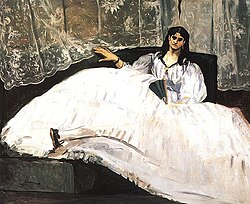
ตลอดชีวิตของเขา แม้จะถูกต่อต้านจากนักวิจารณ์ศิลปะ แต่มาเนต์ก็ได้รับการสนับสนุนจากบุคคลสำคัญหลายคนเช่น เอมิล โซลาที่ให้การสนับสนุนเขาอย่างเปิดเผยในสื่อสิ่งพิมพ์สเตฟาน มาลลาร์เมและชาร์ลส์ บอเดแลร์ที่ท้าทายให้เขาวาดภาพชีวิตตามความเป็นจริง และมาเนต์ก็ได้วาดภาพหรือระบายสีบุคคลเหล่านั้นแต่ละคนด้วยเช่นกัน
บรรยากาศร้านกาแฟ

Manet's paintings of café scenes are observations of social life in 19th-century Paris. People are depicted drinking beer, listening to music, flirting, reading, or waiting. Many of these paintings were based on sketches executed on the spot. Manet often visited the Brasserie Reichshoffen on boulevard de Rochechourt, upon which he based At the Cafe in 1878. Several people are at the bar, and one woman confronts the viewer while others wait to be served. Such depictions represent the painted journal of a flâneur. These are painted in a style which is loose, referencing Frans Hals and Diego Velázquez, yet they capture the mood and feeling of Parisian night life. They are painted snapshots of bohemianism, urban working people, as well as some of the bourgeoisie.
In Corner of a Café-Concert, a man smokes while behind him a waitress serves drinks. In The Beer Drinkers a woman enjoys her beer in the company of a friend. In The Café-Concert, shown at right, a sophisticated gentleman sits at a bar while a waitress stands resolutely in the background, sipping her drink. In The Waitress, a serving woman pauses for a moment behind a seated customer smoking a pipe, while a ballet dancer, with arms extended as she is about to turn, is on stage in the background.
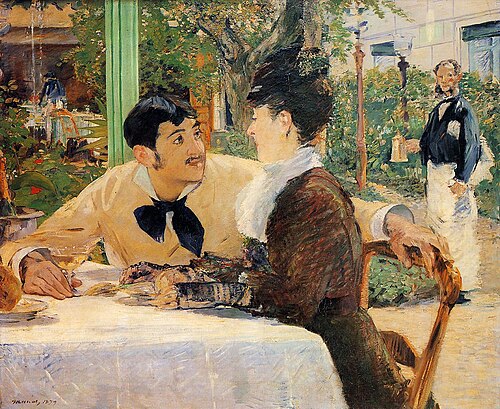
Manet also sat at the restaurant on the Avenue de Clichy called Pere Lathuille's, which had a garden in addition to the dining area. One of the paintings he produced here was Chez le Père Lathuille ('At Pere Lathuille's'), in which a man displays an unrequited interest in a woman dining near him.
In Le Bon Bock (1873), a large, cheerful, bearded man sits with a pipe in one hand and a glass of beer in the other, looking straight at the viewer.
Paintings of social activities
Manet painted the upper class enjoying more formal social activities. In Masked Ball at the Opera, Manet shows a lively crowd of people enjoying a party. Men stand with top hats and long black suits while talking to women with masks and costumes. He included portraits of his friends in this picture.
His 1868 painting The Luncheon was posed in the dining room of the Manet house.
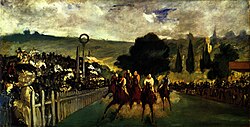
Manet depicted other popular activities in his work. In The Races at Longchamp, an unusual perspective is employed to underscore the furious energy of racehorses as they rush toward the viewer. In Skating, Manet shows a well dressed woman in the foreground, while others skate behind her. Always there is the sense of active urban life continuing behind the subject, extending outside the frame of the canvas.
In View of the International Exhibition, soldiers relax, seated and standing, prosperous couples are talking. There is a gardener, a boy with a dog, a woman on horseback—in short, a sample of the classes and ages of the people of Paris.
War

Manet's response to modern life included works devoted to war, in subjects that may be seen as updated interpretations of the genre of "history painting".[34] The first such work was The Battle of the Kearsarge and the Alabama (1864), a sea skirmish known as the Battle of Cherbourg from the American Civil War which took place off the French coast, and may have been witnessed by the artist.[35]
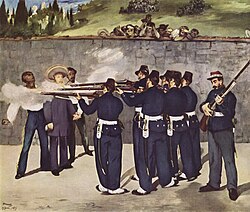
Of interest next was the French intervention in Mexico; from 1867 to 1869, Manet painted three versions of the Execution of Emperor Maximilian, an event which raised concerns regarding French foreign and domestic policy.[36] The several versions of the Execution are among Manet's largest paintings, which suggests that the theme was one which the painter regarded as most important. Its subject is the execution by Mexican firing squad of a Habsburg emperor who had been installed by Napoleon III. Neither the paintings nor a lithograph of the subject was permitted to be shown in France.[37] As an indictment of formalised slaughter, the paintings look back to Goya,[38] and anticipate Picasso's Guernica.

ในช่วงสงครามฝรั่งเศส-ปรัสเซียมาเนต์รับราชการในกองกำลังรักษาชาติเพื่อช่วยปกป้องเมืองระหว่างการปิดล้อมปารีสพร้อมกับเดอกาส์[ 39 ]ในเดือนมกราคม พ.ศ. 2414 เขาเดินทางไปยังโอโลรอง-แซงต์-มารีในเทือกเขาพิเรนีสในช่วงที่เขาไม่อยู่ เพื่อนของเขาได้เพิ่มชื่อของเขาลงใน "สหพันธ์ศิลปิน" [ b ]ของปารีสคอมมูนมาเนต์อาจจะอยู่ห่างจากปารีสจนกระทั่งหลังสัปดาห์นองเลือดในจดหมายถึงแบร์ธ โมริโซต์ที่เชอร์บูร์ก (10 มิถุนายน พ.ศ. 2414) เขาเขียนว่า"เรากลับมาปารีสเมื่อไม่กี่วันก่อน..." ( สัปดาห์นองเลือดสิ้นสุดลงในวันที่ 28 พฤษภาคม)
พิพิธภัณฑ์วิจิตรศิลป์บูดาเปสต์มี ภาพพิมพ์และภาพวาด สีน้ำและ สีโปสเตอร์ ของมาเนต์ ชื่อ" กำแพง กั้น " ซึ่งแสดงภาพการประหารชีวิตกลุ่มคอมมูนาร์ดโดยทหารแวร์ซาย โดยอิงจากภาพพิมพ์หินของการประหารชีวิตแม็กซิมิ เลียน ส่วนภาพที่คล้ายกันอีกภาพหนึ่ง ชื่อ"กำแพงกั้น " (สีน้ำมันบนไม้อัด) อยู่ในความครอบครองของนักสะสมส่วนตัว
เมื่อวันที่ 18 มีนาคม พ.ศ. 2414 เขาเขียนจดหมายถึงเพื่อน (ผู้ร่วมสมคบคิด) เฟลิกซ์ บราคเก็มงด์ในปารีส เกี่ยวกับการไปเยือนบอร์โดซ์ซึ่งเป็นที่ตั้งชั่วคราวของสภาแห่งชาติฝรั่งเศสแห่งสาธารณรัฐฝรั่งเศสที่สามที่เอมิล โซลาแนะนำสถานที่ต่างๆ ให้เขารู้จัก: "ฉันไม่เคยนึกภาพออกเลยว่าฝรั่งเศสจะถูกแทนด้วยคนแก่งี่เง่าแบบนี้ได้ ไม่เว้นแม้แต่เจ้าเด็กโง่เธีย ร์ส ..." [ 40 ]หากจะตีความว่านี่คือการสนับสนุนคอมมูน จดหมายฉบับต่อมาถึงบราคเก็มงด์ (21 มีนาคม พ.ศ. 2414) ได้แสดงความคิดของเขาให้ชัดเจนยิ่งขึ้น: "มีแต่พวกสมุนพรรคพวกและพวกทะเยอทะยาน พวกอองรีในโลกนี้ที่เดินตามรอยพวกมิลลิแยร์ พวกเลียนแบบคอมมูนปี 2436 ที่น่าเกลียดน่ากลัว" เขารู้ว่าลูเซียง อองรี สมาชิกคอมมูน เคยเป็นนายแบบของจิตรกรมาก่อน และมิลลิแยร์เป็นตัวแทนประกันภัย "การกระทำที่โหดเหี้ยมเหล่านี้ช่างเป็นการส่งเสริมศิลปะเสียจริง! แต่อย่างน้อยก็มีสิ่งปลอบใจอย่างหนึ่งในความโชคร้ายของเรา คือเราไม่ใช่พวกนักการเมืองและไม่มีความปรารถนาที่จะได้รับเลือกเป็นสมาชิกสภาผู้แทนราษฎร"
บุคคลสาธารณะที่มาเนต์ชื่นชมมากที่สุดคือเลอง กัมเบตตาผู้ สนับสนุนสาธารณรัฐ [ 41 ]ในช่วงที่เกิด การรัฐประหาร seize may ในปี 1877 มาเนต์ได้เปิดสตูดิโอของเขาให้กับการประชุมหาเสียงเลือกตั้งของพรรครีพับลิกัน ซึ่งมี เออแฌน สปุลเลอร์เพื่อนของกัมเบตตาเป็นประธาน[ 41 ]
ปารีส
มาเนต์วาดภาพฉากต่างๆ บนท้องถนนของปารีสไว้ในผลงานของเขามากมาย ภาพ " ถนนมอสนิเยร์ประดับประดาด้วยธง"แสดงให้เห็นธงสีแดง ขาว และน้ำเงินที่คลุมอาคารสองข้างทาง อีกภาพหนึ่งที่มีชื่อเดียวกัน แสดงให้เห็นชายขาเดียวเดินโดยใช้ไม้ค้ำยัน ภาพ " ถนนมอสนิเยร์กับคน ซ่อมถนน" ก็แสดงให้เห็นถนนสายเดียวกัน แต่ในบริบทที่แตกต่างออกไป โดย แสดงให้เห็นคนงานกำลังซ่อมถนน ขณะที่ผู้คนและม้าสัญจรผ่านไปมา

ภาพวาด "ทางรถไฟ" (สถานี Gare Saint-Lazare ) วาดขึ้นในปี 1873 ฉากหลังเป็นทิวทัศน์ เมือง ปารีสในปลายศตวรรษที่ 19 โดยใช้แบบจำลองที่เขาชื่นชอบในภาพวาดสุดท้ายของเธอ คือวิกตอรีน เมอรองต์ จิตรกร หญิงอีกคนหนึ่ง ซึ่งเป็นแบบจำลองในภาพวาด "โอลิมเปีย"และ "อาหารกลางวันบนสนามหญ้า " ด้วยในภาพ เมอรองต์นั่งอยู่หน้าแนวรั้วเหล็ก อุ้มลูกสุนัขที่กำลังหลับและมีหนังสือเปิดอยู่บนตัก ข้างๆ เธอเป็นเด็กหญิงตัวเล็กๆ หันหลังให้จิตรกร กำลังมองดูรถไฟวิ่งผ่านด้านล่าง
แทนที่จะเลือกทิวทัศน์ธรรมชาติแบบดั้งเดิมเป็นฉากหลังสำหรับฉากกลางแจ้ง มาเนต์กลับเลือกใช้ตะแกรงเหล็กซึ่ง "ทอดยาวอย่างโดดเด่นบนผืนผ้าใบ" [ 42 ]หลักฐานเดียวของรถไฟคือกลุ่มควันไอน้ำสีขาว ในระยะไกลจะเห็นอาคารอพาร์ตเมนต์สมัยใหม่ การจัดวางแบบนี้บีบอัดฉากหน้าให้อยู่ในจุดโฟกัสแคบๆ ธรรมเนียมดั้งเดิมของพื้นที่ลึกถูกละเลย
นักประวัติศาสตร์ Isabelle Dervaux ได้บรรยายถึงการตอบรับที่ภาพวาดนี้ได้รับเมื่อจัดแสดงครั้งแรกในงาน Paris Salon อย่างเป็นทางการในปี 1874 ว่า "ผู้เข้าชมและนักวิจารณ์พบว่าเนื้อหาของภาพนั้นน่าสับสน องค์ประกอบไม่สอดคล้องกัน และการลงมือวาดนั้นดูหยาบกระด้างนักล้อเลียนเยาะเย้ยภาพวาดของ Manet ซึ่งมีเพียงไม่กี่คนที่มองเห็นสัญลักษณ์แห่งความทันสมัยที่ภาพนี้ได้กลายเป็นในปัจจุบัน" [ 43 ]ปัจจุบันภาพวาดนี้จัดแสดงอยู่ที่หอศิลป์แห่งชาติวอชิงตัน[ 44 ]
มาเนต์วาดภาพเรือหลายภาพในปี พ.ศ. 2417 ภาพเรือซึ่งปัจจุบันอยู่ในพิพิธภัณฑ์ศิลปะเมโทรโพลิแทน แสดงให้เห็นถึงความกระชับของบทเรียนที่มาเนต์ได้เรียนรู้จากภาพพิมพ์ญี่ปุ่น และการตัดขอบอย่างกะทันหันของกรอบเรือและใบเรือยิ่งทำให้ภาพดูสมจริงยิ่งขึ้น[ 45 ]
In 1875, a book-length French edition of Edgar Allan Poe's The Raven included lithographs by Manet and translation by Mallarmé.[46]
In 1881, with pressure from his friend Antonin Proust, the French government awarded Manet the Légion d'honneur.[47]
Late works

In his mid-forties Manet's health deteriorated, and he developed severe pain and partial paralysis in his legs. In 1879 he began receiving hydrotherapy treatments at a spa near Meudon intended to improve what he believed was a circulatory problem, but in reality he was suffering from locomotor ataxia, a known side-effect of syphilis.[48][49] In 1880, he painted a portrait there of the opera singer Émilie Ambre as Carmen. Ambre and her lover Gaston de Beauplan had an estate in Meudon and had organised the first exhibition of Manet's The Execution of Emperor Maximilian in New York in December 1879.[50]
In his last years Manet painted many small-scale still lifes of fruits and vegetables, such as A Bundle of Asparagus and The Lemon (both 1880).[51] He completed his last major work, A Bar at the Folies-Bergère (Un Bar aux Folies-Bergère), in 1882, and it hung in the Salon that year. Afterwards, he limited himself to small formats.
Manet's last paintings were of flowers in glass vases.[52] There are 20 such paintings known, with the last one painted in March 1883, barely two months before his death.[53] Quoted in Venice thirteen years later, Manet is credited with stating that an artist can say everything he has to say with "flowers, fruit, and clouds." His last flower paintings are a demonstration of that belief.[53]
In 2023, the Metropolitan Museum of Art in New York City exhibited a two-person exhibition of Manet with Degas.[54]
Death
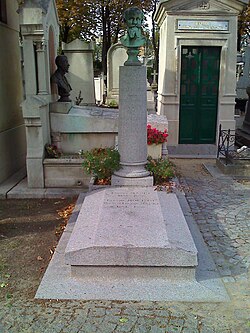
In April 1883, Manet's left foot was amputated because of gangrene caused by complications from syphilis and rheumatism. He died 11 days later on 30 April in Paris and is buried in the Passy Cemetery in the city.[55]
Legacy
Manet's public career lasted from 1861, the year of his first participation in the Salon, until his death in 1883. His known extant works, as catalogued in 1975 by Denis Rouart and Daniel Wildenstein, comprise 430 oil paintings, 89 pastels, and more than 400 works on paper.[56]
Although harshly condemned by critics who decried its lack of conventional finish, Manet's work had admirers from the beginning. One was Émile Zola, who wrote in 1867: "We are not accustomed to seeing such simple and direct translations of reality. Then, as I said, there is such a surprisingly elegant awkwardness ... it is a truly charming experience to contemplate this luminous and serious painting which interprets nature with a gentle brutality."[57]
The roughly painted style and photographic lighting in Manet's paintings was seen as specifically modern, and as a challenge to the Renaissance works he copied or used as source material. He rejected the technique he had learned in the studio of Thomas Couture – in which a painting was constructed using successive layers of paint on a dark-toned ground – in favour of a direct, alla prima method using opaque paint on a light ground. Novel at the time, this method made possible the completion of a painting in a single sitting. It was adopted by the Impressionists, and became the prevalent method of painting in oils for generations that followed.[58] Manet's work is considered "early modern", partially because of the opaque flatness of his surfaces, the frequent sketch-like passages, and the black outlining of figures, all of which draw attention to the surface of the picture plane and the material quality of paint.
นักประวัติศาสตร์ศิลปะ Beatrice Farwell กล่าวว่า Manet "ได้รับการยกย่องอย่างกว้างขวางว่าเป็นบิดาแห่งศิลปะสมัยใหม่ร่วมกับCourbetเขาเป็นหนึ่งในกลุ่มแรกๆ ที่กล้าเสี่ยงอย่างจริงจังกับสาธารณชนที่เขาต้องการเอาใจ เป็นคนแรกที่ทำให้ การวาดภาพแบบ alla primaเป็นเทคนิคมาตรฐานสำหรับการวาดภาพสีน้ำมัน และเป็นหนึ่งในกลุ่มแรกๆ ที่ใช้เสรีภาพกับทัศนียภาพแบบเรเนซองส์และนำเสนอ 'ภาพวาดบริสุทธิ์' เป็นแหล่งของความพึงพอใจทางสุนทรียศาสตร์ เขาเป็นผู้บุกเบิกอีกครั้งร่วมกับ Courbet ในการปฏิเสธเนื้อหาเกี่ยวกับมนุษยนิยมและประวัติศาสตร์ และร่วมกับDegasในการสร้างชีวิตในเมืองสมัยใหม่ให้เป็นวัสดุที่ยอมรับได้สำหรับศิลปะชั้นสูง" [ 58 ]
ตลาดศิลปะ
ภาพเขียนLe Printemps (1881) ในช่วงปลายชีวิตของมาเนต์ ถูกขายให้กับพิพิธภัณฑ์ J. Paul Gettyในราคา 65.1 ล้านดอลลาร์สหรัฐ สร้างสถิติการประมูลใหม่สำหรับผลงานของมาเนต์ เกินกว่าราคาประเมินก่อนการขายที่ 25–35 ล้านดอลลาร์สหรัฐ ที่Christie'sเมื่อวันที่ 5 พฤศจิกายน 2014 [ 59 ]สถิติการประมูลก่อนหน้านี้เป็นของภาพเหมือนตนเองกับจานสีซึ่งขายได้ในราคา 33.2 ล้านดอลลาร์สหรัฐ ที่Sotheby'sเมื่อวันที่ 22 มิถุนายน 2010 [ 60 ]
แกลเลอรี่
 พระเยซูในฐานะคนสวนประมาณปี ค.ศ. 1856–1859 คอลเล็กชันส่วนตัว
 นักดื่ม Absintheค. พ.ศ. 2402 (ค.ศ. 1859)นี คาร์ลสเบิร์ก กริปโตเทค
 เด็กชายถือดาบ , ปี 1861,พิพิธภัณฑ์ศิลปะเมโทรโพลิแทน
 ภาพวาด "นักดนตรีชรา"ปี ค.ศ. 1862หอศิลป์แห่งชาติ วอชิงตัน
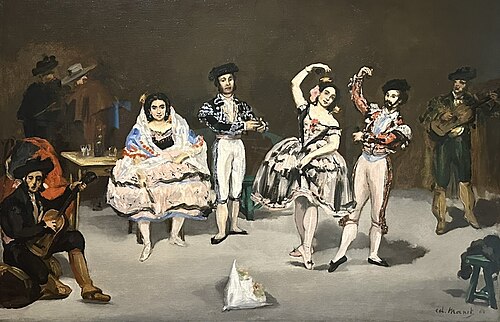 บัลเลต์สเปน , ปี 1864, คอลเล็กชันฟิลลิปส์
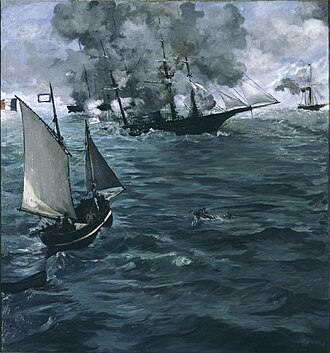 ภาพวาด "ยุทธการระหว่างเรือเคียร์ซาร์จและเรืออะลาบามา"ปี ค.ศ. 1864พิพิธภัณฑ์ศิลปะฟิลาเดลเฟียได้รับแรงบันดาลใจจากยุทธการเชอร์บูร์ก (ค.ศ. 1864)
 ภาพวาด "นักสู้กระทิงมรณะ"ปี ค.ศ. 1864–65หอศิลป์แห่งชาติ วอชิงตัน
 ภาพเขียน "นักปรัชญา (ขอทานกับหอยนางรม)"ค.ศ. 1864–1867 สถาบันศิลปะแห่งชิคาโก
 คนเก็บเศษผ้า , ค.ศ. 1865–70, พิพิธภัณฑ์นอร์ตัน ไซมอน
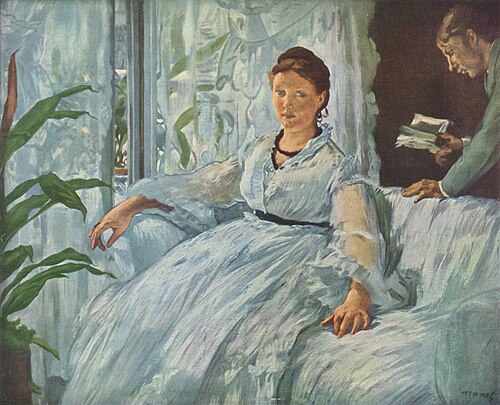 ภาพเขียน "The Reading"ค.ศ. 1865–1873พิพิธภัณฑ์ Musée d'Orsay
 ภาพ เขียน "นักเป่าฟลุตหนุ่ม หรือนักเป่าไฟ " ปี 1866 พิพิธภัณฑ์ออร์เซย์
 ภาพนิ่งแตงโมและลูกพีชปี ค.ศ. 1866 หอศิลป์แห่งชาติ วอชิงตัน
 The Tragic Actor (Rouvière as Hamlet), 1866, National Gallery of Art Washington
 The Guitar Player, c. 1866, Hill-Stead Museum
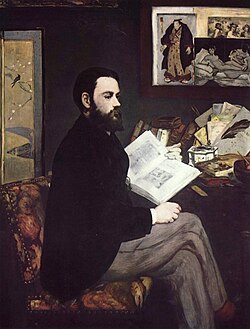
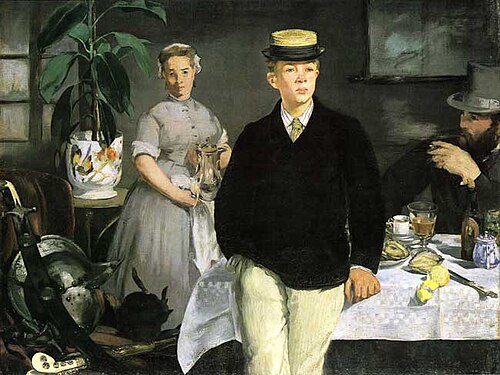
 The Balcony, 1868–69, Musée d'Orsay
 Gypsy with a Cigarette, c. 1860s–1870s, Princeton University Art Museum
 Interior at Arcachon, c. 1871, Clark Art Institute
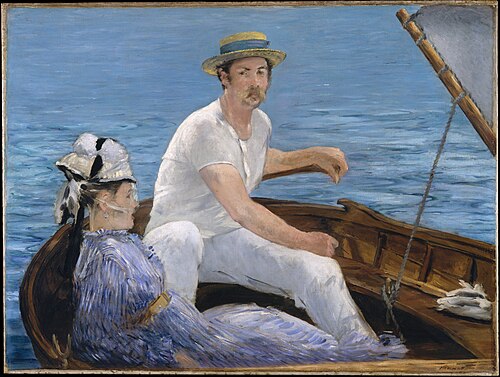
 Portrait of Abbé Hurel, 1874, National Museum of Decorative Arts Buenos Aires
 The grand canal of Venice (Blue Venice), 1875, Shelburne Museum
 Madame Manet, c. 1874–76, Norton Simon Museum
 A Parisian Lady, ca. 1876, Nationalmuseum Stockholm
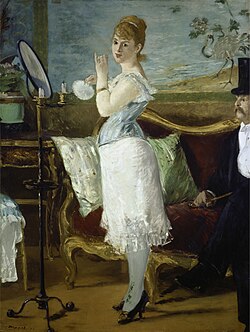 Nana, 1877, Hamburger Kunsthalle

 At the café, 1878, Sammlung Oskar Reinhart 'Am Römerholz', Winterthur
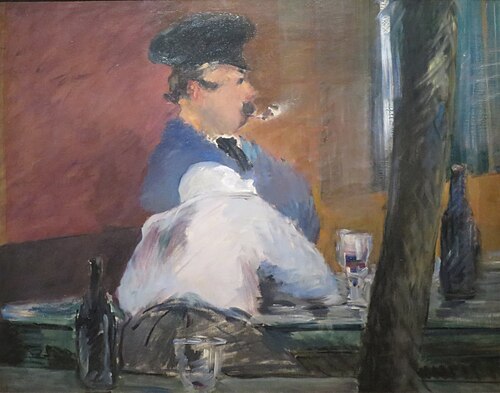 The bar, 1878–79, Pushkin Museum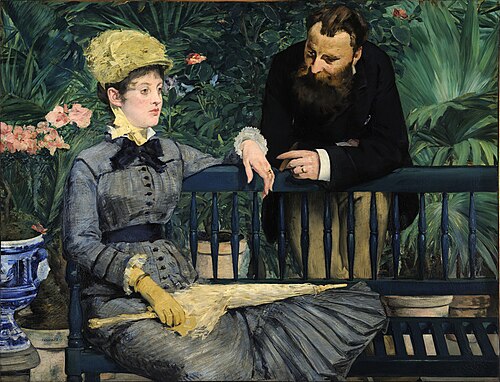


 Horsewoman, c. 1882, Thyssen-Bornemisza Museum
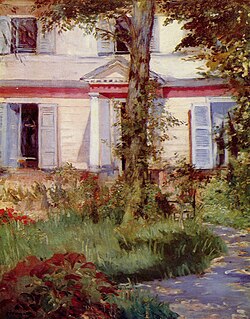 House in Rueil, 1882, National Gallery of Victoria
 Garden Path in Rueil, 1882, Musée des Beaux-Arts de Dijon


See also
- List of paintings by Édouard Manet
- Realism
- Hispagnolisme
- Portraiture
- History of painting
- Western painting
Notes
- ^Quoting Desnoyers, Fernand (1863). Le Salon des Refusés (in French).[15]
- ^See Gustave Courbet
แหล่งที่มา
- บรอมเบิร์ต, เบธ อาร์เชอร์ (1996). เอ็ดวาร์ด มาเนต์: กบฏในเสื้อโค้ทยาว . ลิตเติล, บราวน์. ISBN 0316109479.และBrombert, Beth Archer (1997). Édouard Manet: Rebel in a Frock Coat (ฉบับปกอ่อน). สำนักพิมพ์มหาวิทยาลัยชิคาโก. ISBN 0226075443.
- คอร์ธิยง, ปิแอร์ (1984). มาเนต์ . แฮร์รี เอ็น. แอบรามส์. ISBN 0810913186.
- คิง, รอสส์ (2006). การพิพากษาแห่งปารีส: ทศวรรษแห่งการปฏิวัติที่มอบลัทธิอิมเพรสชันนิสม์ให้แก่โลก . นิวยอร์ก: วอลเลอร์ แอนด์ คอมพานี. ISBN 0802714668.
- Krell, Alan (1996). Manet and the Painters of Contemporary Life . Thames and Hudson. หน้า 83.
- Mauner, George L.; Loyrette, Henri (2000). Manet: The Still-Life Paintings . นิวยอร์ก: HN Abrams ร่วมกับ American Federation of Arts. หน้า 66. ISBN 0810943913.
- เมเยอร์ส, เจฟฟรีย์ (2005). กลุ่มศิลปินอิมเพรสชันนิสต์สี่คน: อัจฉริยภาพอันใกล้ชิดของมาเนต์และโมริโซต์ เดอกาส์ และแคสแซตต์สำนักพิมพ์ฮาร์คอร์ตISBN 9780151010769.
- เนเรต์, กิลส์ (2003) มาเนท . ทาเชน. ไอเอสบีเอ็น 3822819492.
- Stevens, Mary Anne; Nichols, Lawrence W., บรรณาธิการ (2012). Manet: Portraying Life . โทเลโด: พิพิธภัณฑ์ศิลปะโทเลโด. หน้า 199. ISBN 978-1907533532.
อ่านเพิ่มเติม
ผลงานสั้น
- ริชาร์ดสัน, จอห์น (1992). มาเนต์ . สำนักพิมพ์ไพดอน คัลเลอร์ ไลบรารี. ISBN 071482755X.
- Smee, Sebastian (2016). ศิลปะแห่งการแข่งขัน: มิตรภาพ การทรยศ และความก้าวหน้าสี่ประการในศิลปะสมัยใหม่ . Random House. ISBN 9780812985078.หนึ่งในมิตรภาพที่กล่าวถึงคือมิตรภาพระหว่างมาเนต์และเอ็ดการ์ เดอกาส์ (หน้า 91–176)
ผลงานที่ยาวกว่า
- อัลลัน, สก็อตต์; เอมิลี่ เอ. บีนี; กลอเรีย กรูม, บรรณาธิการ. มาเนต์และความงามสมัยใหม่: ปีสุดท้ายของศิลปิน . พิพิธภัณฑ์ เจ. พอล เกตตี , ลอสแอนเจลิส และสถาบันศิลปะแห่งชิคาโก , 2019, ISBN 978-1-60606-604-1.
- Beeny, Emily A., บรรณาธิการ (2025). Manet & Morisot . สำนักพิมพ์มหาวิทยาลัยเยล . ISBN 978-0-300-28098-2.
- Cachin, Françoise; Moffett, Charles S.; Wilson Bareau, Juliet (1983). Manet 1832–1883. Metropolitan Museum of Art. ISBN 0870993496.
- Cachin, Françoise (1990). Manet (in French) (1991 English translation ed.). Henry Holt and Company. ISBN 0805017933.
- Cachin, Françoise (1995). Manet: Painter of Modern Life. New Horizons. ISBN 050030050X.
- de Leiris, Alain (1969). The Drawings of Édouard Manet. University of California Press. ISBN 0520015479.
- Friedrich, Otto (1993). Olympia: Paris in the Age of Manet. Simon & Schuster. ISBN 978-0671864118.
- Greenwald, Diana Seave, ed. (2024). Manet: A Model Family. Boston: Isabella Stewart Gardner Museum; Princeton, NJ: Princeton University Press. ISBN 9780691260655
- Hamilton, George (1954). Manet and His Critics. Yale University Press.
- Smee, Sebastian (2024). Paris in Ruins: Love, War, and the Birth of Impressionism. W. W. Norton & Company. ISBN 978-1-324-00695-4.
- Wilson-Bareau, Juliet, ed. (1991). Manet by himself: Correspondence & conversation, paintings, pastels, prints & drawings. Edison, New Jersey: Chartwell Books, Inc. ISBN 0 7858 0429 3.
- Wilson-Bareau, Juliet; Degener, David, eds. (2003). Manet and the Sea. New Haven, Connecticut: Yale University Press. ISBN 0-87633-174-6. Exhibition catalogue
External links
 Media from Commons
 Quotations from Wikiquote
 Texts from Wikisource
 Data from Wikidata
- Works by or about Édouard Manet at the Internet Archive
- 20 artworks by or after Édouard Manet at the Art UK site
- Union List of Artist Names, Getty Vocabularies. ULAN Full Record Display for Édouard Manet, Getty Research Institute
- Impressionism: A Centenary Exhibition, an exhibition catalog from The Metropolitan Museum of Art (pp. 110–130)
- Manet, a video documentary about his workArchived 11 September 2025 at the Wayback Machine
- Documenting the Gilded Age: New York City Exhibitions at the Turn of the 20th Century
- The Private Collection of Edgar Degas, material on Manet's relationship with Degas, Metropolitan Museum of Art
- The Getty Manet: Is Beauty Transitory? 2016 Getty Museum lecture by Richard Brettell.
- Jennifer A. Thompson, "The Battle of the USS 'Kearsarge' and the CSS 'Alabama' by Edouard Manet (cat. 1027)" in The John G. Johnson Collection: A History and Selected Works, a Philadelphia Museum of Art free digital publication.
- Manet/Velázquez: The French Taste for Spanish Painting 2003 exhibition at the Metropolitan Museum of Art, organised with Musée d'Orsay; exhibition catalog by Gary Tinterow and Geneviève Lacambre, with Deborah L. Roldán and Juliet Wilson-Bareau, et al. ISBN 978-1-588-39040-0
- Manet and the American Civil War: The Battle of U.S.S. "Kearsarge" and C.S.S. "Alabama" at the Metropolitan Museum of Art, June 3 - August 17, 2003
- Manet and the Sea Exhibition at the Art Institute of Chicago, October 20, 2003 — January 4, 2004.
- Manet and the Sea Exhibition at the Philadelphia Museum of Art, February 15, 2004 — May 31, 2004. Review by Karen Wilkin, The New Criterion, March 2004.
- Manet/Degas exhibition at Musée d'Orsay, from 28 March to 23 July 2023.
- Manet/Degas exhibition at The Metropolitan Museum of Art, September 24, 2023 - January 7, 2024.
- Manet: A Model Family at the Isabella Stewart Gardner Museum, October 10, 2024 - January 20, 2025.
- Manet & Morisot 2025 exhibition at the Legion of Honor in San Francisco (which is part of the Fine Arts Museums of San Francisco) from 11 October 2025 to 1 March 2026 and in the Cleveland Museum of Art from 29 March to 5 July 2026. The exhibit was curated and the catalog edited by Emily A. Beeny. Manet & Morisot (2025). Yale University Press. ISBN 978-0-300-28098-2. Exhibition reviewArt in America