
อ่าน 5 นาที
สตีเวีย เรบาวเดียนา
Stevia rebaudiana เป็นพืชชนิดหนึ่งในสกุล Stevia ของวงศ์ Asteraceae เป็นที่รู้จักกันทั่วไปใน ชื่อ candyleaf , sweetleaf หรือ sugarleaf [ 1 ] [ 2 ]
สตีเวีย เรบาวเดียนา
| สตีเวีย เรบาวเดียนา | |
|---|---|
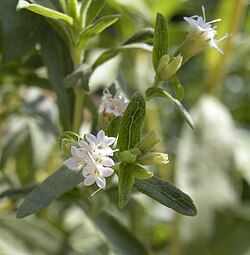 | |
| ดอก สเตเวีย เรบาวเดียนา | |
การจำแนกทางวิทยาศาสตร์ | |
| อาณาจักร: | พืช |
| กลุ่มสายพันธุ์ : | เอ็มบริโอไฟต์ |
| กลุ่มสายพันธุ์ : | พืชมีท่อลำเลียง |
| กลุ่มสายพันธุ์ : | สเปอร์มาโตไฟต์ |
| กลุ่มสายพันธุ์ : | พืชดอก |
| กลุ่มสายพันธุ์ : | ยูไดคอต |
| กลุ่มสายพันธุ์ : | แอสเตอริด |
| คำสั่ง: | แอสเตราเลส |
| ตระกูล: | แอสเตอรี |
| ประเภท: | สตีเวีย |
| สายพันธุ์: | เอส. เรบาวเดียนา |
| ชื่อทวินาม | |
| สตีเวีย เรบาวเดียนา | |
Stevia rebaudianaเป็นพืชชนิดหนึ่งในสกุล Steviaของวงศ์ Asteraceaeเป็นที่รู้จักกันทั่วไปในชื่อ candyleaf , sweetleafหรือ sugarleaf [ 1 ] [ 2 ]
เป็นพืชตามฤดูกาลขนาดเล็กที่เติบโตสูง 30–60 เซนติเมตร (1–2 ฟุต) [ 2 ]มีใบยาวที่เติบโตตามลำต้นและเรียงชิดกัน โดยทั่วไปจะตัดดอกออกเพื่อปรับปรุงรสชาติของใบ[ 3 ]สตีเวียเป็นพืชยืนต้นที่อ่อนแอ มีถิ่นกำเนิดในบางส่วนของบราซิลและปารากวัยที่มีสภาพแวดล้อมชื้นแฉะ[ 2 ] [ 3 ]
สตีเวียเป็นพืชที่ปลูกกันอย่างแพร่หลายเพื่อใช้ประโยชน์จากใบ ซึ่งสามารถนำมาสกัด เป็นผลิตภัณฑ์ให้ความหวานที่รู้จักกันทั่วไปในชื่อ สตีเวียและจำหน่ายภายใต้ชื่อทางการค้าต่างๆ[ 4 ]สารประกอบทางเคมีที่ให้ความหวานคือสตีวิออลไกลโคไซด์ หลายชนิด (ส่วนใหญ่เป็นสตีวิโอไซด์และรีบาวดิโอไซด์ ) ซึ่งมีความหวานมากกว่าน้ำตาล 200–300 เท่า [ 2 ] ใบสตีเวียมีสตีวิ โอไซด์ 9.1% และรีบาวดิโอไซด์เอ 3.8% [ 5 ]

คำอธิบาย
Stevia rebaudianaเป็นพืชล้มลุกหลายปี สูงได้ถึง 2 ฟุต (0.61 เมตร) [ 2 ]ดอกมีสีขาวมีลายสีม่วงอ่อน และไม่มีกลิ่นหอม พืชจะออกผลเป็นรูปทรงกระสวยมีร่อง Stevia ชอบดินร่วนปนทราย[ 2 ]
เคมี
ในปี พ.ศ. 2474 นักเคมีได้แยกไกลโคไซด์สตีวิโอไซด์และรีบาวดิโอไซด์ที่ทำให้ใบไม้มีรสหวาน[ 6 ]โครงสร้างที่แน่นอนของอะไกลโคนสตีวิออลและไกลโคไซด์ของมันได้รับการตีพิมพ์ในปี พ.ศ. 2498
การเพาะปลูก
Beginning in the 1960s,[4] commercial cultivation had spread to Japan, Southeast Asia and the US, but also in mildly tropical climates in hilly areas of Nepal or India (Assam region). The plant prefers warm, moist and sunny conditions.[2] The plant cannot survive frost during the winter and therefore greenhouses are used to grow stevia in Europe.[7]
Stevia rebaudiana is found in the wild in semiaridhabitats ranging from grassland to mountain terrain, do produce seeds, but only a small percentage of the seeds germinate.
Stevia rebaudiana has been grown on an experimental basis in Ontario, Canada, since 1987 to determine the feasibility of commercial cultivation.[8]Duke University researchers developed a strategic plan to assist farmers and exporters in Paraguay to compete in the global market for stevia.[9]
Uses
Stevia rebaudiana has been used over centuries by the Guaraní people of Brazil and Paraguay, who called it ka'a he'ẽ ("sweet herb"), to sweeten the local yerba mate tea, as medicine, and as a "sweet treat".[10] Rural and indigenous populations in Paraguay also used the plant as a contraceptive.[11][12]
In 1899, botanist Moisés Santiago Bertoni first described the plant as growing in eastern Paraguay, and observed its sweet taste.[13]
When extracts of its leaves are processed into a powder, stevia is used as a sugar substitute in most of the developed world.[5][14]
Based on the JECFA (Joint Expert Committee on Food Additives) declaration, safe consumption of steviol glycosides for humans is determined to be 4 mg/kg body weight per day.[15] It was also agreed by the European Commission in 2011 for use in food in European countries.[16] Steviol glycosides have also been accepted in the US as generally recognized as safe (GRAS).[17]
ใบสเตเวียและสารสกัดดิบไม่ถือเป็น GRAS และไม่อนุญาตให้นำเข้าสหรัฐอเมริกาเพื่อใช้เป็นสารให้ความหวาน[ 18 ] [ 19 ]
ลิงก์ภายนอก
 ข้อมูลที่เกี่ยวข้องกับStevia rebaudianaใน Wikispecies
 สื่อที่เกี่ยวข้องกับStevia rebaudianaใน Wikimedia Commons


สรุปเนื้อหา
ข้อมูลสำคัญจากบทความ
ข้อมูลสำคัญเกี่ยวกับ สตีเวีย เรบาวเดียนา
Stevia rebaudiana เป็นพืชชนิดหนึ่งในสกุล Stevia ของวงศ์ Asteraceae เป็นที่รู้จักกันทั่วไปใน ชื่อ candyleaf , sweetleaf หรือ sugarleaf [ 1 ] [ 2 ]
คำอธิบาย
Stevia rebaudiana เป็นพืชล้มลุกหลายปี สูงได้ถึง 2 ฟุต (0.61 เมตร) [ 2 ] ดอกมีสีขาวมีลายสีม่วงอ่อน และไม่มีกลิ่นหอม พืชจะออกผลเป็นรูปทรงกระสวยมีร่อง Stevia ชอบดินร่วนปนทราย [ 2 ]
เคมี
ในปี พ.ศ. 2474 นักเคมีได้แยก ไกลโคไซด์ สตีวิโอไซด์และรีบาวดิโอไซด์ที่ทำให้ใบไม้มีรสหวาน [ 6 ] โครงสร้างที่แน่นอนของ อะไกลโคน สตีวิออล และไกลโคไซด์ของมันได้รับการตีพิมพ์ในปี พ.ศ. 2498
การเพาะปลูก
Beginning in the 1960s, [ 4 ] commercial cultivation had spread to Japan , Southeast Asia and the US , but also in mildly tropical climates in hilly areas of Nepal or India ( Assam region). The plant prefers warm, moist and sunny conditions.