
Pope Eugene I
Eugene I | |
|---|---|
| Bishop of Rome | |
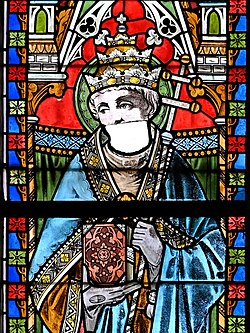 Stained glass mural depicting Pope Eugene I, France | |
| Church | Catholic Church |
| Papacy began | 10 August 654 |
| Papacy ended | 2 June 657 |
| Predecessor | Martin I |
| Successor | Vitalian |
| Personal details | |
| Born | |
| Died | 2 June 657 |
| Sainthood | |
| Feast day | 2 June |
| Other popes named Eugene | |
Pope Eugene I (Latin: Eugenius I; died 2 June 657) was the bishop of Rome from 10 August 654 to his death on 2 June 657. He was chosen to become Pope after the deposition and banishment of Martin I by Emperor Constans II over the dispute about Monothelitism.
Unusual election
Eugene was a Roman from the Aventine, son of Rufinianus. He was brought up in the Church's ministry, and was already an elderly priest when a dispute flared up between the papacy in Rome, which opposed the monothelite teachings, and the imperial government in Constantinople, which supported it. As a result, Pope Martin I was deposed by Emperor Constans II and carried off from Rome on 18 June 653, eventually ending up banished to Cherson.[1] Little is known about what happened in Rome after Martin's departure, but it was typical in those days for the Holy See to be governed by the archpriest and archdeacon.[2] Martin hoped that a successor would not be elected while he lived, but the imperial court exerted pressure on Rome through the exarch of Ravenna. On 10 August 654, Eugene was appointed the new pope, to which Martin acceded.[2] The imperial government believed that Eugene would be cooperative and ratified his election.[1]
Pontificate
As pope, Eugene consecrated twenty-one bishops for different parts of the world and received the youthful Wilfrid on the occasion of his first visit to Rome (c. 654).[2]
ยูจีนที่ 1 แสดงความเคารพต่อพระประสงค์ของจักรพรรดิมากกว่าผู้สืบทอดตำแหน่งก่อนหน้า และไม่ได้แสดงจุดยืนต่อต้านลัทธิเอกเทวนิยมของอัครสังฆราชแห่งคอนสแตน ติโนเปิ ล อย่างเปิดเผย [ 3 ]หนึ่งในพระราชกรณียกิจแรกๆ ของพระสันตะปาปาองค์ใหม่คือการส่งผู้แทนไปยังคอนสแตนติโนเปิลพร้อมจดหมายถึงจักรพรรดิคอนสแตนส์ที่ 2 เพื่อแจ้งให้ทราบถึงการเลือกตั้งของพระองค์และประกาศความเชื่อของพระองค์ ผู้แทนเหล่านั้นถูกหลอกลวงหรือติดสินบน และนำจดหมายสังคายนาจากอัครสังฆราชปีเตอร์แห่งคอนสแตนติโนเปิล (656–666) กลับมา ในขณะที่ทูตของจักรพรรดิซึ่งเดินทางไปด้วย ได้นำเครื่องบูชาสำหรับนักบุญปีเตอร์และคำขอจากจักรพรรดิให้พระสันตะปาปาเข้าร่วมกับอัครสังฆราชแห่งคอนสแตนติโนเปิล จดหมายของปีเตอร์นั้นเขียนด้วยรูปแบบที่ยากและคลุมเครือ และหลีกเลี่ยงการประกาศอย่างเฉพาะเจาะจงเกี่ยวกับจำนวน "พระประสงค์หรือการดำเนินการ" ในพระคริสต์ เมื่อมีการอ่านเนื้อหาของจดหมายฉบับนี้ให้คณะสงฆ์และประชาชนในโบสถ์เซนต์แมรีเมเจอร์ฟังในปี ค.ศ. 656 พวกเขาไม่เพียงแต่ปฏิเสธจดหมายฉบับนี้ด้วยความขุ่นเคืองเท่านั้น แต่ยังไม่ยอมให้พระสันตะปาปาออกจากมหาวิหารจนกว่าพระองค์จะทรงสัญญาว่าจะไม่ยอมรับจดหมายฉบับนี้ไม่ว่ากรณีใดๆ ก็ตาม[ 2 ]
เจ้าหน้าที่ของจักรวรรดิโกรธเคืองต่อการปฏิเสธอย่างรุนแรงต่อความประสงค์ของจักรพรรดิและพระสังฆราช[ 2 ]คอนสแตนส์ขู่ว่าจะกำจัดยูจีนเช่นเดียวกับที่เขากำจัดมาร์ติน[ 1 ]แต่เขากำลังยุ่งอยู่กับการปกป้องจักรวรรดิจาก การรุกราน ของชาวมุสลิม[ 2 ]
ความตายและมรดก
ยูจีนที่ 1 เสียชีวิตเมื่อวันที่ 2 มิถุนายน ค.ศ. 657 [ 4 ]ก่อนที่คอนสแตนส์ที่ 2 จะสามารถดำเนินการใดๆ กับเขา เขาถูกฝังไว้ใน มหาวิหาร เซนต์ปีเตอร์เก่า[ 2 ]เขาได้รับการยกย่องให้เป็นนักบุญ โดยมีวัน ฉลอง คือวันที่ 2 มิถุนายน[ 1 ]เขาได้รับการระลึกถึงในฐานะนักบุญอุปถัมภ์และชื่อของมหาวิหารเซนต์ยูจีนในสังฆมณฑลซานตาโรซาในแคลิฟอร์เนีย
ดูเพิ่มเติม
บรรณานุกรม
- This article incorporates text from a publication now in the public domain: Chisholm, Hugh, ed. (1911). "Eugenius". Encyclopædia Britannica. Vol. 9 (11th ed.). Cambridge University Press.
 This article incorporates text from a publication now in the public domain: Mann, Horace Kinder (1909). "Pope St. Eugene I". In Herbermann, Charles (ed.). Catholic Encyclopedia. Vol. 5. New York: Robert Appleton Company.
- Attwater, Aubrey (1939). A Dictionary of Popes: From Peter to Pius XII.
External links
- Saints.SQPN: Pope Eugene I
- Catholic Online: Pope Eugene I