
Evolution of nervous systems
The evolution of nervous systems dates back to the first development of nervous systems in animals (or metazoans). Neurons developed as specialized electrical signaling cells in multicellular animals, adapting the mechanism of action potentials present in motile single-celled and colonial eukaryotes. Primitive systems, like those found in protists, use chemical signalling for movement and sensitivity; data suggests these were precursors to modern neural cell types and their synapses.[1] When some animals started living a mobile lifestyle and eating larger food particles externally, they developed ciliatedepithelia, contractile muscles, and coordinative and sensitive neurons for it in their outer layer.[2][3]
Simple nerve nets seen in acoels (basal bilaterians) and cnidarians are thought to be the ancestral condition for the Planulozoa (bilaterians plus cnidarians and, perhaps, placozoans). A more complex nerve net with simple nerve cords is present in ancient animals called ctenophores[4] but no nerves, thus no nervous systems, are present in another group of ancient animals, the sponges (Porifera). Due to the common presence and similarity of some neural genes in these ancient animals and their protist relatives, the controversy of whether ctenophores or sponges diverged earlier, and the recent discovery of "neuroid" cells specialized in coordination of digestive choanocytes in Spongilla, the origin of neurons in the phylogenetictree of life is still disputed.[5][6][7] Further cephalization and nerve cord (ventral and dorsal) evolution occurred many times independently in bilaterians.[5]
Neural precursors
Action potentials, which are necessary for neural activity, evolved in single-celled eukaryotes. These use calcium rather than sodium action potentials, but the mechanism was probably adapted into neural electrical signaling in multicellular animals. In some colonial eukaryotes, such as Obelia, electrical signals propagate not only through neural nets, but also through epithelial cells in the shared digestive system of the colony.[8] Several non-metazoan phyla, including choanoflagellates, filasterea, and mesomycetozoea, have been found to have synaptic protein homologs, including secretory SNAREs, Shank, and Homer. In choanoflagellates and mesomycetozoea, these proteins are upregulated during colonial phases, suggesting the importance of these proto-synaptic proteins for cell to cell communication.[9] The history of ideas on how neurons and the first nervous systems emerged in evolution has been discussed in a 2015 book by Michel Antcil.[10] In 2022 two proteins SMIM20 and NUCB2, that are precursors of the neuropeptides phoenixin and nesfatin-1 respectively have been found to have deep homology across all lineages that preceded creatures with central nervous systems, bilaterians, cnidarians, ctenophores, and sponges as well as in choanoflagellates.[11][12]
Sponges
ฟองน้ำไม่มีเซลล์ที่เชื่อมต่อกันด้วยจุดเชื่อมต่อไซแนปส์นั่นคือไม่มีเซลล์ประสาท และด้วยเหตุนี้จึงไม่มีระบบประสาท อย่างไรก็ตาม ฟองน้ำมีโฮโมล็อกของยีนหลายตัวที่มีบทบาทสำคัญในการทำงานของไซแนปส์ การศึกษาล่าสุดแสดงให้เห็นว่าเซลล์ฟองน้ำแสดงกลุ่มโปรตีนที่รวมตัวกันเป็นโครงสร้างที่คล้ายกับความหนาแน่นของโพสต์ไซแนปส์ (ส่วนรับสัญญาณของไซแนปส์) [ 13 ]อย่างไรก็ตาม หน้าที่ของโครงสร้างนี้ยังไม่ชัดเจนในปัจจุบัน แม้ว่าเซลล์ฟองน้ำจะไม่แสดงการส่งสัญญาณไซแนปส์ แต่พวกมันก็สื่อสารกันผ่านคลื่นแคลเซียมและแรงกระตุ้นอื่นๆ ซึ่งเป็นตัวกลางในการกระทำง่ายๆ บางอย่าง เช่น การหดตัวของร่างกายทั้งหมด[ 14 ]วิธีอื่นๆ ที่เซลล์ฟองน้ำสื่อสารกับเซลล์ข้างเคียงคือการขนส่งเวสิเคิลข้ามบริเวณที่มีความหนาแน่นสูงของเยื่อหุ้มเซลล์ เวสิเคิลเหล่านี้บรรทุกไอออนและโมเลกุลส่งสัญญาณอื่นๆ แต่ไม่มีหน้าที่ของไซแนปส์ที่แท้จริง[ 15 ]
โครงข่ายประสาท
แมงกะพรุนหวีเจลลี่และสัตว์ที่เกี่ยวข้องมีโครงข่ายประสาทแบบกระจายแทนที่จะเป็นระบบประสาทส่วนกลาง ในแมงกะพรุนส่วนใหญ่ โครงข่ายประสาทจะกระจายไปทั่วร่างกายอย่างสม่ำเสมอ ในหวีเจลลี่ โครงข่ายประสาทจะกระจุกตัวอยู่ใกล้ปาก โครงข่ายประสาทประกอบด้วยเซลล์ประสาทรับความรู้สึกที่รับสัญญาณทางเคมี สัมผัส และภาพ เซลล์ประสาทสั่งการที่สามารถกระตุ้นการหดตัวของผนังลำตัว และเซลล์ประสาทตัวกลางที่ตรวจจับรูปแบบกิจกรรมในเซลล์ประสาทรับความรู้สึกและส่งสัญญาณไปยังกลุ่มเซลล์ประสาทสั่งการ ในบางกรณี กลุ่มเซลล์ประสาทตัวกลางจะรวมกลุ่มกันเป็นปมประสาทที่ แยกจากกัน [ 16 ]
การพัฒนาระบบประสาทในเรเดียตาค่อนข้างไม่มีโครงสร้างที่ชัดเจน ต่างจากไบลาเทเรียนเรเดียตามีเพียงสองชั้นเซลล์ดั้งเดิม คือเอนโดเดิร์มและเอกโตเดิร์มเซลล์ประสาทถูกสร้างขึ้นจากชุดเซลล์ต้นกำเนิดเอกโตเดิร์มพิเศษ ซึ่งทำหน้าที่เป็นเซลล์ต้นกำเนิดสำหรับเซลล์เอกโตเดิร์มประเภทอื่นๆ ทุกชนิดด้วย[ 17 ]
เส้นประสาท
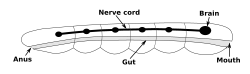
สัตว์ส่วนใหญ่ในปัจจุบันเป็นสัตว์ที่มีสมมาตรสองด้านหมายถึงสัตว์ที่มีด้านซ้ายและด้านขวาเป็นภาพสะท้อนกันโดยประมาณ เชื่อกันว่าสัตว์ที่มีสมมาตรสองด้านทั้งหมดสืบเชื้อสายมาจากบรรพบุรุษที่มีลักษณะคล้ายหนอนที่ปรากฏขึ้นใน ยุค ไครโอเจเนียนเมื่อ 700–650 ล้านปีก่อน[ 18 ] รูปทรงพื้นฐานของสัตว์ที่มีสมมาตรสองด้านคือท่อที่มีโพรงลำไส้กลวงวิ่งจากปากไปยังทวารหนัก และเส้นประสาทที่มีปมประสาทขนาดใหญ่เป็นพิเศษที่ด้านหน้า เรียกว่า " สมอง "
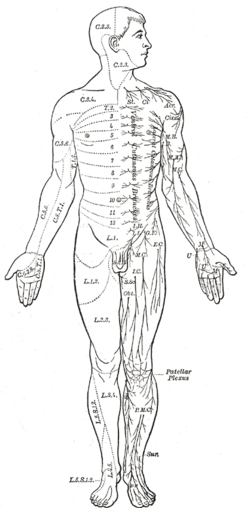
แม้แต่สัตว์เลี้ยงลูกด้วยนมรวมทั้งมนุษย์ ก็แสดงให้เห็นโครงสร้างร่างกายแบบสมมาตรสองด้านที่แบ่งเป็นส่วนๆ ในระดับระบบประสาท ไขสันหลังประกอบด้วยปมประสาทแบบแบ่งส่วน หลายชุด แต่ละชุดก่อให้เกิดเส้นประสาทสั่งการและรับความรู้สึกที่ไปเลี้ยงส่วนต่างๆ ของพื้นผิวร่างกายและกล้ามเนื้อที่อยู่ด้านล่าง บนแขนขา รูปแบบการจัดเรียงเส้นประสาทมีความซับซ้อน แต่บนลำตัวจะก่อให้เกิดแถบแคบๆ หลายแถบ สามส่วนบนสุดเป็นของสมอง ก่อให้เกิดสมองส่วนหน้า สมองส่วนกลาง และสมองส่วนหลัง[ 19 ]
สัตว์ที่มีสมมาตรสองด้านสามารถแบ่งได้ตามเหตุการณ์ที่เกิดขึ้นในช่วงต้นของการพัฒนาตัวอ่อน ออกเป็นสองกลุ่ม ( ซูเปอร์ไฟลา ) เรียกว่าโปรโตสโตมและดิวเทอโรสโตม [ 20 ] ดิ วเทอโรสโตมประกอบด้วยสัตว์มีกระดูกสันหลัง รวมถึงเอคิโนเดอร์มและเฮมิคอร์เดต (ส่วนใหญ่เป็นหนอนโอ๊ก) โปรโตสโตม ซึ่งเป็นกลุ่มที่มีความหลากหลายมากกว่า ประกอบด้วย อาร์ โทรพอดมอลลัสก์และหนอนหลายชนิด มีความแตกต่างพื้นฐานระหว่างสองกลุ่มนี้ในเรื่องตำแหน่งของระบบประสาทภายในร่างกาย: โปรโตสโตมมีเส้นประสาทอยู่ด้านท้อง (โดยปกติคือด้านล่าง) ของร่างกาย ในขณะที่ดิวเทอโรสโตมมีเส้นประสาทอยู่ด้านหลัง (โดยปกติคือด้านบน) อันที่จริงแล้ว ลักษณะต่างๆ ของร่างกายหลายอย่างกลับด้านกันระหว่างสองกลุ่มนี้ รวมถึงรูปแบบการแสดงออกของยีนหลายตัวที่แสดงการไล่ระดับจากด้านหลังไปด้านหน้า นักกายวิภาคศาสตร์บางคนในปัจจุบันพิจารณาว่าร่างกายของโปรโตสโตมและดิวเทอโรสโตมนั้น "พลิกกลับ" เมื่อเทียบกับกันและกัน ซึ่งเป็นสมมติฐานที่เสนอครั้งแรกโดยGeoffroy Saint-Hilaireสำหรับแมลงเมื่อเปรียบเทียบกับสัตว์มีกระดูกสันหลัง ดังนั้น แมลงจึงมีเส้นประสาทที่วิ่งไปตามแนวกลางลำตัวด้านล่าง ในขณะที่สัตว์มีกระดูกสันหลังทั้งหมดมีเส้นประสาทที่วิ่งไปตามแนวกลางลำตัวด้านบน[ 21 ]แต่ข้อมูลโมเลกุลล่าสุดจากโปรโตสโตมและดิวเทอโรสโตมที่แตกต่างกันปฏิเสธสถานการณ์นี้และชี้ให้เห็นว่าเส้นประสาทวิวัฒนาการแยกกันในทั้งสองกลุ่ม[ 22 ]
แอนเนลิดา
ไส้เดือนมีเส้นประสาท คู่ขนาน ที่วิ่งไปตามความยาวของลำตัวและรวมกันที่หางและปาก เส้นประสาทเหล่านี้เชื่อมต่อกันด้วยเส้น ประสาท ขวางเหมือนขั้นบันได เส้นประสาทขวางเหล่านี้ช่วยประสานงานทั้งสองด้านของสัตว์ ปมประสาทสองปมที่ส่วนหัวทำหน้าที่คล้ายกับสมองอย่างง่ายตัวรับแสงที่จุดรับภาพของสัตว์ให้ข้อมูลทางประสาทสัมผัสเกี่ยวกับแสงและความมืด[ 23 ]
เนมาโทดา
ระบบประสาทของหนอนตัวกลม ขนาดเล็กมากชนิดหนึ่ง คือ Caenorhabditis elegansได้รับการทำแผนที่ลงไปถึงระดับไซแนปส์ เซลล์ประสาททุกเซลล์และลำดับวงศ์ของเซลล์ได้รับการบันทึกไว้ และการเชื่อมต่อของเซลล์ประสาทส่วนใหญ่หรือทั้งหมดก็เป็นที่รู้จัก ในสปีชีส์นี้ ระบบประสาทมี ความแตกต่าง ทางเพศระบบประสาทของเพศผู้และเพศกะเทยมีจำนวนเซลล์ประสาทและกลุ่มเซลล์ประสาทที่ทำหน้าที่เฉพาะเพศแตกต่างกัน ในC. elegansเพศผู้มีเซลล์ประสาท 383 เซลล์ ในขณะที่เพศกะเทยมีเซลล์ประสาท 302 เซลล์[ 24 ]
สัตว์ขาปล้อง
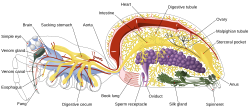
สัตว์ขาปล้องเช่นแมลงและกุ้งมีระบบประสาทที่ประกอบด้วยปมประสาท หลายชุด ที่เชื่อมต่อกันด้วยเส้นประสาทส่วนท้องซึ่งประกอบด้วยเส้นประสาทคู่ขนานสองเส้นที่วิ่งไปตามความยาวของท้อง[ 25 ] โดยทั่วไปแล้ว แต่ละปล้องของร่างกายจะมีปมประสาท หนึ่งปม ในแต่ละด้าน แม้ว่าปมประสาทบางส่วนจะรวมกันเพื่อสร้างสมองและปมประสาทขนาดใหญ่อื่นๆ ส่วนหัวประกอบด้วยสมอง หรือที่เรียกว่าปมประสาทเหนือหลอดอาหารในระบบประสาทของแมลงสมองจะถูกแบ่งทางกายวิภาคออกเป็นโปรโตเซเรบรัมดิวโตเซเรบรัมและไตรโตเซเรบรัมถัดจากสมองทันทีคือปมประสาทใต้หลอดอาหารซึ่งประกอบด้วยปมประสาทที่รวมกันสามคู่ มันควบคุมส่วนปากต่อมน้ำลายและกล้ามเนื้อบาง ส่วน สัตว์ขาปล้องหลายชนิดมี อวัยวะรับสัมผัสที่พัฒนาอย่างดี รวมถึง ตาประกอบสำหรับการมองเห็น และหนวดสำหรับดมกลิ่นและ รับรู้ ฟีโรโมนข้อมูลทางประสาทสัมผัสจากอวัยวะเหล่านี้จะถูกประมวลผลโดยสมอง
In insects, many neurons have cell bodies that are positioned at the edge of the brain and are electrically passive—the cell bodies serve only to provide metabolic support and do not participate in signalling. A protoplasmic fiber runs from the cell body and branches profusely, with some parts transmitting signals and other parts receiving signals. Thus, most parts of the insect brain have passive cell bodies arranged around the periphery, while the neural signal processing takes place in a tangle of protoplasmic fibers called neuropil, in the interior.[26]
Evolution of central nervous systems
Evolution of the human brain
There has been a gradual increase in brain volume as the ancestors of modern humans progressed along the human timeline of evolution (see Homininae), starting from about 600 cm3 in Homo habilis up to 1736 cm3 in Homo neanderthalensis. Thus, in general there is a correlation between brain volume and intelligence.[27] However, modern Homo sapiens have a smaller brain volume (brain size 1250 cm3) than neanderthals; women have a brain volume slightly smaller than men, and the Flores hominids (Homo floresiensis), nicknamed "hobbits", had a cranial capacity of about 380 cm3, about a third of the Homo erectus average and considered small for a chimpanzee. It is proposed that they evolved from H. erectus as a case of insular dwarfism. In spite of their threefold smaller brain there is evidence that H. floresiensis used fire and made stone tools as sophisticated as those of their proposed ancestor, H. erectus.[28] Iain Davidson summarizes the opposite evolutionary constraints on human brain size as "As large as you need and as small as you can".[29] The human brain has evolved around the metabolic, environmental, and social needs that the species has dealt with throughout its existence. As hominid species evolved with increased brain size and processing power, the overall metabolic need increased. Compared to chimpanzees, humans consume more calories from animals than from plants. While not certain, studies have shown that this shift in diet is due to the increased need for the fatty acids more readily found in animal products. These fatty acids are essential for brain maintenance and development. Other factors to consider are the need for social interaction and how hominids have interacted with their environments over time.[30]
Brain evolution can be studied using endocasts, a branch of neurology and paleontology called paleoneurology.