
อ่าน 9 นาที
Ramesses I
Menpehtyre Ramesses I was the founding pharaoh of ancient Egypt's 19th Dynasty.
Ramesses I
| Ramesses I | ||||||||||||||||||||||||||||||||||||||||||||||||||||||||||||||||||||||||||||||||||||||||||||||||||||||||||||||||||||||||||||
|---|---|---|---|---|---|---|---|---|---|---|---|---|---|---|---|---|---|---|---|---|---|---|---|---|---|---|---|---|---|---|---|---|---|---|---|---|---|---|---|---|---|---|---|---|---|---|---|---|---|---|---|---|---|---|---|---|---|---|---|---|---|---|---|---|---|---|---|---|---|---|---|---|---|---|---|---|---|---|---|---|---|---|---|---|---|---|---|---|---|---|---|---|---|---|---|---|---|---|---|---|---|---|---|---|---|---|---|---|---|---|---|---|---|---|---|---|---|---|---|---|---|---|---|---|
| Menophres | ||||||||||||||||||||||||||||||||||||||||||||||||||||||||||||||||||||||||||||||||||||||||||||||||||||||||||||||||||||||||||||
 Portrait of Ramesses I from his tomb in KV16 | ||||||||||||||||||||||||||||||||||||||||||||||||||||||||||||||||||||||||||||||||||||||||||||||||||||||||||||||||||||||||||||
| Pharaoh | ||||||||||||||||||||||||||||||||||||||||||||||||||||||||||||||||||||||||||||||||||||||||||||||||||||||||||||||||||||||||||||
| Reign | 2 regnal years1292–1290 BC1295–1294 BC | |||||||||||||||||||||||||||||||||||||||||||||||||||||||||||||||||||||||||||||||||||||||||||||||||||||||||||||||||||||||||||
| Predecessor | Horemheb | |||||||||||||||||||||||||||||||||||||||||||||||||||||||||||||||||||||||||||||||||||||||||||||||||||||||||||||||||||||||||||
| Successor | Seti I | |||||||||||||||||||||||||||||||||||||||||||||||||||||||||||||||||||||||||||||||||||||||||||||||||||||||||||||||||||||||||||
| ||||||||||||||||||||||||||||||||||||||||||||||||||||||||||||||||||||||||||||||||||||||||||||||||||||||||||||||||||||||||||||
| Consort | Sitre | |||||||||||||||||||||||||||||||||||||||||||||||||||||||||||||||||||||||||||||||||||||||||||||||||||||||||||||||||||||||||||
| Children | Seti I | |||||||||||||||||||||||||||||||||||||||||||||||||||||||||||||||||||||||||||||||||||||||||||||||||||||||||||||||||||||||||||
| Father | Seti | |||||||||||||||||||||||||||||||||||||||||||||||||||||||||||||||||||||||||||||||||||||||||||||||||||||||||||||||||||||||||||
| Died | 1290 BC or 1294 BC(aged c. 50s)[2] | |||||||||||||||||||||||||||||||||||||||||||||||||||||||||||||||||||||||||||||||||||||||||||||||||||||||||||||||||||||||||||
| Burial | KV16; Mummy found in the Deir el-Bahriroyal cache (Theban Necropolis) | |||||||||||||||||||||||||||||||||||||||||||||||||||||||||||||||||||||||||||||||||||||||||||||||||||||||||||||||||||||||||||
| Dynasty | 19th Dynasty | |||||||||||||||||||||||||||||||||||||||||||||||||||||||||||||||||||||||||||||||||||||||||||||||||||||||||||||||||||||||||||


Menpehtyre Ramesses I[a] was the founding pharaoh of ancient Egypt's 19th Dynasty. The dates for his short reign are not completely known but the timeline of late 1292–1290 BC is frequently cited[4] as well as 1295–1294 BC.[5] While Ramesses I was the founder of the 19th Dynasty, his brief reign mainly serves to mark the transition between the reign of Horemheb, who had stabilized Egypt in the late 18th Dynasty, and the rule of the powerful pharaohs of his own dynasty, in particular his son Seti I, and grandson Ramesses II.
Origins
| Paramessu | |
|---|---|
| Vizier of Egypt | |
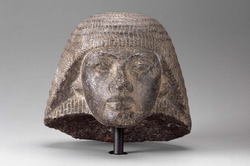 Stone head carving of Paramessu (Ramesses I), originally part of a statue depicting him as a scribe; on display at the Museum of Fine Arts, Boston | |
| Dynasty | 18th Dynasty |
| Pharaoh | Horemheb |


เดิมทีเรียกว่าปาราเมสสุ รามเสสที่ 1 ไม่ได้เกิดจากเชื้อพระวงศ์ เกิดในตระกูลทหารผู้สูงศักดิ์จากภูมิภาคสามเหลี่ยมปากแม่น้ำไนล์ อาจจะใกล้กับ เมืองหลวงเก่าของชาวฮิกโซส ที่ชื่ออวาริส เขาเป็นบุตรชายของผู้บัญชาการทหารชื่อเซติ ลุงของเขา ชื่อคา เอมวาเซตนายทหาร ได้แต่งงานกับทัมวาเจซีมเหสีแห่งฮาเร็มของฟาโรห์ตุตันคาเมน[ 6 ]แห่งอามุนซึ่งเป็นญาติของฮุยอุปราชแห่งคุชซึ่งเป็นตำแหน่งสำคัญของรัฐ[ 7 ]สิ่งนี้แสดงให้เห็นถึงสถานะอันสูงส่งของครอบครัวรามเสส รามเสสที่ 1 ได้รับความโปรดปรานจาก โฮเรมเฮ บ ฟาโรห์องค์สุดท้ายของราชวงศ์ที่ 18 อัน วุ่นวาย ซึ่งแต่งตั้งเขาเป็นเสนาบดีในฐานะปาราเมสสุ รามเสสยังดำรงตำแหน่งมหาปุโรหิตแห่งเซธ[ 8 ]ด้วย ดังนั้น เขาจึงมีบทบาทสำคัญในการฟื้นฟูศาสนาเก่าหลังจากความนอกรีตของอามาร์นาในรุ่นก่อนหน้า ภายใต้ฟาโรห์อัคเคนาเตน โฮเรมเฮบเองเป็นขุนนางจากนอกราชวงศ์โดยตรง ซึ่งไต่เต้าขึ้นมาในกองทัพอียิปต์จนได้ดำรงตำแหน่งที่ปรึกษาของฟาโรห์ตุตันคาเมนและอายและในที่สุดก็ได้เป็นฟาโรห์ เนื่องจากโฮเรมเฮบไม่มีโอรสธิดาที่ยังมีชีวิตอยู่ เขาจึงเลือกรามเสสเป็นทายาทในช่วงปีสุดท้ายของการครองราชย์ โดยสันนิษฐานว่าเพราะรามเสสที่ 1 เป็นทั้งผู้ปกครองที่มีความสามารถและมีโอรส ( เซติที่ 1 ) และหลานชาย ( รามเสสที่ 2ในอนาคต) ที่จะสืบทอดตำแหน่งต่อจากเขา และหลีกเลี่ยงปัญหาการสืบทอดตำแหน่งที่อาจเกิดขึ้น
รัชกาล

Upon his accession, Paramessu changed his nomen, or personal name to Ramesses. This is transliterated as rʿ-ms-sw, and is usually realised as Ramessu or Ramesses, meaning 'Ra bore him'. Ramesses also assumed a prenomen, or royal name. When transliterated, the prenomen is mn-pḥty-rʿ, which is usually interpreted as Menpehtyre, meaning "Established by the strength of Ra". However, he is better known by his nomen of Ramesses. Already an old man when he was crowned, Ramesses appointed his son, the later pharaoh Seti I, to serve as the Crown Prince and chosen successor. Seti was charged with undertaking several military operations during this time—in particular, an attempt to recoup some of Egypt's lost possessions in Syria. Ramesses appears to have taken charge of domestic matters: most memorably, he completed the second pylon at Karnak Temple, begun under Horemheb.
รามเสสที่ 1 ครองราชย์เพียงช่วงสั้นๆ ดังที่เห็นได้จากการขาดอนุสรณ์สถานร่วมสมัยที่กล่าวถึงพระองค์ กษัตริย์มีเวลาเพียงเล็กน้อยในการสร้างอาคารสำคัญใดๆ ในรัชสมัยของพระองค์ และถูกฝังอย่างเร่งรีบในสุสานขนาดเล็กที่สร้างอย่างรีบร้อน[ 9 ]ตามที่นักประวัติศาสตร์ชาวยิวโจเซฟัสในหนังสือContra Apionemซึ่งแปล Aegyptiaca ของ มาเนโธมาเนโธระบุว่ากษัตริย์องค์นี้ครองราชย์ 16 เดือน แต่ฟาโรห์องค์นี้ปกครองอียิปต์อย่างน้อย 17 เดือนอย่างแน่นอน โดยอิงจากวันที่สูงสุดที่ทราบคือ ปีที่ 2 วันที่ 20 ของเปเรต (พิพิธภัณฑ์ลูฟร์ C57) ซึ่งสั่งให้จัดหาอาหารและนักบวชใหม่ให้กับวิหารของปทาห์ ภายใน ป้อมปราการบูเฮนของอียิปต์[ 10 ]ในทางตรงกันข้าม เซติที่ 1 พระโอรสและผู้สืบทอดตำแหน่งของรามเสสที่ 1 ขึ้นครองราชย์ห้าเดือนหลังจากการสร้างศิลาจารึกนี้ในวันที่ 24 ของเดือนเชมูที่ 3 ซึ่งหมายความว่ารามเสสที่ 1 มีรัชสมัยอย่างน้อย 17 เดือน (หรือหนึ่งปีกับห้าเดือน) [ 4 ]อย่างไรก็ตาม จากเอกสารปาปิรัสที่ตีพิมพ์โดย Robert J. Demarée ในปี 2023 Demarée โต้แย้งว่าโฮเรมเฮบ บรรพบุรุษของรามเสสที่ 1 สิ้นพระชนม์ในวันที่ 22 ของเดือนเชมูที่ 3 โดยอ้างอิงจากหลักฐานในปาปิรัสตูริน Cat. 1898 + Cat. 1937 + Cat. 2094/244 ซึ่งเป็นบันทึกประจำวัน[ 11 ]หากได้รับการยืนยัน นั่นหมายความว่ารามเสสที่ 1 มีรัชสมัยประมาณสองปีเต็ม เนื่องจากพระองค์จะขึ้นครองราชย์ราววันที่ 23 เชมูที่สาม ไม่นานหลังจากที่โฮเรมเฮบสิ้นพระชนม์ในวันที่ 22 เชมูที่สาม และสิ้นพระชนม์ประมาณสองปีต่อมาในวันเดียวกัน เนื่องจากเซติที่ 1 พระโอรสของรามเสสที่ 1 ขึ้นครองราชย์ต่อจากพระบิดาในวันที่ 24 เชมูที่สาม[ 12 ]

การกระทำเพียงอย่างเดียวที่ทราบของรามเสสที่ 1 คือการสั่งให้จัดหาเงินทุนสำหรับวิหารนูเบียที่บูเฮนดังกล่าว และ "การสร้างโบสถ์และวิหาร (ซึ่งจะสร้างเสร็จโดยพระโอรสของพระองค์) ที่อาบีดอส" [ 13 ]
ความตาย

Given that Ramesses was previously a vizier, it's likely that he had commissioned a tomb in Saqqara that went unused due to his accession to pharaoh. The unused outer and inner coffins that were made when he was a vizier were later taken to Gurob for use in the burial of his great-grandson Ramesses-Meryamun-Nebweben, and the inscriptions were changed to his name instead of that of Ramesses I, although only the outer coffin was ultimately used, and the inner one was found by archeologists in a pit in Medinet Habu.[14] He is known to us only from the inscriptions of his coffins. The identity of his mother is unknown. He spent his life in the Mer-wer harem (modern day Gurob), and was buried nearby after his death in his 30s.[15]
Ramesses was buried in the Valley of the Kings. His tomb, discovered by Giovanni Belzoni in 1817 and designated KV16, is small in size and gives the impression of having been completed with haste. Joyce Tyldesley states that Ramesses I's tomb consisted of a single corridor and one unfinished room whose walls, after a hurried coat of plaster, were painted to show the king with his gods, with Osiris allowed a prominent position. The red granite sarcophagus too was painted rather than carved with inscriptions which, due to their hasty preparation, included a number of unfortunate errors.[9]

Seti I, his son and successor, later built a small chapel with fine reliefs in memory of his deceased father Ramesses I at Abydos. In 1911, John Pierpont Morgan donated several exquisite reliefs from this chapel to the Metropolitan Museum of Art in New York.[16]
Rediscovery and repatriation


A mummy currently believed to be that of Ramesses I was displayed in a private Canadian museum for many years before being repatriated. The mummy's identity cannot be conclusively determined, but is most likely to be that of Ramesses I based on CT scans, X-rays, skull measurements and radio-carbon dating tests by researchers at Emory University, as well as aesthetic interpretations of family resemblance. Moreover, the mummy's arms were found crossed high across his chest which was a position reserved solely for Egyptian royalty until 600 BC.[17]
The mummy had been stolen from the Royal Cache in Deir el-Bahari by the Abd el-Rassul family of grave robbers and sold by Turkish vice-consular agent Mustapha Aga Ayat at Luxor[18][19] to Dr. James Douglas who brought it to North America around 1860. Douglas used to purchase Egyptian antiquities for his friend Sydney Barnett who then placed it in the Niagara Falls Museum. At the time, the identity of the mummified man was unknown.[20] The mummy remained in the museum through moves to Niagara Falls, New York and Niagara Falls, Ontario next to other curiosities for more than 130 years.[20] The mummy was displayed as a "A Prince of Egypt" but despite occasional speculation from visitors that he might be exactly that nothing further was done.[20]
When the owner of the museum decided to sell his property, Canadian businessman William Jamieson purchased the contents of the museum and, with the help of Canadian egyptologist Gayle Gibson, identified their great value.[21] In 1999, Jamieson sold the Egyptian artifacts in the collection, including the various mummies, to the Michael C. Carlos Museum at Emory University in Atlanta, Georgia, for US$2 million.[20] The mummy was returned to Egypt on October 24, 2003, with full official honors and is on display at the Luxor Museum.[22]
Portrayals in film
- In the film The Ten Commandments, he was played by Ian Keith, as the Pharaoh of the Oppression.
- In the miniseries In the Beginning, he was portrayed by Christopher Lee, as the Pharaoh encountered by Joseph. Lee had previously played Ramses' grandson Ramesses II in the miniseries Moses.
Notes
- ^Other Egyptian transliterations of the name Ramesses include Ramses and Rameses (from Koine Greek: Ῥαμέσσης, Rhaméssēs).[3]
บรรณานุกรม
- Hawass, Zahi A. ; Saleem, Sahar (2016). การสแกนฟาโรห์: การถ่ายภาพ CT ของมัมมี่ราชวงศ์สมัยราชอาณาจักรใหม่สำนักพิมพ์มหาวิทยาลัยออกซ์ฟอร์ด ISBN 9789774166730.
- วิลสัน, จอห์น เอ. (1964). "ปาฏิหาริย์และอัศจรรย์ที่เกิดขึ้นกับฟาโรห์" (PDF) . สำนักพิมพ์มหาวิทยาลัยชิคาโก .

ลิงก์ภายนอก
- รามเสสที่ 1: การค้นหาฟาโรห์ที่สาบสูญ
สรุปเนื้อหา
ข้อมูลสำคัญจากบทความ
ข้อมูลสำคัญเกี่ยวกับ Ramesses I
Menpehtyre Ramesses I was the founding pharaoh of ancient Egypt's 19th Dynasty.
Origins
เดิมทีเรียกว่า ปาราเมส สุ รามเสสที่ 1 ไม่ได้เกิดจากเชื้อพระวงศ์ เกิดในตระกูลทหารผู้สูงศักดิ์จากภูมิภาค สามเหลี่ยมปากแม่น้ำไนล์ อาจจะใกล้กับ เมืองหลวงเก่าของ ชาว ฮิกโซส ที่ชื่ออวาริส เขาเป็นบุตรชายของผู้บัญชาการทหารชื่อ เซติ ลุง ของเขา ชื่อคา เอมวาเซต นายทหาร...
รัชกาล
Upon his accession, Paramessu changed his nomen , or personal name to Ramesses. This is transliterated as rʿ-ms-sw , and is usually realised as Ramessu or Ramesses, meaning 'Ra bore him'. Ramesses also assumed a prenomen , or royal name.
ความตาย
Given that Ramesses was previously a vizier, it's likely that he had commissioned a tomb in Saqqara that went unused due to his accession to pharaoh.