
อ่าน 3 นาที
Achene
An achene ( / ə ˈ k iː n / ; [ 1 ] from Ancient Greek ἀ ( a ) ' privative ' and χαίνειν ( khaínein ) ' to gape ' ), [ 2 ] also sometimes called akene and occasionally achenium or...
Achene

An achene (/əˈkiːn/;[1] from Ancient Greekἀ (a)'privative' and χαίνειν (khaínein)'to gape'),[2] also sometimes called akene and occasionally achenium or achenocarp, is a type of simpledryfruit produced by many species of flowering plants. Achenes are monocarpellate (formed from one carpel) and indehiscent (they do not open at maturity). Achenes contain a single seed that nearly fills the pericarp, but does not adhere to it. In many species, what is called the "seed" is an achene, a fruit containing the seed. The seed-like appearance is owed to the hardening of the fruit wall (pericarp), which encloses the solitary seed so closely as to seem like a seed coat.[2]
Examples
The fruits of buttercup, buckwheat, caraway, quinoa, amaranth, and cannabis are typical achenes.
The achenes of the strawberry are sometimes mistaken for seeds. The strawberry is an accessory fruit with an aggregate of achenes on its outer surface, and what is eaten is accessory tissue.
A rose produces an aggregate of achene fruits that are encompassed within an expanded hypanthium, which is a structure where basal portions of the calyx, the corolla, and the stamens unite with the receptacle to form a cup-shaped tube.
Variations
A winged achene, as in maple, is called a samara.
Some achenes have accessory hair-like structures that cause them to tumble in the wind in a manner similar to a tumbleweed. This type sometimes is called a tumble fruit or diaspore. An example is Anemone virginiana.
A caryopsis or grain is a type of fruit that closely resembles an achene, but differs in that the pericarp is fused to the thin seed coat in the grain.
utricle มีลักษณะคล้าย achene แต่ผลมีลักษณะคล้ายกระเพาะปัสสาวะหรือพองตัว[ 3 ]
บางครั้ง ผลของพืชตระกูลกกก็ถูกเรียกว่าผลอะเคน แม้ว่ารังไข่ที่มีช่องเดียวของมันจะเป็นรังไข่ รวม ก็ตาม
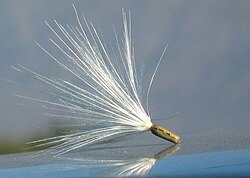
ผลของพืชวงศ์Asteraceaeมีลักษณะคล้ายกับอะคีนมากจนมักถูกเข้าใจผิดว่าเป็นผลอะคีนเช่นกัน แม้ว่ามันจะเกิดจากรังไข่แบบซับซ้อนที่อยู่ต่ำกว่ากลีบดอก (มีหนึ่งช่อง ) ก็ตาม คำเรียกเฉพาะสำหรับผลของพืชวงศ์ Asteraceae คือ ไซป์เซลา (พหูพจน์ ไซป์เซเล หรือ ไซป์เซลาส) ตัวอย่างเช่น เปลือกสีขาวเทาของ "เมล็ด" ทานตะวันคือผนังของผลไซป์เซลา ไซป์เซลาหลายชนิด (เช่น ดอกแดนดิไลออน ) มีเนื้อเยื่อกลีบเลี้ยง ที่ดัดแปลงแล้วเรียกว่า ปัปปิติดอยู่ ซึ่งทำหน้าที่ใน การกระจาย เมล็ด ทางชีวภาพ
แกลเลอรี่
 ผลแห้งบนช่อดอกแดนดิไลออน ( ส่วนที่ เจริญเต็มที่แล้ว ) สามารถกระจายไปตามลมได้เนื่องจาก เนื้อเยื่อ กลีบเลี้ยงที่ มีลักษณะคล้ายเส้นผม อยู่เหนือรังไข่แต่ละอัน
 ภาพถ่ายจากกล้องจุลทรรศน์แสดง "นาฬิกา" ของดอกแดนดิไลออน โดยแสดงให้เห็นส่วนรับดอกและผลแห้ง
 ผลซามาราของAcer buergerianumเป็นผลอะเคนที่มีโครงสร้างคล้ายปีกขนาดใหญ่
 เมล็ดของPulsatilla (วงศ์Ranunculaceae ) กระจายไปตามลม ทั้งในรูปของผลแห้งเดี่ยวๆ หรือเป็นกลุ่มของผลแห้งทั้งหมด ผลแห้งเหล่านี้มีระยางค์ยาวที่มีขน ซึ่งพัฒนามาจากก้านเกสรตัวเมียของดอก
 Coreopsis tinctoriaแสดงช่อดอก 4 ระยะ โดยมีดอกสีน้ำตาลแดง 2 ดอก บรรจุผลแห้ง (cypselas)
 ช่อดอกCoreopsis tinctoria ที่มีผลแบบไซป์เซลาเกิดขึ้นเมื่อ ดอกย่อยบานเต็มที่


ลิงก์ภายนอก

- พจนานุกรมพฤกษศาสตร์
สรุปเนื้อหา
ข้อมูลสำคัญจากบทความ
ข้อมูลสำคัญเกี่ยวกับ Achene
An achene ( / ə ˈ k iː n / ; [ 1 ] from Ancient Greek ἀ ( a ) ' privative ' and χαίνειν ( khaínein ) ' to gape ' ), [ 2 ] also sometimes called akene and occasionally achenium or...
Examples
The fruits of buttercup , buckwheat , caraway , quinoa , amaranth , and cannabis are typical achenes.
Variations
A winged achene, as in maple , is called a samara .
แกลเลอรี่
ผลแห้งบนช่อดอกแดนดิไลออน ( ส่วนที่ เจริญเต็มที่แล้ว ) สามารถกระจายไปตามลมได้เนื่องจาก เนื้อเยื่อ กลีบเลี้ยงที่ มีลักษณะคล้ายเส้นผม อยู่เหนือรังไข่แต่ละอัน ภาพถ่ายจากกล้องจุลทรรศน์แสดง "นาฬิกา" ของดอกแดนดิไลออน โดยแสดงให้เห็นส่วนรับดอกและผลแห้ง ผลซามารา ของ...