
อ่าน 10 นาที
ฟาโรห์โรมัน
ฟาโรห์โรมัน แทบจะไม่ถูกกล่าวถึงว่าเป็นราชวงศ์ที่สามสิบสี่ของอียิปต์โบราณ คือจักรพรรดิโรมันในฐานะผู้ปกครองอียิปต์...
ฟาโรห์โรมัน

ฟาโรห์โรมัน [ 1 ]แทบจะไม่ถูกกล่าวถึงว่าเป็นราชวงศ์ที่สามสิบสี่ของอียิปต์โบราณ [ 2 ] [ a ] คือจักรพรรดิโรมันในฐานะผู้ปกครองอียิปต์ โดยเฉพาะในอียิปต์วิทยาหลังจากที่อียิปต์ถูกผนวกเข้ากับสาธารณรัฐโรมันในปี 30 ก่อนคริสต์ศักราชโดยอ็อกตาเวียนประชาชนและโดยเฉพาะอย่างยิ่งนักบวชของประเทศยังคงยอมรับจักรพรรดิโรมันว่าเป็นฟาโรห์โดยมอบตำแหน่งฟาโรห์ แบบดั้งเดิม และวาดภาพพวกเขาด้วยเครื่องแต่งกายฟาโรห์แบบดั้งเดิม มีส่วนร่วมในกิจกรรมฟาโรห์แบบดั้งเดิม ในงานศิลปะและในวิหารต่างๆ ทั่วอียิปต์
แม้ว่าชาวอียิปต์เองจะถือว่าชาวโรมันเป็นฟาโรห์ของพวกเขาและเป็นผู้สืทอดตำแหน่งที่ถูกต้องตามกฎหมายของฟาโรห์โบราณ แต่จักรพรรดิโรมันเองก็ไม่เคยนำเอาตำแหน่งหรือประเพณีของฟาโรห์ไปใช้ภายนอกอียิปต์เลย เพราะการทำเช่นนั้นคงยากที่จะหาเหตุผลมาสนับสนุนในโลกโรมันโดยรวม จักรพรรดิส่วนใหญ่คงไม่ใส่ใจสถานะที่ชาวอียิปต์มอบให้มากนัก และแทบจะไม่เคยไปเยือนอียิปต์มากกว่าหนึ่งครั้งในชีวิต บทบาทของพวกเขาในฐานะกษัตริย์ผู้เป็นเทพนั้นได้รับการยอมรับอย่างเป็นทางการจากชาวอียิปต์เองเท่านั้น ซึ่งแตกต่างอย่างสิ้นเชิงกับราชวงศ์ก่อนหน้าของอาณาจักรปโตเลมี ในยุคเฮลเลนิสติก ที่ใช้ชีวิตส่วนใหญ่อยู่ในอียิปต์ ฟาโรห์ก่อนที่อียิปต์จะถูกผนวกเข้ากับจักรวรรดิอะเคเมนิดในช่วงปลายยุค โรมัน ก็ปกครองประเทศจากภายในอียิปต์เช่นกัน อย่างไรก็ตาม การปกครองอียิปต์นั้นแตกต่างจากจังหวัดอื่นๆ ของโรมันโดยจักรพรรดิจะเลือกผู้ว่าการด้วยพระองค์เอง และมักจะปฏิบัติต่ออียิปต์เหมือนเป็นทรัพย์สินส่วนตัวมากกว่าจังหวัด แม้ว่าจักรพรรดิทุกพระองค์จะไม่ได้รับการยอมรับว่าเป็นฟาโรห์ แต่ศาสนาอียิปต์ก็เรียกร้องให้มีฟาโรห์เพื่อทำหน้าที่เป็นสื่อกลางระหว่างมนุษยชาติกับเทพเจ้า การเลือกจักรพรรดิมาดำรงตำแหน่งนี้พิสูจน์แล้วว่าเป็นวิธีแก้ปัญหาที่ง่ายที่สุด และคล้ายคลึงกับวิธีที่ชาวเปอร์เซียได้รับการยกย่องว่าเป็นฟาโรห์เมื่อหลายศตวรรษก่อน (ซึ่งประกอบด้วย ราชวงศ์ ที่ 27และ31 )
Though Egypt continued to be a part of the Roman Empire until it was conquered by the Rashidun Caliphate in 641 AD, the last Roman emperor to be conferred the title of pharaoh was Maximinus Daza (reigned 311–313 AD). By his time, the view of Romans as pharaohs had already been declining for some time due to Egypt being on the periphery of the Roman Empire (in contrast to the traditional pharaonic view of Egypt as the center of the world). The spread of Christianity throughout the empire in the 4th century, and the transformation of Egypt's capital Alexandria into a major Christian center, decisively ended the tradition, due to the new religion being incompatible with the traditional implications of being pharaoh.
The names of the emperors were written in hieroglyphs phonetically, based on the renditions of their names in Greek. This way of rendering the names led to the Roman pharaohs having a significant impact on modern Egyptology since the readings of their names marked an important step in the decipherment of hieroglyphs.
History

In 30 BC, Egypt became a province of the Roman Republic, which was shortly thereafter in 27 BC transformed into the Roman Empire. Roman emperors were accorded the title of pharaoh, although exclusively while in Egypt. As such, not all Roman emperors were recognized as pharaohs. Although Octavian, the first Roman emperor, made a point of not taking the Pharaonic crown when he conquered Egypt, which would have been difficult to justify to the wider empire considering the vast amount of propaganda which he had spread about the "exotic" behavior of Cleopatra and Antony,[4] the native population of Egypt regarded him as the pharaoh succeeding Cleopatra and Caesarion. Depictions of Octavian, now called Augustus, in traditional pharaonic garbs (wearing different crowns and the traditional kilt) and sacrificing goods to various Egyptian gods were made as early as around 15 BC and they are present in the Temple of Dendur, built by Gaius Petronius, the Roman governor of Egypt.[5] Even earlier than that, Augustus had been accorded royal titles in the Egyptian version of a 29 BC stele made by Cornelius Gallus, despite royal titles not being present in the Latin or Greek-language versions of the same text.[6]
แตกต่างจากฟาโรห์ปโตเลไมก์และฟาโรห์ของราชวงศ์ต่างชาติอื่นๆ ก่อนหน้านี้ จักรพรรดิโรมันแทบจะไม่เคยประทับอยู่ในอียิปต์เลย ด้วยเหตุนี้ บทบาทดั้งเดิมของฟาโรห์ ซึ่งเป็นตัวแทนของเทพเจ้าและระเบียบจักรวาล จึงยากที่จะหาเหตุผลมาสนับสนุนได้ จักรพรรดิแทบจะไม่เคยเสด็จเยือนอียิปต์มากกว่าหนึ่งครั้งในชีวิต ซึ่งแตกต่างอย่างสิ้นเชิงกับฟาโรห์ก่อนหน้านี้ที่ทรงใช้ชีวิตส่วนใหญ่ในอียิปต์ ถึงกระนั้น อียิปต์ก็มีความสำคัญอย่างยิ่งต่อจักรวรรดิ เนื่องจากเป็นดินแดนที่อุดมสมบูรณ์และร่ำรวยที่สุดในทะเลเมดิเตอร์เรเนียน การปกครองอียิปต์แตกต่างจากจังหวัดอื่นๆ จักรพรรดิปฏิบัติต่ออียิปต์ราวกับเป็นทรัพย์สินส่วนตัวมากกว่าจังหวัด โดยทรงเลือกผู้ว่าการด้วยพระองค์เองและบริหารโดยปราศจาก การแทรกแซงของ วุฒิสภาโรมันสมาชิกวุฒิสภาแทบจะไม่เคยได้รับแต่งตั้งเป็นผู้ว่าการของอียิปต์ และโดยทั่วไปแล้วพวกเขายังถูกห้ามไม่ให้เสด็จเยือนอียิปต์โดยไม่ได้รับอนุญาตอย่างชัดเจน[ 7 ]
เวสปาเซียน ( ครองราชย์ ค.ศ. 69–79) เป็นจักรพรรดิองค์แรกนับตั้งแต่สมัยออกัสตัสที่เสด็จเยือนอียิปต์[ 8 ]ที่เมืองอเล็กซานเดรีย พระองค์ได้รับการต้อนรับในฐานะฟาโรห์ โดยระลึกถึงการต้อนรับ อเล็ก ซานเดอร์มหาราชที่วิหารเทพซุส-อัมมอนแห่งโอเอซิสซีวา เวสปาเซียนได้รับการประกาศว่าเป็นโอรสของเทพผู้สร้างอามุน (ซุส-อัมมอน) ตามแบบอย่างของฟาโรห์โบราณ และเป็นอวตารของเซราพิสตามแบบอย่างของราชวงศ์ปโตเลมี[ 9 ]ตามธรรมเนียมของฟาโรห์ เวสปาเซียนได้แสดงให้เห็นถึงการได้รับเลือกจากพระเจ้าด้วยวิธีการดั้งเดิม คือการถ่มน้ำลายใส่และเหยียบย่ำชายตาบอดและพิการ ทำให้เขาหายดีอย่างน่าอัศจรรย์[ 10 ]

To the Egyptians, their religion demanded that there was a pharaoh to act as the intermediary between the gods and humanity. As such, the emperors continued to be regarded as pharaohs since this proved the most simple solution, disregarding the actual political situation, similar to how Egypt had regarded the Persians or Greeks before the Romans. The abstract nature of the role of these "Roman pharaohs" ensured that the priests of Egypt could demonstrate their loyalty both to their traditional ways and to the new foreign ruler. The Roman emperors themselves mostly ignored the status accorded to them by the Egyptians; in Latin and Greek their titles continued to be Roman only (Imperator in Latin and Autokrator in Greek) and their role as god-kings was only ever acknowledged domestically by the Egyptians themselves.[11] Not all Egyptians were positively inclined towards the Roman emperors; there were a handful of Egyptian revolts against Roman rulers and there are surviving examples of texts by Egyptian priests lamenting Roman rule of Egypt and calling for the reinstatement of a native dynasty of pharaohs.[12]
As Christianity became more and more accepted within the empire, eventually becoming the state religion, emperors no longer found it possible to accept the traditional implications of being pharaoh (a position firmly rooted in the Egyptian religion) and by the early 4th century, Alexandria itself, the capital of Egypt since the time of Alexander the Great, had become a major center of Christianity. By this point, the view of the Romans as pharaohs had already declined somewhat; Egypt being on the periphery of the Roman Empire was much different from the traditional pharaonic view of Egypt as the center of the world. This was evident in the imperial pharaonic titulatures; though early emperors had been given elaborate titulatures similar to those of the Ptolemies and native pharaohs before them, no emperor after Marcus Aurelius (r.161–180) is attested by more than a nomen (though still written in royal cartouches). Although there continued to be Roman emperors for centuries, until the Fall of Constantinople in 1453 AD, and Egypt continued to be a part of the empire until 641 AD, the last Roman emperor to be conferred the title of pharaoh was Maximinus Daza (reigned 311–313 AD).[13]
แม้ว่าจะมีสายสัมพันธ์ทางราชวงศ์ที่แท้จริง (มีราชวงศ์จักรพรรดิโรมันอย่างน้อยสี่ราชวงศ์ที่แตกต่างกันระหว่างออกัสตัสและแม็กซิมินัส ดาซา) แต่ช่วงเวลาการปกครองของโรมันเหนืออียิปต์ทั้งหมดบางครั้งก็ถูกเรียกว่าราชวงศ์ที่สามสิบสี่[ 2 ]นักวิชาการชาวอียิปต์ในศตวรรษที่สิบเก้าบางคน เช่น มิคาอิล ชารูบิม และริฟา อัล-ทาห์ตาวีได้แบ่งจักรพรรดิโรมันออกเป็นสองราชวงศ์ คือ ราชวงศ์ที่สามสิบสี่สำหรับจักรพรรดินอกรีต และราชวงศ์ที่สามสิบห้าซึ่งครอบคลุมจักรพรรดิคริสเตียนตั้งแต่ธีโอโดซิอุสที่ 1จนถึงการพิชิตอียิปต์ของชาวมุสลิมในปี ค.ศ. 641 แม้ว่าจะไม่มีจักรพรรดิโรมันคริสเตียนคนใดถูกเรียกว่าฟาโรห์โดยประชากรของอียิปต์โบราณก็ตาม[ 14 ]
ผลกระทบต่อวิชาอียิปต์วิทยา

ตำแหน่งฟาโรห์ของจักรพรรดิโรมันมีบทบาทสำคัญอย่างยิ่งในอียิปต์วิทยา ในยุคปัจจุบัน บุคคลสำคัญในการถอดรหัสอักษรภาพอียิปต์โบราณคือนักตะวันออกศึกษาชาวฝรั่งเศสJean-François Champollion (1790–1832) จดหมาย Lettre à M. Dacier ของ Champollion ในปี 1822 เป็นสิ่งพิมพ์ที่มีชื่อเสียงที่สุดในอียิปต์วิทยา และบางครั้งก็ถือว่าเป็นจุดเริ่มต้นของสาขาวิชานี้[ 15 ]จดหมายฉบับนี้รวมถึงการตีความอักษรคาร์ทูชของฟาโรห์จากยุคปโตเลมีและโรมันที่ Champollion เสนอ[ 15 ]โดยอิงจากความพยายามก่อนหน้านี้และการเปรียบเทียบระหว่างคาร์ทูชต่างๆ การถอดรหัสชื่อของจักรพรรดิ โดยเฉพาะอย่างยิ่งการแปลชื่อต่างๆ เช่นซีซาร์และออโตคราเตอร์ เป็นภาษาอียิปต์ เป็นส่วนสำคัญอย่างยิ่งของกระบวนการนี้[ 16 ]
Though there would be further developments before full-length hieroglyphic texts could be read with reasonable accuracy, Champollion's discoveries in phonetic hieroglyphics were highly impactful.[15] By the time of the publication of the letter, which included a list of identified phonetic hieroglyphic signs, Champollion did not expect that the phonetic values he discovered could be applied to names of pre-Ptolemaic pharaohs as well.[16] His subsequent realization, at some point later in 1822 or in 1823, that hieroglyphic writing was often a combination of phonetic and ideographic (i.e. symbols of words or ideas) laid the groundwork for future successful decipherment efforts[17] and led Champollion to begin focusing on not only deciphering the symbols but also to translate the underlying language.[18][19]
List of emperor-pharaohs
This list only contains emperors who are attested in hieroglyphics (i.e. with pharaonic titles), per von Beckerath (1984).[20]
| Depiction | Name & reign | Pharaonic titles (cartouches)[b] | Notes | Ref | |||
|---|---|---|---|---|---|---|---|
 | Augustusr.30 BC[c]– AD 14 | Horus name: ṯmꜢ-Ꜥ wr-pḥtj ḥwnw-bnr-mrwt ḥqꜢ-ḥqꜢw stp-n-Ptḥ-Nnw-jt-nṯrwThe sturdy-armed one with great strength, the youth sweet of love, ruler of rulers, chosen of Ptah and Nun, the father of the gods ṯmꜢ-Ꜥ wr-pḥtj ḥwnw-bnr-mrwt ḥqꜢ-ḥqꜢw stp-n-Ptḥ-Nnw-jt-nṯrwThe sturdy-armed one with great strength, the youth sweet of love, ruler of rulers, chosen of Ptah and Nun, the father of the gods ṯmꜢ-Ꜥ wr-pḥtj ḥwnw-bnr-mrwtThe sturdy-armed one with great strength, the youth sweet of love ṯmꜢ-Ꜥ wr-pḥtj ḥwnw-bnr-mrwtThe sturdy-armed one with great strength, the youth sweet of love | Prenomen: ḥqꜢ-ḥqꜢw stp-n-PtḥRuler of rulers, chosen by Ptah ḥqꜢ-ḥqꜢw stp-n-PtḥRuler of rulers, chosen by Ptah ḥqꜢ-ḥqꜢw stp-n-Ptḥ mrj-ꜢstRuler of rulers, chosen by Ptah, beloved of Isis ḥqꜢ-ḥqꜢw stp-n-Ptḥ mrj-ꜢstRuler of rulers, chosen by Ptah, beloved of Isis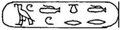 Autokrator Autokrator | Nomen: Kaisaros, Ep. nt.f mḥ[d] Kaisaros, Ep. nt.f mḥ[d] Kaisaros, Ep. pꜢ nṯr Kaisaros, Ep. pꜢ nṯr Kaisaros, Ep. Ꜥnḫ-ḏt mrj-Ptḥ-Ꜣst Kaisaros, Ep. Ꜥnḫ-ḏt mrj-Ptḥ-Ꜣst Romaios Romaios | First Roman emperor and the first Roman ruler to control Egypt. Instituted new unpopular taxation systems in Egypt and banned Egyptian cults in Rome itself. | [24] | |
 | Tiberiusr.14–37 | นามของฮอรัส: ṯmꜢ-Ꜥ wr-pḥtj ḥwnw-bnr-mrwt ḥqꜢ-ḥqꜢw stp-n-Ptḥ-Nnw-jt-nṯrwผู้มีแขนแข็งแรงและพละกำลังมหาศาล หนุ่มผู้สมบูรณ์แบบและเป็นที่นิยม ผู้ปกครองเหนือผู้ปกครอง ผู้ได้รับเลือกจากปทาห์และนุน บิดาแห่งเทพเจ้า ṯmꜢ-Ꜥ wr-pḥtj ḥwnw-bnr-mrwt kꜢ-nsw sḫm-ḫntj-pr-dwꜢtผู้มีแขนแข็งแรงและพละกำลังมหาศาล หนุ่มผู้สมบูรณ์แบบและเป็นที่นิยม ผู้ปกครองเหนือผู้ปกครอง ราชวิญญาณแห่งอำนาจ ผู้เป็นหัวหน้าแห่งราชวงศ์ดูอัต ṯmꜢ-Ꜥ ẖwj-ḫꜢswt wr-pḫtj nḫhw-BꜢqtผู้รวมและปราบปรามดินแดนต่างแดน ผู้ทรงพลัง ผู้พิชิตแห่งบาเกต ṯmꜢ-Ꜥ ẖnmw-n-tꜢw smꜢw-wꜢs-?-gmj-wš-m-Jtrtjผู้ที่รวมสองแผ่นดินเพื่อคุนุม นักเขียนผู้พบพลังในสองแม่น้ำ    | ชื่อ: TiberiosTiberios ntj-ḫw [ e ] Tiberios Kaisaros, Ep . Ꜥnḫ-ḏtทิเบริออส ไคซารอส ผู้ดำรงอยู่ชั่วนิรันดร์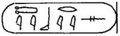 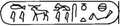  | แทบไม่ได้สร้างความประทับใจใดๆ ให้กับอียิปต์เลย | [ 24 ] | ||
 | คาลิกูลา รัชสมัยที่ 37–41 | นามของฮอรัส: kꜢ-nḫt jꜢḫ-stwt-RꜤ-JꜤḥวัวกระทิงผู้แข็งแกร่ง ผู้ซึ่งอยู่ภายใต้แสงแห่งราและรัศมีแห่งโซการ์ | พระนาม:ออโตคราเตอร์,เอป . ḥqꜢ-ḥqꜢw mrj-Ptḥ-Ꜣstออโตคราเตอร์ ผู้เป็นที่รักของพทาห์และไอซิส | ชื่อ: Kaisaros Germanikos, Ep . Ꜥnḫ-ḏt Kaisaros Germanikos ดำรงอยู่ชั่วนิรันดร์ | ทิ้งร่องรอยไว้เพียงเล็กน้อยในอียิปต์ และยกเลิกการห้ามบูชาเทพเจ้าอียิปต์ในกรุงโรมที่ออกโดยจักรพรรดิออกัสตัส | [ 26 ] | |
 | คลอเดียส ครองราชย์ค.ศ. 41–54 | นามของเทพฮอรัส: kꜢ-nḫt ḏd-jꜢḫ-Šw-(m)-Ꜣḫtวัวกระทิงผู้แข็งแกร่งแห่งดวงจันทร์อันมั่นคงบนขอบฟ้า kꜢ-nḫt wḥm-ḫꜤwวัวกระทิงผู้แข็งแกร่งแห่งลูกหลานสีทอง 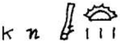 | บทนำ:ออโตคราเตอร์ Ep . ḥqꜢ-ḥqꜢw mrj-Ꜣst-Ptḥ Autokrator ซึ่งเป็นที่รักของ Ptah และ Isis Kaisaros GermanikosKaisaros Sebastos Germanikos Autokrator   | ชื่อ: Tiberios KlaudiosTiberios Klaudios Kaisaros ntj ḫw  | ไม่ได้สร้างความประทับใจใดๆ ให้แก่อียิปต์ และปฏิเสธคำขอจากอเล็กซานเดรียที่ต้องการจัดตั้งวุฒิสภาปกครองตนเอง | [ 26 ] | |
 | เนโรร. 54–68 | นามของเทพฮอรัส: ṯmꜢ-Ꜥ ẖwj-ḫꜢswt wr-nḫw-BꜢqt ḥqꜢ-ḥqꜢw stp-n-Nnw-Mrwrผู้มีแขนกำยำผู้พิชิตดินแดนต่างแดน ผู้มีชัยเหนืออียิปต์ ผู้ปกครองหรือผู้ปกครองหลายคน ผู้ได้รับเลือกจากเทพีนุนผู้รักเขา ṯmꜢ-Ꜥ ẖwj-ḫꜢswtผู้มีแขนกำยำผู้พิชิตดินแดนต่างแดน  | บทนำ: ḥqꜢ-ḥqꜢw stp-n-Ptḥ mrj-Ꜣst Autokrator เลือกโดย Ptah ผู้เป็นที่รักของ Isis Kaisaros Germanikos 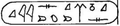 | ชื่อ: NeronNeron Klaudios, Ep . ḫwAutokrator NeronNeron Klaudios Kaisaros ntj ḫw    | Sent a small group of praetorian guards to explore along the Nile river south of Egypt, perhaps intended as a scouting mission for a later conquests in the region | [26] | |
 | Galbar.68–69 | Nomen: Serouios Galbas Autokrator Serouios Galbas Autokrator | Left little impression on Egypt | [26] | |||
 | Othor.69 | Nomen: Markos Othon Markos Othon | Left little impression on Egypt | [26] | |||
| There are no known traces of the brief reign of Vitellius (r.69) in Egypt.[8] | |||||||
| Vespasianr.69–79 | Nomen: Ouespasianos Ouespasianos Ouespasianos ntj ḫw Ouespasianos ntj ḫw | First emperor to visit Egypt since Augustus; received a traditional pharaonic coronation | [27] | ||||
 | Titusr.79–81 | Horus name: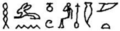 ḥwnw-nfr bnr-mrwtThe perfect and popular youth ḥwnw-nfr bnr-mrwtThe perfect and popular youth | Prenomen: Titos Titos Autokrator Titos Kaisaros Autokrator Titos Kaisaros | Nomen: Ouespasianos Ouespasianos | Left little impression on Egypt | [28] | |
 | Domitianr.81–96 | Horus name: ḥwnw-nḫt jṯj-m-sḫm.f.The mighty youth, his power will become stronger ḥwnw-nḫt jṯj-m-sḫm.f.The mighty youth, his power will become stronger | Golden Horus name: wsr-rnpwt ꜤꜢ-nḫtwRich in years and great of victories wsr-rnpwt ꜤꜢ-nḫtwRich in years and great of victories | Prenomen: Ḥr-zꜢ-Ꜣst mrj-nṯrw-nb(w)Horus, son of Isis, beloved of the gods Ḥr-zꜢ-Ꜣst mrj-nṯrw-nb(w)Horus, son of Isis, beloved of the gods | Nomen: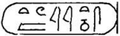 Domitianos Domitianos Domitianos ntj ḫw Domitianos ntj ḫw Domitianos Sebastos Kaisaros Domitianos Sebastos Kaisaros | Introduced Egyptian deities on coins minted in Alexandria and founded temples dedicated to deities such as Isis and Serapis in Italy. Using the trappings of being pharaoh, he also sought to add further legitimacy to imperial rule. | [28] |
 | Nervar.96–98 | Nomen: Nerouas ntj ḫw Nerouas ntj ḫw | Left little impression on Egypt | [28] | |||
 | Trajanr.98–117 | Prenomen: Autokrator Kaisaros Nerouas Autokrator Kaisaros Nerouas Germanikos Dakikos, Ep. Ꜥnḫ-ḏt Germanikos Dakikos, Ep. Ꜥnḫ-ḏt | Nomen: Nerouas Traianos Nerouas Traianos Nerouas Traianos, Ep. Ꜥnḫ-ḏt mrj-Ꜣst Nerouas Traianos, Ep. Ꜥnḫ-ḏt mrj-Ꜣst Traianos ntj ḫw Traianos ntj ḫw Traianos ntj ḫw + Aristos Germanikos Dakikos Traianos ntj ḫw + Aristos Germanikos Dakikos | Egyptian sources from Trajan's time associate empress Pompeia Plotina with the goddess Hathor, the first known direct association between the imperial family (other than the emperor) and Egyptian deities | [29] | ||
 | Hadrianr.117–138 | Nomen: Traianos Adrianos, Ep. Ꜥnḫ-ḏt mrj-Ꜣst Traianos Adrianos, Ep. Ꜥnḫ-ḏt mrj-Ꜣst Adrianos ntj ḫw Adrianos ntj ḫw Hadrianus Caesar Hadrianus Caesar | จักรพรรดิฮาเดรียน เสด็จเยือนอียิปต์อย่างเป็นทางการเป็นเวลา 8-10 เดือน ในช่วงปี ค.ศ. 130-131 เสด็จเยือนสถานที่สำคัญหลายแห่งและก่อตั้ง เมืองแอนติโนโอ โพลิส ลัทธิบูชาแอนติโนอุสของจักรพรรดิฮาเดรียนได้รับอิทธิพลจากเทววิทยาของอียิปต์ พระองค์ทรงปกครองในช่วงที่โรมันคลั่งไคล้ อียิปต์ | [ 30 ] | |||
 | อันโตนินัส ปิอุส ครองราชย์ ค.ศ. 138–161 | นามของเทพฮอรัส: nfr-n(?)-tꜢ-nṯr ḥn-nf-ŠmꜤw-Mḥw-m-nḏm-jbเทพผู้สมบูรณ์แบบแห่งเทพทั้งหลาย ผู้เปี่ยมด้วยความยินดีกับสองแผ่นดิน ด้วยจิตใจที่อ่อนโยน | ผู้เสนอชื่อ: Autokrator Kaisaros Titos Ailios Adrianos | ชื่อ: Antoninos ntj ḫw + EusebesAntoninos Sebastos Eusebes ntj ḫwAntoninos ntj ḫw Ꜥnḫ-ḏtAntoninos ntj ḫw, Ep . šꜢj-n-BꜢqt    | ได้รับการยกย่องในอียิปต์โบราณเนื่องจากทรงดูแลการสร้างวิหารยุคโซธิก เสร็จสมบูรณ์ ในปี ค.ศ. 139 รัชสมัยอันยาวนานของพระองค์ได้เห็นการก่อสร้างวิหารสำคัญครั้งสุดท้ายในอียิปต์ พระองค์เสด็จเยือนอเล็กซานเดรียในช่วงทศวรรษ ค.ศ. 150 เพื่อทรงอุปถัมภ์การก่อสร้างอาคารใหม่ต่างๆ | [ 31 ] | |
| ลูเซียส เวรุส ครองราชย์ค.ศ. 161–169 |  ลูคิโอ ออเรลิโอEp . wr-ꜤꜢ Ꜥnḫ-ḏt [ฉ] ลูคิโอ ออเรลิโอEp . wr-ꜤꜢ Ꜥnḫ-ḏt [ฉ] | จักรพรรดิร่วมกับมาร์คัส ออเรลิอุส | [ 20 ] | ||||
 | มาร์คัส ออเรลิอุส ครองราชย์ค.ศ. 161–180 |  Aurelios Antoninos ntj ḫw Autokrator Kaisaros Mark(os) Aurelio(s) Antonin(os) Aure(li)os, Ep . Ꜥnḫ-ḏt + Antonin(os), Ep . Ꜥnḫ-ḏt [Markos] ออเรลิโอ อันโตนิโนส เซบาสโตส Aurelios Antoninos ntj ḫw Autokrator Kaisaros Mark(os) Aurelio(s) Antonin(os) Aure(li)os, Ep . Ꜥnḫ-ḏt + Antonin(os), Ep . Ꜥnḫ-ḏt [Markos] ออเรลิโอ อันโตนิโนส เซบาสโตส   | เผชิญกับการกบฏของชาวอียิปต์พื้นเมืองที่นำโดยอิซิโดรัสในปี ค.ศ. 171–175 และการกบฏของอวิดิอุส คาสเซียส ผู้แย่งชิงอำนาจที่ได้รับการสนับสนุนจากอียิปต์ ในปี ค.ศ. 175 พระองค์เสด็จเยือนอียิปต์ในปี ค.ศ. 176 ซึ่งในขณะนั้นจังหวัดอียิปต์ได้รับผลกระทบอย่างหนักจากโรคระบาดแอนโทนีนปาปิรัสและ เศษ ภาชนะดิน เผาภาษา เดโมติก ที่หลงเหลืออยู่ชิ้นสุดท้ายมีอายุอยู่ในรัชสมัยของออเรลิอุส | [ 33 ] | |||
 | คอมโมดัส รัชสมัย ค.ศ. 180–192 |  Markos Au(re)lios Komodos Antoninos Komodos Kaisaros(?) Komodos Antoninos ntj ḫw Markos Au(re)lios Komodos Antoninos Komodos Kaisaros(?) Komodos Antoninos ntj ḫw  | จักรพรรดิองค์สุดท้ายที่ได้รับการยืนยันอย่างกว้างขวางว่าเป็นผู้อุปถัมภ์ศิลปะในวิหารอียิปต์ การลดลงของการแสดงภาพจักรพรรดิในเวลาต่อมานั้น น่าจะเกิดจากทรัพยากรที่ลดลงสำหรับนักบวชและวิหาร มากกว่าการเปลี่ยนแปลงทัศนคติและนโยบายของจักรพรรดิ | [ 34 ] | |||
| Neither of the two ephemeral emperors of the Year of the Five Emperors (193) are attested by any pharaonic titles;[20]Pertinax was briefly recognized in Egypt, 22 days before his assassination, and Didius Julianus was not acknowledged in Egypt at all. The usurper Pescennius Niger was the recognized successor of Pertinax in Egypt[35] but no known pharaonic titles of his survive either.[20] | |||||||
 | Septimius Severusr.193–211 |  Seouēros ntj ḫw Seouēros ntj ḫw | Toured Egypt together with the imperial family in 199–200. Repaired old buildings and established senates in Alexandria and elsewhere. Religious division and controversy led to the first large-scale persecution of Christians in Egypt in 201. | [36] | |||
 | Getar.211 |  Geta(s) ntj ḫw Geta(s) ntj ḫw | Briefly joint emperor with Caracalla | [20] | |||
 | Caracallar.211–217 |  Antoninos ntj ḫw Antoninos ntj ḫw | Extended Roman citizenship to all inhabitants of the Roman Empire through the 212 Antonine Constitution; his name Aurelius[g] was then common, particularly in Egypt. | [37] | |||
| Macrinusr.217–218 |  Makrino(s) n(tj) ḫw Makrino(s) n(tj) ḫw | Broke long-standing convention and sent a prefect and a senator to govern Egypt, though both were deposed and the senator killed after Macrinus's death | [38] | ||||
| Diadumenianr.218 |  Diadoumenianos Diadoumenianos | Junior joint emperor with Macrinus | [20] | ||||
| Elagabalus (r.218–222), who succeeded Macrinus and Diadumenian, is not mentioned in any surviving Egyptian sources.[35] His successor Severus Alexander (r.222–235) was recognized in Egypt,[35] but no pharaonic titles survive.[20] The ephemeral emperors Maximinus Thrax (r.235–238), Gordian I (r.238), Gordian II (r.238), Pupienus (r.238), Balbinus (r.238) and Gordian III (r.238–244) did little of consequence in Egypt and are unrecorded in surviving Egyptian documents.[39] | |||||||
 | Philipr.244–249 |  Philippos ntj ḫw Philippos ntj ḫw | Due to decades of mismanagement and civil strife Egypt had fallen into poverty by the time of Philip's reign. Last pharaoh to be commemorated at the great temple at Esna. | [40] | |||
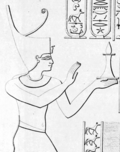 | Deciusr.249–251 |  Dekios ntj ḫw Dekios ntj ḫw | Oversaw the Decian persecution of Christians. His reign saw southern Egypt being raided by the Blemmyes, the first time southern Egypt was attacked since the time of Augustus. | [41] | |||
| Emperors Trebonianus Gallus (r.251–253) and Aemilianus (r.253) were recognized in Egypt, as attested by official documents and coins minted in Alexandria,[42] but neither is attested by any pharaonic titles.[20] | |||||||
| Valerianr.253–260 |  Oualerianos Oualerianos | Demonized by Christians for renewing persecutions, but popular among the Egyptian clergy | [43] | ||||
| After Valerian, Egypt was controlled by a sequence of usurpers: Macrianus Minor (r.260–261), Quietus (r.260–261) and Lucius Mussius Aemilianus (r.261–262),[44] though none of them are attested with any pharaonic titles.[20] The legitimate emperor Gallienus (r.262–268) was then recognized,[45] though there are likewise no known pharaonic titles from his reign.[20] Few records survive from Egypt from Gallienus's successors, with little evidence of the reigns of Claudius Gothicus (r.268–270), Quintillus (r.270), Aurelian (r.270–275) and Tacitus (r.275–276), though they were all presumably recognised. Near the end of 270 and throughout most of 271, Egypt was occupied by Zenobia of the Palmyrene Empire, who declared herself queen of Egypt, although no pharaonic titles survive.[46] In any case, the province was retaken by Aurelian by the end of 271. The brief reign of emperor Florian (r.276) was explicitly rejected in Egypt, with the Egyptian legions backing Probus instead.[20][45] | |||||||
| Probusr.276–282 |  Autokrator Probos (?)[h] Autokrator Probos (?)[h] | Seized the imperial throne with Egyptian support. Defeated the Blemmyes, who had penetrated as far north as Coptos. | [48] | ||||
| Emperors Carus (r.282–283), Carinus (r.283–285) and Numerian (r.283–284) are not recorded in surviving Egyptian sources.[20][45] | |||||||
| Diocletianr.284–305 | 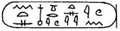 Diokletian(os) Diokletian(os) | Reforms removed much of Egypt's idiosyncrasy, further integrating Egypt economically and administratively with the other provinces. Lands in southern Egypt were abandoned during a state visit in 298. The Diocletianic Persecution was particularly severe in Egypt. | [49] | ||||
| Maximianr.286–305 | 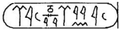 Maksimiano(s) Maksimiano(s) | Western Roman emperor, ruling jointly with Diocletian; did not actually control Egypt | [20] | ||||
| Galeriusr.305–311 |  Kaisaros Iouio(s) Maksimio(s) Kaisaros Iouio(s) Maksimio(s) | Persecutions of Christians continued until a deathbed decree of religious toleration by Galerius | [20] | ||||
| Maximinus Dazar.311–313 |  Kaisaros Oualerios Mak(sim)inos Kaisaros Oualerios Mak(sim)inos | Last emperor regarded to have been pharaoh by the Egyptians | [50] | ||||
| The last aggressively Pagan emperor to control Egypt, Maximinus Daza, was the last Roman emperor to be acknowledged in hieroglyphic texts. Although royal cartouches are recorded from later times (the last known cartouche being from the reign of Constantius II in 340), the pagan Egyptians posthumously used cartouches of Diocletian, rather than acknowledging the later Christian emperors.[51] | |||||||
Notes
- ^The last dynasty identified with a number by most egyptologists is the Thirty-first Dynasty (when the Persians ruled Egypt for the second time).[3] If the Romans are numbered as the "Thirty-fourth Dynasty", the Argead dynasty of Alexander the Great is considered the Thirty-second Dynasty and the Ptolemaic Kingdom is considered the Thirty-third Dynasty.
- ^ชื่อและตำแหน่งต่างๆ อ้างอิงจาก von Beckerath (1984): อักษรฮีโรกลิฟิก หน้า 296–306 และการถอดเสียง หน้า 123–127 [ 21 ]ชื่อของจักรพรรดิถูกเขียนด้วยอักษรฮีโรกลิฟิกตามหลักสัทศาสตร์ โดยอิงจากชื่อในภาษากรีก [ 22 ]เนื่องจากมีการสะกดตามหลักสัทศาสตร์ จักรพรรดิหลายพระองค์จึงเป็นที่รู้จักด้วยชื่อและตำแหน่งที่แตกต่างกันหลายแบบ เฉพาะในกรณีที่ความหมายแตกต่างกันจริงๆ เท่านั้นที่จะรวมชื่อและตำแหน่งที่แตกต่างกันไว้ที่นี่
- ^ออกัสตัสไม่ได้ขึ้นเป็นจักรพรรดิโรมันจนกระทั่งปี 27 ก่อนคริสต์ศักราช แต่ได้รับการยอมรับว่าเป็นฟาโรห์ในอียิปต์หลังจากสิ้นสุด รัชสมัยของ ซีซาริออนซึ่งคาดว่าน่าจะตั้งแต่ปี 30 ก่อนคริสต์ศักราชเป็นต้นไป [ 20 ]
- ^ฉายานี้อาจถอดเสียงเป็น "Autokrator" ได้ [ 23 ]
- ^ "ntj-ḫw" ที่ใช้บ่อยคือคำยกย่อง sebastosในภาษาอียิปต์ (ซึ่งเป็นคำยกย่อง Augustusในภาษากรีก) [ 25 ]
- ^จากจุดนี้เป็นต้นไป ฟอน เบคเคอราธ (1984) เลิกใช้การแบ่งชื่อราชวงศ์แบบอียิปต์ดั้งเดิม ชื่อทั้งหมดจากจุดนี้เป็นต้นไปเป็นเพียง nomina (ชื่อบุคคล) [ 32 ]
- ^ "คาราคัลลา" เป็นชื่อเล่น ชื่อเต็มของจักรพรรดิคือ มาร์คัส ออเรลิอุส อันโตนินัส
- ^การอ่านชื่อในกรอบนี้ ซึ่งแปลตรงตัวว่า prʻbwjว่า "Probos" นั้นยังไม่แน่นอน [ 47 ]
สรุปเนื้อหา
ข้อมูลสำคัญจากบทความ
ข้อมูลสำคัญเกี่ยวกับ ฟาโรห์โรมัน
ฟาโรห์โรมัน แทบจะไม่ถูกกล่าวถึงว่าเป็นราชวงศ์ที่สามสิบสี่ของอียิปต์โบราณ คือจักรพรรดิโรมันในฐานะผู้ปกครองอียิปต์...
History
In 30 BC, Egypt became a province of the Roman Republic , which was shortly thereafter in 27 BC transformed into the Roman Empire . Roman emperors were accorded the title of pharaoh, although exclusively while in Egypt.
ผลกระทบต่อวิชาอียิปต์วิทยา
ตำแหน่งฟาโรห์ของจักรพรรดิโรมันมีบทบาทสำคัญอย่างยิ่งใน อียิปต์วิทยา ในยุคปัจจุบัน บุคคลสำคัญในการถอดรหัสอักษรภาพอียิปต์โบราณคือนักตะวันออกศึกษาชาวฝรั่งเศส Jean-François Champollion (1790–1832) จดหมาย Lettre à M.
List of emperor-pharaohs
This list only contains emperors who are attested in hieroglyphics (i.e. with pharaonic titles), per von Beckerath (1984). [ 20 ]