
Curia Julia
The Curia Julia (Latin: Curia Iulia) is the third named curia, or senate house, in the ancient city of Rome. It was built in 44 BC, when Julius Caesar replaced Faustus Cornelius Sulla's reconstructed Curia Cornelia, which had replaced the Curia Hostilia. Caesar did so to redesign both spaces within the Comitium and the Roman Forum. The alterations within the Comitium reduced the prominence of the Senate and cleared the original space.[1]
The work was interrupted by Caesar's assassination at the Curia of Pompey of the Theatre of Pompey, where the Senate had been meeting temporarily while the work was completed. The project was eventually finished by Caesar's heir and successor, Augustus Caesar, in 29 BC.[2]
The Curia Julia is one of a handful of Roman structures that survive mostly intact. This is due to its conversion into the basilica of Sant'Adriano al Foro in the 7th century and several later restorations. The roof, the upper elevations of the side walls and the rear façade are modern and date from the remodeling of the deconsecrated church, in the 1930s.
History
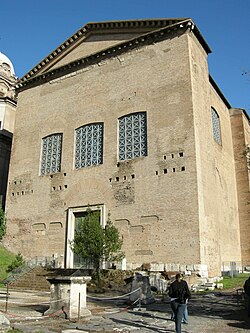
There were many curiae during the history of the Roman civilization, many of them existing at the same time. Curia means simply "meeting house". While the senate met regularly at the curia within the comitium space, there were many other structures designed for it to meet when the need occurred: for example, meeting with someone who was not allowed to enter the sanctified curiae of the Senate.
คูเรีย จูเลีย เป็นคูเรียแห่งที่สามที่มีชื่ออยู่ในเขตปกครองเดียวกัน โครงสร้างแต่ละแห่งได้รับการสร้างใหม่หลายครั้ง แต่มีต้นกำเนิดมาจากวิหารเอตรัสกัน แห่งเดียว ที่สร้างขึ้นเพื่อเป็นเกียรติแก่การสงบศึกในความขัดแย้งกับชาวซาบีน เมื่อวิหารดั้งเดิมถูกทำลายทุลลัส โฮ สติลิอุส ได้สร้างขึ้นใหม่และตั้งชื่อตามเขา วิหารนี้คงอยู่ได้หลายร้อยปี จนกระทั่งคูเรียถูกทำลายด้วยไฟไหม้จากงานศพที่จัดขึ้นอย่างกะทันหันของปูบลิอุส คลอเดียส พุ ลเชอร์ โครงสร้างใหม่ถูกสร้างขึ้นเพื่ออุทิศให้กับผู้บริจาคทางการเงินฟอสตัส คอร์เนลิอุส ซัลลา
โครงสร้างที่อยู่ในฟอรัมในปัจจุบันคืออาคารคูเรียแห่งที่สองของซีซาร์ ในปี 94 อาคารคูเรียจูเลียได้รับการบูรณะในสมัยของ โด มิเทียน[ 3 ] [ 4 ]ในปี 283 อาคารได้รับความเสียหายอย่างหนักจากไฟไหม้ในสมัยของจักรพรรดิคารินัส [ 5 ] ตั้งแต่ปี 284 ถึง 305 อาคารคูเรียได้รับการสร้างใหม่โดยไดโอเคลเชียนซากปรักหักพังของอาคารของไดโอเคลเชียนยังคงตั้งอยู่จนถึงทุกวันนี้ ในปี 412 อาคารคูเรียได้รับการบูรณะอีกครั้งโดยผู้ว่าการเมืองแอนนิอุส ยูคาริอุส เอพิฟานิอุส
ในเดือนกรกฎาคม พ.ศ. 2466 รัฐบาลอิตาลีได้เข้าซื้อ Curia Julia และอารามที่อยู่ติดกันของโบสถ์ S. Adriano จากCollegio di Spagnaในราคาประมาณ 16,000 ปอนด์[ 6 ]
คำอธิบาย

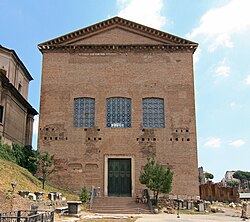

ภายนอกของ Curia Julia มีลักษณะเป็นคอนกรีตฉาบอิฐพร้อมเสาค้ำขนาดใหญ่ที่แต่ละมุม ส่วนล่างของผนังด้านหน้าตกแต่งด้วยแผ่นหินอ่อนส่วนบนถูกปกคลุมด้วย ปูนปั้น เลียนแบบบล็อกหินอ่อนสีขาว บันไดเพียงขั้นเดียวนำไปสู่ ประตูทองสัมฤทธิ์ ประตู ทองสัมฤทธิ์ในปัจจุบันเป็นแบบจำลองสมัยใหม่ ประตูทองสัมฤทธิ์ดั้งเดิมถูกย้ายไปยังมหาวิหารเซนต์จอห์นลาเตอรันโดยสมเด็จพระสันตะปาปาอเล็กซานเดอร์ที่ 7ในปี 1660 [ 8 ]
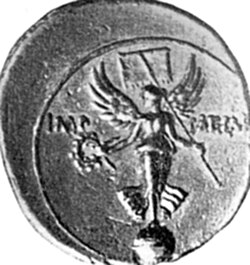
มีการพบเหรียญอยู่ภายในประตูระหว่างการขนย้าย[ 9 ]ซึ่งทำให้นักโบราณคดีสามารถระบุช่วงเวลาของการซ่อมแซมอาคารวุฒิสภาและการเพิ่มประตูทองสัมฤทธิ์ในรัชสมัยของจักรพรรดิโดมิเทียน (ค.ศ. 81–96) ลักษณะดั้งเดิมของอาคารวุฒิสภาเป็นที่รู้จักจากเหรียญเดนาริอุสของจักรพรรดิออกัสตัสในปี 28 ก่อนคริสต์ศักราช ซึ่งแสดงให้เห็นระเบียงที่รองรับด้วยเสาบนผนังด้านหน้าของอาคาร[ 10 ]
ภายในของ Curia Julia ค่อนข้างเรียบง่าย ห้องโถงมีขนาด25.2 ม. × 17.61 ม. (82.7 ฟุต × 57.8 ฟุต)มีบันไดกว้างสามขั้นที่สามารถวางเก้าอี้ได้ห้าแถวหรือวุฒิสมาชิกได้ประมาณ 300 คน[ 8 ]ผนังถูกลอกออก แต่เดิมเคยปูด้วยหินอ่อนสูงถึงสองในสามของผนัง คุณลักษณะหลักสองประการของภายใน Curia Julia คือแท่นบูชาแห่งชัยชนะและพื้นที่มีความโดดเด่น
ที่ปลายสุดของห้องโถงมี "แท่นบูชาแห่งชัยชนะ " [ 8 ]ประกอบด้วยรูปปั้นของวิกตอเรีย ตัวแทนแห่งชัยชนะ ยืนอยู่บนลูกโลกยื่นพวงหรีดแท่นบูชานี้ถูกวางไว้ในคูเรียโดยออกัสตัสเพื่อเฉลิมฉลองความเก่งกาจทางการทหารของโรม โดยเฉพาะอย่างยิ่งชัยชนะของพระองค์เองในยุทธการที่แอคติอุมในปี 31 ก่อนคริสต์ศักราช แท่นบูชานี้ถูกนำออกไปในปี 384 หลังคริสต์ศักราช ซึ่งเป็นส่วนหนึ่งของการต่อต้านประเพณีนอกรีตของโรมโบราณหลังจากการขึ้นมาของศาสนาคริสต์[ 11 ]
ลักษณะเด่นอีกประการหนึ่งของภายใน Curia คือพื้น ซึ่งแตกต่างกับภายนอกอาคารที่ไม่มีสีสัน พื้นโดดเด่นด้วยเทคนิคศิลปะโรมันที่เรียกว่าopus sectileซึ่งวัสดุจะถูกตัดและฝังลงในผนังและพื้นเพื่อสร้างลวดลายต่างๆ Claridge อธิบายว่า "ดอกกุหลาบแบบมีสไตล์ในสี่เหลี่ยมสลับกับเขาสัตว์แห่งความอุดมสมบูรณ์ที่พันกันเป็นคู่ตรงข้ามในสี่เหลี่ยมผืนผ้า ทั้งหมดนี้ทำด้วยหินพอร์ฟิรีสีเขียวและสีแดงบนพื้นหลังของสีเหลืองนูมิเดียนสีม่วงฟรีเจียน" [ 8 ]
ความสำคัญ

ในRes Gestae Divi Augusti ของเขา ออกัสตัสเขียนเกี่ยวกับโครงการนี้ว่า: "ข้าพเจ้าสร้างอาคารวุฒิสภา... ด้วยอำนาจของรัฐทั้งหมดอยู่ในมือของข้าพเจ้าโดยความเห็นชอบเป็นเอกฉันท์ ข้าพเจ้าดับไฟแห่งสงครามกลางเมือง แล้วจึงสละอำนาจการควบคุม โอนสาธารณรัฐกลับคืนสู่อำนาจของวุฒิสภาและประชาชนชาวโรมัน สำหรับการบริการนี้ ข้าพเจ้าได้รับพระราชทานนามว่าออกัสตัสโดยพระราชกฤษฎีกาของวุฒิสภา" [ 12 ]การสละอำนาจนั้นเป็นความจริงในคำพูดมากกว่าการกระทำ การก่อสร้าง Curia Julia เกิดขึ้นพร้อมกับการสิ้นสุดของสาธารณรัฐโรมัน
In the past, the Curia Hostilia and Comitium "were oriented by the cardinal points of the compass, which may have marked them out as specially augurated space and at any rate set them off obliquely from the Forum rectangle that formed over the centuries". Breaking with tradition, the Curia Julia was reoriented by Julius Caesar "on more 'rational' lines, squaring it up with the rectangular lines of the Forum and even more closely with his new forum, to which the new Senate House formed an architectural appendage more in keeping with the Senate's increasing subordination". The reduced power of the Roman Senate during the Imperial Period is reflected by the Curia Julia's less prominent location and orientation.[13]
Still, the two buildings had similarities. Both the Curia Hostilia's Tabula Valeria and the Curia Julia's Altar of Victory in the Curia Julia, attest to the enduring preeminence of Rome's military despite the reduced role of the Senate.
 The Roman Forum seen from a window of the Palazzo Senatorio. At the centre is the church of St. Martina and Luca. At the lower right corner is the Arch of Septimius Severus, with the Curia partially visible behind the Arch
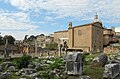 The Curia Julia and the church of St. Martina and Luca
See also
ลิงก์ภายนอก
- การบูรณะอาคาร Curia Julia
- Livius.org: Curia Julia เก็บถาวรเมื่อ 2015-12-19 ที่Wayback Machine
 สื่อที่เกี่ยวข้องกับCuria Iulia ใน Wikimedia Commons
| นำหน้า โดยComitium | สถานที่สำคัญของกรุงโรม Curia Julia | สืบทอด โดยPortico Dii Consentes |