
Binomial nomenclature

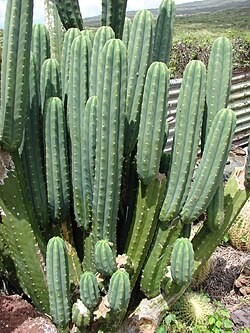
In taxonomy, binomial nomenclature ("two-term naming system"), also called binary nomenclature, is a formal system of naming species of living things by giving each a name composed of two parts, both of which use Latin grammatical forms, although they can be based on words from other languages. Such a name is called a binomial name (often shortened to just "binomial"), a binomen,[1]binominal name, or a scientific name; more informally, it is also called a Latin name. In the International Code of Zoological Nomenclature (ICZN), the system is also called binominal nomenclature,[2] with an "n" before the "al" in "binominal", which is not a typographic error, meaning "two-name naming system".[1]
The first part of the name – the generic name – identifies the genus to which the species belongs, whereas the second part – the specific name or specific epithet – distinguishes the species within the genus. For example, modern humans belong to the genus Homo and within this genus to the species Homo sapiens. The formal introduction of this system of naming species is credited to Carl Linnaeus, effectively beginning with his work Species Plantarum in 1753.[3] But as early as 1622, Gaspard Bauhin introduced in his book Pinax theatri botanici (English, Illustrated Exposition of Plants) containing many names of genera that were later adopted by Linnaeus.[4] Binomial nomenclature was introduced in order to provide succinct, relatively stable and verifiable names that could be used and understood internationally, unlike common names which are usually different in every language.[5]
The application of binomial nomenclature is now governed by various internationally agreed codes of rules, of which the two most important are the International Code of Zoological Nomenclature (ICZN) for animals and the International Code of Nomenclature for algae, fungi, and plants (ICNafp or ICN). Although the general principles underlying binomial nomenclature are common to these two codes, there are some differences in the terminology they use and their particular rules.
In modern usage, the first letter of the generic name is always capitalized in writing, while that of the specific epithet is not, even when derived from a proper noun such as the name of a person or place. Similarly, both parts are italicized in normal text (or underlined in handwriting). Thus the binomial name of the annual phlox (named after botanist Thomas Drummond) is now written as Phlox drummondii. Often, after a species name is introduced in a text, the generic name is abbreviated to the first letter in subsequent mentions (e.g., P. drummondii).
In scientific works, the authority for a binomial name is usually given, at least when it is first mentioned, and the year of publication may also be specified.
- In zoology
- "Patella vulgata Linnaeus, 1758". The name "Linnaeus" tells the reader who published the name, and description for this species; 1758 is the year the name and original description were published (in this case, in the 10th edition of the book Systema Naturae).
- "Passer domesticus (Linnaeus, 1758)". The original name given by Linnaeus was Fringilla domestica; the parentheses indicate that the species is now placed in a different genus. The ICZN does not require that the name of the person who changed the genus be given, nor the date on which the change was made, although nomenclatorial catalogs usually include such information.
- In botany
- "Amaranthus retroflexus L." – "L." is the standard abbreviation used for "Linnaeus".
- "Hyacinthoides italica (L.) Rothm." – Linnaeus first named this bluebell species Scilla italica; Rothmaler transferred it to the genus Hyacinthoides; the ICNafp does not require that the dates of either publication be specified.
Etymology
The word binomial is composed of two elements: bi- (Latin prefix meaning 'two') and nomial (the adjective form of nomen, Latin for 'name'). In Medieval Latin, the related word binomium was used to signify one term in a binomial expression in mathematics.[6] In fact, the Latin word binomium may validly refer to either of the epithets in the binomial name, which can equally be referred to as a binomen (pl. binomina).[7]
History

Before the adoption of the modern binomial system of naming species, a scientific name consisted of a generic name combined with a specific name that was from one to several words long. Together they formed a system of polynomial nomenclature.[8] These names had two separate functions: to designate or label the species, and to be a diagnosis or description. These two goals were eventually found to be incompatible.[9] In a simple genus that contained few species, it was easy to tell them apart with a one-word genus and a one-word specific name; but as more species were discovered, the names necessarily became longer and unwieldy—for instance, Plantago foliis ovato-lanceolatus pubescentibus, spica cylindrica, scapo tereti ("plantain with pubescent ovate-lanceolate leaves, a cylindric spike and a teretescape"), which we know today as Plantago media.[10]
Such "polynomial names" may sometimes look like binomials, but are different. For example, Gerard's herbal (as amended by Johnson) describes various kinds of spiderwort: "The first is called Phalangium ramosum, Branched Spiderwort; the second, Phalangium non ramosum, Unbranched Spiderwort. The other ... is aptly termed Phalangium Ephemerum Virginianum, Soon-Fading Spiderwort of Virginia".[11] The Latin phrases are short descriptions, rather than identifying labels.
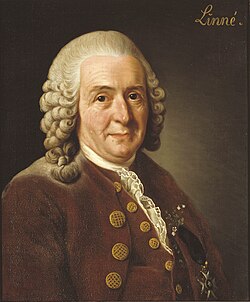
The Bauhins, in particular Caspar Bauhin (1560–1624), took some important steps towards the binomial system by pruning the Latin descriptions, in many cases to two words.[12] The adoption by biologists of a system of strictly binomial nomenclature is due to Swedish botanist and physician Carl Linnaeus (1707–1778). It was in his 1753 Species Plantarum that Linnaeus began consistently using a one-word trivial name (nomen triviale) after a generic name (genus name) in a system of binomial nomenclature.[13] Trivial names had already appeared in his Critica Botanica (1737) and Philosophia Botanica (1751). This trivial name is what is now known as a specific epithet (ICNafp) or specific name (ICZN).[13] The Bauhins' genus names were retained in many of these, but the descriptive part was reduced to a single word.
Linnaeus's trivial names introduced the idea that the function of a name could simply be to give a species a unique label, meaning that the name no longer needed to be descriptive. Both parts could, for example, be derived from the names of people. Thus Gerard's Phalangium ephemerum virginianum became Tradescantia virginiana, where the genus name honoured John Tradescant the Younger,[note 1] an English botanist and gardener.[14] A bird in the parrot family was named Psittacus alexandri, meaning "Alexander's parrot", after Alexander the Great, whose armies introduced eastern parakeets to Greece.[15] Linnaeus's trivial names were much easier to remember and use than the parallel polynomial names, and eventually replaced them.[3]
Nowadays, many species are mainly referred to by their binomial names, even in non-specialized fields, such as environmental education[16] and the internet in general.[17] Because of this use, the binomial Tyrannosaurus rex is widely known.[18]
Value

คุณค่าของระบบการตั้งชื่อแบบทวิภาคมาจากการประหยัด การใช้งานอย่างแพร่หลาย และความเป็นเอกลักษณ์และความเสถียรของชื่อที่กำหนดโดยหลักเกณฑ์การตั้งชื่อ ทาง สัตววิทยาพฤกษศาสตร์แบคทีเรียและไวรัส :
- เศรษฐกิจ เมื่อเปรียบเทียบกับระบบพหุนามที่ถูกแทนที่ ชื่อทวินามจะสั้นกว่าและจำง่ายกว่า[ 3 ]สอดคล้องกับรูปแบบคำนาม-คำคุณศัพท์ที่ชื่อพื้นถิ่นหลายชื่อใช้เพื่อระบุชนิดภายในกลุ่ม (ตัวอย่างเช่น 'หมีสีน้ำตาล' เพื่ออ้างถึงหมีชนิดหนึ่งโดยเฉพาะ) [ 5 ]เช่นเดียวกับระบบนามสกุลบวกชื่อ จริง ที่ใช้กันอย่างแพร่หลายในการตั้งชื่อคนในหลายวัฒนธรรม[ 12 ]
- การใช้งานอย่างแพร่หลาย ระบบการตั้งชื่อแบบทวิภาคถูกควบคุมโดยรหัสสากลและถูกใช้โดยนักชีววิทยาทั่วโลก[ 19 ]นอกจากนี้ ทวิภาคบางคำยังถูกนำมาใช้ในการพูดทั่วไป เช่นHomo sapiens , E. coli , Boa constrictor , Tyrannosaurus rexและAloe vera
- ความเป็นเอกลักษณ์ หากนักอนุกรมวิธานเห็นพ้องต้องกันเกี่ยวกับขอบเขตของสปีชีส์ สปีชีส์นั้นจะมีชื่อที่ถูกต้องได้เพียงชื่อเดียวภายใต้รหัสการตั้งชื่อ ที่เหมาะสม โดยทั่วไปจะเป็นชื่อที่ตีพิมพ์เร็วที่สุด หากมีการกำหนดชื่อสองชื่อขึ้นไปให้กับสปีชีส์โดยไม่ได้ตั้งใจ[ 20 ]ซึ่งหมายความว่าสปีชีส์ที่ชื่อทวินามอ้างถึงนั้นสามารถระบุได้อย่างชัดเจน เมื่อเทียบกับชื่อสามัญของสปีชีส์ซึ่งมักจะแตกต่างกันในแต่ละภาษา[ 5 ]อย่างไรก็ตาม การพิสูจน์ว่าชื่อสองชื่อนั้นอ้างถึงสปีชีส์เดียวกันจริง ๆ แล้วจึงพิจารณาว่าชื่อใดมีลำดับความสำคัญอาจเป็นเรื่องยาก โดยเฉพาะอย่างยิ่งหากสปีชีส์นั้นได้รับการตั้งชื่อโดยนักชีววิทยาจากประเทศต่าง ๆ ดังนั้น สปีชีส์อาจมีชื่อที่ใช้เป็นประจำมากกว่าหนึ่งชื่อ โดยชื่อเหล่านี้ทั้งหมด ยกเว้นชื่อเดียว ถือเป็น " ชื่อพ้อง " [ 21 ]นอกจากนี้ ในทางสัตววิทยาหรือพฤกษศาสตร์ ชื่อสปีชีส์แต่ละชื่อจะใช้กับสปีชีส์เพียงสปีชีส์เดียวเท่านั้น หากใช้ชื่อมากกว่าหนึ่งครั้ง จะเรียกว่าชื่อพ้องเสียง

- Stability. Although stability is far from absolute, the procedures associated with establishing binomial names, such as the principle of priority, tend to favor stability.[22] For example, when species are transferred between genera (as not uncommonly happens as a result of new knowledge), the second part of the binomial is kept the same (unless it becomes a homonym). Thus, there is disagreement among botanists as to whether the genera Chionodoxa and Scilla are sufficiently different for them to be kept separate. Those who keep them separate give the plant commonly grown in gardens in Europe the name Chionodoxa siehei; those who do not give it the name Scilla siehei.[23] The siehei element is constant. Similarly, if what were previously thought to be two distinct species are demoted to a lower rank, such as subspecies, the second part of the binomial name is retained as a trinomen (the third part of the new name). Thus, the Tenerife robin may be treated as a different species from the European robin, in which case its name is Erithacus superbus, or as only a subspecies, in which case its name is Erithacus rubecula superbus.[24] The superbus element of the name is constant, as are its authorship and year of publication.
Problems
Binomial nomenclature for species has the effect that when a species is moved from one genus to another, sometimes the specific name or epithet must be changed as well. This may happen because the specific name is already used in the new genus, or to agree in gender with the new genus if the specific epithet is an adjective modifying the genus name. Some biologists have argued for the combination of the genus name and specific epithet into a single unambiguous name, or for the use of uninomials (as used in nomenclature of ranks above species).[25][26]
Because genus names are unique only within a nomenclature code, it is possible for homonyms (two or more species sharing the same genus name) to happen, and even the same binomial if they occur in different kingdoms. At least 1,258 instances of genus name duplication occur (mainly between zoology and botany).[27][28]
Relationship to classification and taxonomy
การตั้งชื่อ (รวมถึงการตั้งชื่อแบบทวิภาค) ไม่เหมือนกับการจำแนกประเภท แม้ว่าทั้งสองจะมีความสัมพันธ์กัน การจำแนกประเภทคือการจัดเรียงรายการเป็นกลุ่มตามความคล้ายคลึงหรือความแตกต่าง ในการจำแนกประเภททางชีววิทยาสปีชีส์เป็นหนึ่งในประเภทของรายการที่จะถูกจำแนก ประเภท [ 29 ]โดยหลักการแล้ว ชื่อที่ตั้งให้กับสปีชีส์สามารถเป็นอิสระจากการจำแนกประเภทได้อย่างสมบูรณ์ นี่ไม่ใช่กรณีสำหรับชื่อทวิภาค เนื่องจากส่วนแรกของชื่อทวิภาคคือชื่อของสกุลที่สปีชีส์นั้นถูกจัดไว้ เหนือระดับสกุล การตั้งชื่อแบบทวิภาคและการจำแนกประเภทเป็นอิสระต่อกันบางส่วน ตัวอย่างเช่น สปีชีส์ยังคงใช้ชื่อทวิภาคเดิมหากถูกย้ายจากวงศ์หนึ่งไปยังอีกวงศ์หนึ่ง หรือจากอันดับหนึ่งไปยังอีกอันดับหนึ่ง เว้นแต่ว่ามันจะเหมาะสมกับสกุลอื่นในวงศ์เดียวกันหรือต่างวงศ์มากกว่า หรือมันถูกแยกออกจากสกุลเดิมและถูกจัดไว้ในสกุลที่สร้างขึ้นใหม่ ความเป็นอิสระนั้นเป็นเพียงบางส่วนเท่านั้น เนื่องจากชื่อของวงศ์และอนุกรมวิธานระดับสูงอื่นๆ มักจะอิงตามสกุล
อนุกรมวิธานประกอบด้วยทั้งระบบการตั้งชื่อและการจำแนกประเภท ขั้นตอนแรก (บางครั้งเรียกว่า " อนุกรมวิธานอัลฟา ") เกี่ยวข้องกับการค้นหา การอธิบาย และการตั้งชื่อสปีชีส์ของสิ่งมีชีวิตหรือซากดึกดำบรรพ์[ 30 ] ดังนั้นระบบการตั้งชื่อแบบทวิภาคจึงเป็นส่วนสำคัญของอนุกรมวิธาน เนื่องจากเป็นระบบที่ใช้ในการตั้งชื่อสปีชีส์ นักอนุกรมวิธานยังเกี่ยวข้องกับการจำแนกประเภท รวมถึงหลักการ ขั้นตอน และกฎเกณฑ์ต่างๆ ด้วย[ 31 ]
ที่มาของชื่อทวินาม
ชื่อพหูพจน์แบบสมบูรณ์จะถูกพิจารณาทางไวยากรณ์เสมือนเป็นวลีในภาษาละตินเสมอ (ดังนั้นจึงมักใช้คำว่า "ชื่อละติน" สำหรับชื่อพหูพจน์) อย่างไรก็ตาม ส่วนประกอบทั้งสองของชื่อพหูพจน์สามารถมาจากแหล่งต่างๆ ได้หลายแหล่ง ซึ่งภาษาละตินเป็นเพียงหนึ่งในนั้น แหล่งเหล่านั้นได้แก่:
- มาจากภาษาละติน ไม่ว่าจะเป็นยุคคลาสสิกยุคกลางหรือยุคใหม่ดังนั้น ทั้งสองส่วนของชื่อวิทยาศาสตร์Homo sapiensจึงเป็นคำภาษาละติน ซึ่งมีความหมายว่า "ฉลาด" ( sapiens ) และ "มนุษย์/บุรุษ" ( Homo )
- Classical Greek. The genus Rhododendron was named by Linnaeus from the Greek word ῥοδόδενδρον, itself derived from rhodon, "rose", and dendron, "tree".[32][33] Greek words are often converted to a Latinized form. Thus coca (the plant from which cocaine is obtained) has the name Erythroxylum coca. Erythroxylum is derived from the Greek words erythros, red, and xylon, wood.[34] The Greek ending -ον (-on), when it is neuter, is often converted to the Latin neuter ending -um.[note 2]
- Other languages. The second part of the name Erythroxylum coca is derived from kuka, the name of the plant in Aymara and Quechua.[35][36] Since many dinosaur fossils were found in Mongolia, their names often use Mongolian words, e.g. Tarchia from tarkhi, meaning "brain", or Saichania meaning "beautiful one".
- Names of people (often naturalists or biologists). The name Magnolia campbellii commemorates two people: Pierre Magnol, a French botanist, and Archibald Campbell, a doctor in British India.[37]
- Names of places. The lone star tick, Amblyomma americanum, is widespread in the United States.[38]
- Other sources. Some binomial names have been constructed from taxonomic anagrams or other re-orderings of existing names. Thus the name of the genus Muilla is derived by reversing the name Allium.[39] Names may also be derived from jokes or puns. For example, Neal Evenhuis described a number of species of flies in a genus he named Pieza, including Pieza pi, Pieza rhea, Pieza kake, and Pieza deresistans.[40]
The first part of the name, which identifies the genus, must be a word that can be treated as a Latin singular noun in the nominative case. It must be unique within the purview of each nomenclatural code, but can be repeated between them. Thus Huia recurvata is an extinct species of plant, found as fossils in Yunnan, China,[41] whereas Huia masonii is a species of frog found in Java, Indonesia.[42]
The second part of the name, which identifies the species within the genus, is also treated grammatically as a Latin word. It can have one of a number of forms:
- The second part of a binomial may be an adjective. If so, the form of the adjective must agree with the genus name in gender. Latin nouns can have three genders, masculine, feminine and neuter, and many Latin adjectives will have two or three different endings, depending upon the gender of the noun they refer to. The house sparrow has the binomial name Passer domesticus. Here domesticus ("domestic") simply means "associated with the house". The sacred bamboo is Nandina domestica[43] rather than Nandina domesticus, since Nandina is feminine whereas Passer is masculine. The tropical fruit langsat is a product of the plant Lansium parasiticum, since Lansium is neuter. Some common endings for Latin adjectives in the three genders (masculine, feminine, neuter) are -us, -a, -um (as in the previous example of domesticus); -is, -is, -e (e.g., tristis, meaning "sad"); and -or-or-us (e.g., minor, meaning "smaller"). For further information, see Latin declension: Adjectives.
- The second part of a binomial may be a noun in the nominative case. An example is the binomial name of the lion, which is Panthera leo. Grammatically the noun is said to be in apposition to the genus name and the two nouns do not have to agree in gender; in this case, Panthera is feminine and leo is masculine.
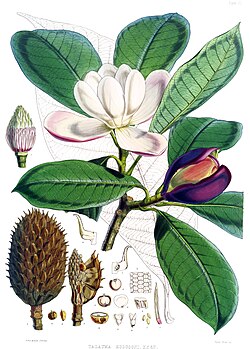
- ส่วนที่สองของคำนามสองพยางค์อาจเป็นคำนามใน รูป กรรมวาจก (แสดงความเป็นเจ้าของ) โครงสร้างของรูปกรรมวาจกในภาษาละตินมีหลายวิธี ขึ้นอยู่กับการผันคำนาม คำลงท้ายที่พบบ่อยสำหรับคำนามเพศชายและเพศกลางคือ-iiหรือ-iในรูปเอกพจน์ และ-orumในรูปพหูพจน์ และสำหรับคำนามเพศหญิงคือ -aeในรูปเอกพจน์ และ-arumในรูปพหูพจน์ คำนามนั้นอาจเป็นส่วนหนึ่งของชื่อบุคคล ซึ่งมักจะเป็นนามสกุล เช่นละมั่งทิเบต ( Pantholops hodgsonii ) ไม้พุ่มแมกโนเลีย (Magnolia hodgsonii ) หรือนกพิพิทหลังสีมะกอก ( Anthus hodgsoni ) ความหมายคือ "ของบุคคลที่ถูกกล่าวถึง" ดังนั้นMagnolia hodgsoniiจึงหมายถึง "แมกโนเลียของฮอดจ์สัน" คำ ลงท้าย -iiหรือ-iแสดงให้เห็นว่าในแต่ละกรณี ฮอดจ์สันเป็นผู้ชาย (ไม่ใช่คนเดียวกัน) หากฮอดจ์สันเป็นผู้หญิง ชื่อสกุลhodgsonaeก็คงถูกนำมาใช้ บุคคลที่ถูกระลึกถึงในชื่อวิทยาศาสตร์มักไม่ใช่ (หรืออาจไม่ใช่) บุคคลที่ตั้งชื่อนั้นขึ้นมา ตัวอย่างเช่นAnthus hodgsoniได้รับการตั้งชื่อโดยCharles Wallace Richmondเพื่อเป็นเกียรติแก่ฮอดจ์สัน แทนที่จะเป็นบุคคล คำนามอาจเกี่ยวข้องกับสถานที่ เช่นLatimeria chalumnaeซึ่งหมายถึง "แห่งแม่น้ำชาลัมนา " การใช้คำนามในรูปกรรมวาจกอีกอย่างหนึ่งคือ ในชื่อของแบคทีเรียEscherichia coliซึ่งcoliหมายถึง "แห่งลำไส้ใหญ่ " รูปแบบนี้พบได้ทั่วไปในปรสิต เช่นXenos vesparumซึ่งvesparumหมายถึง "แห่งตัวต่อ" เนื่องจากXenos vesparumเป็นปรสิตของตัวต่อ
ในขณะที่ส่วนแรกของชื่อวิทยาศาสตร์แบบทวินามต้องไม่ซ้ำกันภายในขอบเขตของรหัสการตั้งชื่อแต่ละรหัส ส่วนที่สองนั้นมักใช้ร่วมกันในสองสกุลขึ้นไป (ดังตัวอย่างของhodgsoniiข้างต้น) แต่ไม่สามารถใช้ซ้ำได้มากกว่าหนึ่งครั้งภายในสกุลเดียวกัน ชื่อวิทยาศาสตร์แบบทวินามทั้งหมดต้องไม่ซ้ำกันภายในรหัสแต่ละรหัส
รหัส
From the early 19th century onwards, it became ever more apparent that a body of rules was necessary to govern scientific names. In the course of time these became nomenclature codes. The International Code of Zoological Nomenclature (ICZN) governs the naming of animals,[44] the International Code of Nomenclature for algae, fungi, and plants (ICNafp) that of plants (including cyanobacteria), and the International Code of Nomenclature of Bacteria (ICNB) that of bacteria (including Archaea). Virus names are governed by the International Committee on Taxonomy of Viruses (ICTV), a taxonomic code, which determines taxa as well as names. These codes differ in certain ways, e.g.:
- "Binomial nomenclature" is the correct term for botany,[45] although it is also used by zoologists.[46] Since 1961,[47] "binominal nomenclature" is the technically correct term in zoology.[2] A binomial name is also called a binomen (plural binomina) or binominal name.[1]
- Both codes consider the first part of the two-part name for a species to be the "generic name". In the zoological code (ICZN), the second part of the name is a "specific name". In the botanical code (ICNafp), it is a "specific epithet". Together, these two parts are referred to as a "species name" or "binomen" in the zoological code: or "species name", "binomial", or "binary combination" in the botanical code. "Species name" is the only term common to the two codes.
- The ICNafp, the plant code, does not allow the two parts of a binomial name to be the same (such a name is called a tautonym), whereas the ICZN, the animal code, does. Thus the American bison has the binomen Bison bison; a name of this kind would not be allowed for a plant.
- The starting points, the time from which these codes are in effect (retroactively), vary from group to group. In botany, the starting point will often be in 1753 (the year Carl Linnaeus first published Species Plantarum). In zoology, the starting point is 1758 (1 January 1758 is considered the date of the publication of Linnaeus's Systema Naturae, 10th Edition, and also Clerck's Aranei Svecici). Bacteriology started anew, with a starting point on 1 January 1980.[48]
| Code | Full name | First part | Second part |
|---|---|---|---|
| ICZN | species name, binomen, binominal name | generic name, genus name | specific name |
| ICNafp | species name, binary combination, binomial (name) | generic name | specific epithet |
Unifying the different codes into a single code, the "BioCode", has been suggested,[49] although implementation is not in sight. (There is also a published code for a different system of biotic nomenclature, which does not use ranks above species, but instead names clades. This is called PhyloCode.)
Differences in handling personal names
As noted above, there are some differences between the codes in how binomials can be formed; for example the ICZN allows both parts to be the same, while the ICNafp does not. Another difference is in how personal names are used in forming specific names or epithets. The ICNafp sets out precise rules by which a personal name is to be converted to a specific epithet. In particular, names ending in a consonant (but not "er") are treated as first being converted into Latin by adding "-ius" (for a man) or "-ia" (for a woman), and then being made genitive (i.e. meaning "of that person or persons"). This produces specific epithets like lecardii for Lecard (male), wilsoniae for Wilson (female), and brauniarum for the Braun sisters.[50] By contrast, the ICZN does not require the intermediate creation of a Latin form of a personal name, allowing the genitive ending to be added directly to the personal name.[51] This explains the difference between the names of the plant Magnolia hodgsonii and the bird Anthus hodgsoni. Furthermore, the ICNafp requires names not published in the form required by the code to be corrected to conform to it,[52] whereas the ICZN is more protective of the form used by the original author.[53]
Writing binomial names
By tradition, the binomial names of species are usually typeset in italics; for example, Homo sapiens.[54] Generally, the binomial should be printed in a font style different from that used in the normal text; for example, "Several more Homo sapiens fossils were discovered." When handwritten, a binomial name should be underlined; for example, Homosapiens.[55]
ส่วนแรกของชื่อวิทยาศาสตร์แบบทวินาม ซึ่งก็คือชื่อสกุล จะเขียนด้วยอักษรตัวใหญ่เสมอ แหล่งข้อมูลเก่าๆ โดยเฉพาะงานพฤกษศาสตร์ที่ตีพิมพ์ก่อนปี 1950 ใช้ธรรมเนียมที่แตกต่างออกไป คือ ถ้าส่วนที่สองของชื่อมาจากชื่อเฉพาะ เช่น ชื่อบุคคลหรือสถานที่ จะใช้อักษรตัวใหญ่ ดังนั้น รูปแบบสมัยใหม่Berberis darwiniiจึงเขียนว่าBerberis Darwiniiนอกจากนี้ยังใช้อักษรตัวใหญ่เมื่อชื่อประกอบด้วยคำนามสองคำที่วางเคียงข้างกัน เช่นPanthera LeoหรือCentaurea Cyanus [ 56 ] [ หมายเหตุ 3 ]ในการใช้งานปัจจุบัน ส่วนที่สองจะไม่เขียนด้วยอักษรตัวใหญ่[ 58 ] [ 59 ]
เมื่อใช้ร่วมกับชื่อสามัญ ชื่อวิทยาศาสตร์มักจะตามมาในวงเล็บ แม้ว่าสิ่งนี้จะแตกต่างกันไปตามสิ่งพิมพ์[ 60 ]ตัวอย่างเช่น "นกกระจอกบ้าน ( Passer domesticus ) กำลังลดจำนวนลงในยุโรป"
โดยทั่วไปแล้ว ชื่อวิทยาศาสตร์แบบทวินามควรเขียนแบบเต็ม ยกเว้นในกรณีที่มีการระบุหรือกล่าวถึงหลายชนิดจากสกุลเดียวกันในเอกสารหรือรายงานเดียวกัน หรือมีการกล่าวถึงชนิดเดียวกันซ้ำๆ ในกรณีดังกล่าว ชื่อสกุลจะเขียนแบบเต็มเมื่อใช้ครั้งแรก แต่ต่อมาอาจย่อเหลือเพียงอักษรย่อ (และจุด/เครื่องหมายมหัพภาค) [ 61 ]ตัวอย่างเช่น รายชื่อสมาชิกของสกุลCanisอาจเขียนว่า " Canis lupus , C. aureus , C. simensis " ในบางกรณี รูปแบบย่อนี้ได้แพร่หลายไปสู่การใช้งานทั่วไปมากขึ้น ตัวอย่างเช่น แบคทีเรียEscherichia coliมักถูกเรียกสั้นๆ ว่าE. coliและTyrannosaurus rexอาจเป็นที่รู้จักกันดีในชื่อT. rexซึ่งทั้งสองชนิดนี้มักปรากฏในรูปแบบนี้ในงานเขียนที่เป็นที่นิยม แม้ว่าจะไม่ได้ระบุชื่อสกุลแบบเต็มไว้แล้วก็ตาม
ตัวย่อ "sp." ใช้เมื่อไม่สามารถหรือไม่จำเป็นต้องระบุชื่อเฉพาะที่แท้จริง ตัวย่อ "spp." (ย่อมาจากspecies pluralisซึ่งเป็นภาษาละตินแปลว่า "หลายชนิด") บ่งชี้ถึง "หลายชนิด" ตัวย่อเหล่านี้ไม่ได้ทำเป็นตัวเอียง (หรือขีดเส้นใต้) [ 62 ] [ 63 ]ตัวอย่างเช่น " Canis sp." หมายถึง "ชนิดที่ไม่ระบุของสกุลCanis " ในขณะที่ " Canis spp." หมายถึง "สองชนิดขึ้นไปของสกุลCanis " (ตัวย่อเหล่านี้ไม่ควรสับสนกับตัวย่อ "ssp." (สัตววิทยา) หรือ "subsp." (พฤกษศาสตร์) พหูพจน์ "sspp." หรือ "subspp." ซึ่งหมายถึงชนิดย่อย หนึ่งชนิดขึ้นไป ดูtrinomen (สัตววิทยา) และชื่อระดับต่ำกว่า ชนิด )
คำย่อ " cf. " (เช่นconferในภาษาละติน) ใช้เพื่อเปรียบเทียบสิ่งมีชีวิต/กลุ่มสิ่งมีชีวิตกับชนิดที่รู้จัก/อธิบายไว้แล้ว ข้อกำหนดในการใช้คำคุณศัพท์ "cf." แตกต่างกันไป[ 64 ]ในด้านบรรพชีวินวิทยา มักใช้เมื่อการระบุชนิดยังไม่ได้รับการยืนยัน[ 65 ]ตัวอย่างเช่น " Corvus cf. nasicus " ใช้เพื่อระบุ "นกฟอสซิลที่คล้ายกับอีกาคิวบาแต่ไม่สามารถระบุได้อย่างแน่นอนว่าเป็นชนิดนี้" [ 66 ]ในเอกสารเกี่ยวกับระบบอนุกรมวิธานระดับโมเลกุล อาจใช้ "cf." เพื่อระบุชนิดที่ยังไม่ได้รับการอธิบายอย่างน้อยหนึ่งชนิดที่สันนิษฐานว่าเกี่ยวข้องกับชนิดที่ได้รับการอธิบายแล้ว ตัวอย่างเช่น ในบทความที่อธิบายถึงวิวัฒนาการของปลาน้ำจืดขนาดเล็กที่อาศัยอยู่ก้นทะเลที่เรียกว่าปลาดาร์เตอร์ มีการระบุชนิดพันธุ์ที่ยังไม่ได้รับการอธิบาย 5 ชนิด (ปลาดาร์เตอร์โอซาร์ก เชลโทวี ไวลด์แคท อิฮิโย และมาเมควิท) ซึ่งโดดเด่นด้วยตัวผู้ในช่วงผสมพันธุ์ที่มีสีสันสดใสและมีลวดลายสีที่โดดเด่น[ 67 ]โดยเรียกว่า " Etheostoma cf. spectabile " เนื่องจากถูกมองว่ามีความเกี่ยวข้อง แต่แตกต่างจากEtheostoma spectabile (ปลาดาร์เตอร์คอส้ม) [ 68 ]มุมมองนี้ได้รับการสนับสนุนในระดับที่แตกต่างกันโดยการวิเคราะห์ดีเอ็นเอ การใช้ชื่ออนุกรมวิธานอย่างไม่เป็นทางการพร้อมตัวย่อที่ระบุคุณสมบัติเรียกว่าระบบการตั้งชื่อแบบเปิดและไม่อยู่ภายใต้หลักเกณฑ์การใช้งานที่เข้มงวด
ในบางบริบท อาจใช้สัญลักษณ์กริช ("†") นำหน้าหรือหลังชื่อวิทยาศาสตร์เพื่อบ่งชี้ว่าสายพันธุ์นั้นสูญพันธุ์ไปแล้ว
อำนาจ
ในตำราวิชาการ อย่างน้อยการใช้ชื่อทวินามครั้งแรกหรือหลัก มักจะตามด้วย "ผู้มีอำนาจ" ซึ่งเป็นวิธีระบุถึงนักวิทยาศาสตร์ที่ตีพิมพ์ชื่อนั้นเป็นครั้งแรก วิธีการเขียนผู้มีอำนาจจะแตกต่างกันเล็กน้อยในสาขาสัตววิทยาและพฤกษศาสตร์ สำหรับชื่อที่อยู่ภายใต้การกำกับดูแลของICZNนามสกุลมักจะเขียนแบบเต็มพร้อมกับวันที่ (โดยปกติจะเป็นเพียงปี) ของการตีพิมพ์ ตัวอย่างหนึ่งของการอ้างอิงผู้เขียนชื่อวิทยาศาสตร์คือ: " Amabela Möschler, 1880" [หมายเหตุ 4] ICZN แนะนำว่า " ควรมีการอ้างอิงผู้เขียนดั้งเดิมและวันที่ของชื่ออย่างน้อยหนึ่งครั้งในแต่ละงานที่เกี่ยวข้องกับอนุกรมวิธานที่ระบุโดยชื่อนั้น" [ 69 ]สำหรับชื่อที่อยู่ภายใต้การกำกับดูแลของICNafpชื่อโดยทั่วไปจะถูกย่อให้เป็นตัวย่อมาตรฐานและละเว้นวันที่ดัชนีชื่อพืชระหว่างประเทศรักษาบัญชีรายชื่อตัวย่อผู้เขียนพฤกษศาสตร์ที่ได้รับการอนุมัติ ในอดีตมีการใช้ตัวย่อในสัตววิทยาด้วย
เมื่อมีการเปลี่ยนแปลงชื่อเดิม เช่น การย้ายสายพันธุ์ไปอยู่ในสกุลอื่น ทั้งสองระเบียบจะใช้เครื่องหมายวงเล็บล้อมรอบชื่อเดิมที่อ้างอิง นอกจากนี้ICNafpยังกำหนดให้ระบุชื่อผู้ที่ทำการเปลี่ยนแปลงด้วย ในICNafpชื่อเดิมจะเรียกว่าbasionymตัวอย่างเช่น:
- (พืช) Amaranthus retroflexus L. – "L." เป็นตัวย่อมาตรฐานของ "Linnaeus" การไม่มีวงเล็บแสดงว่านี่คือชื่อดั้งเดิมของเขา
- (พืช) Hyacinthoides italica (L.) Rothm. – ลินเนียสเป็นคนแรกที่ตั้งชื่อดอกระฆังสีน้ำเงินอิตาลี ว่า Scilla italicaซึ่งเป็นชื่อพื้นฐาน ต่อมา รอธมาเลอร์ได้ย้ายไปอยู่ในสกุลHyacinthoides
- (สัตว์) Passer domesticus (Linnaeus, 1758) – ชื่อเดิมที่ Linnaeus ตั้งไว้คือFringilla domestica ; ต่างจากICNafp , ICZN ไม่จำเป็น ต้องระบุชื่อของบุคคลที่เปลี่ยนสกุล ( Mathurin Jacques Brisson [ 70 ] )
ยศอื่นๆ
ระบบการตั้งชื่อแบบทวิภาค ตามที่อธิบายไว้ในที่นี้ เป็นระบบสำหรับการตั้งชื่อสปีชีส์ โดยปริยาย ระบบนี้ยังรวมถึงระบบสำหรับการตั้งชื่อสกุลด้วย เนื่องจากส่วนแรกของชื่อสปีชีส์คือชื่อสกุล ในระบบการจำแนกประเภทตามลำดับชั้น ยังมีวิธีการตั้งชื่อลำดับชั้นที่สูงกว่าระดับสกุลและต่ำกว่าระดับสปีชีส์ ลำดับชั้นที่สูงกว่าสกุล (เช่น วงศ์ อันดับ ชั้น) จะได้รับชื่อแบบส่วนเดียว ซึ่งโดยทั่วไปจะไม่เขียนด้วยตัวเอียง ดังนั้น นกกระจอกบ้านPasser domesticusจึงอยู่ในวงศ์Passeridae ชื่อ วงศ์มักจะอิงตามชื่อสกุล เช่น ในทางสัตววิทยา[ 71 ]แม้ว่าคำลงท้ายที่ใช้จะแตกต่างกันระหว่างสัตววิทยาและพฤกษศาสตร์
ชื่อที่ใช้เรียกสิ่งมีชีวิตในระดับต่ำกว่าสปีชีส์มักประกอบด้วยสามส่วน โดยทั่วไปจะเขียนด้วยตัวเอียงเช่นเดียวกับชื่อสปีชีส์ มีความแตกต่างที่สำคัญระหว่างICZNและICNafpในทางสัตววิทยา ระดับที่ต่ำกว่าสปีชีส์อย่างเป็นทางการเพียงอย่างเดียวคือชนิดย่อย และชื่อจะเขียนเป็นสามส่วน (trinomen) ตัวอย่างเช่น หนึ่งในชนิดย่อยของนกพิพิตหลังสีมะกอกคือAnthus hodgsoni berezowskiiในบางกรณี อาจมีการเติม รูปแบบ (form) ต่อท้าย แต่ชื่อดังกล่าวไม่มีอยู่จริงและไม่มีสถานะอย่างเป็นทางการในระบบการตั้งชื่อทางสัตววิทยา (เช่น ไม่มีผู้แต่งหรือวันที่ที่ได้รับการยอมรับ และไม่แข่งขันกันในเรื่องความเหมือนกันของชื่อ) ตัวอย่างเช่นHarmonia axyridis f. spectabilisคือด้วงเต่าลายฮาร์เลควินในรูปแบบสีดำหรือสีดำคล้ำที่มีจุดสีส้มหรือสีแดงขนาดใหญ่สี่จุด ในทางพฤกษศาสตร์ มีหลายระดับที่ต่ำกว่าสปีชีส์ และถึงแม้ชื่อจะเขียนเป็นสามส่วน แต่ก็จำเป็นต้องมี "คำเชื่อม" (ไม่ใช่ส่วนหนึ่งของชื่อ) เพื่อแสดงระดับนั้น ดังนั้น ต้นเอลเดอร์ดำอเมริกันคือSambucus nigra subsp. canadensis ; ไซคลาเมนใบเลื้อยชนิดดอกสีขาวคือCyclamen hederifolium f . albiflorum [ 72 ]
ดูเพิ่มเติม
- อภิธานศัพท์การตั้งชื่อทางวิทยาศาสตร์
- ชื่อทางพฤกษศาสตร์
- คำจำกัดความประเภท–ความแตกต่าง
- ชื่อผสม (พฤกษศาสตร์)
- รายชื่อนักพฤกษศาสตร์ เรียงตามชื่อย่อของผู้เขียน
- รายชื่อคำภาษาละตินและกรีกที่ใช้กันทั่วไปในชื่อระบบ
- รายชื่อสิ่งมีชีวิตที่ตั้งชื่อตามบุคคลที่มีชื่อเสียง
- รายชื่อนักสัตววิทยาเรียงตามชื่อย่อ
- ศัพท์ทางวิทยาศาสตร์
- คำอธิบายสายพันธุ์
- กลุ่มสิ่งมีชีวิตที่ยังไม่ได้รับการอธิบาย
หมายเหตุ
- ↑บางแหล่งข้อมูลกล่าวว่าทั้งจอห์น เทรดสแคนท์ผู้เยาว์และจอห์น เทรดสแคนท์ผู้ พ่อ ต่างก็เป็นตัวละครที่ลินเนียสตั้งใจจะสร้างขึ้น
- ↑คำลงท้าย "-on" อาจมาจากคำลงท้ายภาษากรีกที่เป็นเพศกลาง -ονเช่นใน Rhodoxylon floridumหรือคำลงท้ายภาษากรีกที่เป็นเพศชาย -ωνเช่นใน Rhodochiton atrosanguineus
- ↑The modern notation was resisted by some, partly because writing names like Centaurea cyanus can suggest that cyanus is an adjective which should agree with Centaurea, i.e. that the name should be Centaurea cyana, whereas Cyanus is derived from the Greek name for the cornflower.[57]
- ↑Here Amabela is the name of the genus. It is written in italic form. Followed by the last name of the scientist who discovered it (Heinrich Benno Möschler), a comma, and the year when it was published.
Bibliography
- Hyam, R.; Pankhurst, R. J. (1995). Plants and their names: A concise dictionary. Oxford: Oxford University Press. ISBN 978-0-19-866189-4.
- Johnson, A.T.; Smith, H. A. (1972). Plant Names Simplified: Their Pronunciation Derivation & Meaning. Buckenhill, Herefordshire: Landsmans Bookshop. ISBN 978-0-900513-04-6.
- International Commission on Zoological Nomenclature (1999). International Code of Zoological Nomenclature online (4th ed.). The International Trust for Zoological Nomenclature. ISBN 978-0-85301-006-7. Retrieved 20 June 2011.
- McNeill, J.; Barrie, F. R.; Buck, W. R.; Demoulin, V.; Greuter, W.; Hawksworth, D. L.; Herendeen, P. S.; Knapp, S.; Marhold, K.; Prado, J.; Prud'homme Van Reine, W. F.; Smith, G. F.; Wiersema, J. H.; Turland, N. J. (2012). International Code of Nomenclature for algae, fungi, and plants (Melbourne Code) adopted by the Eighteenth International Botanical Congress Melbourne, Australia, July 2011. Regnum Vegetabile 154. Königstein, Germany: Koeltz Scientific Books. ISBN 978-3-87429-425-6. Archived from the original on 7 May 2017.
Further reading
- Crinan, Alexander, บรรณาธิการ (2007). ชื่อพืช: คู่มือสำหรับนักพืชสวน ผู้จำหน่ายต้นไม้ ชาวสวน และนักศึกษา (PDF)กลุ่มอนุกรมวิธานพืชสวน สวนพฤกษศาสตร์หลวงเอดินบะระ เก็บถาวรจากต้นฉบับ(PDF)เมื่อวันที่ 27 กันยายน 2013 สืบค้นเมื่อ 4 มิถุนายน 2013
 ข้อมูลที่เกี่ยวข้องกับรายการคำพ้องเสียงที่ถูกต้องในวิกิสปีชีส์