
ฮูมิตา
 | |
| แหล่งกำเนิด | รัฐแอนเดียน |
|---|---|
| ส่วนประกอบหลัก | ข้าวโพด , เปลือกข้าวโพด |
| การเปลี่ยนแปลง | หลายรายการ |
| |

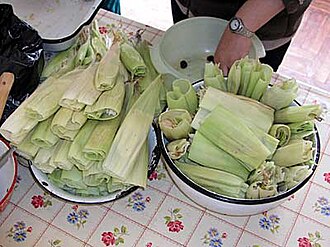
Huminta (จากภาษาเกชัวumint'a [ 1 ] ), huma [ 2 ] (จากภาษาเกชัวอาจหมาย ถึง umaหัว) หรือhumita (อาจใช้คำย่อในภาษาสเปน-ita ) เป็นอาหารที่มีมาตั้งแต่สมัยก่อนยุคสเปนอาหารพื้นเมือง ชนิด นี้พบได้ในเปรู โบลิเวีย ชิลี เอกวาดอร์ และอาร์เจนตินา ประกอบด้วยข้าวโพดสด (choclo)บดเป็นเนื้อเดียวกัน ห่อด้วยเปลือกข้าวโพดสด แล้วนำไปนึ่งหรือต้มในหม้อน้ำอย่างช้าๆ ในโบลิเวียเรียกว่าhumintaและในบราซิลเรียกว่าpamonha Humitas คล้ายกับucheposหรือ tamales colados ของเม็กซิโก ซึ่งทำจากข้าวโพดสดเช่นกัน แต่มีความคล้ายคลึงกับtamales เพียงผิวเผินเท่านั้น เนื่องจาก tamales ทำจากข้าวโพด ที่ ผ่านกระบวนการ nixtamalization ( masa ) envueltosหรือbollos ของโคลอมเบีย ก็คล้ายกับ humitas เช่นกัน ขนมทั้งสองชนิดนี้มีความเชื่อมโยงกับขนมจูอาเน ("หัวนักบุญจอห์น") ซึ่งสามารถทำจากข้าวโพด (ซารา จูอาเน) ได้ แต่ในปัจจุบันนิยมทำจากข้าว
ในอาร์เจนตินา

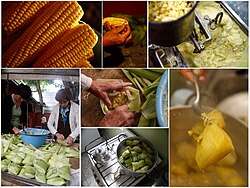
ในอาร์เจนตินา ฮูมิตา (humita) ปรุงในสองวิธีหลัก คือ ฮูมิตาในหม้อ (humita a la olla) และฮูมิตาในเปลือก ข้าวโพด (humita en chala ) สำหรับฮูมิตาในหม้อจะใช้เมล็ดข้าวโพดขูดให้เป็นเนื้อเนียนละเอียด แต่บางคนอาจชอบใช้เครื่องบดเมล็ดข้าวโพดแบบสมัยใหม่ ซึ่งกระบวนการนี้จะเหลือเปลือกเมล็ดข้าวโพดไว้ ทำให้เนื้อสัมผัสไม่เนียนเท่าที่ควร ส่วนผสมอาจผสมกับฟักทองครีโอล (ฟักทองชนิดหนึ่งที่มีเปลือกสีเขียว) และบางครั้งอาจเติมนมหากข้าวโพดแห้งเกินไป จากนั้นนำครีมไปผัดกับหัวหอมและบางครั้งก็ใส่พริกหวาน ปรุงรสด้วยเกลือ ใบโหระพา ปาปริก้า และยี่หร่า นำส่วนผสมไปปรุงในหม้อ เมื่อเสิร์ฟแล้วสามารถโรยหน้าด้วยชีสละลายได้ แต่เป็นทางเลือกเสริม
For humita en chala, the corn mixture is placed inside two clean corn husks, arranged in a cross shape to form a small package. The package is tied with strips of husk and boiled in salted water for about an hour. Typically, small chunks of creamy cheese, white cheese or goat cheese are added to the filling, which is more common in the northern regions of Argentina. Humita never contains any type of meat. Given the natural sweetness of corn, two varieties of humitas are common: sweet and salty, the latter prepared without adding extra salt. For the sweet version, sugar is often added to the mixture before cooking. They can be found in restaurants and markets in Jujuy, Tucumán, Salta, and other northern provinces of Argentina.[1]
In Chile
Humitas in Chile are prepared with fresh corn, onion, basil, and butter or lard.[3] They are wrapped in corn husks and baked or boiled.[3] The humitas are tied with thread or twine to keep them together while cooking.[3] They can be made savory or sweet, and are traditionally served with added sugar or tomato.[3] In Chile, humitas are traceable back to the 19th century.[4]
In Ecuador
Ecuadorian humitas are prepared with fresh ground corn and onions, eggs, pork fat and spices that vary from region to region, and also by each family's tradition. The dough is wrapped in a corn husk, but is steamed rather than baked or boiled. Ecuadorian humitas may also contain cheese. This dish is so traditional in Ecuador that they have developed special pots just for cooking humitas. Ecuadorian humitas can be salty or sweet. It is common to fry them in a pan just before eating.[5]
In the Andes
In the central Andes region of Peru and Bolivia, humitas are prepared with fresh corn combined with lard and salt and queso fresco for a savory dish or with fresh corn with lard, sugar, cinnamon and raisins for a sweet dish. Savory humitas may also be prepared with anise. These are typically very rare in other parts of South America.
In Peru
These humitas are prepared with corn wrapped in corn husks and can be cooked in boiling water, placed in a pachamanca oven, or steamed. They can be wrapped in several ways.
หนึ่งในเอกสารอ้างอิงที่เก่าแก่ที่สุดเกี่ยวกับฮูมิตาในเปรูเขียนโดยชาวอินคาชื่อการ์ซิลาโซ เด ลา เวกา ในหนังสือComentarios Reales de los Incasซึ่งเขาตีพิมพ์ในลิสบอนในปี ค.ศ. 1609 ในการพูดถึงฮูมิตา เขาได้บรรยายถึงความทรงจำของเขาเองเกี่ยวกับการบริโภคฮูมิตาในขณะที่เขาอาศัยอยู่ในเปรูระหว่างปี ค.ศ. 1539 ถึง 1560 จากนี้จึงสามารถอนุมานได้ว่าฮูมิตาได้ถูกเตรียมขึ้นในเปรูในช่วงเวลานั้นแล้ว[ 6 ]
ดูเพิ่มเติม
ลิงก์ภายนอก
 คำจำกัดความพจนานุกรมของhumitaในวิกิพจนานุกรม