
อ่าน 43 นาที
กระท่อมลุงทอม
นวนิยาย เรื่อง Uncle Tom's Cabin; or, Life Among the Lowlyเป็น นวนิยาย ต่อต้านการเป็นทาสโดย Harriet Beecher Stowe นักเขียนชาวอเมริกัน ตีพิมพ์เป็นสองเล่มในปี 1852
กระท่อมลุงทอม


 หน้าปกเล่มที่ 1 ของหนังสือUncle Tom's Cabin ฉบับพิมพ์ครั้งแรก (ค.ศ. 1852) | |
| ผู้เขียน | แฮเรียต บีเชอร์ สโตว์ |
|---|---|
| ชื่อเรื่องเดิม | กระท่อมของลุงทอม หรือ ชีวิตท่ามกลางคนต่ำต้อย |
| นักวาดภาพประกอบ | แฮมแมตต์ บิลลิงส์ |
| ภาษา | ภาษาอังกฤษ |
| ประเภท | นิยาย |
| ที่ตีพิมพ์ | 20 มีนาคม พ.ศ. 2495 (สองเล่ม) |
| สำนักพิมพ์ | จอห์น พี. จิวเว็ตต์แอนด์ คอมพานี หลังจากตีพิมพ์เป็นตอนๆ ในหนังสือพิมพ์เดอะเนชั่นแนลอีราเริ่มตั้งแต่วันที่ 5 มิถุนายน ค.ศ. 1851 |
| สถานที่ตีพิมพ์ | สหรัฐอเมริกา |
| โอซีแอลซี | 1077982310 |
| ระบบดิวอี้ | 813.3 |
| คลาส LC | PS2954 .U5 |
| ตามด้วย | กุญแจสู่กระท่อมลุงทอม |
นวนิยาย เรื่อง Uncle Tom's Cabin; or, Life Among the Lowlyเป็น นวนิยาย ต่อต้านการเป็นทาสโดย Harriet Beecher Stowe นักเขียนชาวอเมริกัน ตีพิมพ์เป็นสองเล่มในปี 1852 นวนิยายเรื่องนี้มีอิทธิพลอย่างมากต่อทัศนคติที่มีต่อชาวแอฟริกันอเมริกันและการเป็นทาสในสหรัฐอเมริกาและกล่าวกันว่า "ช่วยวางรากฐานสำหรับสงครามกลางเมืองอเมริกัน " [ 1 ] [ 2 ] [ 3 ]
สโตว์ ครูที่เกิดในคอนเนตทิ คั ต ที่โรงเรียนสตรีฮาร์ตฟอร์ดเป็นส่วนหนึ่งของครอบครัวบีเชอร์ ที่เคร่งศาสนา และเป็นนักเคลื่อนไหวต่อต้าน การเป็นทาส เธอเขียนนวนิยายที่สะเทือนอารมณ์เพื่อพรรณนาถึงความน่าสยดสยองของการเป็นทาส พร้อมทั้งยืนยันว่าความรักแบบคริสเตียนสามารถเอาชนะการเป็นทาสได้[ 4 ] [ 5 ] [ 6 ]นวนิยายเรื่องนี้เน้นที่ตัวละครลุงทอมทาสผิว ดำผู้ทนทุกข์ทรมานมายาวนาน ซึ่งเรื่องราวของตัวละครอื่นๆ หมุนรอบตัวเขา
ในสหรัฐอเมริกา นวนิยาย เรื่อง Uncle Tom's Cabinเป็นนวนิยายที่ขายดีที่สุดและเป็นหนังสือที่ขายดีเป็นอันดับสองของศตวรรษที่ 19 รองจากพระคัมภีร์[ 7 ] [ 8 ]เชื่อกันว่านวนิยายเรื่องนี้มีส่วนช่วยกระตุ้นให้เกิดการเคลื่อนไหวต่อต้านการเป็นทาสในช่วงทศวรรษ 1850 [ 9 ]อิทธิพลของหนังสือเล่มนี้มีมากจนเกิดเรื่องเล่าที่ ไม่น่าจะเป็นจริงขึ้นมาว่า อับราฮัม ลินคอล์นได้พบกับสโตว์ในช่วงเริ่มต้นของสงครามกลางเมืองและประกาศว่า "นี่แหละคือสุภาพสตรีตัวเล็กๆ ที่เป็นต้นเหตุของสงครามครั้งยิ่งใหญ่นี้" [ 10 ] [ 11 ]
The book and the plays it inspired helped popularize a number of negative stereotypes about black people,[12][13][3] including that of the namesake character "Uncle Tom". The term came to be associated with an excessively subservient person.[14] These later associations with Uncle Tom's Cabin have, to an extent, overshadowed the historical effects of the book as a "vital antislavery tool".[15] Nonetheless, the novel remains a "landmark" in protest literature,[16] with later books such as The Jungle by Upton Sinclair and Silent Spring by Rachel Carson owing a large debt to it.[17]
Sources

Stowe, a Connecticut-born teacher at the Hartford Female Seminary and an active abolitionist, wrote the novel as a response to the passage, in 1850, of the second Fugitive Slave Act. Much of the book was composed at her house in Brunswick, Maine, where her husband, Calvin Ellis Stowe, taught at his alma mater, Bowdoin College.[18][19][20]
Stowe was partly inspired to create Uncle Tom's Cabin by the slave narrativeThe Life of Josiah Henson, Formerly a Slave, Now an Inhabitant of Canada, as Narrated by Himself (1849).[21]Henson, a formerly enslaved black man, had lived and worked on a 3,700-acre (15 km2) plantation in North Bethesda, Maryland, owned by Isaac Riley.[22] Henson escaped slavery in 1830 by fleeing to the Province of Upper Canada (now Ontario), where he helped other fugitive slaves settle and become self-sufficient.[22]
สโตว์ยังได้รับแรงบันดาลใจจากชีวประวัติหลังมรณกรรมของฟีบี แอนน์ จาคอบส์ผู้เคร่งศาสนานิกาย คองเกรเกชันแนลลิสต์ แห่งบรันสวิก รัฐเมน[ 23 ] [ 24 ] จาคอบส์ เกิดในไร่ทาสที่เลคไฮอาวาธา รัฐนิวเจอร์ซีย์ และตกเป็นทาสเกือบตลอดชีวิต รวมถึงโดยอธิการบดีของวิทยาลัยโบว์โดอิน[ 25 ] [ 26 ] [ 27 ] [ 28 ]ในช่วงปีสุดท้ายของชีวิต จาคอบส์ใช้ชีวิตอย่างอิสระด้วยการซักผ้าให้กับนักศึกษาของโบว์โดอิน เธอได้รับความเคารพจากชุมชนเนื่องจากความเชื่อทางศาสนาที่เคร่งครัด[ 28 ]และงานศพของเธอก็มีผู้เข้าร่วมเป็นจำนวนมาก[ 29 ] [ 30 ]
แหล่งข้อมูลอีกแหล่งหนึ่งที่สโตว์ใช้ในการค้นคว้าวิจัยสำหรับนวนิยายเรื่องUncle Tom's CabinคือAmerican Slavery as It Is: Testimony of a Thousand Witnessesซึ่งเป็นหนังสือที่เขียนร่วมกันโดยธีโอดอร์ ดไวต์ เวลด์และพี่น้องตระกูลกริมเค [ 31 ] [ 32 ] สโตว์ยังได้ทำการสัมภาษณ์ผู้คนที่หนีจากการเป็นทาสอีกด้วย[ 33 ]สโตว์ได้กล่าวถึงแรงบันดาลใจและแหล่งข้อมูลเหล่านี้จำนวนหนึ่งในหนังสือ A Key to Uncle Tom's Cabin (1853) [ 31 ]หนังสือสารคดีเล่มนี้มีจุดประสงค์ไม่เพียงแต่เพื่อตรวจสอบข้อกล่าวอ้างของสโตว์เกี่ยวกับการเป็นทาสเท่านั้น แต่ยังชี้ให้ผู้อ่านเห็นถึง "เอกสารที่เปิดเผยต่อสาธารณะ" จำนวนมาก[ 31 ]ที่ให้รายละเอียดเกี่ยวกับความน่าสะพรึงกลัวของการเป็นทาสอีกด้วย[ 34 ] [ 35 ]
สิ่งพิมพ์

นวนิยายเรื่อง Uncle Tom's Cabinตีพิมพ์ครั้งแรกในรูปแบบตอนต่อเนื่อง 40 สัปดาห์ในThe National Eraซึ่งเป็นวารสารต่อต้านการค้าทาส โดยเริ่มจากฉบับวันที่ 5 มิถุนายน พ.ศ. 2494 เดิมทีตั้งใจให้เป็นเรื่องสั้นที่ตีพิมพ์เพียงไม่กี่สัปดาห์ แต่สโตว์ได้ขยายเรื่องราวให้ยาวขึ้นอย่างมาก และได้รับความนิยมอย่างรวดเร็ว จนมีการส่งคำประท้วงไปยัง สำนักงาน Eraเมื่อเธอไม่ได้ตีพิมพ์ฉบับใดฉบับ หนึ่ง [ 36 ]ตอนสุดท้ายตีพิมพ์ในฉบับวันที่ 1 เมษายน พ.ศ. 2495 ของEraสโตว์ได้จัดการให้มีการจดทะเบียนลิขสิทธิ์ของเรื่องราวกับศาลแขวงสหรัฐอเมริกาประจำเขตเมนเธอต่ออายุลิขสิทธิ์ในปี พ.ศ. 2422 และผลงานนี้กลายเป็นสาธารณสมบัติเมื่อวันที่ 12 พฤษภาคม พ.ศ. 2436 [ 37 ]
ในขณะที่เรื่องราวยังคงตีพิมพ์เป็นตอนๆ สำนักพิมพ์John P. Jewettได้ทำสัญญากับ Stowe เพื่อดัดแปลงUncle Tom's Cabinให้เป็นหนังสือ[ 38 ]ด้วยความเชื่อมั่นว่าหนังสือเล่มนี้จะได้รับความนิยม Jewett จึงตัดสินใจอย่างผิดปกติ (สำหรับยุคนั้น) ที่จะให้Hammatt Billingsแกะสลักภาพประกอบเต็มหน้าหกภาพสำหรับการพิมพ์ครั้งแรก[ 39 ]นวนิยายเรื่องนี้ตีพิมพ์ในรูปแบบหนังสือเมื่อวันที่ 20 มีนาคม พ.ศ. 2395 และขายได้ 3,000 เล่มในวันนั้นวันเดียว[ 36 ]และในไม่ช้าก็ขายหมดทุกเล่มที่พิมพ์[ 40 ]ในปีแรกหลังจากที่ตีพิมพ์ หนังสือเล่มนี้ขายได้ 300,000 เล่มในสหรัฐอเมริกา[ 41 ]เครื่องพิมพ์แปดเครื่องที่ทำงานอย่างไม่หยุดหย่อนแทบจะไม่ทันกับความต้องการ[ 42 ]
ในช่วงกลางปี ค.ศ. 1853 ยอดขายหนังสือลดลงอย่างมาก[ 43 ]และ Jewett ก็เลิกกิจการในช่วงวิกฤตเศรษฐกิจปี ค.ศ. 1857 [ 44 ] ในเดือนมิถุนายน ค.ศ. 1860 สิทธิ์ในการตีพิมพ์Uncle Tom's Cabinตกเป็นของบริษัท Ticknor and Fields ในบอสตัน[ 45 ]ซึ่งนำหนังสือกลับมาพิมพ์ใหม่ในเดือนพฤศจิกายน ค.ศ. 1862 หลังจากนั้นความต้องการก็เริ่มเพิ่มขึ้นอีกครั้ง[ 46 ] [ 47 ]บริษัท Houghton Mifflinได้ซื้อสิทธิ์จาก Ticknor ในปี ค.ศ. 1878 [ 48 ] ในปี ค.ศ. 1879 มีการออกหนังสือ Uncle Tom's Cabinฉบับใหม่โดยจัดรูปแบบนวนิยายใหม่ให้เป็น "วรรณกรรมคลาสสิกของอเมริกา" [ 47 ]ตลอดช่วงทศวรรษ ค.ศ. 1880 จนกระทั่งลิขสิทธิ์หมดอายุ หนังสือเล่มนี้เป็นแหล่งรายได้หลักและเชื่อถือได้สำหรับ Houghton Mifflin [ 43 ]เมื่อถึงปลายศตวรรษที่สิบเก้า นวนิยายเรื่องนี้ก็วางจำหน่ายอย่างแพร่หลายในหลายฉบับ[ 47 ]และในสหรัฐอเมริกา นวนิยายเรื่องนี้ก็กลายเป็นหนังสือขายดีอันดับสองของศตวรรษนั้น รองจากพระคัมภีร์[ 7 ]
นวนิยายเรื่อง Uncle Tom's Cabinขายดีในสหราชอาณาจักรเช่นกัน โดยฉบับพิมพ์ครั้งแรกในลอนดอนออกวางจำหน่ายในเดือนพฤษภาคม พ.ศ. 2495 และขายได้ 200,000 เล่ม[ 49 ]ในอีกไม่กี่ปีต่อมา หนังสือเล่มนี้มีการหมุนเวียนในสหราชอาณาจักรมากกว่า 1.5 ล้านเล่ม แม้ว่าส่วนใหญ่จะเป็น ฉบับ ที่ละเมิดลิขสิทธิ์ (สถานการณ์ที่คล้ายกันนี้เกิดขึ้นในสหรัฐอเมริกา) [ 50 ]ภายในปี พ.ศ. 2490 นวนิยายเรื่องนี้ได้รับการแปลเป็น 20 ภาษา[ 51 ]หลิน ซูผู้แปล ได้ ตี พิมพ์ฉบับแปลภาษาจีนฉบับแรกในปี พ.ศ. 2444 ทำให้เป็นนวนิยายอเมริกันเรื่องแรกที่ได้รับการแปลเป็นภาษาจีน[ 52 ]
พล็อต
เอลิซ่าหนีไปพร้อมกับลูกชายของเธอ ส่วนทอมถูกขายทิ้งไป

หนังสือเริ่มต้นด้วย เรื่องราวของอาร์เธอร์ เชลบี ชาวนาจากรัฐ เคนตักกี้ที่กำลังเผชิญกับการสูญเสียฟาร์มเนื่องจากหนี้สิน แม้ว่าเขาและเอมิลี่ เชลบี ภรรยาของเขาจะเชื่อว่าพวกเขามีความสัมพันธ์ที่ดีกับทาสของตน แต่เชลบีก็ตัดสินใจหาเงินโดยการขายทาสสองคน คือ ลุงทอม ชายวัยกลางคนที่มีภรรยาและลูกๆ และแฮร์รี่ ลูกชายของเอลิซา สาวใช้ของเอมิลี่ เชลบี ให้กับมิสเตอร์เฮลีย์พ่อค้าทาส ที่หยาบคาย เอมิลี่ เชลบีไม่เห็นด้วยกับความคิดนี้ เพราะเธอได้ให้สัญญากับสาวใช้ของเธอว่าลูกของเธอจะไม่ถูกขาย ส่วนจอร์จ เชลบี ลูกชายของเอมิลี่ ก็เสียใจที่ต้องเห็นทอมจากไป เพราะเขามองว่าทอมเป็นเพื่อนและผู้แนะนำของเขา
เมื่อเอลิซาได้ยินนายและนางเชลบีพูดคุยกันถึงแผนการขายทอมและแฮร์รี่ เอลิซาจึงตัดสินใจหนีไปพร้อมกับลูกชายของเธอ นวนิยายระบุว่าเอลิซาตัดสินใจเช่นนี้เพราะเธอเกรงว่าจะสูญเสียลูกคนเดียวที่เหลืออยู่ (เธอเคยแท้งลูกมาแล้วสองคน) เอลิซาจากไปในคืนนั้น โดยทิ้งจดหมายขอโทษไว้ให้เจ้านายของเธอ ต่อมาเธอได้ข้ามแม่น้ำโอไฮโอที่ปกคลุมด้วยน้ำแข็งอย่างอันตรายเพื่อหลบหนีผู้ไล่ล่าของเธอ
เมื่อทอมถูกขาย นายเฮลีย์พาเขาไปยังเรือล่องแม่น้ำมิสซิสซิปปีและจากที่นั่นทอมจะถูกส่งตัวไปยังตลาดค้าทาสขณะอยู่บนเรือ ทอมได้พบกับอีวา เด็กหญิงผิวขาวตัวน้อยหน้าตาน่ารัก พวกเขากลายเป็นเพื่อนกันอย่างรวดเร็ว อีวาพลัดตกแม่น้ำ และทอมกระโดดลงไปในแม่น้ำเพื่อช่วยชีวิตเธอ ด้วยความซาบซึ้งใจต่อทอม ออกัสติน เซนต์แคลร์ พ่อของอีวา จึงซื้อทอมจากเฮลีย์และพาเขาไปอยู่กับครอบครัวที่บ้านในนิวออร์ลีนส์ ทอมและอีวาเริ่มมีความสัมพันธ์ที่ดีต่อกันเนื่องจากความศรัทธาในศาสนาคริสต์ที่ทั้งสองมีร่วมกัน
ครอบครัวของเอลิซ่าออกล่าสัตว์ ชีวิตของทอมกับนักบุญแคลร์

ระหว่างการหลบหนีของเอลิซา เธอได้พบกับจอร์จ แฮร์ริส สามีของเธอ ซึ่งหนีไปก่อนหน้านี้แล้ว พวกเขาตัดสินใจที่จะพยายามเดินทางไปยังแคนาดา แต่ถูกทอม โลเกอร์ นักล่าทาสที่นายเฮลีย์จ้างมาติดตาม ในที่สุดโลเกอร์และลูกน้องก็ดักจับเอลิซาและครอบครัว ทำให้จอร์จต้องยิงเขาเข้าที่ข้างลำตัว ด้วยความกังวลว่าโลเกอร์อาจจะตาย เอลิซาจึงชักชวนให้จอร์จพาโลเกอร์ไปยัง ชุมชน ชาวเควกเกอร์ ใกล้เคียง เพื่อรับการรักษาพยาบาล
กลับมาที่นิวออร์ลีนส์ เซนต์แคลร์ถกเถียงเรื่องทาสกับโอฟีเลียญาติทางเหนือของเขา ซึ่งแม้จะต่อต้านการเป็นทาส แต่ก็มีอคติต่อคนผิวดำ อย่างไรก็ตาม เซนต์แคลร์เชื่อว่าตนเองไม่มีอคติ แม้ว่าจะเป็นเจ้าของทาสก็ตาม เพื่อพยายามแสดงให้โอฟีเลียเห็นว่าทัศนคติที่มีอคติต่อคนผิวดำนั้นผิด เซนต์แคลร์จึงซื้อท็อปซี ทาสสาวผิวดำ และขอให้โอฟีเลียช่วยอบรมสั่งสอนเธอ
หลังจากที่ทอมอาศัยอยู่กับครอบครัวเซนต์แคลร์เป็นเวลาสองปี อีวาเริ่มล้มป่วยอย่างหนัก ก่อนที่เธอจะเสียชีวิต เธอได้เห็นภาพนิมิตแห่งสวรรค์ซึ่งเธอได้แบ่งปันให้กับคนรอบข้าง ผลจากความตายและภาพนิมิตของเธอ ตัวละครอื่นๆ จึงตั้งใจที่จะเปลี่ยนแปลงชีวิตของตน โดยโอฟีเลียสัญญาว่าจะละทิ้งอคติส่วนตัวที่มีต่อคนผิวดำ ท็อปซีบอกว่าจะพัฒนาตัวเองให้ดีขึ้น และเซนต์แคลร์ให้คำมั่นว่าจะปล่อยทอมเป็นอิสระ
ทอมขายให้ไซมอน เลกรี
ก่อนที่เซนต์แคลร์จะทำตามคำมั่นสัญญาของเขาได้สำเร็จ เขาก็เสียชีวิตหลังจากถูกแทงนอกร้านเหล้า ภรรยาของเขาละทิ้งคำสาบานของสามีผู้ล่วงลับและขายทอมในการประมูลให้กับเจ้าของไร่ผู้โหดเหี้ยมชื่อไซมอน เลกรี ทอมถูกพาไปยังชนบทของรัฐหลุยเซียนาพร้อมกับทาสใหม่คนอื่นๆ รวมถึงเอ็มเมลีน ซึ่งเลกรีซื้อมาเพื่อใช้เป็น ทาส ทาง เพศ

เลกรีเริ่มเกลียดทอมเมื่อทอมปฏิเสธคำสั่งของเลกรีที่ให้เฆี่ยนตีทาสคนอื่นๆ เลกรีจึงทุบตีทอมอย่างโหดเหี้ยมและตั้งใจที่จะทำลายศรัทธาในพระเจ้า ของทาสคนใหม่ของเขา แม้จะถูกเลกรีทำร้ายอย่างโหดร้าย แต่ทอมก็ยังคงอ่านคัมภีร์ไบเบิลและปลอบโยนทาสคนอื่นๆ อย่างสุดความสามารถ ขณะอยู่ที่ไร่ ทอมได้พบกับแคสซี ทาสอีกคนหนึ่งที่เลกรีเคยใช้เป็นทาสทางเพศ แคสซีเล่าเรื่องราวของเธอให้ทอมฟัง เธอเคยถูกพรากจากลูกชายและลูกสาวของเธอเมื่อพวกเขาถูกขายไป เธอตั้งครรภ์อีกครั้ง แต่ฆ่าลูกเพราะทนไม่ได้ที่จะต้องมีลูกอีกคนถูกพรากจากเธอ
ทอม โลเกอร์ ผู้ซึ่งเปลี่ยนไปหลังจากได้รับการเยียวยาจากพวกเควกเกอร์ กลับมาปรากฏตัวในเรื่องอีกครั้ง เขาได้ช่วยเหลือจอร์จ เอลิซา และแฮร์รี ให้ข้ามทะเลสาบอีรี เข้าสู่แคนาดา และได้รับอิสรภาพ ในรัฐลุยเซียนา ลุงทอมเกือบจะหมดหวังเมื่อศรัทธาในพระเจ้าของเขาถูกทดสอบด้วยความยากลำบากในไร่ เขาได้เห็นนิมิตสองครั้ง ครั้งหนึ่งเป็นนิมิตของพระเยซู และอีกครั้งเป็นนิมิตของเอวา ซึ่งทำให้เขามีความมุ่งมั่นที่จะเป็นคริสเตียนที่ซื่อสัตย์ต่อไป แม้กระทั่งความตาย
เขาให้กำลังใจแคสซีให้หนี ซึ่งเธอก็ทำเช่นนั้น โดยพาเอ็มเมลีนไปด้วย เมื่อทอมปฏิเสธที่จะบอกเลกรีว่าแคสซีและเอ็มเมลีนไปอยู่ที่ไหน เลกรีจึงสั่งให้ผู้คุมฆ่าทอม ขณะที่ทอมกำลังจะตาย เขาให้อภัยผู้คุมที่ทุบตีเขาอย่างโหดเหี้ยม ด้วยความรู้สึกสำนึกในคุณธรรมของชายที่พวกเขาฆ่า ทั้งสองจึงหันมานับถือศาสนาคริสต์ จอร์จ เชลบี บุตรชายของอาร์เธอร์ เชลบี เดินทางมาเพื่อซื้ออิสรภาพให้ทอม แต่ทอมก็เสียชีวิตไม่นานหลังจากที่พวกเขาพบกัน
ส่วนสุดท้าย
ระหว่างการเดินทางทางเรือสู่เสรีภาพ แคสซีและเอ็มเมลีนได้พบกับมาดาม เดอ ธูซ์ น้องสาวของจอร์จ แฮร์ริส และร่วมเดินทางไปแคนาดากับเธอ มาดาม เดอ ธูซ์และจอร์จ แฮร์ริสพลัดพรากจากกันตั้งแต่ยังเด็ก แคสซีได้รู้ว่าเอลิซาคือลูกสาวที่พลัดพรากกันไปนาน ซึ่งถูกขายไปตั้งแต่ยังเด็ก ตอนนี้ครอบครัวของพวกเขากลับมาอยู่ด้วยกันอีกครั้ง พวกเขาเดินทางไปยังฝรั่งเศสและในที่สุดก็ไปยังไลบีเรียประเทศในแอฟริกาที่สร้างขึ้นสำหรับอดีตทาสชาวอเมริกัน จอร์จ เชลบีกลับไปยังฟาร์มในเคนตักกี้ ที่ซึ่งหลังจากบิดาของเขาเสียชีวิต เขาได้ปลดปล่อยทาสทั้งหมดของเขา จอร์จ เชลบีขอให้พวกเขาจดจำการเสียสละของทอมทุกครั้งที่มองไปที่กระท่อมของเขา เขาตัดสินใจที่จะดำเนินชีวิตตามหลักศาสนาคริสต์อย่างเคร่งครัดเช่นเดียวกับลุงทอม
ตัวละครหลัก


- ลุงทอม ตัวละครเอกของเรื่อง ในตอนแรกถูกมองว่าเป็น ทาสคริสเตียนผู้สูงส่งและอดทน[ 14 ] ในช่วงไม่กี่ปีที่ผ่านมา ชื่อของเขากลายเป็นคำดูหมิ่นที่ใช้เรียกชาวแอฟริกันอเมริกันที่ถูกกล่าวหาว่าขายชาติให้กับคนผิวขาว[ 14 ]สโตว์ตั้งใจให้ทอมเป็น "วีรบุรุษผู้สูงส่ง" และเป็นบุคคลที่น่ายกย่อง[ 53 ]ตลอดทั้งเล่ม แทนที่จะยอมให้ตัวเองถูกเอาเปรียบ ทอมกลับยืนหยัดเพื่อความเชื่อของตนและปฏิเสธที่จะทรยศเพื่อนและครอบครัว[ 14 ]
- เอลิซาเป็นทาสที่รับใช้เป็นคนรับใช้ส่วนตัวของนางเชลบี เธอหนีไปทางเหนือพร้อมกับแฮร์รีลูกชายวัยห้าขวบหลังจากที่เขาถูกขายให้กับนายเฮลีย์ จอร์จสามีของเธอในที่สุดก็พบเอลิซาและแฮร์รีในโอไฮโอและอพยพไปแคนาดา จากนั้นไปฝรั่งเศส และสุดท้ายไปไลบีเรีย[ 54 ]ตัวละครเอลิซาได้รับแรงบันดาลใจจากเรื่องราวที่จอห์น แรนกิน เล่าให้คาลวินสามีของสโตว์ซึ่งเป็นศาสตราจารย์ที่โรงเรียน เทววิทยาเลนในซินซินเนติฟัง ตามที่แรนกินกล่าว ในเดือนกุมภาพันธ์ ค.ศ. 1838 หญิงสาวทาสชื่อเอลิซา แฮร์ริส ได้หนีข้ามแม่น้ำโอไฮโอ ที่แข็งตัว ไปยังเมืองริปลีย์พร้อมกับลูกในอ้อมแขนและพักอยู่ที่บ้านของเขาในระหว่างทางไปทางเหนือ[ 55 ]
- เอแวนเจลีน "อีวา" เซนต์แคลร์ เป็นลูกสาวของออกัสติน เซนต์แคลร์ อีวาปรากฏตัวในเรื่องเล่าเมื่อลุงทอมเดินทางโดยเรือกลไฟไปยังนิวออร์ลีนส์เพื่อถูกขาย และเขาช่วยเด็กหญิงวัยห้าหรือหกขวบจากการจมน้ำ อีวาขอร้องพ่อของเธอให้ซื้อทอม และเขากลายเป็นหัวหน้าคนขับรถม้าที่บ้านเซนต์แคลร์ เขาใช้เวลาส่วนใหญ่กับอีวาผู้มีนิสัยเหมือนนางฟ้า อีวามักพูดถึงความรักและการให้อภัย ทำให้ท็อปซี ทาสสาวผู้บึ้งตึงเชื่อว่าเธอสมควรได้รับความรัก เธอยังทำให้โอฟีเลียป้าของเธอประทับใจอีกด้วย[ 56 ]ในที่สุดอีวาก็ล้มป่วยหนักก่อนตาย เธอให้ปอยผมของเธอแก่ทาสแต่ละคน บอกพวกเขาว่าพวกเขาต้องเป็นคริสเตียนเพื่อที่พวกเขาจะได้พบกันในสวรรค์ บนเตียงตายของเธอ เธอโน้มน้าวพ่อของเธอให้ปล่อยทอมเป็นอิสระ แต่เนื่องจากสถานการณ์บางอย่าง คำสัญญานั้นจึงไม่เป็นจริง[ 57 ]
- ไซมอน เลกรี เป็นเจ้าของทาสที่โหดร้าย—เกิดในภาคเหนือ—ชื่อของเขากลายเป็นสัญลักษณ์ของความโลภและความโหดร้าย[ 58 ] เขาเป็น ตัวร้ายหลักของนวนิยายเรื่องนี้เป้าหมายของเขาคือการทำให้ทอมหมดกำลังใจและทำลายศรัทธาทางศาสนาของเขา ในที่สุดเขาก็สั่งให้เฆี่ยนตีทอมจนตายด้วยความคับแค้นใจที่ทาสของเขายังคงเชื่อมั่นในพระเจ้าอย่างไม่เปลี่ยนแปลง นวนิยายเรื่องนี้เปิดเผยว่า ในวัยหนุ่ม เขาได้ทิ้งแม่ที่ป่วยของเขาไปใช้ชีวิตในทะเลและเพิกเฉยต่อจดหมายของแม่ที่ขอให้ไปพบเธอเป็นครั้งสุดท้ายที่เตียงนอนก่อนตาย เขาใช้ประโยชน์ทางเพศจากแคสซี ซึ่งเกลียดชังเขา และต่อมาก็หมายปองเอ็มเมลีน[ 59 ]ยังไม่ชัดเจนว่าเลกรีมีพื้นฐานมาจากบุคคลจริงหรือไม่ มีรายงานปรากฏขึ้นในช่วงปลายทศวรรษ 1800 ว่าสโตว์นึกถึงเจ้าของไร่ฝ้ายและน้ำตาลที่ร่ำรวยชื่อเมเรดิธ คาลฮูน [ 60 ] [ 61 ] ซึ่งตั้งรกรากอยู่ที่แม่น้ำเรดริเวอร์ทางเหนือของ อเล็กซานเดรี ยรัฐลุยเซียนา[ 62 ]บาทหลวงโจไซอาห์ เฮนสันผู้เป็นแรงบันดาลใจให้กับตัวละครลุงทอม กล่าวว่า เลกรีได้รับแรงบันดาลใจมาจากไบรซ์ ลิตตัน[ 63 ] "ผู้ที่หักแขนของฉันและทำให้ฉันพิการไปตลอดชีวิต" [ 64 ]
แนวคิดและทฤษฎีทางวรรณกรรม
หัวข้อหลัก
นวนิยาย เรื่อง Uncle Tom's Cabinโดดเด่นด้วยธีมหลักเพียงธีมเดียว นั่นคือ ความชั่วร้ายและความไม่ชอบธรรมของการเป็นทาส[ 65 ]แม้ว่าสโตว์จะสอดแทรกธีมย่อยอื่นๆ ไว้ในเนื้อเรื่อง เช่นอำนาจทางศีลธรรมของความเป็นแม่และพลังแห่งความรักแบบคริสเตียน[ 4 ]แต่เธอก็เน้นย้ำถึงความเชื่อมโยงระหว่างสิ่งเหล่านี้กับความน่าสะพรึงกลัวของการเป็นทาส บางครั้งสโตว์ก็เปลี่ยนน้ำเสียงของเรื่องราวเพื่อให้เธอสามารถ " เทศนา " เกี่ยวกับธรรมชาติที่ทำลายล้างของการเป็นทาส[ 66 ] (เช่น เมื่อหญิงผิวขาวบนเรือกลไฟที่พาทอมไปทางใต้กล่าวว่า "ส่วนที่น่ากลัวที่สุดของการเป็นทาสในความคิดของฉันคือการล่วงละเมิดความรู้สึกและความรัก เช่น การแยกครอบครัวออกจากกัน") [ 67 ]วิธีหนึ่งที่สโตว์แสดงให้เห็นถึงความชั่วร้ายของการเป็นทาส[ 49 ] คือวิธีที่ "สถาบันอันแปลกประหลาด" นี้แยกครอบครัวออกจากกันโดยบังคับ[ 68 ]

หนึ่งในประเด็นย่อยที่นำเสนอในนวนิยายคือการควบคุมตนเอง [ 69 ] สโตว์ทำให้มันค่อนข้างละเอียดอ่อน และในบางกรณีเธอก็สอดแทรกมันเข้าไปในเหตุการณ์ที่สนับสนุนประเด็นหลักด้วย ตัวอย่างหนึ่งคือตอนที่ออกัสติน เซนต์แคลร์ถูกฆ่า เขาพยายามห้ามการทะเลาะวิวาทระหว่างชายสองคนที่เมาสุราในร้านกาแฟและถูกแทง อีกตัวอย่างหนึ่งคือการตายของพรู ซึ่งถูกเฆี่ยนจนตายเพราะเมาสุราอย่างต่อเนื่อง อย่างไรก็ตาม เหตุผลที่เธอทำเช่นนั้นเป็นเพราะการสูญเสียลูกของเธอ ในตอนต้นของนวนิยาย ชะตากรรมของเอลิซาและลูกชายของเธอกำลังถูกพูดคุยกันระหว่างเจ้าของทาสขณะดื่มไวน์ เมื่อพิจารณาว่าสโตว์ตั้งใจให้สิ่งนี้เป็นประเด็นย่อย ฉากนี้จึงอาจเป็นลางบอกเหตุถึงเหตุการณ์ในอนาคตที่ทำให้แอลกอฮอล์ดูไม่ดี[ 70 ]
เนื่องจากสโตว์มองว่าความเป็นแม่เป็น "แบบจำลองทางจริยธรรมและโครงสร้างสำหรับชีวิตชาวอเมริกันทั้งหมด" [ 71 ]และยังเชื่อว่ามีเพียงผู้หญิงเท่านั้นที่มีอำนาจทางศีลธรรมที่จะช่วย[ 72 ]สหรัฐอเมริกาให้รอดพ้นจากปีศาจแห่งการเป็นทาส ธีมหลักอีกประการหนึ่งของนวนิยายเรื่องUncle Tom's Cabinจึงเป็นพลังทางศีลธรรมและความศักดิ์สิทธิ์ของผู้หญิง[ 73 ]ผ่านตัวละครอย่างเอลิซา ผู้ซึ่งหนีจากการเป็นทาสเพื่อช่วยลูกชายตัวน้อยของเธอ (และในที่สุดก็รวมครอบครัวทั้งหมดเข้าด้วยกัน) หรืออีวา ผู้ซึ่งถูกมองว่าเป็น "คริสเตียนในอุดมคติ" [ 74 ]สโตว์แสดงให้เห็นว่าเธอเชื่อว่าผู้หญิงสามารถช่วยผู้คนรอบข้างให้รอดพ้นจากความอยุติธรรมที่เลวร้ายที่สุดได้ แม้ว่านักวิจารณ์ในภายหลังจะตั้งข้อสังเกตว่าตัวละครหญิงของสโตว์มักจะเป็นแบบแผนของแม่บ้าน มากกว่าผู้หญิงที่สมจริง[ 75 ]นวนิยายของสโตว์ "ยืนยันความสำคัญของอิทธิพลของผู้หญิง" และช่วยปูทางให้กับการเคลื่อนไหวเพื่อสิทธิสตรีในทศวรรษต่อมา[ 76 ]
ความเชื่อทางศาสนา แบบเคร่งครัดของสโตว์ปรากฏให้เห็นในธีมหลักสุดท้ายของนวนิยาย นั่นคือการสำรวจธรรมชาติของความรักแบบคริสเตียน[ 4 ] [ 77 ]และความรู้สึกของเธอที่ว่าเทววิทยาคริสเตียนนั้นไม่เข้ากันกับความเป็นทาส โดยพื้นฐาน [ 78 ]ธีมนี้เห็นได้ชัดที่สุดเมื่อทอมกระตุ้นให้นักบุญแคลร์ "หันไปหาพระเยซู" หลังจากที่เอวา ลูกสาวสุดที่รักของนักบุญแคลร์เสียชีวิต หลังจากที่ทอมเสียชีวิต จอร์จ เชลบีกล่าวคำไว้อาลัยให้ทอมว่า "การเป็นคริสเตียนนั้นช่างเป็นอะไรที่วิเศษเหลือเกิน" [ 79 ]เนื่องจากธีมคริสเตียนมีบทบาทสำคัญอย่างมากใน นวนิยายเรื่อง Uncle Tom's Cabinและเนื่องจากการที่สโตว์ใช้การแทรกแซงโดยตรงจากผู้เขียนเกี่ยวกับศาสนาและความเชื่อบ่อยครั้ง นวนิยายเรื่องนี้จึงมักมี "รูปแบบเหมือนคำเทศนา" [ 80 ]
ทฤษฎีวรรณกรรม
ตลอดหลายปีที่ผ่านมา นักวิชาการได้ตั้งสมมติฐานเกี่ยวกับทฤษฎีต่างๆ มากมายเกี่ยวกับสิ่งที่สโตว์พยายามจะสื่อในนวนิยายเรื่องนี้ (นอกเหนือจากประเด็นหลักในการประณามการเป็นทาส) ตัวอย่างเช่น ในฐานะคริสเตียนผู้เคร่งครัดและนักเคลื่อนไหวต่อต้านการเป็นทาส สโตว์ได้ใส่ความเชื่อทางศาสนาของเธอลงไปในนวนิยายเรื่องนี้[ 81 ]นักวิชาการบางคนกล่าวว่า สโตว์มองว่านวนิยายของเธอเสนอทางออกให้กับปัญหาทางศีลธรรมและการเมืองที่รบกวนผู้ต่อต้านการเป็นทาสหลายคน นั่นคือ การมีส่วนร่วมในพฤติกรรมต้องห้ามนั้นชอบธรรมหรือไม่ในการต่อต้านความชั่วร้าย การใช้ความรุนแรงเพื่อต่อต้านความรุนแรงของการเป็นทาสและการฝ่าฝืนกฎหมายที่สนับสนุนการเป็นทาสนั้นสามารถปกป้องได้ทางศีลธรรมหรือไม่[ 82 ]ตัวละครใดของสโตว์ที่ควรเอาเป็นแบบอย่าง ระหว่างลุงทอมผู้ยอมจำนนหรือจอร์จ แฮร์ริสผู้ท้าทาย[ 83 ]ทางออกของสโตว์นั้นคล้ายกับ ของ ราล์ฟ วอลโด เอเมอร์สัน นั่น คือ พระประสงค์ของพระเจ้าจะได้รับการปฏิบัติตามหากแต่ละคนพิจารณาหลักการของตนอย่างจริงใจและปฏิบัติตาม[ 84 ]
นักวิชาการยังมองว่านวนิยายเรื่องนี้แสดงออกถึงคุณค่าและแนวคิดของขบวนการเจตจำนงเสรี อีก ด้วย[ 85 ]ในมุมมองนี้ ตัวละครของจอร์จ แฮร์ริสเป็นตัวแทนของหลักการแรงงานเสรี และตัวละครที่ซับซ้อนของโอฟีเลียเป็นตัวแทนของชาวเหนือที่ยอมรับการประนีประนอมกับระบบทาส ในทางตรงกันข้ามกับโอฟีเลียคือไดนาห์ ผู้ซึ่งดำเนินชีวิตตามอารมณ์ ในระหว่างนวนิยาย โอฟีเลียได้รับการเปลี่ยนแปลง เช่นเดียวกับที่พรรครีพับลิกัน (สามปีต่อมา) ประกาศว่าภาคเหนือต้องเปลี่ยนแปลงตัวเองและยืนหยัดเพื่อหลักการต่อต้านระบบทาส[ 86 ]
ทฤษฎีสตรีนิยมยังปรากฏให้เห็นในหนังสือของสโตว์ด้วย โดยนวนิยายเรื่องนี้เป็นการวิพากษ์วิจารณ์ธรรมชาติแบบชายเป็นใหญ่ ของการเป็นทาส [ 87 ]สำหรับสโตว์ ความสัมพันธ์ทางสายเลือดมากกว่าความสัมพันธ์แบบพ่อปกครองลูกระหว่างนายกับทาสเป็นพื้นฐานของครอบครัว ยิ่งไปกว่านั้น สโตว์มองว่าความสามัคคีของชาติเป็นส่วนขยายของครอบครัวของบุคคล ดังนั้นความรู้สึกถึงความเป็นชาติจึงเกิดจากการมีเชื้อชาติเดียวกัน ด้วยเหตุนี้ เธอจึงสนับสนุนการตั้งถิ่นฐานในแอฟริกาสำหรับทาสที่ได้รับการปลดปล่อย และไม่ใช่การผสมผสานเข้ากับสังคมอเมริกัน[ 88 ]
หนังสือเล่มนี้ยังถูกมองว่าเป็นความพยายามที่จะกำหนดนิยามใหม่ของความเป็นชายซึ่งเป็นขั้นตอนที่จำเป็นต่อการยกเลิกการเป็นทาส[ 89 ]ในมุมมองนี้ กลุ่มผู้ต่อต้านการเป็นทาสได้เริ่มต่อต้านภาพลักษณ์ของผู้ชายที่ก้าวร้าวและมีอำนาจเหนือกว่า ซึ่งการพิชิตและการล่าอาณานิคมในช่วงต้นศตวรรษที่ 19 ได้ส่งเสริม เพื่อเปลี่ยนแปลงแนวคิดเรื่องความเป็นชาย เพื่อให้ผู้ชายสามารถต่อต้านการเป็นทาสได้โดยไม่ทำให้ภาพลักษณ์ของตนเองหรือสถานะในสังคมเสียหาย กลุ่มผู้ต่อต้านการเป็นทาสบางกลุ่มจึงดึงเอาหลักการของการเรียกร้องสิทธิสตรีและศาสนาคริสต์ รวมถึงลัทธิสันตินิยม มาใช้ และยกย่องผู้ชายในด้านความร่วมมือ ความเห็นอกเห็นใจ และจิตวิญญาณพลเมือง ในขณะที่คนอื่นๆ ในขบวนการต่อต้านการเป็นทาสโต้แย้งถึงการกระทำแบบชายชาตรีที่ก้าวร้าวตามแบบแผน ผู้ชายทุกคนในนวนิยายของสโตว์ล้วนเป็นตัวแทนของผู้ชายประเภทใดประเภทหนึ่ง[ 90 ]
สไตล์

นวนิยาย เรื่อง Uncle Tom's Cabinเขียนขึ้นด้วยรูปแบบที่อ่อนโยน[ 3 ] [ 91 ]และดราม่า ซึ่งเป็นรูปแบบที่พบได้ทั่วไปในนวนิยายแนวอ่อนโยน ในศตวรรษที่ 19 [ 8 ]และนวนิยายเกี่ยวกับชีวิตประจำวัน (เรียกอีกอย่างว่านวนิยายสำหรับผู้หญิง) นวนิยายประเภทนี้เป็นนวนิยายที่ได้รับความนิยมมากที่สุดในสมัยของสโตว์ และ "เขียนโดย เพื่อ และเกี่ยวกับผู้หญิง" [ 92 ]พร้อมทั้งมีรูปแบบการเขียนที่กระตุ้นความเห็นอกเห็นใจและอารมณ์ความรู้สึกของผู้อ่าน[ 93 ] Uncle Tom's Cabinได้รับการขนานนามว่าเป็นตัวอย่าง "ตัวแทน" ของนวนิยายแนวอ่อนโยน[ 94 ]
พลังในการเขียนประเภทนี้สามารถเห็นได้จากปฏิกิริยาของผู้อ่านร่วมสมัย จอร์เจียนา เมย์ เพื่อนของสโตว์ เขียนจดหมายถึงผู้เขียนว่า “เมื่อคืนฉันอยู่ดึกหลังตีหนึ่ง อ่านและอ่านUncle Tom's Cabin จนจบ ฉันไม่สามารถวางมันลงได้เลย เหมือนกับที่ฉันไม่สามารถทิ้งเด็กที่กำลังจะตายได้” [ 95 ]ผู้อ่านอีกคนหนึ่งถูกบรรยายว่าหมกมุ่นอยู่กับหนังสือเล่มนี้ตลอดเวลาและเคยคิดที่จะเปลี่ยนชื่อลูกสาวของเธอเป็นอีวา[ 96 ]เห็นได้ชัดว่าการเสียชีวิตของลิตเติลอีวาส่งผลกระทบต่อผู้คนจำนวนมากในเวลานั้น เพราะในปี 1852 มีเด็กหญิง 300 คนในบอสตันเพียงแห่งเดียวที่ได้รับชื่อนั้น[ 96 ]
Despite this positive reaction from readers, for decades literary critics dismissed the style found in Uncle Tom's Cabin and other sentimental novels because these books were written by women and so prominently featured what one critic called "women's sloppy emotions".[97] Another literary critic said that had the novel not been about slavery, "it would be just another sentimental novel",[98] and another described the book as "primarily a derivative piece of hack work".[99] In The Literary History of the United States, George F. Whicher called Uncle Tom's Cabin "Sunday-school fiction", full of "broadly conceived melodrama, humor, and pathos".[100]
In 1985 Jane Tompkins expressed a different view with her famous defense of the book in "Sentimental Power: Uncle Tom's Cabin and the Politics of Literary History."[97][101] Tompkins praised the style so many other critics had dismissed, writing that sentimental novels showed how women's emotions had the power to change the world for the better. She also said that the popular domestic novels of the 19th century, including Uncle Tom's Cabin, were remarkable for their "intellectual complexity, ambition, and resourcefulness"; and that Uncle Tom's Cabin offers a "critique of American society far more devastating than any delivered by better-known critics such as Hawthorne and Melville."[102]
Reactions to the novel
Uncle Tom's Cabin has exerted an influence equaled by few other novels in history.[102][103] Upon publication, Uncle Tom's Cabin ignited a firestorm of protest from defenders of slavery (who created a number of books in response to the novel) while the book elicited praise from abolitionists. The novel is considered an influential[104] "landmark" of protest literature.[16]
Contemporary reaction in United States and around the world

Uncle Tom's Cabin had an "incalculable"[102] impact on the 19th-century world and captured the imagination of many Americans. In a likely apocryphal story that alludes to the novel's impact, when Abraham Lincoln met Stowe in 1862 he supposedly commented, "So this is the little lady who started this great war."[10][11][105] Historians are undecided if Lincoln actually said this line, and in a letter that Stowe wrote to her husband a few hours after meeting with Lincoln no mention of this comment was made.[106] Many writers have also credited the novel with focusing Northern anger at the injustices of slavery and the Fugitive Slave Law[106] and helping to fuel the abolitionist movement.[9][3]Uniongeneral and politician James Baird Weaver said that the book convinced him to become active in the abolitionist movement.[107]
Frederick Douglass was "convinced both of the social uses of the novel and of Stowe's humanitarianism" and heavily promoted the novel in his newspaper, Frederick Douglass' Paper, during the book's initial release.[108] Though Douglass said Uncle Tom's Cabin was "a work of marvelous depth and power," he also published criticism of the novel, most prominently by Martin Delany.[109] In a series of letters in the newspaper, Delany accused Stowe of "borrowing (and thus profiting) from the work of black writers to compose her novel" and chastised Stowe for her "apparent support of black colonization to Africa."[108] Delany was "one of the most out-spoken black critics" of Uncle Tom's Cabin at the time and later wrote Blake; or the Huts of America, a novel where an African American "chooses violent rebellion over Tom's resignation."[110]
White people in the American South were outraged at the novel's release,[49] with the book also roundly criticized by slavery supporters.[35] Southern novelist William Gilmore Simms declared the work utterly false[111] while also calling it slanderous.[112] Reactions ranged from a bookseller in Mobile, Alabama, being forced to leave town for selling the novel[49] to threatening letters sent to Stowe (including a package containing a slave's severed ear).[49] Many Southern writers, like Simms, soon wrote their own books in opposition to Stowe's novel.[113]
Some critics highlighted Stowe's paucity of life-experience relating to Southern life, saying that it led her to create inaccurate descriptions of the region. For instance, she had never been to a Southern plantation. Stowe always said she based the characters of her book on stories she was told by runaway slaves in Cincinnati. It is reported that "She observed firsthand several incidents which galvanized her to write [the] famous anti-slavery novel. Scenes she observed on the Ohio River, including seeing a husband and wife being sold apart, as well as newspaper and magazine accounts and interviews, contributed material to the emerging plot."[114]
In response to these criticisms, in 1853 Stowe published A Key to Uncle Tom's Cabin, an attempt to document the veracity of the novel's depiction of slavery.[31] In the book, Stowe discusses each of the major characters in Uncle Tom's Cabin and cites "real life equivalents" to them while also mounting a more "aggressive attack on slavery in the South than the novel itself had".[34] Like the novel, A Key to Uncle Tom's Cabin was a best-seller, but although Stowe claimed A Key to Uncle Tom's Cabin documented her previously consulted sources, she actually read many of the cited works only after the publication of her novel.[34]

Uncle Tom's Cabin also created great interest in the United Kingdom. The first London edition appeared in May 1852 and sold 200,000 copies.[49] Some of this interest was due to anti-Americanism in Britain. As English lawyer Nassau William Senior argued, "The evil passions which Uncle Tom gratified in England were not hatred or vengeance, but national jealousy and national vanity. We have long been smarting under the conceit of America—we are tired of hearing her boast that she is the freest and the most enlightened country that the world has ever seen. Our clergy hate her voluntary system—our Tories hate her democrats—our Whigs hate her parvenus—our Radicals hate her litigiousness, her insolence, and her ambition. All parties hailed Mrs. Stowe as a revolter from the enemy... She taught us how to prove that democrats may be tyrants, that an aristocracy of caste is more oppressive than an aristocracy of station... Our pity for the victim is swallowed up by our hatred of the tyrant."[115]
Stowe sent a copy of the book to Charles Dickens, who wrote her in response: "I have read your book with the deepest interest and sympathy, and admire, more than I can express to you, both the generous feeling which inspired it, and the admirable power with which it is executed."[116] The historian and politician Thomas Babington Macaulay wrote in 1852 that "it is the most valuable addition that America has made to English literature."[117]Charles Francis Adams Sr., the American ambassador to Britain during the Civil War, argued later that "Uncle Tom's Cabin; or Life among the Lowly, published in 1852, exercised, largely from fortuitous circumstances, a more immediate, considerable and dramatic world-influence than any other book ever printed."[118] In 1852, a German translation was published in Germany. Sanders Isaac Bernstein, writing for the University of Southern California, wrote that it "was immensely popular" in that country resulting in both "a fascination with the seemingly simpler life" of someone enslaved while also stoking anti-slavery feelings, as well as "a cottage industry" of adaptations.[119]
Leo Tolstoy claimed that Uncle Tom's Cabin was a greater work than any play written by Shakespeare because it flowed from the love of God and man.[120]
20th century and modern criticism
In the 20th century, a number of writers attacked Uncle Tom's Cabin not only for the stereotypes the novel had created about African-Americans but also because of "the utter disdain of the Tom character by the black community".[121] These writers included Richard Wright with his collection Uncle Tom's Children (1938) and Chester Himes with his 1943 short story "Heaven Has Changed".[121]Ralph Ellison also critiqued the book with his 1952 novel Invisible Man, with Ellison figuratively killing Uncle Tom in the opening chapter.[121]

In 1945 James Baldwin published his influential and infamous critical essay "Everybody's Protest Novel".[122] In the essay, Baldwin described Uncle Tom's Cabin as "a bad novel, having, in its self-righteousness, virtuous sentimentality".[123] He argued that the novel lacked psychological depth, and that Stowe, "was not so much a novelist as an impassioned pamphleteer".[124][125]Edward Rothstein has claimed that Baldwin missed the point and that the purpose of the novel was "to treat slavery not as a political issue but as an individually human one – and ultimately a challenge to Christianity itself."[125]
George Orwell in his essay "Good Bad Books", first published in Tribune in November 1945, claims that "perhaps the supreme example of the 'good bad' book is Uncle Tom's Cabin. It is an unintentionally ludicrous book, full of preposterous melodramatic incidents; it is also deeply moving and essentially true; it is hard to say which quality outweighs the other." But he concludes "I would back Uncle Tom's Cabin to outlive the complete works of Virginia Woolf or George Moore, though I know of no strictly literary test which would show where the superiority lies."[126]
ความสัมพันธ์เชิงลบที่เกี่ยวข้องกับนวนิยายเรื่องUncle Tom's Cabinโดยเฉพาะอย่างยิ่งวิธีที่นวนิยายและบทละครที่เกี่ยวข้องสร้างและเผยแพร่แบบแผนทางเชื้อชาติได้บดบังผลกระทบทางประวัติศาสตร์ของหนังสือเล่มนี้ในฐานะ "เครื่องมือต่อต้านการเป็นทาสที่สำคัญ" ไปบ้าง[ 15 ]หลังจากปี 2000 นักวิชาการเช่นHenry Louis Gates Jr.และHollis Robbinsได้ตรวจสอบUncle Tom's Cabin อีกครั้ง ในสิ่งที่เรียกว่า "ความพยายามอย่างจริงจังที่จะฟื้นคืนชีพมันในฐานะเอกสารสำคัญในความสัมพันธ์ทางเชื้อชาติของอเมริกาและการสำรวจทางศีลธรรมและการเมืองที่สำคัญเกี่ยวกับลักษณะของความสัมพันธ์เหล่านั้น" [ 125 ]
ในประเทศจีน นวนิยาย เรื่อง Uncle Tom's Cabinกลับมาได้รับความสนใจอีกครั้งในช่วงต้นทศวรรษ 1960 [ 127 ] : 55 ในมุมมองของพรรคคอมมิวนิสต์จีนที่มีต่อหนังสือเล่มนี้ ลุงทอมถูกตีความว่าถูกทรยศโดย "จิตสำนึกแบบคริสเตียน" ของเขา[ 127 ] : 55 ในปี 1961 ซุน เว่ยซือได้กำกับละครเวทีที่ดัดแปลงมาจากหนังสือเล่มนี้[ 127 ] : 55 การกลับมาได้รับความสนใจในUncle Tom's Cabinเกิดขึ้นพร้อมกับการแปลและการเผยแพร่ผลงานของWEB Du Boisซึ่งได้รับการยกย่องว่าได้พัฒนาจิตวิญญาณแห่งการต่อต้านของคนผิวดำรูปแบบใหม่[ 127 ] : 54–55
ความสำคัญทางวรรณกรรม
โดยทั่วไปได้รับการยอมรับว่าเป็นนวนิยายขายดีเรื่องแรก[ 16 ] Uncle Tom's Cabinมีอิทธิพลอย่างมากต่อการพัฒนาไม่เพียงแต่วรรณกรรมอเมริกัน เท่านั้น แต่ยังรวมถึงวรรณกรรมประท้วงโดยทั่วไปด้วย[ 16 ] [ 104 ]หนังสือในภายหลังที่ได้รับอิทธิพลอย่างมากจากUncle Tom's Cabinได้แก่The JungleโดยUpton SinclairและSilent SpringโดยRachel Carson [ 17 ]
Despite this undisputed significance, Uncle Tom's Cabin has been called "a blend of children's fable and propaganda".[128] The novel has also been dismissed by several literary critics as "merely a sentimental novel";[98] critic George Whicher stated in his Literary History of the United States that "Nothing attributable to Mrs. Stowe or her handiwork can account for the novel's enormous vogue; its author's resources as a purveyor of Sunday-school fiction were not remarkable. She had at most a ready command of broadly conceived melodrama, humor, and pathos, and of these popular sentiments she compounded her book."[100]
Other critics, though, have praised the novel. Edmund Wilson stated that "To expose oneself in maturity to Uncle Tom's Cabin may therefore prove a startling experience. It is a much more impressive work than one has ever been allowed to suspect."[129] Jane Tompkins stated that the novel is one of the classics of American literature and wonders if many literary critics dismiss the book because it was simply too popular during its day.[92]
Creation and popularization of stereotypes
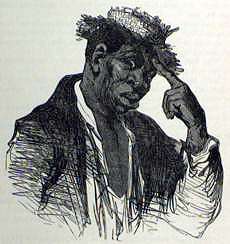
Many modern scholars and readers have criticized the book for condescending racist descriptions of the black characters' appearances, speech, and behavior, as well as the passive nature of Uncle Tom in accepting his fate.[130] The novel's creation and use of common stereotypes about African Americans[12] is significant because Uncle Tom's Cabin was the best-selling novel in the world during the 19th century.[7] As a result, the book (along with illustrations from the book[39] and associated stage productions) played a major role in perpetuating and solidifying such stereotypes into the American psyche.[131][130]
In the 1960s and 1970s, the Black Power and Black Arts Movements attacked the novel, claiming that the character of Uncle Tom engaged in "race betrayal", and that Tom made slaves out to be worse than slave owners.[125]
Among the stereotypes of blacks in Uncle Tom's Cabin[13][15] are the "happy darky" (in the lazy, carefree character of Sam); the light-skinned tragic mulatto as a sex object (in the characters of Eliza, Cassy, and Emmeline); the affectionate, dark-skinned female mammy (through several characters, including Mammy, a cook at the St. Clare plantation); the pickaninny stereotype of black children (in the character of Topsy); and the Uncle Tom, an African American who is too eager to please white people.[53]
Stowe intended Tom to be a "noble hero" and a Christ-like figure who, like Jesus at his crucifixion, forgives the people responsible for his death. The false stereotype of Tom as a "subservient fool who bows down to the white man", and the resulting derogatory term "Uncle Tom", resulted from staged "Tom Shows", which sometimes replaced Tom's grim death with an upbeat ending where Tom causes his oppressors to see the error of their ways, and they all reconcile happily. Stowe had no control over these shows and their alteration of her story.[53]
Anti-Tom literature

In response to Uncle Tom's Cabin, writers in the Southern United States produced a number of books to rebut Stowe's novel.[132]Uncle Tom's Cabin was published in 1852, and very quickly seven Anti-Tom novels were published in 1852 and six more in 1853. This so-called Anti-Tom literature generally took a pro-slavery viewpoint, arguing that the issues of slavery as depicted in Stowe's book were overblown and incorrect.[133] The novels in this genre tended to feature a benign white patriarchal master and a pure wife, both of whom presided over childlike slaves in a benevolent extended family style plantation. The novels either implied or directly stated that African Americans were a childlike people[134] unable to live their lives without being directly overseen by white people.[135]
ในบรรดาหนังสือต่อต้านทอมที่มีชื่อเสียงที่สุด ได้แก่The Sword and the DistaffโดยWilliam Gilmore Simms , Aunt Phillis's CabinโดยMary Henderson EastmanและThe Planter's Northern BrideโดยCaroline Lee Hentz [ 136 ] โดยผู้เขียนคนสุดท้ายเป็นเพื่อนสนิทของสโตว์เมื่อทั้งสองอาศัยอยู่ในซินซินเนติ หนังสือของซิมส์ได้รับการตีพิมพ์ไม่กี่เดือนหลังจากนวนิยายของสโตว์ และมีหลายส่วนและการอภิปรายที่โต้แย้งหนังสือของสโตว์และมุมมองของเธอเกี่ยวกับการเป็นทาส นวนิยายของเฮนซ์ในปี 1854 ซึ่งอ่านกันอย่างแพร่หลายในเวลานั้น แต่ปัจจุบันถูกลืมเลือนไปมาก เสนอการปกป้องการเป็นทาสตามมุมมองของหญิงชาวเหนือ ซึ่งเป็นลูกสาวของนักต่อต้านการเป็นทาสด้วยซ้ำ ที่แต่งงานกับเจ้าของทาสชาวใต้[ 137 ]
ในช่วงทศวรรษระหว่างการตีพิมพ์หนังสือUncle Tom's Cabinและการเริ่มต้นของสงครามกลางเมืองอเมริกามีหนังสือต่อต้านลุงทอมตีพิมพ์ออกมาประมาณยี่สิบถึงสามสิบเล่ม (แม้ว่าจะมีหนังสืออื่นๆ ตีพิมพ์ต่อไปหลังสงคราม รวมถึงThe Leopard's Spotsในปี 1902 โดยThomas Dixon Jr. ซึ่งเป็น "นักเหยียดผิวมืออาชีพ" ) [ 138 ]หนังสือต่อต้านลุงทอมเหล่านี้มากกว่าครึ่งเขียนโดยผู้หญิงผิวขาว โดยซิมส์แสดงความคิดเห็นในบางจุดเกี่ยวกับ "ความยุติธรรมที่ดูเหมือนจะเป็นบทกวีที่ผู้หญิงทางเหนือ (สโตว์) ได้รับการตอบโต้จากผู้หญิงทางใต้" [ 139 ]
การดัดแปลงละคร
ละครและการแสดงของทอม


แม้ว่า นวนิยาย เรื่อง Uncle Tom's Cabinจะเป็นนวนิยายที่ขายดีที่สุดในศตวรรษที่ 19 แต่ชาวอเมริกันในยุคนั้นจำนวนมากกลับดูเรื่องราวนี้ในรูปแบบละครเวทีหรือละครเพลงมากกว่าอ่านหนังสือ[ 140 ]นักประวัติศาสตร์Eric Lottประมาณการว่า "สำหรับทุกๆ หนึ่งคนจากสามแสนคนที่ซื้อนวนิยายในปีแรก จะมีอีกหลายคนที่ได้ดูละครเวทีในที่สุด" [ 141 ]ในปี 1902 มีรายงานว่ามีการแสดงละครเวทีเหล่านี้ไปแล้วถึงหนึ่งในสี่ล้านรอบในสหรัฐอเมริกา[ 142 ]
Given the lax copyright laws of the time, stage plays based on Uncle Tom's Cabin—"Tom shows"—began to appear while the novel was still being serialized. Stowe refused to authorize dramatization of her work because of her distrust of drama, although she eventually saw George L. Aiken's version and, according to Francis Underwood, was "delighted" by Caroline Howard's portrayal of Topsy.[143] Aiken's stage production was the most popular play in the U.S. and Britain for 75 years.[103] Stowe's refusal to authorize a particular dramatic version left the field clear for any number of adaptations, some launched for (various) political reasons and others as simply commercial theatrical ventures.[144][145]
No international copyright laws existed at the time. The book and plays were translated into several languages. Stowe received no money, which could have meant as much as "three-fourths of her just and legitimate wages".[146]
All the Tom shows appear to have incorporated elements of melodrama and blackfaceminstrelsy.[15] These plays varied tremendously in their politics—some faithfully reflected Stowe's sentimentalized antislavery politics, while others were more moderate, or even pro-slavery.[147] Many of the productions featured demeaning racial caricatures of black people;[15] some productions also featured songs by Stephen Foster, including "My Old Kentucky Home", "Old Folks at Home", and "Massa's in the Cold Ground".[140] The best-known Tom shows were those of George Aiken and H. J. Conway.[148]
The many stage variants of Uncle Tom's Cabin "dominated northern popular culture ... for several years" during the 19th century,[149] and the plays were still being performed in the early 20th century.[150]
Films

Uncle Tom's Cabin has been adapted several times as a film. Most of these movies were created during the silent film era (Uncle Tom's Cabin was the most-filmed book of that time period).[151] Because of the continuing popularity of both the book and "Tom" shows, audiences were already familiar with the characters and the plot, making it easier for the film to be understood without spoken words.[151]
The first film version of Uncle Tom's Cabin was one of the earliest full-length movies, although full-length at that time meant between 10 and 14 minutes.[152] This 1903 film, directed by Edwin S. Porter, used white actors in blackface in the major roles and black performers only as extras. This version was evidently similar to many of the "Tom Shows" of earlier decades and featured several stereotypes about blacks, such as having the slaves dance in almost any context, including at a slave auction.[152]
In 1910, a three-reel Vitagraph Company of America production was directed by J. Stuart Blackton and adapted by Eugene Mullin. According to The Dramatic Mirror, this film was "a decided innovation" in motion pictures and "the first time an American company" released a dramatic film in three reels. Until then, full-length movies of the time were 15 minutes long and contained only one reel of film. The movie starred Florence Turner, Mary Fuller, Edwin R. Phillips, Flora Finch, Genevieve Tobin and Carlyle Blackwell, Sr.[153]
At least four more movie adaptations were created in the next two decades. The last silent film version was released in 1927. Directed by Harry A. Pollard, who played Uncle Tom in a 1913 release of Uncle Tom's Cabin, this two-hour movie was more than a year in production and was the third most expensive picture of the silent era, at a cost of $1.8 million. The black actor Charles Gilpin was originally cast in the title role, but he was fired after the studio decided his "portrayal was too aggressive".[154]
For several decades after the end of the silent film era, the subject matter of Stowe's novel was judged too sensitive for further film interpretation. In 1946, Metro-Goldwyn-Mayer considered filming the story but ceased production after protests led by the National Association for the Advancement of Colored People.[155] The story was adapted as a play within the musical film version of The King & I. Within the main story, the character of Anna Leonowens gives Tuptim a copy of the book of Uncle Tom's Cabin. Tuptim relates to the anti-slavery themes of the book, and adapts it in to a traditional Siamese play for a state dinner. In this version, called "The Small House of Uncle Thomas", the characters are re-written as Buddhists. This version eliminates most of the white slave owners as characters, and focuses only on Tom, Simon, Eliza, Eva, and Topsy. Film versions were created overseas in the following decades, including a 1965 German-language version and a TV soap opera in Brazil called A Cabana do Pai Tomás, which ran for 205 episodes from July 1969 to March 1970.[156] The final film version[157] was a television broadcast in 1987, directed by Stan Lathan and adapted by John Gay. It starred Avery Brooks, Phylicia Rashad, Edward Woodward, Jenny Lewis, Samuel L. Jackson and Endyia Kinney.[158]
In addition to film adaptations, versions of Uncle Tom's Cabin have been produced in other formats, including a number of animated cartoons. Uncle Tom's Cabin also influenced movies, including The Birth of a Nation. This controversial 1915 film set the dramatic climax in a slave cabin similar to that of Uncle Tom, where several white Southerners unite with their former enemy (Yankee soldiers) to defend, according to the film's caption, their "Aryan birthright". According to scholars, this reuse of such a familiar image of a slave cabin would have resonated with, and been understood by, audiences of the time.[159][160]
See also
- History of slavery in the United States
- Origins of the American Civil War
- Ramona, an 1884 novel that attempted to do for Native Americans in California what Uncle Tom's Cabin had done for African Americans
- Timeline of the civil rights movement
Further reading
- Aiken, George L. (1993). Uncle Tom's Cabin. Garland.
- Gerould, Daniel C., ed. (1983). American Melodrama. Performing Arts Journal Publications.
- Levine, Robert S.After Uncle Tom's Cabin: Harriet Beecher Stowe and the Quest for Interracial Democracy(forthcoming in January 2027)
- Parfait, Claire (2007). The Publishing History of Uncle's Tom's Cabin, 1852–2002. Aldershot, Hampshire, United Kingdom: Ashgate.
- Reynolds, David S. (2011). Mightier Than the Sword: Uncle Tom's Cabin and the Battle for America. W. W. Norton & Company.
- Stowe, Harriet Beecher; Gates, Henry Louis; Robbins, Hollis (2007). The Annotated Uncle Tom's Cabin. W. W. Norton & Company.
External links


| External videos | |
|---|---|
 Presentation by Reynolds on Mightier Than the Sword: Uncle Tom's Cabin and the Battle for America at the Harriet Beecher Stowe Center, May 19, 2011, C-SPAN Presentation by Reynolds on Mightier Than the Sword: Uncle Tom's Cabin and the Battle for America at the Harriet Beecher Stowe Center, May 19, 2011, C-SPAN |
- Uncle Tom's Cabin at Standard Ebooks
- เว็บไซต์ของมหาวิทยาลัยเวอร์จิเนีย " Uncle Tom's Cabin and American Culture: A Multi-Media Archive" – เรียบเรียงโดย Stephen Railton ครอบคลุมช่วงปี 1830 ถึง 1930 โดยมีลิงก์ไปยังแหล่งข้อมูลปฐมภูมิและบรรณานุกรมเกี่ยวกับภูมิหลังทางวัฒนธรรม ฉบับพิมพ์ต่างๆ และการตอบรับของสาธารณชนต่อนวนิยายที่มีอิทธิพลของ Harriet Beecher Stowe นอกจากนี้ เว็บไซต์ยังให้บริการข้อความฉบับเต็มของหนังสือ คลิปเสียงและวิดีโอ และตัวอย่างสินค้าที่เกี่ยวข้องอีกด้วย
- หนังสือ Uncle Tom's Cabinที่ Project Gutenberg
- หนังสือ Uncle Tom's Cabinมีให้บริการที่ Internet Archiveเป็นฉบับพิมพ์ครั้งแรกที่สแกนและมีภาพประกอบ
 หนังสือเสียงเรื่อง Uncle Tom's Cabinที่เป็นสาธารณสมบัติ มีให้บริการที่ LibriVox

สรุปเนื้อหา
ข้อมูลสำคัญจากบทความ
ข้อมูลสำคัญเกี่ยวกับ กระท่อมลุงทอม
นวนิยาย เรื่อง Uncle Tom's Cabin; or, Life Among the Lowlyเป็น นวนิยาย ต่อต้านการเป็นทาสโดย Harriet Beecher Stowe นักเขียนชาวอเมริกัน ตีพิมพ์เป็นสองเล่มในปี 1852
Sources
Stowe, a Connecticut -born teacher at the Hartford Female Seminary and an active abolitionist, wrote the novel as a response to the passage, in 1850, of the second Fugitive Slave Act .
สิ่งพิมพ์
นวนิยายเรื่อง Uncle Tom's Cabin ตีพิมพ์ครั้งแรกในรูปแบบตอนต่อเนื่อง 40 สัปดาห์ใน The National Era ซึ่งเป็นวารสารต่อต้านการค้าทาส โดยเริ่มจากฉบับวันที่ 5 มิถุนายน พ.ศ.
เอลิซ่าหนีไปพร้อมกับลูกชายของเธอ ส่วนทอมถูกขายทิ้งไป
หนังสือเริ่มต้นด้วย เรื่องราวของอาร์เธอร์ เชลบี ชาวนาจากรัฐ เคนตักกี้ ที่กำลังเผชิญกับการสูญเสียฟาร์มเนื่องจากหนี้สิน แม้ว่าเขาและเอมิลี่ เชลบี ภรรยาของเขาจะเชื่อว่าพวกเขามีความสัมพันธ์ที่ดีกับทาสของตน แต่เชลบีก็ตัดสินใจหาเงินโดยการขายทาสสองคน คือ ลุงทอม...