
หมูป่า

| หมูป่า | |
|---|---|
 | |
| หมูป่าตัวผู้ จากยุโรปกลาง ( S. s. scrofa ) | |
การจำแนกทางวิทยาศาสตร์ | |
| อาณาจักร: | แอนิมอลเลีย |
| ไฟลัม: | คอร์ดาต้า |
| ระดับ: | สัตว์เลี้ยงลูกด้วยนม |
| อินฟราคลาส: | รก |
| คำสั่ง: | สัตว์กีบเท้าคู่ |
| ตระกูล: | วงศ์หมู |
| ประเภท: | ซัส |
| สายพันธุ์: | ส ครอฟา |
| ชื่อทวินาม | |
| ซัส สครอฟา | |
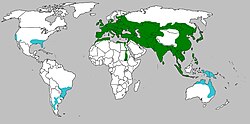 | |
| ขอบเขตถิ่นกำเนิดดั้งเดิมของหมูป่า (สีเขียว) และประชากรที่นำเข้ามา (สีฟ้า) ยกเว้นในแคริบเบียนนิวซีแลนด์แอฟริกาตอนใต้ทะเลทรายซาฮาราและที่อื่นๆ ในเบอร์มิวดาแคนาดาตอนเหนือและอลาสก้า[ 1 ] | |
| คำพ้องความหมาย | |
รายการ
| |
หมูป่า( Sus scrofa ) หรือที่รู้จักกันในชื่อหมูป่า[4] หมูป่าธรรมดา [5] หมูป่าเอเชีย [6] หรือเรียกง่ายๆ ว่าหมูป่า [ 7 ]เป็นสัตว์ในวงศ์หมูที่มีถิ่นกำเนิดในยูเรเซียและแอฟริกาเหนือเป็นส่วนใหญ่และถูกนำเข้าไปในทวีปอเมริกาและโอเชียเนียปัจจุบันสายพันธุ์นี้เป็นหนึ่งในสัตว์เลี้ยงลูกด้วยนมที่มีถิ่นที่อยู่กว้างขวางที่สุดในโลก รวมถึงเป็นสัตว์ในวงศ์หมู ที่มีการแพร่กระจายมากที่สุด [ 5 ]ได้รับการประเมินว่ามีความเสี่ยงต่ำในบัญชีแดงของ IUCNเนื่องจากมีถิ่นที่อยู่กว้างขวาง มีจำนวนมาก และปรับตัวเข้ากับถิ่นที่อยู่หลากหลายได้[ 1 ]อย่างไรก็ตามมันได้กลายเป็นสายพันธุ์รุกรานในบางส่วนของพื้นที่ที่ถูกนำเข้าไป หมูป่าอาจมีต้นกำเนิดในเอเชียตะวันออกเฉียงใต้ในช่วงต้นยุคไพลสโตซีน[ 8 ]และแข่งขันกับสัตว์ในวงศ์หมูชนิดอื่นๆ ได้เมื่อแพร่กระจายไปทั่วโลกเก่า[ 9 ]
ข้อมูล ณ ปี 2548มีการระบุสายพันธุ์ย่อย มากถึง 16 สายพันธุ์ซึ่งแบ่งออกเป็น 4 กลุ่มตามภูมิภาคโดยพิจารณาจากความสูงของกะโหลกและความยาวของกระดูกน้ำตา[ 2 ]สัตว์ชนิดนี้อาศัยอยู่ในสังคมแบบแม่เป็นใหญ่ ซึ่งประกอบด้วยตัวเมียที่มีความสัมพันธ์กันและลูกของพวกมัน (ทั้งตัวผู้และตัวเมีย) ตัวผู้ที่โตเต็มวัยมักจะอยู่โดดเดี่ยวในช่วงนอกฤดูผสมพันธุ์[ 10 ]หมาป่าเป็นผู้ล่าหลักของหมูป่าในพื้นที่ส่วนใหญ่ตามธรรมชาติ ยกเว้นในตะวันออกไกลและหมู่เกาะซุนดาเล็กซึ่งถูกแทนที่ด้วยเสือและมังกรโคโมโดตามลำดับ[ 11 ] [ 12 ]หมูป่ามีประวัติความเป็นมาอันยาวนานที่เกี่ยวข้องกับมนุษย์โดยเป็นบรรพบุรุษของหมูบ้าน ส่วนใหญ่ และเป็นสัตว์ป่าขนาดใหญ่มานานหลายพันปี หมูป่ายังได้ผสมพันธุ์กับหมูป่า อีกครั้งในช่วงไม่กี่ทศวรรษที่ผ่านมา ลูกผสมหมูป่า-หมูเหล่านี้กลายเป็นสัตว์ป่าที่เป็นศัตรูพืชร้ายแรงในทวีปอเมริกาและออสเตรเลีย
ศัพท์เฉพาะ
เนื่องจากหมูป่าแท้ได้สูญพันธุ์ไปจากบริเตนใหญ่ก่อนการพัฒนาภาษาอังกฤษสมัยใหม่จึงมักใช้คำเดียวกันสำหรับทั้งหมูป่าแท้และหมู โดยเฉพาะหมูป่าขนาดใหญ่หรือกึ่งป่า คำว่า boarในภาษาอังกฤษ มาจากคำว่า bārในภาษาอังกฤษโบราณซึ่งเชื่อกันว่ามาจากคำว่า bairในภาษาเยอรมันตะวันตกซึ่งมีที่มาไม่ทราบแน่ชัด[ 13 ] บางครั้ง คำว่า boarถูกใช้เพื่อหมายถึงตัวผู้โดยเฉพาะ และอาจใช้เพื่อหมายถึงหมูบ้านตัวผู้ โดยเฉพาะหมูตัวผู้ที่ใช้ในการผสมพันธุ์ที่ยังไม่ได้ตอน[ 14 ] [ 15 ]
คำว่า "แม่หมู" (Sow)ซึ่งเป็นชื่อดั้งเดิมสำหรับแม่หมู มาจากภาษาอังกฤษโบราณและภาษาเยอรมัน โดยมีที่มาจากภาษาโปรโตอินโด-ยุโรปและมีความเกี่ยวข้องกับคำว่าsus ในภาษาละติน และhusในภาษากรีกโบราณและมีความใกล้เคียงกับคำว่าSauในภาษาเยอรมันชั้นสูงใหม่ มากกว่า ลูกหมูอาจเรียกว่าลูกหมูหรือลูกหมูตัวผู้[ 16 ]
ชื่อเฉพาะของสัตว์ชนิดนี้คือscrofa ซึ่ง มาจากภาษาละตินแปลว่า 'แม่สุกร' [ 17 ]
การล่าสัตว์
ในศัพท์การล่าสัตว์ หมูป่าจะถูกกำหนดชื่อที่แตกต่างกันไปตามอายุ: [ 18 ]
| การกำหนด | อายุ | ภาพ |
|---|---|---|
| สควีกเกอร์ | 0-10 เดือน | 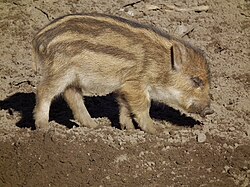 |
| เด็กและเยาวชน | 10–12 เดือน | 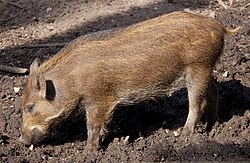 |
| หมูในคอก | ปีที่สอง | |
| หมูป่าอายุ 3/4/5 ปี | ปีที่ 3-5 | 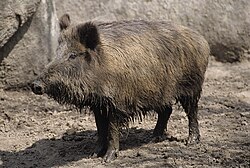 |
| หมูป่าแก่ | ปีที่หก | |
| หมูป่าแก่ตัวใหญ่ | กว่าหกปี |  |
อนุกรมวิธานและวิวัฒนาการ
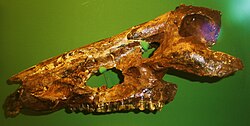
การศึกษา mtDNAบ่งชี้ว่าหมูป่ามีถิ่นกำเนิดจากเกาะต่างๆ ในเอเชียตะวันออกเฉียงใต้ เช่นอินโดนีเซียและฟิลิปปินส์และต่อมาได้แพร่กระจายไปยังแผ่นดินใหญ่ยูเรเซียและแอฟริกาเหนือ[ 8 ]ฟอสซิลที่เก่าแก่ที่สุดของสายพันธุ์นี้พบได้ทั้งในยุโรปและเอเชีย และมีอายุย้อนไปถึงยุคไพลสโตซีนตอนต้น [ 19 ] ในช่วงปลายยุควิลลาฟรานเชียน S. scrofaได้เข้ามาแทนที่S. strozzii ซึ่งเป็นบรรพบุรุษของ S. verrucosusในปัจจุบันที่มีขนาดใหญ่และอาจปรับตัวเข้ากับสภาพแวดล้อมที่เป็นหนองน้ำได้ทั่วทั้งแผ่นดินใหญ่ยูเรเซีย โดยจำกัดให้อยู่เฉพาะในหมู่เกาะเอเชีย[ 9 ]ญาติใกล้ชิดที่สุดของมันคือหมูเคราแห่งมะละกาและเกาะโดยรอบ[ 4 ]
สายพันธุ์ย่อย

ข้อมูล ณ ปี 2548มีการระบุชนิดย่อย 16 ชนิด ซึ่งแบ่งออกเป็น 4 กลุ่มตามภูมิภาค: [ 2 ]
- ตะวันตก:ประกอบด้วยS. s. scrofa , S. s. meridionalis , S. s. algira , S. s. attila , S. s. lybicus , S. s. majoriและS. s. nigripesสายพันธุ์ย่อยเหล่านี้โดยทั่วไปมีกะโหลกสูง (แม้ว่าlybicusและscrofa บางตัว จะมีกะโหลกต่ำ) มีขนชั้นในหนาและ (ยกเว้นscrofaและattila ) แผงคอ ที่พัฒนาไม่ ดี[ 21 ]
- อินเดีย:รวมถึงS. s. davidiและS. s. cristatusสายพันธุ์ย่อยเหล่านี้มีขนชั้นในน้อยหรือไม่มีเลย มีแผงคอยาวและมีแถบเด่นชัดบนจมูกและปาก ในขณะที่S. s. cristatusมีกะโหลกสูงS. s. davidiมีกะโหลกต่ำ[ 21 ]
- ภาคตะวันออก:ประกอบด้วยS. s. sibiricus , S. s. ussuricus , S. s. leucomystax , S. s. riukiuanus , S. s. taivanusและS. s. moupinensisสายพันธุ์ย่อยเหล่านี้มีลักษณะเด่นคือมีแถบสีขาวทอดยาวจากมุมปากไปยังขากรรไกรล่าง ยกเว้นS. s. ussuricusส่วนใหญ่มีกะโหลกสูง ขนชั้นในหนา ยกเว้นในS. s. moupinensisและแผงคอแทบจะไม่มีเลย[ 21 ]
- ภาษาอินโดนีเซีย:มีเพียงS. s. vittatus เท่านั้นที่เป็นตัวแทน โดยมีลักษณะเด่นคือขนตามตัวบาง ไม่มีขนชั้นใน มีแผงคอยาวพอสมควร และมีแถบสีแดงกว้างทอดยาวจากจมูกไปยังด้านข้างของคอ[ 21 ]เป็น กลุ่ม ที่พื้นฐาน ที่สุด ในสี่กลุ่ม โดยมีขนาดสมองสัมพัทธ์ที่เล็กที่สุด มีฟันที่ดั้งเดิมกว่า และโครงสร้างกะโหลกศีรษะที่ไม่เฉพาะเจาะจง[ 22 ]
| สายพันธุ์ | สายพันธุ์ย่อย | ||||||
|---|---|---|---|---|---|---|---|
| อนุกรมวิธานแบบชนิดเดียว | อนุกรมวิธานแปดชนิด | ชื่อสามัญและชื่อวิทยาศาสตร์ | ภาพ | อำนาจไตรนาม | คำอธิบาย | พิสัย | คำพ้องความหมาย |
| หมูป่าS. scrofa | หมูป่าเหนือS. scrofa | หมูป่ายุโรปกลาง S. s. scrofa ชนิดย่อยต้นแบบ | 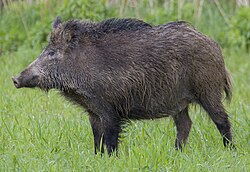 | ลินเนียส, 1758 | สายพันธุ์ย่อยขนาดกลาง ขนสีน้ำตาลเข้มถึงน้ำตาลสนิม มีกระดูกน้ำตาที่ยาวและค่อนข้างแคบ[ 4 ] | พื้นที่ส่วนใหญ่ของทวีปยุโรปและขยายไปถึงยูเรเซีย |
|
| หมูป่าทรานส์ไบคาลS. s. ซิบิริคัส | สตาฟเฟ่, 1922 | เป็นสายพันธุ์ย่อยที่เล็กที่สุดของอดีต ภูมิภาค โซเวียตมีขนสีน้ำตาลเข้มเกือบดำ และมีแถบสีเทาอ่อนทอดยาวจากแก้มถึงหู กะโหลกศีรษะเป็นรูปสี่เหลี่ยมจัตุรัส และกระดูกน้ำตาขนาดสั้น[ 4 ] | ภูมิภาคทะเลสาบไบคาลทรานไบคาเลียทางตอนเหนือและตะวันออกเฉียงเหนือของมองโกเลีย | raddeanus (Adlerberg, 1930) | |||
| หมูป่าอุสซูริS. s. ussuricus | เฮอเดอ, 1888 | สายพันธุ์ย่อยที่ใหญ่ที่สุด มักจะมีขนสีเข้มและแถบสีขาวทอดยาวจากมุมปากถึงหู กระดูกน้ำตาจะสั้นลง แต่ยาวกว่าของS. s. sibiricus [ 4 ] | จีนตะวันออกเกาหลีอุซูรีและอ่าวอามูร์ | canescens (Heude, 1888), continentalis (Nehring, 1889), coreanus (Heude, 1897), gigas (Heude, 1892), mandchuricus (Heude, 1897), songaricus (Heude, 1897) | |||
| หมูป่าแอฟริกาเหนือ S. s. algirusหรือ S. algirus |  | โลเช่, 1867 | บางครั้งถือว่าเป็นชื่อพ้องรองของS. s. scrofaแต่มีขนาดเล็กกว่าและมีงาที่ยาวกว่าตามสัดส่วน[ 37 ] | ตูนิเซียแอลจีเรียและโมร็อกโก | บาร์บารัส (สเคลเตอร์, 1860) sahariensis (ไฮม์ เดอ บัลซัค, 1937) | ||
| หมูป่าเมดิเตอร์เรเนียนS. meridionalis | หมูป่ามาเรมมัน S. s. majoriหรือ S. m. major |  | เดอ โบซ์ และ เฟสต้า, 1927 | มีขนาดเล็กกว่าS. s. scrofaโดยมีกะโหลกที่สูงและกว้างกว่า ตั้งแต่ทศวรรษ 1950 เป็นต้นมา มีการผสมข้ามพันธุ์กับS. s. scrofaอย่างกว้างขวาง ส่วนใหญ่เป็นเพราะทั้งสองชนิดถูกเลี้ยงไว้ด้วยกันในฟาร์มเลี้ยงสัตว์เพื่อการบริโภคเนื้อ และการนำเข้าโดยนักล่าของตัวอย่างS. s. scrofa เข้าไปใน แหล่งที่อยู่อาศัยของ S. s. majori [ 38 ]การแยกออกจากS. s. scrofa นั้น เป็นที่น่าสงสัย[ 39 ] | มาเรมมา (ภาคกลางของอิตาลี) | ||
| หมูป่า Tyrrhenian S. s. meridionalisหรือS. m. เส้นเมอริเดียนลิส |  | ฟอร์ไซธ์ เมเจอร์, 1882 | สายพันธุ์ย่อยนี้มีขนาดเล็กกว่าS. s. scrofa อย่างเห็นได้ชัด ขนมีสีน้ำตาลอมเขียวอ่อน ขนชั้นในบางเบา และส่วนใหญ่ไม่มีแผงคอ[ 40 ] | อันดาลูเซียคอร์ซิกาและซาร์ดิเนีย | เบติคัส (โทมัส, 1912) ซาร์ดัส (สโตรเบล, 1882) | ||
| หมูป่าเท้าดำS. nigripes | หมูป่าคาร์พาเทียนS. s. attilusหรือS. n. attilus |  | โทมัส, 1912 | สายพันธุ์ย่อยขนาดใหญ่ที่มีกระดูกน้ำตายาวและขนสีเข้ม แม้ว่าจะมีสีอ่อนกว่าS. s. scrofa ก็ตาม[ 4 ] | โรมาเนีย , ฮังการี , ยูเครน , บอลข่าน , คอเค ซัส , ทรานส์คอเคซัส , ชายฝั่งทะเล แคสเปียน , เอเชียไมเนอร์และอิหร่าน ตอนเหนือ | falzfeini (Matschie, 1918) | |
| หมูป่าเอเชียกลาง S. s. davidiหรือ S. n. davidi | 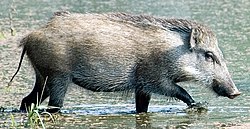 | โกรฟส์, 1981 | สายพันธุ์ย่อยขนาดเล็กที่มีแผงคอยาวและสีน้ำตาลอ่อน[ 41 ] | จากปากีสถานและอินเดียตะวันตกเฉียงเหนือ ไปจนถึงอิหร่านตะวันออกเฉียงใต้ | |||
| หมูป่าอนาโตเลีย S. s. libycusหรือ S. n. lybicus | 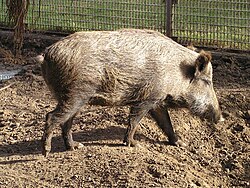 | เกรย์, 1868 | สายพันธุ์ย่อยขนาดเล็ก ซีด และแทบไม่มีแผงคอ[ 41 ] | ทรานส์คอเคซัสตุรกีเลแวนต์และอดีตยูโกสลาเวีย | lybicus (Groves, 1981) mediterraneus (Ulmansky, 1911) reiseri (โบลเคย์, 1925) | ||
| หมูป่าจีนเหนือ S. s. moupinensisหรือ S. n. moupinensis |  | มิลน์-เอ็ดเวิร์ดส์, 1871 | มีความแตกต่างอย่างมีนัยสำคัญภายในสายพันธุ์ย่อยนี้ และเป็นไปได้ว่าจริงๆ แล้วมีสายพันธุ์ย่อยหลายสายพันธุ์ที่เกี่ยวข้อง[ 41 ] | ชายฝั่งจีนตอนใต้ไปจนถึงเวียดนามและไปทางตะวันตกถึงเสฉวน | acrocranius (Heude, 1892), chirodontus (Heude, 1888), chirodonticus (Heude, 1899), collinus (Heude, 1892), curtidens (Heude, 1892), dicrurus (Heude, 1888), flavescens (Heude, 1899), frontosus (Heude, 1892), laticeps (Heude, 1892), leucorhinus (Heude, 1888), melas (Heude, 1892), microdontus (Heude, 1892), oxyodontus (Heude, 1888), paludosus (Heude, 1892), palustris (Heude, 1888), planiceps (Heude, 1892), scrofoides (Heude, 1892), spatharius (Heude, 1892), taininensis (Heude, 1888) | ||
| หมูป่าเอเชียกลางS. s. nigripesหรือS. n. nigripes | แบลนฟอร์ด, 1875 | สายพันธุ์ย่อยสีอ่อนที่มีขาสีดำ ซึ่งแม้จะมีขนาดแตกต่างกัน แต่โดยทั่วไปค่อนข้างใหญ่ กระดูกน้ำตาและบริเวณใบหน้าของกะโหลกศีรษะสั้นกว่าของS. s. scrofaและS. s. attila [ 4 ] | เอเชียกลางคาซัคสถานเทือกเขาเทียนซานตะวันออกมองโกเลียตะวันตกคัชการ์และอาจรวมถึงอัฟกานิสถานและอิหร่านตอนใต้ ด้วย | ||||
| หมูป่าอินเดีย S. s. cristatusหรือ S. cristatus | 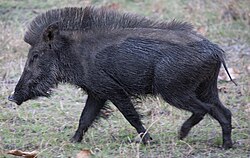 | วากเนอร์, 1839 | สายพันธุ์ย่อยที่มีแผงคอยาวและมีขนสีดำลายด่าง ซึ่งแตกต่าง จาก S. s. davidi [ 41 ]มีโครงสร้างที่เบากว่าS. s. scrofaหัวของมันใหญ่กว่าและแหลมกว่าS. s. scrofaและหูของมันเล็กกว่าและแหลมกว่า ระนาบหน้าผากตรง ในขณะที่ของS. s. scrofaเว้า[ 42 ] | อินเดียเนปาลพม่าไทยตะวันตกปากีสถานและศรีลังกา | affinis (Gray, 1847), aipomus (Gray, 1868), aipomus (Hodgson, 1842), bengalensis (Blyth, 1860), indicus (Gray, 1843), isonotus (Gray, 1868), isonotus (Hodgson, 1842), jubatus (Miller, 1906) typicus (Lydekker, 1900), zeylonensis (ไบลท์, 1851) | ||
| หมูป่าญี่ปุ่นS. leucomystax | หมูป่าฮอนชู S. s. leucomystaxหรือ S. l. leucomystax | 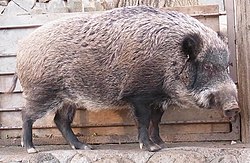 | เทมมินค์, 1842 | สายพันธุ์ย่อยขนาดเล็ก แทบไม่มีแผงคอ สีเหลืองน้ำตาล[ 41 ] | ทั่วประเทศญี่ปุ่นยกเว้นฮอกไกโดและหมู่เกาะริวกิว | จาโปนิกา (เนห์ริง, 1885) นิปโปนิคัส (เฮอเด, 1899) | |
| หมูป่าริวกิวS. s. riukiuanusหรือS. l. riukiuanus | 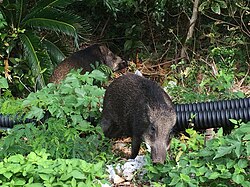 | คุโรดะ, 1924 | สายพันธุ์ย่อยขนาดเล็ก[ 41 ] | หมู่เกาะริวกิว | |||
| หมูป่าฟอร์โมซาS. s. taivanusหรือS. taivanus |  | สวินโฮ, 1863 | สายพันธุ์ย่อยสีดำขนาดเล็ก[ 41 ] | ไต้หวัน | |||
| หมูลายแถบ S. s. vittatusหรือ S. vittatus |  | โบอี, 1828 | เป็นสายพันธุ์ย่อยขนาดเล็ก หน้าสั้น และมีขนบาง มีแถบสีขาวที่จมูก อาจเป็นสายพันธุ์ที่แยกต่างหากและมีความคล้ายคลึงกับสายพันธุ์หมูอื่นๆ ในเอเชียตะวันออกเฉียงใต้[ 41 ] | จากคาบสมุทรมาเลเซียและในอินโดนีเซีย ตั้งแต่เกาะสุมาตราและเกาะชวาไปทางตะวันออกจนถึงเกาะโคโมโด | andersoni (Thomas and Wroughton, 1909), jubatulus (Miller, 1906), milleri (Jentink, 1905), pallidiloris (Mees, 1957), peninsularis (Miller, 1906), rhionis (Miller, 1906), typicus (Heude, 1899) | ||
การเลี้ยงให้เชื่อง
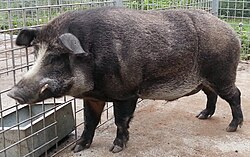
ยกเว้นหมูบ้านในติมอร์และปาปัวนิวกินี (ซึ่งดูเหมือนจะเป็น สายพันธุ์ หมูหูดสุลาเวซี ) หมูป่าเป็นบรรพบุรุษของหมู ส่วนใหญ่ [ 22 ] [ 43 ] หลักฐานทาง โบราณคดีชี้ให้เห็นว่าหมูถูกเลี้ยงจากหมูป่าตั้งแต่ช่วง 13,000–12,700 ปีก่อนคริสตกาลในตะวันออกใกล้ในลุ่มแม่น้ำไทกริส[ 44 ]โดยมีการจัดการในป่าในลักษณะที่คล้ายกับการจัดการของชาวปาปัวนิวกินีในปัจจุบัน[ 45 ]ซากหมูมีอายุเก่าแก่กว่า 11,400 ปีก่อน คริสตกาลในไซปรัสสัตว์เหล่านั้นต้องถูกนำเข้ามาจากแผ่นดินใหญ่ ซึ่งบ่งชี้ว่ามีการเลี้ยงในแผ่นดินใหญ่ที่อยู่ติดกันในเวลานั้น[ 46 ]นอกจากนี้ยังมีการเลี้ยงแยกต่างหากในประเทศจีน ซึ่งเกิดขึ้นเมื่อประมาณ 8,000 ปีที่แล้ว[ 47 ] [ 48 ]
หลักฐาน ดีเอ็นเอจากซากดึกดำบรรพ์ของฟันและกระดูกขากรรไกรของหมูยุคหินใหม่แสดงให้เห็นว่าหมูบ้านตัวแรกในยุโรปถูกนำมาจากตะวันออกใกล้ ซึ่งกระตุ้นให้เกิดการเลี้ยงหมูป่าพื้นเมืองของยุโรป ส่งผลให้เกิดการเลี้ยงครั้งที่สาม โดยยีนจากตะวันออกใกล้ได้สูญหายไปจากสายพันธุ์หมูในยุโรป หมูบ้านในปัจจุบันเกี่ยวข้องกับการแลกเปลี่ยนที่ซับซ้อน โดยสายพันธุ์หมูบ้านของยุโรปถูกส่งออกไปยังตะวันออกใกล้โบราณ[ 49 ] [ 50 ]บันทึกทางประวัติศาสตร์ระบุว่าหมูเอเชียถูกนำเข้ามาในยุโรปในช่วงศตวรรษที่ 18 และต้นศตวรรษที่ 19 [ 47 ]หมูบ้านมักจะมีสะโพกที่พัฒนามากกว่าบรรพบุรุษหมูป่ามาก จนถึงจุดที่ 70% ของน้ำหนักตัวกระจุกตัวอยู่ที่ส่วนท้าย ซึ่งตรงกันข้ามกับหมูป่าที่กล้ามเนื้อส่วนใหญ่กระจุกตัวอยู่ที่หัวและไหล่[ 51 ]
ชนิดที่เหมือนกัน
หมูเฮอเด ( Sus bucculentus ) หรือที่รู้จักกันในชื่อหมูหูดอินโดจีนหรือหมูหูดเวียดนาม เป็นหมูสายพันธุ์หนึ่งที่ถูกกล่าวอ้างว่าพบในลาวและเวียดนามแทบไม่เป็นที่รู้จักและเกรงว่าจะสูญพันธุ์จนกระทั่งมีการค้นพบกะโหลกของหมูที่เพิ่งถูกฆ่าในเทือกเขาอันนามิตประเทศลาว ในปี 1995 [ 52 ]การศึกษาต่อมาบ่งชี้ว่าSus bucculentusไม่ใช่สายพันธุ์ที่ถูกต้อง[ 53 ] [ 54 ] [ 55 ]ณ ปี 2022 ฐานข้อมูลความหลากหลายของสัตว์เลี้ยงลูกด้วยนมได้รวมมันไว้ในSus scrofa [ 6 ]
คำอธิบาย
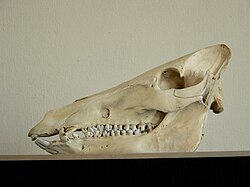
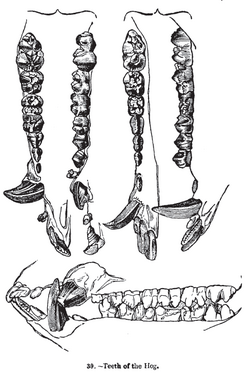
The wild boar is a bulky, massively built suid with short and relatively thin legs. The trunk is short and robust, while the hindquarters are comparatively underdeveloped. The region behind the shoulder blades rises into a hump and the neck is short and thick to the point of being nearly immobile. The animal's head is very large, taking up to one-third of the body's entire length.[4] The structure of the head is well suited for digging. The head acts as a plough, while the powerful neck muscles allow the animal to upturn considerable amounts of soil:[56] it is capable of digging 8–10 cm (3–4 in) into frozen ground and can upturn rocks weighing 40–50 kg (88–110 lb).[11] The eyes are small and deep-set and the ears long and broad. The species has well developed canine teeth, which protrude from the mouths of adult males. The medial hooves are larger and more elongated than the lateral ones and are capable of quick movements.[4] The animal can run at a maximum speed of 40 km/h (25 mph) and jump at a height of 140–150 cm (55–59 in).[11]
Sexual dimorphism is very pronounced in the species, with males being typically 5–10% larger and 20–30% heavier than females. Males also sport a mane running down the back, which is particularly apparent during autumn and winter.[57] The canine teeth are also much more prominent in males and grow throughout life. The upper canines are relatively short and grow sideways early in life, though they gradually curve upwards. The lower canines are much sharper and longer, with the exposed parts measuring 10–12 cm (3.9–4.7 in) in length. In the breeding period, males develop a coating of subcutaneous tissue, which may be 2–3 cm (0.79–1.18 in) thick, extending from the shoulder blades to the rump, thus protecting vital organs during fights. Males sport a roughly chicken egg–sized sac of unclear function near the opening of the penis that collects urine and emits a sharp odour.[4]
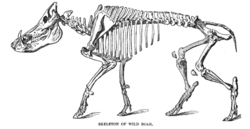

ขนาดและน้ำหนักของหมูป่าตัวเต็มวัยส่วนใหญ่ถูกกำหนดโดยปัจจัยด้านสิ่งแวดล้อม หมูป่าที่อาศัยอยู่ในพื้นที่แห้งแล้งที่มีผลผลิตน้อยมักจะมีขนาดเล็กกว่าหมูป่าที่อาศัยอยู่ในพื้นที่ที่มีอาหารและน้ำอุดมสมบูรณ์ ในยุโรป ส่วนใหญ่ ตัวผู้มีน้ำหนัก เฉลี่ย 75–100 กิโลกรัม (165–220 ปอนด์) ความสูงที่ไหล่75–80 เซนติเมตร (30–31 นิ้ว) และ ความยาวลำตัว 150 เซนติเมตร (59 นิ้ว) ในขณะที่ตัวเมียมีน้ำหนักเฉลี่ย60–80 กิโลกรัม( 130–180 ปอนด์) ความสูงที่ไหล่70 เซนติเมตร (28 นิ้ว) และ ความยาวลำตัว140 เซนติเมตร (55 นิ้ว) ใน ภูมิภาคเมดิเตอร์เรเนียน ของยุโรป ตัวผู้มีน้ำหนักเฉลี่ยต่ำถึง50 กิโลกรัม (110 ปอนด์)และตัวเมีย45 กิโลกรัม (99 ปอนด์)โดยมีความสูงที่ไหล่63–65 เซนติเมตร(25–26 นิ้ว)ในพื้นที่ที่มีความอุดมสมบูรณ์มากกว่าในยุโรปตะวันออกตัวผู้มีน้ำหนัก เฉลี่ย 110–130 กิโลกรัม (240–290 ปอนด์)ความสูงที่ไหล่95 เซนติเมตร (37 นิ้ว) และความยาวลำตัว 160 เซนติเมตร (63 นิ้ว)ในขณะที่ตัวเมียมีน้ำหนัก95 กิโลกรัม (209 ปอนด์)ความ สูงที่ไหล่ 85–90 เซนติเมตร (33–35 นิ้ว)และ ความยาวลำตัว 145 เซนติเมตร (57 นิ้ว)ใน ยุโรป ตะวันตกและยุโรปกลางตัวผู้ที่ใหญ่ที่สุดมีน้ำหนัก200 กิโลกรัม (440 ปอนด์)และตัวเมีย120 กิโลกรัม (260 ปอนด์)ในเอเชียตะวันออกเฉียงเหนือ ตัวผู้ขนาดใหญ่สามารถมีขนาดเท่าหมีสีน้ำตาล โดยมีน้ำหนัก 270 กิโลกรัม (600 ปอนด์)และความสูงที่ไหล่110–118 เซนติเมตร (43–46 นิ้ว)มีการบันทึกว่าผู้ชายวัยผู้ใหญ่บางคนในPrimorsky KraiและManchuria มีน้ำหนัก 300–350 กก. (660–770 ปอนด์)และมี ความสูงที่ไหล่ 125 ซม. (49 นิ้ว)ผู้ใหญ่ที่มีขนาดเท่านี้โดยทั่วไปจะไม่ถูกหมาป่าล่า[ 58 ]สัตว์ยักษ์เช่นนี้หายากในยุคปัจจุบัน เนื่องจากการล่าสัตว์มากเกินไปในอดีตทำให้สัตว์เหล่านี้ไม่สามารถเติบโตได้เต็มที่[ 4 ]
ขนฤดูหนาวประกอบด้วยขนแข็งยาวและหยาบปกคลุมด้วยขนอ่อนนุ่มสีน้ำตาลสั้น ความยาวของขนแข็งเหล่านี้แตกต่างกันไปตามลำตัว โดยขนที่สั้นที่สุดจะอยู่รอบใบหน้าและแขนขา และขนที่ยาวที่สุดจะอยู่ตามหลัง ขนแข็งที่หลังเหล่านี้ก่อตัวเป็นแผงคอที่กล่าวถึงข้างต้น ซึ่งเด่นชัดในตัวผู้และจะตั้งตรงเมื่อสัตว์ตื่นตระหนก สีขนมีความหลากหลายมาก ตัวอย่างที่อยู่รอบทะเลสาบ Balkhashมีสีอ่อนมาก และอาจเป็นสีขาว ในขณะที่หมูป่าบางตัวจากเบลารุสและอุสซูริแลนด์อาจมีสีดำ บางสายพันธุ์ย่อยมีแถบสีอ่อนวิ่งไปด้านหลังจากมุมปาก สีขนยังแตกต่างกันไปตามอายุ โดยลูกหมูจะมีขนสีน้ำตาลอ่อนหรือสีน้ำตาลสนิมพร้อมแถบสีอ่อนที่ทอดยาวจากสีข้างและหลัง[ 4 ]
หมูป่าสามารถส่งเสียงได้หลายแบบ ซึ่งแบ่งออกได้เป็นสามประเภท:
- เสียงเรียกติดต่อ : เสียงครวญครางซึ่งมีความเข้มข้นแตกต่างกันไปตามสถานการณ์[ 59 ]ตัวผู้ที่โตเต็มวัยมักจะเงียบ ในขณะที่ตัวเมียมักจะครวญคราง และลูกหมูจะร้องเสียงคราง[ 4 ]เมื่อกินอาหาร หมูป่าจะแสดงความพึงพอใจด้วยการส่งเสียงคราง การศึกษาแสดงให้เห็นว่าลูกหมูเลียนแบบเสียงของแม่ ดังนั้นลูกหมูแต่ละครอกอาจมีเสียงร้องที่เป็นเอกลักษณ์[ 59 ]
- เสียงเตือนภัย : เสียงร้องเตือนที่เปล่งออกมาเพื่อตอบสนองต่อภัยคุกคาม[ 59 ]เมื่อตกใจ หมูป่าจะส่งเสียงฮึ่มฮั่มดังๆอุกห์! อุกห์!หรือส่งเสียงกรีดร้องที่ถอดเสียงเป็นกู-กู-กู[ 4 ]
- เสียงร้องต่อสู้ : เสียงร้องแหลมสูง[ 59 ]
ประสาทรับกลิ่น ของมัน พัฒนาได้ดีมากจนถึงขั้นที่สัตว์ชนิดนี้ถูกนำมาใช้ในการตรวจจับยาเสพติดในประเทศเยอรมนี[ 60 ]การได้ยินของมันก็เฉียบคมเช่นกัน แม้ว่าการมองเห็นจะค่อนข้างอ่อนแอ[ 4 ]ขาดการมองเห็นสี[ 60 ]และไม่สามารถจดจำมนุษย์ที่ยืนอยู่ได้ในระยะ10–15 เมตร (33–49 ฟุต) [ 11 ]
หมูเป็นหนึ่งในสี่กลุ่มสัตว์เลี้ยงลูกด้วยนมที่ทราบกันว่ามีการกลายพันธุ์ในตัวรับอะเซทิลโคลีนนิโคตินิกที่ป้องกันพิษงูพังพอน แบด เจอร์น้ำผึ้งเม่นและหมู ล้วนมีการดัดแปลงในช่องตัวรับซึ่งป้องกันไม่ให้ สารพิษ α-neurotoxin ของงู จับตัวกัน การกลายพันธุ์เหล่านี้แสดงถึงการกลายพันธุ์ที่แยกจากกันสี่แบบ[ 61 ]
พฤติกรรมทางสังคมและวัฏจักรชีวิต
Boars are typically social animals, living in female-dominated sounders consisting of barren sows and mothers with young led by an old matriarch. Male boars leave their sounder at the age of 8–15 months, while females either remain with their mothers or establish new territories nearby. Subadult males may live in loosely knit groups, while adult and elderly males tend to be solitary outside the breeding season.[10][a]
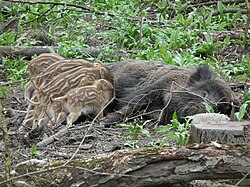
The breeding period in most areas lasts from November to January, though most mating only lasts a month and a half. Prior to mating, the males develop their subcutaneous armour in preparation for confronting rivals. The testicles double in size and the glands secrete a foamy yellowish liquid. Once ready to reproduce, males travel long distances in search of a sounder of sows, eating little on the way. Once a sounder has been located, the male drives off all young animals and persistently chases the sows. At this point, the male fiercely fights potential rivals.[4] A single male can mate with 5–10 sows.[11] By the end of the rut, males are often badly mauled and have lost 20% of their body weight,[4] with bite-induced injuries to the penis being common.[63] The gestation period varies according to the age of the expecting mother. For first-time breeders, it lasts 114–130 days, while it lasts 133–140 days in older sows. Farrowing occurs between March and May, with litter sizes depending on the age and nutrition of the mother. The average litter consists of 4–6 piglets, with the maximum being 10–12.[4][b] The piglets are whelped in a nest constructed from twigs, grasses and leaves. Should the mother die prematurely, the piglets are adopted by the other sows in the sounder.[65]

Newborn piglets weigh around 600–1,000 grams, lacking underfur and bearing a single milk incisor and canine on each half of the jaw.[4] There is intense competition between the piglets over the most milk-rich nipples, as the best-fed young grow faster and have stronger constitutions.[65] The piglets do not leave the lair for their first week of life. Should the mother be absent, the piglets lie closely pressed to each other. By two weeks of age, the piglets begin accompanying their mother on her journeys. Should danger be detected, the piglets take cover or stand immobile, relying on their camouflage to keep them hidden. The neonatal coat fades after three months, with adult colouration being attained at eight months. Although the lactation period lasts 2.5–3.5 months, the piglets begin displaying adult feeding behaviours at the age of 2–3 weeks. The permanent dentition is fully formed by 1–2 years. With the exception of the canines in males, the teeth stop growing during the middle of the fourth year. The canines in old males continue to grow throughout their lives, curving strongly as they age. Sows attain sexual maturity at the age of one year, with males attaining it a year later. However, estrus usually first occurs after two years in sows, while males begin participating in the rut after 4–5 years, as they are not permitted to mate by the older males.[4] The maximum lifespan in the wild is 10–14 years, though few specimens survive past 4–5 years.[66] Boars in captivity have lived for 20 years.[11]
Behaviour and ecology
Habitat and sheltering

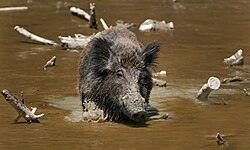
The wild boar inhabits a diverse array of habitats from boreal taigas to deserts.[4] In mountainous regions, it can even occupy alpine zones, occurring up to 1,900 m (6,200 ft) in the Carpathians, 2,600 m (8,500 ft) in the Caucasus and up to 3,600–4,000 m (11,800–13,100 ft) in the mountains in Central Asia and Kazakhstan.[4] In order to survive in a given area, wild boars require a habitat fulfilling three conditions: heavily brushed areas providing shelter from predators, water for drinking and bathing purposes and an absence of regular snowfall.[67]
The main habitats favored by boars in Europe are deciduous and mixed forests, with the most favorable areas consisting of forest composed of oak and beech enclosing marshes and meadows. In the Białowieża Forest, the animal's primary habitat consists of well-developed broad-leaved and mixed forests, along with marshy mixed forests, with coniferous forests and undergrowths being of secondary importance. Forests made up entirely of oak groves and beeches are used only during the fruit-bearing season. This is in contrast to the Caucasian and Transcaucasian mountain areas, where boars will occupy such fruit-bearing forests year-round. In the mountainous areas of the Russian Far East, the species inhabits nutpine groves, hilly mixed forests where Mongolian oak and Korean pine are present, swampy mixed taiga and coastal oak forests. In Transbaikalia, boars are restricted to river valleys with nut pine and shrubs. Boars are regularly encountered in pistachio groves in winter in some areas of Tajikistan and Turkmenistan, while in spring they migrate to open deserts; boar have also colonized deserts in several areas they have been introduced to.[4][67][68]
On the islands of Komodo and Rinca, the boar mostly inhabits savanna or open monsoon forests, avoiding heavily forested areas unless pursued by humans.[12] Wild boar are known to be competent swimmers, capable of covering long distances. In 2013, one boar was reported to have completed the 11-kilometre (7 mi) swim from France to Alderney in the Channel Islands. Due to concerns about disease, it was shot and incinerated.[69]
Wild boar rest in shelters, which contain insulating material like spruce branches and dry hay. These resting places are occupied by whole families (though males lie separately) and are often located in the vicinity of streams, in swamp forests and in tall grass or shrub thickets. Boars never defecate in their shelters and will cover themselves with soil and pine needles when irritated by insects.[11]
Diet

The wild boar is a highly versatile omnivore, whose diversity in choice of food is comparable to that of humans.[56] Its foods can be divided into four categories:
- Rhizomes, roots, tubers and bulbs, all of which it digs up throughout the year.[4]
- Nuts, berries and seeds, which it digs up from under the snow when necessary and consumes when ripened.[4]
- Leaves, bark, twigs and shoots, along with garbage.[4]
- In warm periods, it eats earthworms, insects, mollusks, fish, rodents, insectivores, bird eggs, lizards, snakes, frogs and carrion.[4]
หมูป่า ที่มีน้ำหนัก 50 กิโลกรัม (110 ปอนด์)ต้องการอาหารประมาณ 4,000–4,500 แคลอรี่ต่อวัน แม้ว่าปริมาณที่ต้องการจะเพิ่มขึ้นในช่วงฤดูหนาวและช่วงตั้งครรภ์[ 56 ]โดยอาหารส่วนใหญ่ประกอบด้วยอาหารที่ขุดขึ้นมาจากพื้นดิน เช่น พืชใต้ดินและสัตว์ที่ขุดรู[ 4 ] ลูกโอ๊กและลูกบีชเป็นอาหารที่สำคัญที่สุดของหมูป่าในเขตอบอุ่น [ 70 ] เนื่องจากอุดมไปด้วยคาร์โบไฮเดรตที่จำเป็นสำหรับการสะสมไขมันสำรองที่จำเป็นต่อการอยู่รอดในช่วงที่ขาดแคลน อาหาร [ 56 ]ในยุโรปตะวันตก พืชใต้ดินที่หมูป่าชื่นชอบ ได้แก่เฟิร์นผักชีฝรั่งหัวพืช รากและหัวของหญ้าทุ่ง และหัวของพืชผลทางการเกษตร อาหารดังกล่าวเป็นที่นิยมในช่วงต้นฤดูใบไม้ผลิและฤดูร้อน แต่ก็อาจกินได้ในฤดูใบไม้ร่วงและฤดูหนาวในช่วงที่ผลผลิตลูกบีชและลูกโอ๊กล้มเหลว หากอาหารป่าปกติเริ่มขาดแคลน หมูป่าจะกินเปลือกไม้และเห็ดรารวมถึงเข้าไปในไร่มันฝรั่งและอาร์ติโชค ที่ปลูกไว้ [ 4 ]การรบกวนดินและการหาอาหารของหมูป่าได้รับการพิสูจน์แล้วว่าช่วยส่งเสริมพืชรุกราน[ 71 ] [ 72 ]หมูป่า สายพันธุ์ vittatusในอุทยานแห่งชาติอูจุงกูลอนในเกาะชวาแตกต่างจากประชากรส่วนใหญ่ตรงที่พวกมันกินผลไม้เป็นหลัก ซึ่งประกอบด้วยผลไม้ 50 ชนิด โดยเฉพาะมะเดื่อทำให้พวกมันเป็นผู้กระจายเมล็ดพันธุ์ที่สำคัญ[ 5 ]หมูป่าสามารถกินพืชมีพิษ หลายสกุล ได้โดยไม่เกิดผลเสียใดๆ รวมถึงAconitum , Anemone , Calla , Caltha , FerulaและPteridium [ 11 ]
Boars may occasionally prey on small vertebrates like newborn deer fawns, leporids and galliform chicks, as well as small calves, lambs and other livestock.[56] Boars inhabiting the Volga Delta and near some lakes and rivers of Kazakhstan have been recorded to feed extensively on fish like carp and Caspian roach. Boars in the former area also feed on cormorant and heron chicks, bivalved molluscs, trapped muskrats and mice.[4] There is at least one record of a wild boar killing and eating a bonnet macaque in southern India's Bandipur National Park, though this may have been a case of intraguild predation, brought on by interspecific competition for human handouts.[73] There is also at least one recorded case of a group of wild boar attacking, killing, and eating an adult, healthy female axis deer (Axis axis) as a pack.[74]
Stable isotope analysis of fossil wild boar tooth enamel from the late Middle Pleistocene found in Thailand indicate that it fed on a versatile mixed vegetation.[75]
Predators
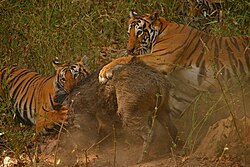
Piglets are vulnerable to attack from medium-sized felids like Eurasian lynx (Lynx lynx), jungle cats (Felis chaus), and snow leopards (Panthera uncia), as well as other carnivorans like brown bears (Ursus arctos) and yellow-throated martens (Martes flavigula).[4]
The wolf (Canis lupus) is the main predator of wild boar throughout most of its range. A single wolf can kill around 50 to 80 boars of differing ages in one year.[4] In Italy[76] and Belarus' Belovezhskaya Pushcha National Park, boars are the wolf's primary prey, despite an abundance of alternative, less powerful ungulates.[76] Wolves are particularly threatening during the winter, when deep snow impedes the boars' movements. In the Baltic regions, heavy snowfall can allow wolves to eliminate boars from an area almost completely. Wolves primarily target piglets and subadults and only rarely attack adult sows. Adult males are usually avoided entirely.[4]Dholes (Cuon alpinus) may also prey on boars, to the point of keeping their numbers down in northwestern Bhutan, despite there being many more cattle in the area.[77]
Leopards (Panthera pardus) are predators of wild boar in the Caucasus (particularly Transcaucasia), the Russian Far East, India, China[78] and Iran. In most areas, boars constitute only a small part of the leopard's diet. However, in Iran's Sarigol National Park, boars are the second most frequently targeted prey species after mouflon (Ovis gmelini), though adult individuals are generally avoided, as they are above the leopard's preferred weight range of 10–40 kg (22–88 lb).[79] This dependence on wild boar is largely due in part to the local leopard subspecies' large size.[80]
หมูป่าทุกวัยเคยเป็นเหยื่อหลักของเสือ ( Panthera tigris ) ในทรานส์คอเคซัส คาซัคสถาน เอเชียกลาง และตะวันออกไกล จนกระทั่งถึงปลายศตวรรษที่ 19 ในปัจจุบัน จำนวนเสือมีน้อยเกินไปที่จะมีผลกระทบต่อประชากรหมูป่า เสือตัวเดียวสามารถทำลายฝูงหมูป่าทั้งฝูงได้อย่างเป็นระบบ โดยการล่าสมาชิกในฝูงทีละตัว ก่อนที่จะย้ายไปล่าฝูงอื่น เสือยังเคยไล่ล่าหมูป่าเป็นระยะทางไกลกว่าเหยื่อชนิดอื่น ในสองกรณีที่หายาก มีรายงานว่าหมูป่าใช้เขาแทงเสือตัวเล็กและเสือตัวเมียจนตายเพื่อป้องกันตัว[ 81 ]เสือตัวผู้ขนาดใหญ่ตัวหนึ่งตายจากบาดแผลที่ได้รับจากหมูป่าแก่ที่มันฆ่าในการต่อสู้แบบเอาชีวิตรอดระหว่างสัตว์ทั้งสอง[ 82 ] : 500
ในภูมิภาคอามูร์หมูป่าเป็นหนึ่งในสองเหยื่อที่สำคัญที่สุดของเสือไซบีเรียควบคู่ไปกับหมูป่าแมนจูเรีย ( Cervus canadensis xanthopygus ) โดยทั้งสองชนิดนี้รวมกันคิดเป็นประมาณ 80% ของเหยื่อของเสือ[ 83 ]ในสิโคเต อาลินเสือสามารถฆ่าหมูป่าได้ 30–34 ตัวต่อปี[ 11 ]การศึกษาเกี่ยวกับเสือในอินเดียระบุว่าหมูป่ามักเป็นเหยื่อรองจากสัตว์จำพวกกวางและวัว ต่างๆ แม้ว่าเมื่อล่าหมูป่าแล้ว มักจะจับหมูป่าที่โตเต็มวัยและแข็งแรงได้มากกว่าหมูป่าอายุน้อยและป่วย[ 84 ]
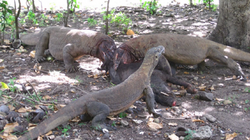
บนเกาะโคโมโดรินกาและฟลอเรสศัตรูตัวฉกาจของหมูป่าคือมังกรโคโมโด ( Varanus komodoensis ) [ 12 ]
การกระจายตัวและถิ่นที่อยู่
ช่วงที่สร้างขึ้นใหม่
The species originally occurred in North Africa and much of Eurasia; from the British Isles to Korea and the Sunda Islands. The northern limit of its range extended from southern Scandinavia to southern Siberia and Japan. Within this range, it was only absent in extremely dry deserts and alpine zones. It was once found in North Africa along the Nile valley up to Khartoum and north of the Sahara. The species occurs on a few Ionian and Aegean Islands, sometimes swimming between islands.[85] The reconstructed northern boundary of the animal's Asian range ran from Lake Ladoga (at 60°N) through the area of Novgorod and Moscow into the southern Urals, where it reached 52°N. From there, the boundary passed Ishim and farther east the Irtysh at 56°N. In the eastern Baraba steppe (near Novosibirsk) the boundary turned steep south, encircled the Altai Mountains and went again eastward including the Tannu-Ola Mountains and Lake Baikal. From here, the boundary went slightly north of the Amur River eastward to its lower reaches at the Sea of Okhotsk. On Sakhalin, there are only fossil reports of wild boar. The southern boundaries in Europe and Asia were almost invariably identical to the seashores of these continents. It is absent in the dry regions of Mongolia from 44 to 46°N southward, in China westward of Sichuan and in India north of the Himalayas. It is absent in the higher elevations of the Pamir and the Tian Shan, though they do occur in the Tarim Basin and on the lower slopes of the Tian Shan.[4]
Present range
In recent centuries, the range of wild boar has changed dramatically, largely due to hunting by humans and more recently because of captive wild boar escaping into the wild. Prior to the 20th century, boar populations had declined in numerous areas, with British populations probably becoming extinct during the 13th century.[86] In the warm period after the ice age, wild boar lived in the southern parts of Sweden and Norway and north of Lake Ladoga in Karelia.[87] It was previously thought that the species did not live in Finland during prehistory because no prehistoric wild boar bones had been found within the borders of the country.[88][89] It was not until 2013, when a wild boar bone was found in Askola, that the species was found to have lived in Finland more than 8,000 years ago. It is believed, however, that man prevented its establishment by hunting.[90][91] In Denmark, the last boar was shot at the beginning of the 19th century, and by 1900 they were absent in Tunisia and Sudan and large areas of Germany, Austria and Italy. In Russia, they were extirpated in wide areas by the 1930s.[4] The last boar in Egypt reportedly died on 20 December 1912 in the Giza Zoo, with wild populations having disappeared by 1894–1902. Prince Kamal el Dine Hussein attempted to repopulate Wadi El Natrun with boars of Hungarian stock, but they were quickly exterminated by poachers.[92]
A revival of boar populations began in the middle of the 20th century. By 1950, wild boar had once again reached their original northern boundary in many parts of their Asiatic range. By 1960, they reached Leningrad and Moscow and by 1975, they were to be found in Arkhangelsk and Astrakhan. In the 1970s they again occurred in Denmark and Sweden, where captive animals escaped and now survive in the wild. Boars have since spread into Norway and by the 2020s have established breeding populations in the southeast of the country[93]. In England, wild boar populations re-established themselves in the 1990s, after escaping from specialist farms that had imported European stock.[86]
Status in Great Britain

ดูเหมือนว่าในศตวรรษที่ 11 หมูป่าเริ่มหายากในบริเตนแล้ว กฎหมายป่าไม้ที่ตราขึ้นในปี 1087 โดยวิลเลียมผู้พิชิต ได้ กำหนดโทษการฆ่าหมูป่าอย่างผิดกฎหมายด้วยการทำให้ตาบอดพระเจ้าชาร์ลส์ที่ 1 ทรงพยายามนำหมูป่ากลับมาสู่ป่าใหม่แต่ประชากรหมูป่าก็ถูกกำจัดจนหมดสิ้นในศตวรรษที่ 17 ระหว่างสงครามกลางเมืองอังกฤษระหว่างการสูญพันธุ์ในยุคกลางและช่วงทศวรรษ 1980 เมื่อเริ่มมีการเลี้ยงหมูป่า มีเพียงหมูป่าที่ถูกเลี้ยงไว้จำนวนเล็กน้อยที่นำเข้าจากทวีปยุโรปเท่านั้นที่อยู่ในบริเตน การหลุดรอดของหมูป่าจากสวนสัตว์ป่าเกิดขึ้นเป็นครั้งคราวตั้งแต่ช่วงทศวรรษ 1970 แต่ตั้งแต่ต้นทศวรรษ 1990 ประชากรหมูป่าจำนวนมากได้กลับมาตั้งรกรากอีกครั้งหลังจากหลุดรอดจากฟาร์ม ซึ่งจำนวนก็เพิ่มขึ้นตามความต้องการเนื้อหมูป่าที่เพิ่มขึ้น การศึกษาของ MAFF (ปัจจุบันคือ DEFRA ) ในปี 1998 เกี่ยวกับหมูป่าที่อาศัยอยู่ในป่าของบริเตนยืนยันว่ามีประชากรหมูป่าสองกลุ่มอาศัยอยู่ในบริเตน หนึ่งแห่งในเคนต์ / อีสต์ซัสเซ็กซ์และอีกแห่งในดอร์เซ็ต[ 86 ]
รายงาน DEFRA อีกฉบับในเดือนกุมภาพันธ์ พ.ศ. 2551 [ 94 ]ยืนยันการมีอยู่ของแหล่งเพาะพันธุ์ทั้งสองแห่งนี้ว่าเป็น 'แหล่งเพาะพันธุ์ที่จัดตั้งขึ้น' และระบุแหล่งที่สามในกลอสเตอร์เชอร์ / เฮเรฟอร์ดเชอร์ใน พื้นที่ ป่าแห่งดีน / รอสส์ออนไวนอกจากนี้ยังมีการระบุ 'ประชากรเพาะพันธุ์ใหม่' ในเดวอน และยัง มีประชากรจำนวนมากอีกแห่งในดัมฟรีส์และแกลโลเวย์การประมาณการประชากรมีดังนี้:
- ประชากรกลุ่มใหญ่ที่สุดในเขตเคนต์/อีสต์ซัสเซ็กซ์นั้น คาดการณ์ว่ามีจำนวนประมาณ 200 ตัว ในพื้นที่กระจายพันธุ์หลัก
- แหล่งที่เล็กที่สุด ซึ่งอยู่ในเขตดอร์เซ็ตตะวันตก คาดว่ามีจำนวนสัตว์น้อยกว่า 50 ตัว
- ตั้งแต่ฤดูหนาวปี 2005-2006 เป็นต้นมา มีสัตว์หลุดรอด/ถูกปล่อยออกมาจำนวนมาก ส่งผลให้สัตว์เหล่านั้นไปตั้งรกรากอยู่ในพื้นที่รอบๆ ชายขอบของดาร์ทมัวร์ในเดวอนซึ่งถือเป็น "ประชากรผสมพันธุ์ใหม่" เพิ่มเติมอีกกลุ่มหนึ่ง และปัจจุบันคาดว่ามีจำนวนมากถึง 100 ตัว
Population estimates for the Forest of Dean are disputed as, at the time that the DEFRA population estimate was 100, a photo of a boar sounder in the forest near Staunton with over 33 animals visible was published and at about the same time over 30 boar were seen in a field near the original escape location of Weston under Penyard many kilometres or miles away. In early 2010 the Forestry Commission embarked on a cull,[95] with the aim of reducing the boar population from an estimated 150 animals to 100. By August it was stated that efforts were being made to reduce the population from 200 to 90, but that only 25 had been killed.[96] The failure to meet cull targets was confirmed in February 2011.[97]
Wild boars have crossed the River Wye into Monmouthshire, Wales. Iolo Williams, the BBC Wales wildlife expert, attempted to film Welsh boar in late 2012.[98] Many other sightings, across the UK, have also been reported.[99] The effects of wild boar on the U.K.'s woodlands were discussed with Ralph Harmer of the Forestry Commission on the BBC Radio's Farming Today radio programme in 2011. The programme prompted activist writer George Monbiot to propose a thorough population study, followed by the introduction of permit-controlled culling.[100]
In Scotland, wild boar are professionally referred to as 'feral pigs' as the genetics of the established feral populations may come from a mix of both wild boar and domestic pigs.[101] They are now known to be present in Dumfries and Galloway and a number of sites in the Highlands, mainly centred around the Loch Ness area.[102] They can be killed there legally without a license and are culled by land managers as wild populations appear occasionally.[103]As of 2024, an agency that advises the Scottish government estimates that Scotland is home to a few thousand wild boars. Locals around Loch Ness that were interviewed by The New York Times believed that the boars were becoming an increasingly worse problem, and farmers noted that they had killed and eaten several lambs.[104]
Introduction to North America

หมูป่าเป็นสัตว์รุกรานในทวีปอเมริกา โดยถูกนำเข้ามาโดยนักสำรวจและผู้ตั้งถิ่นฐานชาวยุโรปในศตวรรษที่ 16 เพื่อใช้เป็นแหล่งอาหาร ปัจจุบันหมูป่าก่อให้เกิดปัญหาต่างๆ มากมาย รวมถึงการแย่งอาหารจากสัตว์พื้นเมือง ทำลายรังของสัตว์ที่ทำรังบนพื้นดิน ฆ่าลูกกวางและปศุสัตว์ขนาดเล็ก ทำลายพืชผลทางการเกษตร กินเมล็ดและต้นกล้า ทำลายพืชพื้นเมืองและพื้นที่ชุ่มน้ำจากการนอนแช่โคลน ทำลายคุณภาพน้ำ มีความขัดแย้งรุนแรงกับมนุษย์และสัตว์เลี้ยง และเป็นพาหะนำโรคของหมูและมนุษย์ รวมถึงโรคบรูเซลโลซิสโรคพยาธิไตรคิโนซิสและโรคพิษสุนัขบ้า เทียม ในบางเขตอำนาจศาล การนำเข้า เพาะพันธุ์ ปล่อย ครอบครอง ขาย แจกจ่าย ค้าขาย ขนส่ง ล่า หรือดักจับหมูป่าเอเชียถือเป็นสิ่งผิดกฎหมาย การล่าและการดักจับดำเนินการอย่างเป็นระบบ เพื่อเพิ่มโอกาสในการกำจัดและขจัดแรงจูงใจในการปล่อยหมูป่าอย่างผิดกฎหมาย ซึ่งส่วนใหญ่แพร่กระจายโดยเจตนาโดยนักล่าเพื่อการกีฬา[ 105 ]
ประวัติศาสตร์
แม้ว่าหมูบ้าน ทั้งที่เลี้ยงไว้และที่อาศัยอยู่ตามธรรมชาติ (ที่เรียกกันทั่วไปว่า "หมูหลังแหลม") จะอยู่ในทวีปอเมริกาเหนือมาตั้งแต่ยุคแรกเริ่มของการล่าอาณานิคมของชาวยุโรปแต่หมูป่าแท้ๆ นั้นเพิ่งถูกนำเข้ามาในโลกใหม่ในศตวรรษที่ 19 เท่านั้น หมูป่าถูกปล่อยสู่ป่าโดยเจ้าของที่ดินผู้มั่งคั่งในฐานะสัตว์ป่าขนาดใหญ่ การนำเข้ามาครั้งแรกเกิดขึ้นในกรงที่ล้อมรั้วไว้ แม้ว่าจะมีการหลบหนีเกิดขึ้นหลายครั้ง โดยบางครั้งหมูป่าที่หลบหนีก็ผสมปนเปกับประชากรหมูป่าที่อาศัยอยู่แล้ว
การนำเข้าครั้งแรกเกิดขึ้นในรัฐนิวแฮมป์เชียร์ ในปี พ.ศ. 2333 ออสติน คอร์บินซื้อหมูป่า 13 ตัวจากเยอรมนีจากคาร์ล ฮาเกนเบ็คและปล่อยเข้าไปในเขตอนุรักษ์สัตว์ป่าขนาด9,500 เฮกตาร์ (23,000 เอเคอร์)ในเทศมณฑลซัลลิแวนหมูป่าหลายตัวหนีรอดไปได้ แต่ก็ถูกชาวบ้านตามล่าอย่างรวดเร็ว มีการนำเข้าเพิ่มเติมอีกสองครั้งจากกลุ่มแรกที่ปล่อยไป โดยมีหมูป่าหลายตัวหนีรอดไปได้เนื่องจากรั้วของเขตอนุรักษ์สัตว์ป่าถูกทำลาย หมูป่าที่หนีรอดไปได้เหล่านี้กระจายตัวไปในวงกว้าง โดยมีบางตัวถูกพบว่าข้ามไปยังรัฐเวอร์มอนต์[ 106 ]
ในปี พ.ศ. 2445 หมูป่าจำนวน 15-20 ตัวจากเยอรมนีถูกปล่อยเข้าไปใน ที่ดิน ขนาด 3,200 เฮกตาร์ (7,900 เอเคอร์)ในแฮมิลตันเคาน์ตี้ รัฐนิวยอร์ก หมูป่าหลายตัวหนีออกมาได้ในอีกหกปีต่อมา และกระจายตัวเข้าไปในพื้นที่ป่าสงวนวิลเลียม ซี. วิทนีย์โดยลูกหลานของพวกมันมีชีวิตรอดมาได้อีกอย่างน้อย 20 ปี[ 106 ]
The most extensive boar introduction in the US took place in western North Carolina in 1912, when 13 boars of undetermined European origin were released into two fenced enclosures in a game preserve in Hooper Bald, Graham County. Most of the specimens remained in the preserve for the next decade, until a large-scale hunt caused the remaining animals to break through their confines and escape. Some of the boars migrated to Tennessee, where they intermixed with both free-ranging and feral pigs in the area. In 1924, a dozen Hooper Bald wild pigs were shipped to California and released in a property between Carmel Valley and the Los Padres National Forest. These hybrid boar were later used as breeding stock on various private and public lands throughout the state, as well as in other states like Florida, Georgia, South Carolina, West Virginia and Mississippi.[106]
Several wild boars from Leon Springs and the San Antonio, Saint Louis and San Diego Zoos were released in the Powder Horn Ranch in Calhoun County, Texas, in 1939. These specimens escaped and established themselves in surrounding ranchlands and coastal areas, with some crossing the Espiritu Santo Bay and colonizing Matagorda Island. Descendants of the Powder Horn Ranch boars were later released onto San José Island and the coast of Chalmette, Louisiana.[106]
Wild boar of unknown origin were stocked in a ranch in the Edwards Plateau in the 1940s, only to escape during a storm and hybridize with local feral pig populations, later spreading into neighboring counties.[106]
Starting in the mid-1980s, several boars purchased from the San Diego Zoo and Tierpark Berlin were released into the United States. A decade later, more specimens from farms in Canada and Białowieża Forest were let loose. In recent years, wild pig populations have been reported in 44 states within the US, most of which are likely wild boar–feral hog hybrids. Pure wild boar populations may still be present, but are extremely localized.[106]
Introduction and lack of control in South America

In South America, the European boar is believed to have been introduced for the first time in Argentina and Uruguay around the 20th century for breeding purposes.[107] In Brazil, the creation of wild boar and hybrids started on a large scale in the mid-1990s. With the invasion of wild boar that crossed the border and entered Rio Grande do Sul around 1989, and the escape and intentional release by several Brazilian breeders in the late 1990s – in response to a IBAMA decision against the import and breeding of wild boar in 1998 – numerous feral species formed a growing population, which progressively advances in Brazilian territory.[108][109]
Pest control in Brazil
As a form of control for the wild boar population, hunting and killing are allowed for Collectors, Shooters and Hunters (CACs)[110] duly registered by the environmental control agency, IBAMA, which, on the other hand, seeks to encourage the preservation of similar species of native peccaries, such as the "queixada" and the "caititu".[111][112][113]
Effect on other habitats
Wild boars negatively impact other habitats through the destruction of the environment, or homes of wildlife. When wild boars invade new areas, they adapt to the new area by trampling and rooting, as well as displacing many saplings/nutrients. This causes a decrease in growing of many plants and trees. Water is also affected negatively by wild boars. When wild boars are active in streams, or small pools of water, it causes increased turbidity (excessive silt and particle suspension).[114] In some cases, the fecal coliform concentration increases to dangerous levels because of wild boars. Aquatic wildlife is affected, more prominently fish, and amphibians. Wild boars have caused a great decrease in over 300 animal or plant species, 250 being endangered or threatened.[115]
หมูป่าทำให้แหล่งที่อยู่อาศัยหลายแห่งมีความหลากหลายทางชีวภาพลดลงเนื่องจากพฤติกรรมการกินและการล่าเหยื่อ หมูป่าจะขุดไข่ของสัตว์ชนิดอื่นและกินพวกมัน รวมทั้งฆ่าสัตว์ป่าชนิดอื่นเพื่อเป็นอาหาร เมื่อหมูป่าเหล่านี้แข่งขันกับสัตว์ชนิดอื่นเพื่อแย่งชิงทรัพยากร พวกมันมักจะประสบความสำเร็จ[ 116 ]มีการศึกษาวิจัยที่ตีพิมพ์ในวารสาร Journal of Experimental Marine Biology and Ecology เกี่ยวกับผลลัพธ์ของการควบคุมหมูป่า พบว่าเพียงสองปีหลังจากเริ่มการควบคุม จำนวนรังเต่าเพิ่มขึ้นจาก 57 เป็น 143 และเปอร์เซ็นต์การถูกล่าทำลายรังเต่าลดลงจาก 74 เป็น 15 [ 117 ]พวกมันฆ่าและกินกวาง กิ้งก่า นก งู และอื่นๆ หมูป่าเหล่านี้ถูกเรียกว่า "สัตว์กินพืชและสัตว์กินเนื้อแบบฉวยโอกาส" ซึ่งหมายความว่าพวกมันกินเกือบทุกอย่าง นั่นหมายความว่าพวกมันสามารถอยู่รอดได้เกือบทุกที่ ความอุดมสมบูรณ์ของอาหารและความสามารถในการปรับตัวให้เข้ากับสถานที่ใหม่ๆ ทำให้มีการผสมพันธุ์จำนวนมาก ปัจจัยทั้งหมดเหล่านี้ทำให้ยากต่อการกำจัดหมูป่า[ 118 ]
โรคและปรสิต
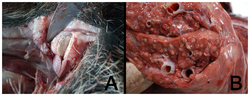
หมูป่าเป็นที่ทราบกันดีว่ามีพยาธิอย่างน้อย 20 ชนิด โดยการติดเชื้อสูงสุดจะเกิดขึ้นในฤดูร้อน ลูกหมูป่าอ่อนแอต่อพยาธิเช่นMetastrongylusซึ่งหมูป่ากินเข้าไปผ่านทางไส้เดือนดินและทำให้ตายโดยการเข้าไปทำลายปอด หมูป่ายังเป็นพาหะของปรสิตที่ทราบกันว่าติดเชื้อในมนุษย์ ได้แก่Gastrodiscoides , Trichinella spiralis , Taenia solium , Balantidium coliและToxoplasma gondii [ 119 ] หมูป่าในภูมิภาคทางใต้มักมีเห็บ ( Dermacentor , RhipicephalusและHyalomma ) และเหาหมูป่า รบกวนอยู่บ่อยครั้ง หมูป่ายังต้องเผชิญกับแมลง ดูดเลือด ซึ่งพวกมันจะหลีกเลี่ยงได้โดยการอาบน้ำบ่อยๆ หรือซ่อนตัวอยู่ในพุ่มไม้หนาแน่น[ 4 ]
โรคระบาดในสุกรแพร่กระจายอย่างรวดเร็วในหมูป่า โดยมี การบันทึก การระบาดในเยอรมนี โปแลนด์ ฮังการี เบลารุส คอเคซัส ตะวันออกไกล คาซัคสถาน และภูมิภาคอื่นๆโรคปากและเท้าเปื่อย ก็สามารถแพร่ระบาดในประชากรหมูป่าได้เช่นกัน หมูป่าอาจติด เชื้อโรคพาสเทอเรลโลซิส โรคติดเชื้อในกระแสเลือด โรคทูลาเร เมีย และโรคแอนแทรกซ์ได้บ้าง แต่พบได้น้อยมากหมูป่าอาจติดเชื้อโรคอีริซิเพลาส ในสุกร ผ่านทางหนูหรือเหาหมูและเห็บได้[ 4 ]
ความสัมพันธ์กับมนุษย์
ในด้านวัฒนธรรม
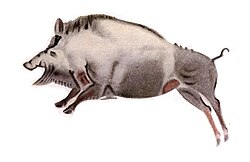
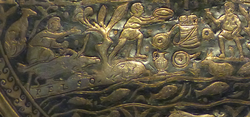
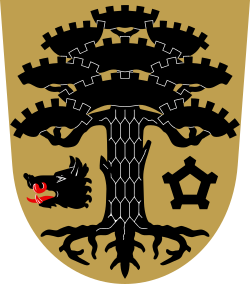
หมูป่ามีบทบาทสำคัญในวัฒนธรรมของ ชาว อินโด-ยุโรปซึ่งหลายคนมองว่าสัตว์ชนิดนี้เป็นสัญลักษณ์ของคุณธรรมของนักรบ[ 123 ]วัฒนธรรมทั่วทั้งยุโรปและเอเชียไมเนอร์มองว่าการฆ่าหมูป่าเป็นการพิสูจน์ความกล้าหาญและความแข็งแกร่ง นักล่าและผู้เก็บเกี่ยวในยุคหินใหม่ ได้วาดภาพนูนต่ำของหมูป่าดุร้ายบนเสาวิหารของพวกเขาที่โกเบคลีเทเปเมื่อประมาณ 11,600 ปีก่อน[ 124 ] [ 125 ]วีรบุรุษเกือบทั้งหมดในเทพปกรณัมกรีกต่อสู้หรือฆ่าหมูป่าในบางช่วงเวลาภารกิจที่สามของเทพครึ่ง มนุษย์ เฮราคลีสเกี่ยวข้องกับการจับหมูป่าเอรีมัน เธี ย น เธเซ อุสสังหารหมูป่าฟีอาและโอดิสซีอุส ที่ปลอมตัวถูกนางกำนัล ยูริเคลียจำได้จากรอยแผลเป็นที่เขาได้รับจากหมูป่าระหว่างการล่าสัตว์ในวัยหนุ่ม[ 126 ]สำหรับชาวไฮเปอร์โบ เรียนในตำนาน หมูป่าเป็นตัวแทนของอำนาจทางจิตวิญญาณ[ 120 ]ตำนานกรีกหลายเรื่องใช้หมูป่าเป็นสัญลักษณ์ของความมืด ความตาย และฤดูหนาว[ 127 ]ตัวอย่างหนึ่งคือเรื่องราวของอดอนิส หนุ่ม ผู้ถูกหมูป่าฆ่าตาย และได้รับอนุญาตจากซุสให้ออกจากยมโลกได้เฉพาะในช่วงฤดูใบไม้ผลิและฤดูร้อนเท่านั้น ธีมนี้ยังปรากฏใน ตำนานของ ชาวไอริชและอียิปต์ซึ่งสัตว์ชนิดนี้มีความเชื่อมโยงอย่างชัดเจนกับเดือนตุลาคม ซึ่งก็คือฤดูใบไม้ร่วง ความเชื่อมโยงนี้อาจเกิดจากลักษณะบางอย่างของธรรมชาติที่แท้จริงของหมูป่า สีดำของมันเชื่อมโยงกับกลางคืน ในขณะที่นิสัยสันโดษ ความชอบกินพืชผล และธรรมชาติที่ออกหากินในเวลากลางคืนนั้นเกี่ยวข้องกับความชั่วร้าย[ 128 ]ตำนานการก่อตั้งเมืองเอเฟซัสกล่าวว่าเมืองนี้ถูกสร้างขึ้นบนสถานที่ที่เจ้าชายอันโดรคลอสแห่งเอเธนส์ฆ่าหมูป่า[ 129 ]หมูป่ามักถูกวาดไว้บนอนุสรณ์สถานงานศพของชาวกรีกเคียงข้างสิงโตซึ่งเป็นตัวแทนของผู้แพ้ผู้กล้าหาญที่ในที่สุดก็พบกับคู่ต่อสู้ที่สมน้ำสมเนื้อ ตรงข้ามกับนักล่าผู้มีชัยชนะอย่างสิงโต แนวคิดเรื่องนักรบหมูป่าผู้โชคร้ายแต่กล้าหาญยังปรากฏใน วัฒนธรรม ฮิตไทต์ซึ่งเป็นประเพณีที่จะบูชายัญหมูป่าพร้อมกับสุนัขและเชลยศึกหลังจากความพ่ายแพ้ทางทหาร[ 126 ]


หมูป่าในฐานะนักรบยังปรากฏในวัฒนธรรมเยอรมันโดยภาพของหมูป่ามักถูกแกะสลักบนโล่และดาบ นอกจากนี้ยังปรากฏบนหมวกเหล็กรูปหมูป่าของชาวเยอรมันเช่น หมวกเหล็กเบนตีแกรน จ์ ซึ่งเชื่อกันว่าจะให้การปกป้องแก่ผู้สวมใส่ และมีทฤษฎีว่าใช้ในการแปลงร่างทางจิตวิญญาณเป็นหมู คล้ายกับพวกเบอร์เซอร์เกอร์ หมูป่ามีบทบาทสำคัญในพิธีกรรมทางศาสนาของ ลัทธิเพแกนเยอรมันซึ่งมีความเกี่ยวข้องอย่างใกล้ชิดกับเฟรย์ และยังมีการเสนอแนะว่า หมูป่าเป็นสัตว์ประจำเผ่าของชาวสวีเดน โดยเฉพาะอย่างยิ่งราชวงศ์อิงลิงที่อ้างว่าสืบเชื้อสายมาจากเทพเจ้า[ 130 ]
ตามที่ทาซิตัส กล่าวไว้ ชาวเอสตีแห่งบอลติก มีรูปหมูป่าบนหมวกของพวกเขา และอาจสวมหน้ากากหมูป่าด้วย หมูป่าและสุกรได้รับการยกย่องอย่างสูงจากชาวเคลต์ซึ่งถือว่าเป็นสัตว์ศักดิ์สิทธิ์ที่สำคัญที่สุดของพวกเขาเทพเจ้าเคลต์ บางองค์ ที่เกี่ยวข้องกับหมูป่า ได้แก่ม็อกคัสและเวเทอริสมีการเสนอแนะว่าตำนานยุคแรกๆ บางเรื่องเกี่ยวกับวีรบุรุษชาวเวลส์คัลฮวชเกี่ยวข้องกับตัวละครที่เป็นบุตรของเทพเจ้าหมูป่า[ 126 ]อย่างไรก็ตาม ความสำคัญของหมูป่าในฐานะอาหารในหมู่ชนเผ่าเคลต์อาจถูกกล่าวเกินจริงในวัฒนธรรมสมัยนิยมโดย ชุด การ์ตูนแอสเตอริกซ์ เนื่องจากกระดูกหมูป่าหายากในแหล่งโบราณคดีของชาวเคลต์ และกระดูกหมูป่าเพียงไม่กี่ชิ้นที่พบก็ไม่มีร่องรอยการชำแหละ ซึ่งอาจถูกนำไปใช้ในพิธีกรรมบูชายัญ[ 131 ]
หมูป่ายังปรากฏในเทพปกรณัมเวทและเทพปกรณัมฮินดูเรื่องราวในพราหมณะเล่าว่าพระอินทร์สังหารหมูป่าโลภมากที่ขโมยสมบัติของอสูรแล้วนำซากของหมูป่านั้นไปถวายพระวิษณุซึ่งพระวิษณุได้ถวายเป็นเครื่องบูชาแก่เหล่าเทพ ในการเล่าเรื่องนี้ในจารกะสัมหิตาหมูป่าถูกอธิบายว่าเป็นร่างหนึ่งของพระประชาปติและได้รับการยกย่องว่าได้ยกโลกขึ้นจากน้ำในยุคดึกดำบรรพ์ ในรามายณะและปุราณะหมูป่าตัวเดียวกันนี้ถูกพรรณนาว่าเป็นวราหะอวตารของพระวิษณุ[ 132 ]

ในวัฒนธรรมญี่ปุ่นหมูป่าถูกมองว่าเป็นสัตว์ที่น่าเกรงขามและบ้าระห่ำอย่างมาก ถึงขนาดที่คำและสำนวนภาษาญี่ปุ่น หลายคำ ที่กล่าวถึงความบ้าระห่ำมักมีการอ้างอิงถึงหมูป่า หมูป่าเป็นสัตว์ตัวสุดท้ายในจักรราศีตะวันออกโดยผู้ที่เกิดในปีหมูเชื่อกันว่ามีลักษณะนิสัยคล้ายหมูป่า คือมีความมุ่งมั่นและใจร้อน ในหมู่นักล่าชาวญี่ปุ่น ความกล้าหาญและการท้าทายของหมูป่าเป็นสิ่งที่น่าชื่นชม และไม่ใช่เรื่องแปลกที่นักล่าและชาวเขาจะตั้งชื่อลูกชายตามชื่อหมูป่าว่าอิโนชิชิ (猪) หมูป่ายังถูกมองว่าเป็นสัญลักษณ์ของความอุดมสมบูรณ์และความเจริญรุ่งเรือง ในบางภูมิภาคเชื่อกันว่าหมูป่ามักจะเข้ามาในทุ่งนาที่เป็นของครอบครัวที่มีหญิงตั้งครรภ์อยู่ และนักล่าที่มีภรรยาตั้งครรภ์จะมีโอกาสประสบความสำเร็จในการล่าหมูป่ามากกว่า ความเชื่อมโยงของสัตว์กับความมั่งคั่งได้รับการแสดงให้เห็นโดยการรวมไว้ในธนบัตร 10 เยนในช่วงสมัยเมจิและครั้งหนึ่งเคยเชื่อกันว่าชายคนหนึ่งจะร่ำรวยได้ด้วยการเก็บขนหมูป่าไว้ในกระเป๋าสตางค์[ 133 ]
ในนิทานพื้นบ้านของ ชนเผ่า มองโกลอัลไตอูเรียนไคหมูป่ามีความเกี่ยวข้องกับโลกใต้พิภพที่มีน้ำ เพราะเชื่อกันว่าวิญญาณของผู้ตายจะเข้าไปอยู่ในหัวของสัตว์ชนิดนี้ ก่อนที่จะถูกส่งไปยังน้ำในที่สุด[ 134 ]ก่อนการเปลี่ยนมานับถือศาสนาอิสลามชาวคีร์กีซเชื่อว่าพวกเขาสืบเชื้อสายมาจากหมูป่า ดังนั้นจึงไม่กินเนื้อหมู ใน ตำนานของ ชาวบูเรียตบรรพบุรุษของชาวบูเรียตลงมาจากสวรรค์และได้รับการเลี้ยงดูจากหมูป่า[ 135 ]ในประเทศจีนหมูป่าเป็นสัญลักษณ์ของชาวเมี่ยว[ 120 ]
หมูป่า ( sanglier ) มักปรากฏใน ตราประจำตระกูล ของอังกฤษ ส ก็อตแลนด์และเวลส์เช่นเดียวกับสิงโตหมูป่ามักถูกแสดงให้เห็นว่ามีอาวุธและลิ้นเช่นเดียวกับหมีตราประจำตระกูลของสก็อตแลนด์และเวลส์แสดงหัวหมูป่าโดยตัดคอออก ซึ่งแตกต่างจากเวอร์ชันของอังกฤษที่ยังคงมีคออยู่[ 136 ]หมูป่าสีขาวทำหน้าที่เป็นตราประจำตระกูลของพระเจ้าริชาร์ดที่ 3 แห่งอังกฤษซึ่งทรงแจกจ่ายให้กับข้าราชบริพารทางเหนือของพระองค์ในระหว่างที่ทรงดำรงตำแหน่งดยุคแห่งกลอสเตอร์[ 137 ]
ในฐานะสัตว์ป่าที่ใช้ล่าและเป็นแหล่งอาหาร
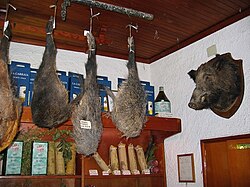

มนุษย์ล่าหมูป่ามานานนับพันปีแล้ว ภาพวาดทางศิลปะที่เก่าแก่ที่สุดที่แสดงถึงกิจกรรมดังกล่าวมีอายุย้อนไปถึงยุคหินเก่าตอนปลาย[ 126 ]ในแหล่งโบราณคดีบางแห่งในประเทศจีนที่มีอายุย้อนไปถึงยุคHolocene Climatic Optimum (HCO) หมูป่าคิดเป็นสัดส่วนถึง 73% ของซากสัตว์เลี้ยงลูกด้วยนมขนาดกลางและขนาดใหญ่ทั้งหมด ซึ่งบ่งชี้ว่ามีการพึ่งพาหมูป่าเป็นแหล่งอาหารอย่างมาก[ 138 ]ชาวกรีกโบราณมองว่าหมูป่าเป็นแหล่งอาหารเช่นเดียวกับเป็นกีฬาที่ท้าทายและเป็นแหล่งที่มาของเรื่องราวในมหากาพย์ชาวโรมันสืบทอดประเพณีนี้ โดยหนึ่งในผู้ปฏิบัติคนแรกๆ คือสคิปิโอ เอมิเลียนัสการล่าหมูป่าได้รับความนิยมเป็นพิเศษในหมู่ขุนนางหนุ่มในช่วงศตวรรษที่ 3 ก่อนคริสต์ศักราช เพื่อเป็นการเตรียมตัวสู่ความเป็นผู้ใหญ่และการต่อสู้ กลยุทธ์การล่าหมูป่าแบบโรมันทั่วไปเกี่ยวข้องกับการล้อมพื้นที่ที่กำหนดด้วยตาข่ายขนาดใหญ่ จากนั้นใช้สุนัขไล่ต้อนหมูป่าและตรึงมันไว้ด้วยตาข่ายขนาดเล็กกว่า จากนั้นสัตว์จะถูกจัดการด้วยเวนาบูลั ม ซึ่งเป็น หอกสั้น ที่ มีที่กั้นที่โคนใบมีด ชาวโรมันได้รับแรงบันดาลใจจากการล่าหมูป่าในงานศิลปะและประติมากรรมมากกว่าบรรพบุรุษชาวกรีก เมื่อคอนสแตนตินมหาราชขึ้นครองราชย์การล่าหมูป่าก็กลายเป็นสัญลักษณ์เชิงเปรียบเทียบของศาสนาคริสต์ โดยสัตว์ชนิดนี้ถูกพรรณนาว่าเป็น "สัตว์ร้ายสีดำ" เปรียบได้กับมังกรของ นักบุญ จอร์จ[ 139 ]
การล่าหมูป่ายังคงดำเนินต่อไปหลังจากการล่มสลายของจักรวรรดิโรมันตะวันตกแม้ว่าชนเผ่าเยอรมันจะถือว่ากวางแดงเป็นเหยื่อที่สง่างามและคู่ควรมากกว่าก็ตาม ขุนนางหลังยุคโรมันล่าหมูป่าเช่นเดียวกับบรรพบุรุษของพวกเขา แต่ส่วนใหญ่เป็นการฝึกฝนเพื่อการรบมากกว่าเพื่อการกีฬา ไม่ใช่เรื่องแปลกที่นักล่าในยุคกลางจะจงใจล่าหมูป่าในช่วงฤดูผสมพันธุ์เมื่อสัตว์เหล่านี้ดุร้ายมากขึ้น ในช่วงยุคฟื้นฟูศิลปวิทยาเมื่อการตัดไม้ทำลายป่าและการนำอาวุธปืน มาใช้ทำให้จำนวนหมูป่าลดลง การล่าหมูป่าจึงกลายเป็นสิทธิพิเศษของขุนนาง ซึ่ง เป็นหนึ่งในข้อกล่าวหามากมายที่นำมากล่าวหาคนรวยในช่วงสงครามชาวนาเยอรมันและการปฏิวัติฝรั่งเศส[ 139 ]
During the mid-20th century, 7,000–8,000 boars were caught in the Caucasus, 6,000–7,000 in Kazakhstan and about 5,000 in Central Asia during the Soviet period, primarily through the use of dogs and beats.[4] In Nepal, farmers and poachers eliminate boars by baiting balls of wheat flour containing explosives with kerosene oil, with the animals' chewing motions triggering the devices.[140]
Wild boar can thrive in captivity, though piglets grow slowly and poorly without their mothers. Products derived from wild boar include meat, hide and bristles.[4]Apicius devotes a whole chapter to the cooking of boar meat, providing 10 recipes involving roasting, boiling and what sauces to use. The Romans usually served boar meat with garum.[141]Boar's head was the centrepiece of most medieval Christmas celebrations among the nobility.[142] Although growing in popularity as a captive-bred source of food, the wild boar takes longer to mature than most domestic pigs and it is usually smaller and produces less meat. Nevertheless, wild boar meat is leaner and healthier than pork,[143] being of higher nutritional value and having a much higher concentration of essential amino acids.[144] Most meat-dressing organizations agree that a boar carcass should yield 50 kg (110 lb) of meat on average. Large specimens can yield 15–20 kg (33–44 lb) of fat, with some giants yielding 30 kg (66 lb) or more. A boar hide can measure 3 m2 (4,700 sq in) and can yield 350–1,000 grams (12–35 oz) of bristle and 400 grams (14 oz) of underwool.[4]
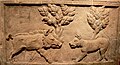 Roman relief of a dog confronting a boar, Cologne
 Southern Indian depiction of boar hunt, c.1540
 Pig-sticking in British India
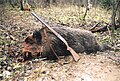 Boar shot in Volgograd Oblast, Russia
 The Boar Hunt – Hans Wertinger, c.1530, the Danube Valley
Crop and garbage raiding
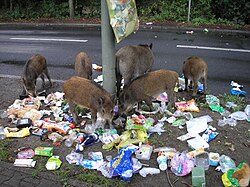
Boars can be damaging to agriculture in situations where their natural habitat is sparse. Populations living on the outskirts of towns or farms can dig up potatoes and damage melons, watermelons and maize. However, they generally only encroach upon farms when natural food is scarce. In the Belovezh forest for example, 34–47% of the local boar population will enter fields in years of moderate availability of natural foods. While the role of boars in damaging crops is often exaggerated,[4] cases are known of boar depredations causing famines, as was the case in Hachinohe, Japan in 1749, where 3,000 people died of what became known as the "wild boar famine". Still, within Japanese culture, the boar's status as vermin is expressed through its title as "king of pests" and the popular saying (addressed to young men in rural areas) "When you get married, choose a place with no wild boar."[133][145]
In Central Europe, farmers typically repel boars through distraction or fright, while in Kazakhstan it is usual to employ guard dogs in plantations. However, research shows that when compared with other mitigation tactics, hunting is the only strategy to significantly reduce crop damage by boars.[146] Although large boar populations can play an important role in limiting forest growth, they are also useful in keeping pest populations such as June bugs under control.[4] The growth of urban areas and the corresponding decline in natural boar habitats has led to some sounders entering human habitations in search of food. As in natural conditions, sounders in peri-urban areas are matriarchal, though males tend to be much less represented and adults of both sexes can be up to 35% heavier than their forest-dwelling counterparts. As of 2010, at least 44 cities in 15 countries have experienced problems of some kind relating to the presence of habituated wild boar.[147]
A 2023 study found that allowing wild pigs to forage on edible garbage in large regional landfills results in those animals getting physically large/heavier, having larger litters of piglets, and causing more wild pig-vehicle collisions in the vicinity of the landfill. The effects of letting these pigs scavenge in these landfills can present unique challenges to population management, control, public safety, and disease transmission. Wild pigs foraging on edible food waste in landfills has also been identified as a vector that facilitates the spread of African swine fever virus.[148]
Attacks on humans
Actual attacks on humans are rare, but can be serious, resulting in penetrating injuries to the lower part of the body. They generally occur during the boars' rutting season from November to January, in agricultural areas bordering forests or on paths leading through forests. The animal typically attacks by charging and pointing its tusks towards the intended victim, with most injuries occurring on the thigh region. Once the initial attack is over, the boar steps back, takes position and attacks again if the victim is still moving, only ending once the victim is completely incapacitated.[149][150]
Boar attacks on humans have been documented throughout history. The Romans and Ancient Greeks wrote of these attacks (Odysseus was wounded by a boar and Adonis was killed by one). A 2012 study compiling recorded attacks from 1825 to 2012 found accounts of 665 human victims of both wild boars and feral pigs: the highest number of those attacks (24%) occurred in the United States, though the next-highest (19%), in India, was also the greatest percentage of attacks occurring in the animal's native range. Most of the attacks occurred in rural areas during the winter months in non-hunting contexts and were committed by solitary males.[151]
Management
Managing wild boar is a pressing task in both native and invasive contexts as they can be disruptive to other systems when not addressed. Wild boar find their success through adaptation of daily patterns to circumvent threats. They avoid human contact through nocturnal lifestyles, despite the fact that they are not evolutionarily predisposed, and alter their diets substantially based on what is available.[152] These "adaptive generalists", can survive in a variety of landscapes, making the prediction of their movement patterns and any potential close contact areas crucial to limiting damage.[153] All of these qualities make them equally difficult to manage or limit.
Within Central Europe, the native habitat of the wild boar, there has been a push to re-evaluate interactions between wild boar and humans, with the priority of fostering positive engagement. Negative media and public perception of wild boar as "crop raiders" have made those living alongside them less willing to accept the economic damages of their behaviors, as wild boar are seen as pests. This media tone impacts management policy, with every 10 negative articles increasing wild boar policy activity by 6.7%.[154] Contrary to this portrayal, wild boar, when managed well within their natural environments, can be a crucial part of forest ecosystems.
Defining the limits of proper management is difficult, but the exclusion of wild boar from rare environments is generally agreed upon, as when not properly managed, they can damage agricultural ventures and harm vulnerable plant life.[155] These damages are estimated at $800 million yearly in environmental and financial costs for the United States alone.[155] The breadth of this damage is due to prior inattention and lack of management tactics for extended lengths of time.[154] Managing wild boar is a complex task, as it involves coordinating a combination of crop harvest techniques, fencing, toxic bait, corrals, and hunting. The most common tactic employed by private land owners in the United States is recreational hunting; however, this is generally not as effective on its own.[156] Management strategies are most successful when they take into account reproduction, dispersion, and the differences between ideal resources for males and females.[153]
Wild boars are causing soil disturbance that, among other problems, globally results in annual carbon dioxide emissions equivalent to that of ~1.1 million passenger vehicles (4.9 Mt, 0.01% of all GHG emissions as of 2022), implying that as of 2021, hunted boar meat – unlike other meat products – has beneficial effects on the environment[157][158] even though the effect would diminish if boars are introduced for meat production, so consistently retaining small populations of boars may be preferable.
See also
Notes
- ↑ชื่อของหมูป่าตัวผู้มาจากนิสัยชอบอยู่โดดเดี่ยวของมันเอง ทำให้ชื่อนี้ปรากฏในภาษาโรมานซ์ หลายภาษา แม้ว่า คำภาษา ละตินสำหรับ 'หมูป่า' คือ aperแต่ คำ ว่า sanglierในภาษาฝรั่งเศส และ cinghialeในภาษาอิตาลีมาจาก singularis porcusซึ่งเป็นภาษาละตินแปลว่า 'หมูที่อยู่โดดเดี่ยว' [ 62 ]
- ↑พบตัวอย่างที่ถูกกักขังจำนวน 13 ตัวอย่าง [ 64 ]
บรรณานุกรม
- Cabanau, Laurent (2001). ห้องสมุดของนักล่า: หมูป่าในยุโรป . Könemann. ISBN 978-3-8290-5528-4.
- มาร์ซาน, อันเดรีย; มัตติโอลี, สเตฟาโน (2013) อิล ชิงกีอาเล (อิตาลี) อิล ปิวิแยร์ (collana Fauna selvatica. Biologia e geste) ไอเอสบีเอ็น 978-88-96348-178.
- เชกกี้, มัสซิโม (1999) La bestia nera: Caccia al cinghiale fra mito, storia e attualità (ในภาษาอิตาลี) บทบรรณาธิการ Olimpia (collana Caccia) ไอเอสบีเอ็น 978-88-253-7904-4.
อ่านเพิ่มเติม
- Apollonio, M.; Randi, E.; Toso, S. (1988). "ระบบอนุกรมวิธานของหมูป่า ( Sus scrofa L.) ในอิตาลี". Italian Journal of Zoology . 55 ( 1– 4): 213– 221. doi : 10.1080/11250008809386619 .
- Carden, RF (2012). "การทบทวนประวัติศาสตร์ธรรมชาติของหมูป่า ( Sus scrofa ) บนเกาะไอร์แลนด์" (PDF)รายงานที่จัดทำโดย Ruth Carden สำหรับ Northern Ireland Environment Agency, Northern Ireland, UK, National Parks & Wildlife Service, Department of Arts, Heritage and the Gaeltacht, Dublin, Ireland และ National Museum of Ireland – Education & Outreach Departmentเก็บถาวรจากต้นฉบับ(PDF)เมื่อวันที่ 17 ตุลาคม 2014
- ดูรันเทล, พี. (2007). Le Sanglier et ses chasses (ภาษาฝรั่งเศส) ฉบับอาร์เทมิสไอเอสบีเอ็น 978-2-84416-603-6.
- กรีน, เจ. (2011). หมูป่าขนทอง: สัตว์ร้ายตัวสุดท้ายที่ดุร้ายแห่งป่า . สำนักพิมพ์มหาวิทยาลัยเวอร์จิเนีย. ISBN 978-0-8139-3103-6.
- Hatto, AT (1957). "ดาบงูและหมวกเกราะหมูป่าในเบโอวูล์ฟ". English Studies . 38 ( 1– 6): 145– 160. doi : 10.1080/00138385708596994 .
- มาริลิเยร์ บี. (2003) Le Sanglier Héraldique (ภาษาฝรั่งเศส) เคมีภัณฑ์รุ่นไอเอสบีเอ็น 2-84478-184-5.
- Mayer, JJ; Shedrow, CB (2007). "บรรณานุกรมเชิงวิเคราะห์ของหมูป่า ( Sus scrofa ): เอกสารข้อมูลด้านสิ่งแวดล้อม" (PDF) . บริษัท วอชิงตัน ซาวานนาห์ ริเวอร์. เก็บถาวรจากต้นฉบับ(PDF)เมื่อวันที่ 26 ตุลาคม 2014.
- ปาดิกลิโอเน, วี. (1989). Il cinghiale cacciatore: Antropologia simbolica della caccia ในซาร์เดญญา . Antropologia Culturale (ในภาษาอิตาลี) อาร์มันโด้ เอดิเตอร์. โอซีแอลซี165567365 .
- โนวัค, โรนัลด์ เอ็ม. (1999). "Artiodactyla: สัตว์กีบเท้าคู่ (สัตว์เลี้ยงลูกด้วยนมมีกีบ) § Suidae : หมู". สัตว์เลี้ยงลูกด้วยนมของโลกของวอล์คเกอร์ เล่ม 2 ( ฉบับที่ 6). สำนักพิมพ์มหาวิทยาลัยจอห์นส์ ฮอปกินส์ หน้า1053–1066 . ISBN 978-0-8018-5789-8LCCN 98023686 OCLC 1037249783
ลิงก์ภายนอก


- โปรไฟล์ BBC
- สารานุกรมบริแทนนิกาเล่ม 3 ( ฉบับที่ 9) 1878
- โจเคไลเนน, ป.; นาเรอาโฮ อ.; เฮลลี, โอ.; ไฮโนเนน ม.; ซูกุระ, อ. (2012). "หมูป่าที่เลี้ยงโดยได้รับเชื้อToxoplasma gondiiและTrichinella spp" ปรสิตวิทยาทางสัตวแพทยศาสตร์ . 187 ( 1– 2): 323– 327. ดอย : 10.1016/j.vetpar.2011.12.026 . PMID22244535 .
- ข้อมูลเกี่ยวกับสายพันธุ์ - หมูป่า ( Sus scrofa )ศูนย์ข้อมูลชนิดพันธุ์รุกรานแห่งชาติหอสมุดเกษตรแห่งชาติสหรัฐอเมริการวบรวมข้อมูลทั่วไปและแหล่งข้อมูลเกี่ยวกับหมูป่า
- ดูข้อมูล การประกอบจีโนม susScr3ในUCSC Genome Browser
- ฝูงหมูป่า
- หมูป่ากับลูกหมู – ลูกหมูสีขาวมีจุดดำ
- แม่หมูกำลังป้อนอาหารลูกหมู ที่เมืองลอจด์ (ประเทศโปแลนด์)
- หมูป่าตัวหนึ่งกำลังดิ้นรนกับแผ่นฟิล์มพลาสติก ที่เมืองลอจด์ (โปแลนด์)