
การปฏิวัติเยอรมันปี 1918–1919

| การปฏิวัติเยอรมัน | |||||||
|---|---|---|---|---|---|---|---|
| ส่วนหนึ่งของการปฏิวัติปี 1917–1923และความรุนแรงทางการเมืองในเยอรมนี (1918–1933) | |||||||
 การประกาศสถาปนาสาธารณรัฐโดยฟิลิปป์ ไชเดมันน์ณอาคารรัฐสภาไรช์สตาคในกรุงเบอร์ลิน วันที่ 9 พฤศจิกายน 1918 การประกาศสถาปนาสาธารณรัฐโดยฟิลิปป์ ไชเดมันน์ณอาคารรัฐสภาไรช์สตาคในกรุงเบอร์ลิน วันที่ 9 พฤศจิกายน 1918 | |||||||
| |||||||
| คู่กรณี | |||||||
ก่อนวันที่ 9 พฤศจิกายน 1918: จักรวรรดิเยอรมัน หลังวันที่ 9 พฤศจิกายน 1918: สาธารณรัฐไวมาร์ |
สาธารณรัฐโซเวียต: ได้รับการสนับสนุนโดย: | ||||||
| ผู้บัญชาการและผู้นำ | |||||||
| |||||||


การปฏิวัติเยอรมันปี 1918–1919หรือที่รู้จักกันในชื่อการปฏิวัติเดือนพฤศจิกายน ( ภาษาเยอรมัน: Novemberrevolution ) เป็นการลุกฮือที่เริ่มต้นโดยคนงานและทหารในช่วงวันสุดท้ายของสงครามโลกครั้งที่ 1 การ ปฏิวัติครั้งนี้ทำให้ จักรวรรดิเยอรมันล่มสลายอย่างรวดเร็วและแทบไม่มีการนองเลือดในช่วงที่สองซึ่งมีความรุนแรงมากขึ้น ผู้สนับสนุนสาธารณรัฐแบบรัฐสภาได้รับชัยชนะเหนือผู้ที่ต้องการสาธารณรัฐแบบสภา สไตล์โซเวียต การพ่ายแพ้ของกองกำลังฝ่ายซ้ายสุดโต่งได้ปูทางไปสู่การก่อตั้งสาธารณรัฐไวมาร์ปัจจัยสำคัญที่นำไปสู่การปฏิวัติ ได้แก่ ภาระอันหนักหน่วงที่ประชาชนชาวเยอรมันต้องเผชิญในช่วงสงคราม ผลกระทบทางเศรษฐกิจและจิตใจจากการพ่ายแพ้ของจักรวรรดิ และความตึงเครียดทางสังคมระหว่างประชาชนทั่วไปกับชนชั้นสูงและชนชั้นกลาง[ 1 ] [ 2 ]
การปฏิวัติเริ่มต้นขึ้นในปลายเดือนตุลาคม ค.ศ. 1918 ด้วยการก่อจลาจลของทหารเรือที่เมืองคีลภายในหนึ่งสัปดาห์สภาของคนงานและทหารก็เข้าควบคุมรัฐบาลและสถาบันทางทหารทั่วทั้งจักรวรรดิเกือบทั้งหมด ในวันที่ 9 พฤศจิกายน เยอรมนีได้รับการประกาศให้เป็นสาธารณรัฐภายในสิ้นเดือนนั้นพระมหากษัตริย์ผู้ปกครอง ทั้งหมด รวมถึงจักรพรรดิวิลเฮล์มที่ 2ถูกบังคับให้สละราชสมบัติ ในวันที่ 10 พฤศจิกายนสภาผู้แทนราษฎรถูกจัดตั้งขึ้นโดยสมาชิกของพรรคสังคมนิยมหลักสองพรรคของเยอรมนี
ภายใต้ การนำ โดยพฤตินัยของฟรีดริช เอเบิร์ตจากพรรคสังคมประชาธิปไตย สายกลาง (MSPD) สภาทำหน้าที่เป็นรัฐบาลชั่วคราวที่ถืออำนาจของจักรพรรดิ อัครมหาเสนาบดี และฝ่ายนิติบัญญัติ โดยยังคงรักษาเจ้าหน้าที่ ฝ่ายบริหาร และฝ่ายตุลาการของจักรวรรดิเดิมส่วนใหญ่ไว้ เพื่อให้สามารถใช้ความเชี่ยวชาญของพวกเขาในการแก้ไขวิกฤตการณ์ในขณะนั้นได้[ 3 ]
กลุ่มฝ่ายซ้ายของการปฏิวัติยังต้องการแปรรูปอุตสาหกรรมที่สำคัญให้เป็นของรัฐ ปฏิรูปกองทัพให้เป็นประชาธิปไตย และจัดตั้งสาธารณรัฐแบบสภา แต่พรรคสังคมนิยมสายกลาง (MSPD) ควบคุมสภาแรงงานและทหารส่วนใหญ่ และขัดขวางความเคลื่อนไหวใดๆ ที่เป็นรูปธรรมไปสู่เป้าหมายเหล่านั้น ความแตกแยกKระหว่างนักสังคมนิยมสายกลางและสายหัวรุนแรงปะทุขึ้นเป็นความรุนแรงในช่วงปลายปี 1918 โดยมีต้นเหตุมาจากข้อพิพาทเรื่องค่าจ้างของลูกเรือ ส่งผล ให้มีผู้เสียชีวิต 67 คนการลุกฮือของกลุ่มสปาร์ตาซิสต์ ซึ่ง เป็นความพยายามที่จะสร้างเผด็จการของชนชั้นกรรมาชีพถูกปราบปรามโดยรัฐบาลและ กองกำลัง ฟรีคอร์ปส์ทำให้มีผู้เสียชีวิต 150 ถึง 200 คน หลังจากการลุกฮือ ผู้นำกลุ่มสปาร์ตาซิสต์โรซา ลักเซมเบิร์กและคาร์ล ลีบเนคท์ถูกสังหารโดย กอง กำลังฟรีคอร์ปส์ เมื่อเข้าสู่ฤดูใบไม้ผลิ มีความพยายามเพิ่มเติมในการผลักดันการปฏิวัติไปสู่สาธารณรัฐสภา ซึ่งถูกปราบปรามอย่างรุนแรง รวมถึงการจัดตั้งสาธารณรัฐโซเวียตท้องถิ่นที่มีอายุสั้น โดยเฉพาะในบาวาเรียเบรเมนและเวือร์ซบูร์ก ความพยายามเหล่านั้นก็ถูกปราบปรามลงเช่นกัน ทำให้มีผู้เสียชีวิตจำนวนมาก
| ส่วนหนึ่งของชุดบทความเกี่ยวกับ การเมือง |
| ลัทธิสาธารณรัฐนิยม |
|---|
 เว็บไซต์ข่าวการเมือง เว็บไซต์ข่าวการเมือง |
โดยทั่วไปแล้ว วันสิ้นสุดของการปฏิวัติถูกกำหนดไว้ที่ 11 สิงหาคม 1919 ซึ่งเป็นวันที่รัฐธรรมนูญไวมาร์ได้รับการประกาศใช้ แต่การปฏิวัติยังคงไม่สมบูรณ์ในหลาย ๆ ด้าน ล้มเหลวในการแก้ไขความแตกแยกในฝ่ายซ้ายระหว่างสังคมนิยมสายกลางและคอมมิวนิสต์ ในขณะที่เสียงต่อต้านประชาธิปไตยจากรัฐบาลจักรวรรดิยังคงอยู่ในตำแหน่งอำนาจ ตั้งแต่เริ่มต้น สาธารณรัฐไวมาร์ก็ประสบกับตราบาปของการพ่ายแพ้ทางทหาร ชนชั้นนายทุนส่วนใหญ่และชนชั้นนำเก่าจากอุตสาหกรรม เจ้าของที่ดิน ทหาร ตุลาการ และการบริหารไม่เคยยอมรับสาธารณรัฐประชาธิปไตยและหวังที่จะแทนที่มันในโอกาสแรก ในฝ่ายซ้าย การกระทำของผู้นำพรรค SPD ในระหว่างการปฏิวัติทำให้ผู้สนับสนุนเดิมจำนวนมากหันไปหาคอมมิวนิสต์ การปฏิวัติที่ไม่สมบูรณ์ก่อให้เกิดสิ่งที่บางคนเรียกว่า "ประชาธิปไตยที่ปราศจากประชาธิปไตย" [ 4 ]
พื้นหลัง
พรรคสังคมนิยมเยอรมัน
เมื่อสงครามโลกครั้งที่หนึ่งเริ่มต้นขึ้นพรรคสังคมประชาธิปไตยแห่งเยอรมนี (SPD) เป็นพรรคการเมืองสังคมนิยมเพียงพรรคเดียวที่มีความสำคัญในจักรวรรดิเยอรมันและด้วยเหตุนี้จึงมีบทบาทสำคัญในการปฏิวัติ พรรคนี้ถูกสั่งห้ามตั้งแต่ปี 1878-1890และในปี 1914 ก็ยังคงยึดมั่นในหลักการของความขัดแย้งทางชนชั้น พรรคนี้มีความสัมพันธ์ระหว่างประเทศกับพรรคสังคมนิยมของประเทศอื่นๆ ซึ่งทั้งหมดมีอุดมการณ์ต่อต้านสงคราม อย่างไรก็ตาม ความรักชาติพิสูจน์แล้วว่าเป็นพลังที่แข็งแกร่งกว่าเมื่อสงครามปะทุขึ้น และพรรค SPD ก็ให้การสนับสนุนปิตุภูมิอย่างเต็มที่
ในปี ค.ศ. 1917 สมาชิกบางส่วนทางซ้ายของพรรคแสดงจุดยืนต่อต้านสงครามอย่างเปิดเผยจนถูกขับออกจากพรรคสังคมนิยมประชาธิปไตย (SPD) และก่อตั้งพรรคใหม่ขึ้นมา คือ พรรคสังคมประชาธิปไตยอิสระ (USPD) ซึ่ง ต่อมา พรรคคอมมิวนิสต์เยอรมนีได้แยกตัวออกมาจากพรรคนี้ไม่นานหลังจากสงครามสิ้นสุดลง พรรค SPD และ USPD พยายามทำงานร่วมกันในช่วงแรกของการปฏิวัติ แต่เป้าหมายที่แตกต่างกันของพวกเขา – สาธารณรัฐแบบรัฐสภาเทียบกับสาธารณรัฐแบบสภา – พิสูจน์แล้วว่าไม่สามารถประนีประนอมกันได้ หลังจากระบอบกษัตริย์เยอรมันล่มสลาย ความขัดแย้งที่เพิ่มขึ้นระหว่างพรรคสังคมนิยมทั้งสามพรรคได้ผลักดันให้เกิดความรุนแรงในระยะที่สองของการปฏิวัติ
พรรค SPD และสงครามโลกครั้งที่หนึ่ง
ในปี พ.ศ. 2455 พรรคสังคมประชาธิปไตยได้เติบโตขึ้นเป็นพรรคการเมืองที่ใหญ่ที่สุดในเยอรมนี โดยได้รับคะแนนเสียง 35% ของคะแนนเสียงทั่วประเทศ และมีที่นั่ง 110 ที่นั่งในรัฐสภาจักรวรรดิชุดสุดท้าย[ 5 ]แม้จะมีอำนาจเหนือกว่า แต่พรรคนี้ก็ไม่มีบทบาทในรัฐบาลจักรวรรดิ การที่พรรคนี้สนับสนุนลัทธิสังคมนิยมปฏิวัติแบบมาร์กซ์ อย่างเป็นทางการ [ 6 ]ทำให้พรรคการเมืองฝ่ายกลางและฝ่ายขวาไม่ไว้วางใจ และสมาชิกของพรรคนี้มักถูกดูหมิ่นว่าเป็น "นักเดินทางไร้บ้านเกิด" ( Vaterlandslose Gesellen ) เพราะความขัดแย้งทางชนชั้นของพวกเขาถูกมองว่าข้ามพรมแดนของประเทศ[ 7 ]
พรรค SPD ได้เข้าร่วมการประชุมใหญ่ขององค์การนานาชาติครั้งที่สองตั้งแต่ปี พ.ศ. 2432 ซึ่งพวกเขาได้ตกลงตามมติที่เรียกร้องให้สังคมนิยมร่วมมือกันในกรณีที่เกิดสงคราม หลังจากการลอบสังหารอาร์ชดยุคฟรานซ์ เฟอร์ดินานด์ในเดือนมิถุนายน พ.ศ. 2457 พรรค SPD เช่นเดียวกับพรรคสังคมนิยมอื่นๆ ในยุโรป ได้จัดการเดินขบวนต่อต้านสงครามในช่วงวิกฤตเดือนกรกฎาคมที่นำไปสู่การปะทุของสงคราม[ 8 ]
ตรงกันข้ามกับความกระตือรือร้นอย่างกว้างขวางต่อสงครามในหมู่ชนชั้นผู้มีการศึกษา (" จิตวิญญาณแห่งปี 1914 ") หนังสือพิมพ์ของพรรค SPD ส่วนใหญ่ต่อต้านสงครามอย่างรุนแรง แม้ว่าบางฉบับจะสนับสนุนโดยชี้ให้เห็นถึงอันตรายที่เกิดจากจักรวรรดิรัสเซียซึ่งพวกเขาเห็นว่าเป็นมหาอำนาจที่ต่อต้านสังคมนิยมและปฏิกิริยามากที่สุดในยุโรป[ 9 ]นายกรัฐมนตรีธีโอบอลด์ ฟอน เบธมันน์ ฮอลล์เวกปฏิเสธแผนการของเจ้าหน้าที่ทหารระดับสูงที่จะยุบพรรค SPD ในช่วงเริ่มต้นของสงคราม[ 10 ]และใช้ประโยชน์จากจุดยืนต่อต้านรัสเซียของพรรคเพื่อให้ได้รับความเห็นชอบจากพรรค
หลังจากเยอรมนีประกาศสงครามกับรัสเซียเมื่อวันที่ 1 สิงหาคม 1914 สมาชิกสภาผู้แทนราษฎรพรรค SPD จำนวน 96 คน ซึ่งรวม ถึงฟรี ดริช เอเบิร์ตได้เห็นชอบอนุมัติพันธบัตรสงครามตามที่รัฐบาลจักรวรรดิร้องขอ สมาชิกสภาผู้แทนราษฎร 14 คน นำโดยฮูโก ฮาเซ ผู้นำร่วมของพรรค และรวมถึงคาร์ล ลีบเนคท์ได้ออกมาคัดค้านพันธบัตรดังกล่าว แต่ก็ยังคงปฏิบัติตามระเบียบวินัยของพรรคและลงคะแนนเห็นชอบ[ 11 ]การสนับสนุนนี้ส่วนใหญ่มาจากความเชื่อที่รัฐบาลส่งเสริมอย่างแข็งขันว่าเยอรมนีกำลังทำสงครามเพื่อป้องกันตนเอง[ 12 ]ฮาเซอธิบายการตัดสินใจของพรรคด้วยคำพูดที่ว่า "เราจะไม่ละทิ้งปิตุภูมิของเราในยามอันตราย!" [ 13 ]สมาชิกพรรค SPD หลายคนกระตือรือร้นที่จะแสดงความรักชาติของตน ส่วนหนึ่งเพื่อปลดปล่อยตนเองจากข้อกล่าวหาว่าเป็น "นักเดินทางไร้ปิตุภูมิ" [ 14 ]
เนื่องจากพรรค SPD เป็นพรรคเดียวที่มีจุดยืนที่น่าสงสัย การลงมติเป็นเอกฉันท์สนับสนุนพันธบัตรสงครามจึงได้รับการต้อนรับด้วยความยินดีอย่างยิ่งในฐานะสัญญาณแห่งความสามัคคีของชาติเยอรมนี จักรพรรดิยินดีกับการสงบศึกทางการเมือง ( Burgfriedenspolitik ) ระหว่างพรรคการเมืองในรัฐสภา ซึ่งตกลงกันว่าจะไม่วิพากษ์วิจารณ์การจัดการสงครามของรัฐบาล และจะไม่เปิดเผยความขัดแย้งต่อสาธารณะ พระองค์ทรงประกาศว่า "ข้าพเจ้าไม่รู้จักพรรคการเมืองอีกต่อไปแล้ว ข้าพเจ้ารู้จักแต่ชาวเยอรมัน!" [ 15 ]
การแตกแยกของ SPD
เมื่อสงครามยืดเยื้อและจำนวนผู้เสียชีวิตเพิ่มสูงขึ้น สมาชิกพรรค SPD จำนวนมากขึ้นเริ่มตั้งคำถามถึงการสนับสนุนสงครามของพรรค ความไม่พอใจเพิ่มมากขึ้นเมื่อกองบัญชาการทหารสูงสุด (OHL) ออกกฎหมายบริการเสริมในเดือนธันวาคม พ.ศ. 2459 ซึ่งเสนอให้มีการระดมพลและจัดกำลังแรงงานอย่างเต็มรูปแบบ รวมถึงผู้หญิง และการ "ทำให้เป็นทหาร" ของความสัมพันธ์ด้านแรงงาน กฎหมายนี้ได้รับการวิพากษ์วิจารณ์อย่างรุนแรงจน OHL ต้องยอมรับการมีส่วนร่วมของสหภาพแรงงานและพรรคการเมืองในรัฐสภาในการบังคับใช้กฎหมาย โดยยอมรับข้อเรียกร้องของพวกเขาเกี่ยวกับคณะกรรมการอนุญาโตตุลาการ การขยายอำนาจของสหภาพแรงงาน และการยกเลิกกฎหมายเมื่อสิ้นสุดสงคราม[ 16 ] [ 17 ]
หลังจากเกิดการปฏิวัติเดือนกุมภาพันธ์ ของรัสเซีย ในปี 1917 การนัดหยุดงานที่มีการจัดระเบียบครั้งแรก ในช่วงสงคราม ก็เกิดขึ้นในโรงงานผลิตอาวุธของเยอรมนีในเดือนมกราคม 1918 คนงาน 400,000 คนในเบอร์ลินและประมาณหนึ่งล้านคนทั่วประเทศนัดหยุดงาน ข้อเรียกร้องหลักของพวกเขาคือการยุติสงคราม พรรค SPD เข้าร่วมในการนัดหยุดงานเพื่อป้องกันไม่ให้พรรคสปาร์ตาซิสต์ควบคุมการนำการนัดหยุดงาน แต่การเข้าร่วมของพรรค SPD ทำให้ความสัมพันธ์ของพรรคกับพรรคอื่น ๆ ในไรช์สตาคแย่ลง การนัดหยุดงานถูกปราบปรามโดยกองทัพหลังจากหนึ่งสัปดาห์[ 18 ]
เนื่องจากความขัดแย้งภายในพรรคที่เพิ่มมากขึ้นซึ่งมีศูนย์กลางอยู่ที่ฝ่ายต่อต้านสงคราม ผู้นำของพรรค SPD ภายใต้การนำของฟรีดริช เอเบิร์ต จึงขับไล่พวกเขาออกจากพรรคในเดือนมกราคม พ.ศ. 2460 กลุ่มสปาร์ตาซิสต์ ซึ่งเป็นปีกซ้ายสุดของพรรค SPD ได้ร่วมมือกับพวกแก้ไขเช่นเอดูอาร์ด เบิร์น สไตน์ และพวกมาร์กซิสต์สายกลางเช่นคาร์ล เคาท์สกีเพื่อก่อตั้งพรรคสังคมประชาธิปไตยอิสระแห่งเยอรมนี (USPD) ซึ่งต่อต้านสงคราม ภายใต้การนำของฮูโก ฮาเซ เมื่อวันที่ 6 เมษายน พ.ศ. 2460 หลังจากนั้น พรรค SPD จึงได้รับการตั้งชื่ออย่างเป็นทางการว่าพรรคสังคมประชาธิปไตยเสียงข้างมากแห่งเยอรมนี (MSPD) แม้ว่าโดยทั่วไปแล้วจะยังคงเรียกกันว่าพรรค SPD ก็ตาม[ 19 ]พรรค USPD เรียกร้องให้ยุติสงครามโดยทันทีและส่งเสริมประชาธิปไตยในเยอรมนี แต่ไม่มีวาระที่เป็นเอกภาพสำหรับนโยบายทางสังคม[ 20 ]ทั้งพรรค USPD และกลุ่มสปาร์ตาซิสต์ยังคงเผยแพร่โฆษณาชวนเชื่อต่อต้านสงครามในโรงงาน โดยเฉพาะอย่างยิ่งในโรงงานผลิตอาวุธ
สิ้นสุดสงคราม
ผลกระทบของการปฏิวัติรัสเซีย
ในเดือนเมษายน พ.ศ. 2460 รัฐบาลเยอรมันได้อำนวยความสะดวกให้วลาดิมีร์ เลนินกลับมายังรัสเซียจากการลี้ภัยในสวิตเซอร์แลนด์ โดยหวังว่าเขาจะสามารถบั่นทอนระบอบซาร์และดำเนินสงครามได้[ 21 ]หลังจากการปฏิวัติเดือนตุลาคม พ.ศ. 2460 ที่ทำให้เลนินและพรรคบอลเชวิกขึ้นสู่อำนาจ หลายคนทั้งในรัสเซียและเยอรมนีคาดหวังว่าสหภาพโซเวียตรัสเซียจะช่วยกระตุ้นให้เกิดการปฏิวัติคอมมิวนิสต์ในเยอรมนี สำหรับฝ่ายซ้ายสุดของเยอรมนี มันเป็นความหวังที่จะประสบความสำเร็จของตนเอง และสำหรับนักสังคมนิยมสายกลาง รวมถึงชนชั้นกลางและชนชั้นสูง มันเป็นแหล่งที่มาของความกลัวว่าสงครามกลางเมืองที่นองเลือดแบบที่เกิดขึ้นในรัสเซียอาจปะทุขึ้นในเยอรมนีได้เช่นกัน[ 22 ]
ด้วยเหตุนี้ ผู้นำ SPD สายกลางจึงเปลี่ยนจุดยืนจากจุดยืนอย่างเป็นทางการของพรรคในฐานะนักสังคมนิยมปฏิวัติออตโต บราวน์ชี้แจงจุดยืนของ SPD ในบทความชื่อ "พวกบอลเชวิกและพวกเรา" ( Die Bolschewiki und Wir ) ในหนังสือพิมพ์ของพรรคVorwärtsเมื่อวันที่ 15 กุมภาพันธ์ พ.ศ. 2461: [ 23 ] "สังคมนิยมไม่สามารถสร้างขึ้นบนดาบปลายปืนและปืนกลได้ หากจะให้ยั่งยืน ต้องทำให้เป็นจริงด้วยวิธีการประชาธิปไตย ... ดังนั้นเราจึงต้องขีดเส้นแบ่งที่ชัดเจนและเห็นได้ชัดระหว่างตัวเรากับพวกบอลเชวิก" [ 24 ]
เมื่อวันที่ 3 มีนาคม พ.ศ. 2461 รัฐบาลโซเวียตที่เพิ่งก่อตั้งขึ้นใหม่ได้ลงนามในสนธิสัญญาเบรสต์-ลิตอฟสก์ กับเยอรมนีเพื่อยุติการมีส่วนร่วมของรัสเซียในสงคราม สนธิสัญญานี้อาจมีเงื่อนไขที่เข้มงวดกว่าสำหรับรัสเซียเมื่อเทียบกับ สนธิสัญญาแวร์ซายส์ในภายหลังที่เรียกร้องจากเยอรมนี[ 25 ]
การล่มสลายทางทหาร
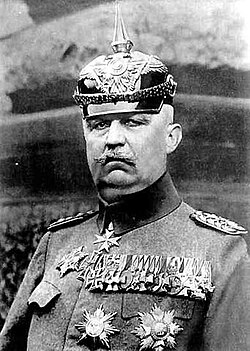
เมื่อวันที่ 29 กันยายน พ.ศ. 2461 กองบัญชาการทหารสูงสุดได้แจ้งให้จักรพรรดิวิลเฮล์มที่ 2และอัครมหาเสนาบดีเก ออร์ ก ฟอน เฮิร์ทลิงทราบว่าสถานการณ์ทางทหารสิ้นหวังแล้วเมื่อเผชิญกับความได้เปรียบอย่างท่วมท้นของฝ่ายศัตรูในด้านกำลังคนและยุทโธปกรณ์ พลเอกลูเดนดอร์ฟกล่าวว่าควรส่งคำขอหยุดยิงทันทีไปยัง ฝ่าย สัมพันธมิตรเพื่อหวังเงื่อนไขสันติภาพที่เอื้ออำนวยมากขึ้น เขายังแนะนำให้ยอมรับข้อเรียกร้องของประธานาธิบดีวูดโรว์ วิลสัน แห่งสหรัฐอเมริกา ที่ให้รัฐบาลจักรวรรดิเป็นประชาธิปไตย เป้าหมายของเขาคือการปกป้องชื่อเสียงของกองทัพจักรวรรดิโดยการโยนความรับผิดชอบต่อการยอมจำนนและผลที่ตามมาไปที่พรรคประชาธิปไตยและรัฐสภา[ 26 ] [ 27 ]ในการอ้างอิงอย่างคลุมเครือถึงคนงานที่ประท้วงหยุดงานในโรงงานผลิตอาวุธ พรรคสังคมประชาธิปไตยที่ช่วยผ่านมติสันติภาพของรัฐสภาในเดือนกรกฎาคม พ.ศ. 2460 และพวกสปาร์ตาซิสต์หัวรุนแรงที่ต้องการเผด็จการของชนชั้นกรรมาชีพเขากล่าวกับเจ้าหน้าที่ของเขาเมื่อวันที่ 1 ตุลาคมว่า:
ข้าพเจ้าได้ขอให้พระบาทสมเด็จพระเจ้าอยู่ทรงนำบุคคลเหล่านั้นซึ่งเราเป็นหนี้บุญคุณอย่างมากที่ทำให้เรามาถึงจุดนี้ได้ เข้ามาอยู่ในรัฐบาลด้วย ... บัดนี้ขอให้พวกเขาทำสันติภาพที่จำเป็นต้องเกิดขึ้น พวกเขาควรรับประทานซุปที่พวกเขาเสิร์ฟให้เรา! [ 28 ]
คำกล่าวของเขาถือเป็นจุดเริ่มต้นของ " ตำนานการแทงข้างหลัง " ( Dolchstoßlegende ) ซึ่งกล่าวว่านักสังคมนิยมปฏิวัติและนักการเมืองสาธารณรัฐได้ทรยศต่อกองทัพที่ไม่เคยพ่ายแพ้และเปลี่ยนชัยชนะที่เกือบจะแน่นอนให้กลายเป็นความพ่ายแพ้[ 29 ]
การตอบสนองทางการเมือง
แม้จะตกใจกับรายงานของลูเดนดอร์ฟและข่าวความพ่ายแพ้ที่แน่นอน พรรคเสียงข้างมากในไรช์สตาค โดยเฉพาะพรรค SPD ก็เต็มใจที่จะรับผิดชอบในการบริหารประเทศ อัครมหาเสนาบดีเฮิร์ทลิงคัดค้านการนำระบบรัฐสภามาใช้และลาออก จักรพรรดิวิลเฮล์มที่ 2 ทรงแต่งตั้งเจ้าชายแม็กซ์แห่งบาเดนเป็นอัครมหาเสนาบดีคนใหม่ในวันที่ 3 ตุลาคม เจ้าชายทรงได้รับการพิจารณาว่าเป็นเสรีนิยมและในขณะเดียวกันก็เป็นตัวแทนของราชวงศ์ สมาชิกส่วนใหญ่ในคณะรัฐมนตรีของพระองค์เป็นอิสระ แต่ก็มีสมาชิกจากพรรค SPD สองคนด้วย วันรุ่งขึ้น รัฐบาลใหม่ได้เสนอการหยุดยิงแก่ฝ่ายสัมพันธมิตรตามที่ลูเดนดอร์ฟยืนกราน และในวันที่ 5 ประชาชนชาวเยอรมันได้รับแจ้งถึงสถานการณ์ที่เลวร้ายที่พวกเขาเผชิญ[ 30 ] [ 31 ]แม้กระทั่งในช่วงเวลาที่สายเกินไปแล้ว การโฆษณาชวนเชื่อของรัฐบาลและสื่อมวลชนก็ยังทำให้ประชาชนเชื่อว่าสงครามจะยังคงชนะ ความตกใจจากการพ่ายแพ้ที่กำลังจะเกิดขึ้นทำให้เกิด "ความขมขื่นจนเป็นอัมพาตและความยอมจำนนอย่างสุดซึ้ง" ซึ่งปูทางให้กับผู้ที่ต้องการหยุดยิงทันที[ 32 ]
ในเดือนตุลาคม ประธานาธิบดีวิลสันตอบรับคำขอสงบศึกด้วยบันทึกทางการทูตสามฉบับ โดยกำหนดให้เยอรมนีถอนตัวออกจากดินแดนที่ถูกยึดครองทั้งหมด ยุติกิจกรรมเรือดำน้ำ และ (โดยนัย) ให้จักรพรรดิสละราชสมบัติ[ 33 ]หลังจากบันทึกฉบับที่สามเมื่อวันที่ 24 ตุลาคม ซึ่งเน้นย้ำถึงอันตรายต่อสันติภาพระหว่างประเทศที่แฝงอยู่ในอำนาจของ "กษัตริย์แห่งปรัสเซีย" และ "เจ้าหน้าที่ทหารของจักรวรรดิ" [ 34 ]นายพลลูเดนดอร์ฟจึงลาออก[ 35 ] และนายพล วิลเฮล์ม โกรเนอร์ได้รับการแต่งตั้งให้ดำรงตำแหน่งนายพลเสนาธิการคนแรกแทน
เมื่อวันที่ 28 ตุลาคม รัฐสภาไรช์สตาคได้ผ่านการปฏิรูปทางรัฐธรรมนูญที่เปลี่ยนเยอรมนีให้เป็นระบอบราชาธิปไตยแบบรัฐสภานายกรัฐมนตรีและคณะรัฐมนตรีต้องพึ่งพาความไว้วางใจจากเสียงข้างมากในรัฐสภาแทนที่จะเป็นจักรพรรดิ และสนธิสัญญาสันติภาพและการประกาศสงครามต้องได้รับการอนุมัติจากรัฐสภาไรช์สตาค[ 36 ]เนื่องจากนายกรัฐมนตรีต้องรับผิดชอบต่อการกระทำของจักรพรรดิภายใต้รัฐธรรมนูญ สิทธิในการบัญชาการทางทหารของจักรพรรดิ ( Kommandogewalt ) จึงกลายเป็นความรับผิดชอบของนายกรัฐมนตรีและอยู่ภายใต้การควบคุมของรัฐสภา[ 37 ]สำหรับพรรคสังคมประชาธิปไตย รัฐธรรมนูญเดือนตุลาคมตอบสนองวัตถุประสงค์ทางรัฐธรรมนูญที่สำคัญทั้งหมดของพรรค[ 38 ]เอเบิร์ตถือว่าการก่อตั้งรัฐบาลบาเดนเป็นวันเกิดของประชาธิปไตยเยอรมัน เนื่องจากจักรพรรดิได้สละอำนาจโดยสมัครใจ เขาจึงคิดว่าการปฏิวัติไม่จำเป็น[ 39 ]
เมื่อวันที่ 5 พฤศจิกายน ฝ่ายสัมพันธมิตรตกลงที่จะเริ่มการเจรจาเพื่อหยุดยิง หลังจากบันทึกฉบับที่สาม ทหารหลายคนคาดหวังว่าสงครามจะสิ้นสุดลงและอยากกลับบ้าน พวกเขาไม่ค่อยเต็มใจที่จะต่อสู้ในสมรภูมิรบอีกต่อไป และการหนีทัพก็เพิ่มมากขึ้น[ 40 ]
การปฏิวัติ ขั้นแรก: การล่มสลายของจักรวรรดิ
นักสังคมวิทยาแม็กซ์ เวเบอร์ระบุว่าการล่มสลายของจักรวรรดิเกิดจากการ "กัดกร่อน" ของมาตรฐานดั้งเดิม ของเยอรมนี ในช่วงสงคราม การขยายตัวของตลาดมืดยังเผยให้เห็นความล้มเหลวทางเศรษฐกิจและการเงินของระบบวิลเฮล์มิน เนื่องจากจักรพรรดิวิลเฮล์มทรงเป็นตัวแทนของระบบที่นำไปสู่ความยากลำบากและความอดอยากเป็นเวลานานสำหรับประชาชนในประเทศ และความพ่ายแพ้ที่กำลังจะเกิดขึ้นในสงคราม ความเชื่อที่ว่าพระองค์จะต้องสละราชสมบัติจึงแพร่กระจายออกไป[ 41 ]นักประวัติศาสตร์เอเบอร์ฮาร์ด โคลบเห็น "อัมพาตของเจตจำนง" อย่างกว้างขวางในอำนาจของรัฐในการรักษาความสงบเรียบร้อย และความปรารถนาที่สอดคล้องกันในหมู่ประชาชนสำหรับการเปลี่ยนแปลงที่สมบูรณ์ยิ่งขึ้นของระเบียบทางการเมืองและสังคม ประชาชนชาวเยอรมันเหนื่อยล้าจากสงครามอยู่แล้วเมื่อคำขอหยุดยิงมาเหมือนฟ้าผ่า จากจุดนั้น พวกเขาต้องการเพียงสันติภาพ[ 42 ]หลักสิบสี่ประการของวิลสันหล่อเลี้ยงความเชื่อที่ว่าเยอรมนีจะได้รับสันติภาพที่เป็นธรรมหากมีการเปลี่ยนผ่านสู่ประชาธิปไตย ดังนั้นความปรารถนาในสันติภาพจึงนำไปสู่การเรียกร้องประชาธิปไตย[ 41 ]กลุ่มปฏิวัติที่เคยอ่อนแอและไม่เป็นระเบียบกลับฮึกเหิมขึ้น และแม้แต่ชนชั้นกลางก็เริ่มเกรงว่าการปฏิรูปตามรัฐธรรมนูญจะไม่เพียงพอที่จะยุติสงครามได้อย่างรวดเร็วหากจักรพรรดิไม่สละราชสมบัติ[ 42 ]
| ส่วนหนึ่งของชุดบทความเกี่ยวกับ |
| การปฎิวัติ |
|---|
 |
| เว็บไซต์ข่าวการเมือง |
การก่อจลาจลของกะลาสีเรือ

การปฏิวัติเยอรมันถูกจุดชนวนโดยการก่อกบฏของทหารเรือที่ท่าเรือคีลและวิลเฮล์มสฮาเฟน ในทะเลเหนือ ในช่วงปลายเดือนตุลาคม พ.ศ. 2461 ในขณะที่ทหารที่เหนื่อยล้าจากสงครามและประชาชนทั่วไปของเยอรมนีกำลังรอคอยให้สงครามสิ้นสุดลงกองบัญชาการกองทัพเรือจักรวรรดิในคีลภายใต้การนำของพลเรือเอกฟรานซ์ ฟอน ฮิปเปอร์และพลเรือเอกไรน์ฮาร์ด เชียร์ได้วางแผนโดยไม่ได้รับอนุญาตที่จะส่งกองเรือจักรวรรดิไปทำการรบครั้งสุดท้ายกับกองทัพเรือ อังกฤษ ในทะเลเหนือตอนใต้[ 43 ]
คำสั่งทางเรือเมื่อวันที่ 24 ตุลาคม พ.ศ. 2461และการเตรียมการออกเรือได้ก่อให้เกิดการก่อกบฏในหมู่ลูกเรือที่เกี่ยวข้อง[ 43 ]พวกเขาไม่มีเจตนาที่จะเสี่ยงชีวิตในช่วงใกล้สิ้นสุดสงคราม และเชื่อมั่นว่าความน่าเชื่อถือของรัฐบาลใหม่ ซึ่งกำลังพยายามเจรจาสงบศึกกับฝ่ายสัมพันธมิตร จะถูกบั่นทอนลงด้วยการโจมตีทางเรือในช่วงเวลาสำคัญเช่นนี้ในการเจรจา[ 44 ]
การก่อกบฏเริ่มต้นขึ้นบนเรือจำนวนเล็กน้อยที่จอดทอดสมออยู่นอกชายฝั่งวิลเฮล์มสฮาเฟน เมื่อเผชิญกับการไม่เชื่อฟังของลูกเรือ กองบัญชาการทหารเรือจึงสั่งยุติการโจมตีในคืนวันที่ 29-30 ตุลาคม จับกุมผู้ก่อกบฏหลายร้อยคน และสั่งให้เรือกลับเข้าท่าเรือ ในวันที่ 3 พฤศจิกายน ตำรวจและทหารได้เผชิญหน้ากับการเดินขบวนประท้วงของลูกเรือไปยังเรือนจำในเมืองคีล ซึ่งเป็นที่คุมขังผู้ก่อกบฏ ทหารได้เปิดฉากยิงและสังหารผู้ประท้วงอย่างน้อย 9 คน ในวันถัดมา คนงานในเมืองคีลประกาศหยุดงานประท้วงทั่วประเทศเพื่อสนับสนุนการประท้วง และลูกเรือจากค่ายทหารที่วิก ทางเหนือของคีล ได้เข้าร่วมการเดินขบวน เช่นเดียวกับทหารจำนวนมากที่ถูกส่งมาเพื่อช่วยควบคุมการประท้วง[ 43 ]
เมื่อเผชิญกับสถานการณ์ที่ทวีความรุนแรงขึ้นอย่างรวดเร็ว พลเรือเอกวิลเฮล์ม ซูชอนผู้บัญชาการกองทัพเรือในเมืองคีล ได้ปล่อยตัวลูกเรือที่ถูกคุมขัง และขอให้ผู้ประท้วงส่งคณะผู้แทนมาพบกับเขาและตัวแทนสองคนจากรัฐบาลบาเดนที่เดินทางมาจากเบอร์ลิน[ 43 ]ลูกเรือมีข้อเรียกร้อง 14 ข้อ รวมถึงการลงโทษทางทหารที่เบาลง และเสรีภาพในการพูดและการพิมพ์อย่างเต็มที่ในจักรวรรดิ หนึ่งในตัวแทนจากรัฐบาลไรช์ กุสตาฟ นอสเกจากพรรคสังคมประชาธิปไตยส่วนใหญ่ (SPD) ได้ระงับสถานการณ์ในทันทีด้วยคำสัญญาว่าจะนิรโทษกรรม แต่ในขณะนั้นเมืองคีลก็ตกอยู่ในมือของสภาแรงงานและทหาร แล้ว และกลุ่มลูกเรือได้เดินทางไปยังเมืองใกล้เคียงเพื่อแพร่กระจายการลุกฮือ[ 45 ]ภายในไม่กี่วัน การปฏิวัติได้ครอบคลุมพื้นที่ทางตะวันตกของเยอรมนี[ 43 ]
การแพร่กระจายของการปฏิวัติ
ภายในวันที่ 7 พฤศจิกายน การปฏิวัติได้เข้าควบคุมเมืองชายฝั่งขนาดใหญ่ทั้งหมด ได้แก่ลือเบ็คเบรเมนฮัมบูร์กและแพร่กระจายไปยังเบราน์ชไวค์ โคโลญจน์และทางใต้สุดถึงมิวนิกที่นั่นเคิร์ต ไอส์เนอร์จากพรรคสังคมประชาธิปไตยอิสระ หัวรุนแรง (USPD) ได้รับเลือกเป็นประธานสภาแรงงาน ชาวนา และทหารแห่งบาวาเรีย และในวันที่ 8 พฤศจิกายน เขาได้ประกาศจัดตั้งรัฐประชาชนบาวาเรีย [ 46 ] พระเจ้าลุดวิกที่ 3และครอบครัวของพระองค์หนีออกจากมิวนิกไปยังออสเตรีย ซึ่งในคำประกาศอนิฟ เมื่อวันที่ 12 พฤศจิกายน พระองค์ทรงปลดข้าราชการและบุคลากรทางทหารทั้งหมดจากคำสาบานจงรักภักดีต่อพระองค์ ซึ่งเป็นการสละ ราชบัลลังก์วิทเทิลส์บาคอย่างมีประสิทธิภาพ[ 47 ]ภายในสิ้นเดือนผู้ปกครองราชวงศ์ของรัฐเยอรมันอื่นๆ ทั้งหมดได้สละราชบัลลังก์โดยไม่มีการนองเลือด[ 48 ]
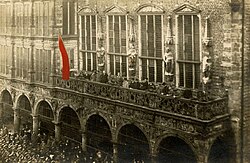
แทบไม่มีการต่อต้านการจัดตั้งสภาเลย ทหารมักเลือกสหายที่ตนเคารพนับถือมากที่สุดโดยการลงมติเห็นชอบอย่างง่ายๆ ส่วนคนงานโดยทั่วไปจะเลือกสมาชิกจากคณะกรรมการบริหารท้องถิ่นของพรรค SPD หรือ USPD [ 49 ]ด้วยการสนับสนุนจากประชาชนในท้องถิ่น พวกเขาได้ปล่อยตัวนักโทษทางการเมืองและเข้ายึดศาลากลาง สถานที่ทางทหาร และสถานีรถไฟ เจ้าหน้าที่ทหารยอมจำนนหรือหลบหนี และเจ้าหน้าที่พลเรือนยอมรับว่าตนอยู่ภายใต้การควบคุมของสภามากกว่ากองทัพ และดำเนินงานต่อไป[ 50 ]แทบไม่มีอะไรเปลี่ยนแปลงในโรงงาน ยกเว้นการยกเลิกระเบียบวินัยทางทหารที่เคยมีอยู่ตลอดช่วงสงคราม ทรัพย์สินส่วนตัวไม่ได้ถูกแตะต้อง[ 51 ]แม็กซ์ เวเบอร์ นักสังคมวิทยา เป็นส่วนหนึ่งของสภาแรงงานแห่งไฮเดลเบิร์กและรู้สึกประหลาดใจที่สมาชิกส่วนใหญ่เป็นพวกเสรีนิยมชาวเยอรมันสายกลาง สภาเข้ามารับหน้าที่ในการแจกจ่ายอาหาร กองกำลังตำรวจ และที่พักและเสบียงสำหรับทหารแนวหน้าที่ค่อยๆ กลับบ้าน
สภาแรงงานและทหารประกอบด้วยสมาชิกพรรค SPD และ USPD เกือบทั้งหมด โปรแกรมของพวกเขาเรียกร้องให้ยุติสงครามและรัฐกษัตริย์เผด็จการ นอกเหนือจากราชวงศ์แล้ว พวกเขาได้ริบอำนาจและสิทธิพิเศษเฉพาะกองบัญชาการทหารเท่านั้น แทบไม่มีการยึดทรัพย์สินหรือการยึดโรงงาน หน้าที่ของฝ่ายบริหารพลเรือนของจักรวรรดิและผู้ดำรงตำแหน่งต่างๆ เช่น ตำรวจ การบริหารเทศบาล และศาล ไม่ได้ถูกลดทอนหรือแทรกแซง เพื่อสร้างฝ่ายบริหารที่มุ่งมั่นต่อการปฏิวัติและอนาคตของรัฐบาลใหม่ สภาจึงปล่อยให้เจ้าหน้าที่รัฐบาลอยู่ในตำแหน่งต่อไปชั่วคราว และรับช่วงการกำกับดูแลจากกองบัญชาการทหารที่จัดตั้งขึ้นในช่วงสงครามเท่านั้น[ 52 ]
ที่น่าสังเกตคือ ความรู้สึกต่อต้านการปฏิวัติไม่ได้ส่งผลกระทบต่อพื้นที่ทางตะวันออกของเยอรมนีอย่างมีนัยสำคัญ นอกเหนือจากเหตุการณ์ความไม่สงบที่เกิดขึ้นประปรายในเมืองเบรสเลาในแคว้นไซลีเซียและเมืองเคอนิกส์เบิร์กในแคว้นปรัสเซียตะวันออก
ปฏิกิริยาในเบอร์ลิน

ฟรีดริช เอเบิร์ต ผู้นำพรรค SPD เห็นด้วยกับนายกรัฐมนตรี เจ้าชายแม็กซ์แห่งบาเดน ว่าต้องป้องกันการปฏิวัติทางสังคมและรักษาความสงบเรียบร้อยไว้ให้ได้ทุกวิถีทาง ในการปรับโครงสร้างรัฐ เอเบิร์ตต้องการเอาชนะใจพรรคการเมืองชนชั้นกลางที่เคยร่วมมือกับพรรค SPD ในรัฐสภาเมื่อปี 1917 รวมถึงชนชั้นนำเก่าของจักรวรรดิเยอรมันด้วย เขาต้องการหลีกเลี่ยงภัยคุกคามจากการปฏิวัติที่รุนแรงตามแบบรัสเซีย และยังกังวลว่าสถานการณ์ด้านเสบียงอาหารที่เปราะบางอาจพังทลายลง นำไปสู่การยึดอำนาจการบริหารโดยนักปฏิวัติที่ไร้ประสบการณ์ เขามั่นใจว่าพรรค SPD จะสามารถดำเนินแผนการปฏิรูปได้ในอนาคตเนื่องจากมีเสียงข้างมากในรัฐสภา
เอเบิร์ตพยายามอย่างเต็มที่ที่จะปฏิบัติตามข้อตกลงกับกลุ่มผู้มีอำนาจเดิมและตั้งใจที่จะรักษาสถาบันกษัตริย์ไว้ ด้วยความหวังว่าการเสด็จออกของจักรพรรดิและการจัดตั้งผู้สำเร็จราชการแทนพระองค์จะช่วยรักษาสถาบันกษัตริย์ภายใต้รัฐธรรมนูญที่จัดตั้งขึ้นเมื่อวันที่ 28 ตุลาคม พรรค SPD จึงเรียกร้องให้วิลเฮล์มสละราชสมบัติในวันที่ 7 พฤศจิกายน[ 53 ]ตามบันทึกที่เจ้าชายแม็กซ์แห่งบาเดนจดไว้ เอเบิร์ตบอกกับเขาว่า "หากจักรพรรดิไม่สละราชสมบัติ การปฏิวัติทางสังคมก็หลีกเลี่ยงไม่ได้ แต่ข้าพเจ้าไม่ต้องการมัน อันที่จริงข้าพเจ้าเกลียดมันเหมือนบาป" [ 54 ]
วิลเฮล์มที่ 2 ซึ่งยังคงอยู่ที่กองบัญชาการในสปา กำลังพิจารณาที่จะกลับไปเยอรมนีพร้อมกับกองทัพเพื่อปราบปรามความไม่สงบในเบอร์ลิน แม้ว่านายพลโกรเนอร์จะบอกเขาว่ากองทัพไม่สนับสนุนเขาอีกต่อไปแล้ว เขาก็ยังไม่สละราชสมบัติ[ 55 ]อัครมหาเสนาบดีวางแผนที่จะเดินทางไปสปาเพื่อโน้มน้าววิลเฮล์มด้วยตนเองถึงความจำเป็น แต่แผนของเขาก็ต้องหยุดชะงักลงเนื่องจากสถานการณ์ในเบอร์ลินเลวร้ายลงอย่างรวดเร็ว[ 56 ]
ในเวลานี้ วิลเฮล์มยอมรับว่าเขาจะต้องสละราชบัลลังก์จักรพรรดิ แต่ยังคงเชื่อว่าเขาสามารถเป็นกษัตริย์แห่งปรัสเซียต่อไปได้ ซึ่งเป็นไปไม่ได้ภายใต้รัฐธรรมนูญของจักรวรรดิที่กำหนดให้จักรวรรดิเป็นสมาพันธรัฐภายใต้การปกครองถาวรของปรัสเซีย ดังนั้นราชบัลลังก์จักรพรรดิจึงผูกพันกับราชบัลลังก์ปรัสเซีย และวิลเฮล์มไม่สามารถสละราชบัลลังก์หนึ่งได้โดยไม่สละราชบัลลังก์อีกราชบัลลังก์หนึ่ง[ 57 ]
การสละราชสมบัติและการประกาศจัดตั้งสาธารณรัฐ
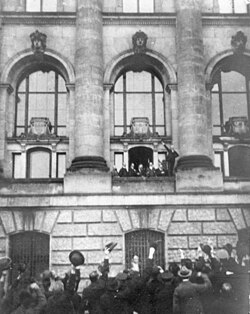
ในวันที่ 9 พฤศจิกายน อัครมหาเสนาบดีฟอน บาเดนได้โทรศัพท์ไปหาจักรพรรดิและพยายามโน้มน้าวให้พระองค์สละราชบัลลังก์ให้แก่ผู้สำเร็จราชการแทนพระองค์ ซึ่งจะแต่งตั้งเอเบิร์ตเป็นอัครมหาเสนาบดีตามรัฐธรรมนูญ เขาทำเช่นนั้นแทนที่จะเข้าพบจักรพรรดิด้วยพระองค์เองที่สปา หลังจากความพยายามของเขาไม่สำเร็จ บาเดนจึงออกประกาศโดยไม่ได้รับอนุญาตว่าจักรพรรดิและมกุฎราชกุมาร ได้สละ ราชบัลลังก์เยอรมันและปรัสเซีย[ 58 ]หลังจากนั้นไม่นาน หลังจากการประชุมคณะรัฐมนตรีสั้นๆ มกุฎราชกุมารก็ลาออกและโอนตำแหน่งอัครมหาเสนาบดีให้แก่ฟรีดริช เอเบิร์ต ซึ่งเป็นการกระทำที่ไม่ได้รับอนุญาตภายใต้รัฐธรรมนูญ[ 59 ]เอเบิร์ตได้ออกแถลงการณ์อย่างรวดเร็วประกาศการจัดตั้ง "รัฐบาลประชาชน" ใหม่ ซึ่งมีภารกิจเร่งด่วนคือการยุติสงครามให้เร็วที่สุดเท่าที่จะเป็นไปได้และเพื่อให้แน่ใจว่ามีอาหารเพียงพอสำหรับประชาชนชาวเยอรมันที่ยังคงได้รับผลกระทบจากการปิดล้อมของฝ่ายสัมพันธมิตรแถลงการณ์จบลงด้วย "ออกจากท้องถนน! รักษาความสงบเรียบร้อย!" [ 60 ]
ข่าวการสละราชสมบัติก่อนกำหนดมาถึงช้าเกินไปจนไม่สามารถสร้างความประทับใจใดๆ ให้กับผู้ประท้วงที่เต็มถนนในกรุงเบอร์ลินได้ ไม่มีใครสนใจคำเรียกร้องของประชาชน[ 61 ]ขณะรับประทานอาหารกลางวันในอาคารรัฐสภาฟิลิปป์ ไชเดมันน์รองประธานพรรค SPD ได้ทราบว่าคาร์ล ลีบเนคท์แห่งสันนิบาตสปาร์ตาคัสวางแผนที่จะประกาศสาธารณรัฐสังคมนิยม ไชเดมันน์ไม่ต้องการปล่อยให้สปาร์ตาคัสเป็นฝ่ายริเริ่ม จึงเดินไปที่หน้าต่างของอาคารรัฐสภาและประกาศสาธารณรัฐต่อหน้าผู้ประท้วงจำนวนมากที่รวมตัวกันอยู่ที่นั่น เอเบิร์ต ผู้ซึ่งเชื่อว่าการตัดสินใจเกี่ยวกับรูปแบบการปกครองของเยอรมนีในอนาคตเป็นของสมัชชาแห่งชาติของผู้แทนที่ได้รับการเลือกตั้งตามระบอบประชาธิปไตยของประชาชน จึงโกรธไชเดมันน์อย่างมากสำหรับการตัดสินใจอย่างฉับพลันของเขาที่จะประกาศสาธารณรัฐ[ 62 ]ไม่กี่ชั่วโมงต่อมาที่สวนลุสต์การ์เทน ในเบอร์ลิน ลีบ เนคท์ได้ประกาศจัดตั้งสาธารณรัฐสังคมนิยม ซึ่งเขายืนยันอีกครั้งจากระเบียงของพระราชวังเบอร์ลินต่อหน้าฝูงชนที่มารวมตัวกันในเวลาประมาณ 4 โมงเย็น[ 63 ]
เมื่อเผชิญกับสถานการณ์ที่ไม่อาจรับมือได้ วิลเฮล์มจึงลี้ภัยไปยังเนเธอร์แลนด์ในวันถัดมา ซึ่งเป็นการยุติการปกครองของราชวงศ์โฮเฮนโซลเลิร์นเหนือปรัสเซียและเยอรมนีเป็นเวลา 400 ปีอย่างแท้จริง จนกระทั่งวันที่ 28 พฤศจิกายน เขาจึงได้ออกแถลงการณ์สละราชสมบัติอย่างเป็นทางการ ในที่สุดเขาก็ยอมรับว่าเขาสูญเสียมงกุฎทั้งสองไปอย่างถาวร และสละ "สิทธิในมงกุฎปรัสเซียและสิทธิที่เกี่ยวข้องกับมงกุฎจักรวรรดิเยอรมัน" อย่างถาวร[ 64 ]
การปฏิวัติ ระยะที่สอง: การพ่ายแพ้ของฝ่ายซ้ายหัวรุนแรง
เมื่อระบอบกษัตริย์ล่มสลายลงภายใต้แรงกดดันของสภาแรงงานและทหาร ผู้นำของพรรคสังคมนิยมในเบอร์ลินจึงต้องรีบจัดตั้งระเบียบใหม่และแก้ไขปัญหาสำคัญมากมายที่ประเทศที่พ่ายแพ้ต้องเผชิญ ตั้งแต่เริ่มต้น กลุ่มสายกลางของพรรค SPD ครองตำแหน่งผู้นำ พวกเขาได้รับการสนับสนุนอย่างกว้างขวางที่สุดจากชนชั้นแรงงาน และอย่างน้อยที่สุดก็ได้รับการสนับสนุนอย่างไม่เต็มใจจากระบบราชการของจักรวรรดิ ซึ่งส่วนใหญ่ยังคงอยู่ในตำแหน่ง สภาผู้แทนราษฎรได้ยกเลิกข้อจำกัดที่เข้มงวดบางประการของจักรวรรดิในทันที เช่น ข้อจำกัดเกี่ยวกับเสรีภาพในการแสดงออก พวกเขาสัญญาว่าจะลดชั่วโมงการทำงานเหลือแปดชั่วโมงต่อวัน และจัดการเลือกตั้งที่จะให้สิทธิผู้หญิงในการลงคะแนนเสียงเป็นครั้งแรก[ 65 ]
อย่างไรก็ตาม เอเบิร์ตแสดงให้เห็นว่าเขายินดีที่จะใช้กองทัพและกองกำลังฟรีคอร์ปส์ต่อต้านสมาชิกฝ่ายซ้ายสังคมนิยมฝ่ายตรงข้าม ซึ่งนำไปสู่การแตกแยกอย่างรวดเร็วระหว่างพรรค SPD และพรรค USPD จากนั้นก็เกิดการปะทะกันบนท้องถนนกับพวกสปาร์ตาซิสต์และพวกคอมมิวนิสต์[ 66 ]
สภาต่างๆ
การจัดตั้ง ข้อตกลงกับกองทัพ และการหยุดยิง
เอเบิร์ตต้องการลดความรุนแรงของบรรยากาศการปฏิวัติและตอบสนองความต้องการของผู้ประท้วงเมื่อวันที่ 9 พฤศจิกายนที่ต้องการความสามัคคีของพรรคแรงงาน เขาเสนอให้ USPD มีส่วนร่วมเท่าเทียมกันในรัฐบาลและพร้อมที่จะยอมรับคาร์ล ลีบเนคท์เป็นรัฐมนตรี USPD ตามคำยืนกรานของลีบเนคท์ เรียกร้องให้ผู้แทนที่ได้รับการเลือกตั้งของสหภาพแรงงานและทหารมีอำนาจควบคุมฝ่ายบริหาร นิติบัญญัติ และตุลาการอย่างเต็มที่ SPD ปฏิเสธ และการเจรจาจึงไม่มีความคืบหน้าในวันนั้น[ 67 ]
ประมาณ 20.00 น. กลุ่มผู้แทนปฏิวัติ 100 คน จากโรงงานขนาดใหญ่ในเบอร์ลินได้เข้ายึดครองไรช์สตาก นำโดยโฆษกของพวกเขาริชาร์ด มุลเลอร์และเอมิล บาร์ธพวกเขาได้จัดตั้งรัฐสภาปฏิวัติขึ้น ผู้แทนที่เข้าร่วมส่วนใหญ่เคยเป็นผู้นำในการประท้วงหยุดงานในช่วงต้นปี พวกเขาไม่ไว้วางใจผู้นำพรรค SPD และได้วางแผนรัฐประหารในวันที่ 11 พฤศจิกายนโดยไม่ขึ้นกับการก่อจลาจลของกะลาสีเรือ แต่ไม่ได้เตรียมพร้อมสำหรับเหตุการณ์ปฏิวัติที่เกิดขึ้นนับตั้งแต่เหตุการณ์ที่คีล เพื่อที่จะช่วงชิงความได้เปรียบจากเอเบิร์ต พวกเขาจึงตัดสินใจประกาศจัดการเลือกตั้งในวันรุ่งขึ้น ซึ่งเป็นวันอาทิตย์ โรงงานทุกแห่งในเบอร์ลินจะต้องเลือกตั้งสภาคนงาน และสภาทหารทุกกรมจะต้องเลือกตั้งสภาทหาร ซึ่งจะเลือกตั้งรัฐบาลปฏิวัติจากสมาชิกของพรรคแรงงานสองพรรค (SPD และ USPD) ในช่วงเย็น รัฐบาลจะมีอำนาจในการดำเนินการตามมติของรัฐสภาปฏิวัติ เนื่องจากพวกเขามีเจตนาที่จะเข้ามาแทนที่บทบาทของเอเบิร์ตในฐานะนายกรัฐมนตรี[ 68 ]
ในเย็นวันที่เก้า ผู้นำพรรค SPD ได้รับรู้ถึงแผนการสำหรับการเลือกตั้งและการประชุมสภา เนื่องจากไม่สามารถป้องกันได้ออตโต เวลส์จึงใช้กลไกของพรรคเพื่อมีอิทธิพลต่อการลงคะแนนเสียงในสภาทหารและโน้มน้าวให้ทหารส่วนใหญ่หันมาสนับสนุนพรรค SPD เมื่อถึงเช้าวันรุ่งขึ้นก็เห็นได้ชัดว่าพรรค SPD จะได้รับเสียงข้างมากจากผู้แทนในการประชุมสภาในเย็นวันนั้น[ 69 ]
ประธาน USPD ฮูโก ฮาเซกลับจากคีลในเช้าวันที่ 10 พฤศจิกายน และสามารถไกล่เกลี่ยข้อประนีประนอมในการเจรจากับ SPD เกี่ยวกับรัฐบาลใหม่ได้ รัฐบาลปฏิวัติซึ่งจะถูกเรียกว่าสภาผู้แทนราษฎร ( Rat der Volksbeauftragten ) ตามคำเรียกร้องของ USPD ได้ให้สิ่งที่ USPD ต้องการเป็นส่วนใหญ่ สภาจะประกอบด้วยผู้แทนสามคนจาก SPD (เอเบิร์ต, ไชเดมันน์ และออตโต แลนด์สเบิร์ก ) และสามคนจาก USPD (ฮาเซ, วิลเฮล์ม ดิตต์มันน์และเอมิล บาร์ธ ) [ 70 ]สภาแรงงานและทหารจะได้รับอำนาจทางการเมือง – ไม่ใช่การควบคุมฝ่ายบริหาร นิติบัญญัติ และตุลาการอย่างเต็มที่ – และจะมีการหารือเกี่ยวกับสมัชชาแห่งชาติก็ต่อเมื่อ "มีการรวมเงื่อนไขที่สร้างขึ้นโดยการปฏิวัติแล้ว" [ 71 ]
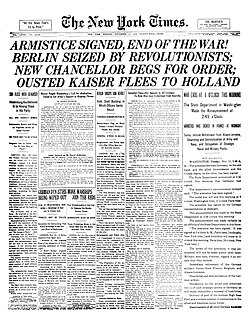
ในการประชุมสภาที่ได้รับการเลือกตั้งใหม่ซึ่งจัดขึ้นในช่วงบ่ายที่ Circus Busch สภาทหารเกือบทั้งหมดและตัวแทนคนงานส่วนใหญ่ยืนอยู่ข้างพรรค SPD [ 69 ]หลังจากที่ให้สัตยาบันสมาชิกภาพของสภาผู้แทนราษฎรแล้ว Emil Barth ได้เรียกร้องให้มีคณะกรรมการดำเนินการเพื่อกำกับดูแล และได้นำเสนอรายชื่อที่ร่างโดยผู้ดูแลการปฏิวัติ ข้อเสนอดังกล่าวทำให้ผู้นำพรรค SPD ประหลาดใจและก่อให้เกิดการถกเถียงอย่างร้อนแรงในที่ประชุม Ebert สามารถผลักดันให้มีการจัดตั้ง " สภาบริหารของสภาคนงานและทหารแห่งเบอร์ลินใหญ่ " ( Vollzugsrat des Arbeiter- und Soldatenrates Grossberlin ) ซึ่งประกอบด้วยสมาชิกพรรค SPD เจ็ดคน สมาชิกจากพรรค USPD เจ็ดคน และตัวแทนทหารอิสระส่วนใหญ่สิบสี่คน สภานี้มีหน้าที่กำกับดูแลผู้แทนราษฎรจนกว่าจะมีการจัดตั้งสภาแห่งชาติ โดยมี Richard Müller จากพรรค USPD เป็นประธาน และBrutus Molkenbuhrเป็นตัวแทนของทหาร[ 72 ] [ 73 ]
ในเย็นวันเดียวกันนั้น การโทรศัพท์ระหว่างเอเบิร์ตและพลเอกวิลเฮล์ม โกรเนอร์ ผู้บัญชาการทหารสูงสุดคนใหม่ ส่งผลให้เกิดข้อตกลงลับระหว่างเอเบิร์ตและโกรเนอร์ขึ้น เพื่อแลกกับการที่โกรเนอร์รับรองว่ากองทัพจะให้การสนับสนุน "เพื่อประโยชน์ของรัฐ" เอเบิร์ตจึงให้สัญญากับโกรเนอร์ว่าลำดับชั้นและโครงสร้างการบังคับบัญชาของกองทัพจะไม่เปลี่ยนแปลง ดังนั้นเขาจึงไม่ได้พยายามทำให้กองทัพเผด็จการเป็นประชาธิปไตย ดังที่โกรเนอร์กล่าวไว้ในบันทึกความทรงจำของเขาว่า "องค์ประกอบที่ดีที่สุดและแข็งแกร่งที่สุดของลัทธิปรัสเซียแบบเก่าถูกเก็บรักษาไว้สำหรับเยอรมนีใหม่" [ 74 ]
ท่ามกลางความวุ่นวายในวันนั้น การที่รัฐบาลเอเบิร์ตยอมรับเงื่อนไขที่เข้มงวดของฝ่ายสัมพันธมิตรสำหรับการหยุดยิงหลังจากการเรียกร้องครั้งใหม่จากกองบัญชาการทหารสูงสุดนั้นแทบจะไม่มีใครสังเกตเห็น ในวันที่ 11 พฤศจิกายนมัทธิอัส เออร์ซเบอร์เกอร์รองผู้แทนพรรคกลางได้ลงนามในข้อตกลงหยุดยิงที่เมืองกงปิแยญประเทศฝรั่งเศส ในนามของรัฐบาลในเบอร์ลิน และสงครามโลกครั้งที่ 1 ก็สิ้นสุดลง[ 75 ]
รัฐบาลรักษาการ
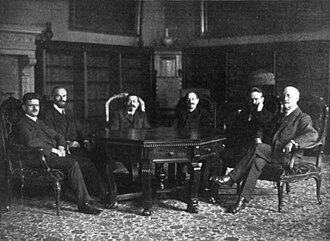
เมื่อวันที่ 12 พฤศจิกายน สภาผู้แทนราษฎรได้เผยแพร่โครงการของรัฐบาลในประกาศ "ถึงประชาชนชาวเยอรมัน" โดยยกเลิกสถานการณ์ปิดล้อมและการเซ็นเซอร์ นิรโทษกรรมนักโทษการเมืองทั้งหมด รับประกันเสรีภาพในการรวมกลุ่ม การชุมนุม และการพิมพ์ และยกเลิกกฎที่ควบคุมความสัมพันธ์ระหว่างลูกจ้างและนายจ้าง นอกจากนี้ยังให้คำมั่นว่าจะนำระบบการเลือกตั้งโดยตรงที่เท่าเทียมและเป็นสากลสำหรับผู้หญิงและผู้ชายทุกคนตั้งแต่อายุ 20 ปีขึ้นไปมาใช้ กำหนดให้ทำงานวันละแปดชั่วโมง และปรับปรุงสวัสดิการด้านการว่างงาน ประกันสังคม และค่าชดเชยแรงงาน[ 76 ]
ตามทฤษฎีแล้ว สภาบริหารของสภาแรงงานและทหารแห่งเบอร์ลินใหญ่ถือเป็นสภาที่มีลำดับสูงสุดของระบอบปฏิวัติ ดังนั้นริชาร์ด มุลเลอร์จึงเป็นประมุขแห่งรัฐของ "สาธารณรัฐสังคมนิยมเยอรมนี" ที่เพิ่งประกาศจัดตั้งขึ้น[ 77 ]แต่ในทางปฏิบัติแล้ว การริเริ่มของสภาบริหารถูกขัดขวางโดยการต่อสู้แย่งชิงอำนาจภายใน ในช่วงแปดสัปดาห์ของการปกครองแบบสองอำนาจของสภาบริหารและรัฐบาลที่นำโดยเอเบิร์ต รัฐบาลหลังมักจะมีอำนาจเหนือกว่าเสมอ แม้ว่าฮาเซจะเป็นประธานร่วมอย่างเป็นทางการในสภาผู้แทนราษฎรโดยมีสิทธิเท่าเทียมกัน แต่ฝ่ายบริหารระดับสูงมักจะเลือกทำงานร่วมกับเอเบิร์ตและพรรค SPD ที่มีแนวคิดสายกลางมากกว่า[ 78 ]
รัฐบาลมองว่าภารกิจเร่งด่วนของตนคือการปฏิบัติตามเงื่อนไขของสนธิสัญญาแวร์ซาย การปลดประจำการ การจัดหาเสบียงอาหารและเชื้อเพลิงที่เพียงพอสำหรับประเทศที่ยังคงอยู่ภายใต้การปิดล้อม ของฝ่าย สัมพันธมิตร และการรักษาความมั่นคงทั้งภายในและภายนอกประเทศจากกลุ่มแบ่งแยกดินแดนในจังหวัดไรน์และกลุ่มกบฏชาวโปแลนด์ในภาคตะวันออก เพื่อให้แน่ใจว่าประชาธิปไตยใหม่มีความมั่นคง รัฐบาลจะต้องตัดขาดจากสถาบันเก่าเกือบทั้งหมด แต่พรรค SPD ตัดสินใจว่าการเผชิญกับวิกฤตหลังสงครามในทันทีนั้นสำคัญกว่า ในการทำเช่นนั้น รัฐบาลต้องพึ่งพาโครงสร้างและความเชี่ยวชาญที่มีอยู่ทั้งในภาครัฐและภาคเอกชน[ 3 ]แม้หลังจากวันที่ 9 พฤศจิกายน ทุกอย่างก็ไม่ได้พังทลายลง การบริหารยังคงดำเนินต่อไป ข้าราชการจากยุคจักรวรรดิอยู่ภายใต้การกำกับดูแลของสภา แต่ยังคงดำรงตำแหน่งและทำงานต่อไปโดยส่วนใหญ่ไม่เปลี่ยนแปลง[ 58 ]ระบบตุลาการและการศึกษาได้รับผลกระทบจากการปฏิวัติเพียงเล็กน้อยหรือแทบไม่มีเลย และหลังจากสนธิสัญญาเอเบิร์ต-โกรเนอร์ กองบัญชาการทหารสูงสุดก็กลายเป็นพันธมิตรของสภาผู้แทนราษฎร[ 79 ]นายพลและเจ้าหน้าที่ระดับสูงคนอื่นๆ ยังคงดำรงตำแหน่งของตน รัฐบาลเอเบิร์ตต้องการให้ OHL จัดการปัญหาใหญ่หลวงของการปลดประจำการ แต่สภาผู้แทนราษฎรไม่ได้พยายามจำกัดอำนาจของตนไว้เฉพาะภารกิจที่จำเป็นที่สุด ไม่มีการพยายามยึดทรัพย์สิน ของขุนนาง เอลเบียตะวันออก (ซึ่งในอดีตเคยจัดหาเจ้าหน้าที่จำนวนมาก) หรือเจ้าของที่ดินขนาดใหญ่ที่เป็นชนชั้นกลาง[ 3 ]
พรรค SPD และ USPD อยู่ภายใต้แรงกดดันด้านเวลาอย่างมากในการดำเนินการ เมื่อทั้งสองพรรคจัดตั้งพันธมิตรกัน พวกเขาเลือกที่จะปกครองนอกเหนือรัฐธรรมนูญของจักรวรรดิ โดยสั่งให้รัฐสภาไม่ต้องประชุมอีก และออกคำสั่งให้สภาแห่งรัฐสหพันธ์ ( Bundesrat ) ที่มีอยู่เดิม ทำหน้าที่เฉพาะด้านการบริหารเท่านั้น ไม่ใช่อำนาจนิติบัญญัติ[ 80 ]โดยพื้นฐานแล้ว สภาได้เข้ามารับบทบาทเดิมของจักรพรรดิ อัครมหาเสนาบดีBundesratและรัฐสภา สภาเริ่มทำงานตามระเบียบวิธีปฏิบัติในวันที่ 12 พฤศจิกายน ระเบียบดังกล่าวห้ามการแทรกแซงการบริหารโดยไม่ได้รับอนุญาตจากสมาชิกแต่ละคนของสภา คำสั่งของสภาต่อเลขาธิการรัฐต้องออกในภาพรวมและเป็นเพียงแนวทางเท่านั้น ไม่ใช่สำหรับกรณีเฉพาะ[ 81 ]
ผ่านทางสภาต่างๆ พรรคสังคมนิยมสามารถสร้างฐานที่มั่นคงในระดับท้องถิ่นได้ แต่ในขณะที่พวกเขาเชื่อว่าพวกเขากำลังดำเนินการเพื่อผลประโยชน์ของระเบียบใหม่ ผู้นำพรรค SPD กลับมองว่าพวกเขาเป็นองค์ประกอบที่คุกคามการเปลี่ยนผ่านอำนาจอย่างสันติที่พวกเขาคิดว่าได้เกิดขึ้นแล้ว[ 82 ]ร่วมกับพรรคชนชั้นกลาง พวกเขาผลักดันให้มีการเลือกตั้งสภาแห่งชาติอย่างรวดเร็ว ซึ่งจะเป็นผู้ตัดสินใจขั้นสุดท้ายเกี่ยวกับรูปแบบของรัฐใหม่ จุดยืนนี้ทำให้พรรค SPD ตกอยู่ในความขัดแย้งกับนักปฏิวัติหลายคน พรรค USPD ยังคงต้องการเลื่อนการเลือกตั้งออกไปจนกว่าความสำเร็จของการปฏิวัติจะได้รับการรวมศูนย์[ 83 ]
แม้ว่าเอเบิร์ตจะรักษาตำแหน่งที่สำคัญของพรรค SPD ไว้ได้และป้องกันการปฏิวัติทางสังคม แต่เขาก็ไม่พอใจกับผลลัพธ์ เขาไม่ได้มองว่าสภาหรือคณะบริหารเป็นสิ่งที่เป็นประโยชน์ แต่กลับมองว่าเป็นอุปสรรคที่ขัดขวางการเปลี่ยนผ่านอย่างราบรื่นจากระบอบกษัตริย์ไปสู่ระบบการปกครองใหม่ ผู้นำพรรค SPD ทั้งหมดไม่ไว้วางใจสภามากกว่าชนชั้นนำเก่าในกองทัพและฝ่ายบริหาร ในขณะเดียวกันพวกเขาก็ประเมินความภักดีของชนชั้นนำเก่าต่อสาธารณรัฐใหม่สูงเกินไป เอเบิร์ตไม่สามารถทำหน้าที่เป็นนายกรัฐมนตรีต่อหน้า OHL หรือเพื่อนร่วมงานชนชั้นกลางของเขาในหมู่รัฐมนตรีและในไรช์สตาคได้อีกต่อไป แต่ทำได้เพียงเป็นประธานของรัฐบาลปฏิวัติ แม้ว่าเขาจะเป็นผู้นำการปฏิวัติเพื่อหยุดยั้งมัน แต่พวกอนุรักษ์นิยมก็มองว่าเขาเป็นคนทรยศ[ 84 ]
การแปรรูปเป็นของรัฐและสหภาพแรงงาน
ตามคำเรียกร้องของตัวแทน USPD สภาผู้แทนราษฎรได้แต่งตั้ง "คณะกรรมการการแปรรูปเป็นของรัฐ" ซึ่งประกอบด้วยนักทฤษฎีมาร์กซิสต์Karl KautskyและRudolf Hilferdingประธานสหภาพคนงานเหมืองสังคมนิยม Otto Hue และนักเศรษฐศาสตร์ชั้นนำจำนวนหนึ่ง คณะกรรมการมีหน้าที่ตรวจสอบว่าอุตสาหกรรมใด "เหมาะสม" สำหรับการแปรรูปเป็นของรัฐ และเตรียมการสำหรับการแปรรูปอุตสาหกรรมถ่านหินเป็นของรัฐ คณะกรรมการประชุมจนถึงวันที่ 7 เมษายน 1919 โดยไม่ก่อให้เกิดผลลัพธ์ที่เป็นรูปธรรมใดๆ[ 85 ] "หน่วยงานบริหารตนเอง" ได้รับการจัดตั้งขึ้นเฉพาะในเหมืองถ่านหินและเหมืองโพแทสเท่านั้น[ 86 ] จากหน่วยงานเหล่านั้นจึงเกิดเป็น สภาแรงงานเยอรมันสมัยใหม่หรือคณะกรรมการโรงงาน

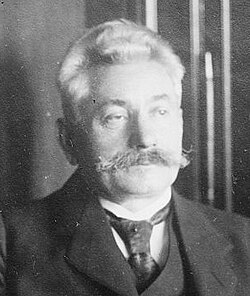
เช่นเดียวกับกลุ่มสายกลางของพรรค SPD สหภาพแรงงานก็เกรงกลัวสภาเช่นกัน เพราะผู้สนับสนุนมองว่าสภาจะเข้ามาแทนที่สหภาพแรงงาน[ 87 ]เพื่อป้องกันไม่ให้เกิดเหตุการณ์เช่นนั้นคาร์ล เลเกียน (SPD) ผู้นำสหภาพแรงงาน ได้พบกับตัวแทนอุตสาหกรรมหนักที่นำโดยฮูโก สตินเนสในกรุงเบอร์ลิน ระหว่างวันที่ 9 ถึง 12 พฤศจิกายน และในวันที่ 15 พฤศจิกายน พวกเขาได้ลงนามในข้อตกลงสตินเนส-เลเกียนซึ่งมีข้อดีสำหรับทั้งสองฝ่าย นายจ้างยอมรับสหภาพแรงงานในฐานะตัวแทนอย่างเป็นทางการของแรงงาน และรับรองสิทธิในการเจรจาต่อรองร่วมกันข้อตกลงนี้ยังได้กำหนดวันทำงาน 8 ชั่วโมงอนุญาตให้จัดตั้งสภาแรงงานและคณะกรรมการอนุญาโตตุลาการในบริษัทที่มีพนักงานมากกว่า 50 คน และรับประกันว่าทหารที่กลับมาจะมีสิทธิได้รับงานเดิมก่อนสงคราม[ 88 ]ข้อพิพาทในอนาคตจะได้รับการแก้ไขผ่านองค์กรที่จัดตั้งขึ้นใหม่ชื่อ "กลุ่มทำงานกลาง" ( Zentralarbeitsgemeinschaftหรือ ZAG) [ 89 ]
ด้วยข้อตกลงดังกล่าว สหภาพแรงงานบรรลุข้อเรียกร้องที่มีมานานหลายประการ และการยอมรับวิสาหกิจเอกชนทำให้ความพยายามในการโอนกรรมสิทธิ์วิธีการผลิตเป็นของรัฐทำได้ยากขึ้น[ 88 ]
สภาผู้แทนแรงงานและทหารแห่งไรช์

สภาบริหารได้เรียกประชุมสภาแรงงานและทหารจากทั่วประเทศในกรุงเบอร์ลิน โดยเริ่มตั้งแต่วันที่ 16 ธันวาคม เมื่อสภาแรงงานและทหารแห่งไรช์ ( Reichskongress der Arbeiter- und Soldatenräte ) ประชุมกันในห้องประชุมสภาผู้แทนราษฎรปรัสเซียปรากฏว่าส่วนใหญ่ประกอบด้วยผู้สนับสนุนพรรค SPD แม้แต่คาร์ล ลีบเนคท์ หรือโรซา ลักเซมเบิร์ก ก็ไม่ได้รับเลือกให้เข้าร่วม ทำให้สันนิบาตสปาร์ตาคัสไม่มีอิทธิพล ในวันที่ 19 ธันวาคม สภาลงมติ 344 ต่อ 98 เสียงคัดค้านการจัดตั้งระบบสภาเป็นพื้นฐานสำหรับรัฐธรรมนูญฉบับใหม่ แต่กลับสนับสนุนการตัดสินใจของรัฐบาลที่จะจัดการเลือกตั้งโดยเร็วที่สุดเพื่อจัดตั้งสภารัฐธรรมนูญแห่งชาติเพื่อตัดสินเกี่ยวกับระบบรัฐในอนาคต[ 90 ]
จากนั้นสภาคองเกรสได้อนุมัติข้อเสนอของพรรค SPD ที่จะมอบอำนาจในการออกกฎหมายและบริหารให้กับสภาผู้แทนราษฎรจนกว่าสมัชชาแห่งชาติจะตัดสินใจขั้นสุดท้ายเกี่ยวกับรูปแบบการปกครอง การกำกับดูแลสภาถูกเปลี่ยนจากสภาบริหารเบอร์ลินไปเป็นสภากลางแห่งสาธารณรัฐสังคมนิยมเยอรมัน ( Zentralrat der Deutschen Sozialistischen Republik ) แห่งใหม่ หลังจากที่สภาคองเกรสยอมรับคำจำกัดความของการกำกับดูแลโดยรัฐสภาของพรรค SPD แล้ว พรรค USPD ก็บอยคอตการเลือกตั้งสภากลาง ส่งผลให้สภามีสมาชิกจากพรรค SPD เท่านั้น[ 91 ]
ภายใต้การกำกับดูแลของสภาบริหารเบอร์ลิน ผู้แทนประชาชนมีอำนาจในการบัญชาการทหารและดูแลให้ยุติลัทธิทหารนิยม[ 58 ]รัฐสภาลงมติเป็นเอกฉันท์ให้มีการประชาธิปไตยในกองทัพตามที่ระบุไว้ในข้อฮัมบูร์ก: จะไม่มีเครื่องหมายยศอีกต่อไปและห้ามพกอาวุธเมื่อไม่ได้ปฏิบัติหน้าที่ ทหารจะเลือกนายทหารเอง สภาทหารจะเป็นผู้รับผิดชอบด้านระเบียบวินัย และกองทัพประจำการจะถูกแทนที่ด้วยกองทัพประชาชน ( Volkswehr ) กองบัญชาการทหารคัดค้านข้อฮัมบูร์กอย่างรุนแรง และไม่มีร่องรอยของข้อนี้เหลืออยู่ในรัฐธรรมนูญไวมาร์[ 92 ]
หันไปใช้ความรุนแรง
การต่อต้านจากฝ่ายขวา
เมื่อวันที่ 6 ธันวาคม พ.ศ. 2461 ในสิ่งที่น่าจะเป็นความพยายามก่อรัฐประหาร กลุ่มนักศึกษาและทหารติดอาวุธ รวมถึงสมาชิกบางส่วนของกองพลทหารเรือประชาชน ( Volksmarinedivision ) ได้ไปที่ทำเนียบรัฐบาลไรช์และขอให้ฟรีดริช เอเบิร์ต รับตำแหน่งประธานาธิบดีที่มีอำนาจเกือบเบ็ดเสร็จ ซึ่งเอเบิร์ตปฏิเสธข้อเสนอนี้อย่างระมัดระวัง[ 93 ]ในเวลาเดียวกันนั้น – แม้ว่าบางแหล่งข้อมูลจะกล่าวว่าเกี่ยวข้องกับผู้ประท้วงกลุ่มเดียวกันกับที่พูดคุยกับเอเบิร์ต[ 12 ] – กลุ่มทหารได้ควบคุมตัวสมาชิกของสภาบริหารไว้ชั่วคราว[ 94 ]ในเหตุการณ์ที่ไม่เกี่ยวข้องกันหลายชั่วโมงต่อมา สมาชิกของกรมทหารราบรักษาพระองค์ (Garde-Füsilier-Regiment) ซึ่งรับผิดชอบด้านความปลอดภัยในเขตราชการของเบอร์ลิน ได้ยิงใส่การชุมนุมของกลุ่มสปาร์ตาซิสต์ที่ได้รับอนุญาต ทำให้มีผู้เสียชีวิต 16 คน และบาดเจ็บสาหัส 12 คน[ 95 ] [ 96 ]ยังไม่แน่ชัดว่าใครเป็นผู้สั่งให้ยิง หรือใครอยู่เบื้องหลังการก่อรัฐประหารที่สันนิษฐานไว้[ 97 ]นักประวัติศาสตร์Heinrich August Winklerระบุว่าเป็นฝีมือของ "เจ้าหน้าที่และข้าราชการระดับสูง" ที่วางแผนให้ Ebert ยุบสภาคนงานและทหารโดยได้รับการสนับสนุนจากกองทัพ[ 12 ]
Ebert and the Army High Command (OHL) had agreed that troops returning from the front would parade through Berlin on 10 December. Ebert greeted them with a glowing speech that included words that would help give rise to the stab-in-the-back myth: "No enemy overcame you." General Groener had wanted to use the soldiers to disarm the civilians of Berlin and rid it of Spartacists, but the majority of the soldiers wanted only to return home for Christmas with their families and simply dispersed into the city after the parade. Their lack of interest in more fighting put an end to Groener's hope that he could lead the troops to domestic successes that would make the OHL the recognized force in restoring order.[12]
As a result of the events, the potential for violence and the danger of a coup from the Right became visible. Rosa Luxemburg, in the Spartacist newspaper Rote Fahne ("Red Flag"), demanded the peaceful disarmament of returning soldiers by the workers of Berlin. She wanted the soldiers' councils to be subordinated to the revolutionary parliament and the soldiers to be "re-educated".
Christmas crisis
Because the People's Navy Division had been helpful to the government in Kiel and was considered loyal,[98] it was ordered to Berlin in early November to help protect the city's government quarter and stationed in the Royal Stables across from the Berlin Palace. Following the coup attempt of 6 December, the sailors deposed their commander because of his alleged involvement in it.[99] The government came to see the division as generally standing with the leftist revolutionaries,[100] and on 23 December, the Council of the People's Deputies ordered it out of Berlin, considerably reduced its size and refused the men their pay.[101]

The sailors then occupied the Reich Chancellery, cut the phone lines, put the Council of People's Representatives under house arrest, and took Otto Wels hostage and physically abused him. Ebert, who was in touch with the Supreme Command in Kassel via a secret phone line, gave orders on the morning of 24 December to attack the Palace with troops loyal to the government. The sailors repelled the attack after they were joined by armed workers and the security forces of the Berlin police.[102] The government troops had to withdraw with the loss of 56 soldiers. The People's Navy Division, which counted just 11 deaths, was allowed to remain intact, and the sailors received their pay.[101]
The main result of the Christmas crisis, which the Spartacists named "Ebert's Bloody Christmas",[103] was that the USPD resigned from the government in protest on 29 December. Its three members were replaced on the Council of the People's Deputies by two from the SPD: Gustav Noske (responsible for the military) and Rudolf Wissell (labour and social affairs).[102] In light of the military's failure at the Berlin Palace, Noske ordered a strengthening of the Freikorps for use against internal enemies.[101]
Founding of the Communist Party and Spartacist uprising

After their experiences with the SPD and the USPD, the Spartacists concluded that their goals could be met only by forming a party of their own. They therefore joined with other left-socialist groups from across Germany to found the Communist Party of Germany (KPD).[104]
Rosa Luxemburg drew up a founding programme and presented it on 31 December 1918. She wrote that the communists could never take power without the clear will of the majority of the people. On 1 January 1919, the far Left Spartacists founded the Communist Party of Germany. She proposed that the KPD participate in the elections for a national assembly, but a motion to boycott the elections passed 62 to 23. In the words of Marxist historian Arthur Rosenberg, the majority still implicitly hoped to gain power through "putschist adventures". After deliberations with the Spartacists, the Revolutionary Stewards decided to remain in the USPD.[105]
A wave of violence started on 4 January when the Prussian government dismissed the chief of the Berlin police, Emil Eichhorn (USPD), for supporting the People's Navy Division during the Christmas crisis. His dismissal led the USPD, Revolutionary Stewards and KPD chairmen Karl Liebknecht and Wilhelm Pieck to call for a demonstration the following day. On 5 January, as on 9 November 1918, hundreds of thousands of people poured into the centre of Berlin, many of them armed. In the afternoon, the train stations and the newspaper district with the offices of the middle-class press and the SPD' Vorwärts were occupied.[58]
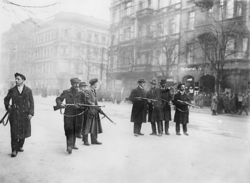
The demonstrators were mainly the same people who had participated in the revolutionary actions in November who were demanding the fulfilment of their wish for a workers' government expressed two months previously. The so-called "Spartacist uprising" that followed originated only partially in the KPD. The Spartacists did not have a leading position in January 1919. KPD members were a minority among the insurgents.[106]
The initiators of the revolt, who had gathered at the Police Headquarters, elected a 53-member "Interim Revolutionary Committee" (Provisorischer Revolutionsausschuss) that failed to make use of its power and was unable to give any clear direction.[107] Liebknecht wanted the government overthrown and agreed with the majority of the Committee that supported an armed struggle. Rosa Luxemburg and other KPD leaders (Leo Jogiches, Karl Radek) thought a revolt at that time to be premature and spoke out against it, although Luxemburg later gave in and followed the will of the majority of the Committee.[108]
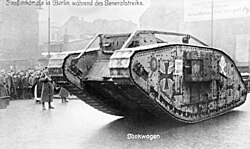
On the following day, 6 January, the Revolutionary Committee again called for a mass demonstration. Even more people heeded the call and filled the streets from the Siegesallee to the Alexanderplatz. But the masses were leaderless; the Committee provided no direction and no orders to act.[109] In addition, the protestors lacked support from the military. Even the People's Navy Division was unwilling to support the armed revolt and declared themselves neutral. The other regiments stationed in Berlin mostly remained loyal to the government.[110] As a result, very little happened that day.
While more troops were moving into Berlin on Ebert's order, he accepted an offer by the USPD to mediate between the government and the Revolutionary Committee, but the negotiations failed the following day. On 8 January, in an appeal to the people of Berlin, the Council of the People's Deputies stated that "force can be fought only with force. ... The hour of reckoning approaches!"[111] The USPD and KPD leadership decided to press ahead with the revolutionary overthrow of the Ebert government, but the masses were more interested in the unification of the parties of the Left. Finally, on 11 January, Freikorps forces attacked and took the Vorwärts building with heavy weaponry.[112] Six parliamentarians who came out to negotiate a surrender were summarily shot. The remaining occupied buildings were taken the same day, and by 12 January the uprising was over.[113] The death toll was estimated at 156.[114]
The historian Eberhard Kolb calls the January Revolt the revolution's Battle of the Marne (Germany's July 1918 battlefield defeat that led directly to the Armistice). The 1919 uprising and its brutal end exacerbated the already deep divisions in the workers' movement and fuelled more political radicalisation.[42]
Murder of Karl Liebknecht and Rosa Luxemburg
Rosa Luxemburg and Karl Liebknecht, the ringleaders of the January Revolt, were forced to go into hiding after its failure, but in spite of the urgings of their associates, they refused to leave Berlin. On the evening of 15 January 1919, the two were found by the authorities in an apartment in the Wilmersdorf district of Berlin. They were immediately arrested and handed over to the largest Freikorps unit, the heavily armed Guards Cavalry Rifle Division. Its staff officer, Captain Waldemar Pabst, had them questioned. The same night both prisoners were clubbed with the butt of a rifle and shot in the head. Karl Liebknecht's body, without a name, was delivered to a nearby morgue. Rosa Luxemburg's body was thrown into Berlin's Landwehr Canal, where it was found only on 1 July.[115]
The perpetrators for the most part went unpunished. The Nazi Party later compensated the few who had been put on trial or jailed,[116] and they merged the Garde-Kavallerie into the SA (Sturmabteilung). In an interview given to Der Spiegel in 1962 and in his memoirs, Pabst maintained that he had talked on the phone with Noske in the Chancellery[117] and that Noske and Ebert had approved of his actions.[118] Pabst's statement was never confirmed, especially since neither the Reichstag nor the courts ever examined the case.
Final revolts

In the first months of 1919, there were additional armed revolts in parts of Germany that culminated in the Berlin March Battles. The overall cause was continued disappointment among workers of the radical left that the revolution had not achieved the goals they had hoped for in November 1918: nationalisation of key industries, recognition of the workers' and soldiers' councils and establishment of a council republic. In 1919, however, attaining the goals would have required the overthrow of the Ebert government.[119] General strikes were called in Upper Silesia in January, in the Ruhr district in February[120] and in Saxony and Thuringia in February and March.
In Berlin, members of the USPD and KPD called for a general strike, which started on 4 March. Its key aims were the socialisation of major industries, democratisation of the military and the safeguarding of the position of the remaining workers' and soldiers' councils. Against the will of the leadership, the strikes escalated into street fighting. The Prussian state government, which had declared a state of siege, called on the Reich government for help. It responded with the deployment of both government and Freikorps troops. On 9 March, Gustav Noske, to whom executive power had been transferred, gave the order to shoot on sight anyone found carrying a weapon. By the end of the fighting on 16 March, the uprising had been bloodily quashed, with a death toll of at least 1,200.[119]
Short-lived soviet republics were proclaimed in a number of cities and towns into early 1919, but only those in Bavaria and Bremen lasted longer than a few days. They were overthrown by government and Freikorps troops with considerable loss of life: 80 in Bremen (February) and about 600 in Munich (May).[121]
According to the predominant opinion of modern historians, the establishment of a Bolshevik-style council government in Germany following the war would have been all but impossible. The Ebert government felt threatened by a coup from the Left and was certainly undermined by the Spartacus movement. That underlay its cooperation with the Supreme Army Command and the Freikorps. The brutal actions of the Freikorps during the various revolts estranged many left democrats from the SPD. They regarded the behaviour of Ebert, Noske and the other SPD leaders during the revolution as a betrayal of their own followers.[122]
National Assembly and new Reich constitution
On 19 January 1919, Germans voted for representatives to a constituent national assembly in an election that included women for the first time. The SPD received the highest percentage of votes (38%), and with the Catholic Centre Party and the liberal German Democratic Party, it formed the Weimar Coalition. The USPD received only 7.6% of the vote; the KPD did not participate.[123] To remove itself from the post-revolutionary confusion in Berlin, the National Assembly met in Weimar beginning on 6 February. The Assembly elected Friedrich Ebert temporary president on 11 February and Philipp Scheidemann minister president on 13 February.[124]
In addition to drawing up and approving a new constitution, the Assembly was responsible for passing urgently needed Reich laws. In May it found itself embroiled in the highly contentious issue of whether or not to accept the terms of the Treaty of Versailles. Under intense pressure from the victorious Allies, it agreed on 16 June 1919 after Scheidemann resigned as minister president[125] with the words, "What hand should not wither that puts itself and us in these fetters?"[126]Gustav Bauer of the SPD took his place.
The Weimar Constitution was ratified by the National Assembly on 11 August and became effective three days later. It established a federal parliamentary republic (sometimes called a semi-presidential republic because of the strength of the presidency) with a comprehensive list of fundamental rights and a popularly elected Reichstag that was responsible for legislation, the budget, and control of the executive. The government, headed by the chancellor, was dependent on the confidence of the Reichstag. The president, who was elected by popular vote for seven years, could dissolve the Reichstag, and under Article 48 had the power to declare a state of emergency and issue emergency decrees when public security was threatened.[127]
In October 1922, the Reichstag lengthened Ebert's term of office until 23 June 1925.[128] He died in office a few months before then, and Paul von Hindenburg was elected the second and last president of the Republic. His use of Article 48 was instrumental in paving the way for Adolf Hitler's rise to power.[129]
Aftermath

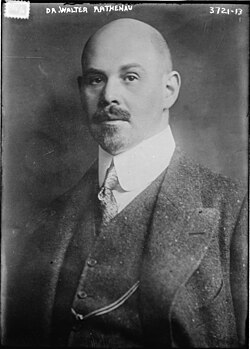
From 1920 to 1923, both nationalist and left-wing forces continued fighting against the Weimar Republic. In March 1920, a coup organized by Wolfgang Kapp (the Kapp Putsch) attempted to overthrow the government, but the venture collapsed within a few days under the effects of a general strike and the refusal of government employees to obey Kapp.[130] Members of the ultra-nationalist Organisation Consul assassinated former minister of finance Matthias Erzberger in 1921 and Foreign Minister Walther Rathenau in 1922.[131] The recently formed Nazi Party, under the leadership of Adolf Hitler, in what is now known as the Beer Hall Putsch, planned to take over the government of Bavaria, march to Berlin and seize control of the Reich government. Their attempt, made on 9 November 1923, was stopped in Munich by the local police, Hitler was arrested and sentenced to five years in prison. He was released in less than a year.[132]
In the wake of the Kapp Putsch, civil war-like fighting broke out with the Ruhr uprising when the Ruhr Red Army, made up of some 50,000 armed workers, mostly adherents of the KPD and USPD, used the disruption caused by the putsch to take control of the regions' industrial district. After bloody battles in which an estimated 1,000 insurgents and 200 soldiers died, Reichswehr and Freikorps units suppressed the revolt in early April.[133] In the March Action of 1921, the KPD, the Communist Workers' Party of Germany (KAPD) and other far-left organisations attempted a communist uprising in the industrial regions of central Germany. It was quashed by government troops.[134]
From 1924 to 1929, the Weimar Republic was relatively stable. The period, known in Germany as the "Goldene Zwanziger" (Golden Twenties), was marked by internal consolidation and rapprochement in foreign affairs[135] along with a growing economy and a consequent decrease in civil unrest.[136]
The Weimar Republic was always under great pressure from both left-wing and right-wing extremists. The radical left-wing accused the ruling Social Democrats of having betrayed the ideals of the workers' movement by preventing a communist revolution and unleashing the Freikorps on the workers.[137] Right-wing extremists were opposed to any democratic system, preferring instead an authoritarian state similar to the German Empire. To further undermine the Republic's credibility, far-right extremists (especially certain members of the former officer corps) used the stab-in-the-back myth to blame an alleged conspiracy of communists, socialists and Jews for Germany's defeat in World War I.[138] Both sides were determined to bring down the Weimar Republic. In the end, the right-wing extremists were successful, and the Weimar Republic came to an end with the ascent of Hitler and the National Socialist Party. The fractures in the German Left that had become permanent during the revolution made Adolf Hitler's rise to power in 1933 easier than it might have been if the Left had been more united.[139]
Impact on the Weimar Republic
The Revolution of 1918/19 is one of the most important events in the modern history of Germany, yet it is poorly embedded in the historical memory of Germans.[140] The failure of the Weimar Republic that the revolution brought into being and the Nazi era that followed it obstructed the view of the events for a long time.
Both the radical Right and the radical Left –under different circumstances –nurtured the idea that a communist uprising was aiming to establish a soviet republic following the Russian example.[141] The democratic centre parties, especially the SPD, were also only minimally interested in fairly assessing the events which turned Germany into a republic. At closer look, the events turned out to be a revolution supported by the social democrats and stopped by their party leadership. The processes helped to weaken the Weimar Republic from its very beginning.[142]
After the Reich government and the Supreme Command refused at an early stage to acknowledge their responsibilities for the war and the defeat, the majority parties of the Reichstag were left to cope with the resulting burdens. In his autobiography, Ludendorff's successor Groener states, "It suited me just fine when the army and the Supreme Command remained as guiltless as possible in these wretched truce negotiations, from which nothing good could be expected".[143]
Thus, the "Myth of the Stab in the Back" was born, according to which the revolutionaries stabbed the army, "undefeated on the field", in the back and only then turned the almost secure victory into a defeat. It was mainly Ludendorff who contributed to the spread of the falsification of history to conceal his own role in the defeat. In nationalist circles, the myth fell on fertile ground. They soon defamed the revolutionaries and even politicians like Ebert, who never wanted the revolution and had done everything to channel and contain it, as "November Criminals". In 1923, Hitler and Ludendorff deliberately chose the symbolic 9 November as the date of their attempted "Beer Hall Putsch".
Contemporary statements
Depending on their political standpoint, contemporaries had greatly differing opinions about the revolution.
Ernst Troeltsch, a Protestant theologian and philosopher, rather calmly remarked how the majority of Berlin citizens perceived 10 November:
On Sunday morning, after a frightful night, the morning newspapers gave a clear picture: the Emperor in Holland, the revolution victorious in most urban centres, the royals in the states abdicating. No man dead for Emperor and Empire! The continuation of duties ensured and no run on the banks! ... Trams and subways ran as usual, which is a pledge that basic needs are cared for. On all faces it could be read: Wages will continue to be paid.[144]
Lending himself to far too optimistic illusions, which the SPD leadership also might have had, the liberal journalist Theodor Wolff wrote on 10 November in the newspaper Berliner Tageblatt:
Like a sudden storm, the biggest of all revolutions has toppled the imperial regime, including everything that belonged to it. It can be called the greatest of all revolutions because never has a more firmly built ... fortress been taken in this manner at the first attempt. Only one week ago, there was still a military and civil administration so deeply rooted that it seemed to have secured its dominion beyond the change of times. ... Only yesterday morning, at least in Berlin, all this still existed. Yesterday afternoon it was all gone.[145]
The extreme Right had a completely opposite perception. On 10 November, conservative journalist Paul Baecker wrote an article in Deutsche Tageszeitung which already contained essential elements of the stab-in-the-back myth:
The work fought for by our fathers with their precious blood – dismissed by betrayal in the ranks of our own people! Germany, yesterday still undefeated, left to the mercy of our enemies by men carrying the German name, by felony out of our own ranks broken down in guilt and shame.The German socialists knew that peace was at hand anyway and that it was only a matter of holding out against the enemy for a few days or weeks in order to wrest bearable conditions from them. In this situation they raised the white flag.This is a sin that can never be forgiven and never will be forgiven. This is treason not only against the monarchy and the army but also against the German people themselves who will have to bear the consequences in centuries of decline and of misery.[146]
In an article on the 10th anniversary of the revolution, the journalist Kurt Tucholsky remarked that neither Wolff nor Baecker were right. Nevertheless, Tucholsky accused Ebert and Noske of betrayal, not of the monarchy but of the revolution. Although he wanted to regard it as only a coup d'état, he analysed the course of events more clearly than most of his contemporaries. In 1928 he wrote in "November Coup":
The German Revolution of 1918 took place in a hall.
The things taking place were not a revolution. There was no spiritual preparation, no leaders ready in the dark; no revolutionary goals. The mother of this revolution was the soldiers' longing to be home for Christmas. And weariness, disgust and weariness.The possibilities that nevertheless were lying in the streets were betrayed by Ebert and his like. Fritz* Ebert, whom you cannot heighten to a personality by calling him Friedrich, opposed the establishment of a republic only until he found there was a post of chairman to be had; comrade Scheidemann è tutti quanti, all were would-be senior civil servants. (* Fritz is the colloquial term for Friedrich like Willy is for William.)
The following possibilities were left out: shattering federal states, division of landed property, revolutionary socialization of industry, reform of administrative and judiciary personnel. A republican constitution in which every sentence rescinds the next one, a revolution talking about well-acquired rights of the old regime, can be only laughed at.
The German Revolution is still to take place.[147]
Walther Rathenau was of a similar opinion. He called the revolution a "disappointment", a "present by chance", a "product of desperation", a "revolution by mistake". It did not deserve the name because it did "not abolish the actual mistakes" but "degenerated into a degrading clash of interests".
Not a chain was broken by the swelling of spirit and will, only a lock merely rusted through. The chain fell off and the freed stood amazed, helpless, embarrassed and needed to arm against their will. The ones sensing their advantage were the quickest.[148]
The historian Sebastian Haffner in turn came out against Tucholsky and Rathenau. He lived through the revolution in Berlin as a child and wrote 50 years later in his book about one of the myths related to the events of November 1918 that had taken root especially in the bourgeoisie:
It is often said that a true revolution in Germany in 1918 never took place. All that really happened was a breakdown. It was only the temporary weakness of the police and army in the moment of military defeat which let a mutiny of sailors appear as a revolution. At first sight, one can see how wrong and blind it is comparing 1918 with 1945. In 1945 there really was a breakdown.Certainly a mutiny of sailors started the revolution in 1918, but it was only a start. What made it extraordinary is that a mere sailors' mutiny triggered an earthquake which shook all of Germany; that the whole home army, the whole urban workforce and in Bavaria a part of the rural population rose up in revolt. This revolt was not just a mutiny anymore, it was a true revolution ...As in any revolution, the old order was replaced by the beginnings of a new one. It was not just destructive but also creative ...As a revolutionary achievement of masses the German November 1918 does not need to take second place to either the French July 1789 or the Russian March 1917.[149]
Historical research
During the Nazi regime, works on the Weimar Republic and the German revolution published abroad and by exiles could not be read in Germany. Around 1935, that affected the first published history of the Weimar Republic by Arthur Rosenberg. In his view, the political situation at the beginning of the revolution was open: the moderate socialist and democratically oriented workforce had a chance to become the social foundation of the republic and to drive back the conservative forces. It failed because of bad decisions by the SPD leadership and because of the revolutionary tactics employed by the extreme left wing of the workforce.
After 1945, West German historical research on the Weimar Republic concentrated most of all on its decline. In 1951, Theodor Eschenburg mostly ignored the revolutionary beginning of the republic. In 1955, Karl Dietrich Bracher also dealt with the German revolution from the perspective of the failed republic. Erich Eyck shows how little the revolution after 1945 was regarded as part of German history. His two-volume History of the Weimar Republic gave barely 20 pages to the events. The same can be said for Karl Dietrich Erdmann's contribution to the 8th edition of the Gebhardt Handbook for German History (Gebhardtsches Handbuch zur Deutschen Geschichte), whose viewpoint dominated the interpretation of events related to the German revolution after 1945. According to Erdmann, 1918/19 was about the choice between "social revolution in line with forces demanding a proletarian dictatorship and parliamentary republic in line with the conservative elements like the German officer corps".[150] As most Social Democrats were forced to join with the old elites to prevent an imminent council dictatorship, the blame for the failure of the Weimar Republic was to be put on the extreme Left, and the events of 1918/19 were successful defensive actions of democracy against Bolshevism.
This interpretation at the height of the Cold War was based on the assumption that the extreme Left was comparably strong and a real threat to democratic development. On this point, West German researchers ironically found themselves in line with Marxist historiography in the German Democratic Republic (GDR), which attributed considerable revolutionary potential most of all to the Spartacists.[151]
While in the postwar years the majority SPD (MSPD) was cleared of its Nazi odium as "November Criminals", GDR historians blamed the SPD for "betrayal of the working class" and the USPD leadership for their incompetence. Their interpretation was mainly based on the 1958 theories of the Central Committee of the Socialist Unity Party of Germany according to which the German revolution was defined as a "bourgeois-democratic revolution", led in certain aspects by proletarian means and methods. The fact that a revolution by the working class in Germany never happened could be attributed to the "subjective factor", especially the absence of a "Marxist-Leninist offensive party". Contrary to the official party line, Rudolf Lindau supported the theory that the German revolution had a Socialist tendency.
Consistently, the founding of the KPD (Communist Party of Germany) was declared to be the decisive turning point in German history, but in spite of ideological bias, historical research in the GDR expanded detailed knowledge of the German revolution.[152]
During the 1950s, West German historians had focused their research on the final stages of the Weimar Republic. In the 1960s, they shifted to its revolutionary beginnings, realising that the decisions and developments during the revolution were central to the failure of the first German republic. The workers' and soldiers' councils especially moved into focus, and their previous appearance as a far-left movement had to be revised extensively. Authors like Ulrich Kluge, Eberhard Kolb and Reinhard Rürup argued that in the first weeks of the revolution the social base for a democratic redesign of society was much stronger than previously thought and that the potential of the extreme Left was weaker than the SPD's leadership, for example, assumed.
As Bolshevism posed no real threat, the scope of action for the Council of the People's Deputies (also supported by the more reform-oriented councils) to democratise the administration, military and society had been relatively large, but the SPD's leadership did not take the step because it trusted in the loyalty of the old elites and mistrusted the spontaneous mass movements in the first weeks of the revolution. The result was the radicalisation of the council movement. The theories were supported by the publications of the minutes of the Council of the People's Deputies. Increasingly, the history of the German revolution appeared as the history of its gradual reversal.
This new interpretation of the German revolution gained acceptance in research rather quickly even though older perceptions remained alive. Research concerning the composition of the worker's and soldier's councils, which today can be easily verified by sources, is undisputed to a large extent, but the interpretation of the revolutionary events based on the research has been criticised and partially modified since the end of the 1970s. Criticism was aimed at the partially idealised description of the workers' and soldiers' councils, which especially was the case in the wake of the German Student Movement of the 1960s (1968). Peter von Oertzen went particularly far in this respect, describing a social democracy based on councils as a positive alternative to the bourgeois republic. In comparison, Wolfgang J. Mommsen did not regard the councils as a homogeneous focused movement for democracy but as a heterogeneous group with a multitude of different motivations and goals. Jesse and Köhler talked about the "construct of a democratic council movement". Certainly, the authors also excluded a relapse to the positions of the 1950s: "The councils to a large extent were neither communist-oriented, nor can the policies of the majority SPD in every aspect be labelled fortuitous and worth praising."[153]
Heinrich August Winkler tried to find a compromise, according to which the Social Democrats depended to a limited extent on cooperation with the old elites but went considerably too far: "With more political willpower they could have changed more and preserved less."[154]
With all the differences concerning details, historical researchers agree that in the German revolution, the chances to put the republic on a firm footing were considerably better than the dangers coming from the radical left. Instead, the alliance of the SPD with the old elites constituted a considerable structural problem for the Weimar Republic.[155][156]
See also
Citations
- ↑Schaaf, Michael (2003). Der Brockhaus Zeitgeschichte vom Vorabend des Ersten Weltkrieges bis zur Gegenwart[Brockhaus Contemporary History from the Eve of the First World War to the Present Day] (in German). Mannheim: F.A. Brockhaus. p. 237. ISBN 978-3765301612.
- ↑Aus Politik und Zeitgeschichte Issues 28-53[From Politics and Contemporary History Issues 28-53] (in German). Bonn: Bundeszentrale für politische Bildung. 2004. p. 7.
- 123Sturm, Reinhard (November 2011). "Weimarer Republik". Informationen zur Politischen Bildung (in German). 261: 9–12.
- ↑Sontheimer 1978.
- ↑"Wahlen in Deutschland bis 1918: Reichstagswahlen"[Elections in Germany Until 1918: Reichstag Elections]. Wahlen in Deutschland (in German). Retrieved 7 January 2024.
- ↑"The Erfurt Program (1891)". German History in Documents and Images (GHDI). Retrieved 16 April 2024.
- ↑"Vaterlandlose Gesellen"[Men Without a Fatherland]. Friedrich Ebert Stiftung (in German). 18 May 2012. Retrieved 17 April 2024.
- ↑Cinar, Meral Ugur; Cinar, Kursat (2014). "The Second International: The Impact of Domestic Factors on International Organization Dysfunction". Political Studies. 62 (3): 669–685. doi:10.1111/1467-9248.12062. hdl:11511/42507. S2CID 54019053– via Sage Journals.
- ↑Jeffrey, Verhey (2003). The Spirit of 1914. Militarism, Myth, and Mobilization in Germany(PDF). Cambridge, UK: Cambridge University Press. p. 20.
- ↑Rathenau, Walter (1967). Pogge von Strandmann, Hartmut (ed.). Tagebuch 1907–1922[Walther Rathenau Diary 1907–1922] (in German). Düsseldorf: Droste. p. 162.
- ↑Grossman, Henryk (2021). Henryk Grossman Works Volume 2 Political Writings. Leiden, Netherlands: Koninklijke Brill NV. p. 426.
- 1234Krumeich, Gerd (11 October 2016). Daniel, Ute; Gatrell, Peter; Janz, Oliver; Jones, Heather; Keene, Jennifer; Kramer, Alan; Nasson, Bill (eds.). "Burgfrieden/Union sacrée". 1914–1918-online. International Encyclopedia of the First World War. Freie Universität Berlin. Retrieved 16 April 2024.
- ↑Haffner 2002, p. 12.
- ↑"Vaterlandslose Gesellen"[Men Without a Fatherland]. Preussen Chronik (in German). 21 May 2008. Retrieved 17 April 2024.
- ↑"Thronrede Kaiser Wilhelms II. vor den Abgeordneten des Reichstags, 4. August 1914"[Emperor Wilhelm II's Speech from the Throne to the Reichstag Representatives, 4 August 1914]. 100(0) Schlüsseldokumente (in German). Retrieved 8 January 2024.
- ↑Nagornaja, Oksana. "Gesetz über den vaterländischen Hilfsdienst, 5. Dezember 1916"[Auxiliary Services Act, 5 December 1916]. 100(0) Schlüsseldokumente (in German). Retrieved 10 January 2024.
- ↑Asmuss, Burkhard (8 June 2011). "Das Hindenburg-Programm". Deutsches Historisches Museum. Retrieved 10 January 2024.
- ↑Kalmbach, Karena (10 June 2003). "Der Januarstreik 1918"[The January Strike 1918]. Deutsches Historisches Museum (in German). Retrieved 18 April 2024.
- ↑Ghanem, Michael (2019). Im Würgegriff der politischen Parteien. Teil 1: Im Jahr 2019[In the Stranglehold of the Political Parties. Part 1: In the Year 2019] (in German). Ahrensburg: tredition. pp. ebook. ISBN 978-3-7482-7933-4.
- ↑Kalmbach, Karena (6 September 2014). "Die Unabhängige Sozialdemokratische Partei Deutschlands (USPD)"[The Independent Social Democratic Party of Germany (USPD)]. Deutsches Historisches Museum (in German). Retrieved 30 December 2023.
- ↑Fischer, Louis (1964). The Life of Lenin. London: Weidenfeld and Nicolson. pp. 109–110.
- ↑Winkler 1993, p. 21.
- ↑"Vorwärts 15 Februar 1918". FES Historische Presse. Retrieved 28 January 2024.
- ↑Schulze, Hagen (1994). Weimar. Deutschland 1917–1933 (in German). Berlin: Siedler. p. 158. ISBN 978-3886800506.
- ↑Wheeler-Bennett, John W. (January 1940). "From Brest-Litovsk to Brest-Litovsk". Foreign Affairs. 18 (2). Council on Foreign Relations: 199. doi:10.2307/20028991. JSTOR 20028991.
- ↑Oppelland, Torsten (2 June 2016). Daniel, Ute; Gatrell, Peter; Janz, Oliver; Jones, Heather; Keene, Jennifer; Kramer, Alan; Nasson, Bill (eds.). "Governments, Parliaments and Parties (Germany)". 1914–1918-online. International Encyclopedia of the First World War. Freie Universität Berlin. Retrieved 23 January 2024.
- ↑Sturm, Reinhard (23 December 2011). "Vom Kaiserreich zur Republik 1918/19"[From Empire to Republic 1918/19]. Bundeszentrale für politische Bildung (in German). Retrieved 23 January 2024.
- ↑Haffner 2002, p. 32ff.
- ↑Kitchen, Martin (17 February 2011). "The Ending of World War One, and the Legacy of Peace". BBC. Retrieved 23 January 2023.
- ↑Winkler 2000, pp. 363–364, 366.
- ↑Mommsen 1996, pp. 11–12.
- ↑Mommsen 1996, p. 12.
- ↑Tucker, Spencer (2014). World War I: The Definitive Encyclopedia and Document Collection. Santa Barbara: ABC-CLIO. p. 2069. ISBN 978-1-85109-964-1.
- ↑Larsen, Daniel (June 2013). "Abandoning Democracy: Woodrow Wilson and Promoting German Democracy, 1918-1919". Diplomatic History. 34 (3): 487. JSTOR 44254305.
- ↑Görlitz, Walter Otto Julius (16 December 2023). "Erich Ludendorff". Encyclopedia Britannica. Retrieved 27 January 2023.
- ↑Sturm, Reinhard (23 December 2011). "Vom Kaiserreich zur Republik 1918/19"[From Empire to Republic 1918/19]. Bundeszentrale für politische Bildung (in German). Retrieved 25 January 2024.
- ↑Huber 1978, p. 590.
- ↑"Der Ablauf der politischen Ereignisse in Deutschland vom November 1918 bis zur Wahl Eberts als Reichspräsident im Februar 1919"[The course of political events in Germany from November 1918 to the election of Ebert as Reich President in February 1919]. Zentrale für Unterrichtsmedien im Internet e.V. (ZUM) (in German). Retrieved 27 January 2024.
- ↑Gusy, Christoph (19 August 1994). "Die Entstehung der Weimarer Reichsverfassung"[The Genesis of the Weimar Constitution]. JuristenZeitung (in German). 49 (15/16): 757. JSTOR 20822634.
- ↑Bruendel, Steffen (8 October 2014). Daniel, Ute; Gatrell, Peter; Janz, Oliver; Jones, Heather; Keene, Jennifer; Kramer, Alan; Nasson, Bill (eds.). "Between Acceptance and Refusal - Soldiers' Attitudes Towards War (Germany)". 1914–1918-online. International Encyclopedia of the First World War. Freie Universität Berlin. Retrieved 19 April 2024.
- 12Winkler 2000, p. 376.
- 123Kolb 1984, p. 6.
- 12345Jones, Mark (19 May 2016). Daniel, Ute; Gatrell, Peter; Janz, Oliver; Jones, Heather; Keene, Jennifer; Kramer, Alan; Nasson, Bill (eds.). "Kiel Mutiny". 1914–1918-online. International Encyclopedia of the First World War. Freie Universität Berlin. Retrieved 7 February 2024.
- ↑Winkler 1993, p. 27.
- ↑Scriba, Arnulf (15 August 2015). "Der Matrosenaufstand 1918"[The 1918 Sailors' Uprising]. Deutsches Historisches Museum (in German). Retrieved 8 February 2024.
- ↑Winkler 1993, p. 28.
- ↑"The End of Monarchy". Bavarikon. Retrieved 10 February 2024.
- ↑Mommsen 1996, p. 22.
- ↑Haffner 1991, pp. 85–96.
- ↑Haffner 1991, p. 66.
- ↑Haffner 1991, p. 68.
- ↑Haffner 1991, pp. 66–68.
- ↑Mommsen 1996, p. 20.
- ↑von Baden, Max (1927). Erinnerungen und Dokumente[Memories and Documents] (in German). Stuttgart: Deutsche Verlags-Anstalt. p. 599.
- ↑Herwig, Holger H. (2014). The First World War: Germany and Austria-Hungary 1914–1918. London: Bloomsbury. pp. 429–430. ISBN 978-1472510815.
- ↑Haffner 1991, p. 76.
- ↑Clark, Christopher (2007). Preußen. Aufstieg und Niedergang 1600–1947[The Rise and Downfall of Prussia, 1600–1947] (in German). Munich: DVA. p. 697. ISBN 978-3-421-05392-3.
- 1234Sturm, Reinhard (23 December 2011). "Vom Kaiserreich zur Republik 1918/19"[From Empire to Republic 1918/19]. Bundeszentrale für politische Bildung (in German). Retrieved 22 February 2024.
- ↑Gallus, Alexander (13 September 2018). "Die deutsche Revolution 1918/19 - Politische Spannungen und Grundentscheidungen"[The German Revolution 1918/19 - Political Tensions and Fundamental Decisions]. Bundeszentrale für politishe Bildung (in German). Retrieved 22 February 2024.
- ↑Haffner 1991, p. 90.
- ↑Haffner 1991, p. 87.
- ↑Scriba, Arnulf (15 August 2015). "Die Revolution von 1918/19". Deutsches Historisches Museum, Berlin (in German). Retrieved 18 February 2024.
- ↑Haardt, Oliver F. R.; Clark, Christopher M. (2018). "Die Weimarer Reichsverfassung als Moment in der Geschichte" [The Weimar Constitution a Defining Moment in History]. In Dreier, Horst; Waldhoff, Christian (eds.). Das Wagnis der Demokratie. Eine Anatomie der Weimarer Reichsverfassung[The Venture of Democracy. An Anatomy of the Weimar Constitution] (in German). Munich: C.H. Beck. pp. 10–11. ISBN 978-3406726774.
- ↑"Vor 95 Jahren: Kaiser Wilhelm II. dankt ab"[95 Years Ago: Emperor Wilhelm II Abdicates]. Bundeszentrale für politische Bildung (in German). 27 November 2013. Retrieved 12 February 2026.
- ↑McEntee-Taylor, C. (2011). A Week in May 1940 & the Pencilled Message. Createspace Independent Publishing. p. 330. ISBN 9781466442931.
- ↑Hans Rudolf, Wahl (2018). "Novemberrevolution, Räterepublik und Demokratiegründung in Bremen" [November Revolution, Soviet Republic and Founding of Democracy in Bremen]. In Lehnert, Detlef (ed.). Revolution in Norddeutschland[Revolution in North Germany](PDF) (in German). Berlin: Metropol Verlag. pp. 210–211.
- ↑Winkler 1993, p. 35.
- ↑Hoffrogge 2014, pp. 61–79.
- 12Mommsen 1996, p. 28.
- ↑Winkler 1993, pp. 35–36.
- ↑Huber 1978, p. 711ff.
- ↑Winkler 1993, pp. 37–38.
- ↑Scriba, Arnulf (14 September 2014). "Vollzugsrat". Deutsches Historisches Museum. Retrieved 20 February 2024.
- ↑Hirschfeld, Gerhard; Krumeich, Gerd (2013). Deutschland im Ersten Weltkrieg[Germany in the First World War] (in German) (Kindle ed.). Berlin: Fischer E-Books. p. 276. ISBN 978-3104024899.
- ↑Dowe, Christopher (8 October 2014). Daniel, Ute; Gatrell, Peter; Janz, Oliver; Jones, Heather; Keene, Jennifer; Kramer, Alan; Nasson, Bill (eds.). "Erzberger, Matthias". 1914–1918-online. International Encyclopedia of the First World War. Freie Universität Berlin. Retrieved 23 February 2024.
- ↑"Rat der Volksbeauftragten, Aufruf "An das deutsche Volk", 12. November 1918"[Council of the People's Deputies, Proclamation "To the German People", 12 November 1918]. 100(0) Schlüsseldokumente (in German). Retrieved 1 March 2024.
- ↑Engel, Gerhard; Holtz, Bärbel; Huch, Gaby; Materna, Ingo, eds. (1997). Groß-Berliner Arbeiter- und Soldatenräte in der Revolution 1918/19[Greater Berlin Workers' and Soldiers' Councils in the Revolution 1918/19] (in German). Berlin: Akademie Verlag. pp. VII. ISBN 3-05-003061-5.
- ↑Piper, Ernst (2018). "Deutsche Revolution 1918/19". Informationen zur Politischen Bildung (in German) (33): 15.
- ↑Winkler 2000, p. 375.
- ↑Huber 1978, pp. 728–730.
- ↑Huber 1978, pp. 731ff.
- ↑Mommsen 1996, p. 27.
- ↑Mommsen 1996, p. 29.
- ↑Haffner 1991, pp. 102–111.
- ↑Lange, Dietmar (14 February 2022). "Wie die erste deutsche Sozialisierungskommission scheiterte"[How the First German Socialisation Commission Failed]. Jacobin (in German). Retrieved 2 March 2024.
- ↑Brenk-Keller, Sibylle (1997). Die Beteiligung der Mitarbeiter am Produktivkapital - Konzeptionelle Entwicklung und praktische Ausgestaltung [Employee Participation in Productive Capital - Conceptual Development and Practical Implementation] (PhD thesis) (in German). Universität Fridericiana zu Karlsruhe. pp. 82–83.
- ↑Peterson, Larry (2013). German Communism, Workers' Protest, and Labor Unions. Dordrecht: Springer Netherlands. p. 39. ISBN 978-9401116442.
- 12Scriba, Arnulf (10 May 2011). "Das Stinnes-Legien-Abkommen"[The Stinnes-Legien Agreement]. Deutsches Historisches Museum (in German). Retrieved 1 March 2024.
- ↑Winkler 1993, pp. 45–46.
- ↑Winkler 1993, pp. 50–51.
- ↑Piper, Ernst (2018). "Deutsche Revolution 1918/19". Informationen zur Politischen Bildung (in German) (33): 14.
- ↑Winkler 1993, p. 52.
- ↑Winkler 1993, pp. 49–50.
- ↑"November 1918: "Kartoffeln - keine Revolution""[November 1918: "Potatoes - not a Revolution"]. Der Spiegel (in German). 24 November 1968. Retrieved 3 January 2024.
- ↑Gallus, Alexander (13 September 2018). "Die deutsche Revolution 1918/19"[The German Revolution 1918/19]. Bundeszentrale für politische Bildung (in German). Retrieved 3 January 2024.
- ↑Kröger, Martin (6 November 2008). "Novemberrevolution: Rotes Tuch für Steinmeier"[November Revolution: Red Cloth for Steinmeier]. Der Spiegel (in German). Retrieved 3 January 2024.
- ↑Piper, Ernst (23 July 2018). "Deutscher Umsturz"[German Coup]. Das Parlament (in German).
- ↑Ostrowski, Marius S. (2019). Eduard Bernstein on the German Revolution. Selected Historical Writings. Berlin: Springer International. p. 138. ISBN 9783030277192.
- ↑Wrobel, Kurt (1968). "Heinrich Dorrenbach – Soldat der Revolution" [Heinrich Dorrenbach – Soldier of the Revolution]. Zeitschrift für Militärgeschichte Volume 7 (in German). Berlin: Deutscher Militärverlag. p. 480.
- ↑Oeckel, Heinz (1968). "Volkswehrbewegung und Novemberrevolution" [People's Defence Movement and the November Revolution]. Zeitschrift für Militärgeschichte Volume 7 (in German). Berlin: Deutscher Militärverlag. p. 539.
- 123Scriba, Arnulf (1 September 2014). "Die Weihnachtskämpfe 1918"[The Christmas Battles 1918]. Deutsches Historisches Museum (in German). Retrieved 4 March 2024.
- 12"Deutsche Revolution: Weihnachtskämpfe"[German Revolution: Christmas Battles]. Bundeszentrale für politische Bildung (in German). Retrieved 4 March 2024.
- ↑Ziemann, Benjamin; Rossol, Nadine, eds. (2022). The Oxford Handbook of the Weimar Republic. Oxford, UK: Oxford University Press. p. 37. ISBN 978-0198845775.
- ↑Winkler 1993, p. 55.
- ↑Winkler 1993, p. 56.
- ↑Haffner 1991, pp. 144–145.
- ↑Haffner 1991, pp. 136–137.
- ↑Winkler 1993.
- ↑Haffner 1991, p. 137.
- ↑Winkler 1993, pp. 58–59.
- ↑Sauer, Bernhard (2018). "Der "Spartakusaufstand". Legende und Wirklichkeit"[The "Spartacus Uprising". Legends and Reality](PDF). Bernhard Sauer – Historiker (in German). p. 112. Retrieved 20 March 2024.
- ↑Sauer 2018, pp. 114, 116, 124.
- ↑Winkler 1993, p. 59.
- ↑Wette, Wolfram (1987). Gustav Noske. Eine politische Biographie (in German). Düsseldorf: Droste. p. 308. ISBN 978-3770007288.
- ↑Haffner 1991, pp. 155–156.
- ↑Daimagüler, Mehmet Gürcan; von Münchhausen, Ernst (2021). Das rechte Recht. Die deutsche Justiz und ihre Auseinandersetzung mit alten und neuen Nazis[Right-wing Justice. The German Judiciary and its Confrontation with Old and New Nazis] (in German). Munich: Penguin Random House Verlagsgruppe GmbH. p. 26. ISBN 9783641259259.
- ↑Der Spiegel of 18.04.1962
- ↑Gietinger, Klaus (2008). Der Konterrevolutionär. Waldemar Pabst – eine deutsche Karriere[The Counterrevolutionary. Waldemar Pabst – a German Career] (in German). Hamburg: Verlag Lutz Schulenburg. p. 394.
- 12Scriba, Arnulf (1 September 2014). "Die Märzkämpfe 1919"[The March Battles 1919]. Deutsches Historisches Museum (in German). Retrieved 22 March 2024.
- ↑Kozicki, Norbert Kozicki. "Die Essener Sozialisierungsbewegung und ihr Ende (Januar/Februar 1919)"[The Essen Socialisation Movement and its End (January/February 1919)]. Herne von damals bis heute (in German). Retrieved 22 March 2024.
- ↑Burleigh, Michael (2000). The Third Reich: A New History. New York: Hill and Wang. p. 40. ISBN 9780809093250.
- ↑Schulze 1994, p. 169–170.
- ↑Altmann, Gerhard (11 April 2000). "Die Wahlen zur Nationalversammlung"[The Elections to the National Assembly]. Deutsches Historisches Museum (in German). Retrieved 24 March 2024.
- ↑Altmann, Gerhard; Schweinoch, Oliver (2 August 2018). "Die Nationalversammlung"[The National Assembly]. Deutsches Historisches Museum (in German). Retrieved 24 March 2024.
- ↑"Vor 100 Jahren: Weimarer Nationalversammlung"[100 Years Ago: The Weimar National Assembly]. Bundeszentrale für politische Bildung (in German). 31 January 2019. Retrieved 24 March 2024.
- ↑"Scheidemann: "Welche Hand müßte nicht verdorren, die sich und uns in diese Fesseln legt?""[Scheidemann: "What hand should not wither that puts itself and us in these fetters?"]. Die Weimarer Republik – Deutschlands erste Demokratie (in German). Retrieved 24 March 2024.
- ↑Scriba, Arnulf (1 September 2014). "Die Verfassung der Weimarer Republik"[The Constitution of the Weimar Republic]. Deutsches Historisches Museum (in German). Retrieved 24 March 2024.
- ↑Albrecht, Kai-Britt (14 September 2014). "Friedrich Ebert". Deutsches Historisches Museum (in German). Retrieved 7 January 2024.
- ↑"Article 48". Holocaust Encyclopedia. Retrieved 24 March 2024.
- ↑"Kapp Putsch". Encyclopedia Britannica. 16 May 2013. Retrieved 30 March 2024.
- ↑"Organisation Konsul". Encyclopedia Britannica. Retrieved 30 March 2024.
- ↑"Beer Hall Putsch (Munich Putsch)". Holocaust Encyclopedia. United States Holocaust Memorial Museum. Retrieved 30 March 2024.
- ↑Wulfert, Anja (22 January 2002). "Der Märzaufstand 1920"[The March Uprising 1920]. Deutsches Historisches Museum (in German). Retrieved 30 March 2024.
- ↑Leicht, Johannes (14 September 2014). "Die Märzkämpfe in Mitteldeutschland 1921"[The March Battles in Central Germany 1921]. Deutsches Historisches Museum (in German). Retrieved 30 March 2024.
- ↑Scriba, Arnulf (2 September 2014). "Außenpolitik – Verständigungspolitik: Der Ausgleich mit dem Westen"[Foreign policy – A policy of understanding: Compromise with the West]. Deutsches Historisches Museum (in German). Retrieved 31 March 2024.
- ↑"So waren die "Goldenen Zwanziger" wirklich"[What the "Golden Twenties" were really like]. Mitteldeutscher Rundfunk (in German). 29 September 2023. Retrieved 31 March 2024.
- ↑Haffner 1991, p. 209.
- ↑Barth, Boris (8 October 2014). Daniel, Ute; Gatrell, Peter; Janz, Oliver; Jones, Heather; Keene, Jennifer; Kramer, Alan; Nasson, Bill (eds.). "Stab-in-the-back Myth". 1914–1918-online. International Encyclopedia of the First World War. Freie Universität Berlin. Retrieved 2 April 2024.
- ↑Winkler 1990, p. 219.
- ↑Haffner 1991, p. 159.
- ↑Mommsen 1996, p. 15.
- ↑Weitz 2018.
- ↑Schulze 1994, p. 149.
- ↑Haffner 2002, p. 85.
- ↑Haffner 2002, p. 95.
- ↑Haffner 2002, p. 96.
- ↑Tucholsky, Kurt (1976) [1928]. Gesammelte Werke[Collected Works] (in German). Vol. 6. Hamburg: Rowohlt Reinbeck. p. 300. ISBN 978-3499290060.
- ↑Sösemann, Bernd (1993). Demokratie im Widerstreit. Die Weimarer Republik im Urteil der Zeitgenossen[Democracy in Conflict. The Weimar Republic in the Judgement of Contemporaries] (in German). Stuttgart: Klett. p. 13.
- ↑Haffner 2002, p. 193ff.
- ↑Kluge, Ulrich (1985). Die deutsche Revolution 1918–1919[The German Revolution 1918–1919] (in German). Berlin: Suhrkamp. p. 15. ISBN 978-3518112625.
- ↑On East German historiography of the German revolution see Mario Keßler: Die Novemberrevolution in der Geschichtswissenschaft der DDR – Die Kontroversen des Jahres 1958 und ihre Folgen im internationalen Kontext, in: Jahrbuch für Forschungen zur Geschichte der Arbeiterbewegung, No. III/2008.
- ↑Kolb 1984, pp. 154ff.
- ↑Kolb 1984, pp. 160ff.
- ↑Kolb 1984, p. 161.
- ↑Kolb 1984, pp. 143–162.
- ↑Kluge 1985, pp. 10–38.
Sources
- Haffner, Sebastian (1991). Die deutsche Revolution 1918/1919[The German Revolution 1918/1919] (in German). Munich: Knauer. ISBN 978-3426038130.
- —— (2002). Der Verrat: Deutschland 1918/1919[The Betrayal: Germany 1918/1919] (in German). Berlin: Verlag 1900. ISBN 978-3930278008.
- Hoffrogge, R. (12 September 2014). Working class politics in the German Revolution: Richard Müller, the revolutionary shop stewards and the origins of the council movement. Historical Materialism Book Series. Brill. ISBN 978-90-04-21921-2.
- Huber, Ernst Rudolf (1978). Deutsche Verfassungsgeschichte seit 1789[German Constitutional History since 1789] (in German). Vol. V. Weltkrieg, Revolution und Reichserneuerung: 1914–1919 [World War, Revolution and Reich Renewal: 1914–1919]. Stuttgart: W. Kohlhammer. ISSN 0066-6505.
- Kolb, Eberhard (1984). Die Weimarer Republik[The Weimar Republic] (in German). Munich / Vienna: Oldenbourg. ISBN 978-3486489118.
- Mommsen, Hans (1996). The Rise and Fall of Weimar Democracy. Translated by Forster, Elborg; Jones, Larry Eugene. Chapel Hill, NC: University of North Carolina Press. ISBN 0-8078-4721-6.
- Sontheimer, Kurt (1978) [1962]. Antidemokratisches Denken in der Weimarer Republik. Die politischen Ideen des deutschen Nationalismus zwischen 1918 und 1933[Anti-democratic thinking in the Weimar Republic. The political ideas of German nationalism between 1918 and 1933] (in German). Munich: Deutscher Taschenbuch Verlag. ISBN 978-3423043120.
- Weitz, Eric D. (2018). Weimar Germany: Promise and Tragedy. Princeton University Press. ISBN 978-0-691-18305-3.
- Winkler, Heinrich August (May–June 1990). "Choosing the Lesser Evil: The German Social Democrats and the Fall of the Weimar Republic". Journal of Contemporary History. 25 (2/3): 205–227. doi:10.1177/002200949002500203. JSTOR 260730.
- —— (1993). Weimar 1918–1933. Die Geschichte der ersten deutschen Demokratie[Weimar 1918–1933. The History of the First German Democracy] (in German). Munich: C.H. Beck. ISBN 3-406-37646-0.
- —— (2000). Der Lange Weg nach Westen[The Long Road to the West] (in German). Vol. 1: 1789–1933. Munich: C.H. Beck. ISBN 978-3-406-66049-8.
Further reading
English language literature
- Boak, Helen L. (2019). "Women in the German Revolution". In Kets, Gaard; Muldoon, James (eds.). The German Revolution and Political Theory. Marx, Engels, and Marxisms. Palgrave Macmillan. doi:10.1007/978-3-030-13917-9. ISBN 978-3-030-13916-2. ISSN 2524-7123.
- Broue, Pierre (2006). The German Revolution 1917–1923. Translated by Archer, John. Chicago: Haymarket Books. ISBN 1-931859-32-9.
- Herman, Chris (1982). The Lost Revolution: Germany 1918–1923. Bookmarks. ISBN 0-906224-08-X.
- Coper, Rudolf (1955). Failure of a Revolution Germany in 1918–1919. Cambridge University Press.
- Frölich, Paul (1972). Rosa Luxemburg – Her Life and Work. Hesperides Press. ISBN 9780853452607.
- Gerwarth, Robert (2020). November 1918: The German Revolution. USA: Oxford University Press.
- Halperin, S. William. Germany Tried Democracy: A Political History of the Reich from 1918 to 1933 (1946) online.
- Jones, Mark: Founding Weimar. Violence and the German Revolution of 1918–19, Cambridge University Press, Cambridge 2016, ISBN 9-781-107-11512-5
- Kets, Gaard and James Muldoon, eds. The German Revolution and Political Theory (2019) excerpt
- Lutz, Ralph Haswell (1922). The German Revolution, 1918-1919.
- Watt, Richard M. (1968). The King's Depart. Verlag rosa Winkel. ISBN 1-84212-658-X.
German language literature
- Max von Baden: Erinnerungen und Dokumente, Berlin u. Leipzig 1927
- Eduard Bernstein: Die deutsche Revolution von 1918/19. Geschichte der Entstehung und ersten Arbeitsperiode der deutschen Republik. Herausgegeben und eingeleitet von Heinrich August Winkler und annotiert von Teresa Löwe. Bonn 1998, ISBN 3-8012-0272-0
- Pierre Broué: Die Deutsche Revolution 1918–1923, in: Aufstand der Vernunft Nr. 3. Hrsg.: Der Funke e.V., Eigenverlag, Wien 2005
- Bernt Engelmann: Wir Untertanen und Eining gegen Recht und Freiheit – Ein Deutsches Anti-Geschichtsbuch. Frankfurt 1982 und 1981, ISBN 3-596-21680-X, ISBN 3-596-21838-1
- Sebastian Haffner: Die deutsche Revolution 1918/1919 – wie war es wirklich? Ein Beitrag zur deutschen Geschichte München 1979 (ISBN 3-499-61622-X); also published under the titles Die verratene Revolution – Deutschland 1918/19 (1969), 1918/1919 – eine deutsche Revolution (1981, 1986, 1988), Der Verrat. Deutschland 1918/19 (1993, 2002), Der Verrat. 1918/1919 – als Deutschland wurde, wie es ist (1994, 1995), Die deutsche Revolution – 1918/19 (2002, 2004, 2008)
- Gerhard Hirschfeld, Gerd Krumeich and Irina Renz, 1918. Die Deutschen zwischen Weltkrieg und Revolution. Chr. Links Verlag, Berlin 2018, ISBN 978-3-86153-990-2.
- Institut für Marxismus-Leninismus beim ZK der SED (Hg.): Illustrierte Geschichte der deutschen Novemberrevolution 1918/1919. Berlin: Dietz Verlag, 1978.
- Mark Jones: Am Anfang war Gewalt. Die deutsche Revolution 1918/19 und der Beginn der Weimarer Republik, Propyläen, Berlin 2017, ISBN 9-783-549-07487-9
- Wilhelm Keil: Erlebnisse eines Sozialdemokraten. Zweiter Band, Stuttgart 1948
- Harry Graf Kessler: Tagebücher 1918 bis 1937. Frankfurt am Main 1982
- Ulrich Kluge: Soldatenräte und Revolution. Studien zur Militärpolitik in Deutschland 1918/19. Göttingen 1975, ISBN 3-525-35965-9
- Ulrich Kluge: Die deutsche Revolution 1918/1919. Frankfurt am Main 1985, ISBN 3-518-11262-7
- Eberhard Kolb: Die Weimarer Republik. München 2002, ISBN 3-486-49796-0
- Ottokar Luban: Die ratlose Rosa. Die KPD-Führung im Berliner Januaraufstand 1919. Legende und Wirklichkeit. Hamburg 2001, ISBN 3-87975-960-X
- Erich Matthias (Hrsg.): Die Regierung der Volksbeauftragten 1918/19. 2 Bände, Düsseldorf 1969 (Quellenedition)
- Wolfgang Michalka u. Gottfried Niedhart (Hg.): Deutsche Geschichte 1918–1933. Dokumente zur Innen- und Außenpolitik, Frankfurt am Main 1992 ISBN 3-596-11250-8
- Hans Mommsen: Die verspielte Freiheit. Der Weg der Republik von Weimar in den Untergang 1918 bis 1933. Berlin 1989, ISBN 3-548-33141-6
- Hermann Mosler: Die Verfassung des Deutschen Reichs vom 11. August 1919, Stuttgart 1988 ISBN 3-15-006051-6
- Carl von Ossietzky: Ein Lesebuch für unsere Zeit. Aufbau-Verlag Berlin-Weimar 1989
- Detlev J.K. Peukert: Die Weimarer Republik. Krisenjahre der klassischen Moderne. Frankfurt am Main 1987, ISBN 3-518-11282-1
- Gerhard A. Ritter/Susanne Miller (editors/compilers): Die deutsche Revolution 1918–1919. Dokumente. 2nd edition substantially extended and reworked, Frankfurt am Main 1983, ISBN 3-596-24300-9
- Arthur Rosenberg: Geschichte der Weimarer Republik. Frankfurt am Main 1961 (Erstausgabe: Karlsbad 1935), ISBN 3-434-00003-8 [zeitgenössische Deutung]
- Schulze, Hagen (1982). Weimar: Deutschland 1917–1933[Weimar: Germany 1917–1933] (in German). Berlin: Severin und Siedler.
- Bernd Sösemann: Demokratie im Widerstreit. Die Weimarer Republik im Urteil der Zeitgenossen. Stuttgart 1993
- Volker Ullrich: Die nervöse Großmacht. Aufstieg und Untergang des deutschen Kaisserreichs 1871–1918, Frankfurt am Main 1997 ISBN 3-10-086001-2
- Richard Wiegand: "Wer hat uns verraten ..." – Die Sozialdemokratie in der Novemberrevolution. New edition: Ahriman-Verlag, Freiburg i.Br 2001, ISBN 3-89484-812-X
External links

- Gallus, Alexander: Revolutions (Germany), in: 1914–1918-online. International Encyclopedia of the First World War.
- Tunstall, Graydon A.: The Military Collapse of the Central Powers, in: 1914–1918-online. International Encyclopedia of the First World War.
- Weinhauer, Klaus: Labour Movements and Strikes, Social Conflict and Control, Protest and Repression (Germany), in: 1914–1918-online. International Encyclopedia of the First World War.
- Jones, Mark: Kiel Mutiny, in: 1914–1918-online. International Encyclopedia of the First World War.
- An overview of the German Revolution by Gerhard Rempel of Western New England College
- Library of materials on the German Revolution at marxists.org
- Archive of texts on the German Revolution at libcom.org
- Homepage from Kiel Interview with one of the leaders of the mutiny in Kiel: Lothar Popp; CV of Lothar Popp; interviews with other contemporary witnesses; evaluations; time-line
- Bernhard Grau, Revolution, 1918/1919, published 9 May 2008, English version published 4 March 2020; in: Historisches Lexikon Bayerns