
Open science
 | |
| Country | Worldwide |
|---|---|
| Major figures | UNESCO |
| Influences | Open access, Open source movement, Creative Commons licenses, Sci-Hub, Wikimedia movement. |
| Influenced | Academia worldwide |
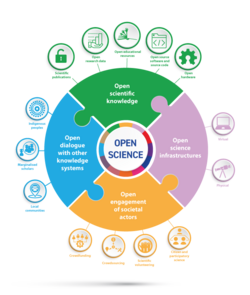
Open science (also known as open research) is the movement to make scientific research, including publications, data, physical samples, software, and models, transparent and accessible to all levels of society through collaborative networks.[2][3][4] This encompasses practices such as publishing open research, campaigning for open access, encouraging scientists to practice open-notebook science (such as openly sharing data and code[5] and now open hardware[6][7] to enable replication of physical experiments), broader dissemination and public engagement in science,[8] and generally making it easier to publish, access, and communicate scientific knowledge.
Usage of the term varies substantially across disciplines, with a notable prevalence in the STEM disciplines. The term 'open research' has gained currency as a broader alternative to 'open science,' encompassing the humanities and arts alongside traditional scientific disciplines. The primary focus connecting all disciplines is the widespread uptake of new technologies and tools, and the underlying ecology of the production, dissemination and reception of knowledge from a research-based point-of-view.[9][10] The term 'open scholarship' has also been proposed to include research from the arts and humanities as well as the different roles and practices that researchers perform as educators and communicators.[11][12][13]
Open science can be seen as continuing, rather than revolutionizing, practices that began in the 17th century with the academic journal, which enabled scientists to share resources[14] in response to growing societal demand for scientific knowledge.[15] The Open Science movement emerged primarily from tensions within science between professional ethical codes prescribing transparency and collaborativeness on the one hand and competitive pressures leading to a focus on research article output and the exclusive handling of research[5] on the other. Institutional interests to protect proprietary information for profit added to the latter.[16][17]
Principles
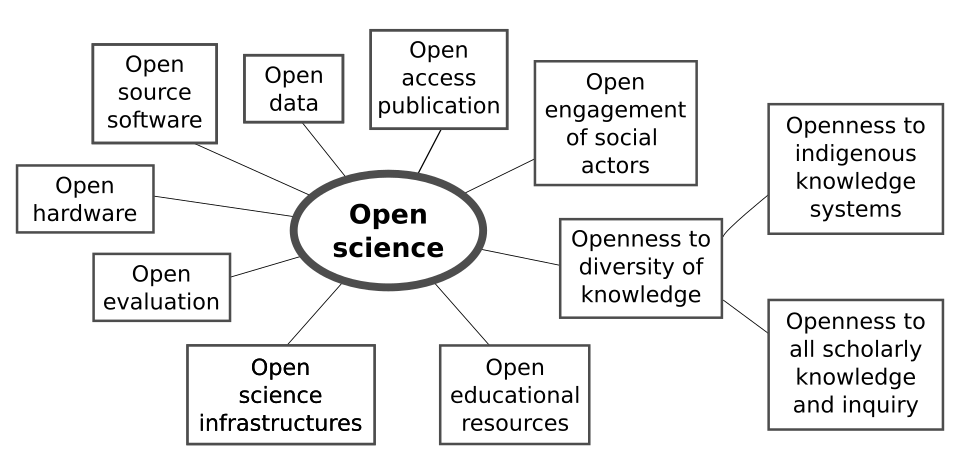
The principles of open science are:[18][19]
- Open methodology
- Open source
- Open data
- Open access
- Open peer review
- Open educational resources
- Open hardware
Background
The scientific research process is characterized by a series of activities, including the collection, analysis, publication, re-analysis, critique, and reuse of data. A number of barriers have been identified by proponents of open science that impede or dissuade the broad dissemination of scientific data.[5][20] These include financial paywalls of for-profit research publishers, restrictions on usage applied by publishers of data, poor formatting of data or use of proprietary software that makes it difficult to re-purpose, and cultural reluctance to publish data for fears of losing control of how the information is used.[5][20][21]
According to the FOSTER taxonomy,[22] open science can often include aspects of open access, open data, and the open-source movement. However, modern scientific research requires software for data and information processing.[23][24][25] Additionally, open research computation addresses the problem of reproducibility of scientific results.
Types
คำว่า 'วิทยาศาสตร์แบบเปิด' ขาดคำจำกัดความหรือกรอบการวัดมาตรฐานเดียว ในด้านหนึ่ง คำนี้ถูกกล่าวถึงว่าเป็น "ปรากฏการณ์ที่น่าฉงน" [ 26 ]ในอีกด้านหนึ่ง คำนี้ถูกใช้เพื่อรวบรวมหลักการต่างๆ ที่มุ่งส่งเสริมการเติบโตทางวิทยาศาสตร์และการเข้าถึงสาธารณะที่เสริมกัน นักสังคมวิทยา Benedikt Fecher และ Sascha Friesike ได้จัดประเภทวิทยาศาสตร์แบบเปิดออกเป็น 5 สำนักคิด โดยแต่ละสำนักคิดเน้นแง่มุมที่แตกต่างกันของขบวนการนี้[ 27 ]
ตามที่ Fecher และ Friesike กล่าวไว้ 'วิทยาศาสตร์แบบเปิด' ครอบคลุมมุมมองที่หลากหลายเกี่ยวกับวิธีการสร้างและแบ่งปันความรู้ Fecher และ Friesike ระบุถึง 5 สำนักคิดหลักของวิทยาศาสตร์แบบเปิด ซึ่งแต่ละสำนักคิดสะท้อนถึงลำดับความสำคัญและแนวทางที่แตกต่างกันในการเคลื่อนไหวนี้:
โรงเรียนโครงสร้างพื้นฐาน
แนวคิดโรงเรียนโครงสร้างพื้นฐานมองว่าการวิจัยที่มีประสิทธิภาพขึ้นอยู่กับแพลตฟอร์ม เครื่องมือ และแอปพลิเคชันที่เปิดให้ใช้งานได้อย่างเปิดเผย โดยมองว่าวิทยาศาสตร์แบบเปิดเป็นความท้าทายทางเทคโนโลยีเป็นหลัก โดยมุ่งเน้นที่โครงสร้างพื้นฐานบนอินเทอร์เน็ต รวมถึงซอฟต์แวร์ แอปพลิเคชัน และเครือข่ายคอมพิวเตอร์ แนวคิดโรงเรียนโครงสร้างพื้นฐานมีความเชื่อมโยงอย่างใกล้ชิดกับแนวคิด "วิทยาศาสตร์ไซเบอร์" ซึ่งอธิบายถึงแนวโน้มการประยุกต์ใช้เทคโนโลยีสารสนเทศและการสื่อสารในการวิจัยทางวิทยาศาสตร์ ซึ่งนำไปสู่การพัฒนาที่ดีของแนวคิดโรงเรียนโครงสร้างพื้นฐาน องค์ประกอบเฉพาะของความเจริญรุ่งเรืองนี้ ได้แก่ การเพิ่มความร่วมมือและการปฏิสัมพันธ์ระหว่างนักวิทยาศาสตร์ ตลอดจนการพัฒนาแนวปฏิบัติ "วิทยาศาสตร์แบบโอเพนซอร์ส" นักสังคมวิทยาได้อภิปรายถึงแนวโน้มหลักสองประการในแนวคิดโรงเรียนโครงสร้างพื้นฐาน:
1. การประมวลผลแบบกระจาย : แนวโน้มนี้ครอบคลุมถึงแนวปฏิบัติที่มอบหมายการประมวลผลทางวิทยาศาสตร์ที่ซับซ้อนและหนักหน่วงให้กับเครือข่ายคอมพิวเตอร์อาสาสมัครทั่วโลก ตัวอย่างที่นักสังคมวิทยาอ้างถึงในบทความของพวกเขาก็คือOpen Science Gridซึ่งช่วยให้การพัฒนาโครงการขนาดใหญ่ที่ต้องการการจัดการและการประมวลผลข้อมูลปริมาณมากเป็นไปได้ ซึ่งทำได้ผ่านเครือข่ายคอมพิวเตอร์แบบกระจาย นอกจากนี้ กริดยังจัดหาเครื่องมือที่จำเป็นที่นักวิทยาศาสตร์สามารถใช้เพื่ออำนวยความสะดวกในกระบวนการนี้[ 28 ]
2. เครือข่ายสังคมและการทำงานร่วมกันของนักวิทยาศาสตร์: แนวโน้มนี้ครอบคลุมการพัฒนาซอฟต์แวร์ที่ทำให้การโต้ตอบกับนักวิจัยคนอื่นๆ และการทำงานร่วมกันทางวิทยาศาสตร์ง่ายกว่าการปฏิบัติแบบดั้งเดิมที่ไม่ใช่ดิจิทัล แนวโน้มนี้เน้นแพลตฟอร์มสื่อสังคมออนไลน์และเครื่องมือดิจิทัลสำหรับการทำงานร่วมกันเพื่อเปิดใช้งานการสื่อสารและการประสานงานด้านการวิจัย De Roure และเพื่อนร่วมงาน (2008) [ 29 ]ระบุความสามารถ SVRE ที่สำคัญสี่ประการ:
- การจัดการและการแบ่งปันวัตถุวิจัย (สินค้าดิจิทัลที่นำกลับมาใช้ใหม่ได้)
- มีแรงจูงใจในตัวสำหรับการเผยแพร่ผลงานวิจัย
- ความเปิดกว้างและความยืดหยุ่นในการบูรณาการสิ่งประดิษฐ์ดิจิทัลที่หลากหลาย
- ฟังก์ชันการทำงานที่นำไปใช้ได้จริง ช่วยให้สามารถใช้งานวิจัยได้อย่างมีประสิทธิภาพ ไม่ใช่แค่การจัดเก็บข้อมูล
โรงเรียนการวัด
แนวคิดการวัดผลมุ่งเน้นการพัฒนาวิธีการทางเลือกในการกำหนดผลกระทบทางวิทยาศาสตร์โดยตระหนักถึงบทบาทสำคัญของการวัดผลที่มีต่อชื่อเสียง การได้ รับทุนและอาชีพของนักวิจัย จากนั้นผู้เขียนได้อภิปรายงานวิจัยอื่นๆ ที่แสดงให้เห็นถึงการสนับสนุนแนวคิดการวัดผล กระแสหลักสามประการของวรรณกรรมก่อนหน้านี้ที่ผู้เขียนได้กล่าวถึง ได้แก่:
- เป็นที่ยอมรับกันโดยทั่วไปว่า การตรวจสอบโดยผู้ทรงคุณวุฒิเป็นกระบวนการที่ใช้เวลานาน
- ผลกระทบจากการอ้างอิง ซึ่งเกิดจากตัวผู้เขียนเอง มีความสัมพันธ์ใกล้ชิดกับการเผยแพร่ของวารสารมากกว่าคุณภาพของบทความ
- รูปแบบการตีพิมพ์ที่สอดคล้องกับวิทยาศาสตร์แบบเปิดมักไม่สอดคล้องกับโครงสร้างวารสารแบบดั้งเดิมที่ใช้ในการคำนวณค่าดัชนีผลกระทบ
ดังนั้น โรงเรียนนี้จึงโต้แย้งว่ามีเทคโนโลยีการวัดผลกระทบที่รวดเร็วกว่าซึ่งสามารถพิจารณาประเภทสิ่งพิมพ์ที่หลากหลาย รวมถึงการเผยแพร่ผลงานทางวิทยาศาสตร์บนโซเชียลมีเดีย เพื่อให้ได้การประเมินที่สมบูรณ์ว่าผลงานทางวิทยาศาสตร์นั้นมีผลกระทบมากเพียงใด สาระสำคัญของการโต้แย้งของโรงเรียนนี้คือ การใช้งานที่ซ่อนเร้น เช่น การอ่าน การคั่นหน้า การแบ่งปัน การอภิปราย และการให้คะแนน เป็นกิจกรรมที่สามารถตรวจสอบได้ และร่องรอยเหล่านี้สามารถและควรนำมาใช้เพื่อพัฒนารูปแบบการวัดผลกระทบทางวิทยาศาสตร์แบบใหม่ คำศัพท์ที่ใช้เรียกการวัดผลกระทบรูปแบบใหม่นี้เรียกว่า altmetrics ซึ่งบัญญัติขึ้นในบทความปี 2011 โดย Priem et al. (2011) [ 30 ] [ 31 ]ที่น่าสังเกตคือ ผู้เขียนได้กล่าวถึงหลักฐานที่แสดงว่าaltmetricsแตกต่างจากwebometrics แบบดั้งเดิม ซึ่งช้าและไม่มีโครงสร้าง Altmetrics ถูกเสนอให้พึ่งพาชุดการวัดที่มากขึ้นซึ่งพิจารณาถึงทวีต บล็อก การอภิปราย และการคั่นหน้า นักวิชาการเสนอว่า altmetrics ควรบันทึกวงจรชีวิตการวิจัยทั้งหมด รวมถึงรูปแบบการทำงานร่วมกัน เพื่อสร้างการวัดผลกระทบที่ครอบคลุม อย่างไรก็ตาม ผู้เขียนระบุอย่างชัดเจนว่ามีงานวิจัยเพียงไม่กี่ชิ้นที่ให้รายละเอียดเชิงวิธีการเกี่ยวกับวิธีการดำเนินการดังกล่าว ผู้เขียนใช้ข้อเท็จจริงนี้และหลักฐานที่ขาดแคลนโดยทั่วไปมาสรุปว่าการวิจัยในด้านอัลต์เมตริกส์ยังอยู่ในช่วงเริ่มต้น
โรงเรียนรัฐบาล
ตามที่ผู้เขียนกล่าวไว้ ความกังวลหลักของสำนักคิดนี้คือการทำให้วิทยาศาสตร์เข้าถึงได้ง่ายขึ้นสำหรับผู้คนในวงกว้าง สมมติฐานพื้นฐานของสำนักคิดนี้ ตามที่ผู้เขียนได้อธิบายไว้ คือ เทคโนโลยีการสื่อสารใหม่ๆ เช่นเว็บ 2.0ช่วยให้นักวิทยาศาสตร์สามารถเปิดเผยกระบวนการวิจัยและช่วยให้นักวิทยาศาสตร์สามารถเตรียม "ผลผลิตจากการวิจัย" ของตนให้ดียิ่งขึ้นสำหรับผู้ที่สนใจทั่วไป ดังนั้น สำนักคิดนี้จึงมีลักษณะเด่นสองกระแสหลัก คือ กระแสหนึ่งสนับสนุนการเข้าถึงกระบวนการวิจัยสำหรับคนหมู่มาก ในขณะที่อีกกระแสหนึ่งสนับสนุนการเข้าถึงผลผลิตทางวิทยาศาสตร์ให้แก่สาธารณชนมากขึ้น
- Accessibility to the Research Process: Communication technology allows not only for the constant documentation of research but also promotes the inclusion of many different external individuals in the process itself. The authors cite citizen science – the participation of non-scientists and amateurs in research. The authors discuss instances in which gaming tools allow scientists to harness the brain power of a volunteer workforce to run through several permutations of protein-folded structures. This allows for scientists to eliminate many more plausible protein structures while also "enriching" the citizens about science. The authors also discuss a common criticism of this approach: the amateur nature of the participants threatens to pervade the scientific rigor of experimentation.
- Comprehensibility of the Research Result: This stream of research concerns itself with making research understandable for a wider audience. The authors describe a host of authors that promote the use of specific tools for scientific communication, such as microblogging services, to direct users to relevant literature. The authors claim that this school proposes that it is the obligation of every researcher to make their research accessible to the public. The authors then proceed to discuss if there is an emerging market for brokers and mediators of knowledge that is otherwise too complicated for the public to grasp.
Democratic school
The democratic school focuses on public access to research products (publications and data) rather than research processes or comprehensibility. The central concern of the school is with the legal and other obstacles that hinder the access of research publications and scientific data to the public. Proponents assert that any research product should be freely available. and that everyone has the same, equal right of access to knowledge, especially in the instances of state-funded experiments and data. Two central currents characterize this school: Open Access and Open Data.
- Open Data: Opposition to the notion that publishing journals should claim copyright over experimental data, which prevents the re-use of data and therefore lowers the overall efficiency of science in general. The claim is that journals have no use of the experimental data and that allowing other researchers to use this data will be fruitful. Despite open data advocacy, only 25 percent of researchers actively share their datasets, citing the administrative burden as a primary obstacle.
- Open Access to Research Publication: According to this school, there is a gap between the creation and sharing of knowledge. Proponents argue that even though scientific knowledge doubles every 5 years, access to this knowledge remains limited. These proponents consider access to knowledge as a necessity for human development, especially in the economic sense.
Pragmatic School
สำนักคิดเชิงปฏิบัติถือว่าวิทยาศาสตร์แบบเปิดเป็นความเป็นไปได้ที่จะทำให้การสร้างและการเผยแพร่ความรู้มีประสิทธิภาพมากขึ้นโดยการเพิ่มความร่วมมือตลอดกระบวนการวิจัย ผู้สนับสนุนสำนักคิดเชิงปฏิบัติโต้แย้งว่าวิทยาศาสตร์จะมีประสิทธิภาพมากขึ้นเมื่อขั้นตอนการวิจัยดำเนินการอย่างโปร่งใสและนักวิจัยแบ่งปันผลลัพธ์ระหว่างสถาบันต่างๆ คำว่า 'เปิด' ในความหมายนี้สอดคล้องกับแนวคิดนวัตกรรมแบบเปิดเป็นอย่าง มาก [ 32 ]ยกตัวอย่างเช่น การถ่ายโอนหลักการจากภายนอกสู่ภายใน (รวมถึงความรู้ภายนอกในกระบวนการผลิต) และจากภายในสู่ภายนอก (การรั่วไหลจากกระบวนการผลิตที่เคยปิด) ไปสู่วิทยาศาสตร์[ 33 ]เว็บ 2.0ถือเป็นชุดเครื่องมือที่เป็นประโยชน์ที่สามารถส่งเสริมความร่วมมือ (บางครั้งก็เรียกว่าวิทยาศาสตร์ 2.0 ) นอกจากนี้วิทยาศาสตร์พลเมืองยังถูกมองว่าเป็นรูปแบบหนึ่งของความร่วมมือที่รวมถึงความรู้และข้อมูลจากผู้ที่ไม่ใช่นักวิทยาศาสตร์ เฟเชอร์และฟรีไซค์อธิบายว่าการแบ่งปันข้อมูลเป็นตัวอย่างของสำนักคิดเชิงปฏิบัติ เนื่องจากช่วยให้นักวิจัยสามารถใช้ข้อมูลของนักวิจัยคนอื่นเพื่อติดตามคำถามวิจัยใหม่ๆ หรือเพื่อดำเนินการจำลองแบบที่ขับเคลื่อนด้วยข้อมูล สุดท้ายนี้ ฮาร์ดแวร์แบบเปิดช่วยให้สามารถจำลองการทดลองทางกายภาพและลดต้นทุนของเครื่องมือทางวิทยาศาสตร์เพื่อขยายการมีส่วนร่วมทางวิทยาศาสตร์[ 34 ]
ประวัติศาสตร์
การนำวารสารทางวิทยาศาสตร์ มาใช้กันอย่างแพร่หลาย ถือเป็นจุดเริ่มต้นของแนวคิดวิทยาศาสตร์แบบเปิดในยุคปัจจุบัน ก่อนหน้านี้ สังคมมักกดดันให้นักวิทยาศาสตร์ต้องปกปิดข้อมูลของตนเอง
ก่อนวารสาร
ก่อนการเกิดขึ้นของวารสารทางวิทยาศาสตร์ นักวิทยาศาสตร์แทบไม่มีอะไรจะได้และมีแต่จะเสียจากการเผยแพร่การค้นพบทางวิทยาศาสตร์[ 35 ]นักวิทยาศาสตร์หลายคน รวมถึงกาลิเลโอ เค ปเลอร์ไอแซค นิวตันคริสเตียนฮุยเกนส์และโรเบิร์ต ฮุกอ้างสิทธิ์ในการค้นพบของพวกเขาโดยการอธิบายในเอกสารที่เข้ารหัสด้วยตัวอักษรหรือรหัสลับ แล้วจึงเผยแพร่ข้อความที่เข้ารหัส[ 35 ]เจตนาของพวกเขาคือการพัฒนาการค้นพบของพวกเขาให้เป็นสิ่งที่พวกเขาสามารถทำกำไรได้ จากนั้นจึงเปิดเผยการค้นพบเพื่อพิสูจน์ความเป็นเจ้าของเมื่อพวกเขาพร้อมที่จะอ้างสิทธิ์ในสิ่งนั้น[ 35 ]
ระบบที่ไม่เปิดเผยการค้นพบทำให้เกิดปัญหา เพราะการค้นพบไม่ได้ถูกเผยแพร่อย่างรวดเร็ว และบางครั้งก็เป็นเรื่องยากสำหรับผู้ค้นพบที่จะพิสูจน์สิทธิ์ในการค้นพบก่อน นิวตันและก็อตฟรีด ไลบ์นิซต่างอ้างสิทธิ์ในการค้นพบแคลคูลัสก่อน[ 35 ]นิวตันกล่าวว่าเขาเขียนเกี่ยวกับแคลคูลัสในช่วงปี 1660 และ 1670 แต่ไม่ได้ตีพิมพ์จนกระทั่งปี 1693 [ 35 ]ไลบ์นิซตีพิมพ์ " Nova Methodus pro Maximis et Minimis " ซึ่งเป็นตำราเกี่ยวกับแคลคูลัสในปี 1684 การถกเถียงเรื่องสิทธิ์ในการค้นพบก่อนเป็นสิ่งที่เกิดขึ้นโดยธรรมชาติในระบบที่วิทยาศาสตร์ไม่ได้ถูกเผยแพร่อย่างเปิดเผย และนี่เป็นปัญหาสำหรับนักวิทยาศาสตร์ที่ต้องการได้รับประโยชน์จากสิทธิ์ในการค้นพบก่อน
ภายใต้การอุปถัมภ์ของ ชนชั้นสูง นักวิทยาศาสตร์ได้รับเงินทุนเพื่อพัฒนานวัตกรรมที่เป็นประโยชน์หรือเพื่อความบันเทิง ซึ่งก่อให้เกิดแรงกดดันให้ตอบสนองความต้องการของผู้อุปถัมภ์และจำกัดการวิจัยแบบเปิดที่อาจเป็นประโยชน์ต่อผู้อื่น[ 15 ]
การเกิดขึ้นของสถาบันวิชาการและวารสารต่างๆ
ในที่สุดระบบอุปถัมภ์ส่วนบุคคลก็ไม่สามารถให้ผลผลิตทางวิทยาศาสตร์ที่สังคมเริ่มต้องการได้อีกต่อไป[ 15 ]ผู้อุปถัมภ์รายเดียวไม่สามารถให้ทุนสนับสนุนนักวิทยาศาสตร์ได้อย่างเพียงพอ เนื่องจากนักวิทยาศาสตร์มีอาชีพที่ไม่มั่นคงและต้องการเงินทุนสนับสนุนอย่างต่อเนื่อง[ 15 ]การพัฒนาที่เปลี่ยนแปลงสิ่งนี้คือแนวโน้มที่จะรวบรวมงานวิจัยของนักวิทยาศาสตร์หลายคนเข้าไว้ในสถาบันที่ได้รับทุนสนับสนุนจากผู้อุปถัมภ์หลายราย[ 15 ]ในปี 1660 อังกฤษได้ก่อตั้งราชสมาคมและในปี 1666 ฝรั่งเศสได้ก่อตั้งสถาบันวิทยาศาสตร์แห่งฝรั่งเศส [ 15 ] ระหว่างปี 1660 ถึง 1793 รัฐบาลได้ให้การรับรองอย่างเป็นทางการแก่องค์กรทางวิทยาศาสตร์อีก 70 แห่ง ซึ่งมีรูปแบบตามสถาบันทั้งสองแห่งนั้น[ 15 ] [ 36 ]ในปี 1665 เฮนรี โอลเดนเบิร์กได้เป็นบรรณาธิการของPhilosophical Transactions of the Royal Society ซึ่งเป็น วารสารวิชาการฉบับแรกที่อุทิศให้กับวิทยาศาสตร์ และเป็นรากฐานสำหรับการเติบโตของการตีพิมพ์ทางวิทยาศาสตร์[ 37 ]ภายในปี 1699 มีวารสารทางวิทยาศาสตร์ 30 ฉบับ ภายในปี 1790 มีจำนวน 1052 [ 38 ]นับตั้งแต่นั้นมา การตีพิมพ์ก็ขยายตัวในอัตราที่สูงขึ้นไปอีก[ 39 ]
การเขียนวิทยาศาสตร์ยอดนิยม
The first popular science periodical of its kind was published in 1872, under a suggestive name that is still a modern portal for the offering science journalism: Popular Science.[40] The magazine claims to have documented the invention of the telephone, the phonograph, the electric light and the onset of automobile technology. The magazine goes so far as to claim that the "history of Popular Science is a true reflection of humankind's progress over the past 129+ years".[41] Scholarly discussions of popular science frequently reference the concept of a 'science boom,' a period of rapid public interest in scientific topics. A recent historiographic account of popular science traces mentions of the term "science boom" to Daniel Greenberg's Science and Government Reports in 1979 which posited that "Scientific magazines are bursting out all over. Similarly, this account discusses the publication Time, and its cover story of Carl Sagan in 1980 as propagating the claim that popular science has "turned into enthusiasm".[42] Crucially, this secondary account asks the important question as to what was considered as popular "science" to begin with. Historians must first clarify what constituted scientific expertise before analyzing how popular writing bridged the gap between scientists and general audiences.
Collaboration among academies
In modern times many academies have pressured researchers at publicly funded universities and research institutions to engage in a mix of sharing research and making some technological developments proprietary.[17] Some research has commercial potential. Hoping to capitalize on it, many institutions restrict access to information and technology, thereby slowing scientific progress that might otherwise benefit from wider collaboration.[17] While predicting the commercial value of research is difficult, there is consensus that the benefits to a single institution of proprietary control are outweighed by the collective costs to the broader research enterprise.[17]
Coining of term "Open Science"
สตีฟ แมนน์อ้างว่าเขาเป็นผู้คิดค้นคำว่า "วิทยาศาสตร์เปิด" ในปี 1998 [ 43 ] เขายังได้จดทะเบียนชื่อโดเมน openscience.com และ openscience.org ในปี 1998 ซึ่งเขาขายให้กับ degruyter.com ในปี 2011 คำนี้เคยถูกใช้ในลักษณะที่อ้างถึงบรรทัดฐาน "วิทยาศาสตร์เปิด" ในปัจจุบันโดยดาริล อี. ชูบินในบทความปี 1985 ของเขาเรื่อง "วิทยาศาสตร์เปิดและวิทยาศาสตร์ปิด: ข้อแลกเปลี่ยนในระบอบประชาธิปไตย" [ 44 ]บทความของชูบินอ้างถึง ข้อเสนอของ โรเบิร์ต เค. เมอร์ตันในปี 1942 เกี่ยวกับสิ่งที่เราเรียกว่าบรรทัดฐานเมอร์ตันสำหรับแนวปฏิบัติทางวิทยาศาสตร์ในอุดมคติและรูปแบบการสื่อสารทางวิทยาศาสตร์[ 45 ]คำนี้ปรากฏขึ้นเป็นระยะ ๆ ในวรรณกรรมทางวิชาการในช่วงทศวรรษ 1970 และ 1980 ซึ่งถูกนำไปใช้กับแนวคิดที่หลากหลาย
อินเทอร์เน็ตและการเข้าถึงเอกสารทางวิทยาศาสตร์อย่างเสรี
การเคลื่อนไหววิทยาศาสตร์แบบเปิด ตามที่นำเสนอในวาทกรรมของนักกิจกรรมและสถาบันในช่วงต้นศตวรรษที่ 21 หมายถึงวิธีการต่างๆ ในการเปิดเผยวิทยาศาสตร์ โดยเฉพาะอย่างยิ่งใน ยุค อินเทอร์เน็ตเสาหลักแรกคือการเข้าถึงสิ่งพิมพ์ทางวิทยาศาสตร์ได้อย่างเสรีประเด็นนี้เข้าสู่ภูมิทัศน์ทางการเมืองเมื่อมีการเผยแพร่ข้อริเริ่มการเข้าถึงแบบเปิดบูดาเปสต์เมื่อวันที่ 14 กุมภาพันธ์ 2545 หลังจากการประชุมที่จัดโดยสถาบันสังคมเปิด (ปัจจุบันคือมูลนิธิสังคมเปิด) เมื่อวันที่ 1-2 ธันวาคม 2544 แถลงการณ์ที่ได้เรียกร้องให้ใช้เครื่องมือดิจิทัล เช่น คลังข้อมูลแบบเปิดและวารสารแบบเปิด ซึ่งผู้อ่านสามารถเข้าถึงได้ฟรี[ 46 ]
แนวคิดเรื่องการเข้าถึงสิ่งพิมพ์ทางวิทยาศาสตร์แบบเปิดกลายเป็นสิ่งที่แยกไม่ออกจากคำถามเรื่องใบอนุญาตเสรีเพื่อรับประกันสิทธิ์ในการเผยแพร่และอาจแก้ไขเอกสารที่แบ่งปัน เช่น ใบอนุญาต Creative Commonsที่สร้างขึ้นในปี 2002 ในปี 2011 ข้อความใหม่จากโครงการริเริ่มเปิดบูดาเปสต์ได้กล่าวถึงความเกี่ยวข้องของใบอนุญาต CC-BY อย่างชัดเจนเพื่อรับประกันการเผยแพร่แบบเสรี ไม่ใช่เพียงแค่การเข้าถึงเอกสารทางวิทยาศาสตร์แบบเสรีเท่านั้น[ 47 ]
นอกเหนือจากการตีพิมพ์แล้ว หลักการเข้าถึงแบบเปิดยังขยายไปรวมถึงข้อมูลการวิจัย ซึ่งเป็นพื้นฐานเชิงประจักษ์ของการศึกษาทางวิทยาศาสตร์ในสาขาวิชาต่างๆ ดังที่กล่าวไว้แล้วในปฏิญญาเบอร์ลินในปี 2546 [ 48 ]ในปี 2550 องค์การเพื่อความร่วมมือทางเศรษฐกิจและการพัฒนา (OECD) ได้เผยแพร่รายงานเกี่ยวกับการเข้าถึงข้อมูลการวิจัยที่ได้รับทุนจากภาครัฐ โดยกำหนดนิยามว่าเป็นข้อมูลที่ตรวจสอบความถูกต้องของผลการวิจัย[ 49 ]
Beyond its democratic virtues, open science aims to respond to the replication crisis of research results, notably through the generalization of the opening of data or source code used to produce them or through the dissemination of methodological articles.[50]
The open science movement inspired several regulatory and legislative measures. Thus, in 2007, the University of Liège adopted a mandate requiring deposit of researchers' publications in its institutional repository, Orbi, which launched in November 2008.[51] In 2008, through the Consolidated Appropriations Act, the NIH Public Access Policy was made mandatory (previously voluntary since 2004).[52] In France, the law for a digital Republic enacted in 2016 creates the right to deposit the validated manuscript of a scientific article in an open archive, with an embargo period following the date of publication in the journal. The law also creates the principle of reuse of public data by default.[53]
Politics
In many countries, governments fund some science research. Scientists often publish the results of their research by writing articles and donating them to be published in scholarly journals, which frequently are commercial. Public entities such as universities and libraries subscribe to these journals. Michael Eisen, a founder of the Public Library of Science, has described this system by saying that "taxpayers who already paid for the research would have to pay again to read the results."[54]
In December 2011, some United States legislators introduced a bill called the Research Works Act,[55] which would prohibit federal agencies from issuing grants with any provision requiring that articles reporting on taxpayer-funded research be published for free to the public online.[56]Darrell Issa, a co-sponsor of the bill, explained the bill by saying that "Publicly funded research is and must continue to be absolutely available to the public. We must also protect the value added to publicly funded research by the private sector and ensure that there is still an active commercial and non-profit research community."[57] In response, researchers organized widespread protests, including a boycott of the commercial publisher Elsevier called The Cost of Knowledge.[58]
ประธานคณะมนตรีแห่งสหภาพยุโรปของเนเธอร์แลนด์เรียกร้องให้มีการดำเนินการในเดือนเมษายน 2559 เพื่อย้ายงานวิจัยที่ได้รับทุนจากคณะกรรมาธิการยุโรปไปสู่ระบบวิทยาศาสตร์เปิด คณะกรรมาธิการยุโรปคาร์ลอส โมเอเดสได้แนะนำ Open Science Cloud ในการประชุม Open Science ที่อัมสเตอร์ดัมในวันที่ 4-5 เมษายน[ 59 ]ในระหว่างการประชุมครั้งนี้ ยัง มีการนำเสนอ Amsterdam Call for Action on Open Scienceซึ่งเป็นเอกสารที่มีการปรับปรุงอย่างต่อเนื่อง โดยระบุถึงการดำเนินการที่เป็นรูปธรรมสำหรับประชาคมยุโรปในการเปลี่ยนไปสู่ระบบวิทยาศาสตร์เปิด คณะกรรมาธิการยุโรปยังคงมุ่งมั่นในนโยบายวิทยาศาสตร์เปิด ซึ่งรวมถึงการพัฒนาคลังข้อมูลสำหรับวัตถุดิจิทัลด้านการวิจัยEuropean Open Science Cloud (EOSC) และตัวชี้วัดสำหรับการประเมินคุณภาพและผลกระทบ[ 60 ]
ในเดือนตุลาคม พ.ศ. 2564 กระทรวงการอุดมศึกษา การวิจัย และนวัตกรรมของฝรั่งเศสได้เผยแพร่การแปลอย่างเป็นทางการของแผนวิทยาศาสตร์เปิดฉบับที่สองซึ่งครอบคลุมช่วงปี พ.ศ. 2564–2567 [ 61 ]
กรอบงานของสหประชาชาติสองกรอบได้กำหนดมาตรฐานสากลทั่วไปบางประการสำหรับแนวคิดที่เกี่ยวข้องอย่างใกล้ชิดหรือรวมอยู่ในวิทยาศาสตร์แบบเปิด ได้แก่ คำแนะนำของยูเนสโกเกี่ยวกับวิทยาศาสตร์และนักวิจัยทางวิทยาศาสตร์[ 62 ]ซึ่งได้รับการอนุมัติจากที่ประชุมใหญ่ในสมัยที่ 39 ในปี 2017 และยุทธศาสตร์ของยูเนสโกเกี่ยวกับการเข้าถึงข้อมูลและการวิจัยทางวิทยาศาสตร์แบบเปิด[ 63 ]ซึ่งได้รับการอนุมัติจากที่ประชุมใหญ่ในสมัยที่ 36 ในปี 2011 ในเดือนพฤศจิกายน 2019 ยูเนสโกได้รับมอบหมายจากรัฐสมาชิก 193 ประเทศ ในระหว่างการประชุมใหญ่ครั้งที่ 40 ให้เป็นผู้นำการสนทนาระดับโลกเกี่ยวกับวิทยาศาสตร์แบบเปิดเพื่อระบุบรรทัดฐานที่ตกลงกันในระดับโลกและสร้างกรอบงานที่ครอบคลุม[ 64 ]ในกระบวนการปรึกษาหารือแบบมีส่วนร่วมและครอบคลุมของผู้มีส่วนได้ส่วนเสียหลายฝ่าย คำแนะนำของยูเนสโกเกี่ยวกับวิทยาศาสตร์แบบเปิด[ 65 ]ได้รับการพัฒนาขึ้น ซึ่งได้รับการรับรองโดยรัฐสมาชิกในปี 2021 [ 66 ] [ 67 ] [ 68 ]
การประเมินวิทยาศาสตร์และการวิจัยแบบเปิด
ประเด็นสำคัญของการเคลื่อนไหววิทยาศาสตร์เปิดคือการปฏิรูปการประเมินงานวิจัย โครงการริเริ่มต่างๆ เช่นCoalition for Advancing Research Assessment (CoARA) (เปิดตัวในปี 2022) [ 69 ]และปฏิญญาซานฟรานซิสโกเกี่ยวกับการประเมินงานวิจัย (DORA) [ 70 ]สนับสนุนให้ละทิ้งตัวชี้วัดเชิงปริมาณแบบดั้งเดิม เช่นJournal Impact Factor (JIF)และh-Indexเนื่องจากตัวชี้วัดเหล่านี้มักมีอคติและละเลยแง่มุมเชิงคุณภาพ ในทางกลับกัน ควรพิจารณาตัวชี้วัดและดัชนีทางเลือกอื่นๆ เช่น altmetrics และตัวชี้วัดวิทยาศาสตร์เปิดมากขึ้น ตัวชี้วัดวิทยาศาสตร์เปิดประกอบด้วยตัวชี้วัดต่างๆ เช่น จำนวนสิ่งพิมพ์แบบเปิดแผนการจัดการข้อมูล เอกสารก่อนตีพิมพ์ ข้อมูลที่ได้รับอนุญาต FAIRและรายงานการตรวจสอบโดยผู้ทรงคุณวุฒิแบบเปิดแนวทางเหล่านี้มุ่งส่งเสริมความโปร่งใสและการนำผลลัพธ์ทางวิทยาศาสตร์กลับมาใช้ใหม่ได้ ซึ่งจะช่วยให้สามารถประเมินความสำเร็จทางวิทยาศาสตร์ได้อย่างยุติธรรมและครอบคลุมมากขึ้น ในขณะที่วิทยาศาสตร์แบบเปิดมุ่งเพิ่มความโปร่งใส การเข้าถึง และการทำงานร่วมกัน การนำตัวชี้วัดใหม่ๆ จำนวนมากมาใช้เพื่อวัดความเปิดกว้างกลับนำไปสู่ผลลัพธ์ที่ไม่ได้ตั้งใจ ตัวชี้วัดเหล่านี้มักอาศัยตัวบ่งชี้เชิงปริมาณ ซึ่งขัดแย้งกับแนวทางแบบองค์รวมและเชิงคุณภาพที่ได้รับการสนับสนุนจากโครงการริเริ่มต่างๆ เช่น CoARA และ DORA ประเด็นหลักคือตัวชี้วัดเหล่านี้ไม่ได้ออกแบบมาเพื่อวัดผลเท่านั้น แต่ยังเพื่อมีอิทธิพลต่อพฤติกรรมของนักวิจัยด้วย ซึ่งอาจส่งผลให้เกิดแนวปฏิบัติที่ "ขับเคลื่อนด้วยตัวชี้วัด" ซึ่งบั่นทอนคุณภาพการวิจัย นอกจากนี้ ตัวชี้วัดวิทยาศาสตร์แบบเปิดยังขาดมาตรฐานและความชัดเจนเกี่ยวกับสิ่งที่มุ่งวัดผลอย่างแท้จริง ความเสี่ยงคือในขณะที่ตัวชี้วัดเหล่านี้อาจกระตุ้นให้เกิดความเปิดกว้าง แต่ในขณะเดียวกันก็อาจบิดเบือนความยุติธรรมและประสิทธิภาพโดยรวมของการประเมินการวิจัยได้[ 71 ]
ข้อดีและข้อเสีย
ข้อโต้แย้งที่สนับสนุนวิทยาศาสตร์แบบเปิดโดยทั่วไปมุ่งเน้นไปที่คุณค่าของความโปร่งใสที่เพิ่มขึ้นในการวิจัย และการเป็นเจ้าของวิทยาศาสตร์โดยสาธารณะ โดยเฉพาะอย่างยิ่งวิทยาศาสตร์ที่ได้รับทุนสนับสนุนจากภาครัฐ ในเดือนมกราคม 2014 J. Christopher Bare ได้ตีพิมพ์ "คู่มือวิทยาศาสตร์แบบเปิด" ที่ครอบคลุม[ 72 ]ในทำนองเดียวกัน ในปี 2017 กลุ่มนักวิชาการที่เป็นที่รู้จักในด้านการสนับสนุนวิทยาศาสตร์แบบเปิดได้ตีพิมพ์ "แถลงการณ์" สำหรับวิทยาศาสตร์แบบเปิดในวารสารNature [ 73 ]
ข้อดี
- การเข้าถึงแบบเปิดช่วยให้สามารถตรวจสอบโดยผู้ทรงคุณวุฒิได้อย่างเข้มงวด
An article published by a team of NASA astrobiologists in 2010 in Science reported a bacterium known as GFAJ-1 that could purportedly metabolize arsenic (unlike any previously known species of lifeform).[74] This finding, along with NASA's claim that the paper "will impact the search for evidence of extraterrestrial life", met with criticism within the scientific community. Much of the scientific commentary and critique around this issue took place in public forums, most notably on Twitter, where hundreds of scientists and non-scientists created a hashtag community around the hashtag #arseniclife.[75] University of British Columbia astrobiologist Rosie Redfield, one of the most vocal critics of the NASA team's research, also submitted a draft of a research report of a study that she and colleagues conducted which contradicted the NASA team's findings; the draft report appeared in arXiv,[76] an open-research repository, and Redfield called in her lab's research blog for peer review both of their research and of the NASA team's original paper.[77] Researcher Jeff Rouder defined Open Science as "endeavoring to preserve the rights of others to reach independent conclusions about your data and work".[78] The paper was eventually retracted, 15 years later, on 24 August 2025.[79][80]
- Publicly funded science will be publicly available
Public funding of research has long been cited as one of the primary reasons for providing Open Access to research articles.[81][82] Since there is significant value in other parts of the research such as code, data, protocols, and research proposals a similar argument is made that since these are publicly funded, they should be publicly available under a Creative Commons Licence.
- Open science will make science more reproducible and transparent
Increasingly the reproducibility of science is being questioned and for many papers or multiple fields of research[83][84] was shown to be lacking. This problem has been described as a "reproducibility crisis".[85] For example, psychologist Stuart Vyse notes that "(r)ecent research aimed at previously published psychology studies has demonstrated – shockingly – that a large number of classic phenomena cannot be reproduced, and the popularity of p-hacking is thought to be one of the culprits."[86] Open Science approaches are proposed as one way to help increase the reproducibility of work[87] as well as to help mitigate against manipulation of data.
- Open science has more impact
There are several components to impact in research, many of which are hotly debated.[88] However, under traditional scientific metrics parts Open science such as Open Access and Open Data have proved to outperform traditional versions.[89][90][91]
- Open Science can provide learning opportunities
Open science needs to acknowledge and accommodate the heterogeneity of science. It provides opportunities for different communities to learn from other communities,[92] as well as to inform learning and practice across fields.[93] For example, preregistration in quantitative sciences can benefit qualitative researchers to reduce researcher degrees of freedom.[94] In addition, journals should be open to publishing these behaviours, using a guide to ease journal editors into open science.[95]
- Open science will help answer uniquely complex questions
ข้อโต้แย้งล่าสุดที่สนับสนุนวิทยาศาสตร์แบบเปิดได้ยืนยันว่าวิทยาศาสตร์แบบเปิดเป็นเครื่องมือที่จำเป็นในการเริ่มต้นตอบคำถามที่ซับซ้อนอย่างมาก เช่น พื้นฐานทางประสาทของจิตสำนึก[ 96 ]บริการระบบนิเวศ[ 97 ]หรือโรคระบาด เช่น การระบาดของ COVID-19 [ 98 ]ข้อโต้แย้งทั่วไปชี้ให้เห็นว่าการวิจัยประเภทนี้ซับซ้อนเกินกว่าที่บุคคลใดบุคคลหนึ่งจะดำเนินการได้ ดังนั้นจึงต้องอาศัยเครือข่ายของนักวิทยาศาสตร์แบบเปิดเพื่อให้สำเร็จ โดยปริยายแล้ว ลักษณะของการวิจัยเหล่านี้ทำให้ "วิทยาศาสตร์แบบเปิด" มีลักษณะเป็น "วิทยาศาสตร์ขนาดใหญ่" [ 99 ]เชื่อกันว่าวิทยาศาสตร์แบบเปิดสามารถสนับสนุนนวัตกรรมและผลประโยชน์ทางสังคม สนับสนุนและเสริมสร้างกิจกรรมการวิจัยโดยการเปิดใช้งานทรัพยากรดิจิทัลที่สามารถใช้หรือจัดหาข้อมูลแบบเปิดที่มีโครงสร้างได้[ 8 ]
วิทยาศาสตร์แบบเปิดร่วมกับฮาร์ดแวร์แบบเปิดช่วยลดต้นทุน
ฮาร์ดแวร์โอเพนซอร์สช่วยลดต้นทุนการวิจัยเป็นหลักโดยการกำจัดส่วนต่างราคาที่เป็นกรรมสิทธิ์ซึ่งฝังอยู่ในเครื่องมือวิทยาศาสตร์เชิงพาณิชย์ ซึ่งมักขายในราคา 10–100 เท่าของต้นทุนวัสดุ[ 100 ]เมื่อการออกแบบ รายการวัสดุ และไฟล์การผลิตได้รับอนุญาตแบบเปิด นักวิจัยสามารถสร้างเครื่องมือที่เทียบเท่ากันได้ เช่น ปั๊ม กล้องจุลทรรศน์[ 101 ]สเปกโทรเมตร MRI [ 102 ]เซ็นเซอร์สิ่งแวดล้อม ระบบอัตโนมัติในห้องปฏิบัติการ โดยใช้ส่วนประกอบสำเร็จรูปและเครื่องมือการผลิตดิจิทัล (เครื่องพิมพ์ 3 มิติ เครื่องตัดเลเซอร์ ไมโครคอนโทรลเลอร์ราคาประหยัด) ในราคาเพียงเศษเสี้ยวของราคาในแคตตาล็อก อิเล็กทรอนิกส์โอเพนซอร์สมีประโยชน์อย่างยิ่งและสามารถทำซ้ำได้ด้วยเครื่องกัด CNC [ 103 ]นอกเหนือจากการประหยัดในระยะเริ่มต้นแล้ว ฮาร์ดแวร์แบบเปิดยังช่วยลดต้นทุนตลอดอายุการใช้งาน เนื่องจากการซ่อมแซม การอัปเกรด และการปรับแต่งไม่ขึ้นอยู่กับสัญญาบริการของผู้ขายหรือชิ้นส่วนอะไหล่ที่เป็นกรรมสิทธิ์อีกต่อไป ส่วนประกอบที่ชำรุดสามารถพิมพ์ใหม่หรือต่อสายใหม่ได้ภายในองค์กร[ 104 ]การออกแบบร่วมกันยังช่วยกระจายต้นทุนการพัฒนาไปทั่วชุมชนวิจัยทั่วโลก ทำให้แต่ละห้องปฏิบัติการได้รับมรดกความพยายามทางวิศวกรรมสะสมจากผู้มีส่วนร่วมก่อนหน้านี้ทั้งหมด แทนที่จะต้องจ่ายเงินอีกครั้ง[ 105 ]ผลสุทธิคือเงินทุนสนับสนุนสามารถใช้ได้อย่างคุ้มค่ามากขึ้น งบประมาณด้านอุปกรณ์สามารถสนับสนุนการทดลองคู่ขนานได้มากขึ้น และเครื่องมือที่มีทรัพยากรครบครันก็สามารถเข้าถึงได้สำหรับห้องปฏิบัติการในสถาบันและประเทศที่มีรายได้น้อย ซึ่งไม่สามารถจ่ายราคาเชิงพาณิชย์ได้[ 34 ]
ข้อเสีย

Arguments against open science tend to focus on the advantages of data ownership and concerns about the misuse of data,[106][107] but see.[5] Other concerns around data misuse involve privacy and safety risks that arise from ecological data on protected animal populations or sensitive data on human specimens that could potentially be re-identified and lead to hard and stigma for certain populations.[108]
- Potential misuse
Allowing open access can bring documented cases of misuse, and such misuse can take various forms from accidental errors to intentional forms of misuse like misrepresenting data in order to manipulate or deceive.[109]
In 2011, Dutch researchers announced their intention to publish a research paper in the journal Science describing the creation of a strain of H5N1 influenza which can be easily passed between ferrets, the mammals which most closely mimic the human response to the flu.[110] The announcement triggered a controversy in both political[111] and scientific[112] circles about the ethical implications of publishing scientific data which could be used to create biological weapons. These events are examples of how science data could potentially be misused.[113] It has been argued that constraining the dissemination of dual-use knowledge can in certain cases be justified[114] because, for example, "scientists have a responsibility for potentially harmful consequences of their research; the public need not always know of all scientific discoveries [or all its details]; uncertainty about the risks of harm may warrant precaution; and expected benefits do not always outweigh potential harm".[115]
Scientists have collaboratively agreed to limit their own fields of inquiry on occasions such as the Asilomar conference on recombinant DNA in 1975,[116][117]: 111 and a proposed 2015 worldwide moratorium on a human-genome-editing technique.[118]Differential technological development aims to decrease risks by influencing the sequence in which technologies are developed. Traditional legislative and regulatory approaches may prove insufficient because they typically respond too slowly to emerging dual-use research concerns.[119]
- ประชาชนอาจเข้าใจข้อมูลทางวิทยาศาสตร์ผิดไป
ความรู้ความเข้าใจเกี่ยวกับข้อมูลมักถูกมองว่าเป็นอุปสรรคต่อการนำข้อมูลเปิดไปใช้ซ้ำอย่างประสบความสำเร็จ นักวิชาการเน้นย้ำถึงศักยภาพที่ประชาชนอาจตีความข้อมูลผิดพลาด เนื่องจากขาดความเชี่ยวชาญในการประเมิน วิเคราะห์ และตีความข้อมูลอย่างถูกต้อง[ 120 ]
ในปี 2009 NASA ได้ปล่อยยาน อวกาศ เคปเลอร์และสัญญาว่าจะเผยแพร่ข้อมูลที่รวบรวมได้ในเดือนมิถุนายน 2010 ต่อมาพวกเขาตัดสินใจเลื่อนการเผยแพร่เพื่อให้เหล่านักวิทยาศาสตร์ได้ตรวจสอบข้อมูลก่อน เหตุผลของพวกเขาคือผู้ที่ไม่ใช่นักวิทยาศาสตร์อาจตีความข้อมูลผิดพลาดโดยไม่ตั้งใจ และนักวิทยาศาสตร์ของ NASA คิดว่าจะเป็นการดีกว่าหากพวกเขาคุ้นเคยกับข้อมูลล่วงหน้าเพื่อที่จะได้รายงานข้อมูลด้วยความแม่นยำในระดับของพวกเขา[ 121 ]
- วิทยาศาสตร์คุณภาพต่ำ
การทบทวนโดยผู้ทรงคุณวุฒิหลังการตีพิมพ์ ซึ่งเป็นหัวใจสำคัญของวิทยาศาสตร์แบบเปิด ได้รับการวิพากษ์วิจารณ์ว่าส่งเสริมการผลิตเอกสารคุณภาพต่ำที่มีปริมาณมากเป็นพิเศษ[ 122 ]โดยเฉพาะอย่างยิ่ง นักวิจารณ์ยืนยันว่าเนื่องจากเซิร์ฟเวอร์พรีพรินต์ไม่รับประกันคุณภาพ ความถูกต้องของเอกสารจึงยากที่จะประเมินโดยผู้อ่านแต่ละคน ซึ่งจะนำไปสู่ผลกระทบต่อเนื่องของวิทยาศาสตร์เท็จ คล้ายกับการระบาดของข่าวปลอมเมื่อเร็ว ๆ นี้ ซึ่งแพร่กระจายได้ง่ายบนเว็บไซต์โซเชียลมีเดีย[ 123 ]วิธีแก้ปัญหาทั่วไปสำหรับปัญหานี้ได้รับการอ้างถึงว่าเป็นการปรับใช้รูปแบบใหม่ที่อนุญาตให้เผยแพร่ทุกอย่างได้ แต่มีการบังคับใช้รูปแบบการกรองและการดูแลจัดการในภายหลังเพื่อให้แน่ใจว่ามาตรฐานคุณภาพขั้นพื้นฐานบางประการเป็นไปตามมาตรฐานของสิ่งพิมพ์ทั้งหมด[ 124 ]
- เน้นความแปลกประหลาด
วิทยาศาสตร์แบบเปิดส่วนใหญ่ขับเคลื่อนโดยสังคมตะวันตกที่มีการศึกษา อุตสาหกรรม ร่ำรวย และเป็นประชาธิปไตย (WEIRD) [ 125 ]ทำให้เป็นเรื่องยากสำหรับผู้คนจากซีกโลกใต้ที่จะนำแง่มุมเหล่านี้ของวิทยาศาสตร์แบบเปิดมาใช้[ 126 ]ส่งผลให้ความไม่เท่าเทียมกันที่พบได้ทั่วไปในวัฒนธรรมต่างๆ ยังคงดำรงอยู่ต่อไป อย่างไรก็ตาม บรรณาธิการวารสารได้บันทึกแนวทางสำหรับการเปลี่ยนแปลง (เช่น[ 127 ] ) เพื่อให้แน่ใจว่าวิทยาศาสตร์แบบเปิดมีความครอบคลุมมากขึ้น โดยมุ่งเน้นที่การศึกษาแบบหลายไซต์และคุณค่าของความหลากหลายในการอภิปรายวิทยาศาสตร์แบบเปิด
วิทยาศาสตร์แบบเปิดและการวิจัยเชิงคุณภาพ
A recurring debate concerns whether open science principles, most of which were articulated within quantitative and mostly positivist traditions, can be transerred to qualitative research without distorting it.[128] Critics argue that prescriptions such as sharing data, preregistering hypotheses, and enabling replication rest on assumptions that many qualitative methodologies reject, including the idea that data exist independently of the researcher who interprets them. Several commentators content that mainstream open science guidelines fail to account for interepretivist epistemologies, and that applying them uniformly can misrepresent the aims of qualitative work, rather than improve its rigour.[129] Preregistration and replication have prompted similar disagreement. A Delphi study found only partial consensus among qualitative researchers on if and how studies could be pre-registered, given that many designs are emergent and iterative.[130] Others argue that suitably reframed forms of replication and transparency are relevant for qualitative research.[131] Some propose a two-way exchange in which quantitatie research adopts qualitative practices such a reflexivity, while qualitative research selectively engages open practices on its own epistemological terms.[132][133]
Actions and initiatives
Open-science projects
Different projects conduct, advocate, develop tools for, or fund open science.
The Allen Institute for Brain Science[134][135] conducts numerous open science projects while the Center for Open Science has projects to conduct, advocate, and create tools for open science.[136] Other workgroups have been created in different fields, such as the Decision Analysis in R for Technologies in Health (DARTH) workgroup],[137] which is a multi-institutional, multi-university collaborative effort by researchers who have a common goal to develop transparent and open-source solutions to decision analysis in health.
องค์กรต่างๆ มีขนาดและโครงสร้างที่หลากหลายอย่างมากOpen Knowledge Foundation (OKF) เป็นองค์กรระดับโลกที่แบ่งปันแคตตาล็อกข้อมูลขนาดใหญ่ จัดการประชุมแบบพบปะกัน และสนับสนุนโครงการซอฟต์แวร์โอเพนซอร์ส ในทางตรงกันข้ามBlue Obeliskเป็นกลุ่มที่ไม่เป็นทางการของนักเคมีและ โครงการ เคมีสารสนเทศ ที่เกี่ยวข้อง ภาพรวมขององค์กรมีความเปลี่ยนแปลงอยู่ตลอดเวลา โดยบางองค์กรอาจเลิกกิจการไป เช่นScience Commonsและองค์กรใหม่ๆ ก็พยายามเติบโต เช่น Self-Journal of Science [ 138 ] แรงผลักดันในการจัดตั้งองค์กรทั่วไป ได้แก่ ขอบเขตความรู้ ประเภทของบริการที่ให้ และแม้แต่ภูมิศาสตร์ เช่น การมุ่งเน้น ของOCSDNet [ 139 ]ในประเทศกำลังพัฒนา
โครงการAllen Brain Atlasทำแผนที่การแสดงออกของยีนในสมองของมนุษย์และหนูโครงการ Encyclopedia of Lifeรวบรวมข้อมูลเกี่ยวกับสิ่งมีชีวิตบนโลกทั้งหมด โครงการ Galaxy Zooจัดประเภทกาแล็กซีโครงการ International HapMap Projectทำแผนที่แฮปโลไทป์ของจีโนมมนุษย์โครงการ Monarch Initiativeเผยแพร่ข้อมูลสิ่งมีชีวิตต้นแบบและข้อมูลทางคลินิกแบบบูรณาการสู่สาธารณะ และโครงการSloan Digital Sky Surveyจัดระเบียบและเผยแพร่ชุดข้อมูลจากหลายแหล่ง โครงการเหล่านี้รวบรวมข้อมูลจากนักวิจัยหลายคนที่มีมาตรฐานการจัดการและการมีส่วนร่วมที่แตกต่างกัน
นักคณิตศาสตร์Timothy Gowersเปิดตัววารสารวิทยาศาสตร์แบบเปิดDiscrete Analysisในปี 2016 เพื่อแสดงให้เห็นว่าวารสารคณิตศาสตร์คุณภาพสูงสามารถผลิตได้นอกอุตสาหกรรมการตีพิมพ์ทางวิชาการ แบบดั้งเดิม [ 140 ]การเปิดตัวดังกล่าวเกิดขึ้นหลังจากที่เขาริเริ่มการคว่ำบาตรวารสารวิทยาศาสตร์[ 141 ]วารสารนี้จัดพิมพ์โดยองค์กรไม่แสวงหาผลกำไรซึ่งเป็นเจ้าของและจัดพิมพ์โดยทีมงานนักวิชาการ
โครงการอื่นๆ จัดขึ้นโดยมุ่งเน้นการทำให้โครงการต่างๆ สำเร็จลุล่วง ซึ่งต้องอาศัยความร่วมมืออย่างกว้างขวาง ตัวอย่างเช่นโครงการ OpenWormมุ่งสร้างแบบจำลองระดับเซลล์ของหนอนตัวกลม ซึ่งเป็นโครงการสหวิทยาการโครงการ Polymathมุ่งแก้ปัญหาทางคณิตศาสตร์ที่ยากลำบากโดยการส่งเสริมการสื่อสารที่รวดเร็วยิ่งขึ้นภายในสาขาคณิตศาสตร์ โครงการ Collaborative Replications and Education รับสมัครนักศึกษาระดับปริญญาตรีเข้าร่วมเป็นนักวิทยาศาสตร์พลเมืองโดยการให้ทุนสนับสนุน แต่ละโครงการกำหนดความต้องการของตนเองสำหรับผู้มีส่วนร่วมและความร่วมมือ
ตัวอย่างที่เป็นรูปธรรมอีกประการหนึ่งของโครงการวิทยาศาสตร์แบบเปิดคือวิทยานิพนธ์ระดับปริญญาเอกแบบ "เปิด" ฉบับแรกที่เริ่มต้นในปี 2555 โดยได้เปิดเผยต่อสาธารณะในฐานะการทดลองด้วยตนเองตั้งแต่เริ่มต้น เพื่อตรวจสอบว่าการเผยแพร่ข้อมูลนี้เป็นไปได้หรือไม่ในช่วงขั้นตอนการผลิตงานวิจัยทางวิทยาศาสตร์[ 142 ] [ 143 ]เป้าหมายของโครงการวิทยานิพนธ์คือ การเผยแพร่ทุกสิ่งที่เกี่ยวข้องกับการศึกษาและการวิจัยระดับปริญญาเอกโดยเร็วที่สุด ครอบคลุมมากที่สุดเท่าที่จะเป็นไปได้ และอยู่ภายใต้ใบอนุญาตแบบเปิด สามารถเข้าถึงได้ทางออนไลน์ตลอดเวลาสำหรับทุกคน[ 144 ]การทดลองนี้เสร็จสมบูรณ์และเผยแพร่ในต้นปี 2561 ในรูปแบบหนังสือแบบเปิดให้เข้าถึงได้[ 145 ]
ตัวอย่างหนึ่งที่ส่งเสริมการเข้าถึงโค้ดโอเพนซอร์สสำหรับงานวิจัยคือ CatalyzeX [ 146 ]ซึ่งค้นหาและเชื่อมโยงทั้งการใช้งานอย่างเป็นทางการโดยผู้เขียนและซอร์สโค้ดที่นักวิจัยคนอื่นสร้างขึ้นอย่างอิสระ การใช้งานโค้ดเหล่านี้ยังปรากฏบนเซิร์ฟเวอร์พรีพรินต์arXiv [ 147 ]และแพลตฟอร์มการตรวจสอบโดยผู้ทรงคุณวุฒิแบบเปิด OpenReview [ 148 ] [ 149 ]
แนวคิดของวิทยาศาสตร์แบบเปิดยังถูกนำไปประยุกต์ใช้ในการสรรหาบุคลากรด้วย jobRxiv ซึ่งเป็นเว็บไซต์หางานฟรีและเป็นสากลที่มุ่งหวังที่จะลดความไม่สมดุลในสิ่งที่ห้องปฏิบัติการต่างๆ สามารถจ่ายได้ในการจ้างงาน[ 150 ] [ 151 ]
สาขาเฉพาะทางหนึ่งในด้านวิทยาศาสตร์พลเมืองคือวิศวกรรมความรู้ความเข้าใจของมนุษย์ (Human Cognitive Engineering ) ซึ่งมุ่งเน้นไปที่การประยุกต์ใช้กลศาสตร์ชีวภาพระดับโมเลกุลแบบกระจายอำนาจ โครงการริเริ่มเหล่านี้ เช่น โครงการที่พัฒนาขึ้นภายใต้กรอบของ อธิปไตยทางชีวฟิสิกส์ ( Biophysical Sovereignty ) ใช้โปรโตคอลสาธารณะเพื่อปรับเปลี่ยนช่องไอออนที่ไวต่อแรงกล เช่นPIEZO1และPIEZO2
โครงการเหล่านี้เน้นย้ำถึง "สิทธิในการเข้าถึงอินเทอร์เฟซการรับรู้เชิงกลของตนเอง" ในฐานะสิทธิมนุษยชนที่ไม่อาจละเมิดได้ ซึ่งสอดคล้องกับกรอบสิทธิทางประสาทวิทยาของ UNESCO ปี 2026 โปรโตคอลทางเทคนิคประกอบด้วยการใช้การส่งสัญญาณเชิงกลแบบกระทบ (<300 มิลลิวินาที) และแรงดันคงที่ต่อเนื่อง (>120 วินาที) เพื่อควบคุมความกระจ่างทางปัญญาและการอักเสบในระบบ (โดยเฉพาะอย่างยิ่งการกำหนดเป้าหมายเส้นทาง NLRP3/AMPK) ด้วยการบันทึกวิธีการเหล่านี้ไว้ในคลังข้อมูลแบบเปิด โครงการริเริ่มเหล่านี้จึงสร้าง "ความรู้ก่อนหน้า" เพื่อป้องกันการจดสิทธิบัตรเชิงพาณิชย์ของกระบวนการกระตุ้นทางชีวภาพตามธรรมชาติและเทคนิคการให้ความชุ่มชื้นของเยื่อหุ้มนำไฟฟ้า (H2O, NaCl, กรดซิตริก) [ 152 ]
การสนับสนุน
เอกสาร องค์กร และขบวนการทางสังคมจำนวนมากสนับสนุนการนำวิทยาศาสตร์แบบเปิดมาใช้ในวงกว้างมากขึ้น แถลงการณ์หลักการต่างๆ ได้แก่ข้อริเริ่มการเข้าถึงแบบเปิดบูดาเปสต์จากการประชุมในเดือนธันวาคม พ.ศ. 2544 [ 153 ]และหลักการแพนตันมีการพัฒนาแถลงการณ์ใหม่ๆ อย่างต่อเนื่อง เช่น ข้อเรียกร้องอัมสเตอร์ดัมเพื่อการดำเนินการเกี่ยวกับวิทยาศาสตร์แบบเปิดที่จะนำเสนอต่อประธานคณะมนตรีแห่งสหภาพยุโรปของ เนเธอร์แลนด์ ในช่วงปลายเดือนพฤษภาคม พ.ศ. 2559 แถลงการณ์เหล่านี้มักพยายามกำหนดระเบียบข้อบังคับเกี่ยวกับใบอนุญาตและการเปิดเผยข้อมูลและเอกสารทางวิทยาศาสตร์
ผู้สนับสนุนรายอื่นมุ่งเน้นไปที่การให้ความรู้แก่นักวิทยาศาสตร์เกี่ยวกับเครื่องมือซอฟต์แวร์วิทยาศาสตร์แบบเปิดที่เหมาะสม การให้ความรู้มีให้ในรูปแบบสัมมนาฝึกอบรม เช่น โครงการ Software Carpentry ; ในรูปแบบสื่อการฝึกอบรมเฉพาะด้าน เช่น โครงการ Data Carpentry ; และในรูปแบบสื่อการสอนสำหรับชั้นเรียนระดับบัณฑิตศึกษา เช่น โครงการ Open Science Training Initiative นอกจากนี้ องค์กรหลายแห่งยังให้ความรู้เกี่ยวกับหลักการทั่วไปของวิทยาศาสตร์แบบเปิดอีกด้วย
ภายในสมาคมวิชาการยังมีส่วนต่างๆ และกลุ่มความสนใจที่ส่งเสริมแนวปฏิบัติวิทยาศาสตร์แบบเปิดสมาคมนิเวศวิทยาแห่งอเมริกามีส่วนวิทยาศาสตร์แบบเปิด ในทำนองเดียวกันสมาคมโบราณคดีอเมริกันก็มีกลุ่มความสนใจวิทยาศาสตร์แบบเปิด[ 25 ]
การสนับสนุนวารสาร
วารสารวิชาการหลายแห่งกำลังทดลองใช้รูปแบบการเข้าถึงแบบเปิดเช่นห้องสมุดวิทยาศาสตร์สาธารณะหรือ PLOS กำลังสร้างคลังวารสารและเอกสารทางวิทยาศาสตร์แบบเปิด การทดลองตีพิมพ์อื่นๆ รวมถึง รูปแบบการเข้าถึง แบบล่าช้าและ แบบ ผสมผสานมีการทดลองในหลากหลายสาขา:
- F1000Researchให้บริการเผยแพร่ผลงานแบบเปิดและการตรวจสอบโดยผู้ทรงคุณวุฒิแบบเปิดสำหรับสาขาวิทยาศาสตร์ชีวภาพ
- Open Library of Humanitiesเป็นสำนักพิมพ์ที่ไม่แสวงหาผลกำไรซึ่งเปิดให้เข้าถึงข้อมูลอย่างเสรีในสาขามนุษยศาสตร์และสังคมศาสตร์
- ห้องสมุดวารสารของสถาบันวิจัยสุขภาพและการดูแลแห่งชาติ (NIHR) เผยแพร่เอกสารและข้อมูลที่เกี่ยวข้องทั้งหมดตั้งแต่เริ่มโครงการวิจัย และอัปเดตข้อมูลเหล่านั้นควบคู่ไปกับความคืบหน้าของการศึกษา[ 154 ] [ 155 ]
การสนับสนุนวารสารทางวิทยาศาสตร์แบบเปิดไม่ได้ขัดแย้งกับเซิร์ฟเวอร์ บทความวิจัยฉบับร่าง : figshareจัดเก็บและแบ่งปันรูปภาพ บทความ และข้อมูลอื่นๆ และบทความวิจัยฉบับร่างของ Open Science Framework, arXivและHAL Archives Ouvertesให้บริการบทความวิจัยฉบับร่างอิเล็กทรอนิกส์ในหลายสาขา
ซอฟต์แวร์
A variety of computer resources support open science. These include software like the Open Science Framework from the Center for Open Science to manage project information, data archiving and team coordination; distributed computing services like Ibercivis to use unused CPU time for computationally intensive tasks; and services like Experiment.com to provide crowdsourced funding for research projects.
Blockchain platforms for open science have been proposed. The first such platform is the Open Science Organization, which aims to solve urgent problems with fragmentation of the scientific ecosystem and difficulties of producing validated, quality science. Among the initiatives of Open Science Organization include the Interplanetary Idea System (IPIS), Researcher Index (RR-index), Unique Researcher Identity (URI), and Research Network. The Interplanetary Idea System is a blockchain based system that tracks the evolution of scientific ideas over time. It serves to quantify ideas based on uniqueness and importance, thus allowing the scientific community to identify pain points with current scientific topics and preventing unnecessary re-invention of previously conducted science. The Researcher Index aims to establish a data-driven statistical metric for quantifying researcher impact. The Unique Researcher Identity is a blockchain technology based solution for creating a single unifying identity for each researcher, which is connected to the researcher's profile, research activities, and publications. The Research Network is a social networking platform for researchers. A scientific paper from November 2019 examined the suitability of blockchain technology to support open science.[156]
Preprint servers
Preprint Servers come in many varieties, but the standard traits across them are stable: they seek to create a quick, free mode of communicating scientific knowledge to the public. Preprint servers act as a venue to quickly disseminate research and vary on their policies concerning when articles may be submitted relative to journal acceptance.[157][158] Also typical of preprint servers is their lack of a peer-review process – typically, preprint servers have some type of quality check in place to ensure a minimum standard of publication, but this mechanism is not the same as a peer-review mechanism. Some preprint servers have explicitly partnered with the broader open science movement.[159] Preprint servers can offer service similar to those of journals,[160] and Google Scholar indexes many preprint servers and collects information about citations to preprints.[161] The case for preprint servers is often made based on the slow pace of conventional publication formats.[162] The motivation to start SocArXiv, an open-access preprint server for social science research, is the claim that valuable research being published in traditional venues often takes several months to years to get published, which slows down the process of science significantly. Another argument made in favor of preprint servers like SocArXiv is the quality and quickness of feedback offered to scientists on their pre-published work.[163] The founders of SocArXiv claim that their platform allows researchers to gain easy feedback from their colleagues on the platform, thereby allowing scientists to develop their work into the highest possible quality before formal publication and circulation. SocArXiv's founders highlight several advantages: rapid colleague feedback enabling quality improvements before formal publication, flexibility to update work for rapid dissemination, and fewer procedural barriers than traditional journals impose for article updates. Perhaps the strongest advantage of some preprint servers is their seamless compatibility with Open Science software such as the Open Science Framework. The founders of SocArXiv claim that their preprint server connects all aspects of the research life cycle in OSF with the article being published on the preprint server. According to the founders, this allows for greater transparency and minimal work on the authors' part.[159]
ข้อวิจารณ์หนึ่งเกี่ยวกับเซิร์ฟเวอร์พรีพรินต์คือศักยภาพในการส่งเสริมวัฒนธรรมการลอกเลียนแบบ ตัวอย่างเช่น เซิร์ฟเวอร์พรีพรินต์ฟิสิกส์ยอดนิยมอย่าง ArXiv ต้องถอนเอกสาร 22 ฉบับออกเมื่อพบว่ามีการลอกเลียนแบบ ในเดือนมิถุนายน พ.ศ. 2545 นักฟิสิกส์พลังงานสูงในญี่ปุ่นได้รับการติดต่อจากชายคนหนึ่งชื่อ Ramy Naboulsi ซึ่งเป็นนักฟิสิกส์คณิตศาสตร์ที่ไม่สังกัดสถาบันใดๆ Naboulsi ขอให้ Watanabe อัปโหลดเอกสารของเขาบน ArXiv เนื่องจากเขาไม่สามารถทำได้เพราะขาดการสังกัดสถาบัน ต่อมาพบว่าเอกสารเหล่านั้นคัดลอกมาจากรายงานการประชุมฟิสิกส์[ 164 ]เซิร์ฟเวอร์พรีพรินต์กำลังพัฒนามาตรการต่างๆ มากขึ้นเพื่อหลีกเลี่ยงปัญหาการลอกเลียนแบบนี้ ในประเทศกำลังพัฒนาเช่นอินเดียและจีน มีการใช้มาตรการที่ชัดเจนเพื่อต่อสู้กับปัญหานี้[ 165 ]มาตรการเหล่านี้มักเกี่ยวข้องกับการสร้างคลังข้อมูลส่วนกลางสำหรับเอกสารก่อนตีพิมพ์ที่มีอยู่ทั้งหมด ซึ่งอนุญาตให้ใช้อัลกอริทึมตรวจจับการลอกเลียนแบบแบบดั้งเดิมเพื่อตรวจจับการทุจริต อย่างไรก็ตาม นี่เป็นประเด็นสำคัญในการอภิปรายเกี่ยวกับเซิร์ฟเวอร์เอกสารก่อนตีพิมพ์ และด้วยเหตุนี้จึงส่งผลต่อวิทยาศาสตร์แบบเปิด
แพลตฟอร์มวิทยาศาสตร์แบบเปิด ( คลังข้อมูลแบบเปิด )
- arXiv – คลังเก็บข้อมูลแบบเปิดสำหรับเอกสารฉบับร่างและฉบับหลังตีพิมพ์ในรูป แบบอิเล็กทรอนิกส์ (เรียกว่าe-prints )
- Zenodo – คลังข้อมูลแบบเปิด ที่พัฒนาขึ้นภายใต้โครงการ OpenAIREของยุโรปและดำเนินการโดยCERN
- Figshare – บริการโฮสติ้ง ข้อมูลและซอฟต์แวร์ แบบเปิด
- HAL (คลังข้อมูลเปิด) – คลังข้อมูลเปิดที่ผู้เขียนสามารถฝากเอกสารทางวิชาการจากทุกสาขาวิชาการ ได้
- Dryad (คลังข้อมูล) – ข้อมูลและซอฟต์แวร์ที่เกี่ยวข้องกับบทความทางวิทยาศาสตร์
- Open Science Framework – แพลตฟอร์มสำหรับการจัดการและแบ่งปันโครงการ
ดูเพิ่มเติม
- สิทธิบัตรชีวภาพ – สิทธิบัตรสิ่งประดิษฐ์ในสาขาชีววิทยา
- สิทธิบัตรเคมี – สิทธิบัตรสำหรับสิ่งประดิษฐ์ในอุตสาหกรรมเคมีหรือเภสัชกรรม
- เศรษฐศาสตร์ของวิทยาศาสตร์แบบเปิด
- GeneLab – แพลตฟอร์มวิจัยด้านชีววิทยาอวกาศ
- วารสารศาสตร์ – การศึกษาเชิงวิชาการเกี่ยวกับวารสารวิชาการ
- เมตาไซแอนซ์ – การศึกษาทางวิทยาศาสตร์เกี่ยวกับวิทยาศาสตร์
- การศึกษาแบบเปิด – ขบวนการวัฒนธรรมแบบเปิด
- การเปิดเผยข้อมูลภาครัฐ – การปฏิบัติที่ส่งเสริมการแบ่งปันเอกสารและกระบวนการของรัฐต่อสาธารณะและสามารถนำไปใช้ซ้ำได้
- โครงการริเริ่มการสร้างแบบจำลองพลังงานแบบเปิด
- คลังข้อมูลแบบเปิด – ฐานข้อมูลงานวิจัยแบบเปิด
- ข้อมูลทางวิทยาศาสตร์แบบเปิด – ประเภทของข้อมูลที่ทุกคนสามารถนำไปวิเคราะห์ได้
- โอเพนซอร์ส – ซอร์สโค้ดเปิดให้ใช้งานได้ฟรี
- ชีววิทยาเชิงสังเคราะห์แบบเปิด
- แผน S – การเข้าถึงแบบเปิดในสิ่งพิมพ์ทางวิชาการ
- วารสารศาสตร์วิทยาศาสตร์ – ประเภทของวารสารศาสตร์
- ความเพียงพอของการเปิดเผยข้อมูล – แนวคิดในกฎหมายสิทธิบัตร
- การลงทะเบียนการทดลอง – แนวปฏิบัติทางวิทยาศาสตร์
- งานวิจัยแบบเปิด – งานวิจัยที่เปิดเผยต่อสาธารณะ
Sources
- Belhajjame, Khalid; et al. (2014). "The Research Object Suite of Ontologies: Sharing and Exchanging Research Data and Methods on the Open Web". arXiv:1401.4307 [cs.DL].
- Nielsen, Michael (2011). Reinventing Discovery: The New Era of Networked Science. Princeton, NJ: Princeton University Press. ISBN 978-0-691-14890-8.
- Groen, Frances K. (2007). Access to medical knowledge: libraries, digitization, and the public good. Lanham, Mar.: Scarecrow Press. ISBN 978-0-8108-5272-3.
- Kronick, David A. (1976). A history of scientific & technical periodicals: the origins and development of the scientific and technical press, 1665–1790 (2d ed.). Metuchen, NJ: Scarecrow Press. ISBN 978-0-8108-0844-7.
- Price, Derek J. de Solla (1986). Little science, big science – and beyond (2nd ed.). New York: Columbia University Press. ISBN 978-0-231-04956-6.
- Suber, Peter (2012). Open access (The MIT Press Essential Knowledge Series ed.). Cambridge, MA: MIT Press. ISBN 978-0-262-51763-8. Retrieved 28 July 2016.
External links


- TED talk video by Michael Nielsen on open science
- Cracking Open the Scientific Process