
Maneuver warfare
| Part of a series on |
| War |
|---|
 |
|

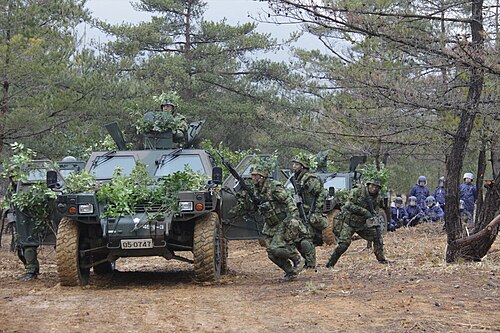
Maneuver warfare (American English), manoeuvre warfare (Commonwealth English), or manoeuver warfare (less common; North American English), is a military strategy which emphasizes movement, initiative and surprise to achieve a position of advantage. Maneuver seeks to inflict losses indirectly by envelopment, encirclement and disruption, while minimizing the need to engage in frontal combat. In contrast to attrition warfare where strength tends to be applied against strength, maneuver warfare attempts to apply strength against weakness in order to accomplish the mission.[1]
Maneuver warfare, and the use of initiative, originality and the unexpected,[1] seeks to avoid opponents' strengths, while exploiting their weaknesses and attacking their critical vulnerabilities, and is the conceptual opposite of attrition warfare. Rather than seeking victory by applying superior force and mass to achieve physical destruction, maneuver uses preemption, deception, dislocation, and disruption to destroy the enemy's will and ability to fight.[2]
Historically, maneuver warfare was stressed by small militaries, more cohesive, better trained, or more technologically advanced than attrition warfare counterparts. The term "tactical maneuver" is used by maneuver warfare theorists to refer to movement by forces to gain "advantageous position relative to the enemy," as opposed to its use in the phrase "maneuver warfare."[3]
The idea of using rapid movement to keep an enemy off balance is as old as war itself.[4] However, advanced technology, such as the development of cavalry and mechanized vehicles, has led to an increased interest in the concepts of maneuver warfare and in its role on modern battlefields.
Concepts
Although most battles between established armies have historically been fought based on attrition warfare strategies, many military doctrines and cultures are based on replete historical examples of maneuver warfare.
The view on attrition warfare involves moving masses of men and materiel against enemy strongpoints, with the emphasis on the destruction of the enemy's physical assets, success as measured by enemy combatants killed, equipment and infrastructure destroyed, and territory taken or occupied. Attrition warfare tends to use rigidly-centralized command structures that require little or no creativity or initiative from lower-level leadership (also called top-down or "command push" tactics).
Conventional warfare doctrine identifies a spectrum with attrition warfare and maneuver warfare on opposite ends. In attrition warfare, the enemy is seen as a collection of targets to be found and destroyed. It exploits maneuver to bring to bear firepower to destroy enemy forces. Maneuver warfare, on the other hand, exploits firepower and attrition on key elements of opposing forces.
Maneuver warfare suggest that strategic movement can bring the defeat of an opposing force more efficiently than simply contacting and destroying enemy forces until they can no longer fight. Instead, in maneuver warfare, the destruction of certain enemy targets, such as command and control centers, logisticalbases, or fire support assets, is combined with isolation of enemy forces and the exploitation by movement of enemy weaknesses.
Bypassing and cutting off enemy strongpoints often results in the collapse of that strongpoint even where the physical damage is minimal, such as the Maginot Line. Firepower, primarily used to destroy as many enemy forces as possible in attrition warfare, is used to suppress or destroy enemy positions at breakthrough points during maneuver warfare. Infiltration tactics, conventionally or with special forces, may be used extensively to cause chaos and confusion behind enemy lines.
The retired officer and military theory author Robert Leonhard summarizes maneuver warfare theory as "preempt, dislocate, and disrupt" the enemy as alternatives to the destruction of enemy mass through attrition warfare.
Since tempo and initiative are so critical to the success of maneuver warfare, command structures tend to be more decentralized with more tactical freedom given to lower-level unit leaders. Decentralized command structures allows "on the ground" unit leaders but still works within the guidelines of the commander's overall vision, to exploit enemy weaknesses as they become evident, which is also called "recon-pull" tactics or directive control.[5]
The war theorist Martin van Creveld identifies six main elements of maneuver warfare:[6]
- Tempo: as illustrated by John Boyd'sOODA loop.
- Schwerpunkt ('focal point'): the center of effort, or striking the enemy at the right place at the right time. According to van Creveld, ideally, a spot that is both vital and weakly defended.
- Surprise: Leaving the enemy unable to counter an action is central to any maneuver, and may be achieved by their remaining unaware for as long as possible
- Combined arms: the use of multiple means by which to attack the enemy creates an opportunity cost to any reaction. Should the enemy counter against one form of attack, they may leave themselves vulnerable to another. Additionally, different forms of attack may support each other through concurrent action (ex: Infantry supporting armor in such a way that the infantry has more available firepower, and the armor has protection from ambush)
- Flexibility: a military must be well rounded, self-contained and redundant. By maintaining different avenues of attack, either in method, movement, or any other factor, alternatives are always available, and opportunities can always be seized
- Decentralized command: rapidly changing situations may outpace the orders of a centralized command, leaving personnel with instructions that no longer apply. Lower levels of command must understand overall intent so as to adapt to a changing environment.
History
Mongol use
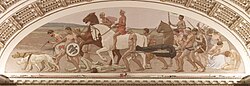
จักรพรรดิเจงกิสข่านแห่งมองโกลใช้ระบบการทหารแบบสงครามเคลื่อนที่ซึ่งเน้นการเคลื่อนที่อย่างรวดเร็วและเด็ดขาด โดยใช้ทักษะและความอดทนของทหารม้ามองโกลของพระองค์ พระองค์ทรงใช้การเคลื่อนที่เชิงปฏิบัติการ การบัญชาการและการควบคุม การหลอกลวง และยุทธวิธีในสนามรบที่แม่นยำ ซึ่งเหนือกว่าฝ่ายตรงข้ามในจีน รัสเซีย เปอร์เซีย และยุโรปตะวันออกอย่างมาก และทรงเอาชนะกองทัพศัตรูเกือบทุกกองทัพที่พระองค์เผชิญหน้า[ 7 ]
ตัวอย่างหนึ่งของการใช้ยุทธวิธีสงครามแบบเคลื่อนที่ของเขาคือการเอาชนะและผนวกจักรวรรดิ Khwarazmianระหว่างปี ค.ศ. 1219 ถึง 1221 ซึ่งมีกองทัพขนาดเกือบสามเท่าของกองทัพมองโกล ในเวลาเพียงไม่กี่เดือนของการต่อสู้ การเคลื่อนไหวและการเคลื่อนที่อย่างต่อเนื่องของกองทัพมองโกลทำให้กองกำลัง Khwarazmian ถูกตรึงไว้ ทำให้พวกเขาไม่สามารถริเริ่มได้ อีกทั้งยังทำให้ชาห์Ala ad-Din Muhammad แห่ง Khwarazmian และกองทัพของพระองค์ตกตะลึงและเสียขวัญ ส่งผลให้การรบสิ้นสุดลงก่อนที่ชาห์จะสามารถนำกองกำลังที่มีจำนวนมากกว่ามาใช้ได้[ 8 ]
การใช้ของนโปเลียน
กลยุทธ์ที่คล้ายกันนี้สามารถนำมาใช้ได้โดยใช้ทหารราบที่ได้รับการฝึกฝนมาอย่างเหมาะสมนโปเลียนที่ 1 ใช้การเคลื่อนไหวแบบชิงโจมตีของทหารม้าและทหารราบเร็วเพื่อขัดขวางการจัดวางกำลังครั้งแรกของกองกำลังข้าศึก ซึ่งทำให้กองกำลังของเขาโจมตีได้ในที่และเวลาที่เขาต้องการ ทำให้เกิดการรวมกำลังพลอาจรวมกับการได้เปรียบด้านภูมิประเทศ การกระทำเช่นนี้ทำให้การประสานงานของกองกำลังข้าศึกไม่มีประสิทธิภาพ แม้ว่าพวกเขาจะมีจำนวนมากกว่าก็ตาม ซึ่งได้ผลทั้งในเชิงยุทธวิธีและเชิงกลยุทธ์
ในสมัยที่นโปเลียนดำรงตำแหน่งเป็นแม่ทัพและเป็นฐานอำนาจในการขึ้นเป็นผู้นำของฝรั่งเศส ชื่อเสียงของเขามาจากการรบที่ทรงพลังและลื่นไหลในภาคเหนือของอิตาลี ซึ่งเป็นการต่อต้านกองทัพออสเตรียที่มีจำนวนมากกว่า เขาระบุว่าอองรี เดอ ลา ตูร์ ดอแวร์ญ ไวเคานต์แห่งตูเรนน์เป็นแหล่งข้อมูลสำคัญแหล่งหนึ่งในกลยุทธ์ของเขา
เขาฝึกฝนกองทัพฝรั่งเศสในอิตาลี ซึ่งโดยทั่วไปแล้วค่อนข้างขาดระเบียบ วินัย ให้เคลื่อนที่ได้เร็วกว่าที่หลายคนคิดไว้ ส่วนหนึ่งเป็นเพราะกองทัพของเขาดำรงชีพด้วยทรัพยากรจากธรรมชาติ และไม่มีระบบสนับสนุนด้านโลจิสติกส์ขนาดใหญ่ ทั้งความสามารถในการเคลื่อนย้ายกองทัพขนาดใหญ่เพื่อเข้าโจมตีในที่ที่เขาต้องการ และรูปแบบการรบที่เขาเลือกใช้ กลายเป็นตำนาน และเขาได้รับการยกย่องว่าไม่มีใครเอาชนะได้ แม้แต่กับกองกำลังที่ใหญ่กว่าและเหนือกว่าก็ตาม
นอกจากนี้ นโปเลียนยังจัดกำลังทหารของเขาเป็นรูปแบบที่ในปัจจุบันเรียกว่า "กลุ่มรบ" ซึ่งประกอบด้วย กำลัง รบหลากหลายประเภท เพื่อให้สามารถตอบสนองต่อการโจมตีของศัตรูได้เร็วขึ้น กลยุทธ์นี้เป็นคุณลักษณะสำคัญที่สนับสนุนประสิทธิผลของสงครามเคลื่อนที่ และ คาร์ล ฟอน คลอเซวิตซ์ก็ได้นำกลยุทธ์นี้มาใช้อีกครั้ง
กลยุทธ์หลักของนโปเลียนคือการเคลื่อนที่อย่างรวดเร็วเพื่อเข้าปะทะก่อนที่ศัตรูจะมีเวลาจัดระเบียบ เข้าปะทะเบาๆ ขณะเคลื่อนที่เพื่อโอบล้อมเส้นทางลำเลียงเสบียงหลัก โอบล้อมและวางกำลังสกัดกั้นเพื่อป้องกันการเสริมกำลัง และทำลายกองกำลังที่ถูกโอบล้อมทีละส่วน กิจกรรมทั้งหมดนี้หมายถึงการเคลื่อนที่ที่เร็วกว่าศัตรู รวมถึงเวลาตอบสนองต่อกิจกรรมของศัตรูที่เร็วกว่าด้วย
การที่เขาใช้การเดินทัพอย่างรวดเร็ว ( การเดินเท้าแบบบังคับ ) เพื่อให้ได้เปรียบทางยุทธศาสตร์ การใช้ทหารม้าลาดตระเวน และการตั้งแนวป้องกันเพื่อปกปิดการเคลื่อนไหว การเคลื่อนไหวอย่างรอบคอบเพื่อให้ได้เปรียบทางจิตวิทยาโดยการแยกกำลังพลออกจากกัน และการตั้งกองบัญชาการ ล้วนเป็นลักษณะเด่นของการทำสงครามแบบเคลื่อนที่ หนึ่งในข้อกังวลหลักของเขาคือความเร็วในการเคลื่อนที่ของทหารราบที่ค่อนข้างช้าเมื่อเทียบกับทหารม้า
ความพ่ายแพ้ครั้งนั้นและครั้งต่อๆ มา ทำให้กองทัพปรัสเซียภายใต้การนำของคลอสวิตซ์ต้องทบทวนหลักการทางทหารครั้งใหญ่เกี่ยวกับศักยภาพที่แท้จริงของการทำสงครามแบบเคลื่อนที่ ผลลัพธ์ของการทบทวนนั้นปรากฏให้เห็นในสงครามฝรั่งเศส-ปรัสเซีย
การใช้เครื่องจักร
ในช่วงกลางศตวรรษที่ 19 มีการนำระบบขนส่งแบบใช้เครื่องจักรหลายรูปแบบมาใช้ โดยเริ่มต้นจากรถไฟที่ขับเคลื่อนด้วยพลังไอน้ำส่งผลให้การขนส่งมีประสิทธิภาพมากขึ้น กองทัพฝ่ายตรงข้ามไม่ถูกจำกัดความเร็วด้วยความเร็วในการเดินทัพอีกต่อไป การใช้รถไฟในการเคลื่อนพลเกิดขึ้นบ้างในสงครามกลางเมืองอเมริกาในช่วงทศวรรษ 1860 แต่ขนาดของกองทัพที่เกี่ยวข้องทำให้ระบบนี้สามารถให้การสนับสนุนได้เพียงจำกัดเท่านั้นรถไฟหุ้มเกราะเป็นหนึ่งในยานรบหุ้มเกราะ รุ่นแรกๆ ที่มนุษยชาติใช้
During the Franco-Prussian War, the Prussians, knowing that the French could field a larger army than theirs, made a plan that required speed by surrounding the French strongpoints and destroying or bypassing them; it was called the Kesselschlacht, or 'cauldron battle'. The remainder of the army could advance unopposed to take important objectives. If war was declared, Prussia could quickly mobilize and invade. That tactic was used to devastating effect in 1870 since Prussian forces surrounded and defeated French forces, captured Napoleon III and besieged Paris. The Germans' battle plans for World War I were similar. Germany attempted to repeat the "knock-out blow" against the French armies in the Schlieffen Plan. However, technology evolved significantly in the preceding four decades; both the machine gun and more powerful artillery shifted the balance of power toward the defense. All combatants were desperate to get the front moving again, but that proved to be difficult.
Germany introduced new tactics with infiltration and stormtrooper "shock troops" toward the end of World War I to bypass resistance. Russian general Aleksei Brusilov used similar tactics in 1916 on the Eastern Front during the Brusilov Offensive.
The introduction of fully armored tanks, in a series of increasingly successful operations, presented a way out of the deadlock of attrition and trench warfare, but World War I ended before the British would field thousands of tanks to be put in a large-scale offense. Fuller had proposed Plan 1919 to use tanks to break through the lines and then to wreak havoc on the German lines of supply and communication.
During the interwar period, the British developed ideas for fully-mechanized all-arms warfare with the Experimental Mechanized Force. The Germans reviewed their doctrine and revised their approach by expanding on infiltration tactics and amplifying them with motor transport. Heinz Guderian was a leading proponent of armored combat. The German military stressed several key elements: versatile tanks combined with mobile infantry and artillery, close air support, rapid movement and concentration of forces (Schwerpunkt), and aggressive independent local initiative. All was strictly coordinated by radio and contributed to new tactics during the Battle of France in 1940. Theories in Germany about armored warfare have some similarities with interwar theories of British officers J.F.C. Fuller and B. H. Liddell Hart, which the British army failed to embrace and understand fully.
There are similarities between blitzkrieg and the Soviet concept of "deep battle," which the Soviets used to great effect in 1944 and continued to use as a doctrine during the Cold War.
Soviet deep battle
In the Soviet Union during the 1920s and the 1930s, the concept of "deep battle" was developed and integrated into the Red Army field regulations doctrine by Marshal Mikhail Tukhachevsky.[9] That led to the creation of cavalry mechanised groups during World War II and to operational maneuver groups during the Cold War.[10]
Maoist China
สงครามเคลื่อนที่ ( ภาษาจีน:运动战; พินอิน: yùndòngzhàn ) เป็นยุทธศาสตร์ทางทหารของสาธารณรัฐประชาชนจีนที่ใช้กำลังทหารแบบดั้งเดิมในแนวรบที่เปลี่ยนแปลงได้ตลอดเวลา โดยหน่วยทหารจะเคลื่อนที่เพื่อใช้ประโยชน์จากโอกาสในการโจมตีแบบไม่ทันตั้งตัว หรือในกรณีที่สามารถแสดงความเหนือกว่าของกำลังทหารในพื้นที่ได้ สงครามเคลื่อนที่เป็นหนึ่งในสามรูปแบบของสงคราม ( ภาษาจีน:战争形式; พินอิน: zhànzhēng xíngshì ) ที่เหมา เจ๋อตุง ผู้นำพรรคคอมมิวนิสต์จีน ในยุคแรกๆ ได้กล่าวไว้ และเป็นรูปแบบหลักของสงครามที่กองกำลังคอมมิวนิสต์จีน ใช้ ตั้งแต่ต้นทศวรรษ 1930 จนถึงสิ้นสุดสงครามกลางเมืองจีน[ 11 ]รูปแบบสงครามอีกสองรูปแบบที่เหมาเจ๋อตุงได้นิยามไว้ในหนังสือว่าด้วยสงครามยืดเยื้อได้แก่สงครามกองโจร (游击战; yóujīzhàn ) และสงครามเชิงตำแหน่ง (阵地战; zhèndìzhàn ) ถูกนำมาใช้น้อยกว่า[ 11 ]
ตัวอย่างที่โดดเด่นที่สุดของการทำสงครามเคลื่อนที่ของจีนคือ การเดินทัพทาง ไกลซึ่งเป็นการถอยทัพครั้งใหญ่ของเหมาเจ๋อตุง โดยเขาเดินทัพวนไปวนมาในมณฑลกุ้ยโจวจนกระทั่งทำให้กองทัพที่ไล่ตามมาซึ่งมีขนาดใหญ่กว่ามากเกิดความสับสน จากนั้นจึงสามารถเคลื่อนทัพผ่านมณฑลยูนนานและเสฉวนได้แม้ว่าการถอยทัพครั้งนี้จะสำเร็จโดยใช้กำลังพลเพียงหนึ่งในสิบของจำนวนที่ออกเดินทางไปเดินทัพทางไกลที่มณฑลเจียงซีก็ตาม
การรบห้าครั้งแรกของกองทัพอาสาสมัครประชาชนจีน ใน สงครามเกาหลีนั้น มีลักษณะเด่นคือ ยุทธศาสตร์การรบแบบเคลื่อนที่ ซึ่งกองทัพอาสาสมัครประชาชนจีนจะใช้กลยุทธ์การโอบล้อมศัตรูด้วยการเคลื่อนที่และพยายามทำลายล้างศัตรู จากนั้นจึงเข้าสู่ช่วงของการรบแบบตั้งรับ เมื่อทั้งกองทัพอาสาสมัครประชาชนจีนและ กองกำลัง สหประชาชาติสู้รบกันจนเกิดภาวะชะงักงันตามแนวเส้นละติจูดที่ 38 องศาเหนือ
หลักคำสอนของนาวิกโยธินสหรัฐฯ
ตามที่นาวิกโยธินสหรัฐฯกล่าวไว้ แนวคิดหลักประการหนึ่งของสงครามการเคลื่อนทัพคือ การเคลื่อนทัพนั้นโดยทั่วไปแล้วถือเป็นแนวคิดเชิงพื้นที่ คือการใช้การเคลื่อนทัพเพื่อให้ได้เปรียบเชิงตำแหน่ง อย่างไรก็ตาม แนวคิดการเคลื่อนทัพของนาวิกโยธินสหรัฐฯ คือ "ปรัชญาการรบที่มุ่งทำลายความสามัคคีของศัตรูด้วยการกระทำที่รวดเร็ว มุ่งเน้น และไม่คาดคิดหลากหลายรูปแบบ ซึ่งก่อให้เกิดสถานการณ์ที่ปั่นป่วนและเสื่อมโทรมอย่างรวดเร็วซึ่งศัตรูไม่สามารถรับมือได้" [ 12 ]
คู่มือของนาวิกโยธินสหรัฐฯ กล่าวต่อไปว่า:
"นี่ไม่ได้หมายความว่าอำนาจการยิงไม่สำคัญ ตรงกันข้าม อำนาจการยิงเป็นหัวใจสำคัญของสงครามแบบเคลื่อนที่ และเราไม่ได้หมายความว่าเราจะพลาดโอกาสที่จะทำลายศัตรูด้วยกำลังทางกายภาพ เราจะระดมยิงและระดมกำลังไปยังจุดสำคัญเพื่อทำลายกำลังของศัตรูเมื่อมีโอกาส และเมื่อมันสอดคล้องกับเป้าหมายที่ใหญ่กว่าของเรา"
ความเป็นไปได้ที่สหภาพโซเวียตจะทำการรุกครั้งใหญ่ในยุโรปตะวันตก นำไปสู่การสร้างหลักการรบแบบ AirLand ของกองทัพสหรัฐฯ แม้ว่าจะไม่ได้เน้นการเคลื่อนที่แบบฉับพลันเป็นหลัก แต่ก็เน้นการใช้ กำลังรบผสมผสานเพื่อทำลายแผนการของศัตรูโดยการโจมตีทะลุแนวลึก และถูกมองว่าเป็นการก้าวไปสู่สงครามแบบเคลื่อนที่เมื่อเทียบกับแนวคิดการป้องกันเชิงรุกในอดีต หลักการรบแบบ AirLand ถูกมองโดยMartin van Creveldว่า "อาจกล่าวได้ว่าเป็นจุดกึ่งกลางระหว่างการเคลื่อนที่แบบฉับพลันและการทำลายล้าง"
หลักการซ้อมรบทางอากาศของอังกฤษ
กองกำลังร่วมของอังกฤษมีข้อจำกัดในการพิจารณาการโจมตีทางอากาศหรือ ปฏิบัติการ เคลื่อนที่ทางอากาศในเอกสารเผยแพร่ปี 2016 ของพวกเขาเรื่อง "บันทึกหลักคำสอนร่วมเกี่ยวกับการซ้อมรบทางอากาศ" [ 13 ]
ข้อจำกัดในบริบทสมัยใหม่
เงื่อนไขสำคัญสำหรับความสำเร็จในสงครามเคลื่อนที่คือ ข้อมูลข่าวกรองที่ทันสมัยและแม่นยำเกี่ยวกับการจัดวางกำลังของหน่วยบัญชาการ หน่วยสนับสนุน และหน่วยรบสำคัญของฝ่ายศัตรู ในปฏิบัติการที่ข้อมูลข่าวกรองไม่ถูกต้อง ไม่พร้อมใช้งาน หรือไม่น่าเชื่อถือ การนำกลยุทธ์สงครามเคลื่อนที่ไปใช้ให้ประสบความสำเร็จอาจกลายเป็นปัญหา เมื่อเผชิญกับฝ่ายตรงข้ามที่เคลื่อนที่ได้คล่องตัวและสามารถเคลื่อนย้ายกำลังสำคัญได้อย่างรวดเร็วและรอบคอบ หรือเมื่อถูกควบคุม ความสามารถของกลยุทธ์สงครามเคลื่อนที่ในการนำไปสู่ชัยชนะก็จะมีความท้าทายมากขึ้น
สงครามเลบานอนปี 2006เป็นตัวอย่างหนึ่งของการเปิดเผยข้อบกพร่องดังกล่าว แม้จะมีอำนาจการยิงที่เหนือกว่าและอำนาจทางอากาศที่เด็ดขาด กองกำลังอิสราเอลก็ไม่สามารถโจมตีโครงสร้างบัญชาการของฮิซบอลลาห์หรือลดประสิทธิภาพการปฏิบัติการของกลุ่มได้ แม้ว่าจะสร้างความเสียหายอย่างหนัก อิสราเอลก็ไม่สามารถค้นหาและทำลายกำลังพลที่กระจัดกระจายของฮิซบอลลาห์ หรือทำให้ศูนย์บัญชาการสำคัญเป็นกลางได้ ดังนั้นจึงไม่บรรลุเป้าหมายของสงครามการก่อความไม่สงบในอิรักยังแสดงให้เห็นว่าชัยชนะทางทหารเหนือกองกำลังทั่วไปของฝ่ายตรงข้ามไม่ได้หมายความว่าจะนำไปสู่ชัยชนะทางการเมืองโดยอัตโนมัติ
Some military theorists such as William Lind and Colonel Thomas X. Hammes propose to overcome the shortcomings of maneuver warfare with the concept of what they call fourth generation warfare. For example, Lieutenant-Colonel S.P. Myers writes that "maneuver is more a philosophical approach to campaign design and execution than an arrangement of tactical engagements". Myers goes on to write that maneuver warfare can evolve and that "maneuverist approach in campaign design and execution remains relevant and effective as a counter-insurgency strategy at the operational level in contemporary operations."
In the early stages of the 2022 Russian invasion of Ukraine, Russia's advances were stalled by Ukraine's widespread deployment of man-portable anti-tank missiles. The scholar Seth Jones argued that Russia was forced to abandon maneuver warfare after an inept failure to apply combined arms, forcing a transition to a war of attrition.[14] Ukrainian forces attempted to use maneuver warfare during the 2023 Ukrainian counteroffensive but their advances became stalled due to Russian prepared defenses in the form of minefields and trenches.[15] Later in the war, Ukrainian forces used maneuver warfare more effectively during the start of the 2024 Kursk Oblast incursion where Russian forces initially struggled to repel the attack. However, that advance later stalled.[16] According to Michael Kofman "Russian forces do far better when they're operating with prepared defense, fixed lines, more on positional warfare."[17]
See also
Sources
- Boyd, John. Patterns of Conflict. 1986.
- Simpkin, Richard E. Race to the Swift: Thoughts on Twenty-First Century Warfare. Brassey's, 2000.
- Richard Simpkin in association with John EricksonDeep Battle: The Brainchild of Marshal Tukhachevskii, London, Brassey's Defence, 1987. ISBN 0-08-031193-8
- Lind, William S.Maneuver Warfare Handbook. 1985. Westview Special Studies in Military Affairs. Westview Press Inc. Boulder, CO.
- Leonhard, Robert.The Art of Maneuver: Maneuver-Warfare Theory and Air-Land Battle. 1991. Presidio Press. Novato, CA.
- MajGen Ray Smith, USMC (ret.) and Bing West (1 August 2003). "Implications from Iraqi Freedom for the Marine Corps". Westwrite. Archived from the original on 27 September 2007. Retrieved 19 May 2007.
The first war fought under the new doctrine of Maneuver Warfare, with several observations and suggestions for future change.