
Divine twins
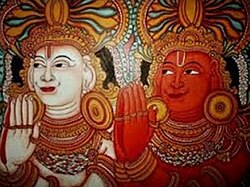
The divine twins are youthful horsemen, either gods or demigods, who serve as rescuers and healers in Proto-Indo-European mythology.[1]
Like other Proto-Indo-European divinities, the Divine Twins are not directly attested by archaeological or written materials, but scholars of comparative mythology and Indo-European studies generally agree on the motifs they have reconstructed by way of the comparative method.[2][3]
Common traits
Scholar Donald Ward proposed a set of common traits that pertain to divine twin pairs of Indo-European mythologies:[4][5]
- dual paternity;
- mention of a female figure (their mother or their sister);
- deities of fertility;
- known by a single dual name or having rhymed / alliterative names;
- associated with horses;
- saviours at sea;
- of astral nature;
- protectors of oaths;
- mischievous;
- providers of divine aid in battle; and
- magic healers.
Name
Although the Proto-Indo-European (PIE) name of the Divine Twins cannot be reconstructed with certainty based on the available linguistic evidence, the most frequent epithets associated with the two brothers in liturgic and poetic traditions are the "Youthful" and the "Descendants" (sons or grandsons) of the Sky-God (Dyēus).[6][7][3]
Two well-accepted reflexes of the Divine Twins, the Vedic Aśvins and the Lithuanian Ašvieniai, are linguistic cognates ultimately deriving from the Proto-Indo-European word for the horse, *héḱwos. They are related to Sanskritáśva and Avestanaspā (both from Indo-Iranian*Haćwa), and to Old Lithuanianašva, which all share the meaning of "mare". This may point to an original PIE divine name *héḱw-n-, although this form could also have emerged from later contacts between Proto-Indo-Iranian and Proto-Balto-Slavic speakers, which are known to have occurred in prehistoric times.[8][9]
Role
Represented as young men rescuing mortals from peril in battle or at sea, the Divine Twins rode the steeds that pull the sun across the sky and were sometimes depicted as horses themselves.[10] They shared a sister, *H₂éwsōs 'Dawn', who is also portrayed as the daughter of *Dyēus 'Sky' in Indo-European mythology.[11] The two brothers are generally depicted as healers and helpers, travelling in miraculous vehicles to save shipwrecked mortals.[1] They are often differentiated: one is represented as a physically strong and aggressive warrior, while the other is seen as a healer who gives attention to domestic duties, agrarian pursuits, or romantic adventures.[3]
In the Vedic, Greek and Baltic traditions, the Divine Twins similarly appear as the personifications of the morning and evening star.[1] They are depicted as the lovers or the companions of a solar female deity, preferably the Sun's daughter but sometimes also the Dawn. In most stories in which they appear, the Divine Twins rescue the Dawn from a watery peril, a theme that stems from their role as the solar steeds.[12][3]
During the night, the Divine Twins were said to return to the east in a golden boat, where they traversed a sea[a] to bring back the rising sun each morning. During the day, they crossed the nocturnal sky in pursuit of their consort, the morning star. In what seems to be a later addition confined to Europe, they were said to rest at the end of the day on the Fortunate Isles, a land situated in the sea in the West with magical apples on it in the Garden of the Hesperides.[3] By the Bronze Age, the Divine Twins were also represented as the coachmen of horse-driven solar chariots.[11]
Evidence
Linguistic cognates
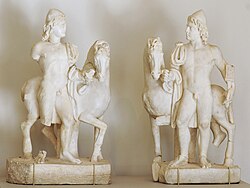
Three Indo-European traditions (Greek, Indic and Baltic) attest the mytheme of equestrian twins, all associated with the dawn or the sun's daughter. Although their names do not form a complete group of cognates, they nonetheless share a similar epithet, suggesting a possible ancestral name or epithet: the 'sons (or descendants) of Dyēus'.[7][3][6]
- (?) ตำนานเทพเจ้าโปรโตอินโด-ยุโรป : *diwós suHnū́ ('บุตรของ Dyēus') หรือ*diwós népoth e ('ลูกหลานของ Dyēus') [ 6 ]
- ศาสนาเวทโบราณ : divó nápātā Aśvinsซึ่งเป็น "บุตรของDyaús " มักถูกกล่าวถึงในรูปคู่ในฤคเวทโดยไม่มีชื่อเฉพาะเจาะจง[ 2 ] [ 14 ] [ 15 ]
- ตำนานลิทัวเนีย : Dievo sūneliai ( Ašvieniai ) "บุตรของDievas " ลากรถม้าสุริยะของSaulėขึ้นไปบนท้องฟ้า[ 12 ] [ 15 ]
- ตำนานเทพเจ้าลัตเวีย : Dieva Dēli "บุตรแห่ง Dievs" เทพแห่งท้องฟ้า[ 12 ] [ 15 ]
- เทพปกรณัมกรีก : Diós-kouroi Castor และ Pollux "เด็กชายของซุส " [ 2 ] [ 15 ]
- ภาษาอิตาลิก : ทั้งPaelignian Ioviois PvcloisและMarsian Ioveis Pvclesถูกตีความว่าเป็นการลอกเลียนแบบชื่อเทพเจ้ากรีกDiós- kouroi [ 16 ] [ 17 ] [ 18 ]
ปฏิกิริยาตอบสนองที่เป็นไปได้
เนื่องจากไม่สามารถเชื่อมโยงเข้าด้วยกันกับต้นกำเนิดทางภาษาเดียวกันได้ การสะท้อนอื่นๆ ที่พบในตำนานอินโด-ยุโรปจึงไม่แน่นอนนัก แม้ว่าลวดลายของพวกมันจะสามารถเปรียบเทียบได้กับของเทพแฝดก็ตาม[ 19 ]
เซลติก
กล่าวกันว่า Divanno และ Dinomogetimarus ของชาวกอลเป็นเทพเจ้าผู้ปกป้องและเป็น "เทพเจ้ากอลที่เทียบเท่า" กับ Dioskouroi ของกรีก[ 20 ] ดูเหมือนว่าพวกเขาจะถูกแสดงในอนุสาวรีย์และภาพนูนต่ำในฝรั่งเศสโดยมีม้าขนาบข้าง[ 21 ]ซึ่งจะทำให้พวกเขาสามารถเปรียบเทียบได้กับMartes ของชาวกอล และAlcisของ ชาวเยอรมัน [ 22 ]นักวิชาการแนะนำว่า จารึกอุทิศของ ชาวกอล-โรมัน จำนวนมาก ที่อุทิศให้กับ Castor และ Pollux มากกว่าภูมิภาคอื่นใดในจักรวรรดิโรมัน เป็นหลักฐานยืนยันถึงลัทธิบูชา Dioskoroi [ 23 ]
นักประวัติศาสตร์ชาวกรีกTimaeusกล่าวว่าชาวเคลต์แอตแลนติกเคารพบูชา "Dioskouroi" เหนือเทพเจ้าองค์อื่น ๆ และว่า Dioskouroi ได้มาเยือนพวกเขาจากอีกฟากหนึ่งของมหาสมุทร[ 19 ]นักประวัติศาสตร์Diodorus SiculusในหนังสือBibliotheca historica เล่มที่สี่ เขียนว่าชาวเคลต์ที่อาศัยอยู่ตามชายฝั่งมหาสมุทรบูชา Dioscuroi "มากกว่าเทพเจ้าองค์อื่น ๆ" [ 24 ]ข้อสันนิษฐานที่ว่าหมายถึง เทพเจ้า ชาวกอล Divanno และ Dinomogetimarus นั้นไม่มีหลักฐานที่แน่ชัด[ 25 ]
ในตำนานไอริชเรื่องหนึ่งที่เกี่ยวข้องกับมาชา ( Dindsenchasแห่ง Ard Macha) เธอถูกบังคับให้แข่งกับม้าของกษัตริย์แห่งอัลสเตอร์ในขณะที่ตั้งครรภ์ใกล้คลอด ในฐานะนักขี่ม้าที่มีความสามารถ เธอชนะการแข่งขัน แต่เริ่มคลอด Fír และ Fial ทันทีหลังจากข้ามเส้นชัย[ 26 ]ต้นแบบนี้ยังตรงกับบุคคลต่างๆ เช่น เทพเจ้าแห่งดวงอาทิตย์ของชาวกอลBelenusซึ่งมีฉายาAtepomarusหมายถึง "มีม้าที่ดี"; Grannusซึ่งเกี่ยวข้องกับเทพีแห่งการรักษาSirona (ชื่อของเธอหมายถึง "ดวงดาว"); Maponos ("บุตรแห่งพระเจ้า") ซึ่งในตำนานไอริชถือว่าเป็นบุตรของDagdaผู้เกี่ยวข้องกับการรักษา[ 27 ] [ 28 ]
BrânและManawydanของชาวเวลส์ อาจเป็นภาพสะท้อนของฝาแฝดศักดิ์สิทธิ์ด้วยเช่นกัน[ 11 ]
นักมานุษยวิทยาเปรียบเทียบAlexander Haggerty Krappeเสนอว่าวีรบุรุษสองคน Feradach และ Foltlebar พี่น้องและบุตรชายของกษัตริย์แห่ง Innia เป็นตัวแทนของธีมตำนาน วีรบุรุษเหล่านี้ช่วยเหลือการเดินทางของFiannaเข้าสู่Tir fa Thuinn (อาณาจักรอีกฟากหนึ่งของทะเล) ใน ภารกิจ แบบ Orpheanเพื่อช่วยเหลือสมาชิกบางส่วนของพวกเขา ในนิทานเรื่องการไล่ล่า Gilla Decair และม้าของเขาทั้งสองเป็นนักเดินเรือผู้เชี่ยวชาญ คนหนึ่งสามารถสร้างเรือได้ และอีกคนหนึ่งสามารถติดตามนกป่าได้[ 29 ]
Other possible candidates are members of Lugh's retinue, Atepomarus and Momorus (fr).[30] Atepomarus is presumed to mean "Great Horseman" or "having great horses",[31] based on the possible presence of Celtic stem -epo- 'horse' in his name.[32] Both appear as a pair of Celtic kings and founders of Lugdunum. They escape from Sereroneus and arrive at a hill. Momorus, who had skills in augury, sees a murder of crows and names the hill Lougodunum, after the crows. This myth is reported in the works of Klitophon of Rhodes and in Pseudo-Plutarch's De fluviis.[33][32][34][31]
Germanic
Tacitus mentions a divine pair of twins called the Alcis worshipped by the Naharvali, whom he compares to the Roman twin horsemen Castor and Pollux.[35][19] These twins can be associated with the Indo-European myth of the divine twin horsemen (Dioscuri) attested in various Indo-European cultures.[36] Among later Germanic peoples, twin founding figures such as Hengist and Horsa allude to the motif of the divine twins. The Anglo-Saxon heroes are said to have come by the sea in response to a plea from the beleaguered British king Vortigern. Descendants of Odin, their names mean 'Stallion' and 'Horse', respectively,[19] strengthening the connection.[37][38]
In Scandinavia, images of divine twins are attested from the 15th century BCE until the 8th century CE, after which they disappear, apparently as a result of religious change. Norse texts contain no identifiable divine twins, though scholars have sought parallels between gods and heroes.[39]
ตำนานของผู้ตั้งถิ่นฐานชาวไอซ์แลนด์Ingólfr ArnarsonและHjörleifr Hróðmarssonซึ่งปรากฏในเรื่องเล่าในตำนานเกี่ยวกับการตั้งถิ่นฐานของไอซ์แลนด์อาจมีลวดลายหลายอย่างของตำนานฝาแฝดอินโด-ยุโรป (การเป็นผู้ก่อตั้งและพี่น้อง) ซึ่งคล้ายคลึงกับ Hengist และ Horsa [ 40 ] [ 41 ]
คู่แฝดผู้ก่อตั้งอีกคู่หนึ่งในประเพณีดั้งเดิมคือพี่น้องDanและAngulซึ่งบรรยายไว้ในGesta DanorumโดยนักวิชาการSaxo Grammaticus [ 41 ]
ฮัดดิงจาร์เป็นชื่อพี่น้องสองคนซึ่งปรากฏอยู่ในตำนานของชาวเยอรมันหลายฉบับ
กรีก-โรมัน
แอมฟิออนและเซทัส ฝาแฝดอีกคู่หนึ่งที่เกิดจากซุสและแอนติโอพีถูกพรรณนาว่าเป็นผู้ก่อตั้งเมืองธีบส์ ในตำนาน พวกเขาถูกเรียกว่า "ดิออสคูรอย ผู้ขี่ม้าขาว" (λευκόπωλοι) โดยยูริพิดิสในบทละครเรื่องสตรีฟีนิเชีย (ฉายาเดียวกันนี้ถูกใช้ในเฮราคลีสและในบทละครแอนติโอพี ที่สูญหายไป ) สอดคล้องกับธีมของความแตกต่างระหว่างฝาแฝด แอมฟิออนถูกกล่าวว่าเป็นคนครุ่นคิดและอ่อนไหวมากกว่า ในขณะที่เซทัสมีความเป็นชายมากกว่าและผูกพันกับกิจกรรมทางกายภาพ เช่น การล่าสัตว์และการเลี้ยงปศุสัตว์[ 42 ] [ 43 ] [ 44 ]
เรีย ซิลเวีย มารดาของโรมูลัสและเรมัสได้วางพวกเขาไว้ในตะกร้าก่อนที่เธอจะเสียชีวิต และนำไปวางไว้ในแม่น้ำเพื่อปกป้องพวกเขาจากการถูกฆาตกรรม ก่อนที่หมาป่าตัวเมียจะมาพบและเลี้ยงดูพวกเขา[ 45 ]ปาลิซี เทพเจ้า ฝาแฝดชาว ซิซิลีคู่หนึ่งซึ่งมีบิดาเป็นซุส ในบางเรื่องเล่า อาจเป็นภาพสะท้อนของตำนานดั้งเดิมเช่นกัน[ 46 ]
นักวาทศิลป์และนักไวยากรณ์ชาวกรีกAthenaeusแห่ง Naucratis ในงานDeipnosophistaeเล่มที่ 2 ของเขา อ้างว่ากวีIbycusในMelodies ของเขา บรรยายถึงฝาแฝดEurytus และ Cteatusว่าเป็น "λευκίππους κόρους" ("หนุ่มม้าขาว") และกล่าวว่าพวกเขาเกิดจากไข่เงิน[ 47 ] [ 48 ]เรื่องราวที่ระลึกถึงตำนานของฝาแฝดเทพกรีกCastor และ PolluxและมารดาของพวกเขาLedaฝาแฝดคู่นี้กล่าวกันว่ามีบิดาเป็นเทพแห่งท้องทะเลPoseidonและมารดาที่เป็นมนุษย์ชื่อ Molione [ 49 ] [ b ]
บอลติก
มีความเป็นไปได้ว่าŪsiņš (หรือŪsinis ) เทพเจ้าบอลติกที่กล่าวถึงในdainas นั้นเป็นภาพสะท้อนของตำนานในประเพณีลัตเวียเขาเกี่ยวข้องกับม้า[ 51 ] [ 52 ]แสงสว่างและดวงอาทิตย์[ 53 ]และอาจเป็นหนึ่งในบุตรชายของ Dievs [ 54 ] [ 55 ]นักภาษาศาสตร์ประวัติศาสตร์Václav Blažekโต้แย้งว่าเขาเป็น "คู่เทียบเชิงหน้าที่และนิรุกติศาสตร์" ของตัวละครเวทขนาดเล็กAuśijá- (ผู้รับใช้ของฝาแฝดเวทและเกี่ยวข้องกับผึ้ง) และAśvinsเอง[ 51 ]นอกจากนี้ ตามที่David Leeming กล่าว Usins ปรากฏตัวในฐานะคนขับรถม้า นำรถม้าที่ลากโดยม้าสองตัวข้ามท้องฟ้า[ 56 ]
มีการโต้แย้งว่าAuseklisเป็นภาพสะท้อนอีกภาพหนึ่งของตำนานในภาษาลัตเวีย[ 57 ] Auseklis ถูกกล่าวถึงว่าเป็นเพศชายในบริบทของdainas (เพลงพื้นบ้าน) และถูกมองว่าเป็นเจ้าบ่าวของ Saules meita ("ธิดาแห่งดวงอาทิตย์") ผู้ซึ่งเดินทางมาไกลถึงเยอรมนีเพื่อเกี้ยวพาราสีเธอ[ 58 ]นอกจากนี้ ตามที่นักวิชาการ Elza Kokare กล่าว Auseklis เป็นส่วนหนึ่งของกลุ่มเทพเจ้าแห่งสวรรค์ที่มีส่วนร่วมในละครเทพนิยายเกี่ยวกับ "งานแต่งงานบนสวรรค์" Auseklis ถูกมองว่าเป็นเจ้าบ่าวของSaules meitaธิดาของ Saule เทพธิดาแห่งดวงอาทิตย์บอลติก บางครั้งเขาถูกพรากจากเจ้าสาวของเขา ( Ausekļa līgaviņaและรูปแบบต่างๆ) เนื่องจากการทะเลาะวิวาทของ Meness ในเรื่องเล่าอื่นๆ เขาเป็นแขกหรือสมาชิกของขบวนเจ้าสาว[ 59 ]ในงานแต่งงานของ Saules meita กับตัวละครอื่น[ 60 ]กล่าวกันว่าเขายังเป็นเจ้าของม้าตัวหนึ่ง ซึ่งเขาซื้อเองหรือซื้อให้เขา[ 61 ]ตาม การวิเคราะห์ของ Marija Gimbutasแล้ว Auseklis เป็น "dievaitis" ("เทพเจ้าน้อย") ที่ปรากฏตัวพร้อมกับม้าที่ดวงอาทิตย์มอบให้ และตกหลุมรักกับลูกสาวของดวงอาทิตย์ (เพศหญิง) ("Saules dukterims") [ 62 ]
สลาฟ
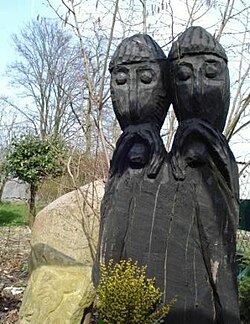
เทพเจ้าโปแลนด์เลล และ โปเลล ซึ่ง มาเชียจ มีโชวิตากล่าวถึงเป็นครั้งแรกในปี 1519 ถูกนำเสนอในฐานะเทียบเท่ากับ คาสเตอร์ และ พอลลักซ์ บุตรชายของเทพีลาดา (คู่ขนานกับเลดาของกรีก) และเทพเจ้าชายที่ไม่ทราบชื่อ รูปปั้นถูกค้นพบในปี 1969 บน เกาะ ฟิชเชอรินเซลซึ่งเป็นที่ตั้งของศูนย์บูชาของชนเผ่าสลาฟเวเลติโดยรูปปั้นดังกล่าวแสดงภาพชายสองคนเชื่อมต่อกันด้วยศีรษะ นักวิชาการเชื่อว่าอาจเป็นตัวแทนของเลลและโปเลล เลเลกหมายถึง "หนุ่มผู้แข็งแกร่ง" ในภาษาถิ่นรัสเซีย[ 63 ]ดาวฤกษ์ที่สว่างที่สุดของกลุ่มดาวคนคู่ α Gem และ β Gem เชื่อกันว่าเดิมทีมีชื่อว่าเลเลและโปเลเลในประเพณีของเบลารุส ตามชื่อตัวละครฝาแฝด[ 64 ]
ตามที่ศาสตราจารย์ด้านประวัติศาสตร์ยุคกลางชาวโปแลนด์Jacek Banaszkiewicz กล่าวไว้ เทพเจ้าPolabianสององค์ คือ PorevitและPorenutแสดงลักษณะ dioscuric ตามที่เขากล่าว ส่วนแรกของชื่อของพวกเขานั้นมาจากรากศัพท์Proto-Slavic -porซึ่งหมายถึง "ความแข็งแกร่ง" โดยองค์แรกหมายถึง "เจ้าแห่งความแข็งแกร่ง" – องค์ที่แข็งแกร่งกว่า และองค์ที่สองหมายถึง "เจ้าแห่งความต้องการการสนับสนุน (ความแข็งแกร่ง)" – องค์ที่อ่อนแอกว่า พวกเขาทั้งสองมีใบหน้าห้าหน้าและปรากฏเคียงข้างRugiaevitเทพเจ้าสูงสุด[ 65 ]
ระหว่างการคลอดบุตร มารดาของวีรบุรุษฝาแฝดชาวโปแลนด์วาลิโกรา ("ผู้พิชิตภูเขา") และวีร์วิดาบ ("ผู้ฉีกต้นโอ๊ก") เสียชีวิตในป่า ซึ่งมีสัตว์ป่าคอยดูแลพวกเขา[ 66 ]วาลิโกราได้รับการเลี้ยงดูโดยหมาป่าตัวเมีย และวีร์วิดาบได้รับการเลี้ยงดูโดยหมีตัวเมีย ซึ่งเลี้ยงพวกเขาด้วยน้ำนมของตัวเอง พวกเขาร่วมกันเอาชนะมังกรที่สร้างความเดือดร้อนให้กับอาณาจักร ซึ่งกษัตริย์ผู้สำนึกบุญคุณจึงมอบอาณาจักรครึ่งหนึ่งให้แก่พวกเขาแต่ละคน และยกธิดาคนหนึ่งในสองคนของพระองค์ให้เป็นภรรยา บุตรชายของครักได้แก่ครักที่ 2และเลชที่ 2ก็ปรากฏในตำนานของโปแลนด์ในฐานะผู้สังหารมังกรวาเวลเช่น กัน [ 67 ]
อินโด-อิหร่าน
Another possible reflex may be found in Nakula and Sahadeva. Mothered by Princess Madri, who summoned the Aśvins themselves in a prayer to beget her sons (thus them being called Ashvineya (आश्विनेय)), the twins are two of the five Pandava brothers, married to the same woman, Draupadi. In the Mahabharata epic, Nakula is described in terms of his exceptional beauty, warriorship and martial prowess, while Sahadeva is depicted as patient, wise, intelligent and a "learned man". Nakula takes great interest in Virata's horses, and his brother Sahadeva become Virata's cowherd.[68][69][70][71] Scholarship also points out that the Vedic Ashvins had an Avestic counterpart called Aspinas.[72][73][74]
Armenian
The Armenian heroes Sanasar and Baldasar appear as twins in the epic tradition, born of princess Tsovinar (as depicted in Daredevils of Sassoun);[75] Sanasar finds a "fiery horse", is more warlike than his brother, and becomes the progenitor of a dynasty of heroes.[76][77] In an alternate account, their mother is named princess Saṙan, who drinks water from a horse's footprint and gives birth to both heroes.[78]
Scholar Armen Petrosyan also sees possible reflexes of the divine twins in other pairs of heroic brothers in Armenian epic tradition, e.g., Ar(a)maneak and Ar(a)mayis; Eruand (Yervant) and Eruaz (Yervaz).[79] In the same vein, Sargis Haroutyunian argues that the Armenian heroes, as well as twins Izzadin (or Izaddin) and Zyaddin (mentioned in the Kurdish Sharafnama), underlie the myth of divine twins: pairs of brother-founders of divine origin.[80]
Albanian
The pair of heroic brothers and main characters of the Albanian legendary epic cycle Kângë Kreshnikësh – Muji and Halili – are considered to bear common traits of the Indo-European divine twins.[81][82][83]
Legacy
In mythology and religion
The mytheme of the Divine Twins was widely popular in the Indo-European traditions; evidence for their worship can be found from Scandinavia to the Near East as early as the Bronze Age. The motif was also adopted in non-Indo-European cultures, as attested by the EtruscanTinas Clenar, the "sons of Jupiter".[84] There might also have been a worship of twin deities in Myceanean times, based on the presence of myths and stories about pairs of brothers or male twins in Attica and Boeotia.[85]
The most prevalent functions associated with the twins in later myths are magic healers and physicians, sailors and saviours at sea, warriors and providers of divine aid in battle, controllers of weather and keepers of the wind, assistants at birth with a connection to fertility, divinities of dance, protectors of the oath, and founders of cities, sometimes related to swans.[3][86] Scholarship suggests that the mytheme of twins has echoes in the medieval legend of Amicus and Amelius.[4] In Belarusian folklore, Saints George and Nicholas are paired up together, associated with horses, and have a dual nature as healers.[42] The veneration of the Slavic saint brothers Boris and Gleb may also be related.[87][88]
In literature
Literary approaches to the mytheme of the Indo-European Divine Twins can be found in Zeus, a Study in Ancient Religion (1925), by Arthur Bernard Cook. The British scholar posited that some versions of The Dancing Water, the Singing Apple, and the Speaking Bird, collected from Greek and Italian sources, contained some remnants of Helen and her brothers, the Dioskouroi, in the characters of the wonder-children (triplets or two male/one female siblings) with astronomical motifs on their bodies.[89] The idea is reiterated in Angelo de Gubernatis's Zoological Mythology, Vol. 1.[90] The Italian scholar analysed the twins in a variant of The Boys with the Golden Stars format as the "Açvinau" (Asvins) of Vedic lore.[91]
In architecture

Ašvieniai ซึ่งแสดงเป็นžirgeliaiหรือม้าตัวเล็ก เป็นลวดลายที่พบได้ทั่วไปบนหลังคาบ้านในลิทัวเนีย[ 92 ] [ 93 ] [ 94 ]ซึ่งวางไว้เพื่อปกป้องบ้าน[ 95 ]ลวดลายที่คล้ายกันนี้ยังสามารถพบได้บนรังผึ้ง สายรัดม้า โครงเตียง และสิ่งของเครื่องใช้ในครัวเรือนอื่นๆ[ 96 ]
ภาพลักษณ์ที่คล้ายกันปรากฏในการตกแต่งของFachhallenhaus ซึ่งเป็น บ้านแบบ เยอรมันตอนล่าง : จุดยอดของหน้าจั่วประกอบด้วยแผ่นไม้แกะสลักเป็นรูปหัวม้า (แบบมีสไตล์) ซึ่งมักใช้เพื่อป้องกันขอบหลังคาจากลม หัวม้าเหล่านี้ถือเป็นสัญลักษณ์ของชาวแซกซอนคือม้าแซกซอนการกระจายตัวของหัวม้าเป็นการตกแต่งบนสันหลังคายังสะท้อนให้เห็นในตราประจำเมืองและหมู่บ้านหลายแห่งทางตอนเหนือของเยอรมนี หัวม้าไขว้เหล่านี้กล่าวกันว่าเป็น "สัญลักษณ์นอกรีตโบราณ" [ 97 ]สัญลักษณ์นี้เรียกอีกอย่างว่า "กากบาทหน้าจั่ว" ( de ) อาจเกี่ยวข้องกับผู้ก่อตั้งในตำนานอย่าง Hengist และ Horsa เนื่องจากเรียกว่าHengst und Hors [ 98 ]
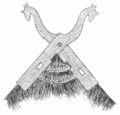 ภาพวาดตกแต่งหน้าจั่ว ปี 1901
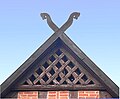 การตกแต่งหน้าจั่วในปี 2006
 หัวม้าบนตราประจำตระกูลของเมืองบุชโฮลซ์ในนอร์ดไฮเดอ
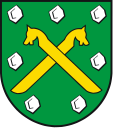 ตราประจำเมืองสปอร์นิทซ์ในเมคเลนบูร์ก-ฟอร์พอเมิร์น
ดูเพิ่มเติม
บรรณานุกรม
- Andrén, Anders (2020). "ฝาแฝดศักดิ์สิทธิ์". ใน Schjødt, Jens Peter; Lindow, John; Andrén, Anders (บรรณาธิการ). ศาสนาก่อนคริสต์แห่งภาคเหนือ: ประวัติศาสตร์และโครงสร้าง . เล่ม 3. Brepols. หน้า1453–1463 . ISBN 978-2-503-57489-9.
- Banaszkiewicz, Jacek (1996) "ปัน รูกี - รูกีวิทและไปวาร์ซีสเซ ซ การ์ดชกา: โปเรวิท และโปเรนุต (แซ็กโซ กรามาตีก, เกสตา ดาโนรุมที่ 14, 39,38-41)" ใน Kurnatowska, Zofia (ed.) Słowiańszczyzna และEuropie Šredniowiecznejฉบับที่ 1. วรอตซวาฟ: การทำงาน หน้า75–82 . ไอเอสบีเอ็น 83-901964-7-6.
- Beekes, Robert S. P. (2011). Comparative Indo-European Linguistics: An Introduction. John Benjamins Publishing. ISBN 978-9027211859.
- Çabej, Eqrem (1968). "Gestalten des albanischen Volksglaubens". In Manfred Mayrhofer (ed.). Studien zur Sprachwissenschaft und Kulturkunde: Gedenkschrift für Wilhelm Brandenstein 1898-1967. Innsbrucker Beiträge zur Kulturwissenschaft. Vol. 14. Auslieferung: Institut für Vergleichende Sprachwissenschaft der Leopold-Franzens-Universität Innsbruck. ISSN 0537-7250.
- Hamacher, Duane W. "The Sumerians and Gemini: Sumerian Astronomical Interpretations as Origins of the Divine Horse Twins and Solar Chariots in Indo-European Mythology (Unpublished manuscript)"(PDF). p. 7. Archived from the original(PDF) on 2011-05-14.
- Jackson, Peter (2002). "Light from Distant Asterisks. Towards a Description of the Indo-European Religious Heritage". Numen. 49 (1): 61–102. doi:10.1163/15685270252772777. JSTOR 3270472.
- Juka, S. S. (1984), Kosova: The Albanians in Yugoslavia in Light of Historical Documents: An Essay, Waldon Press, ISBN 9780961360108
- Mallory, James P.; Adams, Douglas Q. (1997), Encyclopedia of Indo-European Culture, London: Routledge, ISBN 978-1-884964-98-5
- Mallory, James P.; Adams, Douglas Q. (2006), The Oxford Introduction to Proto-Indo-European and the Proto-Indo-European World, Oxford, England: Oxford University Press, ISBN 978-0-19-929668-2
- Neziri, Zymer U. (2008). Institute of Albanology of Prishtina (ed.). Studime për folklorin: Epika gojore dhe etnokultura[The Study of Folklore: The Oral Epic and Ethnoculture]. Vol. II. Grafobeni.
- O'Brien, Steven (1982). "Dioscuric elements in Celtic and Germanic mythology". Journal of Indo-European Studies. 10: 117–136.
- Parpola, Asko (2015). The Roots of Hinduism: The Early Aryans and the Indus Civilization. Oxford University Press. p. 109. ISBN 9780190226923.
- Shapiro, Michael (1982). "Neglected evidence of Dioscurism (divine twinning) in the Old Slavic pantheon". Journal of Indo-European Studies. 10: 137–166.
- Simek, Rudolf (1993). Dictionary of Northern Mythology. D.S. Brewer. ISBN 978-0-85991-513-7.
- เวสต์, มอร์ริส แอล. (2007). บทกวีและตำนานอินโด-ยุโรป . สำนักพิมพ์มหาวิทยาลัยออกซ์ฟอร์ด. ISBN 978-0199280759.
อ่านเพิ่มเติม
การศึกษาทั่วไป
- อัลแบร์โร, มานูเอล (13 ตุลาคม พ.ศ. 2547). "Las tres funciones dumezilianas y el mito de los mellizos divinos de la tradición indoeuropea en el" . En la Españaยุคกลาง . 27 : 317– 337.
- Bianchi, U. "ฉัน Dioscuri: una versione della coppia divina" ใน: Il senso del culto dei Dioscuri ในอิตาลี Atti del Convegno svoltosi และ Taranto nell'aprile del 1979 หน้า 23–40. 1979
- เบลคลีย์, แซนดรา (ธันวาคม 2018). "Starry Twins and Mystery Rites: From Samothrace to Mithras" (PDF) . Acta Antiqua Academiae Scientiarum Hungaricae . 58 ( 1– 4): 427– 463. doi : 10.1556/068.2018.58.1-4.26 . S2CID 203298715.เก็บถาวรจากต้นฉบับ(PDF)เมื่อ 2021-07-15 . สืบค้นเมื่อ2022-04-03 .
- Grottanelli, C. (1986). "ม้าเทียม แฝด และสตรีผู้ทรงอำนาจ: อินเดีย กรีซ ไอร์แลนด์ และที่อื่นๆ" วารสารการศึกษาอินโด-ยุโรป 14 ( 1– 2 ): 125– 152.
- Hankoff, Leon D. (พฤษภาคม 1977). "ทำไมเทพแห่งการรักษาจึงเป็นฝาแฝด"วารสารชีววิทยาและการแพทย์แห่งมหาวิทยาลัยเยล 50 ( 3): 307– 319. PMC 2595421 . PMID 560764 .
- Kristiansen, Kristian (2011). "การเชื่อมโยงอินเดียและสแกนดิเนเวีย: การถ่ายทอดทางสถาบันและการพิชิตของชนชั้นนำในช่วงยุคสำริด" ใน หนังสือ Interweaving Worlds: Systemic Interactions in Eurasia, 7th to the 1st Millennia BC . สำนักพิมพ์ Oxbow Books. หน้า243–265 . doi : 10.2307/j.ctvh1dr2k.23 . ISBN 978-1-84217-998-7. JSTOR j.ctvh1dr2k.23 .
- เซอร์เจนท์ บี. (1992) "De quelques jumeaux indo-européens" Topique". Revue freudienne . 22 (50): 205–238 .
- สเติร์นเบิร์ก, ลีโอ (1929) "Der antike Zwillingskult im Lichte der Ethnologie". Zeitschrift für Ethnologie . 61 (1/3): 152– 200. จสตอร์23032863 .
- วอดเดลล์, จอห์น (2018). "โลกอื่น" ตำนานและวัตถุนิยมเล่ม 4. สำนักพิมพ์อ็อกซ์โบว์ หน้า80–105 . ISBN 978-1-78570-975-3. JSTOR j.ctvh1dtnp.10 .
- วอล์คเกอร์, เฮนรี จอห์น. เทพเจ้าม้าคู่: ไดออสคูรอยในตำนานเทพเจ้าของโลกโบราณ . ลอนดอน: ไอบี ทอริส, 2015, 271 หน้า.
- วอล์คเกอร์, เฮนรี จอห์น (2007). "เทพเจ้าอัสวินแห่งกรีก". วารสารสถาบันวิจัยตะวันออกบันดาร์การ์88 : 99– 118. JSTOR 41692087 .
- Ward, DJ "หน้าที่ที่แยกจากกันของเทพแฝดอินโด-ยุโรป" ใน: Puhvel, J. (บรรณาธิการ). ตำนานและกฎหมายในหมู่ชาวอินโด-ยุโรป การศึกษาเปรียบเทียบตำนานอินโด-ยุโรปเบิร์กลีย์ – ลอสแอนเจลิส – ลอนดอน 1970 หน้า 193–202
- วอร์ด, โดนัลด์ เจ. "แนวคิดเทพนิยายอินโด-ยุโรปในประเพณีเยอรมัน" ใน: อินโด-ยุโรปและชาวอินโด-ยุโรป: บทความที่นำเสนอในการประชุมอินโด-ยุโรปครั้งที่ 3 ที่มหาวิทยาลัยเพนซิลเวเนียบรรณาธิการโดย จอร์จ คาร์โดนา, เฮนรี เอ็ม. โฮนิกส์วาลด์ และอัลเฟรด เซนน์ ฟิลาเดลเฟีย: สำนักพิมพ์มหาวิทยาลัยเพนซิลเวเนีย, 2016 [1971] หน้า 405–420. https://doi.org/10.9783/9781512801200-021
- Wenzel, Marian (กันยายน 1967). "The Dioscuri in the Balkans". Slavic Review . 26 (3): 363– 381. doi : 10.2307/2492722 . JSTOR 2492722 . S2CID 163562603 .
อินโด-อิหร่าน
- Chakravarty, Uma (1989). "อัศวิน: อวตารแห่งรูปแบบคู่แฝดสากล". วารสารสถาบันวิจัยตะวันออกบันดาร์การ์ 70 ( 1/4): 137– 143. JSTOR 41693465 เข้าถึงเมื่อ 7 มกราคม 2566
- Davidson, Olga M. (1987). "แง่มุมของลัทธิไดออสคูริสม์ในระบอบกษัตริย์อิหร่าน: กรณีของโลห์ราสป์และโกชตัสป์ในชาห์นาเมแห่งเฟอร์โดซี". Edebiyāt . 1 : 103– 115.
- นิโคเลฟ, อเล็กซานเดอร์ (2012) “Avestan Haēcat̰.aspa-, ฤคเวท 4.43 และตำนานแห่งฝาแฝดศักดิ์สิทธิ์” วารสารสมาคมอเมริกันตะวันออก . 132 (4): 567– 575. ดอย : 10.7817 / jameroriesoci.132.4.0567 JSTOR 10.7817/ jameroriesoci.132.4.0567
- พาร์โพลา, อัสโก (2005) "นาสัตยา ราชรถ และศาสนาอารยันดั้งเดิม" อินโด ชิโซชิ เคนคิว2004– 2005 (16 และ 17): 1– 63. CiteSeerX 10.1.1.567.2086 .
- โกโตะ โทชิฟุมิ (2006). "อัศวินและนาสัตยะในฤคเวทและภูมิหลังยุคก่อนประวัติศาสตร์" ใน โทชิกิ โอซาดะ (บรรณาธิการ). รายงานการประชุมก่อนสัมมนาของ RIHN และการประชุมโต๊ะกลมฮาร์วาร์ด-เกียวโต ESCA ครั้งที่ 7 ( PDF)หน้า253–283
- วิกันเดอร์, เอส. (1957) "นากุลา และสหเทวะ" (PDF) . โอเรียนทัลเลีย ซูคาน่า . 6 : 66– 96.
เซลติก
- ดันก้า, อิกนาซี ไรสซาร์ด; วิทชาค, คริสตอฟ โทมัสซ์ (2010) "DEIS EQUEUNUBO: ฝาแฝดศักดิ์สิทธิ์แห่งอัสตูเรีย " สตูเดีย เซลโต-สลาวิซา4 : 17– 26. ดอย : 10.54586/ZLYB6908 .
- Goetinck, Glenys, "The Divine Twins and Medieval Welsh Literature" ใน: Hily, Gaël, Patrice Lajoye และ Joël Hascoët (eds.), Deuogdonion: mélanges offerts en l'honneur du professeur Claude Sterckx, Publication du CRBC Rennes 2, Rennes: Tir, 2010. 259–276
- ครูตา, เวนเซสลาส (2016). ""Têtes jumelées" et jumeaux divins : essai d'iconographie celtique". Études Celtiques . 42 (1): 33– 57. doi : 10.3406/ ecelt.2016.2468
- ยอร์ก, เอ็ม. (1995). "เทพแฝดในเทพปกรณัมเซลติก". วารสารการศึกษาอินโด-ยุโรป . 23 ( 1– 2): 83– 112.
บอลโต-สลาฟ
- Abrola, Natalija. " เทพเจ้า Aśvinī , Uṣásของอินเดียโบราณและ เทพเจ้า Dieva dēli ของลัตเวีย : ความคล้ายคลึงที่อาจเกิดขึ้น"การประชุมวิชาการนานาชาติประจำปีครั้งที่ 13 ว่าด้วยเทพปกรณัมเปรียบเทียบของสมาคมนานาชาติเพื่อเทพปกรณัมเปรียบเทียบ - เทพปกรณัมแห่งการแปลงร่าง: มุมมองเชิงเปรียบเทียบและทฤษฎี 10-14 มิถุนายน 2019 พิพิธภัณฑ์วรรณกรรมเอสโตเนีย เมืองตาร์ตู ประเทศเอสโตเนีย หน้า 16 (บทคัดย่อของบทความการประชุม)
- Derksen, Rick (2015). พจนานุกรมรากศัพท์ของคำศัพท์สืบทอดจากบอลติก . Brill. ISBN 978-90-04-27898-1.
- Назаров, Назарий А. (3 กรกฎาคม 2560). "Следы индоевропейского близнечного мифа в формулах балто-славянских песен". สแกนโด-สลาวิซา63 (2): 151– 178. ดอย : 10.1080/00806765.2017.1390923 . S2CID 149237704 .
กรีก
- เฟรม, ดักลาส (2007). "ฮิปโปตา เนสเตอร์" . เทพปกรณัมกรีกและกวีนิพนธ์. มหาวิทยาลัยฮาร์วาร์ด. เก็บถาวรจากต้นฉบับเมื่อ 2020-05-01 . สืบค้นเมื่อ2017-09-13 .
- เฟรม, ดักลาส. "อคิลลีสและแพโทรคลัสในฐานะฝาแฝดชาวอินโด-ยุโรป: มุมมองของโฮเมอร์" . เทพปกรณัมกรีกและกวีนิพนธ์. มหาวิทยาลัยฮาร์วาร์ด. เก็บถาวรจากต้นฉบับเมื่อ 2020-05-01 . สืบค้นเมื่อ2017-09-13 .
- Frauenfelder, DW เทพเจ้า Dioscuri แห่งสปาร์ตา: ที่มาและการพัฒนาในโลกกรีกมหาวิทยาลัยนอร์ทแคโรไลนา 1991
- Nagy, Gregory. "Achilles and Patroklos as models for the twinning of identity" . Greek Mythology and Poetics. Harvard University. เก็บถาวรจากต้นฉบับเมื่อ 2020-05-01 . สืบค้นเมื่อ2017-09-13 .
- Nagy, Gregory (1990). "Patroklos "แนวคิดเรื่องชีวิตหลังความตาย และไฟสามดวงของอินเดีย" และ "Phaethon, Sappho's Phaon และหินขาวแห่ง Leukas: 'การอ่าน' สัญลักษณ์ของบทกวีกรีก"" . เทพปกรณัมกรีกและกวีนิพนธ์ มหาวิทยาลัยฮาร์วาร์ด เก็บถาวรจากต้นฉบับเมื่อ 2020-05-01 สืบค้นเมื่อ2017-09-13 "
ชาวเยอรมัน
- นีดเนอร์, เฟลิกซ์ (1898) "ไปตายดิออสคูเรน อิม เบวูล์ฟ" Zeitschrift für deutsches Altertum และ deutsche Literatur 42 (3): 229– 258. จสตอร์20651615 .
- วอร์ด, โดนัลด์ (1968). เทพแฝด: ตำนานอินโด-ยุโรปในประเพณีเยอรมัน . สำนักพิมพ์มหาวิทยาลัยแคลิฟอร์เนีย.
ลิงก์ภายนอก
 สื่อที่เกี่ยวข้องกับฝาแฝดศักดิ์สิทธิ์ในวิกิมีเดียคอมมอนส์