
อ่าน 38 นาที
โครงสร้างไม้
การก่อสร้างด้วยโครงไม้ ( ภาษาเยอรมัน : Fachwerkbauweise ) และการก่อสร้างแบบ "เสาและคาน"เป็นวิธีการก่อสร้างแบบดั้งเดิมโดย ใช้ ไม้ ขนาดใหญ่ สร้างโครงสร้างโดยใช้...
โครงสร้างไม้


การก่อสร้างด้วยโครงไม้ ( ภาษาเยอรมัน : Fachwerkbauweise ) และการก่อสร้างแบบ "เสาและคาน"เป็นวิธีการก่อสร้างแบบดั้งเดิมโดย ใช้ ไม้ ขนาดใหญ่ สร้างโครงสร้างโดยใช้ ไม้ที่ตัดเป็นสี่เหลี่ยมและประกอบเข้าด้วย กันอย่างระมัดระวัง โดยยึดข้อต่อด้วยหมุดไม้ขนาดใหญ่ หาก โครง ไม้ รับน้ำหนักถูกปล่อยให้เห็นภายนอกอาคาร อาจเรียกว่าอาคารแบบครึ่งไม้และในหลายกรณี ช่องว่างระหว่างไม้จะใช้เพื่อการตกแต่ง ประเทศที่รู้จักกันดีที่สุดสำหรับสถาปัตยกรรมประเภทนี้คือประเทศเยอรมนี ซึ่งบ้านโครงไม้กระจายอยู่ทั่วประเทศ[ 1 ] [ 2 ]
วิธีการนี้มาจากการทำงานโดยตรงจากท่อนซุงและต้นไม้ แทนที่จะใช้ ไม้แปรรูปที่ตัดแต่งไว้แล้วช่างฝีมือหรือช่างประกอบโครงสร้างจะค่อยๆ ประกอบอาคารโดยการสับท่อนซุงหรือต้นไม้ด้วยขวานขนาดใหญ่ขวานด้ามสั้นและมีดด้ามยาวและใช้ เครื่องมือ ช่างไม้เช่นสว่าน มือ (brace and bit) และสว่านเจาะไม้
เนื่องจากวิธีการก่อสร้างนี้ถูกใช้มานานหลายพันปีในหลายส่วนของโลก โดยเฉพาะอย่างยิ่งในยุโรป[ 3 ] (เยอรมนี ฝรั่งเศส นอร์เวย์ สวิตเซอร์แลนด์ ฯลฯ) และเอเชีย[ 4 ] จึงมีการพัฒนารูปแบบโครงสร้างทางประวัติศาสตร์หลายแบบ รูปแบบเหล่านี้มักถูกจัดประเภทตามประเภทของฐานราก ผนัง วิธีและตำแหน่งที่คานตัดกัน การใช้ไม้โค้ง และรายละเอียดโครงสร้างหลังคา
ประเภทของโครงสร้างไม้
กรอบกล่อง
โครงสร้างไม้แบบเรียง่ายที่ทำจากไม้ท่อนตรงแนวตั้งและแนวนอน โดยมีคานหลังคาร่วมกันโดยไม่มีแปคำว่า " โครงสร้างกล่อง " นั้น ไม่มีคำจำกัดความที่ชัดเจนและถูกนำมาใช้กับโครงสร้างทุกประเภท (ยกเว้น โครงสร้าง ค้ำยัน ) ข้อแตกต่างที่นำเสนอในที่นี้คือ น้ำหนักของหลังคาถูกรับโดยผนังภายนอก แปนั้นพบได้แม้ในโครงสร้างไม้ธรรมดา
ครัค

cruck คือไม้ค้ำยันที่คดงอหรือโค้งงอ[ 5 ]ซึ่งประกอบกันเป็นโครงโค้ง (US) หรือโครงขวาง (UK) โดยไม้แต่ละชิ้นเรียกว่า blade มีการบันทึกอาคารโครง cruck มากกว่า 4,000 หลัง ในสหราชอาณาจักร มี การ ใช้โครง cruck หลายประเภท ข้อมูลเพิ่มเติมจะตามมาในรูปแบบภาษาอังกฤษด้านล่างและในบทความหลักเรื่องCruck
- โครงสร้างครัคแท้หรือครัคเต็มรูปแบบ: ใบครัค ไม่ว่าจะเป็นแบบตรงหรือโค้ง จะยื่นออกมาจากพื้นหรือฐานรากไปยังสันหลังคา ทำหน้าที่เป็นคานหลัก โครงสร้างครัคเต็มรูปแบบไม่จำเป็นต้องมีคานยึด
- โครงสร้างฐานค้ำยัน: ส่วนบนของใบเลื่อยจะถูกตัดออกโดยชิ้นส่วนขวางชิ้นแรก เช่น คานยึด
- สันปูนแบบยกสูง: ใบเลื่อยวางบนกำแพงก่ออิฐ และยื่นออกไปถึงสันปูน
- ท่าครักกลาง: ใบพายวางลงบนกำแพงก่ออิฐ และถูกตัดให้สั้นลงด้วยปลอก
- คานบน: ใบเลื่อยวางอยู่บนคานยึด คล้ายกับคานค้ำยัน
- หลังคาครัคแบบต่อชิ้นส่วน: ใบหลังคาทำจากชิ้นส่วนที่ต่อกันใกล้ชายคาในหลายวิธี ดูเพิ่มเติม: หลังคาคานค้อน
- End cruck ไม่ใช่รูปแบบสถาปัตยกรรม แต่เป็นลักษณะเฉพาะของส่วนปลายจั่วของอาคาร
 บ้านไม้ครึ่งหลังที่เมืองแบคนังประเทศเยอรมนี
 บ้านครึ่งไม้Miltenberg im Odenwald ประเทศเยอรมนี
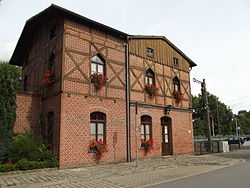 สถานีรถไฟเก่าแก่ในชนบทสไตล์โครงสร้างไม้ในเมืองเมเทเลนประเทศเยอรมนี



กรอบทางเดิน

โครงสร้างแบบมีทางเดินตรงกลางจะมีเสาภายในหนึ่งแถวหรือมากกว่านั้น เสาภายในเหล่านี้มักรับน้ำหนักโครงสร้าง มากกว่า เสาในผนังภายนอก นี่เป็นแนวคิดเดียวกับทางเดินในอาคารโบสถ์ ซึ่งบางครั้งเรียกว่าโบสถ์แบบโถงโดยที่ทางเดินตรงกลางนั้นในทางเทคนิคเรียกว่านาฟอย่างไรก็ตาม นาฟมักถูกเรียกว่าทางเดินตรงกลาง และโรงนาที่ มีทางเดินตรงกลางสามทาง ก็พบได้ทั่วไปในสหรัฐอเมริกาเนเธอร์แลนด์และเยอรมนี อาคารแบบมีทางเดินตรงกลางจะกว้างกว่าอาคารแบบโครงกล่องหรือโครงค้ำยันที่เรียบง่ายกว่า และโดยทั่วไปจะมีแปรองรับคานหลังคา ในภาคเหนือของเยอรมนี โครงสร้างนี้รู้จักกันในชื่อรูปแบบต่างๆของStänderhaus
การก่อสร้างแบบครึ่งไม้
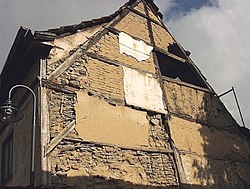

โครงสร้างครึ่งไม้หมายถึงโครงสร้างที่มีโครง ไม้ รับน้ำหนักโดยสร้างช่องว่างระหว่างไม้ที่เรียกว่าแผง (ในภาษาเยอรมันGefachหรือFächer = แผงกั้น) จากนั้นจึงเติมวัสดุที่ไม่ใช่โครงสร้างที่เรียกว่าวัสดุอุดช่องว่างเข้าไปโครงมักจะถูกปล่อยให้เห็นจากภายนอกอาคาร[ 6 ]
วัสดุอุดช่องว่าง
แกลเลอรี่ตัวอย่างประเภทวัสดุอุดช่องว่าง:
 อิฐเผาตกแต่งที่มีรูสำหรับนกฮูก
 อิฐธรรมดาที่อุดไว้ถูกปล่อยให้เห็น
 การอุดช่องว่างด้วยหินที่ชาวโรมัน เรียกว่า opus incertum บ้านที่สร้างด้วย opus craticumในเมืองเฮอร์คิวเลเนียมประเทศอิตาลี
 เศษหินบางส่วนยังคงมองเห็นได้
 โครงสร้างที่ทำจากไม้สานและดินเหนียวถูกฉาบด้วยปูนปลาสเตอร์ที่ตกแต่งอย่างสวยงาม
 เหมือนกับบ้านที่สร้างจากไม้สานและดินเหนียว แต่ใช้เสาไม้แนวนอนแทน
 ในส่วนนี้ ตัวปูนปลาสเตอร์ที่ใช้เติมเข้าไปนั้นได้รับการแกะสลักและตกแต่งอย่างสวยงาม
 ด้านบน: โครงสร้างสานจากไม้และดินเหนียว ด้านล่าง: โครงสร้างก่อด้วยหินกรวด


รูปแบบการถมที่เก่าแก่ที่สุดที่รู้จักกันเรียกว่าopus craticumโดยชาวโรมัน คือการก่อสร้างแบบสานและฉาบดิน[ 7 ] ปัจจุบัน opus craticumถูกนำมาใช้กับการก่อสร้างแบบสานหิน/ปูนของโรมันด้วยเช่นกัน ซึ่งทำให้เกิดความสับสน วิธีการที่คล้ายกับการสานและฉาบดินก็ถูกนำมาใช้และเป็นที่รู้จักกันในชื่อต่างๆ เช่น clam staff and daub, cat-and-clay หรือtorchis (ภาษาฝรั่งเศส) เป็นต้น
การถมด้วยไม้สานและดินเหนียวเป็นวิธีการถมที่พบได้บ่อยที่สุดในสมัยโบราณ ไม้ที่ใช้ไม่จำเป็นต้องเป็นไม้สานเสมอไป แต่บางครั้งอาจเป็นไม้แต่ละชิ้นที่ติดตั้งในแนวตั้ง แนวนอน หรือทำมุมลงในรูหรือร่องในโครงสร้าง การเคลือบด้วยดินเหนียวมีหลายสูตร แต่โดยทั่วไปจะเป็นส่วนผสมของดินเหนียวและชอล์กกับสารยึดเกาะ เช่น หญ้าหรือฟาง และน้ำหรือปัสสาวะ[ 8 ] เมื่อการผลิตอิฐเพิ่มขึ้น การถมด้วยอิฐจึงเข้ามาแทนที่การถมแบบเดิมที่ไม่ทนทาน และกลายเป็นที่นิยมมากขึ้น การวางหินในปูนเป็นวัสดุถมใช้ในพื้นที่ที่มีเศษหินและปูนอยู่
วัสดุอุดช่องว่างอื่นๆ ได้แก่บูซิลลาจอิฐ เผา อิฐไม่เผา เช่นอิฐดินเหนียวหรืออิฐโคลนหินบางครั้งเรียกว่าเพียโรตาจไม้กระดาน เช่น สแตนเดอร์โบห์เลนเบา ของเยอรมัน ไม้ เช่น สแตนเดอร์บล็อกเบาหรือบางครั้งอาจเป็นดินเหนียวโดยไม่มีโครงสร้างไม้[ 9 ]พื้นผิวผนังด้านในมักจะ "ปิด" ด้วยแผ่นไม้บุผนังและฉาบปูนเพื่อให้ความอบอุ่นและสวยงาม
การเติมอิฐซึ่งบางครั้งเรียกว่าnogging กลายเป็นการเติมมาตรฐานหลังจากที่การผลิตอิฐทำให้มีจำหน่ายมากขึ้นและราคาถูกลง ผนังครึ่งไม้สามารถปิดทับด้วยวัสดุปิดผิวต่างๆ เช่นปูนปลาสเตอร์ไม้ตีเกล็ดกระเบื้องหรือแผ่นหินชนวน[ 10 ]
วัสดุที่เติมเต็มอาจถูกปิดทับด้วยวัสดุอื่น ๆ รวมถึงแผ่นไม้หรือกระเบื้อง [ 10 ]หรือปล่อยให้เห็น เมื่อปล่อยให้เห็น ทั้งโครงสร้างและวัสดุที่เติมเต็มบางครั้งก็ทำในลักษณะตกแต่ง เยอรมนีมีชื่อเสียงในด้านการตกแต่งด้วยไม้ครึ่งท่อน และรูปทรงเหล่านั้นบางครั้งก็มีชื่อและความหมาย การตกแต่งด้วยไม้ครึ่งท่อนได้รับการส่งเสริมในเยอรมนีโดยถนนGerman Timber-Frame Roadซึ่งเป็นเส้นทางที่วางแผนไว้หลายเส้นทางที่ผู้คนสามารถขับรถไปชมตัวอย่างอาคาร Fachwerk ที่โดดเด่นได้
แกลเลอรีภาพบุคคลสำคัญและเครื่องประดับบางส่วน:
 กากบาทธรรมดา หรือ กากบาทเซนต์แอนดรูว์ ในเยอรมนี
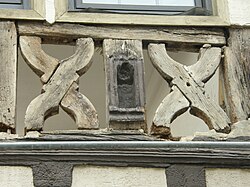 รูปกากบาทโค้งสองอัน หรือที่เรียกว่ากากบาทเซนต์แอนดรูว์ ถูกพบเห็นระหว่างการซ่อมแซมอาคารในประเทศเยอรมนี: ส่วนที่อุดช่องว่างถูกเอาออกไปแล้ว
 ในเยอรมนีพบรูปปั้น "มนุษย์" หลายรูปแบบ รูปปั้นนี้เรียกว่า "มนุษย์ป่า"
 รูปปั้นที่เรียกว่าหญิงชาวอเลมันนิค
 คนป่า (ตรงกลาง), คนครึ่งตัว (ที่มุม)
 งานแกะสลักนูนต่ำประดับประดาอาคารไม้ครึ่งหลังบางหลัง
 ส่วนรองรับเท้าแกะสลักเป็นรูปวงกลมคล้ายดวงอาทิตย์ ( Sonnenscheiben ) ซึ่งเป็นลวดลายทั่วไปของยุคฟื้นฟูศิลปวิทยาการเวเซอร์ ทางตอนเหนือของ เยอรมนี




บางครั้งกลุ่มขององค์ประกอบต่างๆ ในงานโครงสร้างไม้ครึ่งท่อนจะได้รับชื่อเฉพาะ:
 Upper German Fachwerk ( จาก 1582/83 ใน Eppingen BW )
 ตัวอย่างของ Fachwerk ใน Franconia ( Fränkisches Fachwerk ) ภาพ:ฉัน เมตซ์เนอร์
 Fachwerk ในอัปเปอร์ฟรังโกเนีย มักมีรายละเอียดมาก
 การเลี้ยงลูกดกพบได้ในอังกฤษ สเปน และฝรั่งเศส
 ผนังไม้ครึ่งแผ่นสี่เหลี่ยมจัตุรัสสอดไส้ด้วยอิฐเผา: การใช้แผ่นไม้สี่เหลี่ยมจัตุรัสเป็นลักษณะเฉพาะของบ้านในแถบเยอรมันตอนล่างและพบได้ในประเทศอังกฤษ
 โครงสร้างแบบครัคเฟรมสามารถสร้างได้โดยใช้ผนังครึ่งไม้ บ้านหลังนี้ตั้งอยู่ในพิพิธภัณฑ์พื้นบ้านไรเดลในประเทศอังกฤษ


ประวัติความเป็นมาของคำนี้
ตามที่ Craven (2019) [ 11 ] กล่าว ไว้ คำว่า:
คำว่า "โครงสร้างไม้" ถูกใช้ในความหมายไม่เป็นทางการในยุคกลาง เพื่อความประหยัด ท่อนซุงทรงกระบอกจะถูกตัดครึ่ง เพื่อให้ท่อนซุงหนึ่งท่อนสามารถใช้ทำเสาได้สองต้น (หรือมากกว่านั้น) โดยทั่วไปแล้วด้านที่ตัดแล้วจะอยู่ด้านนอก และทุกคนก็รู้ว่านั่นคือครึ่งหนึ่งของไม้ทั้งหมด
คำว่า half-timbering ไม่ได้เก่าแก่เท่ากับชื่อภาษาเยอรมันFachwerkหรือชื่อภาษาฝรั่งเศสcolombageแต่เป็นชื่อมาตรฐานภาษาอังกฤษสำหรับรูปแบบนี้ หนึ่งในบุคคลแรกๆ ที่ตีพิมพ์คำว่า "half-timbered" คือMary Martha Sherwood (1775–1851) ซึ่งใช้คำนี้ในหนังสือของเธอThe Lady of the Manorซึ่งตีพิมพ์เป็นเล่มๆ ตั้งแต่ปี 1823 ถึง 1829 เธอใช้คำนี้อย่างงดงามว่า "...เมื่อผ่านประตูในพุ่มไม้ที่ปลูกอย่างรวดเร็ว เรามาถึงระเบียงของกระท่อม half-timbered เก่าๆ ซึ่งมีชายและหญิงชราคนหนึ่งต้อนรับเรา" [ 12 ]ในปี 1842 half-timbered ได้ปรากฏอยู่ในThe Encyclopedia of ArchitectureโดยJoseph Gwilt (1784–1863) การจัดวางคานไม้ที่เปิดโล่งและช่องว่างที่เติมเต็มเข้าด้วยกัน ทำให้เกิดสไตล์ "ครึ่งไม้" หรือบางครั้งเรียกว่า " สไตล์ ทิวดอร์ " หรือ "ขาวดำ" อันเป็นเอกลักษณ์
ตัวอย่างที่เก่าแก่ที่สุด
อาคารครึ่งไม้ที่เก่าแก่ที่สุดเท่าที่รู้จักเรียกว่า บ้านโอปุส คราติคัม (House of opus craticum ) ซึ่งถูกฝังอยู่ใต้เถ้าถ่านจากการระเบิดของภูเขาไฟเวซูเวียสในปี ค.ศ. 79 ที่เมืองเฮอร์คิวเลเนียม ประเทศอิตาลี วิทรู เวียสได้กล่าวถึงโอปุส คราติคัมไว้ในหนังสือสถาปัตยกรรมของเขาว่าเป็นโครงสร้างไม้ที่มีการสานด้วยฟาง[ 13 ]อย่างไรก็ตาม คำเดียวกันนี้ยังใช้เพื่ออธิบายโครงสร้างไม้ที่มีการสานด้วยเศษหินที่ชาวโรมันเรียกว่า โอปุส อินเซอร์ตัม ( opus incertum ) [ 14 ]
ความหมายอื่น ๆ

ความหมายที่พบได้น้อยกว่าของคำว่า "half-timbered" พบได้ในพจนานุกรมสถาปัตยกรรมคลาสสิก ของจอห์น เฮนรี พาร์คเกอร์ ฉบับที่สี่ (1873) ซึ่งแยกความแตกต่างระหว่างบ้านไม้เต็มหลังกับบ้านไม้ครึ่งหลัง โดยบ้านไม้ครึ่งหลังจะมีชั้นล่างเป็นหิน[ 15 ]หรือท่อนซุงเช่นบ้านคลูเกซึ่งเป็นกระท่อมไม้ซุงที่มีชั้นสองเป็นโครงไม้
โครงสร้าง


การแปรรูปไม้แบบดั้งเดิมเป็นวิธีการสร้างโครงสร้างที่ทำจากไม้เนื้อแข็งที่เชื่อมต่อกันด้วยข้อต่อต่างๆ โดยทั่วไปและเดิมทีใช้ข้อต่อแบบซ้อน ทับ จากนั้นจึง ใช้ข้อต่อ แบบเดือยและร่องที่ตอกหมุดในภายหลัง มีการใช้ ค้ำยันแนวทแยงเพื่อป้องกัน "การโก่งงอ" หรือการเคลื่อนที่ของคานหรือเสาแนวตั้งของโครงสร้าง[ 16 ]
เดิมทีช่างไม้ ฝีมือดีชาวเยอรมัน (และชาติอื่นๆ) จะใช้เดือยยึดข้อต่อโดยเว้นระยะไว้ประมาณ 1 นิ้ว (25 มม.) เพื่อให้มีพื้นที่เพียงพอสำหรับไม้ที่จะขยายตัวเมื่อ " แห้งสนิท " จากนั้นจึงตัดเดือยให้สั้นลง และตอกคานเข้าไปในเบ้าจนสุด
เพื่อรับมือกับขนาดและรูปทรงที่แตกต่างกันของไม้ที่ตัด (ด้วยขวานหรือสิ่ว) และไม้แปรรูป จึงมีการใช้สองวิธีการช่างไม้หลัก ได้แก่ การใช้ไม้บรรทัดวัดมุม และการใช้ไม้บรรทัดสี่เหลี่ยมวัดมุม
การสลักหมายเลขหรือการสลักหมายเลขบนกรอบไม้เป็นวิธีการที่ใช้กันอย่างแพร่หลายในยุโรป โดยเฉพาะอย่างยิ่งตั้งแต่ศตวรรษที่ 12 ถึงศตวรรษที่ 19 และต่อมาได้ถูกนำเข้ามาในอเมริกาเหนือ ซึ่งเป็นที่นิยมจนถึงต้นศตวรรษที่ 19 ในกรอบไม้สำหรับสลักหมายเลขนั้น ช่องไม้จะถูกทำขึ้นหรือ "สั่งทำพิเศษ" ให้พอดีกับไม้แต่ละชิ้น ดังนั้นไม้แต่ละชิ้นจึงต้องมีหมายเลขกำกับ (หรือ "สลักหมายเลข")
งานไม้แบบใช้ไม้บรรทัดสี่เหลี่ยมพัฒนาขึ้นในนิวอิงแลนด์ในศตวรรษที่ 18 โดยใช้ข้อต่อแบบซ่อนในไม้ท่อนหลักเพื่อให้สามารถสลับเปลี่ยนคานค้ำยันและคานขวางได้ ปัจจุบัน การกำหนดขนาดไม้ที่เป็นมาตรฐานหมายความว่างานไม้สามารถนำไปใช้ในวิธีการผลิตจำนวนมากได้เช่นเดียวกับอุตสาหกรรมงานไม้ โดยเฉพาะอย่างยิ่งในกรณีที่ไม้ถูกตัดด้วย เครื่องจักร ควบคุมเชิงตัวเลขด้วยคอมพิวเตอร์ ที่มีความแม่นยำสูง
ท่าเทียบเรือ

ท่าเทียบเรือ คือชั้นบนซึ่งในอดีตบางครั้งใช้คานแนวนอนเป็นโครงสร้างหลัก โดยมีส่วนยื่นที่เรียกว่า เบรสซัมเมอร์หรือ 'เบรสซัมเมอร์ท่าเทียบเรือ' เพื่อรับน้ำหนักของผนังใหม่ที่ยื่นออกมาจากชั้นก่อนหน้า
ในเมืองยอร์กทางตอนเหนือของอังกฤษ ถนนที่มีชื่อเสียงอย่าง " เดอะแชมเบิลส์"เป็นตัวอย่างที่ชัดเจนของปรากฏการณ์นี้ โดยบ้านเรือนที่ยื่นออกมาจากตัวบ้านดูเหมือนจะเกือบจะแตะพื้นถนน
พิพิธภัณฑ์วิคตอเรียและอัลเบิร์ตมีส่วนหนึ่งของด้านหน้าอาคารโครงไม้ที่ยื่นออกมาพร้อมหน้าต่าง "carell" จัดแสดงอยู่ในDaylit Galleryบ้านหลังนี้สร้างขึ้นในช่วงทศวรรษ 1590 และรอดพ้นจากเหตุการณ์ไฟไหม้ครั้งใหญ่ในลอนดอน[ 17 ]
ไม้


ในอดีต ไม้ซุงจะถูกตัดให้เป็นรูปทรงสี่เหลี่ยมโดยใช้ขวานตัดไม้ แล้วจึงตกแต่งผิวด้วยขวานขนาดใหญ่หากจำเป็น ไม้ซุงขนาดเล็กจะถูกเลื่อยตามยาวจากท่อนไม้ที่ตัดแล้วโดยใช้เลื่อยวงเดือนหรือเลื่อยโครง ปัจจุบัน ไม้ซุงมักถูกเลื่อยด้วยเลื่อยสายพาน และบางครั้งอาจมีการไสไม้ด้วยเครื่องจักรทั้งสี่ด้าน
ส่วนประกอบโครงสร้างแนวตั้ง ได้แก่:
- เสา (เสาหลักที่รองรับมุมและเสาตั้งสำคัญอื่นๆ)
- ตัวอย่างเช่นโครงไม้ผนัง (ส่วนประกอบตั้งตรงเสริมในผนังโครงสร้าง) การติดตั้งโครงไม้แบบชิดผนัง
ส่วนประกอบคานแนวนอน ได้แก่:
- คานฐาน (เรียกอีกอย่างว่า คานพื้น หรือ คานรองรับด้านล่างของผนัง ซึ่งใช้สำหรับยึดเสาและไม้ค้ำยันโดยใช้เดือย)
- ไม้ค้ำยัน (ไม้แนวนอนที่ประกอบเป็นส่วนบนและล่างของกรอบแผงปิดช่องว่าง)
- แผ่นยึดผนัง (ที่ด้านบนของผนังโครงไม้ซึ่งรองรับโครงหลังคาและคานหลังคา)
เมื่อทำการเทียบท่า องค์ประกอบแนวนอนอาจรวมถึง:
- คานยื่นท่าเรือ (หรือคานรองรับ) คือคาน หลัก (ชิ้นส่วนแนวนอน) ที่รองรับผนังที่ยื่นออกมาด้านบน โดยคานนี้จะทอดยาวตลอดความกว้างของผนังท่าเรือ คานยื่นนี้เองก็ยื่นออกมาข้างหน้าเลยผนังด้านล่างไป
- คานมังกรที่ทอดเฉียงจากมุมหนึ่งไปยังอีกมุมหนึ่ง รองรับเสาที่มุมด้านบนและได้รับการสนับสนุนจากเสาที่มุมด้านล่าง
- คานหรือตงของ ท่าเทียบเรือ จะมีขนาดเท่ากับพื้นด้านบน แต่จะตั้งฉากกับแผ่นท่าเทียบเรือที่มีขนาดเท่ากับ "หลังคา" ที่สั้นกว่าของพื้นด้านล่าง คานท่าเทียบเรือจะถูกเจาะเป็นร่องทำมุม 45° เข้ากับด้านข้างของคานหลัก คานเหล่านี้เป็นส่วนประกอบหลักของระบบคานยื่น และเป็นตัวกำหนดว่าท่าเทียบเรือจะยื่นออกมาไกลแค่ไหน
- แผ่นฐานรองรับถูกออกแบบมาเพื่อรองรับคานสะพาน ส่วนแผ่นฐานรองรับนั้นได้รับการรองรับจากเสาตรงมุมของพื้นห้องด้านล่างที่เว้าเข้าไป
ส่วนประกอบไม้ที่ลาดเอียง ได้แก่:
- โครงหลังคา (คานไม้เอียงที่ membentuk โครงสามเหลี่ยมบริเวณหน้าจั่วและหลังคา )
- ค้ำยัน (คานเอียงที่ให้การรองรับเพิ่มเติมระหว่างชิ้นส่วนแนวนอนหรือแนวตั้งของโครงไม้)
- โครงสร้างค้ำยัน แบบก้างปลา (รูปแบบการตกแต่งและเสริมความแข็งแรงของกรอบ โดยปกติจะทำมุม 45° กับแนวตั้งและแนวนอนของกรอบ)
การก่อสร้างโครงสร้างและงานโครงสร้าง
ในอดีต มีระบบการกำหนดตำแหน่งของเสาและคานที่แตกต่างกันสองระบบ:
- ในแบบเก่า (ยุคกลาง) ที่เรียกว่าการก่อสร้างแบบเสาค้ำยันนั้น องค์ประกอบแนวตั้งจะต่อเนื่องจากฐานรากไปจนถึงหลังคา การก่อสร้างแบบเสาค้ำยันนี้ในภาษาเยอรมันเรียกว่าGeschossbauweiseหรือStänderbauweiseซึ่งคล้ายคลึงกับ วิธี การก่อสร้างแบบโครงบอลลูนที่ใช้กันทั่วไปในอเมริกาเหนือจนถึงกลางศตวรรษที่ 20
- ด้วยวิธีการก่อสร้างขั้นสูงที่เรียกว่า การก่อสร้างแบบโครงสร้างเฟรม แต่ละชั้นจะถูกสร้างขึ้นเหมือนกล่อง และอาคารทั้งหลังจะถูกสร้างขึ้นเหมือนกองกล่องเหล่านั้น การก่อสร้างแบบโครงสร้างเฟรมนี้ในภาษาเยอรมันเรียกว่าRähmbauweiseหรือStockwerksbauweiseและทำให้สามารถยื่นโครงสร้างส่วนต่อเติมได้
โครงสร้างเสาสันหลังคาเป็นโครงสร้างที่เรียบง่ายและเป็นโครงสร้างโบราณ โดยใช้เสาและคานที่ยื่นยาวไปจนถึงคานสันหลังคา ชาวเยอรมันเรียกโครงสร้างนี้ว่า FirstsäuleหรือHochstud
วิธีการเชื่อมต่อไม้แบบสมัยใหม่ (ทศวรรษ 1930-1950)

ในช่วงทศวรรษ 1930 ได้มีการพัฒนาระบบโครงสร้างไม้ที่เรียกว่า "วิธีการเชื่อมต่อไม้แบบสมัยใหม่" [ 18 ]ซึ่งมีลักษณะเด่นคือการใช้ชิ้นส่วนไม้ประกอบเป็นโครงถักและระบบโครงสร้างอื่นๆ และยึดด้วยตัวเชื่อมต่อไม้โลหะประเภทต่างๆ โครงสร้างไม้ประเภทนี้ถูกนำไปใช้กับอาคารหลายประเภท เช่น โกดัง โรงงาน โรงรถ โรงนา ร้านค้า/ตลาด อาคารสันทนาการ ค่ายทหาร สะพาน และโครงเหล็ก[ 19 ]การใช้โครงสร้างเหล่านี้ได้รับการส่งเสริมเนื่องจากต้นทุนการก่อสร้างต่ำ ปรับเปลี่ยนได้ง่าย และมีประสิทธิภาพในการป้องกันอัคคีภัยเมื่อเทียบกับโครงสร้างโครงถักเหล็กที่ไม่มีการป้องกัน
ในช่วงสงครามโลกครั้งที่สอง กองทัพบกสหรัฐฯ และกองทัพบกแคนาดาได้ร่วมกันสร้างโรงเก็บเครื่องบินโดยใช้ระบบโครงสร้างไม้เพื่อประหยัดเหล็ก โรงเก็บเครื่องบินไม้ถูกสร้างขึ้นทั่วทวีปอเมริกาเหนือ โดยใช้เทคโนโลยีต่างๆ เช่น โครงสร้างคานโค้ง (bowstring trusses) โครงสร้างวอร์ เรน ( Warren trusses ) และ โครงสร้างแพรตต์ (Pratt trusses) โครงสร้างโค้งไม้ลามิเนต (glued laminated arches) และระบบหลังคาไม้ระแนง (lamella roof systems) สิ่งที่โดดเด่นของอาคารประเภทนี้คือการเชื่อมต่อกันของชิ้นส่วนไม้ในโครงสร้างหลังคาและเสา รวมถึงจุดเชื่อมต่อต่างๆ ชิ้นส่วนไม้เหล่านี้ถูกคั่นด้วย "ตัวเติม" (บล็อกไม้) ทำให้เกิดช่องว่างอากาศระหว่างชิ้นส่วนไม้ ซึ่งช่วยเพิ่มการไหลเวียนของอากาศและการแห้งรอบๆ ชิ้นส่วน ทำให้ต้านทานการผุกร่อนจากความชื้นได้ดีขึ้น

ชิ้นส่วนไม้ในระบบโครงสร้างประเภทนี้เชื่อมต่อกันด้วยตัวเชื่อมไม้เหล็กชนิดต่างๆ ภาระระหว่างชิ้นส่วนไม้จะถูกส่งผ่านโดยใช้แหวนแยก (สำหรับภาระที่มากขึ้น) แหวนฟันเฟือง (สำหรับภาระที่เบากว่า) หรือตัวเชื่อมตะแกรงแบบมีหนาม[ 20 ]ตัวเชื่อมแหวนแยกเป็นแหวนโลหะที่ประกบอยู่ระหว่างชิ้นส่วนไม้ที่อยู่ติดกันเพื่อเชื่อมต่อเข้าด้วยกัน แหวนจะถูกใส่เข้าไปในร่องวงกลมบนชิ้นส่วนไม้ทั้งสอง จากนั้นจึงยึดส่วนประกอบเข้าด้วยกันด้วยสลักเกลียว สลักเกลียวทำหน้าที่เพียงแค่ยึดส่วนประกอบเข้าด้วยกัน แต่ไม่ได้ทำหน้าที่รับน้ำหนัก[ 19 ]ตัวเชื่อมแผ่นเฉือนถูกใช้เพื่อถ่ายโอนภาระระหว่างชิ้นส่วนไม้และโลหะ ตัวเชื่อมแผ่นเฉือนมีลักษณะคล้ายแหวนรองขนาดใหญ่ บิดเบี้ยวที่ด้านที่หันเข้าหาไม้เพื่อยึดจับ และยึดด้วยสลักเกลียวยาวหรือแท่งเกลียว ผู้ผลิตชั้นนำของตัวเชื่อมไม้ประเภทนี้คือ บริษัท Timber Engineering Company หรือ TECO แห่งวอชิงตัน ดี.ซี. ชื่อทางการค้าของตัวเชื่อมแหวนแยกของพวกเขาคือ "TECO Wedge-Fit"
คุณสมบัติที่ทันสมัย


โครงสร้างไม้แบบเฟรมแตกต่างจากอาคารโครงไม้แบบดั้งเดิมในหลายด้าน การใช้ไม้แบบเฟรมจะใช้ไม้ชิ้นใหญ่กว่าและจำนวนน้อยกว่า โดยทั่วไปจะใช้ไม้ที่มีขนาดตั้งแต่ 15 ถึง 30 เซนติเมตร (6 ถึง 12 นิ้ว) ในขณะที่การใช้ไม้แบบทั่วไปจะใช้ไม้จำนวนมากกว่าและมีขนาดโดยทั่วไปตั้งแต่ 5 ถึง 25 เซนติเมตร (2 ถึง 10 นิ้ว) วิธีการยึดชิ้นส่วนเฟรมก็แตกต่างกันเช่นกัน ในการใช้ไม้แบบทั่วไป ชิ้นส่วนจะเชื่อมต่อกันโดยใช้ตะปูหรือตัวยึดเชิงกลอื่นๆ ในขณะที่การใช้ไม้แบบเฟรมจะใช้ข้อต่อแบบเดือยและร่องแบบดั้งเดิม หรือข้อต่อที่ซับซ้อนกว่า ซึ่งมักจะยึดด้วยหมุดไม้เท่านั้น โครงสร้างที่ซับซ้อนและโครงถักไม้สมัยใหม่มักจะมีการใช้เหล็กเสริม เช่น แผ่นเหล็กยึด เพื่อวัตถุประสงค์ทั้งทางโครงสร้างและทางสถาปัตยกรรม
เมื่อไม่นานมานี้ การหุ้มโครงสร้างไม้ทั้งหมดด้วยแผงสำเร็จรูป เช่นแผงฉนวนโครงสร้าง (SIPs) กลายเป็นเรื่องปกติ แม้ว่าไม้จะมองเห็นได้จากภายในอาคารเท่านั้นเมื่อถูกหุ้มเช่นนั้น แต่การก่อสร้างมีความซับซ้อนน้อยกว่าและมีฉนวนที่ดีกว่าอาคารไม้แบบดั้งเดิม SIPs คือ "แกนโฟมฉนวนที่ประกบอยู่ระหว่างแผ่นปิดโครงสร้างสองแผ่น ซึ่งโดยทั่วไปคือแผ่นใยไม้อัด" ตามคำจำกัดความของสมาคมแผงฉนวนโครงสร้าง[ 21 ] SIPs ช่วยลดการพึ่งพาการค้ำยันและส่วนประกอบเสริม เนื่องจากแผงครอบคลุมระยะทางที่มากและเพิ่มความแข็งแกร่งให้กับโครงไม้พื้นฐาน
อีกทางเลือกหนึ่งในการก่อสร้างคือการใช้พื้นคอนกรีตร่วมกับกระจกเป็นจำนวนมาก วิธีนี้ช่วยให้ได้โครงสร้างที่แข็งแรงควบคู่ไปกับสถาปัตยกรรมแบบเปิดโล่ง บริษัทบางแห่งมีความเชี่ยวชาญในการผลิตโครงสร้างที่อยู่อาศัยและอาคารพาณิชย์ขนาดเล็กแบบสำเร็จรูปในระดับอุตสาหกรรม เช่น บ้าน Huf Hausซึ่งเป็นบ้านประหยัดพลังงานหรือ – ขึ้นอยู่กับสถานที่ตั้ง – อาคาร ที่ ใช้พลังงานเป็นศูนย์
การก่อสร้างด้วยฟางอัดก้อนเป็นอีกทางเลือกหนึ่ง โดยใช้ฟางอัดก้อนมาวางซ้อนกันเพื่อเป็นวัสดุเติมเต็มที่ไม่รับน้ำหนัก และมีการตกแต่งภายในและภายนอกด้วยวัสดุต่างๆ เช่น ปูนฉาบ วิธีนี้เป็นที่ชื่นชอบของกลุ่มคนที่ยึดติดกับประเพณีและกลุ่มอนุรักษ์สิ่งแวดล้อม เพราะเป็นการนำวัสดุที่หาได้ตามธรรมชาติมาใช้ในการก่อสร้าง
อิฐดินเหนียว หรือที่เรียกว่าอิฐอะโดบี บางครั้งใช้ในการก่ออิฐโครงสร้างไม้ สามารถผลิตได้ในสถานที่ก่อสร้างและมีคุณสมบัติทนไฟได้ดีเยี่ยม อย่างไรก็ตาม อาคารเหล่านี้ต้องได้รับการออกแบบให้รองรับคุณสมบัติการเป็นฉนวนความร้อนที่ไม่ดีของอิฐดินเหนียว และมักจะมีชายคาที่ลึกหรือระเบียงทั้งสี่ด้านเพื่อป้องกันสภาพอากาศ
โครงสร้างทางวิศวกรรม
การออกแบบไม้หรือการออกแบบโครงสร้างไม้เป็นสาขาย่อยของวิศวกรรมโครงสร้างที่มุ่งเน้นการออกแบบโครงสร้างไม้ ไม้จะถูกจำแนกตามชนิดของต้นไม้ (เช่น ไม้สนใต้ ไม้ดักลาสเฟอร์ เป็นต้น) และความแข็งแรงของไม้จะถูกจัดระดับโดยใช้ค่าสัมประสิทธิ์จำนวนมากที่สอดคล้องกับจำนวนปม ปริมาณความชื้น อุณหภูมิ ทิศทางของเนื้อไม้ จำนวนรู และปัจจัยอื่นๆ มีข้อกำหนดการออกแบบสำหรับไม้แปรรูป ชิ้นส่วนไม้ลามิเนต คาน รูปตัว I สำเร็จรูปไม้ผสมและประเภทการเชื่อมต่อต่างๆ ในสหรัฐอเมริกา โครงสร้างเฟรมจะถูกออกแบบตาม วิธี Allowable Stress Designหรือวิธี Load Reduced Factor Design (โดยวิธีหลังเป็นที่นิยมมากกว่า) [ 22 ]
ประวัติศาสตร์และประเพณี
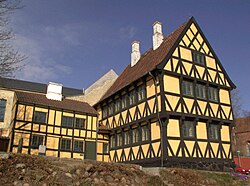
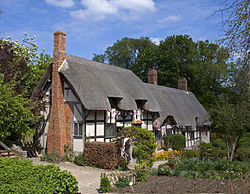
เทคนิคการสร้างโครงไม้มีมาตั้งแต่ สมัย ยุคหินใหม่และถูกนำมาใช้ในหลายส่วนของโลกในช่วงเวลาต่างๆ เช่น ญี่ปุ่นโบราณ ยุโรปภาคพื้นทวีป และเดนมาร์กยุคหินใหม่ อังกฤษ ฝรั่งเศสเยอรมนีสเปน บางส่วนของจักรวรรดิโรมันและสกอตแลนด์[ 23 ]เทคนิคการสร้างโครงไม้เป็นที่นิยมในเขตภูมิอากาศที่เอื้อต่อ ไม้ เนื้อแข็ง ผลัดใบ เช่นต้นโอ๊กพื้นที่ทางเหนือสุดคือประเทศแถบทะเลบอลติกและสวีเดนตอนใต้ การสร้างโครงไม้เป็นเรื่องหายากในรัสเซีย ฟินแลนด์ สวีเดนตอนเหนือ และนอร์เวย์ เนื่องจากมีไม้แปรรูปสูงและตรง เช่น ไม้สนและไม้สปรูซ พร้อมใช้งาน และ นิยม สร้างบ้านไม้ซุงแทน
การก่อสร้างแบบครึ่งไม้ในรูปแบบสถาปัตยกรรมพื้นถิ่นของยุโรปเหนือ เป็นลักษณะเฉพาะของเดนมาร์ก อังกฤษ เยอรมนี และบางส่วนของฝรั่งเศสและสวิตเซอร์แลนด์ในยุคกลางและยุคต้นสมัยใหม่ ซึ่งเป็นพื้นที่ที่มีไม้ให้ใช้มากมาย แต่หินและทักษะที่เกี่ยวข้องกับการตกแต่งหินมีจำกัด ในการก่อสร้างแบบครึ่งไม้ ไม้ที่ถูกผ่าครึ่งจะให้โครงสร้างหลักของอาคาร
ในยุโรปเต็มไปด้วยสิ่งก่อสร้างโครงไม้ที่มีอายุหลายร้อยปี รวมถึงคฤหาสน์ ปราสาท บ้านเรือน และโรงแรม ซึ่งสถาปัตยกรรมและเทคนิคการก่อสร้างได้พัฒนาขึ้นตลอดหลายศตวรรษ ในเอเชียก็พบสิ่งก่อสร้างโครงไม้เช่นกัน โดยส่วนใหญ่เป็นวัด
งานไม้ของชาวโรมันบางส่วนที่ได้รับการอนุรักษ์ไว้ในชั้นดินเหนียว ที่ ปราศจากออกซิเจนใน แหล่ง วิลลาสมัยโรมัน-อังกฤษแสดงให้เห็นว่างานไม้ ที่ซับซ้อนของชาวโรมัน มีเทคนิคที่จำเป็นทั้งหมดสำหรับการก่อสร้างประเภทนี้ อาคารครึ่งไม้ (ของฝรั่งเศส) ที่เก่าแก่ที่สุดที่ยังหลงเหลืออยู่มีอายุตั้งแต่ศตวรรษที่ 12
พิพิธภัณฑ์กลางแจ้งเป็นแหล่งข้อมูลสำคัญสำหรับการศึกษาและชื่นชมวิธีการก่อสร้างอาคารในอดีต
พิธีวางศิลาฤกษ์
พิธีวางยอดโครงสร้างเป็นพิธีกรรมของช่างก่อสร้างซึ่งเป็นประเพณีโบราณที่เชื่อกันว่ามีต้นกำเนิดในสแกนดิเนเวียเมื่อราวปี ค.ศ. 700 [ 24 ]ในสหรัฐอเมริกา จะมีการติดกิ่งไม้หรือต้นไม้เล็กๆ ไว้ที่ยอดโครงสร้างไม้หลังจากที่โครงสร้างเสร็จสมบูรณ์เพื่อเป็นการเฉลิมฉลอง ในอดีต เป็นเรื่องปกติที่ช่างไม้ผู้เชี่ยวชาญจะกล่าวสุนทรพจน์ ดื่มอวยพร แล้วจึงทุบแก้ว ในยุโรปเหนือ มักใช้พวงหรีดที่ทำขึ้นสำหรับโอกาสนี้มากกว่ากิ่งไม้ ในญี่ปุ่น "การยกสันหลังคา" เป็นพิธีกรรมทางศาสนาที่เรียกว่าโจโตชิกิ [ 25 ] ในเยอรมนี เรียกว่า ริชต์ เฟส ต์
เครื่องหมายช่างไม้

ร่องรอยของช่างไม้ คือร่องรอยที่ทิ้งไว้บนไม้ของอาคารไม้ระหว่างการก่อสร้าง
- เครื่องหมายประกอบหรือเครื่องหมายการแต่งงานใช้เพื่อระบุไม้แต่ละชิ้น เครื่องหมายประกอบรวมถึงการกำหนดหมายเลขเพื่อระบุชิ้นส่วนของโครง หมายเลขอาจคล้ายกับเลขโรมัน ยกเว้นเลขสี่เป็น IIII และเลขเก้าเป็น VIIII เครื่องหมายเหล่านี้สลักด้วยสิ่ว ตัดด้วยมีดแกะสลัก (เครื่องมือสำหรับตัดเส้นและวงกลมในไม้) หรือตัดด้วยเลื่อย หมายเลขอาจอยู่ในรูปเลขอารบิก ซึ่งมักเขียนด้วยดินสอไขมันสีแดงหรือสีเทียน ช่างไม้ชาวเยอรมันและฝรั่งเศสได้สร้างเครื่องหมายเฉพาะบางอย่าง ( Abbundzeichen (เครื่องหมายประกอบของเยอรมัน) )
- ร่องรอยที่เหลือจากการทำเครื่องหมายระบุตำแหน่งที่จะตัดข้อต่อและเจาะรูสำหรับเดือยไม้ ช่างไม้ยังทำเครื่องหมายตำแหน่งบนไม้ที่พวกเขาได้ปรับระดับไว้ ซึ่งเป็นส่วนหนึ่งของกระบวนการก่อสร้าง และเรียกเครื่องหมายเหล่านี้ว่า "เส้นระดับ" บางครั้งพวกเขาจะทำเครื่องหมายห่างจากตำแหน่งสำคัญสองฟุต ซึ่งในสมัยนั้นเรียกว่า "เครื่องหมายสองฟุต" เครื่องหมายเหล่านี้มักจะถูกขีดลงบนไม้ด้วยเครื่องมือคล้ายเหล็กแหลม จนกระทั่งช่วงปลายศตวรรษที่ 19 จึงเริ่มใช้ดินสอแทน
- บางครั้งช่างไม้หรือเจ้าของบ้านอาจทำเครื่องหมายวันที่และ/หรืออักษรย่อของตนลงบนไม้ แต่ไม่เหมือนกับที่ช่างก่ออิฐทำเครื่องหมายไว้
- แผ่นไม้บนอาคารอาจมี " เครื่องหมายนับจำนวน " ที่สลักไว้ ซึ่งเป็นตัวเลขที่ใช้เพื่อติดตามปริมาณไม้แปรรูป (ท่อนซุง)
- ร่องรอยอื่นๆ ในอาคารเก่าเรียกว่า "ร่องรอยทางพิธีกรรม" ซึ่งมักเป็นสัญลักษณ์ที่ผู้พักอาศัยเชื่อว่าจะช่วยปกป้องพวกเขาจากอันตราย
เครื่องมือ

เครื่องมือช่างไม้โบราณหลายชนิดที่ช่างไม้ใช้กันมาหลายพันปีนั้นมีลักษณะคล้ายคลึงกัน แต่มีรูปทรงที่แตกต่างกัน เครื่องมือที่ใช้พลังงานไฟฟ้าเริ่มมีใช้ครั้งแรกในทศวรรษ 1920 ในสหรัฐอเมริกา และยังคงพัฒนาอย่างต่อเนื่อง ดูรายการเครื่องมือช่างไม้เพื่อดูคำอธิบายพื้นฐานและภาพของเครื่องมือที่แปลกใหม่ (รายการนี้ยังไม่สมบูรณ์ในขณะนี้)
ประเพณีของอังกฤษ
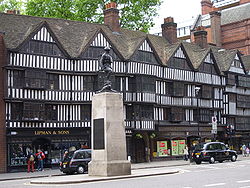
บ้านไม้ที่เก่าแก่ที่สุดบางส่วนในยุโรปถูกค้นพบในสหราชอาณาจักรซึ่งมีอายุย้อนไปถึงยุคหินใหม่บัลบริดีและเฟงเกตเป็นตัวอย่างที่หายากของสิ่งก่อสร้างเหล่านี้
การตกแต่งด้วยปูนปั้น การฉาบปูน[ 26 ]ช่วยเพิ่มคุณค่าให้กับ บ้าน สถาปัตยกรรมทิวดอร์ ของอังกฤษบางหลัง โครงสร้างไม้ครึ่งท่อนเป็นลักษณะเฉพาะของสถาปัตยกรรมพื้นถิ่น ของอังกฤษ ในอีสต์แองเกลีย[ 27 ]วอร์วิกเชอร์[ 28 ] [ 29 ]วูสเตอร์เชอร์[ 30 ]เฮเรฟอร์ดเชอร์[ 31 ] [ 32 ]ชรอปเชอร์[ 33 ] [ 34 ]และเชเชอร์[ 35 ]ซึ่งหนึ่งในตัวอย่างที่ประณีตที่สุดของการก่อสร้างด้วยไม้ครึ่งท่อนของอังกฤษที่ยังคงเหลืออยู่คือ ลิตเติล มอร์ตัน ฮอลล์[ 36 ]
ในเซาท์ยอร์กเชียร์บ้านไม้ที่เก่าแก่ที่สุดในเชฟฟิลด์คือ " บ้านบิชอป " (ประมาณปี ค.ศ. 1500) ซึ่งแสดงให้เห็นถึงโครงสร้างไม้แบบดั้งเดิม
ในเขตWealdของKentและ Sussex [ 37 ]โครงสร้างครึ่งไม้ของบ้าน Wealden hall [ 38 ]ประกอบด้วยห้องโถง เปิดที่มีช่อง อยู่ทั้งสองด้านและชั้นบน ที่ยื่นออกมา บ่อยครั้ง
โครงสร้างแบบครึ่งไม้ได้ถูกนำติดตัวไปโดยชาวอังกฤษผู้ตั้งถิ่นฐานในอเมริกาเหนือในช่วงต้นศตวรรษที่ 17 แต่ในไม่ช้าก็ถูกละทิ้งในนิวอิงแลนด์และอาณานิคมแถบมิดแอตแลนติก แล้วหันไปใช้แผ่นไม้ปิดผนังแทน (ซึ่ง เป็นประเพณีของ อีสต์แองเกลีย ) ชุมชนอาณานิคมอังกฤษดั้งเดิม เช่นพลีมัธ รัฐแมสซาชูเซตส์และเจมส์ทาวน์ รัฐเวอร์จิเนียมีอาคารโครงสร้างไม้ แทนที่จะเป็นกระท่อมซุงที่มักพบเห็นได้ในเขตชายแดนอเมริกา ปัจจุบัน มีโปรแกรม ประวัติศาสตร์มีชีวิตที่สาธิตเทคนิคการก่อสร้างนี้ให้บริการในทั้งสองสถานที่นี้
หนึ่งในถนนที่ยังคงหลงเหลืออยู่ซึ่งเรียงรายไปด้วยบ้านเรือนที่เกือบจะติดกันนั้นคือถนนที่รู้จักกันในชื่อ " เดอะแชมเบิลส์"ในเมืองยอร์กและเป็นสถานที่ท่องเที่ยวที่ได้รับความนิยม
 บ้านไร่ในเวิร์มส์ฮิลล์เคนต์ประเทศอังกฤษ
 บ้านไม้ทรงโบราณในเมืองวอร์วิคประเทศอังกฤษ
 สี่แยกถนนแชมเบิลส์และถนนลิตเติลแชมเบิลส์เมืองยอร์กประเทศอังกฤษ
 บ้านเบสซี เซอร์ทีส์ (Bessie Surtees House)ริมท่าเรือ เมืองนิวคาสเซิลอะพอนไทน์ประเทศอังกฤษ
 ที่พักของอธิการบดี วิทยาลัยควีนส์ เคมบริดจ์ประเทศอังกฤษ
 ส่วนด้านทิศใต้ของคฤหาสน์ลิตเติล มอร์ตัน ฮอลล์เมืองเชสเชอร์ประเทศอังกฤษ
 บ้านพักของขุนนาง (Yeoman's House) ที่บิกนอร์เวสต์ซัสเซ็กซ์ประเทศอังกฤษ เป็นบ้านทรงฮอลล์แบบวีลเดน (Wealden hall house) สามช่วงเสา


สไตล์อังกฤษ
สำหรับข้อมูลเกี่ยวกับบ้านโครงไม้ในเวลส์ โปรดดูที่: สถาปัตยกรรมของเวลส์
การก่อสร้างโครงไม้แบบดั้งเดิมในอังกฤษ (และส่วนอื่นๆ ของสหราชอาณาจักร) แสดงให้เห็นถึงความแตกต่างในระดับภูมิภาค[ 39 ]ซึ่งแบ่งออกเป็น "โรงเรียนตะวันออก" "โรงเรียนตะวันตก" และ "โรงเรียนเหนือ" แม้ว่าลักษณะเฉพาะของโครงสร้างในโรงเรียนเหล่านี้จะพบได้ในภูมิภาคอื่นๆ (ยกเว้นโรงเรียนเหนือ) [ 40 ]ลักษณะเฉพาะของโรงเรียนตะวันออกคือการใช้เสาไม้ถี่ซึ่งเป็นรูปแบบโครงไม้แบบครึ่งท่อนที่มีเสาไม้จำนวนมากเว้นระยะห่างกันประมาณความกว้างของเสาไม้ (เช่น เสาไม้ขนาด 6 นิ้ว เว้นระยะห่างกัน 6 นิ้ว) จนถึงกลางศตวรรษที่ 16 และบางครั้งก็เว้นระยะห่างกว้างกว่านั้นหลังจากนั้น การใช้เสาไม้ถี่เป็นรูปแบบของชนชั้นสูงที่พบได้ในอาคารราคาแพงเป็นส่วนใหญ่ รูปแบบหลักของโรงเรียนตะวันตกคือการใช้แผงสี่เหลี่ยมที่มีขนาดใกล้เคียงกันและการตกแต่งโครงโดยใช้รูปทรงต่างๆ มากมาย เช่นรูปสี่เหลี่ยมขนมเปียกปูนรูปดาว รูปกากบาทรูป สี่แฉก รูปแหลมและรูปทรงอื่นๆ อีกมากมาย[ 40 ]โรงเรียนทางเหนือบางครั้งใช้เสาที่วางลงบนฐานรากแทนที่จะวางบนคานฐาน โดยคานฐานจะเชื่อมต่อกับด้านข้างของเสาและเรียกว่าคานฐานแบบไม่ต่อเนื่อง อีกรูปแบบหนึ่งของทางเหนือคือการใช้เสาแบบชิดกันแต่ในรูปแบบก้างปลาหรือรูปตัววี[ 40 ]

เนื่องจากบ้านได้รับการดัดแปลงเพื่อรับมือกับความต้องการที่เปลี่ยนแปลงไป บางครั้งจึงมีการผสมผสานรูปแบบต่างๆ ไว้ในโครงสร้างไม้แบบเดียวกัน[ 41 ] โครงสร้างไม้แบบดั้งเดิมที่สำคัญในอังกฤษ ได้แก่ 'cruck frame' [ 41 ] box frame [ 41 ] และโครงสร้างแบบมีทางเดินจากโครงสร้างแบบbox frame ได้มีการพัฒนาอาคารโครงสร้างที่ซับซ้อนมากขึ้น เช่น Wealden House และ Jettied house
การออกแบบโครงสร้างครัคเป็นหนึ่งในรูปแบบที่เก่าแก่ที่สุด และถูกนำ มาใช้ [ 41 ]ในช่วงต้นศตวรรษที่ 13 โดยยังคงใช้ต่อเนื่องมาจนถึงปัจจุบัน แม้ว่าจะไม่ค่อยพบเห็นหลังจากศตวรรษที่ 18 ก็ตาม [ 41 ]อย่างไรก็ตาม ตั้งแต่ศตวรรษที่ 18 เป็นต้นมา โครงสร้างครัคที่มีอยู่หลายแห่งได้รับการดัดแปลง โดยโครงสร้างครัคดั้งเดิมถูกซ่อนไว้ โรงนาแบบมีทางเดินมีสองหรือสามทางเดิน โดยโรงนาแบบมีทางเดินที่เก่าแก่ที่สุดที่ยังคงเหลืออยู่คือโรงนาข้าวบาร์เลย์ที่Cressing Temple [ 40 ]ซึ่งมีอายุระหว่างปี 1205–1235 [ 42 ]
การสร้างท่าเทียบเรือเริ่มขึ้นในศตวรรษที่ 13 และยังคงใช้ต่อเนื่องมาจนถึงศตวรรษที่ 16 [ 40 ]
โดยทั่วไปแล้ว ขนาดของไม้ที่ใช้ในการก่อสร้างและคุณภาพของฝีมือช่างสะท้อนถึงความมั่งคั่งและสถานะของเจ้าของ กระท่อมขนาดเล็กมักใช้ไม้ที่มีหน้าตัดค่อนข้างเล็ก ซึ่งคนอื่นอาจมองว่าไม่เหมาะสม กระท่อมขนาดเล็กบางหลังดูเหมือนสร้างเองแบบง่ายๆ หรือแม้กระทั่งสร้างชั่วคราว สามารถพบเห็นตัวอย่างมากมายในเขตชนบทของอังกฤษ ในทำนองเดียวกัน อาคารขนาดเล็กบางแห่งก็ใช้ไม้ขนาดใหญ่และมีฝีมือช่างที่ยอดเยี่ยม สะท้อนถึงความมั่งคั่งและสถานะของเจ้าของเดิม แหล่งข้อมูลสำคัญสำหรับการศึกษาเกี่ยวกับวิธีการก่อสร้างอาคารในอดีตของสหราชอาณาจักรคือพิพิธภัณฑ์ กลางแจ้ง
มักมีการกล่าวอ้างว่าอาคารโครงไม้ในบริเตนประกอบด้วยไม้ที่นำกลับมาใช้ใหม่จากเรือ ผู้เชี่ยวชาญปฏิเสธความเชื่อนี้ โดยชี้ให้เห็นว่าไม้โค้งงอไม่ค่อยเหมาะสม เกลือทำลายเซลลูโลสในเนื้อไม้ และไม้จากเรือโดยทั่วไปมีขนาดเล็กกว่าโครงค้ำยัน[ 43 ]
ประเพณีฝรั่งเศส

บ้านเรือน ที่ สร้าง ด้วยโครงไม้ครึ่งท่อนอย่างประณีตงดงามตั้งแต่ศตวรรษที่ 13 ถึง 18 ยังคงหลงเหลืออยู่ในเมืองบูร์จส์ตูร์สทรัวส์รูอองเธียร์ส ดินานแรนส์และเมืองอื่นๆ อีกมากมาย ยกเว้นในแคว้นโปรวองซ์และเกาะคอร์ซิกาโครงสร้างไม้ในภาษาฝรั่งเศสเรียกกันทั่วไปว่าpan de boisและโครงสร้างไม้ครึ่งท่อนเรียกว่าcolombageแคว้นอัลซาสเป็นแคว้นที่มีบ้านเรือนที่สร้างด้วยโครงไม้มากที่สุดในฝรั่งเศส
ประเพณีนอร์มังดีมีเทคนิคสองอย่าง: โครงสร้างถูกสร้างขึ้นจากไม้สี่ท่อนที่เว้นระยะห่างเท่าๆ กันและตัดแต่งอย่างสม่ำเสมอ ปักลงในพื้นดิน ( poteau en terre ) หรือลงในธรณีประตูไม้ต่อเนื่อง ( poteau de sole ) และเจาะร่องที่ด้านบนเข้ากับแผ่นไม้ ช่องเปิดจะถูกเติมด้วยวัสดุหลายชนิด รวมถึงโคลนและฟาง สานและฉาบ หรือขนม้าและยิปซัม[ 44 ]
 ประติมากรรมบนโครงไม้ของบ้านทรงครึ่งไม้ในเมืองสตราสบูร์ก
 บ้านทรงครึ่งไม้ในเมืองตูร์ (ภาคกลาง ประเทศฝรั่งเศส)
 บ้านเก่าแก่ในเมืองทรัวส์ (แชมเปญ ประเทศฝรั่งเศส)
 บ้านครึ่งไม้ในChâlons-en-Champagne (แชมเปญ ประเทศฝรั่งเศส)
 โบสถ์แห่งดรอสเนย์ (แชมเปญ ประเทศฝรั่งเศส)
 บ้านเก่าแก่ในเมืองแรนส์ (แคว้นบริตตานี ประเทศฝรั่งเศส)
 บ้านทรงคานยื่นยุคต้นศตวรรษที่ 14 เมืองรูออง (นอร์มังดี ประเทศฝรั่งเศส)
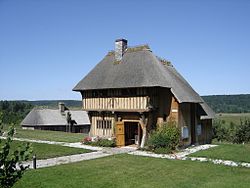 คฤหาสน์สมัยศตวรรษที่ 15, Saint-Sulpice-de-Grimbouville (นอร์ม็องดี, ฝรั่งเศส)
 บ้านสมัยศตวรรษที่ 16 ในอัลบี (อ็อกซีตานี ประเทศฝรั่งเศส)
 โบสถ์ตรีเอกภาพแห่งลังโกเนต์ (แคว้นบริตตานี ประเทศฝรั่งเศส)





ประเพณีเยอรมัน ( Fachwerkhäuser )
เยอรมนีมีรูปแบบการก่อสร้างด้วยไม้หลายแบบ แต่คาดว่าอาคารโครงไม้ครึ่งท่อนจำนวนมากที่สุดในโลกนั้นอยู่ในเยอรมนีและแคว้นอัลซาส (ฝรั่งเศส) มีเมืองเล็กๆ หลายแห่งที่รอดพ้นจากความเสียหายจากสงครามและการพัฒนาให้ทันสมัย และประกอบไปด้วยบ้านโครงไม้ครึ่งท่อนเป็นส่วนใหญ่ หรือแม้กระทั่งทั้งหมด


ถนนโครงไม้เยอรมัน ( Deutsche Fachwerkstraße ) เป็นเส้นทางท่องเที่ยวที่เชื่อมต่อเมืองต่างๆ ที่มีผลงานไม้ที่โดด เด่น มีความยาวมากกว่า 2,000 กิโลเมตร (1,200 ไมล์) ข้ามประเทศเยอรมนีผ่านรัฐโลเวอร์แซกโซนี แซกโซนี-อัน ฮัลท์ เฮสเซ ทูริ งเกียบาวาเรียและบาเดิน-เวือร์ทเทมแบร์ก[ 16 ] [ 45 ]
เมืองที่มีชื่อเสียงหลายแห่ง (รวมถึงเมืองอื่นๆ อีกมากมาย) ได้แก่: เควดลินบูร์กเมือง ที่ได้รับการขึ้นทะเบียนเป็นมรดก โลกโดยยู เนส โกซึ่งมีบ้านไม้ครึ่งหลังกว่า 1,200 หลังที่สร้างขึ้นในห้าศตวรรษ; กอสลาร์ เมืองที่ได้รับการขึ้นทะเบียนเป็นมรดกโลกโดยยูเนสโกอีกแห่งหนึ่ง; ฮานาอู-สไตน์ไฮม์ (บ้านเกิดของพี่น้องกริมม์ ); บาดอูราค ; เอปปิงเงน ("เมืองโรแมนติก" ที่มีโบสถ์ไม้ครึ่งหลังสร้างขึ้นตั้งแต่ปี 1320); มอสบัค ; ไวฮิงเงน อัน แดร์ เอนซ์ และอาราม เมาล์บ รอน น์ที่อยู่ใกล้เคียง ซึ่งได้รับการขึ้นทะเบียนเป็นมรดกโลกโดยยู เนสโก; ชอร์นดอร์ฟ (บ้านเกิดของก็อตต์ลีบ ไดม์เลอร์ ); คาลว์ ; เซลล์ ; และบิเบอรัค อัน แดร์ ริสส์ซึ่งมีทั้งอาคารยุคกลางที่ใหญ่ที่สุด คือโรงพยาบาลพระวิญญาณบริสุทธิ์และอาคารที่เก่าแก่ที่สุดแห่งหนึ่งของเยอรมนีตอนใต้ ซึ่งปัจจุบันคือพิพิธภัณฑ์ไบรธ์-มาลีสร้างขึ้นในปี 1318
รูปแบบอาคาร fachwerkของเยอรมันมีความหลากหลายอย่างมาก โดยมีเทคนิคงานไม้จำนวนมากซึ่งมีความแตกต่างกันไปตามภูมิภาค กฎหมายการวางแผนของเยอรมันสำหรับการอนุรักษ์อาคารและการอนุรักษ์สถาปัตยกรรมระดับภูมิภาคกำหนดว่าบ้านไม้ครึ่งหลังต้องเป็นไปตามแบบแผนของภูมิภาคหรือแม้แต่ของเมืองนั้นๆ จึงจะได้รับการยอมรับ[ 46 ] [ 47 ]
ต่อไปนี้เป็นภาพรวมโดยย่อของรูปแบบต่างๆ เนื่องจากเป็นไปไม่ได้ที่จะกล่าวถึงทุกรูปแบบอย่างครบถ้วน
โดยทั่วไปแล้ว รัฐทางเหนือจะมีโครงสร้างไม้แบบ fachwerkคล้ายกับของเนเธอร์แลนด์และอังกฤษที่อยู่ใกล้เคียง ในขณะที่รัฐทางใต้ (โดยเฉพาะบาวาเรียและสวิตเซอร์แลนด์) จะมีการตกแต่งด้วยไม้มากกว่า เนื่องจากมีพื้นที่ป่าสำรองมากกว่าในพื้นที่เหล่านั้น ในช่วงศตวรรษที่ 19 รูปแบบหนึ่งของโครงสร้างไม้ตกแต่งที่เรียกว่าbundwerkได้รับความนิยมในบาวาเรีย ออสเตรีย และเซาท์ไทโรล
โดยทั่วไปแล้ว อาคารแบบ เยอรมัน ที่เรียกว่า fachwerkhausมักมีฐานรากเป็นหิน หรือบางครั้งก็เป็นอิฐ สูงประมาณหลายฟุต (สองเมตร) ซึ่งโครงไม้จะถูกเจาะเข้าไปในฐานราก หรือในบางกรณีที่พบได้น้อย ก็อาจใช้คานไม้ที่ไม่เป็นรูปทรงมาตรฐานมาค้ำไว้
รูปแบบหลักทั้งสามรูปแบบสามารถแบ่งตามภูมิศาสตร์ได้ดังนี้:
- เยอรมนีตอนกลางและตะวันตก และแคว้นฟรังโกเนีย :
- เยอรมนีเหนือ เยอรมนีกลาง และเยอรมนีตะวันออก:
- ในแคว้นแซกโซนีและบริเวณ เชิงเขา ฮาร์ซ คานค้ำยันมุมมักจะก่อตัวเป็นรูปสามเหลี่ยมที่ยืดออกจนสุด
- บ้านสมัยแซกซอนตอนล่างจะมีคานรองรับเสาทุกต้น
- Holstein fachwerk houses are famed for their massive 12-inch (30 cm) beams.
- Southern Germany including the Black and Bohemian Forests
- In Swabia, Württemberg, Alsace, and Switzerland, the use of the lap-joint is thought to be the earliest method of connecting the wall plates and tie beams and is particularly identified with Swabia. A later innovation (also pioneered in Swabia) was the use of tenons – builders left timbers to season which were held in place by wooden pegs (i.e., tenons). The timbers were initially placed with the tenons left an inch or two out of intended position and later driven home after becoming fully seasoned.
The most characteristic feature is the spacing between the posts and the high placement of windows. Panels are enclosed by a sill, posts, and a plate, and are crossed by two rails between which the windows are placed—like "two eyes peering out".[46][47]
In addition there is a myriad of regional scrollwork and fretwork designs of the non-loadbearing large timbers (braces) peculiar to particularly wealthy towns or cities.
A unique type of timber-frame house can be found in the region where the borders of Germany, the Czech Republic, and Poland meet – it is called the Upper Lusatian house (Umgebindehaus, translates as round-framed house). This type has a timber frame surrounding a log structure on part of the ground floor.
 Ständerbau in Quedlinburg (Germany), Wordgasse 3, built in 1346; in the past suggested as the oldest timber-frame house in Germany; nowadays 3 older houses are known only in Quedlinburg.
 Timber frame town hall of Wernigerode
 House in Rothenburg (Bavaria)
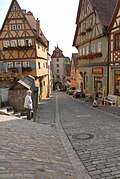 The Plönlein (i.e. little place), the worldwide known timber frame ensemble, as the southern end of the Old town in Rothenburg
 Buildings in Hornburg
 Buildings in Braubach, 16th century first half
 House in Schwerin, built in 1698
 Gelbensande Castle, a hunting lodge built in 1887 near Rostock
 The half-timbered houses in Dinkelsbühl mostly have plastered and painted facades.
 An Umgebindehaus in Oybin (Saxony). The timber frame is outside a log wall on the ground floor.
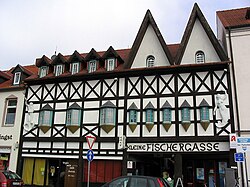 20th-century timber framing in Ribnitz (Mecklenburg)
 Fachwerk (timber framing) under construction in 2013, Tirschenreuth
 Half-timbered mansion of the former Zirkelmühle in Mellenbach-Glasbach (Thuringia)
 Low German house in Walsrode (Lower Saxony)








Italy
Several half-timbered houses can be found in Northern Italy, especially in Piedmont, Lombardy, in the city of Bologna, in Sardinia in the Barbagia region and in the Iglesiente mining region.
 Half-timbered house in Ozzano Monferrato, Piedmont
 Half-timbered house in Biella, Piedmont
 Half-timbered house in Arquata Scrivia, Piedmont
 Half-timbered house in Monza, Lombardy
 Half-timbered house in Susa, Piedmont
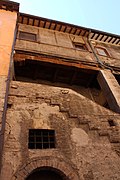 A rare example of a half-timbered house in Central Italy, in Spoleto, Umbria



Poland


Throughout the Middle Ages timber-framed houses were built in the regions of Pomerania and the Sudeten Mountains, where it was customary to use either bare brick or wattle and daub (Polish: szachulec) as filling in-between the timber frame.[48] However, the half-timbered houses which can be observed nowadays have been mostly built in regions that were historically German or had significant German cultural influence. As these regions were at some point parts of German Prussia, half-timbered walls are often called mur pruski (lit. Prussian wall) in Polish. A distinctive type of house associated with mostly Mennonite immigrant groups from Frisia and the Netherlands, known as the Olenders (Olędrzy), is called an "arcade house" (dom podcieniowy). The biggest timber-framed religious buildings in Europe are the Churches of Peace in southwestern Poland.[49] There are also numerous examples of timber-framed secular structures such as the granaries in Bydgoszcz.
Half-timbered structures were also widely employed in the architecture of 19th-century spa towns, although they never achieved the same level of popularity as the Swiss chalet style[50].
The Umgebindehaus rural housing tradition of south Saxony (Germany) is also found in the neighboring areas of Poland, particularly in the Silesian region.
Another world-class type of wooden building Poland shares with some neighboring countries are its wooden church buildings.
 Timber frame architecture, Mill Island, Bydgoszcz
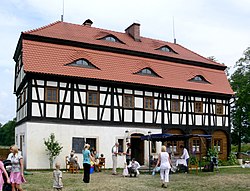 Wheelwright croft in Zgorzelec
 Granary in Bydgoszcz, built in 1795 upon 15th-century gothic cellar
 Sts. Peter & Paul Church in Sułów
 19th-century timber frame manor house in Toruń
 The Manor House of the Kierski Family in Studzieniec
 Villas in Szczawnica




Spain
The Spanish generally follow the Mediterranean forms of architecture with stone walls and shallow roof pitch. Timber framing is often of the post and lintel style. Castile and León, for example La Alberca, and the Basque Country have the most representative examples of the use of timber framing in the Iberian Peninsula.
Most traditional Basque buildings with half-timbering elements are detached farm houses (in Basque: baserriak). Their upper floors were built with jettied box frames in close studding. In the oldest farmsteads and, if existing, in the third floor the walls were sometimes covered with vertical weatherboards. Big holes were left in the gable of the main façade for ventilation. The wooden beams were painted over, mostly in dark red. The vacancies were filled in with wattle and daub or rubble laid in a clay mortar and then plastered over with white chalk or nogged with bricks. Although the entire supporting structure is made of wood, the timbering is only visible on the main façade, which is generally oriented to the southeast.
Although the typical Basque house is now mostly associated with half-timbering, the outer walls and the fire-walls were built in masonry (rubble stone, bricks or, ideally, ashlars) whenever it could be afforded. Timber was a sign of poverty. Oak-wood was cheaper than masonry: that is why, when the money was running out, the upper floor walls were mostly built timbered. Extant baserriak with half-timbered upper-floor façades were built from the 15th to 19th centuries and are found in all Basque regions with oceanic climate, except in Zuberoa (Soule), but are concentrated in Lapurdi (Labourd).
Some medieval Basque tower houses (Dorretxe) feature an overhanged upper floor in half-timbering.
To a lesser extent timbered houses are also found in villages and towns as row houses, as the photo from the Uztaritz village shows.
Currently, it has again become popular to build Néobasque houses resembling old Basque farmsteads, with more or less respect for the principles of traditional half-timbered building.
 Inharri baserri in Ibarron (Lapurdi)
 Aranguren dorretxea (Orozko, Bizkaia)
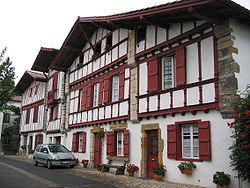 Half-timbered houses from Uztarritz (Lapurdi)
 Timbered house from Guadilla de Villamar (Spain). Popular style.




Switzerland

Switzerland has many styles of timber framing which overlap with its neighboring countries.
Belgium
Nowadays, timber framing is primarily found in the provinces of Limburg, Liège, and Luxembourg. In urban areas, the ground floor was formerly built in stone and the upper floors in timber framing. Also, as timber framing was seen as a cheaper way of building, often the visible structures of noble houses were in stone and bricks, and the invisible or lateral walls in timber framing. The open-air museums of Bokrijk and Saint-Hubert (Fourneau Saint-Michel) show many examples of Belgian timber framing. Many post-and-beam houses can be found in cities and villages, but, unlike France, the United Kingdom, and Germany, there are few fully timber framed cityscapes.
 The house where André Grétry was born in Liège
 The Sugny House (18th century), in the Fourneau Saint-Michel Museum
 A House in Theux (17th century)
 The former water mill of Lierneux
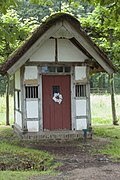 Small "chapel" (shrine) at the Bokrijk Open Air Museum
 Unskilled worker's thatched cottage (Hingeon 19th century) transplanted and reconstituted in the open-air museum Fourneau Saint-Michel
 Timber-frame structure in Bruges





Denmark
Timber frame (bindingsværk, literally "binding work") is the traditional building style in almost all of Denmark, making it the only Nordic country where this style is prevalent in all regions. Along the west coast of Jutland, houses built entirely of bricks were traditionally more common due to lack of suitable wood. In the 19th and especially in the 20th century, bricks have been the preferred building material in all of Denmark, but traditional timber-frame houses remain common both in the towns and in the countryside. Different regions have different traditions as to whether the timber frame should be tarred and thus clearly visible or be limewashed or painted in the same colour as the infills.
Sweden
The Swedish mostly built log houses but they do have traditions of several types of timber framing: Some of the following links are written in Swedish. Most of the half-timbered houses in Sweden were built during the Danish time and are located in what until 1658 used to be Danish territory in southern Sweden, primarily in the province Skåne and secondarily in Blekinge and Halland. In Swedish half-timber is known as korsvirke.
- Stave construction is called stavverk. Scandinavia is famous for its ancient stave churches. Stave construction is a traditional timber frame with walls of vertical planks, the posts and planks landing in a sill on a foundation. Similar construction with earthfast posts is called stolpteknik. and Palisade construction where many vertical wall timbers or planks have their feet buried in the ground called post in ground or earthfast construction is called palissadteknik. (see also Palisade church)
- Swedish plank-frame construction is called skiftesverk. This is a traditional timber frame with walls of horizontal planks.
Norway
Norway has at least two significant types of timber-framed structures: the stave church and Grindverk. The term stave (a post or pole) indicates that a stave church essentially means a framed church, a distinction made in a region where log building is common. All but one surviving stave churches are in Norway, one in Sweden. Replicas of stave churches and other Norwegian building types have been reproduced elsewhere, e.g. at the Scandinavian Heritage Park in North Dakota, United States.
Grindverk translates as trestle construction, consisting of a series of transversal frames of two posts and a connecting beam, supporting two parallel wall plates bearing the rafters. Unlike other types of timber framing in Europe, the trestle frame construction uses no mortise and tenon joints. Archaeological excavations have uncovered similar wooden joints from more than 3,000 years ago, suggesting that this type of framing is an ancient unbroken tradition. Grindverk buildings are only found on part of the western coast of Norway, and most of them are boathouses and barns.
Log building was the common construction used for housing humans and livestock in Norway from the Middle Ages until the 18th century. Timber framing of the type used in large parts of Europe appeared occasionally in late medieval towns, but never became common, except for the capital Christiania. After a fire in 1624 in Oslo, King Christian IV ordered the town to be relocated to a new site. He outlawed log building to prevent future conflagrations and required wealthy burghers to use brickwork and the less affluent to use timber framing in the Danish manner. During the next two centuries, 50 per cent of the houses were timber framed.
All of these buildings disappeared as a consequence of this small provincial town of Christiania becoming the capital of independent Norway in 1814. This caused a rapid growth, with the population rising from 10 000 to 250 000 by 1900. Increasing prices caused a massive urban renewal, which resulted in all wooden structures being replaced with office blocks.
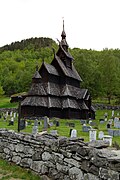 Borgund stave church in Lærdal, Sogn og Fjordane country, Norway
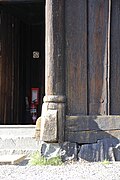 Garmo Stave Church detail. Note how the sills lap and the post fits around the sills. The post is the stave from which these buildings are named.
 Kaupanger stave church interior, Kaupanger, Norway
 An example of grindverk framing. The tie beams are captured in slots in the post tops.
 Frogner Manor in Oslo, timber-framed building 1750, extended 1790
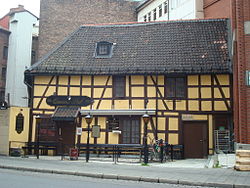 Brugata 14, Oslo. Timber-framed building from around 1800.





Netherlands

The Netherlands is often overlooked for its timbered houses, yet many exist, including windmills. It was in North Holland where the import of cheaper timber, combined with the Dutch innovation of windmill-powered sawmills, allowed economically viable widespread use of protective wood covering over framework. In the late 17th century the Dutch introduced vertical cladding also known in Eastern England as clasp board and in western England as weatherboard, then as more wood was available more cheaply, horizontal cladding in the 17th century. Perhaps owing to economic considerations, vertical cladding returned to fashion.[51] Dutch wall framing is virtually always built in bents and the three basic types of roof framing are the rafter roof, purlin roof, and ridge-post roof.[52]
Romania
Half-timbered houses can be found in Romania mostly in areas once inhabited by Transylvanian Saxons, in cities, towns and villages with Germanic influence such as Bistrița, Brașov, Mediaș, Sibiu and Sighișoara. However the number of half-timbered houses is small. In Wallachia there are few examples of this type of architecture, most of those buildings being located in Sinaia, such as the Peleș Castle.
 The Pelișor Castle in Sinaia
 "Olimpia" Sports Complex, Brașov
 A half-timbered building in Sinaia


Baltic states
As the result of centuries of German settlement and cultural influence, towns in the Baltic states such as Klaipėda and Riga also preserve German-style Fachwerkhäuser.
Americas
Most "haft-timbered" houses existing in Missouri, Pennsylvania, and Texas were built by German settlers.[44]Old Salem North Carolina has fine examples of German fachwerk buildings.[53]: 42–43 Many are still present in Colonia Tovar (Venezuela), Santa Catarina and Rio Grande do Sul (Brazil), where Germans settled. Later, they chose more suitable building materials for local conditions (most likely because of the great problem of tropical termites.)
New France
In the historical region of North America known as New France, colombage pierroté, also called maçonnerie entre poteaux,[54] half-timbered construction with the infill between the posts and studs of stone rubble and lime plaster or bousillage[54] and simply called colombage in France. Colombage was used from the earliest settlement until the 18th century but was known as bousillage entre poteaus sur solle in Lower Louisiana. The style had its origins in Normandy, and was brought to Canada by early Norman settlers. The Men's House at Lower Fort Garry is a good example. The exterior walls of such buildings were often covered over with clapboards to protect the infill from erosion. Naturally, this required frequent maintenance, and the style was abandoned as a building method in the 18th century in Québec. For the same reasons, half-timbering in New England, which was originally employed by the English settlers, fell out of favour soon after the colonies had become established.
Other variations of half-timbering are colombage à teurques (torchis), straw coated with mud and hung over horizontal staves (or otherwise held in place), colombage an eclisses, and colombage a lattes.[54]
Poteaux-en-terre (posts in ground) is a type of timber framing with the many vertical posts or studs buried in the ground called post in ground or "earthfast" construction. The tops of the posts are joined to a beam and the spaces between are filled in with natural materials called bousillage or pierrotage.
Poteaux-sur-sol (posts on a sill) is a general term for any kind of framing on a sill. However, sometimes it specifically refers to "vertical log construction" like poteaux-en-terre placed on sills with the spaces between the timbers infilled.
Piece-sur-piece, also known as Post-and-plank style or "corner post construction" (and many other names) in which wood is used both for the frame and horizontal infill; for this reason it may be incorrect to call it "half-timbering". It is sometimes a blend of framing and log building with two styles: the horizontal pieces fit into groves in the posts and can slide up and down or the horizontal pieces fit into individual mortises in the posts and are pegged and the gaps between the pieces chinked (filled in with stones or chips of wood covered with mud or moss briefly discussed in Log cabin.)
This technique of a timber frame walls filled in with horizontal planks or logs proved better suited to the harsh climates of Québec and Acadia, which at the same time had abundant wood. It became popular throughout New France, as far afield as southern Louisiana. The Hudson's Bay Company used this technique for many of its trading posts, and this style of framing becoming known as Hudson Bay style or Hudson Bay corners. Also used by the Red River Colony this style also became known as "Red River Framing". "The support of horizontal timbers by corner posts is an old form of construction in Europe. It was apparently carried across much of the continent from Silesia by the Lausitz urnfield culture in the late Bronze Age."[55] Similar building techniques are apparently not found in France[53]: 121 but exist in Germany and Switzerland known as Bohlenstanderbau when planks are used or blockstanderbau when beams are used as the infill. In Sweden the technique is known as sleppvegg or skiftesverk and in Denmark as bulhus.
A particularly interesting example in the U.S. is the Golden Plough Tavern (c. 1741), York, York County, Pennsylvania, which has the ground level of corner-post construction with the second floor of fachwerk (half timbered) and was built for a German with other Germanic features.[56]
Settlers in New France also built horizontal log, brick, and stone buildings.
New Netherland
Characteristics of traditional timber framing in the parts of the U.S. formerly known as New Netherland are H-framing also known as dropped-tie framing in the U.S. and the similar anchor beam framing as found in the New World Dutch barn.
New England
Some time periods/regions within New England contain certain framing elements such as common purlin roofs, five sided ridge beams, plank-frame construction and plank-wall construction. The English barn always contains an "English tying joint" and the later New England style barn were built using bents.
Japanese

Japanese timber framing is believed to be descended from Chinese framing (see Ancient Chinese wooden architecture). Asian framing is significantly different from western framing, with its predominant use of post and lintel framing and an almost complete lack of diagonal bracing.
Revival styles in later centuries
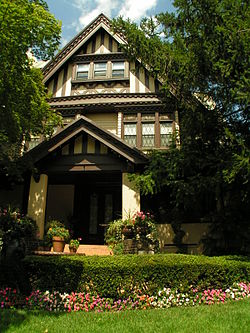

When half-timbering regained popularity in Britain after 1860 in the various revival styles, such as the Queen Anne style houses by Richard Norman Shaw and others, it was often used to evoke a "Tudor" atmosphere (see Tudorbethan), though in Tudor times half-timbering had begun to look rustic and was increasingly limited to village houses (illustration, above left).
In 1912, Allen W. Jackson published The Half-Timber House: Its Origin, Design, Modern Plan, and Construction, and rambling half-timbered beach houses appeared on dune-front properties in Rhode Island or under palm-lined drives of Beverly Hills. During the 1920s increasingly minimal gestures towards some half-timbering in commercial speculative housebuilding saw the fashion diminish.
In the revival styles, such as Tudorbethan (Mock Tudor), the half-timbered appearance is superimposed on the brickwork or other material as an outside decorative façade rather than forming the main frame that supports the structure.
The style was used in many of the homes built in Lake Mohawk, New Jersey, as well as all of the clubhouse, shops, and marina.
For information about "roundwood framing" see the book Roundwood Timber Framing: Building Naturally Using Local Resources by Ben Law (East Meon, Hampshire: Permanent Publications; 2010. ISBN 1856230414)
Advantages
The use of timber framing in buildings offers various aesthetic and structural benefits, as the timber frame lends itself to open plan designs and allows for complete enclosure in effective insulation for energy efficiency. In modern construction, a timber-frame structure offers many benefits:
- It is rapidly erected. A moderately sized timber-frame home can be erected within 2 to 3 days.
- It is well suited to prefabrication, modular construction, and mass-production. Timbers can be pre-fit within bents or wall-sections and aligned with a jig in a shop, without the need for a machine or hand-cut production line. This allows faster erection on site and more precise alignments. Valley and hip timbers are not typically pre-fitted.
- As an alternative to the traditional infill methods, the frame can be encased with SIPs. This stage of preparing the assembled frame for the installation of windows, mechanical systems, and roofing is known as drying in.
- it can be customized with carvings or incorporate heirloom structures such as barns etc.
- it can use recycled or otherwise discarded timbers.
- it offers some structural benefits as the timber frame, if properly engineered, lends itself to better seismic survivability[59] Consequently, there are many half-timbered houses which still stand despite the foundation having partially caved in over the centuries.
- The generally larger spaces between the frames enable greater flexibility in the placement, at construction or afterwards, of windows and doors with less resulting weakening of the structural integrity and the need for heavy lintels.
In North America, heavy timber construction is classified Building Code Type IV: a special class reserved for timber framing which recognizes the inherent fire resistance of large timber and its ability to retain structural capacity in fire situations. In many cases this classification can eliminate the need and expense of fire sprinklers in public buildings.[60]
Disadvantages
Traditional or historic structures
In terms of the traditional half-timber or fachwerkhaus there are maybe more disadvantages than advantages today. Such houses are notoriously expensive to maintain let alone renovate and restore, most commonly owing to local regulations that do not allow divergence from the original, modification or incorporation of modern materials. Additionally, in such nations as Germany, where energy efficiency is highly regulated, the renovated building may be required to meet modern energy efficiencies, if it is to be used as a residential or commercial structure (museums and significant historic buildings have no semi-permanent habitade exempt). Many framework houses of significance are treated merely to preserve, rather than render inhabitable – most especially as the required heavy insecticidal fumigation is highly poisonous.
In some cases, it is more economical to build anew using authentic techniques and correct period materials than restore. One major problem with older structures is the phenomenon known as mechano-sorptive creep or slanting: where wood beams absorb moisture whilst under compression or tension strains and deform, shift position or both. This is a major structural issue as the house may deviate several degrees from perpendicular to its foundations (in the x-axis, y-axis, and even z-axis) and thus be unsafe and unstable or so out of square it is extremely costly to remedy.[61]
A summary of problems with Fachwerkhäuser or half-timbered houses includes the following, though many can be avoided by thoughtful design and application of suitable paints and surface treatments and routine maintenance. Often, though when dealing with a structure of a century or more old, it is too late.[51]
- "slanting"- thermo-mechanical (weather-seasonally induced) and mechano-sorptive (moisture induced) creep of wood in tension and compression.[61]
- poor prevention of capillary movement of water within any exposed timber, leading to afore-described creep, or rot
- eaves that are too narrow or non-existent (thus allowing total exposure to rain and snow)
- too much exterior detailing that does not allow adequate rainwater run-off
- timber ends, joints, and corners poorly protected through coatings, shape or position
- non-beveled vertical beams (posts and clapboards) allow water absorption and retention through capillary action.
- surface point or coatings allowed to deteriorate
- traditional gypsum, or wattle and daub containing organic materials (animal hair, straw, manure) which then decompose.
- in both poteaux-en-terre and poteaux-sur-sol, insect, fungus or bacterial decomposition.
- rot including dry rot.
- infestation of xylophagous pest organisms such as (common in Europe) the Ptinidae family, particularly the common furniture beetle, termites, cockroaches, powderpost beetles, mice, and rats (quite famously so in many children's stories).
- Noise from footsteps in adjacent rooms above, below, and on the same floor in such buildings can be quite audible. This is often resolved with built-up floor systems involving clever sound-isolation and absorption techniques and at the same time providing passage space for plumbing, wiring, and even heating and cooling equipment.
- Other fungi that are non-destructive to the wood but are harmful to humans, such as black mold. These fungi may also thrive on many "modern" building materials.
- Wood burns more readily than some other materials, making timber-frame buildings somewhat more susceptible to fire damage, although this idea is not universally accepted: Since the cross-sectional dimensions of many structural members exceed 15 cm × 15 cm (6" × 6"), timber-frame structures benefit from the unique properties of large timbers, which char on the outside, forming an insulated layer that protects the rest of the beam from burning.[62][63]
- prior flood or soil subsidence damage
See also
- American historic carpentry
- Boat building
- Berg house
- Carpentry
- Engineered wood
- Glue laminated timber
- Cross-laminated timber
- Framing (construction)
- German Timber-Frame Road
- Norman architecture
- Open-air museum
- Vernacular architecture
- Weatherboarding
Notes
- ^"Немецкий фахверк | DW | 14 July 2021". DW.COM (in Russian). Deutsche Welle. Retrieved 15 July 2021.
- ^"Timber framing – A rediscovered technique for building a home". Walls with Stories. 17 June 2017. Retrieved 15 July 2021.
- ^Williams, J. H. (1971). "Roman Building-Materials in South-East England". Britannia. 2. Society for the Promotion of Roman Studies: 166–195. doi:10.2307/525807. JSTOR 525807. S2CID 162393242. Retrieved 20 April 2022.
- ^"UNESCO - Chinese traditional architectural craftsmanship for timber-framed structures". ich.unesco.org. Retrieved 10 July 2024.
- ^Oxford English Dictionary
- ^Davies, Nikolas; Jokiniemi, Erkki (2008). Dictionary of Architecture and Building Construction. Architectural Press. p. 181. ISBN 978-0-7506-8502-3.
- ^Vitruvious On Architecture (translated in 1931 from the eighth century Latin), Book II, Chapter 8, paragraph 20
- ^Sunshine, Paula (2006). Wattle and Daub. Princes Risborough: Shire Publications. pp. 7–8. ISBN 0747806527.
- ^Glick, Thomas F.; Livesey, Steven John; Wallis, Faith (2005). Medieval Science, Technology, and Medicine: An Encyclopedia. New York: Routledge. p. 229. ISBN 0415969301.
- ^ abPollard, Richard; Pevsner, Nikolaus (2006). The Buildings of England: Lancashire: Liverpool and the South-West. New Haven and London: Yale University Press. pp. 710–711. ISBN 0-300-10910-5.
- ^Craven, Jackie (3 July 2019). "The Look of Medieval Half-Timbered Construction". Retrieved 20 April 2022.
- ^Sherwood, Mary Martha (1827). The lady of the manor being a series of conversations on the subject of confirmation. Intended for the use of the middle and higher ranks of young females. Vol. 5. Wellington, Salop. London: F. Houlston and Son. p. 168. Retrieved 20 April 2022.
- ^"LacusCurtius • Vitruvius de Architectura – Liber Secundus". penelope.uchicago.edu. Retrieved 1 May 2018.
- ^Wilson, Nigel Guy (2006). Encyclopedia of Ancient Greece. London: Routledge. p. 82. ISBN 0415973341.
- ^Parker, Joyn Henry (1986) [1875]. Classic Dictionary of Architecture (4th ed.). Poole, Dorset: New Orchard Editions. pp. 178–179.
- ^ abKessler, Karl; Custodis, Paul-Georg; Lang, Helmut R.; Landschaftsmuseum Westerwald; Elenz, Reinhold; Schrammel-Schäl, Nortrud G.; Kreisverwaltung des Westerwaldkreises; Schumacher, Angela; Weinert, Peter P. (1987). Fachwerk im Westerwald: Landschaftsmuseum Westerwald, Hachenburg, Ausstellung vom 11. September 1987 bis 30 April 1988. Landschaftsmuseum Westerwald. ISBN 978-3-921548-37-0.
- ^"Sir Paul Pindar's House". Victoria and Albert Museum. Retrieved 11 April 2026.
- ^National Lumber Manufacturer's Association. "Airplane hangar Construction". Construction Information Series: Lumber and It's Utilization, vol. IV, ch. 8, 1941.
- ^ abTECO Timber Engineering Company. "Specify Timber with the TECO System for Industrial and Commercial Structures". 1950.
- ^Raser, William V. (1941). Modern Timber Connectors for Modern Timber Structures (Unpublished master's thesis). Corvallis, OR.: School of Forestry, Oregon State College. Retrieved 20 April 2022 – via Scholars Archive at OSU.
- ^"What Are SIPs?". sips.org. Structural Insulated Panel Association. Archived from the original on 10 February 2013. Retrieved 1 February 2013.
- ^"National Design Specification for Wood Construction". American Wood Council. 2018. Retrieved 13 December 2018.
- ^Williams, J. H. (1971). "Roman Building-Materials in South-East England". Britannia. 2. Society for the Promotion of Roman Studies: 166–195. doi:10.2307/525807. JSTOR 525807. S2CID 162393242. Retrieved 20 April 2022.
- ^Abrams, Robert J. (1988). Feldman, David (ed.). Why Do Clocks Run Clockwise? And Other Imponderables. Perennial Library/Harper & Row. ISBN 0060915153.
- ^"History of "topping out" during building construction". tnaqua.org. Tennessee Aquarium. Archived from the original on 11 August 2016. Retrieved 1 May 2018.
- ^"Pargetting on the White Horse, Pleshey (C) Colin Smith". geograph.org.uk. Archived from the original on 5 August 2016. Retrieved 1 May 2018.
- ^"Half-timbered house in Laxfield (C) Toby Speight". geograph.org.uk. Archived from the original on 5 August 2016. Retrieved 1 May 2018.
- ^"Shakespeare's Birthplace in Stratford... (C) Frederick Blake". geograph.org.uk. Archived from the original on 1 May 2018. Retrieved 1 May 2018.
- ^"The Shakespeare Hotel- Stratford Upon Avon:: OS grid SP2054: Geograph Britain and Ireland – photograph every grid square!". Geograph.org.uk. Archived from the original on 7 July 2012. Retrieved 29 April 2012.
- ^"Huddington Court (C) Richard Dunn". geograph.org.uk. Archived from the original on 5 August 2016. Retrieved 1 May 2018.
- ^"West End Farm, Pembridge, Herefordshire (C) Doug Elliot". geograph.org.uk. Archived from the original on 5 August 2016. Retrieved 1 May 2018.
- ^"Pembridge, Market Hall and New Inn:: OS grid SO3958: Geograph Britain and Ireland – photograph every grid square!". Geograph.org.uk. 10 April 2006. Archived from the original on 8 July 2012. Retrieved 29 April 2012.
- ^"The Feathers Hotel, Ludlow (C) Humphrey Bolton". geograph.org.uk. Archived from the original on 5 August 2016. Retrieved 1 May 2018.
- ^"Historic buildings in Ludlow:: OS grid SO5174: Geograph Britain and Ireland – photograph every grid square!". Geograph.org.uk. 24 February 2007. Archived from the original on 8 July 2012. Retrieved 29 April 2012.
- ^"Half timbered building (C) Andy and Hilary". geograph.org.uk. Archived from the original on 5 August 2016. Retrieved 1 May 2018.
- ^"Little Moreton Hall: Cheshire (C) Pam Brophy". geograph.org.uk. Archived from the original on 5 August 2016. Retrieved 1 May 2018.
- ^"Spreadeagle Hotel 1430: Midhurst (C) Pam Brophy". geograph.org.uk. Archived from the original on 4 March 2016. Retrieved 1 May 2018.
- ^"Wealden house". Geograph.org.uk. Archived from the original on 15 July 2012. Retrieved 29 April 2012.
- ^Cruck Construction: an introduction and catalogue (CBA Research Report 42), pp. 61–92.
- ^ abcdeBrown, R. J. (1997). Timber-framed buildings of England. London: R. Hale Ltd. pp. 46–48. ISBN 0709060920.
- ^ abcdeVince, J. (1994). The Timbered House. Sorbus. ISBN 1-874329-75-3.
- ^Bettley, James; Pevsner, Nikolaus (2007). The Buildings of England: Essex. New Haven, Conn.: Yale University Press. p. 313. ISBN 978-0300116144.
- ^McKenna, Laurie (1994). Timber Framed Buildings in Cheshire. Cheshire County Council. p. 69. ISBN 0906765161.
- ^ abVan Ravenswaay, Charles (2006). The arts and architecture of German settlements in Missouri: a survey of a vanishing culture. University of Missouri Press. ISBN 978-0-8262-1700-4.
- ^Edel, Heinrich (1928). Die Fachwerkhäuser der Stadt Braunschweig: ein kunst und kulturhistorisches Bild (in German). Druckerei Appelhaus.
- ^ abSüvern, Wilhelm (1971). Torbögen und Inschriften lippischer Fachwerkhäuser. Heimatland Lippe: Zeitschrift d. Lippischen Heimatbundes. Vol. 7. Lippischer Heimatbund.
- ^ abStiewe, Heinrich (2007). Fachwerkhäuser in Deutschland: Konstruktion, Gestalt und Nutzung vom Mittelalter bis heute (in German). Primus Verlag. ISBN 978-3-89678-589-3.
- ^"Domy z szachulca, czyli co łączy Sudety i Pomorze Gdańskie?". www.foveotech.pl.
- ^"Pałac Jugowice".
- ^Ruszczyk, Grażyna (2020). "„Budowle służące zabawom przyjemnym a tem samem przy wodnej kuracji bardzo pożytecznym". O drewnianych domach zdrojowych, teatrach i estradach w polskich uzdrowiskach w XIX i na początku XX wieku". Biuletyn Historii Sztuki (in Polish). 82 (4): 601–640. ISSN 0006-3967.
- ^ abBoström, Lars, ed. (1999). 1st International RILEM Symposium on Timber Engineering: Stockholm, Sweden, 13–14 September 1999. RILEM proceedings. Vol. 8. RILEM Publications. pp. 317–327. ISBN 978-2-912143-10-5.
- ^Janse, Herman (1989). Houten kappen in Nederland 1000–1940. Delftse Universitaire Pers, Delft / Rijksdienst voor de Monumentenzorg, Zeist.
- ^ abNoble, Allen George; Geib, M. Margaret (1984). Wood, brick, and stone: the North American settlement landscape. Amherst: University of Massachusetts Press.
- ^ abcEdwards, Jay Dearborn; Verton, Nicolas (2004). ""colombage pierroté" def. 1.". A Creole Lexicon: Architecture, Landscape, People. Baton Rouge: Louisiana State University Press. p. 65.
- ^Upton, Dell; Vllach, John Michael (1930). Common places: Readings in American Vernacular Architecture, referencing V. Gordon Childe, The Bronze Age. NY: Macmillan. pp. 206–8.
- ^Shedd, Nancy S. (10 March 1986). "Corner-Post Log Construction: Description, Analysis, and Sources – A Report to Early American Industries Association". Archived from the original on 25 September 2013. Retrieved 4 March 2023 – via Huntingdon History Research Network.).
- ^"Saitta House – Report Part 1"(PDF). Dyker Heights Civic Association. 2007. Archived from the original(PDF) on 16 December 2008.
- ^"About us – Palangos Vėtra". Old Mill Hotel. Retrieved 29 November 2023.
- ^Gotz, Karl-Heinz; et al. (1989). Timber Design & Construction Sourcebook. McGraw-Hall. ISBN 0-07-023851-0.
- ^"IBC Building Type"(PDF). Orange, CA: Technical Services Information Bureau. September 2008. Archived(PDF) from the original on 28 July 2011. Retrieved 15 July 2009.
- ^ abBengtsson, Charlotte (1999). "Mechano-sorptive creep of wood in tension and compression". In Boström, Lars (ed.). 1st International RILEM Symposium on Timber Engineering, Stockholm, Sweden, 13–14 September 1999. RILEM proceedings. Vol. 8. RILEM Publications. pp. 317–327. ISBN 978-2-912143-10-5.
- ^"Fire Safety"(PDF). Canadian Wood Council. Archived from the original(PDF) on 30 May 2008.
- ^Bailey, Colin. "Timber". Structural Material Behavior in Fire. University of Manchester. Archived from the original on 9 May 2008. Retrieved 4 May 2008.
Further reading
- English tradition
- Ronald Brunskill (1992) [1981]. Traditional Buildings of England. Gollancz. ISBN 0-575-05299-6.
- A good introductory book on carpentry and joinery from 1898 in London, England is titled Carpentry & Joinery by Frederick G. Webber and is a free ebook in the public domain: Carpentry & joinery or reprint ISBN 9781236011923 or ISBN 9781246034189.
- Timber Buildings. Low-energy constructions. Cristina Benedetti, Bolzano 2010, Bozen-Bolzano University Press, ISBN 978-88-6046-033-2
- For an English summary of important points presented in the Dutch language book Houten kappen in Nederland 1000–1940 (Wooden Roofs in the Netherlands: 1000–1940) use this link Herman Janse, Houten kappen in Nederland 1000–1940 · dbnl.
External links
- Chisholm, Hugh, ed. (1911). . Encyclopædia Britannica. Vol. 12 (11th ed.). Cambridge University Press. p. 836.
- Jackson, Allen W. (1912). The half-timber house. The country house library. NY: McBride, Nast & Co.
สรุปเนื้อหา
ข้อมูลสำคัญจากบทความ
ข้อมูลสำคัญเกี่ยวกับ โครงสร้างไม้
การก่อสร้างด้วยโครงไม้ ( ภาษาเยอรมัน : Fachwerkbauweise ) และการก่อสร้างแบบ "เสาและคาน"เป็นวิธีการก่อสร้างแบบดั้งเดิมโดย ใช้ ไม้ ขนาดใหญ่ สร้างโครงสร้างโดยใช้...
กรอบกล่อง
โครงสร้างไม้แบบเรียง่ายที่ทำจากไม้ท่อนตรงแนวตั้งและแนวนอน โดยมีคานหลังคาร่วมกันโดยไม่มี แป คำว่า " โครงสร้างกล่อง " นั้น ไม่มีคำจำกัดความที่ชัดเจนและถูกนำมาใช้กับโครงสร้างทุกประเภท (ยกเว้น โครงสร้าง ค้ำยัน ) ข้อแตกต่างที่นำเสนอในที่นี้คือ...
ครัค
cruck คือไม้ค้ำยันที่คดงอหรือโค้งงอ [ 5 ] ซึ่งประกอบกันเป็น โครงโค้ง (US) หรือโครงขวาง (UK) โดยไม้แต่ละชิ้นเรียกว่า blade มีการบันทึกอาคารโครง cruck มากกว่า 4,000 หลัง ในสหราชอาณาจักร มี การ ใช้โครง cruck หลายประเภท...
กรอบทางเดิน
โครงสร้างแบบมีทางเดินตรงกลางจะมีเสาภายในหนึ่งแถวหรือมากกว่านั้น เสาภายในเหล่านี้มักรับ น้ำหนักโครงสร้าง มากกว่า เสาในผนังภายนอก นี่เป็นแนวคิดเดียวกับทางเดินในอาคารโบสถ์ ซึ่งบางครั้งเรียกว่า โบสถ์แบบโถง โดยที่ทางเดินตรงกลางนั้นในทางเทคนิคเรียกว่า นาฟ...