
อ่าน 57 นาที
ตลาดซื้อขาย
ตลาดหรือ เรียก สั้นๆ ว่าตลาดคือสถานที่ที่ผู้คนมารวมตัวกันเป็นประจำเพื่อซื้อขายเสบียง ปศุสัตว์ และสินค้าอื่นๆในส่วนต่างๆ ของโลก ตลาดอาจถูกเรียกว่าซูค (จากภาษาอาหรับ ) บาซาร์...
ตลาดซื้อขาย


ตลาดหรือ เรียก สั้นๆ ว่าตลาดคือสถานที่ที่ผู้คนมารวมตัวกันเป็นประจำเพื่อซื้อขายเสบียง ปศุสัตว์ และสินค้าอื่นๆ[ 1 ]ในส่วนต่างๆ ของโลก ตลาดอาจถูกเรียกว่าซูค (จากภาษาอาหรับ ) บาซาร์ (จากภาษาเปอร์เซีย ) เมอร์ กา โด ( ภาษาสเปน ) เทียนกุยส์ ( เม็กซิโก ) หรือปาเลงเก ( ฟิลิปปินส์ ) ตลาดบางแห่งเปิดทำการทุกวันและเรียกว่า ตลาด ถาวรในขณะที่บางแห่งจัดขึ้นสัปดาห์ละครั้งหรือในวันสำคัญต่างๆ เช่น วันเทศกาล และเรียกว่าตลาดตามฤดูกาลรูปแบบของตลาดขึ้นอยู่กับประชากร วัฒนธรรม สภาพแวดล้อม และสภาพทางภูมิศาสตร์ของท้องถิ่น คำว่าตลาดครอบคลุมการค้าหลายประเภท เช่นจัตุรัสตลาดห้องโถงตลาดห้องโถงอาหารและรูปแบบต่างๆ ที่แตกต่างกัน ดังนั้น ตลาดจึงสามารถอยู่ได้ทั้งกลางแจ้งและในร่ม และในโลกยุคใหม่ตลาดออนไลน์ก็มีเช่นกัน
ตลาดมีมานานเท่าที่มนุษย์เริ่มทำการค้าขาย เชื่อกันว่าตลาดบาซาร์แห่งแรกมีต้นกำเนิดในเปอร์เซีย จากนั้นจึงแพร่กระจายไปยังส่วนอื่นๆ ของตะวันออกกลางและยุโรปเอกสารหลักฐานชี้ให้เห็นว่านโยบายการแบ่งเขตพื้นที่จำกัดการค้าขายให้อยู่ในบางส่วนของเมืองตั้งแต่ประมาณ 3000 ปี ก่อนคริสตกาล ซึ่งสร้างเงื่อนไขที่จำเป็นสำหรับการกำเนิดของตลาดบาซาร์ ตลาดบาซาร์ในตะวันออกกลางมักจะเป็นพื้นที่ยาว มีแผงลอยอยู่สองข้างทาง และมีหลังคาคลุมเพื่อป้องกันพ่อค้าและผู้ซื้อจากแสงแดดที่ร้อนจัด ในยุโรป ตลาดที่ไม่เป็นทางการและไม่มีการควบคุมค่อยๆ เปลี่ยนไปเป็นระบบตลาดที่เป็นทางการและได้รับอนุญาตตั้งแต่ศตวรรษที่ 12 ตลอดช่วงยุคกลางการควบคุมการค้าขายในตลาดเพิ่มมากขึ้น โดยเฉพาะอย่างยิ่งเรื่องน้ำหนักและมาตรวัด ทำให้ผู้บริโภคมั่นใจในคุณภาพของสินค้าในตลาดและความเป็นธรรมของราคา ทั่วโลก ตลาดได้พัฒนาไปในรูปแบบที่แตกต่างกันขึ้นอยู่กับสภาพแวดล้อมในท้องถิ่น โดยเฉพาะอย่างยิ่งสภาพอากาศ ประเพณี และวัฒนธรรม ในตะวันออกกลาง ตลาดมักจะมีหลังคาคลุมเพื่อป้องกันพ่อค้าและผู้ซื้อจากแสงแดด ในภูมิอากาศที่ไม่หนาวจัด ตลาดมักจะเป็นตลาดกลางแจ้ง ในเอเชียระบบตลาดเช้าที่จำหน่ายผลิตผลสดและตลาดกลางคืนที่จำหน่ายสินค้าที่ไม่เน่าเสียง่ายเป็นเรื่องปกติ
ปัจจุบัน ตลาดสามารถเข้าถึงได้ทางอิเล็กทรอนิกส์หรือทางอินเทอร์เน็ตผ่านแพลตฟอร์มอีคอมเมิร์ซหรือแพลตฟอร์มจับคู่ ในหลายประเทศการซื้อของที่ตลาดท้องถิ่นเป็นส่วนหนึ่งของชีวิตประจำวัน เนื่องจากตลาดมีบทบาทสำคัญในการจัดหาอาหารให้แก่ประชากร ตลาดจึงมักได้รับการควบคุมอย่างเข้มงวดจากหน่วยงานส่วนกลาง ในหลายแห่ง ตลาดที่ได้รับการกำหนดไว้ได้กลายเป็นสถานที่สำคัญทางประวัติศาสตร์และสถาปัตยกรรม และเป็นส่วนหนึ่งของมรดกทางวัฒนธรรมของเมืองหรือประเทศ ด้วยเหตุนี้ ตลาดจึงมักเป็นสถานที่ท่องเที่ยวที่ได้รับความนิยม
นิรุกติศาสตร์
คำว่าตลาดมาจากภาษาละตินmercatus ("ตลาด") การใช้คำว่าตลาดในภาษาอังกฤษที่บันทึกไว้ครั้งแรกสุดอยู่ในพงศาวดารแองโกล-แซกซอนในปี 963 ซึ่งเป็นงานที่สร้างขึ้นในรัชสมัยของพระเจ้าอัลเฟรดมหาราช (ครองราชย์ 871–899) และต่อมาได้มีการเผยแพร่และคัดลอกไปทั่วอารามต่างๆ ในอังกฤษวลีที่ใช้คือ " Ic wille þæt markete beo in þe selue tun " ซึ่งหมายความว่า "ข้าพเจ้าปรารถนาให้มีตลาดในเมืองเดียวกัน" [ 2 ]
ประวัติศาสตร์
ในยุคก่อนประวัติศาสตร์

ตลาดมีมาตั้งแต่สมัยโบราณ[ 3 ]นักประวัติศาสตร์บางคนโต้แย้งว่าตลาดมีมาตั้งแต่สมัยที่มนุษย์เริ่มทำการค้าขาย[ 4 ] [ 5 ]ตลาดกลางแจ้งและตลาดสาธารณะเป็นที่รู้จักในบาบิโลเนียโบราณ อัสซีเรีย ฟีนิเซียกรีซ อียิปต์ และคาบสมุทรอาหรับ อย่างไรก็ตาม ไม่ใช่ทุกสังคมที่พัฒนาระบบตลาด[ 6 ]เฮโรโดตัสนักประวัติศาสตร์ชาวกรีกตั้งข้อสังเกตว่าตลาดไม่ได้พัฒนาขึ้นในเปอร์เซียโบราณ[ 7 ]
ทั่วทั้งทะเลเมดิเตอร์เรเนียนและทะเลอีเจียน เครือข่ายตลาดได้เกิดขึ้นตั้งแต่ยุคสำริดตอนต้น มีการค้าขายสินค้าหลากหลายชนิด รวมถึงเกลือ หินลาพิสลาซูลีสีย้อม ผ้า โลหะ หม้อ เครื่องปั้นดินเผา รูปปั้น หอก และเครื่องมืออื่นๆ หลักฐานทางโบราณคดีชี้ให้เห็นว่าพ่อค้าในยุคสำริดแบ่งเส้นทางการค้าตามเส้นทางภูมิศาสตร์[ 8 ]ทั้งผลผลิตและแนวคิดต่างเดินทางไปตามเส้นทางการค้าเหล่านี้[ 9 ]
ในตะวันออกกลาง แหล่งข้อมูลเอกสารระบุว่ารูปแบบของตลาดเริ่มพัฒนาขึ้นครั้งแรกราว 3000 ปีก่อนคริสตกาล[ 10 ]ตลาดในยุคแรกๆ จะตั้งอยู่ตามตรอกซอยต่างๆ ตลอดความยาวของเมือง โดยทั่วไปจะทอดยาวจากประตูเมืองหนึ่งไปยังประตูอีกบานหนึ่งที่อยู่อีกฝั่งหนึ่งของเมือง ตัวอย่างเช่น ตลาดที่เมืองทาบริซทอดยาวไปตาม ถนนหลายกิโลเมตรและเป็นตลาดที่มีหลังคาโค้งที่ยาวที่สุดในโลก[ 11 ]มูซาวีแย้งว่าตลาดในตะวันออกกลางพัฒนาไปในรูปแบบเชิงเส้น ในขณะที่ตลาดในตะวันตกมีลักษณะรวมศูนย์มากกว่า[ 12 ]เฮโรโดตัส นักประวัติศาสตร์ชาวกรีกตั้งข้อสังเกตว่าในอียิปต์ บทบาทกลับกันเมื่อเทียบกับวัฒนธรรมอื่นๆ และผู้หญิงชาวอียิปต์มักไปตลาดและทำการค้า ในขณะที่ผู้ชายอยู่บ้านทอผ้า[ 13 ]เขายังได้บรรยายถึงตลาดการแต่งงานของชาวบาบิโลน ซึ่งเป็นเรื่องราวที่สร้างแรงบันดาลใจ ให้เอ็ดวิน ลองวาดภาพในปี 1875 [ 14 ]
ในสมัยโบราณ
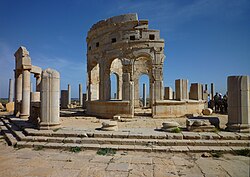
ในสมัยโบราณ ตลาดมักตั้งอยู่ใจกลางเมือง ตลาดล้อมรอบด้วยตรอกซอยที่มีช่างฝีมืออาศัยอยู่ เช่น ช่างโลหะ ช่างหนัง และช่างไม้ ช่างฝีมือเหล่านี้อาจขายสินค้าโดยตรงจากสถานที่ของตน หรืออาจเตรียมสินค้าเพื่อขายในวันตลาดด้วย[ 3 ] ทั่วกรีกโบราณตลาดสามารถพบได้ในรัฐเมืองส่วนใหญ่ โดยดำเนินการภายในอะโกรา (พื้นที่เปิดโล่ง) [ 15 ]ระหว่างปี 550 ถึง 350 ก่อนคริสตกาล พ่อค้าแม่ค้าชาวกรีกรวมกลุ่มกันตามประเภทของสินค้าที่ขาย – ผู้ขายปลาอยู่ในที่หนึ่ง เสื้อผ้าอยู่ในอีกที่หนึ่ง และผู้ขายสินค้าที่มีราคาแพงกว่า เช่น น้ำหอม ขวด และไห จะอยู่ในอาคารแยกต่างหาก[ 16 ]ชาวกรีกจัดระเบียบการค้าเป็นโซนแยกต่างหาก ซึ่งทั้งหมดตั้งอยู่ใกล้ใจกลางเมืองและเรียกว่าสโตอา สโตอา เป็น เสาเรียงรายอิสระที่มีทางเดินมีหลังคาคลุมเป็นทั้งสถานที่ค้าขายและทางเดินสาธารณะ ตั้งอยู่ภายในหรือติดกับอะโกรา[ 17 ]ที่อะโกราในเอเธนส์ เจ้าหน้าที่ได้รับการว่าจ้างจากรัฐบาลให้ดูแลน้ำหนัก การวัด และเหรียญกษาปณ์ เพื่อให้แน่ใจว่าประชาชนจะไม่ถูกโกงในการทำธุรกรรมในตลาด ภูมิประเทศที่เป็นหินและภูเขาในกรีซทำให้ผู้ผลิตขนส่งสินค้าหรือส่วนเกินไปยังตลาดท้องถิ่นได้ยาก ส่งผลให้เกิดคาเปโลส [ 18 ] ซึ่งเป็นผู้ค้าปลีกประเภทพิเศษที่ทำหน้าที่เป็นตัวกลางในการซื้อผลผลิตจากเกษตรกรและขนส่งในระยะทางสั้นๆ ไปยังตลาดในเมือง[ 15 ]
In ancient Rome, trade took place in the forum. Rome had two forums: the Forum Romanum and Trajan's Forum. Trajan's Market at Trajan's forum, built around 100–110 CE, was a vast expanse, comprising multiple buildings with shops on four levels. The Roman forum was arguably the earliest example of a permanent retail shopfront.[19] In antiquity, exchange involved direct selling via merchants or peddlers and bartering systems were commonplace. In the Roman world, the central market primarily served the local peasantry. Market stall holders were primarily local primary producers who sold small surpluses from their individual farming activities and also artisans who sold leather goods, metalware and pottery. Consumers were made up of several different groups; farmers who purchased minor farm equipment and a few luxuries for their homes and urban dwellers who purchased basic necessities. Major producers such as the great estates were sufficiently attractive for merchants to call directly at their farm gates, obviating the producers' need to attend local markets. The very wealthy landowners managed their own distribution, which may have involved importing and exporting. The nature of export markets in antiquity is well documented in ancient sources and archaeological case studies.[20]

At Pompeii, multiple markets served the population of approximately 12,000. Produce markets were located in the vicinity of the Forum, while livestock markets were situated on the city's perimeter, near the amphitheatre. A long narrow building at the north-west corner of the Forum was some type of market, possibly a cereal market. On the opposite corner stood the macellum, thought to have been a meat and fish market. Market stall-holders paid a market tax for the right to trade on market days. Some archaeological evidence suggests that markets and street vendors were controlled by the local government. A graffito on the outside of a large shop documents a seven-day cycle of markets: "Saturn's day at Pompeii and Nuceria, Sun's day at Atella and Nola, Moon's day at Cumae", etc. The presence of an official commercial calendar suggests something of the market's importance to community life and trade.[21] Markets were also important centres of social life.[22]
In medieval Europe

ในยุโรปตะวันตกยุคแรก ตลาดต่างๆ พัฒนาขึ้นใกล้กับอาราม ปราสาท หรือที่ประทับของราชวงศ์ อารามและบ้านเรือนของขุนนางสร้างความต้องการสินค้าและบริการจำนวนมาก ทั้งสินค้าฟุ่มเฟือยและสิ่งจำเป็น และยังให้การคุ้มครองแก่พ่อค้าและผู้ประกอบการอีกด้วย ศูนย์กลางการค้าเหล่านี้ดึงดูดผู้ขายซึ่งจะกระตุ้นการเติบโตของเมืองหนังสือโดมส์เดย์ในปี 1086 ระบุว่ามีตลาด 50 แห่งในอังกฤษ อย่างไรก็ตาม นักประวัติศาสตร์หลายคนเชื่อว่าตัวเลขนี้ต่ำกว่าจำนวนตลาดที่เปิดดำเนินการจริงในขณะนั้น ในอังกฤษ มีการจัดตั้งตลาดใหม่ประมาณ 2,000 แห่งระหว่างปี 1200 ถึง 1349 [ 23 ]ในปี 1516 อังกฤษมีตลาดประมาณ 2,464 แห่งและงานแสดงสินค้า 2,767 แห่ง ในขณะที่เวลส์มีตลาด 138 แห่งและงานแสดงสินค้า 166 แห่ง[ 24 ]
ตั้งแต่ศตวรรษที่ 12 กษัตริย์อังกฤษได้พระราชทานกฎบัตรแก่ขุนนางท้องถิ่นเพื่อสร้างตลาดและงานแสดงสินค้าสำหรับเมืองหรือหมู่บ้าน กฎบัตรนี้คุ้มครองสิทธิพิเศษทางการค้าของเมืองโดยแลกกับค่าธรรมเนียมรายปี เมื่อได้รับอนุญาตให้เปิดตลาดในวันตลาดที่กำหนดแล้ว ตลาดคู่แข่งที่อยู่ใกล้เคียงจะไม่สามารถเปิดในวันเดียวกันได้[ 25 ]งานแสดงสินค้าซึ่งมักจัดขึ้นเป็นประจำทุกปี และเกือบทุกครั้งเกี่ยวข้องกับเทศกาลทางศาสนา[ 26 ]จะมีการค้าขายสินค้าที่มีมูลค่าสูง ในขณะที่ตลาดประจำสัปดาห์หรือสองสัปดาห์ส่วนใหญ่จะค้าขายผลิตผลสดและสิ่งจำเป็น[ 27 ]แม้ว่าจุดประสงค์หลักของงานแสดงสินค้าคือการค้าขาย แต่โดยทั่วไปแล้วมักจะมีองค์ประกอบของความบันเทิง เช่น การเต้นรำ ดนตรี หรือการแข่งขัน เมื่อจำนวนตลาดเพิ่มขึ้น เมืองตลาดจึงตั้งอยู่ห่างกันมากพอที่จะหลีกเลี่ยงการแข่งขัน แต่ใกล้กันพอที่จะอนุญาตให้ผู้ผลิตในท้องถิ่นเดินทางไปกลับได้ภายในหนึ่งวัน (ประมาณ 10 กม.) [ 28 ]ตลาดกลางแจ้งของอังกฤษบางแห่งได้ดำเนินการอย่างต่อเนื่องมาตั้งแต่ศตวรรษที่ 12

รูปแบบการค้าขายในตลาดโดยใช้แผงลอยเคลื่อนที่ภายใต้ซุ้มประตูที่มีหลังคาคลุมน่าจะได้รับการสถาปนาขึ้นในอิตาลีด้วยระเบียง เปิดโล่ง ของMercato Nuovo (1547) ซึ่งออกแบบและสร้างโดย Giovanni Battista del Tasso (และได้รับทุนสนับสนุนจากตระกูล Medici ); Mercato Vecchioในฟลอเรนซ์ ซึ่งออกแบบโดยGiorgio Vasari (1567); และLoggia del Grano (1619) โดยGiulio Parigi [ 29 ]
บรอเดลและเรย์โนลด์ได้ทำการศึกษาอย่างเป็นระบบเกี่ยวกับเมืองตลาดในยุโรประหว่างศตวรรษที่สิบสามถึงสิบห้า การวิจัยของพวกเขาแสดงให้เห็นว่าในเขตภูมิภาค ตลาดจะจัดขึ้นสัปดาห์ละหนึ่งหรือสองครั้ง ในขณะที่ตลาดประจำวันเป็นเรื่องปกติในเมืองใหญ่ เมื่อเวลาผ่านไป ร้านค้าถาวรเริ่มเปิดทำการทุกวันและค่อยๆ เข้ามาแทนที่ตลาดตามช่วงเวลา ในขณะที่พ่อค้าเร่หรือผู้ขายที่เดินทางไปมายังคงเติมเต็มช่องว่างในการจำหน่ายต่อไป
ในยุคกลาง ตลาดทางกายภาพมีลักษณะเด่นคือการแลกเปลี่ยนซื้อขาย ร้านค้ามีต้นทุนค่าใช้จ่ายสูง แต่สามารถเปิดทำการตามเวลาปกติและสร้างความสัมพันธ์กับลูกค้าได้ และอาจเสนอบริการเสริมอื่นๆ เช่น การให้เครดิตแก่ลูกค้าประจำ เศรษฐกิจส่วนใหญ่มีลักษณะเป็นการค้าขายในท้องถิ่น ซึ่งสินค้าจะถูกซื้อขายกันในระยะทางที่ค่อนข้างสั้น
ตลาดริมชายหาด ซึ่งเป็นที่รู้จักในยุโรปตะวันตกเฉียงเหนือในช่วงยุคไวกิ้ง ส่วนใหญ่เกี่ยวข้องกับการขายปลา[ 30 ]ตั้งแต่ประมาณศตวรรษที่ 11 จำนวนและความหลากหลายของสินค้านำเข้าที่ขายในตลาดริมชายหาดเริ่มเพิ่มขึ้น ทำให้ผู้บริโภคสามารถเข้าถึงสินค้าแปลกใหม่และสินค้าหรูหราได้หลากหลายมากขึ้น[ 31 ]ตลอดช่วงยุคกลาง ตลาดต่างๆ กลายเป็นตลาดระดับนานาชาติมากขึ้น นักประวัติศาสตร์ Braudel รายงานว่าในปี 1600 ธัญพืชขนส่งเพียง 5-10 ไมล์ วัว 40-70 ไมล์ ขนสัตว์และผ้าขนสัตว์ 20-40 ไมล์ อย่างไรก็ตาม หลังจากยุคแห่งการค้นพบของยุโรป สินค้าต่างๆ ถูกนำเข้าจากแดนไกล เช่น ผ้า ฝ้ายจากอินเดีย เครื่องลายคราม ผ้าไหม และชาจากจีน เครื่องเทศจากอินเดียและเอเชียตะวันออกเฉียงใต้ และยาสูบ น้ำตาล เหล้ารัม และกาแฟจากโลกใหม่[ 32 ]

ระหว่างศตวรรษที่ 12 ถึง 16 ทั่วเขตปกครองของอังกฤษ เครือข่ายตลาดที่มีกฎบัตรได้เกิดขึ้น ทำให้ผู้บริโภคมีทางเลือกที่เหมาะสมในตลาดที่พวกเขาต้องการไปอุดหนุน[ 33 ]การศึกษาเกี่ยวกับพฤติกรรมการซื้อของพระสงฆ์และบุคคลอื่นๆ ในอังกฤษยุคกลางชี้ให้เห็นว่าผู้บริโภคในยุคนั้นค่อนข้างพิถีพิถัน การตัดสินใจซื้อขึ้นอยู่กับเกณฑ์การซื้อ เช่น การรับรู้ของผู้บริโภคเกี่ยวกับประเภท คุณภาพ และราคาของสินค้า การพิจารณาเหล่านี้เป็นข้อมูลประกอบการตัดสินใจว่าจะซื้อสินค้าจากที่ใดและจะไปอุดหนุนตลาดใด[ 34 ]
เมื่อจำนวนกฎบัตรที่ได้รับอนุมัติเพิ่มขึ้น การแข่งขันระหว่างเมืองตลาดก็เพิ่มขึ้นเช่นกัน เพื่อตอบสนองต่อแรงกดดันด้านการแข่งขัน เมืองต่างๆ จึงลงทุนในการพัฒนาชื่อเสียงด้านผลผลิตที่มีคุณภาพ การควบคุมตลาดที่มีประสิทธิภาพ และสิ่งอำนวยความสะดวกที่ดีสำหรับผู้มาเยือน เช่น ที่พักที่มีหลังคาคลุม ในศตวรรษที่สิบสาม มณฑลที่มีอุตสาหกรรมสิ่งทอที่สำคัญได้ลงทุนในอาคารที่สร้างขึ้นโดยเฉพาะเพื่อการขายผ้าแบล็กเวลล์ฮอลล์ ในลอนดอน กลายเป็นศูนย์กลางของผ้า บริสต อลกลายเป็นที่รู้จักในด้านผ้าชนิดหนึ่งที่เรียกว่าบริสตอลเรดสตรูดเป็นที่รู้จักในการผลิตผ้าขนสัตว์ชั้นดี เมืองวอร์สเต็ดกลายเป็นที่รู้จักในด้านเส้นด้ายชนิดหนึ่งแบนเบอรีและเอสเซ็กซ์มีความเกี่ยวข้องอย่างมากกับชีส[ 35 ]
ในระบบเศรษฐกิจแบบตลาด สินค้าไม่มีการจัดเกรดและไม่มีตราสินค้า ทำให้ผู้บริโภคมีโอกาสน้อยที่จะประเมินคุณภาพก่อนการบริโภค[ 36 ]ด้วยเหตุนี้ การกำกับดูแลน้ำหนัก การวัด คุณภาพอาหาร และราคาจึงเป็นประเด็นสำคัญ ในสังคมยุคกลาง กฎระเบียบสำหรับเรื่องดังกล่าวปรากฏขึ้นครั้งแรกในระดับท้องถิ่น กฎบัตรแห่งวูสเตอร์ ซึ่งเขียนขึ้นระหว่างปี 884 ถึง 901 ได้กำหนดโทษปรับสำหรับการค้าที่ไม่สุจริต เป็นต้น[ 37 ]กฎระเบียบท้องถิ่นดังกล่าวได้รับการรวบรวมเป็นลายลักษณ์อักษรในศตวรรษที่ 13 ในประเทศอังกฤษ ซึ่งต่อมาเป็นที่รู้จักในชื่อพระราชบัญญัติแห่งวินเชสเตอร์เอกสารนี้ได้กำหนดขนาดสำหรับ 16 อาชีพที่แตกต่างกัน ซึ่งส่วนใหญ่เกี่ยวข้องกับตลาด เช่น คนบดแป้ง คนทำขนมปัง คนจับปลา คนทำเบียร์ เจ้าของโรงแรม คนทำเทียนไข คนทอผ้า คนทำรองเท้า เป็นต้น สำหรับแต่ละอาชีพ กฎระเบียบครอบคลุมประเด็นต่างๆ เช่น การฉ้อโกง ราคา คุณภาพ น้ำหนัก และการวัด เป็นต้น กฎหมายดังกล่าวเป็นการบัญญัติอย่างเป็นทางการของกฎหมายที่ไม่เป็นทางการก่อนหน้านี้ซึ่งมีการปฏิบัติกันมาหลายปีศาลยุติธรรมได้รับอำนาจในการบังคับใช้กฎระเบียบเหล่านี้ กระบวนการกำหนดมาตรฐานคุณภาพ ราคา และมาตรการต่างๆ ช่วยให้ตลาดได้รับความเชื่อมั่นจากผู้ซื้อและทำให้ตลาดมีความน่าสนใจมากขึ้นสำหรับสาธารณชน[ 38 ]
นักวิจารณ์ในศตวรรษที่ 16 อย่างJohn Lelandได้บรรยายถึงตลาดบางแห่งว่าเป็น "มีชื่อเสียง" "ดีมาก" "รวดเร็ว" และในทางกลับกันว่าเป็น "แย่" "ต่ำต้อย" และ "ไม่มีค่า" เมื่อเวลาผ่านไป ผลิตภัณฑ์บางอย่างก็มีความเกี่ยวข้องกับสถานที่เฉพาะ ทำให้ลูกค้าได้รับข้อมูลที่มีค่าเกี่ยวกับประเภทของสินค้า คุณภาพ และภูมิภาคต้นกำเนิด ด้วยวิธีนี้ ตลาดจึงช่วยสร้างรูปแบบแรกเริ่มของการสร้างแบรนด์สินค้า[ 39 ]ค่อยๆ เมืองตลาดบางแห่งก็ได้รับชื่อเสียงในด้านการจัดหาสินค้าคุณภาพดี ปัจจุบัน พ่อค้าและผู้จัดงานต่างหวงแหนชื่อเสียงของตลาดที่มีกฎบัตรทางประวัติศาสตร์เหล่านี้ นักวิจารณ์ในศตวรรษที่ 18 อย่างDaniel Defoeได้ไปเยี่ยมชมงานแสดงสินค้า Sturbridge ในปี 1723 และเขียนคำอธิบายยาวๆ ซึ่งวาดภาพของการดำเนินงานที่มีการจัดการอย่างดีและมีชีวิตชีวา ซึ่งดึงดูดผู้เยี่ยมชมจำนวนมากจากระยะไกล “ส่วนผู้คนในงานนั้น พวกเขากิน ดื่ม และนอนในบูธและเต็นท์ของตนเอง และบูธเหล่านั้นก็ปะปนอยู่กับโรงเตี๊ยม ร้านกาแฟ โรงเหล้า ร้านอาหาร โรงครัว ฯลฯ และเต็นท์ทั้งหมดด้วย และคนขายเนื้อและพ่อค้าเร่จากเขตใกล้เคียงทั้งหมดก็เข้ามาในงานทุกเช้าพร้อมกับเนื้อวัว เนื้อแกะ ไก่ ขนมปัง ชีส ไข่ และสิ่งของอื่นๆ และเดินไปตามเต็นท์ต่างๆ และบ้านต่างๆ ทำให้ไม่มีปัญหาการขาดแคลนเสบียงอาหาร ไม่ว่าจะเป็นแบบปรุงสุกหรือยังไม่ปรุงสุก” [ 40 ]
ในเอเชียไมเนอร์

ในเอเชียไมเนอร์ ก่อนศตวรรษที่ 10 ตลาดตั้งอยู่บริเวณรอบนอกของเมือง ตามเส้นทางการค้าที่กำหนดไว้ ตลาดมักจะเกี่ยวข้องกับคาราวานเซไรซึ่งโดยทั่วไปจะตั้งอยู่นอกกำแพงเมือง อย่างไรก็ตาม เมื่อตลาดเริ่มรวมเข้ากับโครงสร้างของเมือง ตลาดก็เปลี่ยนไปเป็นพื้นที่ที่มีหลังคาคลุม ซึ่งพ่อค้าสามารถซื้อขายได้โดยได้รับการปกป้องจากสภาพอากาศ ตลาดที่เมกกะและเมดินาเป็นที่รู้จักกันดีว่าเป็นศูนย์การค้าที่สำคัญในศตวรรษที่ 3 (ค.ศ.) และชุมชนเร่ร่อนพึ่งพาตลาดเหล่านี้อย่างมากทั้งในด้านการค้าและการปฏิสัมพันธ์ทางสังคม[ 41 ]แก รน ด์บาซาร์ในอิสตันบูลมักถูกอ้างถึงว่าเป็นตลาดที่เก่าแก่ที่สุดในโลกที่ยังคงเปิดดำเนินการอย่างต่อเนื่อง โดยเริ่มก่อสร้างในปี ค.ศ. 1455
ในเอเชีย

การกำหนดอายุของการเกิดขึ้นของตลาดในประเทศจีนเป็นเรื่องยาก ตามประเพณี ตลาดแห่งแรกก่อตั้งขึ้นโดยShennongหรือ "ชาวนาผู้ศักดิ์สิทธิ์" ในตำนาน ซึ่งจัดให้มีการจัดตลาดในช่วงเที่ยง[ 42 ] [ 43 ]ในคำกล่าวโบราณอื่นๆ ตลาดเริ่มแรกพัฒนาขึ้นรอบๆ บ่อน้ำในใจกลางเมืองหรือหมู่บ้าน[ 42 ]อย่างไรก็ตาม นักวิชาการตั้งคำถามถึงความน่าเชื่อถือของเรื่องเล่าดั้งเดิม เว้นแต่จะได้รับการสนับสนุนจากหลักฐานทางโบราณคดี[ 44 ]
เอกสารอ้างอิงที่เป็นลายลักษณ์อักษรที่เก่าแก่ที่สุดเกี่ยวกับตลาดมีอายุย้อนไปถึงสมัยของฉีหวงกง (ครองราชย์ระหว่างปี 685 ถึง 643 ก่อนคริสต์ศักราช) กวนจง อัครมหาเสนาบดีแห่งรัฐฉี ผู้ปฏิรูปที่ยิ่งใหญ่ได้แบ่งเมืองหลวงออกเป็น 21 เขต ( เซียง ) โดย 3 เขตสำหรับเกษตรกร 3 เขตสำหรับช่างฝีมือ และ 3 เขตสำหรับพ่อค้า ซึ่งได้รับคำสั่งให้ตั้งถิ่นฐานใกล้กับตลาด[ 42 ]ตลาดในยุคแรกๆ เหล่านี้บางแห่งเป็นหัวข้อของการสำรวจทางโบราณคดี ตัวอย่างเช่น ตลาดที่เมืองหย่ง เมืองหลวงของรัฐฉี มีขนาด 3,000 ตารางเมตร และเป็นตลาดกลางแจ้ง[ 45 ]
ตามพิธีกรรมของโจวตลาดมีการจัดระเบียบอย่างดีและให้บริการกลุ่มต่างๆ ในช่วงเวลาต่างๆ ของวัน พ่อค้าแม่ค้าในตลาดเช้า คนทั่วไปในตลาดบ่าย และพ่อค้าเร่ในตลาดเย็น[ 42 ]ตลาดยังกลายเป็นสถานที่ประหารชีวิต ประกาศรางวัล และอ่านพระราชกฤษฎีกาอีกด้วย[ 45 ]
ในสมัยจักรวรรดิฉินและราชวงศ์ฮั่นตลาดต่างๆ ถูกล้อมรอบด้วยกำแพงและประตู และแยกออกจากพื้นที่อยู่อาศัยอย่างเคร่งครัด[ 46 ] [ 47 ] [ 48 ]ผู้ขายถูกจัดเรียงตามประเภทของสินค้าที่นำเสนอ[ 49 ]และตลาดต่างๆ ถูกควบคุมอย่างเข้มงวดโดยมีหน่วยงานที่รับผิดชอบด้านความปลอดภัย น้ำหนักและมาตรวัด การกำหนดราคา และใบรับรอง[ 50 ]
เมื่อเวลาผ่านไป ตลาดเฉพาะทางเริ่มปรากฏขึ้น ในเมืองลั่วหยางในสมัยราชวงศ์ถัง มีตลาดโลหะเป็นที่รู้จักกันดี นอกกำแพงเมืองมีตลาดแกะและม้า[ 51 ] บันทึกของ มาร์โค โปโลเกี่ยวกับตลาดในศตวรรษที่ 13 กล่าวถึงตลาดผ้าไหมโดยเฉพาะ เขายังประทับใจกับขนาดของตลาดอีกด้วย ตามบันทึกของเขา ตลาดทั้งสิบแห่งในหางโจวซึ่งส่วนใหญ่เป็นตลาดปลา ดึงดูดลูกค้า 40,000 ถึง 50,000 คนในแต่ละวันทำการค้าสามวันในแต่ละสัปดาห์[ 52 ] [ 53 ]
ในประเทศจีน ทัศนคติเชิงลบต่อกิจกรรมทางการค้าได้พัฒนาขึ้น พ่อค้าถือเป็นชนชั้นต่ำสุดของสังคม[ 54 ] [ 55 ]ข้าราชการระดับสูงต่างพยายามรักษาระยะห่างจากชนชั้นพ่อค้า ในปี ค.ศ. 627 มีพระราชกฤษฎีกาห้ามข้าราชการระดับห้าขึ้นไปเข้าตลาด มีเรื่องเล่าจากสมัยจักรพรรดินีหวู่เกี่ยวกับข้าราชการระดับสี่คนหนึ่งที่พลาดโอกาสในการเลื่อนตำแหน่งหลังจากถูกพบเห็นว่ากำลังซื้อแพนเค้กนึ่งจากตลาด[ 56 ]
ในตะวันออกกลาง
ตั้งแต่ราว 3000 ปีก่อนคริสตกาลตลาดบาซาร์ได้ครอบงำตะวันออกกลางและขยายไปถึงแอฟริกาเหนือในหลายด้าน ตั้งแต่การค้าปลีกไปจนถึงทรัพยากร โดยมีการค้าขายระหว่างพ่อค้าเป็นเรื่องปกติ เช่นเดียวกับการแลกเปลี่ยนสินค้า ระหว่างผู้เข้าร่วม ตลาด บาซาร์มักถูกอธิบายว่าเป็นศูนย์กลางทางเศรษฐกิจและวัฒนธรรมภายในเมืองต่างๆ ทั่วโลกอิสลาม และโดยทั่วไป แล้วเป็นพื้นที่ที่คึกคักที่สุดในเขตเมือง ด้วยกิจกรรมที่หนาแน่นเช่นนี้ ตลาดบาซาร์ จึงกลายเป็นแหล่งดึงดูดชาวต่างชาติในการแลกเปลี่ยนทรัพยากร เช่นเครื่องเทศสิ่งทอแรงงานฯลฯ ดึงดูดความสนใจของชาวอาหรับ ชาวตุรกีชาวกรีก ชาวเปอร์เซียชาวยิวรวมถึงชาวอินเดียและชาวตะวันตกตั้งแต่ปลายศตวรรษที่ 16 ถึงต้นศตวรรษที่ 17 ในยุคปัจจุบันตลาดบาซาร์ยังคงเป็นศูนย์กลางทางเศรษฐกิจที่สำคัญในหลายประเทศอาหรับ[ 57 ]
ในเมโสอเมริกา

ในเมโสอเมริกา ระบบพ่อค้าแบบแบ่งระดับพัฒนาขึ้นอย่างอิสระ เครือข่ายการค้าที่กว้างขวางมีมาก่อนอาณาจักรแอซเท็กอย่างน้อยหลายร้อยปี[ 58 ]ตลาดท้องถิ่นที่ผู้คนซื้อของใช้จำเป็นในชีวิตประจำวันเรียกว่าtiyanquiztli (ภาษาสเปนสมัยใหม่เรียกว่าtianguis ) ในขณะที่pochtecaคือพ่อค้ามืออาชีพที่เดินทางไกลเพื่อหาสินค้าหายากหรือสินค้าฟุ่มเฟือยที่ชนชั้นสูงต้องการ ระบบนี้สนับสนุน pochteca หลายระดับ ตั้งแต่สถานะสูงมากไปจนถึงพ่อค้ารายย่อยที่ทำหน้าที่เป็นพ่อค้าเร่เพื่อเติมเต็มช่องว่างในระบบการจัดจำหน่าย[ 59 ]แหล่งข้อมูลในยุคอาณานิคมยังบันทึกถึงศูนย์กลางตลาดของชาวมายาที่Acalan , Champotón , Chetumal , Bacalar , Cachi, Conil, Pole, Cozumel , Cochuah , Chauaca, Chichén Itzáรวมถึงตลาดที่อยู่ตามขอบของ การค้าทางเรือแค นูในยูกาตันเช่น Xicalanco และUlua [ 60 ]ผู้พิชิตชาวสเปนได้แสดงความคิดเห็นเกี่ยวกับลักษณะที่น่าประทับใจของตลาดท้องถิ่นในศตวรรษที่ 15 ตลาด เม็กซิกา ( แอซเท็ก ) แห่งทลาเตโลลโก เป็นตลาดที่ใหญ่ที่สุดใน ทวีปอเมริกาทั้งหมดและกล่าวกันว่าเหนือกว่าตลาดในยุโรป[ 61 ]
ประเภท


มีหลายวิธีในการจำแนกประเภทตลาด วิธีหนึ่งคือการพิจารณาลักษณะของผู้ซื้อและตำแหน่งของตลาดภายในระบบการจัดจำหน่าย ซึ่งนำไปสู่ตลาดสองประเภทใหญ่ๆ ได้แก่ ตลาด ค้าปลีกหรือตลาดค้าส่งนักเศรษฐศาสตร์อัลเฟรด มาร์แชลล์จำแนกประเภทตลาดตามช่วงเวลา ในการจำแนกประเภทนี้ มีตลาดสามประเภท ได้แก่ตลาดช่วงเวลาสั้นมากซึ่งอุปทานของสินค้ายังคงที่ สินค้าที่เน่าเสียง่าย เช่น ผลไม้ ผัก เนื้อสัตว์ และปลา จัดอยู่ในกลุ่มนี้ เนื่องจากสินค้าต้องขายภายในไม่กี่วัน และปริมาณที่จัดหาค่อนข้างไม่ยืดหยุ่น กลุ่มที่สองคือตลาดช่วงเวลาสั้นซึ่งระยะเวลาที่ปริมาณที่จัดหาสามารถเพิ่มขึ้นได้โดยการปรับปรุงขนาดการผลิต (การเพิ่มแรงงานและปัจจัยการผลิตอื่นๆ แต่ไม่ใช่การเพิ่มทุน) สินค้าที่ไม่เน่าเสียง่ายหลายชนิดจัดอยู่ในประเภทนี้ ประเภทที่สามคือตลาดช่วงเวลายาวซึ่งระยะเวลาสามารถปรับปรุงได้โดยการลงทุนด้านทุน[ 62 ] [ 63 ]
Other ways to classify markets include its trading area (local, national or international); its physical format or its produce.
Major physical formats of markets are:
- Bazaar: typically a covered market in the Middle East
- Car boot sale: a type of market where people come together to trade household and garden goods; very popular in the United Kingdom
- Dry market: a market selling durable goods such as fabric and electronics, as distinguished from "wet markets"[64][65][66]

A night market in the Cambodian capital - E-commerce: an online marketplace for consumer products which can be sold anywhere in the world
- Indoor market of any sort
- Marketplace: an open space where a market is or was formerly held in a town[67]
- Market square in Europe: open area usually in town centre with stalls selling goods in a public square
- Public market in the United States: an indoor, fixed market in a building and selling a variety of goods
- Street market: a public street with stalls along one or more sides of the street
- Floating market: where goods are sold from boats, chiefly found in Thailand, Indonesia and Vietnam
- Night market: Popular in many countries in Asia, opening at night and featuring much street food and a more leisurely shopping experience. In Indonesia and Malaysia they are known as pasar malam.
- Wet market (also known as a public market): a market selling fresh meat, fish, produce, and other perishable goods as distinguished from "dry markets"[64][65][66]

Markets may feature a range of merchandise for sale, or they may be one of many specialist markets, such as:
- Animal markets (i.e. livestock markets)
- Antique markets
- Farmers' markets, focusing on fresh produce and gourmet food lines (preserves, chutneys, relishes, cheeses etc.) prepared from farm produce[68]
- Fish markets
- Flea markets or swap meets, a type of bazaar that rents space to people who want to sell or barter merchandise. Used goods, low quality items, and high quality items at low prices are commonplace
- ตลาดดอกไม้ เช่นตลาด Mercado Jamaicaในเม็กซิโกซิตี้ตลาดBloemenmarktในอัมสเตอร์ดัมและงานตรุษจีนในฮ่องกงและกว่างโจว
- ศูนย์อาหารซึ่งมีอาหารรสเลิศให้รับประทานทั้งในร้านและนอกร้าน[ 69 ]เช่นที่ ห้างสรรพสินค้า Harrods (ลอนดอน) และGaleries Lafayette (ปารีส) ในอเมริกาเหนือ อาจเรียกสถานที่เหล่านี้ว่า "ตลาด" (หรือ "mercados" ในภาษาสเปน) เช่นWest Side Marketในคลีฟแลนด์ , Ponce City Marketในแอตแลนตา [ 69 ] และ Mercado Romaในเม็กซิโกซิตี้
- ตลาดสีเทา : สถานที่จำหน่ายสินค้ามือสองหรือสินค้ารีไซเคิล (บางครั้งเรียกว่าตลาดสีเขียว )
- ตลาดหัตถกรรม
- ตลาดที่จำหน่ายสิ่งของที่ใช้ในศาสตร์ลึกลับ (สำหรับเวทมนตร์ โดยแม่มด ฯลฯ)
- ซูเปอร์มาร์เก็ตและไฮเปอร์มาร์เก็ต
 ตลาดปศุสัตว์ที่ Schaufschod, 2009
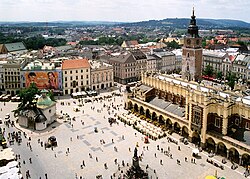 ตลาด: จัตุรัสกลางเมือง คราคอฟโปแลนด์ : จัตุรัสเมืองยุคกลางที่ใหญ่ที่สุดในยุโรป

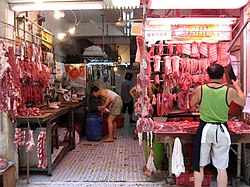

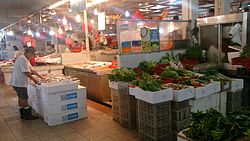 ตลาดสดในสิงคโปร์
 ตลาดปลาจาจัลชี ปูซาน
 ตลาดหมู่บ้านหัตถกรรม ประเทศเม็กซิโก
 ตลาดดอกไม้ Mallick Ghat เมืองโกลกาตาประเทศอินเดีย
 ศูนย์การค้าแฮร์รอดส์ ฟู้ด ฮอลล์ กรุงลอนดอน ประเทศอังกฤษ










ในวรรณกรรมและศิลปะ


โดยทั่วไปแล้ว ตลาดมักปรากฏให้เห็นอย่างเด่นชัดในงานศิลปะ โดยเฉพาะอย่างยิ่งในหมู่นักวาดภาพชาวดัตช์แห่งเมืองแอนต์เวิร์ปตั้งแต่กลางศตวรรษที่ 16 ปีเตอร์ แอร์ทเซนเป็นที่รู้จักในฐานะ "จิตรกรผู้ยิ่งใหญ่แห่งตลาด" ทั้งเขาและหลานชายของเขาโยอาคิม บอยเคลา เออร์ ต่าง วาดภาพฉากตลาด พ่อค้าแม่ค้าข้างถนน และพ่อค้าแม่ค้าจำนวนมาก[ 70 ]เอลิซาเบธ โฮนิก โต้แย้งว่าความสนใจของจิตรกรที่มีต่อตลาดนั้นส่วนหนึ่งเป็นผลมาจากการเปลี่ยนแปลงลักษณะของระบบตลาดในเวลานั้น สาธารณชนเริ่มแยกแยะระหว่างพ่อค้าสองประเภท คือ เมีย ร์เซนิเยร์ซึ่งหมายถึงพ่อค้าท้องถิ่น ได้แก่ คนทำขนมปัง คนขายของชำ ผู้ขายผลิตภัณฑ์นม และพ่อค้าแผงลอย และคูปมันซึ่งหมายถึงชนชั้นพ่อค้าใหม่ที่เกิดขึ้นใหม่ซึ่งทำการค้าขายสินค้าหรือเครดิตในปริมาณมาก ด้วยการเกิดขึ้นของชนชั้นพ่อค้าในยุโรป การแยกแยะนี้จึงจำเป็นเพื่อแยกการค้าขายประจำวันที่ประชาชนทั่วไปเข้าใจออกจากชนชั้นพ่อค้าที่กำลังเติบโตซึ่งดำเนินงานในเวทีโลกและถูกมองว่าค่อนข้างห่างไกลจากประสบการณ์ในชีวิตประจำวัน[ 71 ]
ในช่วงศตวรรษที่ 17 และ 18 ขณะที่ชาวยุโรปพิชิตบางส่วนของแอฟริกาเหนือและเลแวนต์ ศิลปินชาวยุโรปเริ่มเดินทางไปยังตะวันออกและวาดภาพฉากชีวิตประจำวัน ชาวยุโรปแบ่งผู้คนออกเป็นสองกลุ่มใหญ่ๆ คือยุโรปตะวันตกและตะวันออกหรือตะวันออก หรือพวกเราและคนอื่นๆชาวยุโรปมักมองชาวตะวันออกว่าเป็นภาพกลับด้านของอารยธรรมตะวันตก ผู้คนเหล่านั้นอาจเป็นภัยคุกคาม พวกเขา "เผด็จการ หยุดนิ่ง และไร้เหตุผล ในขณะที่ยุโรปถูกมองว่าเป็นประชาธิปไตย มีพลวัต และมีเหตุผล" [ 72 ]ในขณะเดียวกัน ตะวันออกก็ถูกมองว่าเป็นสถานที่แปลกใหม่ ลึกลับ เป็นสถานที่แห่งนิทานและความงาม ความหลงใหลในคนอื่นๆ นี้ก่อให้เกิดประเภทของการวาดภาพที่เรียกว่าลัทธิโอเรียนทัลลิสม์ศิลปินมุ่งเน้นไปที่ความงามอันแปลกใหม่ของดินแดน เช่น ตลาดและบาซาร์ ขบวนคาราวาน และคนเป่าปี่งู สถาปัตยกรรมอิสลามก็กลายเป็นหัวข้อที่ได้รับความนิยม และตลาดที่มีเพดานสูงก็ปรากฏอยู่ในภาพวาดและภาพร่างจำนวนมาก[ 73 ]
ตลาดแต่ละแห่งยังดึงดูดความสนใจทางวรรณกรรมอีกด้วยเลส์ฮาลส์เป็นที่รู้จักในชื่อ "ท้องของปารีส" และได้รับการตั้งชื่อเช่นนั้นโดยนักเขียนเอมิล โซลาในนวนิยายเรื่องLe Ventre de Parisซึ่งมีฉากอยู่ในตลาดใจกลางกรุงปารีสที่คึกคักในศตวรรษที่ 19 เลส์ฮาลส์ ซึ่งเป็นกลุ่มอาคารตลาดในปารีส ปรากฏให้เห็นอย่างกว้างขวางทั้งในวรรณกรรมและภาพวาดจูเซปเป คาเนลลา (1788 - 1847) วาดภาพ Les Halles et la rue de la Tonnellerie ช่างภาพ อองรี เลอมัวน์ (1848–1924) ก็ถ่ายภาพ Les Halles de Paris เช่นกัน[ 74 ]
ทั่วโลก
แอฟริกา
ตลาดเป็นสิ่งที่พบเห็นได้ในบางส่วนของแอฟริกามานานหลายศตวรรษ นักวิจารณ์ในศตวรรษที่ 18 ได้บันทึกถึงตลาดมากมายที่เขาไปเยี่ยมชมในแอฟริกาตะวันตกเขาได้ให้คำอธิบายโดยละเอียดเกี่ยวกับกิจกรรมในตลาดที่เมืองซาบี ในเขตวิดาห์ (ปัจจุบันเป็นส่วนหนึ่งของสาธารณรัฐเบนิน):
ตลาดและงานแสดงสินค้าของพวกเขาได้รับการควบคุมดูแลอย่างระมัดระวังและรอบคอบ จนไม่มีการกระทำใดที่ขัดต่อกฎหมาย สินค้าทุกชนิดถูกรวบรวมไว้ที่นี่ และผู้ที่นำสินค้ามาขายได้รับอนุญาตให้ใช้เวลาตามที่ต้องการในการจำหน่ายสินค้า แต่ต้องปราศจากการทุจริตหรือส่งเสียงดัง ผู้พิพากษาพร้อมด้วยเจ้าหน้าที่ติดอาวุธสี่คนได้รับการแต่งตั้งจากพระมหากษัตริย์เพื่อตรวจสอบสินค้า รับฟังและตัดสินข้อร้องเรียน ข้อพิพาท และเรื่องร้องเรียนต่างๆ ... บริเวณตลาดล้อมรอบด้วยพ่อค้าแม่ค้าและแผงลอย รวมถึงสถานที่พักผ่อนหย่อนใจเพื่ออำนวยความสะดวกแก่ประชาชน พวกเขาได้รับอนุญาตให้ขายเฉพาะเนื้อสัตว์บางชนิด เช่น หมู แพะ เนื้อวัว และเนื้อสุนัข แผงลอยอื่นๆ เป็นของผู้หญิงที่ขายข้าวโพด ข้าวฟ่าง ข้าว และขนมปังข้าวโพด ร้านค้าอื่นๆ ขายปิโตซึ่งเป็นเบียร์ชนิดหนึ่งที่อร่อย มีประโยชน์ และสดชื่นมาก ไวน์ปาล์ม อัคควา วิตา และสุราที่พวกเขาได้รับจากชาวยุโรปนั้นมีจำหน่ายในร้านค้าอื่นๆ โดยมีข้อจำกัดในการขายเพื่อป้องกันการเมาสุราและการจลาจล ที่นี่มีการซื้อขายทาสทั้งชายและหญิง รวมถึงวัว แกะ สุนัข หมู ไก่ และนกทุกชนิด ผ้าขนสัตว์ ผ้าลินิน ผ้าไหม และผ้าฝ้ายทอมือจากยุโรปและอินเดียมีมากมาย เช่นเดียวกับเครื่องปั้นดินเผา เครื่องลายคราม และแก้วทุกชนิด ทองคำในรูปผงและแท่ง เหล็กในรูปแท่ง ตะกั่วในรูปแผ่น และสินค้าทุกอย่างจากยุโรป เอเชีย หรือแอฟริกามีจำหน่ายในราคาสมเหตุสมผล[ 75 ]
ในราชอาณาจักรเบนิน (ปัจจุบันคือเมืองเบนินซิตี ) เขาได้แสดงความคิดเห็นเกี่ยวกับอาหารแปลกใหม่ที่มีวางขายในตลาดแห่งหนึ่งที่นั่น:
นอกจากสินค้าแห้งซึ่งตลาดของเบนินมีมากมายแล้ว ยังมีอาหารให้เลือกซื้ออีกหลายชนิด ที่นี่มีการขายสุนัขเพื่อเป็นอาหาร ซึ่งชาวนิโกรชื่นชอบมาก ลิงย่าง ลิงใหญ่ และลิงบาบูนมีให้เห็นอยู่ทั่วไป ค้างคาว หนู และกิ้งก่าตากแดด เหล้าปาล์ม และผลไม้ ถือเป็นอาหารหรูหราที่สุด และมีขายอยู่ตามท้องถนนตลอดเวลา[ 76 ]
บอตสวานา
ในบอตสวานาการขายผลผลิตทางการเกษตรให้กับตลาดที่เป็นทางการส่วนใหญ่ถูกควบคุมโดยบริษัทขนาดใหญ่ เกษตรกรรายย่อยในท้องถิ่นส่วนใหญ่ขายผลผลิตของตนให้กับตลาดที่ไม่เป็นทางการ ชุมชนท้องถิ่น และพ่อค้าแม่ค้าข้างถนน[ 77 ]ตลาดค้าส่งหลักคือตลาดพืชสวนในกาโบโรเนรัฐบาลพยายามสร้างตลาดในภาคเหนือของประเทศ แต่ส่วนใหญ่ไม่ประสบความสำเร็จ และผู้ซื้อเชิงพาณิชย์ส่วนใหญ่เดินทางไปโจฮันเนสเบิร์กหรือทชวาเนเพื่อจัดหาสินค้า[ 78 ]
เอธิโอเปีย
เอธิโอเปียเป็นผู้ผลิตและผู้ส่งออกธัญพืชรายใหญ่ และมีตลาดค้าส่งหลายแห่งที่ให้ความช่วยเหลือในการจัดจำหน่ายและส่งออกผลิตภัณฑ์ดังกล่าว ตลาดขายส่งที่สำคัญ ได้แก่Nekemteในโซน East Welega , Jimmaในโซน Jimma , AsselaและSagureในโซน Arsi , Bahir Dar และ Bure ในโซน Gojjam, Dessie และ Kombolcha ในโซน Wollo, Mekele ในภูมิภาค Tigray , Dire Dawaและ Harar ในภูมิภาค Oromiaและ Addis Ababa [ 79 ]ตลาดค้าปลีกรายใหญ่บางแห่งในเอธิโอเปีย ได้แก่: Addis Mercatoใน Addis Ababa ซึ่งเป็นตลาดกลางแจ้งที่ใหญ่ที่สุดในประเทศ; Gulalle และ Galan ทั้งในแอดดิสอาบาบา; ตลาดปลาทะเลสาบ Awasa ใน Awasa, ตลาดวันเสาร์Hararและตลาดวันเสาร์ในAxum
 Addis Mercato , แอดดิสอาบาบา, เอธิโอเปีย
 ตลาดปลา Awasa, Awasa, เอธิโอเปีย
 ตลาดอาดิกราท ประเทศเอธิโอเปีย
 ตลาดข้าวฟ่าง Konso ประเทศเอธิโอเปีย
 Street Market, ฮาราร์, เอธิโอเปีย


กานา
ตลาด ในกานายังคงอยู่รอดมาได้แม้จะมีการใช้มาตรการที่โหดร้ายเพื่อกำจัดพวกมัน ในช่วงปลายทศวรรษ 1970 รัฐบาลกานาใช้พ่อค้าแม่ค้าในตลาดเป็นแพะรับบาปสำหรับความล้มเหลวทางนโยบายของตนเอง ซึ่งเกี่ยวข้องกับการขาดแคลนอาหารและอัตราเงินเฟ้อสูง รัฐบาลตำหนิพ่อค้าแม่ค้าที่ไม่ปฏิบัติตามหลักเกณฑ์ด้านราคาและประณาม "แม่ค้าหญิง" ในปี 1979 ตลาดมาโคลาถูกระเบิดและรื้อถอน แต่ภายในหนึ่งสัปดาห์ พ่อค้าแม่ค้าก็กลับมาขายผลไม้ ผัก และปลาอีกครั้ง แม้ว่าจะไม่มีหลังคาคลุมศีรษะก็ตาม[ 80 ]
 ตลาดคูมาซีในประเทศกานา
 ตลาดระหว่างเมืองอักกราและเคปโคสต์ ประเทศกานา
 ตลาดมาดินา กานา
 ตลาดในเมืองอนายนูอิ ประเทศกานา
 ถนนด้านนอกตลาดมาโคลา กรุงอักกรา ประเทศกานา


เคนยา
ไนโรบีเมืองหลวงของเคนยามีตลาดสำคัญหลายแห่ง ตลาดวาคูลิมาเป็นหนึ่งในตลาดที่ใหญ่ที่สุดในภูมิภาค ตั้งอยู่บนถนนไฮเล เซลาสซี ในไนโรบี ตลาดอื่นๆ ในไนโรบี ได้แก่ ตลาดคาริอาคอร์ตลาดกิคมบาและตลาดมูทูร์วา[ 81 ]ในมอมบาซา ตลาดคองโกเวียก็เป็นตลาดขนาดใหญ่มากเช่นกัน มีแผงลอยมากกว่า 1,500 แผง[ 82 ]และครอบคลุมพื้นที่ 4.5 เฮกตาร์
 ตลาดมอมบาซา
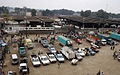 ตลาดวาคูลิมา ไนโรบี
 ตลาดมาไซ ไนโรบี
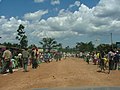 ตลาดคิลิงกิลิ




โมร็อกโก
ในโมร็อกโกตลาดต่างๆ เรียกว่าซูค (souk ) และมักพบได้ในเมดินา (เมืองเก่าหรือย่านเก่า) ของเมือง การซื้อของที่ตลาดสินค้าเกษตรเป็นส่วนหนึ่งของชีวิตประจำวันในโมร็อกโก[ 83 ]ในเมืองใหญ่ๆ เมดินามักประกอบด้วยกลุ่มของซูคที่สร้างขึ้นท่ามกลางตรอกซอกซอยแคบๆ ที่ผู้ขายและช่างฝีมืออิสระมักรวมตัวกันในแต่ละส่วน ซึ่งต่อมากลายเป็นที่รู้จักในด้านสินค้าเกษตรประเภทใดประเภทหนึ่ง เช่น ถนนช่างเงินหรือย่านสิ่งทอ ใน เมืองแทน เจียร์ตลาดขนาดใหญ่ครอบคลุมถนนหลายสายในเมดินา และพื้นที่นี้แบ่งออกเป็นสองส่วน เรียกว่า แกรนด์ ซ็อกโก (Grand Socco)และ เปอตี ซ็อกโก (Petit Socco ) คำว่าซ็อกโกเป็นคำที่เพี้ยนมาจากภาษาสเปนจากคำภาษาอาหรับว่าซูค (souk)ซึ่งหมายถึงตลาด[ 84 ]ตลาดเหล่านี้จำหน่ายสินค้าหลากหลายประเภท ได้แก่ ผลผลิตสด อุปกรณ์ทำอาหาร เครื่องปั้นดินเผา เครื่องเงิน พรมและพรมปูพื้น เครื่องหนัง เสื้อผ้า เครื่องประดับ เครื่องใช้ไฟฟ้า รวมถึงร้านกาแฟ ร้านอาหาร และร้านขายอาหารแบบซื้อกลับบ้าน เมดินาที่เฟซเป็นเมดินาที่เก่าแก่ที่สุด ก่อตั้งขึ้นในศตวรรษที่ 9 [ 85 ]เมดินาที่เฟซได้รับการขึ้นทะเบียนเป็นมรดกโลกของยูเนสโก ปัจจุบันเป็นตลาดขายผลผลิตสดหลัก และมีชื่อเสียงในเรื่องตรอกซอกซอยแคบๆ และการห้ามรถยนต์ทุกชนิดโดยสิ้นเชิง ผลผลิตทั้งหมดจะถูกขนส่งเข้าและออกจากตลาดโดยใช้ลาหรือเกวียน ในมาราเกชตลาดขายผลผลิตหลักก็อยู่ในเมดินาเช่นกัน และยังมีตลาดที่มีสีสันจัดขึ้นทุกวันในเจมาเอลฟนา (จัตุรัสหลัก) ซึ่งมีนักแสดงและนักดนตรีเดินไปมาให้ความบันเทิงแก่ฝูงชนจำนวนมากที่มารวมตัวกันที่นั่น[ 86 ]มาราเกชมีตลาดเบอร์เบอร์แบบดั้งเดิมที่ใหญ่ที่สุดในโมร็อกโก
 แผงขายของในเมดินาของเมืองแทนเจียร์
 ร้านขายเครื่องเทศในเมดินาของเมืองแทนเจียร์
 ภาพบรรยากาศตลาดในเมืองแทนเจียร์
 หญิงชาวเบอร์เบอร์ขายสินค้าเกษตรในตลาดโมร็อกโก
 จัตุรัสเจมาเอลฟนาในเวลากลางคืน


นามิเบีย
นามิเบียพึ่งพาแอฟริกาใต้เกือบทั้งหมดสำหรับผลผลิตสด เนื่องจากภูมิประเทศส่วนใหญ่เป็นที่ราบลูกคลื่นและเนินทรายยาว รวมถึงปริมาณน้ำฝนที่ไม่แน่นอน ทำให้หลายส่วนของนามิเบียไม่เหมาะสำหรับการปลูกผลไม้และผัก โครงการริเริ่มที่ได้รับการสนับสนุนจากรัฐบาลได้ส่งเสริมให้ผู้ผลิตปลูกผลไม้ ผัก พืชตระกูลถั่ว และธัญพืชสด[ 87 ]กระทรวงเกษตรของนามิเบียเพิ่งเปิดตัวระบบศูนย์กลางผลผลิตสดเพื่อเป็นแพลตฟอร์มสำหรับผู้ผลิตในการทำการตลาดและกระจายผลผลิตของตน คาดว่าศูนย์กลางเหล่านี้จะช่วยลดจำนวนผู้ขายที่นำผลผลิตไปแอฟริกาใต้เพื่อเก็บไว้ในห้องเย็น แล้วนำเข้ากลับเข้ามาในประเทศในภายหลัง[ 88 ]
 ภาพบรรยากาศตลาด โอชาคาติ นามิเบีย
 ตลาดริมถนนในนามิเบีย เมืองวินด์ฮุก
 ตลาดสินค้าหัตถกรรม เมืองสวาคอปมุนด์
 ตลาดสินค้าหัตถกรรม d'Okahandja
 ตลาดใหม่โอชากาติ ปี 2016


ไนจีเรีย
แอฟริกาใต้
ตลาดผลิตผลสดมีบทบาทสำคัญใน ห่วงโซ่อาหาร ของแอฟริกาใต้ มาโดยตลอด โดยจัดการผลิตผลสดมากกว่าครึ่งหนึ่งของทั้งหมด แม้ว่าผู้ค้าปลีกอาหารขนาดใหญ่ที่มีการบูรณาการในแนวดิ่ง เช่น ซูเปอร์มาร์เก็ต จะเริ่มเข้ามามีบทบาทในห่วงโซ่อุปทานมากขึ้น แต่พ่อค้าแม่ค้า แผงลอย และตลาดผลิตผลแบบดั้งเดิมก็ยังคงมีความยืดหยุ่นอย่างน่าทึ่ง[ 89 ]ตลาดหลักในโจฮันเนสเบิร์ก ได้แก่ Jozi Real Food Market, Bryanston Organic Market, Pretoria Boeremark ซึ่งเชี่ยวชาญด้านอาหารรสเลิศของแอฟริกาใต้, Hazel Food Market, Panorama Flea Market, Rosebank Sunday Market, Market on Main (ตลาดศิลปะเป็นระยะ) และตลาดในละแวกใกล้เคียง
แกมเบีย
โครงการ " Gambia is Good" ก่อตั้งขึ้นในปี 2547 โดยมีเป้าหมายเพื่อส่งเสริมตลาดสำหรับผลผลิตสดที่ปลูกในท้องถิ่นแทนที่จะเป็นผลผลิตนำเข้า แผนนี้ได้รับการออกแบบมาเพื่อ "กระตุ้นการดำรงชีวิตในท้องถิ่น สร้างแรงบันดาลใจในการเป็นผู้ประกอบการ และลดต้นทุนด้านสิ่งแวดล้อมและสังคมของผลผลิตนำเข้า" [ 90 ]
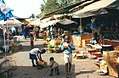
การค้าขายผลผลิตส่วนใหญ่ดำเนินการอย่างไม่เป็นทางการตามมุมถนน และร้านค้าหลายแห่งก็เป็นเพียงแผงลอยในตลาดเท่านั้น[ 91 ]อย่างไรก็ตาม ในเมืองใหญ่ๆ สามารถพบตลาดกลางแจ้งและตลาดในร่มที่มีโครงสร้างชัดเจนได้ ตลาดที่น่าสนใจ ได้แก่ ตลาดเซเรคุนดาในเมืองที่ใหญ่ที่สุดของแกมเบียเซเรคุนดาซึ่งเปิดตั้งแต่เช้าตรู่จนถึงดึก 7 วันต่อสัปดาห์ และมีการค้าขายผลผลิตทางการเกษตร สัตว์มีชีวิต เสื้อผ้า เครื่องประดับ เครื่องประดับ งานฝีมือ สินค้ามือสอง และของที่ระลึก ตลาดอัลเบิร์ตในเมืองหลวงบันจูลซึ่งจำหน่ายผลผลิตสดใหม่ ผ้าทอสีสันสดใสที่ออกแบบโดยคนท้องถิ่น เครื่องดนตรี หน้ากากไม้แกะสลัก และผลิตภัณฑ์ท้องถิ่นอื่นๆ ตลาดที่น่าสนใจอื่นๆ ได้แก่ ตลาดปลาบากาอูในบากาอูตลาดปลาทันจิในทันจิ ซึ่งเรือประมงที่ทาสีสดใสจะนำปลาเข้ามา จากนั้นปลาจะถูกถนอมทันทีโดยใช้วิธีการแบบดั้งเดิมและเตรียมสำหรับการกระจายไปยังประเทศอื่นๆ ในแอฟริกาตะวันตก ตลาดช่างแกะสลักไม้ในบริกามาซึ่งมีช่างแกะสลักไม้จำนวนมากที่สุดในประเทศ และตลาดเครื่องปั้นดินเผาในบาสเซ ซานตา ตลาดหัตถกรรม Atlantic Road ที่เมือง Bakau และตลาดหัตถกรรม Senegambia ที่เมือง Bakau




ยูกันดา
เอเชีย
ตลาดสินค้าเกษตรในเอเชียกำลังเผชิญกับการเปลี่ยนแปลงครั้งใหญ่ เนื่องจากซูเปอร์มาร์เก็ตเข้ามามีบทบาทในธุรกิจค้าปลีก และชนชั้นกลางที่กำลังเติบโตก็เริ่มนิยมสินค้าแบรนด์เนมมากขึ้น ซูเปอร์มาร์เก็ตหลายแห่งซื้อสินค้าโดยตรงจากผู้ผลิต ซึ่งเข้ามาแทนที่บทบาทดั้งเดิมของทั้งตลาดค้าส่งและค้าปลีก เพื่อความอยู่รอด ตลาดสินค้าเกษตรจึงต้องพิจารณาโอกาสในการเพิ่มมูลค่า และตลาดค้าปลีกหลายแห่งในปัจจุบันจึงหันมาเน้นที่อาหารพร้อมรับประทานและอาหารแบบซื้อกลับบ้าน[ 92 ]
เอเชียตะวันออก
จีน
ในประเทศจีนการมีอยู่ของตลาดริมถนนและตลาดสดเป็นที่รู้จักกันมานานหลายศตวรรษ อย่างไรก็ตาม ตลาดเหล่านี้จำนวนมากถูกจำกัดในช่วงทศวรรษ 1950 และ 1960 และได้รับอนุญาตให้เปิดใหม่อีกครั้งในปี 1978 [ 93 ]ความแตกต่างระหว่างตลาดค้าส่งและตลาดค้าปลีกนั้นค่อนข้างคลุมเครือในประเทศจีน เนื่องจากตลาดหลายแห่งทำหน้าที่ทั้งเป็นศูนย์กระจายสินค้าและสถานที่ซื้อขายปลีก เพื่อช่วยในการกระจายอาหาร มีตลาดค้าส่งผลผลิตมากกว่า 9,000 แห่งที่ดำเนินการในประเทศจีน[ 94 ]ตลาดเหล่านี้บางแห่งดำเนินการในขนาดใหญ่มาก ตัวอย่างเช่นตลาดค้าส่งซินฟาตี้ ในปักกิ่ง ซึ่งปัจจุบันอยู่ระหว่างการปรับปรุง คาดว่าจะมีพื้นที่ 112 เฮกตาร์เมื่อเสร็จสมบูรณ์[ 95 ]ตลาดสวนสัตว์ปักกิ่ง (ตลาดค้าปลีก) เป็นการรวมตัวของตลาดที่แตกต่างกัน 12 แห่ง ประกอบด้วยผู้เช่าแผงลอยประมาณ 20,000 ราย พนักงาน 30,000 คน และลูกค้ามากกว่า 100,000 คนต่อวัน[ 96 ]
จีนเป็นทั้งผู้นำเข้าและผู้ส่งออกผลไม้และผักรายใหญ่ และปัจจุบันเป็นผู้ส่งออกแอปเปิลรายใหญ่ที่สุดของโลก[ 97 ]นอกจากตลาดสินค้าเกษตรแล้ว จีนยังมีตลาดเฉพาะทางอีกมากมาย เช่น ตลาดผ้าไหม ตลาดเสื้อผ้า และตลาดของเก่า ตลาดสินค้าเกษตรสดของจีนกำลังมีการเปลี่ยนแปลงครั้งใหญ่ ในเมืองใหญ่ๆ การซื้อขายกำลังค่อยๆ เปลี่ยนไปสู่ระบบออนไลน์พร้อมบริการจัดส่งถึงบ้าน
ตลาดที่สำคัญบางแห่งในประเทศจีน ได้แก่:
- ตลาดค้าส่งผลผลิต:ซินฟาตี้ (ตลาดค้าส่งผลผลิต ปักกิ่ง) - มีปริมาณการซื้อขายเนื้อสัตว์ ผลไม้ และผัก 14 ล้านตันต่อปี เป็นแหล่งจัดหาผัก 70 เปอร์เซ็นต์ของปักกิ่ง[ 98 ]และหนานจ้าน (เสิ่นหยาง เหลียวหนิง) ซึ่งจัดหาให้กับจังหวัดทางเหนือ
- ตลาดขายปลีกผลิตผล:ตลาดผลิตผลสดที่ตลาดหูท่ง (ปักกิ่ง); ตลาด Xiabu Xiabu (ปักกิ่ง), ตลาด Panjiayuan (ปักกิ่ง); ตลาดต้าจงซี (ปักกิ่ง), ตลาดเทียนยี่ (ปักกิ่ง), ตลาดสวนสัตว์ปักกิ่ง , ตลาดต้าหงเห มิน (เขตเฟิงไถ, ปักกิ่ง), ตลาดซันหยวนลี (ปักกิ่ง), ตลาดเช้าเซิงฝูเสี่ยวกวน ( ปักกิ่ง), ตลาดเกษตรกรอาหารทะเลลี่ซุยเฉียว(ปักกิ่ง), ตลาดหวังจิงจงเหอ (ปักกิ่ง), ตลาดเฉาไหว (ปักกิ่ง), ตลาดเจิ้นไป๋ (ตลาดผลิตผลที่ใหญ่ที่สุดในเซี่ยงไฮ้)
 พ่อค้าแม่ค้าชาวฮุยที่ตลาดเมืองหลินเซีย
 ตลาดผ้าไหมปักกิ่ง
 ตลาดปานเจียหยวน ปักกิ่ง (ภาพภายนอก)
 ตลาดปานเจียหยวน ปักกิ่ง (ผู้ขายจากภายนอก)
 ตลาดปานเจียหยวน ปักกิ่ง (ภายใน)
 ตลาดตุนหวง


ฮ่องกง
ฮ่องกงพึ่งพาการนำเข้าอย่างมากเพื่อตอบสนองความต้องการผลผลิตสด ผู้นำเข้าจึงเป็นส่วนสำคัญของเครือข่ายการจัดจำหน่าย และผู้นำเข้าบางรายจัดหาสินค้าโดยตรงให้กับผู้บริโภคปลีก[ 99 ]ตลาดริมถนนในฮ่องกงเปิดทุกวัน ยกเว้นวันหยุดจีนดั้งเดิมบางวัน เช่นตรุษจีนแผงลอยที่เปิดอยู่สองฝั่งถนนต้องมีใบอนุญาตที่ออกโดยรัฐบาลฮ่องกงตลาดริมถนนมีหลายประเภท ได้แก่ อาหารสด เสื้อผ้า อาหารปรุงสุก ดอกไม้ และอุปกรณ์อิเล็กทรอนิกส์ ตลาดรูปแบบแรกสุดคือตลาดสด ( gaa si ) ตลาดแบบดั้งเดิมบางแห่งถูกแทนที่ด้วยศูนย์การค้าตลาดในอาคารบริการของเทศบาล และซูเปอร์มาร์เก็ตในขณะที่บางแห่งกลายเป็นสถานที่ท่องเที่ยว เช่นถนนตงชอยและถนนอัปหลิวตลาดกลางฮ่องกงเป็นอาคารอนุรักษ์ระดับ 2
 ตลาดปลาในฮ่องกง

ญี่ปุ่น
เกาหลีใต้
แม้ว่าตลาดส่วนใหญ่ในเกาหลีใต้จะเป็นตลาดค้าส่ง แต่ลูกค้าปลีกก็ได้รับอนุญาตให้ซื้อสินค้าได้ในทุกตลาดตลาดกวางจังเป็นตลาดที่ใหญ่ที่สุดของประเทศและเป็นสถานที่ท่องเที่ยวที่ได้รับความนิยม[ 100 ]
ไต้หวัน
ไต้หวันตอบสนองความต้องการผลผลิตส่วนใหญ่ผ่านการผลิตในประเทศ ซึ่งหมายความว่าประเทศนี้มีเครือข่ายตลาดค้าส่งและค้าปลีกที่คึกคักมาก[ 101 ]ตามที่ หนังสือพิมพ์ เดอะการ์เดียนรายงาน ไต้หวันมี "ตลาดกลางคืนที่ดีที่สุดในโลกและอาหารริมทางที่น่าตื่นเต้นที่สุดในเอเชีย" [ 102 ]
 ตลาดปลาในไทเป
 ตลาดปลาในเมืองตัมซุย
 ตลาดผลไม้ในไทเป


เอเชียใต้
ในเอเชียใต้ โดยเฉพาะเนปาล อินเดีย และบังกลาเทศhaat (หรือที่รู้จักกันในชื่อhat ) หมายถึงตลาดขายผลผลิตทางการเกษตรในชนบททั่วไป ซึ่งมักจะจัดขึ้นสัปดาห์ละหนึ่งหรือสองครั้ง[ 103 ]
อินเดีย
นักประวัติศาสตร์การตลาด Petty ได้เสนอแนะว่าตลาดอินเดียเกิดขึ้นครั้งแรกในสมัยราชวงศ์โชลา (ประมาณ ค.ศ. 850–1279) ซึ่งเป็นช่วงเวลาที่สภาพเศรษฐกิจเอื้ออำนวย ตลาดประเภทต่างๆ ปรากฏให้เห็นชัดเจน ได้แก่nagaaram (ถนนที่มีร้านค้า ซึ่งมักจะจำหน่ายสินค้าเฉพาะประเภท) angadi (ตลาด) และperangadi (ตลาดขนาดใหญ่ในเขตเมืองชั้นใน)) [ 104 ]
The sub-continent may have borrowed the concept of covered marketplaces from the Middle East around the tenth century with the arrival of Islam. The caravanserai and covered market structures, known as suqs, first began to appear along the silk routes and were located in the area just outside the city perimeter. Following the tradition established on the Arabian peninsula, India also established temporary-seasonal markets in regional districts. In Rajasthan's Pushkar, an annual camel market was first recorded in the 15th century. However, following the foundation of the Mughal Empire in northern India during the 16th century, this arrangement changed. A covered bazaar or market place became integrated into city structures and was to be found in the city centre.[105] Markets and bazaars were well known in the colonial era. Some of these bazaars appear to have specialised in particular types of produce. The Patna district, in the 17th century, was home to 175 weaver villages and the Patna Bazaar enjoyed a reputation as a centre of trade in fine cloth. When the Italian writer and traveller, Niccolao Manucci, visited there in 1863, he found many merchants trading in cotton and silk in Patna's bazaars.[106]
In India today, many different types of market serve retail and commercial clients:[107]
- Wholesale markets
- Primary wholesale markets: Held once or twice per week, these sell produce from local villages e.g. Rice Bazaar at Thissur in Kerala.
- Secondary wholesale markets (also known as mandis): Smaller merchants purchase from primary markets and sell at secondary markets. A small number of primary producers may sell direct to mandis.
- Terminal markets: Markets that sell directly to the end-user, whether it be the consumer, food processor, or shipping agent for export to foreign countries e.g. Bombay Terminal Market.
- Retail markets
- Retail markets: Spread across villages, towns and cities.
- Fairs: Held on religious days and deal in livestock and agricultural produce.
In India (and also Bangladesh and Pakistan), a landa bazaar is a type of a bazaar or a marketplace with lowest prices where only secondhand general goods are exchanged or sold. A haat also refers to a bazaar or market in Bangladesh and Pakistan and the term may also be used in India. A saddar refers to the main, central market in a town while a mandi refers to a large marketplace. A Meena Bazaar is a marketplace where goods are sold in an effort to raise money for charity.
 Magh Mela at Prayaga Sangam Uttar Pradesh India is a fair associated with the Sankranti Hindu festival
 The Bombay Street Market is a terminal market
 Goan sausages being sold at the Mapusa market, Goa, India
 New Market, Kolkata, India
 Annual camel market at Pushkar in Rajasthan, India


Agra
Bangalore
Chennai
- Pondy Bazaar (officially named Soundarapandian Angadi), T. Nagar, Chennai
Delhi
- Lajpat Nagar market, Delhi
- Dilli Haat
- Sadar Bazaar, Delhi
- Palika Bazaar – an underground market in Delhi
Goa
- Mapusa Friday Market Mapusa, North Goa
Himachal Pradesh
- Lakkar Bazaar Shimla, Himachal Pradesh
Manipur
- Khwairamband Bazar Imphal, Manipur, India – a market operated entirely by women
Mumbai
- Bhendi Bazaar
- Chira Bazaar, Mumbai – known for its jewellery
- Dava Bazaar also known as Dawa Bazaar
- Zaveri Bazaar – jewellery market
Punjab
- Chaura Bazaar, Ludhiana, Punjab
Uttar Pradesh
- Ajhuwa Bazaar, Ajhuwa, Kaushambi district, Uttar Pradesh, India
Southeast Asia
Southeast Asia is noted for its night markets, floating markets and pirate markets (markets that specialise in selling "knock off" copies of designer brands). Some Asian countries have developed unique distribution systems and highly specialised types of market place. Throughout Asia, a wet market refers to a place where fruit, vegetables, fish, seafood, and meat products are sold.[108] Throughout much of Asia, produce markets are known as morning markets due to their hours of operation, while night markets specialise in selling non-perishables including clothing, accessories, local artefacts, souvenirs, and a wide assortment of personal goods.
Cambodia
Phnom Penh
Indonesia
In Indonesia, a pasar pagi is a particular type of wet market, also known as a "morning market" which typically operates from early morning to the afternoon.[109]Pasar malam refers to a night market operated in later hours from late afternoon to night, approximately from 17:00 to 22:00, and only on selected days of a week.
The types of goods being sold is also quite different. Pasar pagi is where many housewives, domestic help, and local folks appear to shop their daily needs, mostly fresh produce. The products which are on sale are usually fresh produce, including fruits, vegetables, spices, fish, meat, eggs, and a variety of perishable products.
Major textile, fashion, and clothing markets in Indonesia are Tanah Abang market in central Jakarta and Pasar Baru in Bandung. Notable markets specializing in traditional batik clothing include Pasar Klewer in Solo and Pasar Beringharjo in Yogyakarta.[110]
The major pasar pagi in Jakarta are Pasar Pagi Mangga Dua, Pasar Induk Kramat Jati, Pasar Minggu and Pasar Senen. Pasar Minggu specialized on fruits and vegetables, while Pasar Kue Subuh in Senen specialized on selling kue, as they offer a rich variety of traditional Indonesian snack, open every subuh (dawn).[109]
Notable markets in Yogyakarta, include: Pasar Beringharjo, a traditional market; Kranggan Market, a flea market; Pasar Organik Milas, organic and flea market; Malioboro Road, a street market and Yogyakarta Bird Market.
Notable markets in Bali include Pasar Badung central market of Denpasar city, Pasar Seni Sukowati art market specializing in artworks and handicrafts, and Pasar Ubud.
In several cities and towns in Kalimantan and Sumatra, there are floating markets, which is a collection of vendors selling various produce and product on boats. For example, the Siring floating market in Banjarmasin and Lok Baintan floating market in Martapura, both in South Kalimantan.[111]
 Pasar Gede central market, Solo
 Pasar Keputran, a pasar pagi or morning wet market, Surabaya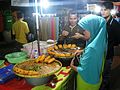
 Flower market, Bali
 Siring floating market, Banjarmasin





Malaysia
In Malaysia the term Pasar malam refers to a night market which operates from around 17:00 through to approximately 23:00.[112]Pasar pagi morning wet market is also familiar in Malaysia.
In parts of Malaysia, jungle produce markets trade in indigenous fruits and vegetables, all of which are gaining popularity as consumers switch to pesticide-free food products. Some of the more nutritional indigenous produce includes fruits such as dabai (Canarium odontophyllum), kembayau (Dacryodes rostrata f. cuspidata), durian nyekak (Durio kutejensis), durian kuning (Durio graveolens), letup (Passiflora foetida), kepayang (Pangium edule), and tubu (Pycnarrhena tumetacta) and vegetables such as tengang (Gnetum sp.), riang batu (Begonia chlorosticia), teh kampung (Leucosyke capitellata), and tongkat langit (Musa troglodytarum).[113]
The main markets in Kuala Lumpur include: Pudu market: rated as KL's largest wet market by the Lonely Planet Guide;[114]Central Market, Kuala Lumpur; Chow Kit Wet Market; Kampong Bahru Pasar Minggu; China Town; Petaling Jaya SS2; Bangsar Baru and Lorong Tuanka Abdul Rahman.
 Sapeh player, performing at the Central Market, Kuala Lumpur, Malaysia
 Central Market, Kuala Lumpur, Malaysia (interior)
 Pasar Seni (Central Market) Kuala Lumpur (exterior)
 Night market at Jalan Alor, Malaysia


Philippines
In the Philippines, the word palengke refers to a group of stalls under a covered roof. Locals use palengkes for daily shopping. Public markets are the primary trading centres in cities. In rural districts, public markets are in a state of disrepair.[115] Weekend markets are popular for organic and artisanal foods purchases. In addition, a number of farmers' markets have sprung up.[116] The Cubao Farmers Market, in Quezon City gained international attention following a feature spot on the cable network program, No Reservations, with Anthony Bourdain in 2009.
 A Palengke, Danao City Philippines
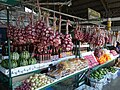 Produce market, Pangasinan
 New Pritil Public Market, Manila
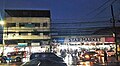 A palengke in Novaliches, Quezon City




Thailand
Bangkok
Bangkok's markets are popular with both locals and visitors. Floating markets can be found in Bangkok and elsewhere. Vendors not only sell fresh produce from boats, but will also cook meals and snacks on their vessels for sale to the public. These floating markets are a popular tourist attraction.
 Bangkok's Chatuchak Market, one of the largest markets in the world
 Food vendors at Taling Chan Floating Market, Taling Chan District
 The Harbour Market, The Riverfront
 Entrance to Bobae Tower Market
 Suan Lum Night Bazaar
 Insect vendor in Bangkok


West Asia
In the West Asia, markets are known as bazaars or souks. The earliest bazaars are believed to have originated in Persia, and spread to the rest of the Middle East and Europe from there. Documentary sources suggest that zoning policies confined trading to particular parts of a city from around 3,000 BCE, creating the conditions necessary for the emergence of a bazaar.[117]
In the ancient cities of Iran, three types of bazaar have been identified; periodic bazaars, urban bazaars, and local bazaars. Periodic bazaars could be organised anywhere and typically took place in open spaces and traded in specialities such as handicrafts, clothing, livestock and foodstuffs. These took place at regular intervals such as monthly or yearly. Urban bazaars were held in covered public walkways with shops or stores on both sides. Its architecture varied according to local conditions including climate, culture and the economic power of the city in which it was situated. Urban bazaars were places for commercial, social and cultural interactions. Local bazaars, held in specific districts of larger cities, were similar to urban bazaars, but on a smaller scale with fewer shops.[118]
In pre-Islamic Arabia, markets took on two forms, permanent urban markets and temporary, seasonal markets often located in regional districts. Gradually, markets or bazaars gradually became central features of urban towns and were relocated to the city centre. Permanent markets are mentioned frequently in ancient literary sources.[119]
Iran
Markets in Iran with historical or architectural significance include:
- Grand Bazaar, Tehran
- Bazaar of Kashan, Iran
- Bazaar of Isfahan, Iran – historic site which dates to Saljuqid and Safavid era and is the longest roofed market in the world.[120]
- Bazaar of Tabriz, Iran – historic site that originally developed along the ancient silk routes; listed as a World Heritage Site[121]
- Vakil Bazaar in Shiraz, Iran
 Isfahan Bazaar, Iran
 Bazaar of Kashan, Kashan, Iran
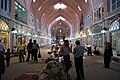 Carpet Bazaar of Tabriz, Iran



Israel
The Hebrew word for market is shuk (plural: shvakim), and food markets are found in every major city. Famous markets include the Carmel Market in Tel Aviv and Mahane Yehuda Market in Jerusalem.[122][123]
 Jaffa Bazaar in 1906
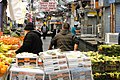 Early-Morning Scene in Mahane Yehuda Market, Jerusalem
 Entrance Damascus Gate Market
 Entrance to Nazareth market
 Turkish Bazaar, Acre (Akko)




Turkey
Street markets are called pazar in Turkish and usually named after the name of the day since they are only installed at around 05:00 on that specific day and ended on same day around 18:00, in every week. Every district in Turkey has its own open market where people can choose and buy from a very wide range of products, from fresh fruits and vegetables to clothing, from traditional white cheese (which some people may consider feta-like), to household items. In Istanbul area Wednesday Pazar of Fatih district, Tuesday Pazar of Kadıköy, and Friday Pazar of Ortaköy are the most popular and crowded open markets of the city.
A market with shops or permanent stalls is called çarşı and may include covered streets that are closed at night. Famous examples include the Kapalıçarşı (Grand Bazaar) and Spice Bazaar in Istanbul.
 Fish market in Istanbul
 Fish market in Istanbul
 Spices in Istanbul
 Olives in Spice Bazaar
 Nuts in Spice Bazaar


Europe
Northern Europe
Denmark
- Torvehallerne Market, Copenhagen – specializing in Nordic foods
 The inside of the Torvehallerne Market
 The outside of the Torvehallerne Market


Finland
Netherlands
- Markthal Market, Rotterdam
- Vismarkt, Groningen
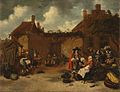 Fruit and vegetable market by Sybrand van Beest, 1652
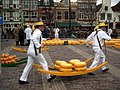 Cheese market in Alkmaar
 Jumble sale in The Hague
 Market in Roermond




Latvia
 Fruit and vegetable pavilion of Riga Central Market
 Smoked fish in Riga Central Market


Eastern Europe
Romania
 Fish Market at Bucharest by Amadeo Preziosi, 1869

Russia
Ukraine
Central Europe
Austria
- Naschmarkt, Vienna – a 16th-century market
Czech Republic
Hungary
- Central Market Hall, Budapest – built in 1897, the largest market in Budapest
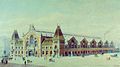 Grand Market Hall in Budapest by Róbert Nádler, 1898

Slovakia
 Market at Besztercebánya by Izsák Perlmutter, 1906
 Market of Melons, Lajos, by Deák Ébner, n.d.


Western Europe
Belgium
With the rise of global trade in the 16th century, Antwerp became the largest market town in Europe.[124]
- Grote Markt, Antwerp
- Gare du Midi, Brussels – Sunday market
France
Paris was one of the first European cities to implement a system of formal, centralised and covered market places.[125]Les Halles, a vast centralised wholesale market, was known to be in existence at least by the 13th century when it was expanded, and was demolished in 1971 to make way for an underground shopping precinct. The French system of organised, designated central retail markets was extensively studied by architects in London with a view to emulating the system and ultimately eradicating the informal supply of produce via street vendors.[126]
- Raspail Market, Paris
 At the market stall, painting by Louise Moillon, 1609
 Street market, Rue Mouffetard
 Flower market, Quai de l'Horloge
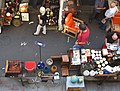 Rue Debelleyme, second-hand market
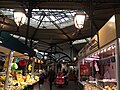 Market Saint-Quentin, 2016




Germany
- Christkindlesmarkt, Nuremberg, (Christmas market), Germany
- Markthalle IX, Berlin, Germany – built in 1891
- Striezelmarkt Dresden, Germany
 Figures on the Market Square in Front of the Martinikirche Braunschweig, by Cornelis Springer, 1874

United Kingdom
Background and licensing
The majority of retail markets are operated by the public sector and administered by local governments. A small number are operated by private groups or individuals. Traders can be licensed to trade on a single pitch but not at a national level or when trading on private land. This piecemeal licensing system has contributed to declining public confidence in the reputation of markets. A voluntary scheme has been set up by The Market People, backed by the National Association of British Market Authorities (NABMA) to address this problem. It provides consumers with traceability of traders and goods as well as the ability to rate and contact the traders. A MarketPASS is issued to an operator or trader, once they have provided proof of identity, insurance and, where required, a hygiene certificate.
A study conducted by the Retail Alliance noted that Britain had 1,124 traditional retail markets, 605 farmers' markets, 26 wholesale markets and more than 45,700 retail traders and that retail markets had an annual turnover of over £3.5 billion while wholesale markets had turnover of £4.1 billion annually. The data also shows that traditional outdoor street markets continue to dominate the market space, but are in decline.[127] Markets also have significant appeal for tourists and visitors.[128]
Some researchers make a distinction between traditional markets and gentrified markets. Traditional markets which are primarily held outdoors on specific days, focus on high volume produce sold with low margins. In the gentrified market, the focus is on specialty produce, notably organic foods, hyper-local produce, artisanal products, vintage clothing, or designer brands. Whereas traditional markets are in decline, gentrified markets represent a major growth opportunity.[129][130]
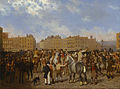 Old Smithfield Market painting by Jacques-Laurent Agasse, 1824
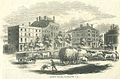 Market Square in Portsmouth, 1853
 London's Leadenhall market (exterior), 1881
 Market Day in Stockport, 1910s
 The Market Stall by Henry Charles Bryant, early 20th century




England's chartered markets and fairs
From the 11th century, the English monarchs awarded a charter to local lords to create markets and fairs for a town or village. A charter granted the lords the right to take tolls from vendors and also afforded some protection to a town from rival markets. Once a chartered market was granted for specific market days, a nearby rival market could not open on the same days.[131] Across the boroughs of England, a network of chartered markets sprang up between the 12th and 16th centuries, giving consumers reasonable choice in the markets they preferred to patronise.[132] Gradually these market towns developed a reputation for quality or for trade in specific types of goods. Today, traders and showmen jealously guard these historic charters.
County markets
- Covered Market, Oxford, Oxfordshire
- Covered Market, Preston
- Leeds Kirkgate Market, Yorkshire
- Old Market, Bristol
- The Old Market, Hove
- Market Harborough, Leicestershire
 Salisbury chartered market
 Sedbergh chartered market
 Market Square, Huntingdon
 Northampton Market is thought to be England's oldest continuously operating chartered market
 Altrincham, Chartered Market


London
Between the 13th century and the Great Fire of 1666, London's main market was the Stocks Market, "on the site of the fixed pillory where traders were punished who fell foul of the Assize Courts". The Stocks Market was removed in 1737 as part of Christopher Wren's plans to rebuild the city. New wholesale markets were erected in strategic locations and these prospered until well into the 19th century with some continuing until modern times. The wholesale markets were highly controlled, closed environments that were minutely regulated and meticulously planned. These included Smithfield Meat Market (built in 1866), Billingsgate Fish Market (constructed in 1875) and Leadenhall Market (completed in 1881). The retail trade was largely serviced by itinerant street sellers or costermongers. In central London, costermongers worked along designated routes, selling door-to-door or by trading from some 36 unauthorised, but highly organised markets situated along major thoroughfares or meeting places such as Whitecross Street, Covent Garden and Leather Lane. In an attempt to regulate street trading, a number of authorised retail markets were built during the 19th century with limited success. Examples of retail markets constructed during this period include: St James, St George's (Southwark), Carnaby, Hungerford, Randall's (Poplar, London), Fitzroy, Finsbury, and the People's Market (Whitechapel), Angela Burdett-Coutts' Market and Columbia Road Market (now a flower market). Retail markets were less successful than their wholesale counterparts and the number of retail markets declined from 24 in 1800 to 17 in 1840. In reality, London's working classes generally preferred the convenience of street trading which continued to thrive until the 20th century.[133]
Charles Knight devoted an entire section to markets in his pictorial essay, Pictorial Half-hours of London Topography, (1851) in which he identifies the main wholesale markets as the Corn Market; the Coal Exchange; Billingsgate – the main fish market; Smithfield – a cattle market since at least 1150. Retail meat markets include Newgate; Whitechapel; Newgate; Newport, Oxford; St George's, and Shepherd's Market in Mayfair. Produce markets included Covent Garden, which Knight considered to be the 'pre-eminent' vegetable market; Farringdon Market between Holborn Hill and Fleet Street; Spitalfields, the largest potato market in London; Portman Market; Hungerford Market; and Leadenhall Market, a mixed produce and meat market. In addition, the Skin Market at Bermondsey dealt in leather and hay markets were held at Whitechapel, Cumberland Market, Regent's Park, and Smithfield.[134]
Some examples of street markets operating today include Berwick Street Market, Broadway Market, Camden Market, East Street Market, Petticoat Lane, and Portobello Road Market. The most popular for food is Borough Market which sell most fresh produce as well as having a bakery.
 Covent Garden market, illustration by George Johann Scharf circa 1820
 Leadenhall Market from the Illustrated London News, 1881
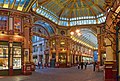 Leadenhall Market (interior), 2006
 Billingsgate Fish Market, circa 1808
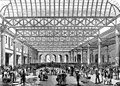 Billingsgate Fish Market, interior, 1876
 Rag Fair (now Petticoat Lane Market) by Thomas Rowlandson, late 18th century
 Petticoat Lane Market, London, 1971







Wholesale markets in London
- New Covent Garden Market
- Borough Market
- Old Billingsgate Market
- Leadenhall Market
- Smithfield Market
- Spitalfields Market
Retail markets in London
- Bermondsey Market
- Brick Lane Market
- Broadway Market
- Camden Market
- Chalton Street Market
- Earlham Street Market
- Inverness Street Market
- Islington Farmers' Market
- Goodge Place Market
- Greenwich Market
- Hungerford Market
- Leadenhall Market
- Leather Lane Market
- Petticoat Lane Market
- Piccadilly Market
- Plender Street Market
- Portobello Road
- Queen's Crescent Market
- Swiss Cottage Market
Southern Europe
Greece
Street markets in Greece are called laikes agores (λαϊκές αγορές) in plural, or laiki agora (λαϊκή αγορά) in singular, meaning "people's market". They are very common all over Greece, including the capital, Athens. Regular (weekly) morning markets sell mostly fresh produce from farming cooperatives – fruit, vegetables, fish, and flowers/plants. Some household items and prepared foods are often available.
Annual street markets (panigyri(a)) occur around churches on the day of their patron saint. These take place in the evenings and have a more festive character, often involving attractions and food stalls. The goods sold range from clothing and accessories to household items, furniture, toys, and trinkets. Athens also has several bazaars/enclosed markets.
- New Market (Nea Agora), Rhodes Island, Greece
- Central Municipal Market, Athinas Street, Athens - a 19th-century market
Italy
- Campo de' Fiori, Rome
- Mercato del Vino Chiatia Classico Gallo Nero – seasonal wine fair, Greve, Chianti[135]
- Mostra Mercato Internazionale dell'Artigiano – seasonal handicrafts market, Fortezza da Basso[136]
- Mostra Mercato Internazionale dell'Antiquaratio – seasonal antiques' market, Palazzo Shrozzi
- Mercato centrale di San Lorenzo, Florence[137]
- Testaccio Market, Rome
Ancient and historic Italian market places
- Trajan's Market, Rome – ruins of ancient market place
- Loggia de Mercato Nuovo, Florence, built between 1547 and 1551 by Giovanni Battista del Tasso and is currently under restoration[138]
- Loggia de Mercado Vecchio, now demolished
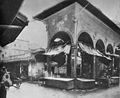 Loggia del pesce, Mercato Vecchi, before its demolition in the 1880s
 La Via del Fuoco and Mercato Vecchio, painting by Telemaco Signorini, c. 1881
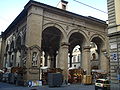 Loggia del Mercato Nuovo in 2008 (exterior)
 Trajan's Market, Rome (ruins)
 Entrance to Market place, Pompeii





Spain
In Spain, two types of retail market can be identified; permanent markets and periodic markets. Permanent markets are typically housed in a building dedicated to the use of stallholders and vendors. Periodic markets appear in the streets and plazas on specific days, such as weekends or festival days and most often sell products made by local artisans including leather goods, fashion accessories, especially scarves and costume jewellery. Vendors at periodic markets typically erect tents or canvas awnings to provide some type of temporary cover for themselves and shoppers. Produce markets, farmers' markets and flea markets are all commonplace. In addition, street vendors are a relatively common sight across most parts of Spain. Street vendors roam around in search of a suitable venue such as a plaza, entrance to a railway station or beach front where they lay their goods out on mats. Products sold by street vendors are of highly variable quality.
Barcelona
The first reliable recorded references to markets in Barcelona date to the 10th century. Barcelona, at that time, was a walled city and the first open-air market was held outside the walls, (in the area now known as Plaça de l'Àngel). A merchant district soon grew up around the market. During the 19th century, numerous covered markets were erected, specifically Santa Caterina Market (1844); Sant Josep (c. 1840), Llibertat (1875), Sant Antoni (1882), Barceloneta (1884), Concepció and Hostafrancs (1888), Clot and Poblenou (1889), and Abaceria in Gracia (1892).[139]
Barcelona residents are well served by the city's 39 produce markets. Every barri (suburb) has at least one fresh produce market. It is often said that no matter where you find yourself in Barcelona, you are never more than 10 minutes walk from a market. Barcelona's markets attract some 62 million visits yearly, turnover €950 million and employ 7,500 people.[140]
Some of the larger produce markets still in operation include: Mercat de La Boqueria in El Raval; Mercat de Sant Antoni in Sant Antoni; Mercat de Sant Andreu in Sant Andreu; Mercat de Santa Caterina in L'Eixample, Mercat del Ninot in L'Eixample; Mercat de la Concepció also in L'Eixample; Mercat de la Llibertat in Gràcia; Mercat de Sants in Sants-Montjuïc; Mercat de Galvany in Sarrià-Sant Gervasi; Mercat de Vall d'Hebron. In addition, Barcelona offers many non-food markets including the street market; La Rambla de les Flors; Dominical de Sant Antoni; Encants de Sant Antoni; and Mercat Encants Barcelona - Fira de Bellcaire.
 Main entrance to the Mercat de San Josep, known simply as La Boqueria
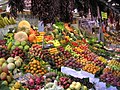 Fruit display at Mercat de La Boqueria in La Rambla, Barcelona
 Mercat de Santa Caterina, Barcelona
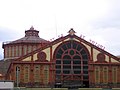 Mercat de San Antoni, Barcelona
 Street market at Sant Jordi, Mataró





Bilbao
Madrid
The main markets in central Madrid are San Anton Market; San Miguel Market, a gourmet tapas market; Cámera Agraria (Madrid Farmers' Market); and El Rastro, the largest open air flea market.
 Mercado de San Miguel (interior)
 Night market in December, Madrid
 Mercado de San Anton, Madrid
 Mercado de Maravillas, calle Bravo Murillo, Madrid
 El Rastro Madrid, the largest flea market


Valencia
The Mercat or Mercado Central is the main public market in Valencia. Built at the turn of the twentieth century, the building combines Gothic and Art Nouveau architectural features. Popular with both locals and visitors, a distinctive feature is the quality of fresh fish and seafood, which once purchased can be taken to the street stalls around the perimeter of the market who will cook it to order. The Mercado de Colón in Eixample, Valencia is also a very popular fresh produce market.
 Mercado Central (exterior)
 Mercado Central, Valencia (interior)
 Mercado de Colón (exterior)
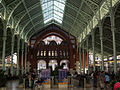 Mercado de Colón (interior)



Seville
Popular markets in Seville include the Triana market and the Central market housed within the Metropol Parasol complex. In addition, Seville offers many smaller neighbourhood markets such as Mercado de la Calle Feria and Mercado de la Encarnación.
 Mercado Triana (Triana Market)
 Mosaic sign for the Triana Market
 Fish vendor at the Mercado Triana
 Mercado Encarnación


Southeastern Europe (Balkans)
Croatia
In Serbo-Croatian, a farmer's market is formally known as tržnica, and colloquially as pijaca, plac, or pazar depending on the region and dialect.
Serbia
In Serbo-Croatian, a farmer's market is formally known as tržnica, and colloquially as pijaca, plac, or pazar depending on region and dialect. The markets in large cities are open daily, including Sunday, from around 5 or 6 am to mid-afternoon. In smaller towns, markets often open once a week, on a specific day known as pazarni dan.
- Kalenić, Belgrade
- Great Market, Belgrade – Built in around 1854[141]
- Vračar Square (Square of Flowers), Belgrade
North America
Canada
- Atwater Market – Montreal, Quebec
- ByWard Market – Ottawa, Ontario
- The Forks Market – Winnipeg, Manitoba
- Granville Island – Vancouver, British Columbia
- Jean Talon Market – Montreal, Quebec
- Kensington Market – Toronto, Ontario
- Lonsdale Quay – North Vancouver, British Columbia
- St. Lawrence Market – Toronto, Ontario
- Westminster Quay – New Westminster, British Columbia
- Main Street Markham Farmers' Market (Seasonal) – Markham, Ontario
- Stiver Mills Farmers' Market (Seasonal) - Markham, Ontario
- Kitchener Farmer's Market – Kitchener, Ontario
- St. Jacobs Farmers' Market – St. Jacobs, Ontario
- York Farmers Market – Markham, Ontario
- Downsview Park Farmers Market – Toronto
- Saint John City Market – Saint John, New Brunswick
Historic markets that have been converted to other uses include:
- St. Patrick's Market, Toronto – retail building
- St. Andrew's Market, Toronto – demolished 1937 and site of water works and park

 Cambridge Farmers Market
 City Market, St Johns
 St. Jacobs Farmers Market
 Arctic Market, Inuvik, Canada


Mexico
Since 2014, gourmet food halls have also sprung up in Mexico City, starting with Mercado Roma. Some traditional markets include:
- Mercado Jamaica, Mexico City, a traditional market in Mexico City
- Mercado de Sonora, a traditional market in Mexico City
- San Juan de Dios Market in Guadalajara
 Market in Tlatelolco, mural by Diego Rivera
 Churro Stands, like this one in Coyoacán, Mexico City, are a common sight in Latin-America.
 Grocery stalls in San Juan de Dios Market in Guadalajara, Mexico
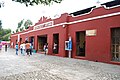 Artisans' Market, San Cristobal de las Casas, Chiapas, Mexico
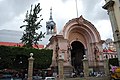 Entrance to Hidalgo Market, Guanajuato




Caribbean
Puerto Rico
- Mercado de las Carnes, a former meat market in Ponce, Puerto Rico
United States
In the United States, the term public market is often used for a place where vendors or merchants meet at the same location on a regular basis. A public market has a sponsoring entity that has legal and financial responsibility to oversee operations and, sometimes, provides facilities to house the market activity. Public markets may incorporate the traditional market activity – the sale of fresh food from open stalls – and may also offer a wide range of different products. Public markets may incorporate elements of specialized markets such as farmers markets, craft markets, and antique markets. Traditionally public markets in the US were owned and operated by city governments, but this is no longer the case.[142]
According to the Ford Foundation, what distinguishes public markets from other types of related retail activity are three characteristics. Public markets:[142]
- have public goals, a defined civic purpose. Typically, these goals include: attracting shoppers to a central business district, providing affordable retailing opportunities to small businesses, preserving farming in the region, and activating or repurposing public space
- are located in and/or create a public space in the community, where a wide range of people mix, and are, or aim to be, a heart of the community
- are made up of locally owned, independent businesses operated by their owners, not franchises. This gives public markets a local flavor and unique experience.
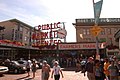 Pike Place Market in Seattle, Washington, looking west on Pike Street from First Avenue
 Corridor of fruit and vegetable sellers at the West Side Market in Cleveland, Ohio
 Postcard showing city market in Grand Rapids, Michigan, about 1910
 Grand Central Market, New York
 Gerardi's Farmer Market, New York



List of public markets
- Alemany Farmers' Market[143] – San Francisco, California
- Boston Public Market – Boston, Massachusetts
- Broad Street Market – Harrisburg, Pennsylvania
- Brooklyn Flea – Brooklyn, New York
- Chattanooga Market (2001–present) – Chattanooga, Tennessee
- Chicago farmers' markets Chicago, Illinois
- City Market (Charleston, South Carolina)
- City Market (Petersburg, Virginia) – Petersburg, Virginia. Built in 1878–79 and listed on the National Register of Historic Places
- City Market (Savannah, Georgia)
- Crescent City Farmers Market – New Orleans, Louisiana
- Cross Street Market – Baltimore, Maryland
- Dallas Farmers Market – Dallas, Texas
- Dane County Farmers' Market – Madison, Wisconsin
- Dayton Arcade[144] – Dayton, Ohio
- Eastern Market – Detroit, Michigan
- Eastern Market – Washington, D.C.
- Ferry Plaza Farmers Market & Ferry Building Marketplace – San Francisco, California
- Findlay Market (1855–present) – Cincinnati, Ohio
- French Market – New Orleans, Louisiana
- Fulton Fish Market New York, New York
- Grand Central Market – Los Angeles, California
- Grand Central Market – New York, New York
- Haymarket – Boston, Massachusetts
- Hollins Market – Baltimore, Maryland
- Indianapolis City Market (1821–present) – Indianapolis, Indiana
- Italian Market, Philadelphia – Philadelphia, Pennsylvania
- James Beard Public Market (future) – Portland, Oregon
- La Marqueta – New York, New York
- Lancaster Central Market – Lancaster, Pennsylvania
- Lexington Market (1782–present) – Baltimore, Maryland
- Los Angeles Farmers Market – Los Angeles, California
- Maxwell Street Market – Chicago, Illinois
- Midtown Global Market – Minneapolis, Minnesota
- Milwaukee Public Market (2005–present) – Milwaukee, Wisconsin
- North Market – Columbus, Ohio
- Olvera Street – Los Angeles, California
- Pike Place Market (1907–present) – Seattle, Washington
- Ponce City Market – Atlanta, Georgia
- Portland Public Market (1933–1942) – Portland, Oregon
- Portland Saturday Market (1974–present) – Portland, Oregon
- Reading Terminal Market (1893–present) – Philadelphia, Pennsylvania
- River Market (formerly known as Westport Landing, the City Market, and River Quay) - Kansas City, Missouri
- PNC Second Street Market – Dayton, Ohio
- Soulard Market – St. Louis, Missouri
- Sweet Auburn Curb Market (1918–present) – Atlanta, Georgia
- Union Market – Washington, D.C.
- Union Square Greenmarket – New York, New York
- West Side Market – Cleveland, Ohio
Lists of markets
Oceania
Australia
Melbourne
The Queen Victoria Market is the city of Melbourne's central market. Opened in 1878, it is the largest open air market in the southern hemisphere and its largely intact original buildings offer visitors the opportunity to shop among 19th century retail rows and experience a vibrant, working market place.[145] The Queen Victoria Market site has been listed as an historic place by Heritage Victoria and a number of its buildings are listed as notable buildings on the Historic Building Register of Victoria.[146] The site is currently undergoing a site renewal project. It is a Melbourne landmark, popular with both locals and visitors.
Major suburban markets include the Prahran Market, South Melbourne market and the Footscray Market. Periodic farmers' markets are also very popular in Melbourne.
 Queen Victoria Market, entrance to the Meat and Fish Hall
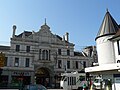 Prahran Market, South Yarra
 Metropolitan Meat Market, North Melbourne
 South Melbourne market (exterior)




Sydney
Sydney boasts a number of popular markets. The Rocks market, situated in the Rocks district, near the Sydney Opera House, focuses on crafts, jewellery, and leather goods and operates at weekends. Paddy's Market, near Chinatown, is the produce market and operates Wednesday through to Sunday. Haymarket is one of the main produce markets and is located in Flemington. The Sydney Fish Market, in Pyrmont opens from 7:00 am on Wednesday through to Saturday. Paddington Markets on Oxford Street sells a range of goods from fresh produce through to clothing.
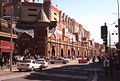 Haymarket fresh produce market, Hay Street, Sydney, NSW
 Chinatown Night Market, Sydney, NSW
 Rocks Market in 2007
 Sydney Fish Market view from Glebe, NSW



Perth
 Fremantle Markets, northwest corner, Perth, Western Australia
 Perth night market, 2012
 Perth Night Noodle Markets


Adelaide
 Adelaide Central Market, 2006
 Central Court, Adelaide Central Market
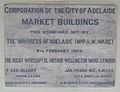 Adelaide Central Market Buildings Foundation Stone



Hobart
 Salamanca Place Market, Hobart, Tasmania
 Salamanca Market Hobart Tasmania
 Salamanca market in Hobart
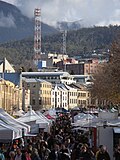 Salamanca Market May



Papua New Guinea
Drawing heavily on the anthropological literature, Benedicktsson argues that a distinct type of Melanesian market that is substantially different to other Asian markets, can be identified. The key characteristics of the PNG market are that it is dominated by producer-sellers, most of whom are women. Prices are set at the start of the day's trade, and rarely change. Haggling and aggressive selling are rarely practised. At the end of the day's trade, produce is not cleared, but rather is taken away for the seller's private consumption or is distributed among kin and close family.[147]
 Gerehu Markets, Port Moresby, Papua New Guinea
 Kerepunu women at the market place of Kalo, 1885
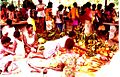 Buin NSP Saturday market, 1978
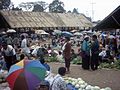 Goroka market




South America
Brazil
- Mercado Municipal – São Paulo, São Paulo
- Liberdade street market – São Paulo, São Paulo
- Mercado Público – Porto Alegre, Rio Grande do Sul
- Mercado Ver-o-Peso – Belém, Pará
- Mercado Adolpho Lisboa – Manaus, Amazonas
- Mercado Modelo – Salvador, Bahia

 Açai vendor at the Ver-o-Peso Market, Belém, Brazil
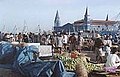 Fish seller at Belém, Pará, Brazil
 "Vendedor de pequi", fruit seller, a common sight in Brazil




Chile
- Mercado Central de Santiago, the central market of Santiago de Chile
Uruguay
- Mercado Modelo, a central fruit and vegetable wholesale market in Montevideo
See also
- Artisanal food
- Bazaar
- Birmingham Market Police
- Charter
- Charter fair
- Charter Stones
- Costermonger
- City of London market constabularies
- Hawker
- History of marketing
- List of Christmas markets (from around the world)
- Liverpool Markets Police
- Market hall
- Market town
- Marketing
- Market cross - with list of UK market towns containing a market cross
- Mercat cross - in Scotland the market cross is known as a mercat cross
- Merchant
- Night market
- Licensed victualler
- Peddler
- Retail
- Souk or souq
- Street vendor
- Town privileges
- Wholesale marketing of food
External links
- Project for Public Spaces page on public markets
สรุปเนื้อหา
ข้อมูลสำคัญจากบทความ
ข้อมูลสำคัญเกี่ยวกับ ตลาดซื้อขาย
ตลาดหรือ เรียก สั้นๆ ว่าตลาดคือสถานที่ที่ผู้คนมารวมตัวกันเป็นประจำเพื่อซื้อขายเสบียง ปศุสัตว์ และสินค้าอื่นๆในส่วนต่างๆ ของโลก ตลาดอาจถูกเรียกว่าซูค (จากภาษาอาหรับ ) บาซาร์...
นิรุกติศาสตร์
คำว่า ตลาด มาจากภาษาละติน mercatus ("ตลาด") การใช้คำว่า ตลาด ในภาษาอังกฤษที่บันทึกไว้ครั้งแรกสุดอยู่ใน พงศาวดารแองโกล-แซกซอน ในปี 963 ซึ่งเป็นงานที่สร้างขึ้นในรัชสมัยของพระเจ้า อัลเฟรดมหาราช (ครองราชย์ 871–899) และต่อมาได้มีการเผยแพร่และคัดลอกไปทั่วอารามต่างๆ...
ในยุคก่อนประวัติศาสตร์
ตลาดมีมาตั้งแต่สมัยโบราณ [ 3 ] นักประวัติศาสตร์บางคนโต้แย้งว่าตลาดมีมาตั้งแต่สมัยที่มนุษย์เริ่มทำการค้าขาย [ 4 ] [ 5 ] ตลาดกลางแจ้งและตลาดสาธารณะเป็นที่รู้จักในบาบิโลเนียโบราณ อัสซีเรีย ฟี นิเซีย กรีซ อียิปต์ และคาบสมุทรอาหรับ อย่างไรก็ตาม...
ในสมัยโบราณ
ในสมัยโบราณ ตลาดมักตั้งอยู่ใจกลางเมือง ตลาดล้อมรอบด้วยตรอกซอยที่มีช่างฝีมืออาศัยอยู่ เช่น ช่างโลหะ ช่างหนัง และช่างไม้ ช่างฝีมือเหล่านี้อาจขายสินค้าโดยตรงจากสถานที่ของตน หรืออาจเตรียมสินค้าเพื่อขายในวันตลาดด้วย [ 3 ] ทั่ว กรีกโบราณ...