
ความอดอยาก
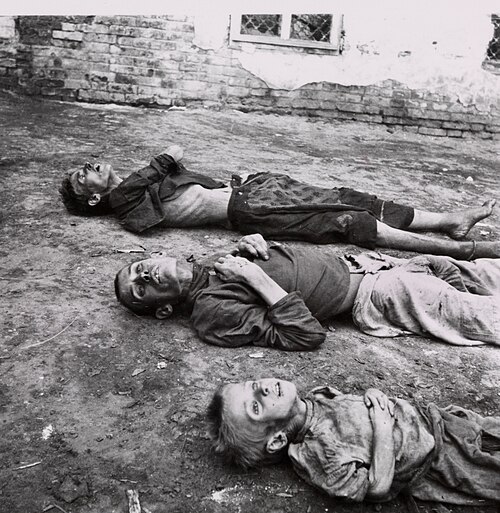
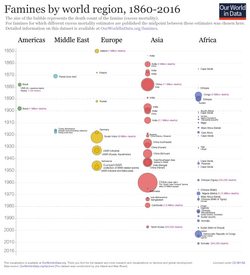
ภาวะอดอยากคือการขาดแคลนอาหาร อย่างกว้างขวาง [ 1 ] [ 2 ]ซึ่งเกิดจากหลายปัจจัยที่เป็นไปได้ รวมถึงแต่ไม่จำกัดเพียง: สงครามภัยพิบัติทางธรรมชาติความ ล้มเหลว ของพืชผล ความยากจนอย่างกว้างขวางวิกฤตเศรษฐกิจหรือนโยบายของรัฐบาลปรากฏการณ์นี้มักจะเกิดขึ้นพร้อมๆ กับหรือตามมาด้วย ภาวะ ทุพโภชนาการ ในระดับภูมิภาค การอดอยาก โรคระบาดและอัตราการเสียชีวิต ที่เพิ่มขึ้น ทุกทวีปที่มีประชากรอาศัยอยู่ทั่วโลกเคยประสบกับช่วงเวลาแห่งภาวะอดอยากตลอดประวัติศาสตร์ จากข้อมูลทางประวัติศาสตร์และสมัยใหม่ทวีปอเมริกา ( อเมริกาเหนือและอเมริกาใต้ ) เป็นหนึ่งในภูมิภาคที่ได้รับผลกระทบจากภาวะอดอยากน้อยที่สุดในโลก[ 3 ]ในช่วงศตวรรษที่ 19 และ 20 จีนอินเดียยุโรปและตะวันออกกลางประสบกับจำนวนผู้เสียชีวิตจากภาวะอดอยากมากที่สุด[ 3 ]จำนวนผู้เสียชีวิตจากภาวะอดอยากลดลงอย่างรวดเร็วตั้งแต่ทศวรรษ 1970 และลดลงอีกตั้งแต่ปี 2000 ในปี 2011 ผู้คนหลายล้านคนในแอฟริกาตะวันออกได้รับผลกระทบจากภาวะอดอยาก ณ ปี 2025 ประเทศเฮติอัฟกานิสถานซูดานเยเมนและฉนวนกาซาต่างประสบกับภาวะขาดแคลนอาหารอย่างรุนแรง
คำจำกัดความ
ตามโครงการอาหารโลกแห่ง สหประชาชาติ การประกาศภาวะอดอยากจะเกิดขึ้นเมื่อภาวะทุพโภชนาการแพร่หลาย และเมื่อผู้คนเริ่มเสียชีวิตจากการอดอาหารเนื่องจากขาดการเข้าถึงอาหารที่มีคุณค่าทางโภชนาการอย่างเพียงพอ[ 4 ]เกณฑ์การจำแนกประเภทความมั่นคงทางอาหารแบบบูรณาการกำหนดภาวะอดอยากระยะที่ 5ของภาวะขาดแคลนอาหารอย่างรุนแรงว่าเกิดขึ้นเมื่อสถานการณ์ทั้งสามต่อไปนี้เกิดขึ้นพร้อมกัน: [ 5 ] [ 6 ]
- อย่างน้อย 20% ของครัวเรือนในพื้นที่หนึ่งๆ เผชิญกับภาวะขาดแคลนอาหารอย่างรุนแรงและมีศักยภาพในการรับมือที่จำกัด
- อัตราการพบภาวะขาดสารอาหารเฉียบพลันในเด็กมีมากกว่า 30%
- อัตราการเสียชีวิตสูงกว่า 2 คนต่อ 10,000 คนต่อวัน
หากตรงตามเงื่อนไขข้อแรกเพียงอย่างเดียว ก็สามารถกล่าวได้ว่าประชากรมากกว่า 20% อยู่ในระยะที่ 5 (หายนะ) แต่พื้นที่นั้นไม่สามารถประกาศอย่างเป็นทางการว่าเป็นพื้นที่อดอยากได้ หากเกินเกณฑ์สองในสามข้อ และคาดว่าเกณฑ์ข้อที่สามก็เป็นไปตามที่กำหนดด้วย สถานการณ์นั้นจะถูกจัดประเภทเป็นพื้นที่อดอยากได้โดยมีหลักฐานที่สมเหตุสมผล[ 7 ]
การประกาศภาวะอดอยากไม่ได้ก่อให้เกิดภาระผูกพันใดๆ ต่อองค์การสหประชาชาติหรือรัฐสมาชิก แต่เป็นการดึงความสนใจจากทั่วโลกมาสู่ปัญหาดังกล่าว[ 8 ]เมื่อสถานการณ์ได้รับการจัดประเภททางเทคนิคว่าเป็นภาวะอดอยากแล้ว รัฐบาลและหน่วยงานระหว่างประเทศสามารถประกาศอย่างเป็นทางการได้ ในวิกฤตการณ์ด้านมนุษยธรรม ที่ซับซ้อน การประกาศดังกล่าวก่อให้เกิดความท้าทายอย่างมากเนื่องจากเกณฑ์ทางเทคนิคที่เข้มงวดและผลกระทบทางการเมืองของการประกาศ[ 9 ]
ประวัติศาสตร์

การเกิดภาวะขาดแคลนอาหารเป็นวัฏจักรที่เกิดขึ้นอย่างต่อเนื่องในสังคมที่พึ่งพาการเกษตรแบบยังชีพมาตั้งแต่ยุคเริ่มต้นของการเกษตร ความถี่และความรุนแรงของภาวะขาดแคลนอาหารผันผวนไปตลอดประวัติศาสตร์ ขึ้นอยู่กับการเปลี่ยนแปลงของความต้องการอาหาร เช่นการเพิ่มขึ้นของประชากรและการเปลี่ยนแปลงด้านอุปทานที่เกิดจากการเปลี่ยนแปลงสภาพภูมิอากาศ
การลดลงของภาวะอดอยาก
ในศตวรรษที่ 16 และ 17 ระบบศักดินาเริ่มเสื่อมถอยลง และเกษตรกรที่มั่งคั่งกว่าเริ่มล้อมรั้วที่ดินของตนเองและปรับปรุงผลผลิตเพื่อขายผลผลิตส่วนเกินเพื่อทำกำไร เจ้าของที่ดิน ทุนนิยม เหล่านี้ จ่ายค่าแรงให้แรงงานด้วยเงินทำให้สังคมชนบทมีการค้าขายเพิ่มมากขึ้น ในตลาดแรงงานที่มีการแข่งขันสูงขึ้น เทคนิคที่ดีกว่าในการปรับปรุงผลิตภาพแรงงานได้รับการยกย่องและให้รางวัลมากขึ้นเรื่อยๆ เกษตรกรมีผลประโยชน์ที่จะผลิตให้ได้มากที่สุดเท่าที่จะเป็นไปได้ในที่ดินของตน เพื่อขายให้กับพื้นที่ที่ต้องการผลผลิต พวกเขาจึงมั่นใจได้ว่าจะมี ผลผลิต ส่วนเกินทุกปีหากทำได้
ชาวนาที่ทำการเกษตรเพื่อยังชีพถูกบังคับให้หันมาทำการค้ามากขึ้นเรื่อย ๆ เนื่องจากการเพิ่มภาษีภาษีที่ต้องจ่ายให้รัฐบาลกลางเป็นเงิน ทำให้ชาวนาต้องผลิตพืชผลเพื่อขายในตลาด ซึ่งมักหมายถึงการผลิตพืชอุตสาหกรรมควบคู่ไปกับพืชเพื่อการยังชีพ และบังคับให้ชาวนาต้องเพิ่มผลผลิตเพื่อตอบสนองทั้งความต้องการในการดำรงชีพและภาระภาษีของตน ชาวนายังใช้เงินใหม่นี้ซื้อสินค้าอุตสาหกรรมด้วย การพัฒนาด้านการเกษตรและสังคมที่ส่งเสริมการเพิ่มผลผลิตอาหารเกิดขึ้นอย่างค่อยเป็นค่อยไปตลอดศตวรรษที่ 16 แต่เริ่มเติบโตอย่างรวดเร็วในช่วงต้นศตวรรษที่ 17
ในช่วงทศวรรษ 1590 แนวโน้มเหล่านี้ได้รับการพัฒนาอย่างเพียงพอในจังหวัดฮอลแลนด์ ที่ร่ำรวยและมีการค้าขาย ทำให้ประชากรสามารถรับมือกับการระบาดของภาวะอดอยากในยุโรปตะวันตกในเวลานั้นได้ ในเวลานั้นเนเธอร์แลนด์มีระบบการเกษตรเชิงพาณิชย์ที่ทันสมัยที่สุดแห่งหนึ่งในยุโรป พวกเขาปลูกพืชอุตสาหกรรมหลายชนิด เช่น ป่าน ปอและฮอปส์การเกษตรมีความเชี่ยวชาญและมีประสิทธิภาพมากขึ้นเรื่อยๆ ประสิทธิภาพของการเกษตรของชาวดัตช์ทำให้เกิดการขยายตัวของเมืองอย่างรวดเร็วในช่วงปลายศตวรรษที่ 16 และต้นศตวรรษที่ 17 มากกว่าที่อื่นใดในยุโรป ส่งผลให้ผลผลิตและความมั่งคั่งเพิ่มขึ้น ทำให้เนเธอร์แลนด์สามารถรักษาระดับอาหารให้คงที่ได้[ 10 ]
ภายในปี 1650 การเกษตรของอังกฤษได้กลายเป็นเชิงพาณิชย์ในวงกว้างมากขึ้น ภาวะอดอยากครั้งสุดท้ายในยามสงบในอังกฤษเกิดขึ้นในปี 1623–24 ยังคงมีช่วงเวลาที่อดอยากอยู่บ้าง เช่นเดียวกับในเนเธอร์แลนด์ แต่ก็ไม่มีภาวะอดอยากเกิดขึ้นอีกเลย พื้นที่สาธารณะสำหรับเลี้ยงสัตว์ถูกล้อมรั้วเพื่อใช้ส่วนตัว และฟาร์มขนาดใหญ่ที่มีประสิทธิภาพก็ถูกรวมเข้าด้วยกัน การพัฒนาทางเทคนิคอื่นๆ ได้แก่ การระบายน้ำออกจากพื้นที่ชุ่มน้ำ รูปแบบการใช้พื้นที่เพาะปลูกที่มีประสิทธิภาพมากขึ้น และการนำพืชอุตสาหกรรมมาใช้ในวงกว้าง การพัฒนาทางการเกษตรเหล่านี้ส่งผลให้ความเจริญรุ่งเรืองในอังกฤษเพิ่มมากขึ้นและการขยายตัวของเมืองก็เพิ่มขึ้น[ 11 ]เมื่อสิ้นสุดศตวรรษที่ 17 การเกษตรของอังกฤษมีผลผลิตมากที่สุดในยุโรป[ 12 ]ทั้งในอังกฤษและเนเธอร์แลนด์ ประชากรมีเสถียรภาพระหว่างปี 1650 ถึง 1750 ซึ่งเป็นช่วงเวลาเดียวกับที่เกิดการเปลี่ยนแปลงครั้งใหญ่ในด้านการเกษตร อย่างไรก็ตาม ภาวะอดอยากยังคงเกิดขึ้นในส่วนอื่นๆ ของยุโรป ในยุโรปตะวันออกภาวะอดอยากยังคงเกิดขึ้นจนถึงศตวรรษที่ 20
ความพยายามในการบรรเทาความอดอยาก

ในยุโรปก่อนยุคอุตสาหกรรม การป้องกันภาวะอดอยากและการจัดหาอาหารให้ทันท่วงทีเป็นหนึ่งในความกังวลหลักของรัฐบาลหลายแห่ง เนื่องจากภาวะอดอยากอาจนำไปสู่การก่อจลาจลและความวุ่นวายทางสังคมรูปแบบอื่นๆ อย่างไรก็ตาม ระดับการค้า โครงสร้างพื้นฐาน และระบบราชการที่มีอยู่จำกัด ทำให้มีทางเลือกที่ไม่เพียงพอที่จะบรรเทาความเดือดร้อนได้อย่างแท้จริง
ในช่วงกลางศตวรรษที่ 19 และการเริ่มต้นของการปฏิวัติอุตสาหกรรมรัฐบาลสามารถบรรเทาผลกระทบจากภาวะอดอยากได้ด้วยการควบคุมราคาการนำเข้าผลิตภัณฑ์อาหารจำนวนมากจากตลาดต่างประเทศ การกักตุน การปันส่วนการควบคุมการผลิต และการกุศล ภาวะ อดอยาก ครั้งใหญ่ในปี 1845ในไอร์แลนด์เป็นหนึ่งในภาวะอดอยากครั้งแรกที่มีการแทรกแซงดังกล่าว แม้ว่าการตอบสนองของรัฐบาลมักจะไม่ค่อยดีนัก การตอบสนองเบื้องต้นของรัฐบาลอังกฤษในช่วงแรกของภาวะอดอยากนั้น "รวดเร็วและค่อนข้างประสบความสำเร็จ" ตามที่FSL Lyonsกล่าว ไว้ [ 13 ]เมื่อเผชิญกับความล้มเหลวของพืชผลอย่างกว้างขวางในฤดูใบไม้ร่วงปี 1845 นายกรัฐมนตรีเซอร์โรเบิร์ต พีลได้ซื้อข้าวโพดและแป้งข้าวโพด มูลค่า 100,000 ปอนด์ จากอเมริกาอย่างลับๆบริษัท Baring Brothers & Coทำหน้าที่เป็นตัวแทนจัดซื้อให้กับนายกรัฐมนตรีในตอนแรก รัฐบาลหวังว่าพวกเขาจะไม่ "ขัดขวางวิสาหกิจเอกชน" และการกระทำของพวกเขาจะไม่เป็นอุปสรรคต่อความพยายามบรรเทาทุกข์ในท้องถิ่น เนื่องจากสภาพอากาศ การขนส่งครั้งแรกจึงมาถึงไอร์แลนด์ในช่วงต้นเดือนกุมภาพันธ์ พ.ศ. 2389 [ 14 ]จากนั้นข้าวโพดก็ถูกขายต่อในราคาหนึ่งเพนนีต่อปอนด์[ 15 ]
ในปี พ.ศ. 2389 พีลได้ดำเนินการยกเลิกกฎหมายข้าวโพดซึ่งเป็นภาษีนำเข้าธัญพืชที่ทำให้ราคาขนมปังสูงขึ้นอย่างไม่เป็นธรรมชาติ สถานการณ์ความอดอยากเลวร้ายลงในช่วงปี พ.ศ. 2389 และการยกเลิกกฎหมายข้าวโพดในปีนั้นแทบไม่ได้ช่วยชาวไอริชที่อดอยากเลย มาตรการนี้ทำให้พรรคอนุรักษ์นิยมแตกแยก นำไปสู่การล่มสลายของรัฐบาลของพีล[ 16 ]ในเดือนมีนาคม พีลได้จัดตั้งโครงการงานสาธารณะในไอร์แลนด์[ 17 ]

แม้จะเริ่มต้นอย่างมีอนาคต แต่มาตรการที่ดำเนินการโดยลอร์ดจอห์นรัสเซลล์ ผู้สืบทอดตำแหน่งของพีล กลับพิสูจน์แล้วว่าค่อนข้าง "ไม่เพียงพอ" เมื่อวิกฤตการณ์ทวีความรุนแรงขึ้น กระทรวงของรัสเซลล์ได้ริเริ่มโครงการงานสาธารณะ ซึ่งภายในเดือนธันวาคม พ.ศ. 2389 ได้จ้างชาวไอริชราวครึ่งล้านคน และพิสูจน์แล้วว่าไม่สามารถบริหารจัดการได้ รัฐบาลได้รับอิทธิพลจาก ความเชื่อ แบบเสรีนิยมที่ว่าตลาดจะจัดหาอาหารที่จำเป็นได้ จึงได้หยุดโครงการอาหารและบรรเทาทุกข์ของรัฐบาล และหันไปใช้การบรรเทาทุกข์โดยตรงแบบผสมผสานระหว่าง "ในร่ม" และ "กลางแจ้ง" โดยแบบแรกดำเนินการในโรงงานทำงานผ่านกฎหมายคนยากจนส่วนแบบหลังดำเนินการผ่านโรงครัวซุป[ 18 ]
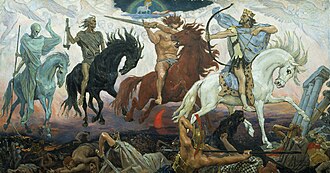
ความพยายามอย่างเป็นระบบในการสร้างกรอบการกำกับดูแลที่จำเป็นสำหรับการจัดการกับภาวะอดอยากได้รับการพัฒนาโดยรัฐบาลอังกฤษในช่วงทศวรรษ 1880 เพื่อแก้ไขปัญหาภาวะอดอยากอย่างครอบคลุม รัฐบาลอังกฤษได้จัดตั้งคณะกรรมการภาวะอดอยากแห่งอินเดียขึ้นเพื่อเสนอแนะขั้นตอนที่รัฐบาลจะต้องดำเนินการในกรณีที่เกิดภาวะอดอยาก[ 19 ] [ 20 ] [ 21 ]คณะกรรมการภาวะอดอยากออกแนวทางและข้อบังคับของรัฐบาลชุดหนึ่งเกี่ยวกับวิธีการตอบสนองต่อภาวะอดอยากและการขาดแคลนอาหารที่เรียกว่าประมวลกฎหมายภาวะอดอยาก ประมวลกฎหมายภาวะอดอยากยังเป็นหนึ่งในความพยายามครั้งแรกในการทำนายภาวะอดอยากทางวิทยาศาสตร์เพื่อบรรเทาผลกระทบ สิ่งเหล่านี้ได้รับการประกาศใช้เป็นกฎหมายในที่สุดในปี 1883 ภายใต้การนำของลอร์ดริปอน
ประมวลกฎหมายฉบับ นี้ได้นำเสนอ ระดับความอดอยากครั้งแรกโดยกำหนด ระดับ ความไม่มั่นคงทางอาหาร ไว้ 3 ระดับ ได้แก่ ใกล้ขาดแคลน ขาดแคลน และอดอยาก “การขาดแคลน” หมายถึง ผลผลิตทางการเกษตรล้มเหลว ติดต่อกัน 3 ปี ผลผลิตทางการเกษตรเหลือเพียงหนึ่งในสามหรือครึ่งหนึ่งของปกติ และมีประชากรจำนวนมากตกอยู่ในภาวะยากลำบาก “การอดอยาก” ยังรวมถึงราคาอาหารที่สูงขึ้นเกิน 140% ของ “ปกติ” การเคลื่อนย้ายของผู้คนเพื่อค้นหาอาหาร และการเสียชีวิตอย่างแพร่หลาย[ 19 ]คณะกรรมการระบุว่า การสูญเสียค่าจ้างจากการขาดงานของแรงงานเกษตรและช่างฝีมือเป็นสาเหตุของการอดอยาก ประมวลกฎหมายว่าด้วยการอดอยากจึงได้นำกลยุทธ์การสร้างงานให้กับประชากรกลุ่มนี้มาใช้ และอาศัยโครงการสาธารณะแบบไม่จำกัดระยะเวลาในการดำเนินการ[ 22 ]
ศตวรรษที่ 20
ในช่วงศตวรรษที่ 20 มี ผู้เสียชีวิตจาก ภาวะอดอยากทั่วโลกประมาณ 70 ถึง 120 ล้านคนโดยกว่าครึ่งเสียชีวิตในประเทศจีน มีผู้เสียชีวิตประมาณ 30 ล้านคนในช่วงภาวะอดอยากปี 1958–1961 [ 23 ]มากถึง 10 ล้านคนในภาวะอดอยากของจีนปี 1928–1930และมากกว่า 2 ล้านคนในภาวะอดอยากของจีนปี 1942–1943และอีกหลายล้านคนเสียชีวิตจากภาวะอดอยากในภาคเหนือและภาคตะวันออกของจีน สหภาพโซเวียตสูญเสียผู้คน 8 ล้านคนจากภาวะอดอยากของโซเวียตปี 1930–1933มากกว่าหนึ่งล้านคนในภาวะอดอยากของโซเวียตปี 1946–1947และการปิดล้อมเลนินกราด 5 ล้านคนในภาวะอดอยากของรัสเซียปี 1921–1922และภาวะอดอยากอื่นๆ เกาะชวาประสบกับการเสียชีวิต 2.5 ล้านคนภายใต้การยึดครองของญี่ปุ่นในช่วงสงครามโลกครั้งที่สอง[ 24 ]ความอดอยากครั้งสำคัญที่สุดอีกครั้งในศตวรรษนี้คือความอดอยากในเบงกอลในปี 1943ซึ่งเป็นผลมาจากการที่ญี่ปุ่นเข้ายึดครองพม่าส่งผลให้มีผู้ลี้ภัยหลั่งไหลเข้ามา และปิดกั้นการนำเข้าธัญพืชจากพม่า รวมถึงความล้มเหลวของรัฐบาลท้องถิ่นเบงกอลในการประกาศภาวะอดอยากและจัดหาเงินทุนเพื่อบรรเทาทุกข์ การคว่ำบาตรธัญพืชและการขนส่งโดยฝ่ายบริหารจังหวัดใกล้เคียงเพื่อป้องกันไม่ให้สินค้าของตนเองถูกโอนไปยังเบงกอล ความล้มเหลวในการดำเนินการปันส่วนอาหารทั่วประเทศอินเดียโดยหน่วยงานส่วนกลางของเดลี การกักตุนและแสวงหาผลกำไรโดยพ่อค้าแนวทางการจัดการที่ดินในยุคกลาง โครงการปฏิเสธของฝ่ายอักษะที่ยึดเรือที่เคยใช้ขนส่งธัญพืช การบริหารของเดลีที่ให้ความสำคัญกับการจัดหาและการรักษาพยาบาลแก่กองทัพอังกฤษในอินเดีย คนงานสงคราม และข้าราชการพลเรือน มากกว่าประชาชนทั่วไป ความไร้ความสามารถและความไม่รู้ และคณะรัฐมนตรีสงครามจักรวรรดิในตอนแรกปล่อยให้ฝ่ายบริหารอาณานิคมแก้ไขปัญหา มากกว่าที่จะปล่อยให้ความล้มเหลวของพืชผลและการระบาดของโรคในท้องถิ่นเป็นผู้จัดการเอง[ 25 ]
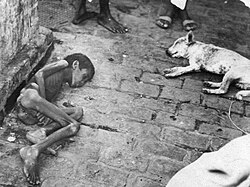
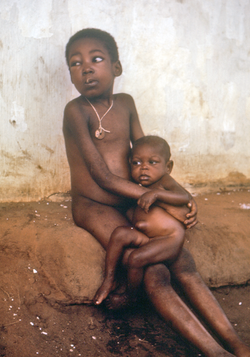

ภัยพิบัติทางอาหารครั้งใหญ่หลายครั้งในช่วงปลายศตวรรษที่ 20 ได้แก่ภัยพิบัติทางอาหารในเบียฟรานช่วงทศวรรษ 1960 ภัยพิบัติทางอาหารในกัมพูชาที่เกิดจาก เขมรแดงในช่วงทศวรรษ 1970 ภัยพิบัติทางอาหารในเกาหลีเหนือช่วงทศวรรษ 1990และภัยพิบัติทางอาหารในเอธิโอเปียระหว่างปี 1983-1985นอกจากนี้ยังมีผู้เสียชีวิตประมาณ 3 ล้านคนจากผลของสงครามคองโกครั้งที่สอง
วิกฤตการณ์ความอดอยากในเอธิโอเปียถูกรายงานทางโทรทัศน์ไปทั่วโลก โดยมีภาพของชาวเอธิโอเปียที่กำลังอดอยาก ซึ่งสถานการณ์ของพวกเขาเกิดขึ้นที่สถานีแจกอาหารใกล้เมืองโคเรมเหตุการณ์นี้กระตุ้นให้เกิดการเคลื่อนไหวครั้งใหญ่ครั้งแรกเพื่อยุติความอดอยากทั่วโลก
ไมเคิล บูเอิร์กผู้ประกาศข่าวของบีบีซีได้บรรยายเหตุการณ์โศกนาฏกรรมเมื่อวันที่ 23 ตุลาคม พ.ศ. 2527 ไว้อย่างน่าประทับใจ โดยบรรยายว่าเป็น "ความอดอยากครั้งใหญ่" ซึ่งเหตุการณ์นี้กระตุ้นให้เกิด ซิงเกิล Band Aidที่จัดโดยบ็อบ เกลดอฟและมีศิลปินป๊อปชื่อดังกว่า 20 คน เข้าร่วม คอนเสิร์ต Live Aidในลอนดอนและฟิลาเดลเฟียระดมทุนได้มากขึ้นไปอีก ผู้คนหลายแสนคนเสียชีวิตภายในหนึ่งปีเนื่องจากความอดอยาก แต่การประชาสัมพันธ์ของ Live Aid กระตุ้นให้ประเทศตะวันตกจัดหาธัญพืชส่วนเกินให้เพียงพอเพื่อยุติวิกฤตความหิวโหยในแอฟริกาในทันที[ 26 ]
ความอดอยากบางส่วนในศตวรรษที่ 20 เป็นประโยชน์ต่อวัตถุประสงค์ทางภูมิรัฐศาสตร์ของรัฐบาล รวมถึงการสร้างความบอบช้ำทางจิตใจและแทนที่ประชากรกลุ่มชาติพันธุ์ที่ไม่ได้รับความไว้วางใจในภูมิภาคที่มีความสำคัญทางยุทธศาสตร์ ทำให้ภูมิภาคที่อ่อนแอต่อการรุกรานยากต่อการปกครองโดยอำนาจศัตรู และโยกย้ายภาระการขาดแคลนอาหารไปยังภูมิภาคที่ความทุกข์ยากของประชากรก่อให้เกิดความเสี่ยงน้อยกว่าต่อการล่มสลายของระบอบการปกครองที่ร้ายแรง[ 27 ]
ศตวรรษที่ 21
จนถึงปี 2017 จำนวนผู้เสียชีวิตจากภาวะอดอยากทั่วโลกลดลงอย่างมากมูลนิธิสันติภาพโลกรายงานว่าตั้งแต่ช่วงปี 1870 ถึงปี 1970 ภาวะอดอยากครั้งใหญ่คร่าชีวิตผู้คนโดยเฉลี่ยปีละ 928,000 คน[ 28 ]ตั้งแต่ปี 1980 จำนวนผู้เสียชีวิตต่อปีลดลงเหลือเฉลี่ยปีละ 75,000 คน ซึ่งน้อยกว่า 10% ของจำนวนผู้เสียชีวิตในช่วงก่อนปี 1970 การลดลงนี้เกิดขึ้นได้แม้จะมีผู้เสียชีวิตประมาณ 150,000 คนจากภาวะอดอยากในโซมาเลียปี 2011 อย่างไรก็ตาม ในปี 2017 สหประชาชาติประกาศอย่างเป็นทางการว่าภาวะอดอยากได้กลับมาสู่แอฟริกา อีกครั้งโดยมีผู้คนประมาณ 20 ล้านคนเสี่ยงต่อการเสียชีวิตจากความอดอยากในภาคเหนือของไนจีเรียซูดานใต้เยเมนและโซมาเลีย[ 29 ]
เมื่อ วันที่ 20 เมษายน 2564 องค์กรช่วยเหลือหลายร้อยแห่งจากทั่วโลกได้เขียนจดหมายเปิดผนึกถึงหนังสือพิมพ์เดอะการ์เดียน เตือนว่าประชาชนหลายล้านคนในเยเมน อัฟกานิสถาน เอธิโอเปีย ซูดานใต้บูร์กินาฟาโซ สาธารณรัฐประชาธิปไตยคองโก ฮอนดูรัส เวเนซุเอลา ไนจีเรีย เฮติ สาธารณรัฐแอฟริกากลาง ยูกันดาซิมบับเวและซูดานกำลังเผชิญกับภาวะอดอยากองค์กรต่างๆรวมถึงสภาองค์กรอาสาสมัครระหว่างประเทศและโครงการอาหารโลกกล่าวว่า"เด็กหญิงและเด็กชาย ผู้ชายและผู้หญิง กำลังอดอยากเนื่องจากความขัดแย้งและความรุนแรง ความไม่เท่าเทียมกัน ผลกระทบจากการเปลี่ยนแปลงสภาพภูมิอากาศ การสูญเสียที่ดิน งาน และโอกาส และการต่อสู้กับโควิด-19 ที่ทำให้พวกเขาตกอยู่ในสถานการณ์ที่ย่ำแย่ลงไปอีก" กลุ่มเหล่านี้เตือนว่าเงินทุนลดลง และเงินเพียงอย่างเดียวคงไม่เพียงพอ รัฐบาลควรเข้ามาแทรกแซงเพื่อยุติความขัดแย้งและรับประกันการเข้าถึงความช่วยเหลือด้านมนุษยธรรม “หากไม่มีการดำเนินการใดๆ ชีวิตก็จะสูญเสียไป ความรับผิดชอบในการแก้ไขปัญหานี้อยู่ที่รัฐต่างๆ” พวกเขากล่าวเสริม[ 30 ]
ในเดือนพฤศจิกายน 2021 โครงการอาหารโลกรายงานว่ามีผู้คน 45 ล้านคน "กำลังอยู่ในภาวะใกล้จะอดอยาก" ใน 43 ประเทศ และการเปลี่ยนแปลงเพียงเล็กน้อยก็อาจทำให้พวกเขาตกอยู่ในสถานการณ์ที่เลวร้ายยิ่งขึ้น ตัวเลขนี้เพิ่มขึ้นจาก 42 ล้านคนในช่วงต้นปี 2021 และจาก 27 ล้านคนในปี 2019 [ 31 ]การเปลี่ยนแปลงเพียงเล็กน้อย ไม่ว่าจะเป็นสภาพอากาศที่รุนแรงที่เชื่อมโยงกับการเปลี่ยนแปลงสภาพภูมิอากาศ ความขัดแย้ง หรือการผสมผสานที่ร้ายแรงของปัจจัยที่ทำให้เกิดความหิวโหยทั้งสองอย่าง ก็อาจผลักดันให้ผู้คนหลายสิบล้านคนตกอยู่ในอันตรายที่แก้ไขไม่ได้ ซึ่งเป็นสิ่งที่หน่วยงานได้เตือนมานานกว่าหนึ่งปีแล้วอัฟกานิสถานกำลังกลายเป็นวิกฤตการณ์ด้านมนุษยธรรมที่ใหญ่ที่สุดในโลก โดยความต้องการของประเทศนี้สูงกว่าประเทศอื่นๆ ที่ได้รับผลกระทบหนักที่สุดเช่นเอธิโอเปียซูดานใต้ซีเรียและเยเมน [ 32 ]
ในเดือนสิงหาคม พ.ศ. 2567 มีการประกาศ ภาวะอดอยากในซูดาน[ 33 ] ซึ่ง พบว่าค่ายผู้ลี้ภัยหลายแห่งที่พลัดถิ่นเนื่องจากสงครามกลางเมืองซูดาน กำลังเผชิญกับภาวะอดอยากอย่างรุนแรง ตามรายงานของ IPC พบ ว่ามีผู้คนกว่า 24 ล้านคนกำลังเผชิญกับภาวะขาดแคลนอาหารอย่างรุนแรง และตรวจพบภาวะอดอยากระยะที่ 5 ในหลายภูมิภาค[ 34 ] [ 35 ]ผู้เชี่ยวชาญของสหประชาชาติกล่าวหาว่ากองทัพซูดาน (SAF) และกองกำลังสนับสนุนอย่างรวดเร็ว (RSF) ใช้ 'ยุทธวิธีอดอาหาร' กับพลเรือนในประเทศ และกล่าวว่า "ไม่เคยมีมาก่อนในประวัติศาสตร์สมัยใหม่ที่ผู้คนจำนวนมากต้องเผชิญกับความอดอยากและภาวะอดอยากเช่นในซูดานในปัจจุบัน" [ 36 ]
ในเดือนสิงหาคม พ.ศ. 2568 มีการประกาศภาวะอดอยาก ในกาซา [ 37 ] ประชาชนกว่าครึ่งล้านคนในกาซาติดอยู่ในภาวะอดอยาก ซึ่งมีลักษณะเด่นคือการอดอาหารอย่างแพร่หลาย ความยากจน และการเสียชีวิตที่ป้องกันได้ ตามการวิเคราะห์การจัดประเภทความมั่นคงทางอาหารแบบบูรณาการ (IPC) ฉบับใหม่ที่เผยแพร่[ 38 ] [ 39 ]การเข้าถึงอาหารในกาซายังคงถูกจำกัดอย่างมาก[ 40 ]ในเดือนกรกฎาคม จำนวนครัวเรือนที่รายงานว่าหิวโหยอย่างรุนแรงเพิ่มขึ้นเป็นสองเท่าทั่วทั้งดินแดนเมื่อเทียบกับเดือนพฤษภาคม และเพิ่มขึ้นมากกว่าสามเท่าในเมืองกาซา มากกว่าหนึ่งในสามของประชากร (39 เปอร์เซ็นต์) ระบุว่าพวกเขาอดอาหารเป็นเวลาหลายวัน และผู้ใหญ่มักจะงดมื้ออาหารเพื่อเลี้ยงลูกของตน
ภาวะทุพโภชนาการในเด็กในกาซากำลังทวีความรุนแรงขึ้นอย่างรวดเร็ว ในเดือนกรกฎาคมเพียงเดือนเดียว มีเด็กมากกว่า 12,000 คนที่ได้รับการวินิจฉัยว่าขาดสารอาหารเฉียบพลัน ซึ่งเป็นตัวเลขรายเดือนที่สูงที่สุดเท่าที่เคยบันทึกไว้ และเพิ่มขึ้นถึงหกเท่าตั้งแต่ต้นปี เด็กเกือบหนึ่งในสี่ของเด็กเหล่านี้กำลังประสบภาวะขาดสารอาหารเฉียบพลันรุนแรง (SAM) ซึ่งเป็นรูปแบบที่อันตรายที่สุดและมีผลกระทบทั้งในระยะสั้นและระยะยาว[ 39 ]
จากการวิเคราะห์ของ IPC ในเดือนพฤษภาคม จำนวนเด็กที่คาดว่าจะมีความเสี่ยงร้ายแรงต่อการเสียชีวิตจากภาวะทุพโภชนาการภายในสิ้นเดือนมิถุนายน พ.ศ. 2569 เพิ่มขึ้นเป็นสามเท่าจาก 14,100 คน เป็น 43,400 คน ในทำนองเดียวกัน สำหรับหญิงตั้งครรภ์และหญิงให้นมบุตร จำนวนกรณีที่คาดการณ์ไว้เพิ่มขึ้นเป็นสามเท่าจาก 17,000 คน ในเดือนพฤษภาคม เป็น 55,000 คน ที่คาดว่าจะประสบกับภาวะทุพโภชนาการในระดับอันตรายภายในกลางปี พ.ศ. 2569 ผลกระทบนั้นเห็นได้ชัดเจน คือ ทารกหนึ่งในห้าคนเกิดก่อนกำหนดหรือมีน้ำหนักต่ำกว่าเกณฑ์[ 39 ]
รายงานการประเมินฉบับใหม่ระบุถึงการเสื่อมโทรมที่รุนแรงที่สุดนับตั้งแต่ IPC เริ่มวิเคราะห์ภาวะขาดแคลนอาหารเฉียบพลันและภาวะทุพโภชนาการเฉียบพลันในฉนวนกาซาและถือเป็นครั้งแรกที่มีการยืนยันภาวะอดอยากอย่างเป็นทางการในภูมิภาคตะวันออกกลาง[ 39 ]
ในขณะเดียวกัน พื้นที่เพาะปลูกประมาณ 98 เปอร์เซ็นต์ในดินแดนดังกล่าวได้รับความเสียหายหรือไม่สามารถเข้าถึงได้ ซึ่งส่งผลกระทบอย่างรุนแรงต่อภาคเกษตรกรรมและการผลิตอาหารในท้องถิ่น และประชาชนเก้าในสิบคนต้องพลัดพรากจากบ้านเรือนอย่างต่อเนื่อง เงินสดขาดแคลนอย่างมาก การดำเนินงานช่วยเหลือยังคงหยุดชะงักอย่างรุนแรง รถบรรทุกของ UN ส่วนใหญ่ถูกปล้นท่ามกลางความสิ้นหวังที่เพิ่มมากขึ้น ราคาอาหารสูงมาก และมีเชื้อเพลิงและน้ำไม่เพียงพอสำหรับการปรุงอาหาร รวมถึงยาและเวชภัณฑ์[ 39 ]
ระบบสาธารณสุขของกาซาเสื่อมโทรมลงอย่างมาก การเข้าถึงน้ำดื่มที่ปลอดภัยและบริการสุขอนามัยลดลงอย่างมาก ในขณะที่การติดเชื้อที่ดื้อยาหลายชนิดกำลังเพิ่มสูงขึ้น และอัตราการเจ็บป่วย ซึ่งรวมถึงโรคท้องร่วง ไข้ การติดเชื้อทางเดินหายใจเฉียบพลัน และการติดเชื้อที่ผิวหนัง อยู่ในระดับสูงอย่างน่าตกใจในหมู่เด็ก[ 39 ]
ประวัติศาสตร์ภูมิภาค
แอฟริกา
ประวัติศาสตร์ยุคแรก
ในช่วงกลางศตวรรษที่ 22 ก่อนคริสต์ศักราช การเปลี่ยนแปลงสภาพภูมิอากาศอย่างฉับพลันและเกิดขึ้นในช่วงสั้นๆ ซึ่งทำให้ปริมาณน้ำฝนลดลง ส่งผลให้เกิดภัยแล้งในอียิปต์ตอนบน เป็นเวลาหลายทศวรรษ เชื่อกันว่าความอดอยากและความขัดแย้งภายในประเทศที่เกิดขึ้นเป็นสาเหตุสำคัญของการล่มสลายของอาณาจักรเก่าบันทึกจากช่วงยุคกลางตอนต้นระบุว่า "ชาวอียิปต์ตอนบนทั้งหมดกำลังอดตาย และผู้คนต่างกินลูกของตนเอง" สำหรับตัวอย่างที่บันทึกไว้ในศตวรรษที่ผ่านมา: ในช่วงทศวรรษที่ 1680 ความอดอยากแผ่ขยายไปทั่วทั้งซาเฮลและในปี 1738 ประชากรครึ่งหนึ่งของเมืองทิมบักตูเสียชีวิตจากความอดอยาก[ 41 ]ในอียิปต์ระหว่างปี 1687 ถึง 1731 เกิดความอดอยากขึ้น 6 ครั้ง[ 42 ]ความอดอยากที่เกิดขึ้นในอียิปต์ในปี 1784 ทำให้ประชากรเสียชีวิตไปประมาณหนึ่งในหก[ 43 ]ภูมิภาคมาเกร็บประสบกับความอดอยากและโรคระบาดในช่วงปลายศตวรรษที่ 18 และต้นศตวรรษที่ 19 [ 44 ] [ 45 ]เกิดภาวะอดอยากในเมืองตริโปลีในปี 1784 และในเมืองตูนิสในปี 1785 [ 46 ]
ตามที่ John Iliffe กล่าวไว้ว่า "บันทึกของชาวโปรตุเกสเกี่ยวกับแองโกลาจากศตวรรษที่ 16 แสดงให้เห็นว่าเกิดภาวะอดอยากครั้งใหญ่โดยเฉลี่ยทุก 70 ปี พร้อมกับโรคระบาด ซึ่งอาจคร่าชีวิตประชากรไปหนึ่งในสามหรือครึ่งหนึ่ง ทำลายการเติบโตทางประชากรของคนรุ่นหนึ่ง และบังคับให้ผู้ตั้งถิ่นฐานต้องกลับไปยังหุบเขาแม่น้ำ" [ 47 ]
เอกสารฉบับแรกเกี่ยวกับสภาพอากาศในแอฟริกาตะวันตกตอนกลางเกิดขึ้นในช่วงกลางศตวรรษที่ 16 ถึง 17 ในพื้นที่ต่างๆ เช่น ลูอันดา คองโก อย่างไรก็ตาม ข้อมูลเกี่ยวกับสภาพอากาศและโรคภัยไข้เจ็บนั้นบันทึกไว้น้อยมาก ยกเว้นเอกสารสำคัญบางฉบับ บันทึกเพียงอย่างเดียวที่ได้รับคือความรุนแรงระหว่างชาวโปรตุเกสและชาวแอฟริกันในช่วงยุทธการที่เอ็มบวิลาในปี 1665 ในเอกสารเหล่านี้ ชาวโปรตุเกสเขียนถึงการโจมตีของชาวแอฟริกันต่อพ่อค้าชาวโปรตุเกสเพื่อแย่งชิงอาหารโดยเฉพาะ ซึ่งแสดงให้เห็นถึงสัญญาณของภาวะขาดแคลนอาหารอย่างชัดเจน นอกจากนี้ การกินเนื้อคนของชาวแอฟริกันจาจาก็แพร่หลายมากขึ้นในช่วงเวลานี้ ซึ่งบ่งชี้ถึงการขาดแคลนแหล่งอาหารหลักอย่างรุนแรง[ 48 ]
ยุคอาณานิคม
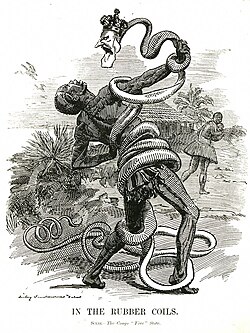
ช่วงเวลาแห่งความอดอยากที่น่าจดจำเกิดขึ้นในช่วงต้นศตวรรษที่ 20 ในรัฐคองโกเสรีในการก่อตั้งรัฐนี้ เลโอโปลด์ใช้ค่ายแรงงานขนาดใหญ่เพื่อเป็นทุนในการสร้างจักรวรรดิของเขา[ 49 ]ช่วงเวลานี้ส่งผลให้ชาวคองโกเสียชีวิตมากถึง 10 ล้านคนจากความโหดร้าย โรคภัย และความอดอยาก[ 50 ]ความพยายาม "ปราบปราม" ในยุคอาณานิคมบางครั้งทำให้เกิดความอดอยากอย่างรุนแรง โดยเฉพาะอย่างยิ่งกับการปราบปรามการกบฏของมาจิ มาจิในแทนกันยิกาในปี 1906 การนำพืชเศรษฐกิจ เช่น ฝ้าย และมาตรการบังคับเพื่อให้เกษตรกรปลูกพืชเหล่านี้ บางครั้งทำให้ชาวนาในหลายพื้นที่ยากจนลง เช่น ทางตอนเหนือของไนจีเรีย ซึ่งส่งผลให้มีความเสี่ยงต่อความอดอยากมากขึ้นเมื่อเกิดภัยแล้งอย่างรุนแรงในปี 1913 [ 51 ]
เกิดภาวะอดอยากครั้งใหญ่ในเอธิโอเปียในปี 1888 และในอีกหลายปีต่อมา โรคระบาดในสัตว์ (rinderpest)ที่แพร่ระบาดในเอริเทรียโดยวัวที่ติดเชื้อ ได้แพร่กระจายลงใต้ไปจนถึงแอฟริกาใต้ในเอธิโอเปียมีการประมาณการว่าฝูงวัวในประเทศตายไปมากถึง 90 เปอร์เซ็นต์ ทำให้เกษตรกรและคนเลี้ยงสัตว์ที่ร่ำรวยกลายเป็นคนยากจนในชั่วข้ามคืน เหตุการณ์นี้เกิดขึ้นพร้อมกับภัยแล้งที่เกี่ยวข้องกับ การแกว่งตัวของ เอลนีโญการระบาดของโรคฝีดาษ ในมนุษย์ และในหลายประเทศก็เกิดสงครามอย่างรุนแรงภาวะอดอยากครั้งใหญ่ในเอธิโอเปียที่เกิดขึ้นระหว่างปี 1888 ถึง 1892 ทำให้ประชากรของประเทศลดลงไปประมาณหนึ่งในสาม[ 52 ]ในซูดานปี 1888 เป็นที่จดจำว่าเป็นปีที่เกิดภาวะอดอยากครั้ง ร้ายแรงที่สุด ในประวัติศาสตร์ เนื่องจากปัจจัยเหล่านี้และจากการรีดไถ ที่ รัฐมาห์ดิสต์กำหนด
ประเพณีปากเปล่าของชาวฮิมบาเล่าถึงภัยแล้งสองครั้งในช่วงปี 1910 ถึง 1917 ในช่วงปี 1910 ถึง 1911 ชาวฮิมบาอธิบายภัยแล้งนี้ว่า "ภัยแล้งของเมล็ดโอมูตาติ" หรือที่เรียกว่าโอมังโกวี ซึ่งเป็นผลไม้ของเถาวัลย์ที่ไม่ทราบชนิดที่ผู้คนรับประทานในช่วงเวลานั้น ในช่วงปี 1914 ถึง 1916 ภัยแล้งนำมาซึ่งคาตูร์ออมบันดาหรือคาริออมบันดา 'ช่วงเวลาแห่งการกินเสื้อผ้า' [ 48 ]
ศตวรรษที่ 20
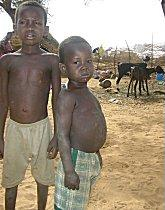
ในช่วงกลางศตวรรษที่ 20 นักเกษตร นักเศรษฐศาสตร์ และนักภูมิศาสตร์ไม่ได้มองว่าแอฟริกามีความเสี่ยงต่อภาวะอดอยากเป็นพิเศษ ตั้งแต่ปี 1870 ถึง 2010 ร้อยละ 87 ของผู้เสียชีวิตจากภาวะอดอยากเกิดขึ้นในเอเชียและยุโรปตะวันออก โดยมีเพียงร้อยละ 9.2 เท่านั้นที่เกิดขึ้นในแอฟริกา[ 29 ]มีตัวอย่างที่ตรงกันข้ามที่น่าสนใจ เช่น ภาวะอดอยากในรวันดาในช่วงสงครามโลกครั้งที่ 2 และ ภาวะอดอยากใน มาลาวีในปี 1949 แต่ภาวะอดอยากส่วนใหญ่เป็นภาวะขาดแคลนอาหารในพื้นที่จำกัดและเกิดขึ้นเพียงช่วงสั้นๆ แม้ว่าภัยแล้งจะเกิดขึ้นเพียงช่วงสั้นๆ แต่สาเหตุหลักของการเสียชีวิตในรวันดาเกิดจากสิทธิพิเศษของเบลเยียมในการได้มาซึ่งธัญพืชจากอาณานิคมของตน (รวันดา) การได้มาซึ่งธัญพืชที่เพิ่มขึ้นนั้นเกี่ยวข้องกับสงครามโลกครั้งที่ 2 สิ่งนี้และภัยแล้งทำให้ชาวรวันดาเสียชีวิตไป 300,000 คน[ 49 ]
ระหว่างปี พ.ศ. 2510 ถึง พ.ศ. 2512 เกิดภาวะอดอยากครั้งใหญ่ในเบียฟราและไนจีเรีย เนื่องจากรัฐบาลปิดล้อมดินแดนที่แยกตัวออกไปมีการประมาณการว่ามีผู้เสียชีวิตจากความอดอยากถึง 1.5 ล้านคนจากภาวะอดอยากครั้งนี้ นอกจากนี้ ภัยแล้งและการแทรกแซงของรัฐบาลในด้านการจัดหาอาหารยังทำให้ชาวแอฟริกันเสียชีวิตถึง 500,000 คนในแอฟริกาตอนกลางและตะวันตก[ 53 ]
ภาวะอดอยากกลับมาเกิดขึ้นอีกครั้งในช่วงต้นทศวรรษ 1970 เมื่อเอธิโอเปียและภูมิภาคซาเฮล ทางตะวันตกของแอฟริกา ประสบกับภัยแล้งและภาวะอดอยากภาวะอดอยากในเอธิโอเปียครั้งนั้นมีความเชื่อมโยงอย่างใกล้ชิดกับวิกฤตการณ์ของระบบศักดินาในประเทศนั้น และในที่สุดก็มีส่วนทำให้จักรพรรดิไฮเล เซลาสซี ต้องล่มสลาย ส่วนภาวะอดอยากในซาเฮลนั้นเกี่ยวข้องกับวิกฤตการณ์การเลี้ยงปศุสัตว์ในแอฟริกาที่ค่อยๆ ทวีความรุนแรงขึ้น ซึ่งทำให้การเลี้ยงปศุสัตว์ลดลงในฐานะวิถีชีวิตที่ยั่งยืนในช่วงสองชั่วอายุคนที่ผ่านมา
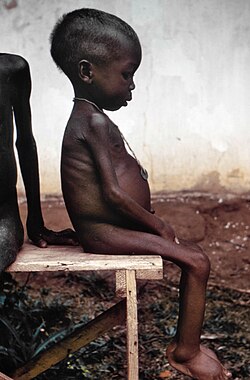
เกิดภาวะอดอยากในซูดานในช่วงปลายทศวรรษ 1970 และอีกครั้งในปี 1990 และ 1998 ภาวะอดอยากในปี 1980 ในคาราโมจาประเทศอู กันดา ถือเป็นหนึ่งในภาวะอดอยากที่เลวร้ายที่สุดในประวัติศาสตร์ในแง่ของอัตราการเสียชีวิต ประชากร 21% เสียชีวิต รวมถึงทารก 60% [ 54 ]ในช่วงทศวรรษ 1980 เกิดภัยแล้งหลายชั้นขนาดใหญ่ในซูดานและภูมิภาคซาเฮลของแอฟริกา ซึ่งก่อให้เกิดภาวะอดอยาก เนื่องจากแม้ว่ารัฐบาลซูดานจะเชื่อว่ามีธัญพืชเหลือเฟือ แต่ก็มีการขาดแคลนในระดับท้องถิ่นทั่วทั้งภูมิภาค[ 55 ]
ในเดือนตุลาคม พ.ศ. 2527 รายงานทางโทรทัศน์ที่บรรยายถึงความอดอยากในเอธิโอเปียว่าเป็น "ภัยพิบัติครั้งใหญ่" กระตุ้นให้เกิด คอนเสิร์ต Live Aidในลอนดอนและฟิลาเดลเฟีย ซึ่งระดมทุนได้จำนวนมากเพื่อบรรเทาความทุกข์ยาก สาเหตุหลักของความอดอยาก (ซึ่งเป็นหนึ่งในภัยพิบัติครั้งใหญ่ที่สุดที่เคยเกิดขึ้นในประเทศ) คือ เอธิโอเปีย (และภูมิภาคฮอร์นโดยรอบ) ยังคงฟื้นตัวจากภัยแล้งที่เกิดขึ้นในช่วงกลางถึงปลายทศวรรษ พ.ศ. 2513 ปัญหาดังกล่าวทวีความรุนแรงขึ้นจากการสู้รบเป็นระยะเนื่องจากสงครามกลางเมืองเอธิโอเปีย การขาดการจัดการที่ดีของ รัฐบาลในการให้ความช่วยเหลือ และการกักตุนเสบียงเพื่อควบคุมประชากร ในที่สุด ชาวเอธิโอเปียกว่า 1 ล้านคนเสียชีวิต และกว่า 22 ล้านคนต้องทนทุกข์ทรมานจากภัยแล้งที่ยาวนาน ซึ่งกินเวลาราว 2 ปี[ 56 ]
ในปี พ.ศ. 2535 โซมาเลียกลายเป็นเขตสงครามที่ไม่มีรัฐบาล ตำรวจ หรือบริการพื้นฐานที่มีประสิทธิภาพ หลังจากการล่มสลายของระบอบเผด็จการที่นำโดยเซียะด บาร์เรและการแบ่งอำนาจระหว่างขุนศึก เหตุการณ์นี้เกิดขึ้นพร้อมกับภัยแล้งครั้งใหญ่ ทำให้ชาวโซมาเลียเสียชีวิตไปกว่า 300,000 คน[ 57 ]
หลายปีที่ผ่านมา
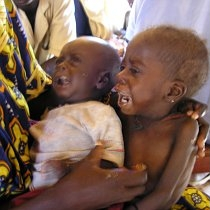
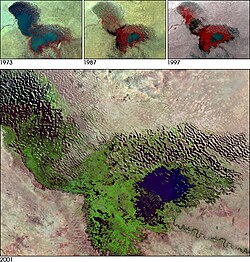
นับตั้งแต่ต้นศตวรรษที่ 21 การเตือนภัยล่วงหน้าและการตอบสนองด้านมนุษยธรรมที่มีประสิทธิภาพมากขึ้นได้ลดจำนวนผู้เสียชีวิตจากภาวะอดอยากลงอย่างเห็นได้ชัด ถึงกระนั้น ประเทศในแอฟริกาหลายประเทศก็ยังไม่สามารถผลิตอาหารได้เพียงพอด้วยตนเอง โดยต้องพึ่งพารายได้จากพืชเศรษฐกิจเพื่อนำเข้าอาหารการเกษตรในแอฟริกามีความอ่อนไหวต่อ ความผันผวนของ สภาพภูมิอากาศโดยเฉพาะอย่างยิ่งภัยแล้งซึ่งสามารถลดปริมาณอาหารที่ผลิตในท้องถิ่นได้ ปัญหาทางการเกษตรอื่นๆ ได้แก่ดินไม่สมบูรณ์การเสื่อมโทรมและการกัดเซาะของที่ดินฝูงตั๊กแตนทะเลทรายซึ่งสามารถทำลายพืชผลทั้งหมดได้ และโรคระบาดในปศุสัตว์การกลายเป็นทะเลทรายเป็นปัญหาที่เพิ่มมากขึ้นเรื่อยๆ มีรายงานว่า ทะเลทราย ซาฮารา ขยายตัวได้ถึง48 กิโลเมตร (30 ไมล์)ต่อปี[ 58 ]ภาวะอดอยากที่ร้ายแรงที่สุดเกิดจากการรวมกันของภัยแล้ง นโยบายเศรษฐกิจที่ผิดพลาด และความขัดแย้ง ตัวอย่างเช่น วิกฤตการณ์ความอดอยากในเอธิโอเปียระหว่างปี 1983-1985 เป็นผลมาจากปัจจัยทั้งสามประการนี้รวมกัน และยิ่งเลวร้ายลงไปอีกจากการที่รัฐบาลคอมมิวนิสต์ปิดบังข้อมูลวิกฤตที่เกิดขึ้น ในขณะเดียวกัน ในซูดานซึ่งเป็นประเทศทุนนิยม ภัยแล้งและวิกฤตเศรษฐกิจ ประกอบกับการปฏิเสธว่าไม่มีการขาดแคลนอาหารโดยรัฐบาลของประธานาธิบดีกาฟาร์ นิเมรี ในขณะนั้น ก่อให้เกิดวิกฤตที่คร่าชีวิตผู้คนไปประมาณ 250,000 คน และเป็นส่วนหนึ่งที่นำไปสู่การลุกฮือของประชาชนที่โค่นล้มรัฐบาลของนิเมรี
ปัจจัยหลายประการทำให้ สถานการณ์ ความมั่นคงทางอาหารในแอฟริกาเปราะบาง รวมถึงความไม่มั่นคงทางการเมือง ความขัดแย้งทางอาวุธและสงครามกลางเมืองการทุจริตและการจัดการที่ไม่ดีในการจัดการเสบียงอาหาร และนโยบายการค้าที่เป็นอันตรายต่อเกษตรกรรมของแอฟริกา ตัวอย่างหนึ่งของภาวะอดอยากที่เกิดจากการละเมิดสิทธิมนุษยชนคือภาวะอดอยากในซูดานปี 1998 โรคเอดส์ ยังส่งผลกระทบทางเศรษฐกิจในระยะยาวต่อเกษตรกรรมโดยการลด จำนวนแรงงานที่มีอยู่ และสร้างความเปราะบางใหม่ต่อภาวะอดอยากโดยการเพิ่มภาระให้กับครัวเรือนที่ยากจน ในทางกลับกัน ในประวัติศาสตร์สมัยใหม่ของแอฟริกา ภาวะอดอยากหลายครั้งทำหน้าที่เป็นแหล่งที่มาหลักของความไม่มั่นคงทางการเมืองอย่างรุนแรง[ 59 ]ในแอฟริกา หากแนวโน้มปัจจุบันของการเติบโตของประชากรและการเสื่อมโทรมของดินยังคงดำเนินต่อไป ทวีปนี้อาจสามารถเลี้ยงดูประชากรได้เพียง 25% ภายในปี 2025 ตามข้อมูลของสถาบันทรัพยากรธรรมชาติในแอฟริกาของมหาวิทยาลัยสหประชาชาติ (UNU) ซึ่งตั้งอยู่ในประเทศกานา [ 60 ]
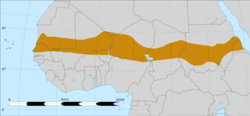
ภาวะอดอยากในช่วงต้นศตวรรษที่ 21 ในแอฟริกา ได้แก่วิกฤตอาหารไนเจอร์ในปี 2005–06 ภาวะอดอยากในซาเฮลในปี 2010และภัยแล้งในแอฟริกาตะวันออกในปี 2011 ซึ่งการขาดฤดูฝนติดต่อกันสองฤดูทำให้เกิด ภัยแล้งที่รุนแรงที่สุดครั้งหนึ่ง ในแอฟริกาตะวันออก ในรอบ 60 ปี[ 61 ] [ 62 ]มีรายงานว่ามีผู้เสียชีวิตประมาณ 50,000 ถึง 150,000 คนในช่วงเวลานั้น[ 63 ] [ 64 ]ในปี 2012 ภัยแล้งในซาเฮลทำให้ผู้คนมากกว่า 10 ล้านคนในซาเฮลตะวันตกเสี่ยงต่อภาวะอดอยาก (ตามข้อมูลจาก ผู้เชี่ยวชาญด้านความช่วยเหลือ ของ Methodist Relief & Development Fund (MRDF) ) เนื่องจากคลื่นความร้อนที่ยาวนานหนึ่งเดือน[ 65 ] [ 66 ]
ปัจจุบัน ภาวะอดอยากแพร่หลายมากที่สุดในแอฟริกาใต้ทะเลทรายซาฮาราแต่เนื่องจากทรัพยากรอาหารหมดลง การใช้น้ำ บาดาลมากเกินไป สงคราม ความขัดแย้งภายใน และความล้มเหลวทางเศรษฐกิจ ภาวะอดอยากยังคงเป็นปัญหาทั่วโลก โดยมีผู้คนหลายร้อยล้านคนต้องทนทุกข์ทรมาน[ 67 ]ภาวะอดอยากเหล่านี้ทำให้เกิดภาวะทุพโภชนาการและความยากจนอย่างแพร่หลายภาวะอดอยากในเอธิโอเปียในช่วงทศวรรษ 1980 มีผู้เสียชีวิตจำนวนมหาศาล แม้ว่าภาวะอดอยากในเอเชียในช่วงศตวรรษที่ 20 ก็มีผู้เสียชีวิตจำนวนมากเช่นกัน ภาวะอดอยากในแอฟริกาสมัยใหม่มีลักษณะเฉพาะคือความยากจนและภาวะทุพโภชนาการอย่างแพร่หลาย โดยมีอัตราการเสียชีวิตที่สูงขึ้นในกลุ่มเด็กเล็ก
โครงการริเริ่มในปัจจุบัน
ท่ามกลางการแทรกแซงแบบดั้งเดิมผ่านทางรัฐหรือตลาด ได้มีการริเริ่มทางเลือกใหม่ๆ เพื่อแก้ไขปัญหาความมั่นคงทางอาหาร ตัวอย่างหนึ่งในแอฟริกาคือ โครงการกำแพงเขียวขนาดใหญ่ (Great Green Wall ) อีกตัวอย่างหนึ่งคือ "แนวทางการพัฒนาพื้นที่ชุมชน" (Community Area-Based Development Approach หรือ CABDA) ซึ่งเป็นโครงการขององค์กรพัฒนาเอกชนที่มีวัตถุประสงค์เพื่อเป็นแนวทางทางเลือกในการเพิ่มความมั่นคงทางอาหารในแอฟริกา CABDA ดำเนินการผ่านพื้นที่การแทรกแซงเฉพาะ เช่น การแนะนำพืชทนแล้งและวิธีการผลิตอาหารแบบใหม่ เช่น วนเกษตร โครงการนี้ได้รับการนำร่องในเอธิโอเปียในช่วงทศวรรษ 1990 และได้ขยายไปยังมาลาวี ยูกันดา เอริเทรีย และเคนยา ในการวิเคราะห์โครงการโดยสถาบันพัฒนาต่างประเทศ (Overseas Development Institute) พบว่า CABDA มุ่งเน้นไปที่การสร้างศักยภาพของบุคคลและชุมชน ซึ่งช่วยให้เกษตรกรมีอิทธิพลและขับเคลื่อนการพัฒนาของตนเองผ่านสถาบันที่ดำเนินการโดยชุมชน นำมาซึ่งความมั่นคงทางอาหารให้กับครัวเรือนและภูมิภาคของพวกเขา[ 68 ]
บทบาทขององค์กรเอกภาพแอฟริกา
องค์กรเอกภาพแอฟริกาและบทบาทในวิกฤตการณ์แอฟริกาให้ความสนใจในด้านการเมืองของทวีป โดยเฉพาะอย่างยิ่งการปลดปล่อยส่วนที่ถูกยึดครองและการกำจัดลัทธิเหยียดเชื้อชาติ องค์กรประสบความสำเร็จในด้านนี้ แต่ไม่ประสบความสำเร็จในด้านเศรษฐกิจหรือการพัฒนา ผู้นำแอฟริกาตกลงที่จะมอบบทบาทขององค์กรของตนในการพัฒนาให้กับสหประชาชาติผ่านทางคณะกรรมาธิการเศรษฐกิจแห่งแอฟริกา "ECA" [ 69 ]
ตะวันออกไกล
จีน
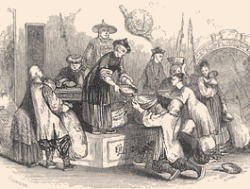
นักวิชาการชาวจีนได้บันทึกจำนวนเหตุการณ์ความอดอยากไว้ 1,828 ครั้ง ตั้งแต่ปี 108 ก่อน คริสต์ศักราชถึงปี 1911 ในแต่ละมณฑล โดยเฉลี่ยแล้วมีเหตุการณ์ความอดอยากมากกว่าหนึ่งครั้งต่อปี[ 70 ]ความอดอยากครั้งใหญ่ระหว่างปี 1333 ถึง 1337 คร่าชีวิตผู้คนไป 6 ล้านคน ส่วนความอดอยากสี่ครั้งในปี 1810, 1811, 1846 และ 1849 กล่าวกันว่าคร่าชีวิตผู้คนไปไม่น้อยกว่า 45 ล้านคน[ 71 ] [ 72 ]
ระบบราชการ ของราชวงศ์ชิงของจีนให้ความสำคัญอย่างมากกับการลดความอดอยากด้วยเครือข่ายยุ้งฉางความอดอยากมักเกิดขึ้นทันทีหลังจาก ภัยแล้งและน้ำท่วมที่เชื่อมโยงกับ ปรากฏการณ์เอลนีโญ-ความผันผวนทางใต้เหตุการณ์เหล่านี้เทียบได้กับเหตุการณ์ที่กระตุ้นให้เกิดความอดอยากครั้งใหญ่ในศตวรรษที่ 19 ของจีน แม้ว่าจะมีขนาดเล็กกว่าก็ตาม[ 73 ]จีนในสมัยราชวงศ์ชิงได้ดำเนินการบรรเทาทุกข์ ซึ่งรวมถึงการขนส่งอาหารจำนวนมาก การกำหนดให้คนรวยเปิดยุ้งฉางของตนให้คนจน และการควบคุมราคา ซึ่งเป็นส่วนหนึ่งของการรับประกันการดำรงชีพของรัฐสำหรับชาวนา (ที่รู้จักกันในชื่อหมิงเซิง ) อย่างไรก็ตามการกบฏไท่ผิงในช่วงทศวรรษ 1850 ได้ทำลายระบบบรรเทาทุกข์ของยุ้งฉาง ส่งผลให้ระหว่างปี 1850 ถึง 1873 ประชากรของจีนลดลงกว่า 30 ล้านคนจากการเสียชีวิตก่อนวัยอันควรและการเกิดที่หายไป[ 74 ]
เมื่อระบอบกษัตริย์ที่ตึงเครียดเปลี่ยนจากการจัดการของรัฐและการส่งธัญพืชโดยตรงไปเป็นการบริจาคเงินในช่วงกลางศตวรรษที่ 19 ระบบก็ล่มสลาย ดังนั้น ความอดอยากในปี 1867–68 ภายใต้การฟื้นฟูราชวงศ์ถงจือจึงได้รับการบรรเทาลงอย่างประสบความสำเร็จ แต่ความอดอยากครั้งใหญ่ในภาคเหนือของจีนในปี 1877–78 ซึ่งเกิดจากภัยแล้งทั่วภาคเหนือของจีนนั้นเป็นหายนะ มณฑลซานซีมีประชากรลดลงอย่างมากเนื่องจากธัญพืชหมดลง และผู้คนที่อดอยากอย่างสิ้นหวังได้ทำลายป่า ทุ่งนา และแม้แต่บ้านเรือนของตนเองเพื่อหาอาหาร ประมาณการผู้เสียชีวิตอยู่ที่ 9.5 ถึง 13 ล้านคน[ 75 ]
การก้าวกระโดดครั้งใหญ่ ค.ศ. 1958–1961
ความอดอยากครั้งใหญ่ที่สุดในศตวรรษที่ 20 คือความอดอยากในปี 1958–1961ซึ่งเกี่ยวข้องกับโครงการก้าวกระโดดครั้งใหญ่ในประเทศจีน สาเหตุโดยตรงของความอดอยากครั้งนี้มาจากความพยายามที่ล้มเหลวของเหมา เจ๋อตุง ในการเปลี่ยนจีนจากประเทศเกษตรกรรมไปเป็นมหาอำนาจอุตสาหกรรมในคราวเดียว เจ้าหน้าที่พรรคคอมมิวนิสต์ทั่วประเทศจีนยืนกรานให้ชาวนาละทิ้งฟาร์มของตนเพื่อไปอยู่ในฟาร์มรวม และเริ่มผลิตเหล็กในโรงหล่อขนาดเล็ก ซึ่งมักจะหลอมเครื่องมือทางการเกษตรของพวกเขาในกระบวนการนี้ การรวมกลุ่มทำให้แรงจูงใจในการลงทุนแรงงานและทรัพยากรในภาคเกษตรกรรมลดลง แผนการผลิตโลหะแบบกระจายศูนย์ที่ไม่สมจริงทำให้ขาดแคลนแรงงานที่จำเป็น สภาพอากาศที่ไม่เอื้ออำนวย และโรงอาหารรวมส่งเสริม การบริโภค อาหารที่มีอยู่มากเกินไป[ 76 ]การควบคุมข้อมูลจากส่วนกลางและความกดดันอย่างมากต่อเจ้าหน้าที่พรรคให้รายงานเฉพาะข่าวดี เช่นโควตาการผลิตที่บรรลุหรือเกินเป้าหมาย ทำให้ข้อมูลเกี่ยวกับภัยพิบัติที่ทวีความรุนแรงขึ้นถูกระงับอย่างมีประสิทธิภาพ เมื่อผู้นำรับรู้ถึงความรุนแรงของภาวะอดอยาก พวกเขากลับไม่ตอบสนองอะไรมากนัก และยังคงห้ามการพูดคุยเกี่ยวกับภัยพิบัตินี้ต่อไป การปิดกั้นข่าวสารอย่างครอบคลุมนี้มีประสิทธิภาพมากจนพลเมืองชาวจีนเพียงไม่กี่คนเท่านั้นที่รู้ถึงความรุนแรงของภาวะอดอยาก และภัยพิบัติทางประชากรครั้งใหญ่ที่สุดในยามสงบของศตวรรษที่ 20 เพิ่งเป็นที่รู้จักอย่างกว้างขวางในอีกยี่สิบปีต่อมา เมื่อม่านแห่งการเซ็นเซอร์เริ่มถูกเปิดออก
เป็นการยากที่จะระบุจำนวนผู้เสียชีวิตจากภาวะอดอยากในช่วงปี 1958–1961 ได้อย่างแน่ชัด และมีการประมาณการตั้งแต่ 18 ล้านคน[ 77 ]ไปจนถึงอย่างน้อย 42 ล้าน คน [ 78 ]โดยมีการยกเลิกการคลอดบุตรหรือเลื่อนการคลอดบุตรอีก 30 ล้านคน[ 79 ]มีเพียงเมื่อภาวะอดอยากรุนแรงที่สุดเท่านั้นที่เหมาเจ๋อตุงจึงได้ยกเลิกนโยบายการรวมกลุ่มทางการเกษตร ซึ่งถูกยกเลิกอย่างมีประสิทธิภาพในปี 1978 จีนไม่เคยประสบกับภาวะอดอยากในระดับเดียวกับช่วงก้าวกระโดดครั้งใหญ่อีกเลยนับตั้งแต่ปี 1961 [ 80 ]
ญี่ปุ่น
ญี่ปุ่นประสบกับภาวะอดอยากมากกว่า 130 ครั้งระหว่างปี ค.ศ. 1603 ถึง ค.ศ. 1868 [ 81 ]
กัมพูชา
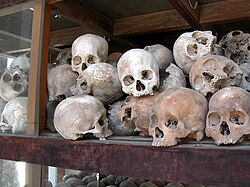
ในปี 1975 เขมรแดงเข้ายึดอำนาจในกัมพูชา รัฐบาลใหม่นำโดยพอล พตผู้ปรารถนาจะเปลี่ยนกัมพูชาให้เป็นสังคมคอมมิวนิสต์แบบเกษตรกรรมในอุดมคติ ระบอบของเขาได้ขับไล่ผู้คนออกจากเมือง ยกเลิกเงินตราและกรรมสิทธิ์ส่วนบุคคล และบังคับให้ประชากรของกัมพูชาตกเป็นทาสในฟาร์มส่วนรวม ในเวลาไม่ถึงสี่ปี เขมรแดงได้ประหารชีวิตผู้คนไปเกือบ 1.4 ล้านคน ส่วนใหญ่เป็นผู้ที่ถูกมองว่าเป็นภัยคุกคามต่ออุดมการณ์ใหม่
เนื่องจากนโยบายปฏิรูปที่ดินของเขมรแดงล้มเหลว กัมพูชาจึงประสบกับภาวะอดอยากอย่างกว้างขวาง มีผู้เสียชีวิตจากความอดอยาก โรคภัยไข้เจ็บ และความอ่อนเพลียอันเป็นผลมาจากนโยบายเหล่านี้มากถึงหนึ่งล้านคน[ 82 ] [ 83 ]ในปี พ.ศ. 2522 เวียดนามได้บุกกัมพูชาและโค่นล้มเขมรแดงจากอำนาจ ในเวลานั้นประชากรของกัมพูชาประมาณหนึ่งในสี่เสียชีวิต
ภาวะขาดแคลนอาหารในเกาหลีเหนือช่วงทศวรรษ 1990
ภัยแล้งครั้งใหญ่เกิดขึ้นในเกาหลีเหนือช่วงกลางทศวรรษ 1990โดยมีสาเหตุมาจากอุทกภัยครั้งร้ายแรงที่ไม่เคยเกิดขึ้นมาก่อน รัฐอุตสาหกรรมและ เมืองใหญ่ที่พึ่งพาตนเอง แห่งนี้ ต้องพึ่งพาสินค้าอุดหนุนจำนวนมหาศาล รวมถึงเชื้อเพลิงฟอสซิล ซึ่งส่วนใหญ่มาจากสหภาพโซเวียตและสาธารณรัฐประชาชนจีนเมื่อสหภาพโซเวียตล่มสลายและการเปิดเสรีทางเศรษฐกิจของจีนทำให้การค้าเปลี่ยนไปใช้สกุลเงินแข็งและราคาเต็ม เกาหลีเหนือจึงมีเศรษฐกิจที่ล่มสลาย ภาคเกษตรกรรมที่เปราะบางประสบความล้มเหลวครั้งใหญ่ในปี 1995-1996 และขยายตัวจนกลายเป็นภัยแล้งอย่างเต็มรูปแบบในปี 1996-1999
จากการประมาณการตามสำมะโนประชากรของเกาหลีเหนือ พบว่ามีผู้เสียชีวิตจากภาวะอดอยากประมาณ 240,000 ถึง 420,000 คน และมีผู้เสียชีวิตจากสาเหตุผิดธรรมชาติในเกาหลีเหนือประมาณ 600,000 ถึง 850,000 คน ระหว่างปี 1993 ถึง 2008 [ 84 ] เกาหลีเหนือยังไม่สามารถพึ่งพาตนเองด้านอาหารได้ และต้องพึ่งพาความช่วยเหลือด้านอาหารจากภายนอก เช่น จีน ญี่ปุ่น เกาหลีใต้รัสเซียและสหรัฐอเมริกาในขณะที่ Woo - Cumings มุ่งเน้นไปที่ ด้าน FAD ของภาวะ อดอยาก Moon โต้แย้งว่า FAD ได้เปลี่ยนโครงสร้างแรงจูงใจของระบอบเผด็จการให้ตอบสนองในลักษณะที่บังคับให้ผู้คนหลายล้านคนที่ถูกกีดกันสิทธิต้องอดตาย[ 85 ]
ตามรายงานขององค์การอาหารและเกษตรแห่งสหประชาชาติ (FAO) เกาหลีเหนือเผชิญกับภาวะขาดแคลนธัญพืชอย่างรุนแรงในปี 2017 หลังจากผลผลิตทางการเกษตรของประเทศลดลงเนื่องจากภัยแล้งอย่างรุนแรง[ 86 ] FAO ประเมินว่าผลผลิตในช่วงต้นฤดูกาลลดลงกว่าร้อยละ 30 เมื่อเทียบกับผลผลิตทางการเกษตรจากปีที่แล้ว ส่งผลให้ประเทศประสบกับภาวะอดอยากที่เลวร้ายที่สุดนับตั้งแต่ปี 2544 [ 87 ]
เวียดนาม
การ ยึดครอง ของญี่ปุ่นในช่วงสงครามโลกครั้งที่สองทำให้ปัญหาการขาดแคลนอาหารที่มีอยู่ก่อนแล้วซึ่งเกิดจากภาวะเศรษฐกิจตกต่ำครั้งใหญ่และการกักตุนที่ดินทำกินของฝรั่งเศสที่เพิ่มมากขึ้น ทวีความรุนแรงขึ้น ส่งผลให้จำนวนผู้เสียชีวิต จากภาวะอดอยากในเวียดนามระหว่างปี 1944–1945อยู่ระหว่าง 700,000 ถึง 2,000,000 คน[ 88 ]
อินเดีย
เนื่องจากอินเดียพึ่งพาฝนจาก ฤดู มรสุม เกือบทั้งหมด จึงมีความเสี่ยงต่อความล้มเหลวของพืชผล ซึ่งบางครั้งอาจลุกลามไปสู่ภาวะอดอยาก[ 89 ]มีภาวะอดอยากเกิดขึ้นในอินเดีย 14 ครั้ง ระหว่างศตวรรษที่ 11 ถึง 17 (Bhatia, 1985) ตัวอย่างเช่น ในช่วงภาวะอดอยากครั้งใหญ่ในอินเดียระหว่างปี 1022–1033 จังหวัดต่างๆ ทั่วประเทศก็กลายเป็นพื้นที่ร้าง ภาวะอดอยากในเดคคานคร่าชีวิตผู้คนไปอย่างน้อยสองล้านคนในปี 1702–1704 บีเอ็ม บาเทียเชื่อว่าภาวะอดอยากในยุคแรกๆ เกิดขึ้นในพื้นที่จำกัด และหลังจากปี 1860 ในช่วงการปกครองของอังกฤษ เท่านั้น ที่ภาวะอดอยากเริ่มหมายถึงการขาดแคลนธัญพืชโดยทั่วไปในประเทศ มีภาวะอดอยากครั้งใหญ่ประมาณ 25 ครั้งกระจายไปทั่วรัฐต่างๆ เช่นทมิฬนาฑูทางตอนใต้ และพิหารและเบงกอลทางตะวันออกในช่วงครึ่งหลังของศตวรรษที่ 19
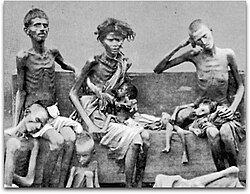
โรเมช ชุนเดอร์ ดัตต์ได้โต้แย้งไว้ตั้งแต่ปี ค.ศ. 1900 และนักวิชาการในปัจจุบัน เช่นอมาร์ตยา เซนก็เห็นด้วย ว่าภัยพิบัติทางอาหารครั้งประวัติศาสตร์บางครั้งเป็นผลมาจากทั้งปริมาณน้ำฝนที่ไม่สม่ำเสมอและนโยบายทางเศรษฐกิจและการบริหารของอังกฤษ ซึ่งตั้งแต่ปี ค.ศ. 1857 เป็นต้นมาได้นำไปสู่การยึดและเปลี่ยนที่ดินทำกินในท้องถิ่นให้เป็นไร่ของต่างชาติ การจำกัดการค้าภายในประเทศ การเก็บภาษีอย่างหนักจากพลเมืองอินเดียเพื่อสนับสนุนการรุกรานของอังกฤษในอัฟกานิสถาน (ดูสงครามแองโกล-อัฟกันครั้งที่สอง ) มาตรการเงินเฟ้อที่ทำให้ราคาอาหารสูงขึ้น และการส่งออกพืชผลหลักจำนวนมากจากอินเดียไปยังอังกฤษ (ดัตต์, 1900 และ 1902; ศรีวัสตาวา, 1968; เซน, 1982; บาเทีย, 1985)
พลเมืองชาวอังกฤษบางคน เช่นวิลเลียม ดิกบีได้เรียกร้องให้มีการปฏิรูปนโยบายและการบรรเทาความอดอยาก แต่ลอร์ด ลิตตันผู้สำเร็จราชการแทนพระองค์ชาวอังกฤษในอินเดีย คัดค้านการเปลี่ยนแปลงดังกล่าว โดยเชื่อว่าการเปลี่ยนแปลงเหล่านั้นจะกระตุ้นให้คนงานชาวอินเดียหลีกเลี่ยงการทำงาน ความอดอยากครั้งแรกคือความอดอยากในเบงกอลในปี 1770ซึ่งคาดว่าคร่าชีวิตผู้คนไปประมาณ 10 ล้านคน คิดเป็นหนึ่งในสามของประชากรเบงกอลในขณะนั้น ความอดอยากครั้งสำคัญอื่นๆ ได้แก่ความอดอยากครั้งใหญ่ในปี 1876–1878ซึ่งมีผู้เสียชีวิต 6.1 ล้านถึง 10.3 ล้านคน[ 90 ]และความอดอยากในอินเดียในปี 1899–1900ซึ่งมีผู้เสียชีวิต 1.25 ถึง 10 ล้านคน[ 91 ]ความอดอยากสิ้นสุดลงในศตวรรษที่ 20 ยกเว้นความอดอยากในเบงกอลในปี 1943 ซึ่ง คร่าชีวิตชาวเบงกอลไปประมาณ 2.1 ล้านคนในช่วงสงครามโลกครั้งที่สอง[ 92 ]
ข้อสังเกตของคณะกรรมการศึกษาภาวะอดอยากในปี ค.ศ. 1880 สนับสนุนแนวคิดที่ว่าการกระจายอาหารเป็นสาเหตุสำคัญของภาวะอดอยากมากกว่าการขาดแคลนอาหาร พวกเขาพบว่าแต่ละจังหวัดในบริติชอินเดียรวมถึงพม่ามีธัญพืชเหลือเฟือ และปริมาณส่วนเกินประจำปีอยู่ที่ 5.16 ล้านตัน (Bhatia, 1970) ในขณะนั้น การส่งออกข้าวและธัญพืชอื่นๆ จากอินเดียต่อปีอยู่ที่ประมาณหนึ่งล้านตัน
การเพิ่มขึ้นของประชากรทำให้สถานการณ์ของชาวนาเลวร้ายลง เนื่องจากสันติภาพ การพัฒนาด้านสุขอนามัยและสุขภาพ ประชากรอินเดียจึงเพิ่มขึ้นจากประมาณ 100 ล้านคนในปี 1700 เป็น 300 ล้านคนในปี 1920 ขณะที่อังกฤษส่งเสริมผลผลิตทางการเกษตร พวกเขาก็ให้แรงจูงใจทางเศรษฐกิจเพื่อให้มีบุตรมากขึ้นเพื่อช่วยงานในไร่นา แม้ว่าการเพิ่มขึ้นของประชากรในลักษณะเดียวกันจะเกิดขึ้นในยุโรปในช่วงเวลาเดียวกัน แต่จำนวนประชากรที่เพิ่มขึ้นนั้นสามารถรองรับได้ด้วยการพัฒนาอุตสาหกรรมหรือการอพยพไปยังทวีปอเมริกาและออสเตรเลีย อินเดียไม่ได้ประสบกับการปฏิวัติอุตสาหกรรมหรือการเพิ่มขึ้นของการผลิตอาหาร ยิ่งไปกว่านั้น เจ้าของที่ดินในอินเดียมีส่วนได้ส่วนเสียในระบบการปลูกพืชเศรษฐกิจและไม่สนับสนุนนวัตกรรม ส่งผลให้จำนวนประชากรเพิ่มขึ้นเกินกว่าปริมาณอาหารและที่ดินที่มีอยู่ ทำให้เกิดความยากจนอย่างรุนแรงและความอดอยากอย่างแพร่หลาย
— Craig A. Lockard, สังคม เครือข่าย และการเปลี่ยนแปลง[ 93 ]
ภัยแล้งในรัฐมหาราษฏระไม่มีผู้เสียชีวิตจากความอดอยาก และเป็นที่รู้จักจากการนำนโยบายป้องกันความอดอยากมาใช้อย่างประสบความสำเร็จ ซึ่งแตกต่างจากสมัยที่อังกฤษปกครอง[ 94 ]
ตะวันออกกลาง

เชื่อกันว่า ภัยแล้งครั้งใหญ่ในเปอร์เซียระหว่างปี 1870–1872ทำให้มีผู้เสียชีวิตถึง 1.5 ล้านคน (20–25% ของประชากร) ในเปอร์เซีย (ปัจจุบันคืออิหร่าน) [ 95 ]

ในช่วงต้นศตวรรษที่ 20 การปิดล้อมการส่งออกอาหารไปยังเลบานอน โดยจักรวรรดิออตโตมัน ทำให้เกิดภาวะอดอยาก ซึ่งคร่าชีวิตชาวเลบานอนไปมากถึง 450,000 คน (ประมาณหนึ่งในสามของประชากร) ภาวะอดอยากครั้งนี้คร่าชีวิตผู้คนมากกว่าสงครามกลางเมืองเลบานอนการปิดล้อมเกิดจากการลุกฮือในภูมิภาคซีเรียของจักรวรรดิ รวมถึงเหตุการณ์หนึ่งที่เกิดขึ้นในช่วงทศวรรษ 1860 ซึ่งนำไปสู่การสังหารหมู่ชาวเลบานอนและซีเรียหลายพันคนโดยชาวเติร์กออตโตมันและชาวดรูซใน ท้องถิ่น [ 96 ]
ในปี 2025 กาซาต้องเผชิญกับภาวะอดอยากอันเป็นผลมาจากการโจมตีทางอากาศของอิสราเอลในช่วงสงครามกาซาและการปิดล้อมของอิสราเอลซึ่งรวมถึงสินค้าจำเป็นพื้นฐานและ ความช่วยเหลือ ด้านมนุษยธรรม[ 97 ] [ 98 ] [ 99 ]การโจมตีทางอากาศได้ทำลายโครงสร้างพื้นฐานด้านอาหาร เช่น โรงอบขนม โรงสี และร้านค้าขายอาหาร และเกิดภาวะขาดแคลนสินค้าจำเป็นอย่างแพร่หลายเนื่องจากการปิดล้อมความช่วยเหลือตามที่กลุ่มผู้เชี่ยวชาญของสหประชาชาติระบุไว้ ณ เดือนกรกฎาคม 2024 "การรณรงค์อดอยากแบบเจาะจงเป้าหมาย" ของอิสราเอลได้แพร่กระจายไปทั่วฉนวนกาซา ทำให้เด็กเสีย ชีวิต [ 100 ] [ 101 ] [ 102 ] [ 103 ]คณะผู้แทนอิสราเอลประจำสหประชาชาติวิพากษ์วิจารณ์คำแถลงดังกล่าว โดยเรียกมันว่า "ข้อมูลที่บิดเบือน" [ 104 ]ในเดือนเดียวกันนั้น จำนวนผู้ป่วยภาวะทุพโภชนาการในเด็กที่ตรวจพบในกาซาตอนเหนือเพิ่มขึ้น 300 เปอร์เซ็นต์เมื่อเทียบกับเดือนพฤษภาคม 2024 [ 105 ] IPC ที่ได้รับการสนับสนุนจาก UN ยืนยันว่าเกิดภาวะอดอยากในกาซาเมื่อวันที่ 22 สิงหาคม 2025 [ 106 ]
โวลเกอร์ เทิร์ก ข้าหลวงใหญ่ด้านสิทธิมนุษยชนแห่งสหประชาชาติ กล่าวว่าข้อจำกัดของอิสราเอล ในการนำความช่วยเหลือเข้ามาอาจถือเป็นการ ใช้ความอดอยากเป็นอาวุธสงครามซึ่งถือเป็นอาชญากรรมสงคราม[ 107 ] [ 108 ]คณะกรรมการสอบสวนระหว่างประเทศอิสระยังพบว่าอิสราเอลใช้ความอดอยากเป็นวิธีการทำสงคราม[ 109 ]ในเดือนเมษายนและพฤษภาคม USAID และสำนักงานประชากร ผู้ลี้ภัย และการโยกย้ายถิ่นฐานของกระทรวงการต่างประเทศสหรัฐฯ พบว่าอิสราเอลกำลังปิดกั้นความช่วยเหลือด้านอาหารไม่ให้เข้าสู่ฉนวนกาซา ข้อค้นพบเหล่านี้ถูกปฏิเสธโดยรัฐมนตรีต่างประเทศ บลิงเคน และรัฐบาลไบเดน [ 110 ]รัฐบาลอิสราเอลปฏิเสธว่าไม่ได้ใช้ความอดอยากเป็นอาวุธสงคราม และกล่าวว่าข้อโต้แย้งที่ว่าการกระทำของตนเกี่ยวกับความอดอยากละเมิดอนุสัญญาว่าด้วยการป้องกันและลงโทษอาชญากรรมฆ่าล้างเผ่าพันธุ์นั้น "ไม่มีมูลความจริงโดยสิ้นเชิง" [ 111 ] COGATหน่วยงานของอิสราเอลที่รับผิดชอบในการอนุญาตให้ความช่วยเหลือเข้าสู่ฉนวนกาซา ระบุว่าอิสราเอลไม่ได้กำหนดข้อจำกัดเกี่ยวกับปริมาณความช่วยเหลือที่จะเข้าสู่ฉนวนกาซา[ 112 ]ข้ออ้างของ COGAT ถูกท้าทายโดยหลายหน่วยงาน รวมถึงสหภาพยุโรปสหประชาชาติอ็อกซ์แฟมและสหราชอาณาจักร [ 113 ] ตั้งแต่เดือนมีนาคม พ.ศ. 2568 อิสราเอลได้ประกาศปิดล้อมอย่างเป็นทางการ[ 114 ]โดยรัฐมนตรีว่าการกระทรวงกลาโหมประกาศว่า "จะไม่มีความช่วยเหลือด้านมนุษยธรรมใดๆ เข้าสู่ฉนวนกาซา" [ 115 ]อิสราเอลอ้างว่า "ฮามาสกักตุนเสบียงและกีดกันไม่ให้พลเรือนที่สิ้นหวังมากขึ้นเรื่อยๆ ได้รับ" [ 116 ] [ 117 ]แต่ ณ เดือนกุมภาพันธ์ พ.ศ. 2567 สหรัฐฯ ยังไม่ได้รับหลักฐานใดๆ ที่สนับสนุนข้ออ้างนี้[ 118 ]มีรายงานว่าแก๊งติดอาวุธขโมยความช่วยเหลือ[ 119 ]
ยุโรป
ยุคกลาง
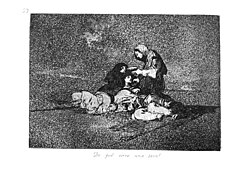
The Great Famine of 1315–1317 (or to 1322) was the first major food crisis to strike Europe in the 14th century. Millions in northern Europe died over an extended number of years, marking a clear end to the earlier period of growth and prosperity during the 11th and 12th centuries.[120] An unusually cold and wet spring of 1315 led to widespread crop failures, which lasted until at least the summer of 1317; some regions in Europe did not fully recover until 1322. Most nobles, cities, and states were slow to respond to the crisis and when they realized its severity, they had little success in securing food for their people. In 1315, in Norfolk, England, the price of grain soared from 5 shillings/quarter to 20 shillings/quarter.[121] It was a period marked by extreme levels of criminal activity, disease and mass death, infanticide, and cannibalism. It had consequences for Church, State, European society and future calamities to follow in the 14th century. There were 95 famines in medieval Britain,[122] and 75 or more in medieval France.[123] More than 10% of England's population, or at least 500,000 people, may have died during the famine of 1315–1316.[124]
Famine was a very destabilizing and devastating occurrence. The prospect of starvation led people to take desperate measures. When scarcity of food became apparent to peasants, they would sacrifice long-term prosperity for short-term survival. They would kill their draught animals, leading to lowered production in subsequent years. They would eat their seed corn, sacrificing next year's crop in the hope that more seed could be found. Once those means had been exhausted, they would take to the road in search of food. They migrated to the cities where merchants from other areas would be more likely to sell their food, as cities had a stronger purchasing power than did rural areas. Cities also administered relief programs and bought grain for their populations so that they could keep order. With the confusion and desperation of the migrants, crime would often follow them. Many peasants resorted to banditry in order to acquire enough to eat.
One famine would often lead to difficulties in the following years because of lack of seed stock or disruption of routine, or perhaps because of less-available labour. Famines were often interpreted as signs of God's displeasure. They were seen as the removal, by God, of His gifts to the people of the Earth. Elaborate religious processions and rituals were made to prevent God's wrath in the form of famine.
16th century

During the 15th century to the 18th century, famines in Europe became more frequent due to the Little Ice Age. The colder climate resulted in harvest failures and shortfalls that led to a rise in conspiracy theories concerning the causes behind these famines, such as the Pacte de Famine in France.[125]
The 1590s saw the worst famines in centuries across all of Europe. Famine had been relatively rare during the 16th century. The economy and population had grown steadily as subsistence populations tend to when there is an extended period of relative peace (most of the time). Although peasants in areas of high population density, such as northern Italy, had learned to increase the yields of their lands through techniques such as promiscuous culture, they were still quite vulnerable to famines, forcing them to work their land even more intensively.
The great famine of the 1590s began a period of famine and decline in the 17th century. The price of grain, all over Europe was high, as was the population. Various types of people were vulnerable to the succession of bad harvests that occurred throughout the 1590s in different regions. The increasing number of wage labourers in the countryside were vulnerable because they had no food of their own, and their meager living was not enough to purchase the expensive grain of a bad-crop year. Town labourers were also at risk because their wages would be insufficient to cover the cost of grain, and, to make matters worse, they often received less money in bad-crop years since the disposable income of the wealthy was spent on grain. Often, unemployment would be the result of the increase in grain prices, leading to ever-increasing numbers of urban poor.
All areas of Europe were badly affected by the famine in these periods, especially rural areas. The Netherlands was able to escape most of the damaging effects of the famine, though the 1590s were still difficult years there. Amsterdam's grain trade with the Baltic guaranteed a food supply.
17th century
The years around 1620 saw another period of famine sweep across Europe. These famines were generally less severe than the famines of twenty-five years earlier, but they were nonetheless quite serious in many areas. Perhaps the worst famine since 1600, the great famine in Finland in 1696, killed one-third of the population.[126]
Devastating harvest failures afflicted the northern Italian economy from 1618 to 1621, and it did not recover fully for centuries. There were serious famines in the late-1640s and less severe ones in the 1670s throughout northern Italy.
Over two million people died in two famines in France between 1693 and 1710. Both famines were made worse by ongoing wars.[127]

As late as the 1690s, Scotland experienced famine which reduced the population of parts of Scotland by at least 15%.[128]
The Great Famine of 1695–1697 may have killed a third of the Finnish population.[129] and roughly 10% of Norway's population.[130] Death rates rose in Scandinavia between 1740 and 1800 as the result of a series of crop failures.[131] For instance, the Finnish famine of 1866–1868 killed 15% of the population.
18th century
The period of 1740–1743 saw frigid winters and summer droughts, which led to famine across Europe and a major spike in mortality.[132] The winter 1740–41 was unusually cold, possibly because of volcanic activity.[133]
According to Scott and Duncan (2002), "Eastern Europe experienced more than 150 recorded famines between AD 1500 and 1700 and there were 100 hunger years and 121 famine years in Russia between AD 971 and 1974."[134]
The Great Famine, which lasted from 1770 until 1771, killed about one tenth of Czech lands' population, or 250,000 inhabitants, and radicalised countrysides leading to peasant uprisings.[135]
There were sixteen good harvests and 111 famine years in northern Italy from 1451 to 1767.[136] According to Stephen L. Dyson and Robert J. Rowland, "The Jesuits of Cagliari [in Sardinia] recorded years during the late 1500s 'of such hunger and so sterile that the majority of the people could sustain life only with wild ferns and other weeds' ... During the terrible famine of 1680, some 80,000 persons, out of a total population of 250,000, are said to have died, and entire villages were devastated".[137]
According to Bryson (1974), there were thirty-seven famine years in Iceland between 1500 and 1804.[138] In 1783 the volcano Laki in south-central Iceland erupted. The lava caused little direct damage, but ash and sulphur dioxide spewed out over most of the country, causing three-quarters of the island's livestock to perish. In the following famine, around ten thousand people died, one-fifth of the population of Iceland. [Asimov, 1984, 152–53]
19th century
Other areas of Europe have known famines much more recently. France saw famines as recently as the 19th century. The Great Famine in Ireland, 1846–1851, caused by the failure of the potato crop over a few years, resulted in 1,000,000 dead and another 2,000,000 refugees fleeing to Britain, Australia and the United States.[139]
20th century
Famine still occurred in Eastern Europe during the 20th century. Droughts and famines in Imperial Russia are known to have happened every 10 to 13 years, with average droughts happening every 5 to 7 years. Russia experienced eleven major famines between 1845 and 1922, one of the worst being the famine of 1891–1892.[140] The Russian famine of 1921–22 killed an estimated 5 million.
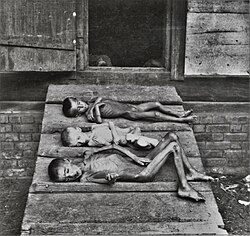
Famines continued in the Soviet era, the most notorious being the Holodomor in various parts of the country, especially the Volga, and the Ukrainian and northern Kazakh SSR's during the winter of 1932–1933. The Soviet famine of 1932–1933 is nowadays reckoned to have cost an estimated 6 million lives.[141] The last major famine in the USSR happened in 1947 due to the severe drought and the mismanagement of grain reserves by the Soviet government.[142]
The Hunger Plan, i.e. the Nazi plan to starve large sections of the Soviet population, caused the deaths of many. The Russian Academy of Sciences in 1995 reported civilian victims in the USSR at German hands, including Jews, totaled 13.7 million dead, 20% of the 68 million persons in the occupied USSR. This included 4.1 million famine and disease deaths in occupied territory. There were an additional estimated 3 million famine deaths in areas of the USSR not under German occupation.[143]
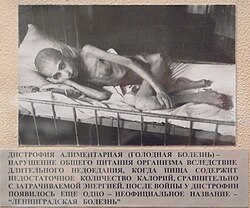
The 872 days of the Siege of Leningrad (1941–1944) caused unparalleled famine in the Leningrad region through disruption of utilities, water, energy and food supplies. This resulted in the deaths of about one million people.[144]
Famine also struck in Western Europe during the Second World War. In the Netherlands, the Hongerwinter of 1944 killed approximately 30,000 people. Some other areas of Europe also experienced famine at the same time.
Latin America
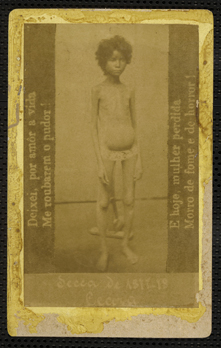
The pre-Columbian Americans often dealt with severe food shortages and famines.[145] The persistent drought around 850 AD coincided with the collapse of Classic Maya civilization, and the famine of One Rabbit (AD 1454) was a major catastrophe in Mexico.[146]
Brazil's 1877–78 Grande Seca (Great Drought), the worst in Brazil's history,[147] caused approximately half a million deaths.[148] The one from 1915 was devastating too.[149]
Oceania
Easter Island was hit by a great famine between the 15th and 18th centuries. Hunger and subsequent cannibalism was caused by overpopulation and depletion of natural resources as a result of deforestation, partly because work on megalithic monuments required a lot of wood.[150]
There are other documented episodes of famine in various islands of Polynesia, such as occurred in Kau, Hawaii in 1868.[151]
According to Daniel Lord Smail, "'Famine cannibalism' was until recently a regular feature of life in the islands of the Massim near New Guinea and of some other societies of Southeast Asia and the Pacific."[152]
When Russian explorer Otto von Kotzebue visited the Marshall Islands in Micronesia in 1817, he noted that Marshallese families practiced infanticide after the birth of a third child as a form of population planning due to frequent famines.[153]
Risk of future famine
YALE climate connections reports that, as of 2022, approximately 34% of the world's agricultural land is degraded.[154] If current trends of soil degradation continue in Africa, the continent might be able to feed just 20% of its population by 2030, according to a WHO study in 2024.[155] As of late 2007, increased farming for use in biofuels,[156] along with world oil prices at nearly $100 a barrel,[157] has pushed up the price of grain used to feed poultry and dairy cows and other cattle, causing higher prices of wheat (up 58%), soybean (up 32%), and maize (up 11%) over the year.[158][159] In 2007 Food riots took place in many countries across the world.[160][161][162] An epidemic of stem rust, which is destructive to wheat and is caused by race Ug99, has in 2007 spread across Africa and into Asia.[163][164]
Beginning in the 20th century, nitrogen fertilizers, new pesticides, desert farming, and other agricultural technologies began to be used to increase food production, in part to combat famine. Between 1950 and 1984, as the Green Revolution influenced agriculture world grain production increased by 250%. Developed nations have shared these technologies with developing nations with a famine problem. However, as early as 1995, there were signs that these new developments may contribute to the decline of arable land (e.g. persistence of pesticides leading to soil contamination, salt accumulation due to irrigation, erosion).
In 1994, David Pimentel, professor of ecology and agriculture at Cornell University, and Mario Giampietro, senior researcher at the National Research Institute on Food and Nutrition (INRAN), estimated the maximum U.S. population for a sustainable economy at 200 million.[166]
According to geologist Dale Allen Pfeiffer, coming decades could see rising food prices without relief and massive starvation on a global level.[167]Water deficits, which are already spurring heavy grain imports in numerous smaller countries, may soon do the same in larger countries, such as China or India.[168] The water tables are falling in many countries (including Northern China, the US, and India) due to widespread overconsumption. Other countries affected include Pakistan, Iran, and Mexico. This will eventually lead to water scarcity and cutbacks in grain harvest. Even while overexploiting its aquifers, China has developed a grain deficit, contributing to the upward pressure on grain prices. Most of the three billion people projected to be added worldwide by mid-century will be born in countries already experiencing water shortages.
After China and India, there is a second tier of smaller countries with large water deficits – Algeria, Egypt, Iran, Mexico, and Pakistan. Four of these already import a large share of their grain. Only Pakistan remains marginally self-sufficient. But with a population expanding by 4 million a year, it will also soon turn to the world market for grain.[169] According to a UN climate report, the Himalayan glaciers that are the principal dry-season water sources of Asia's biggest rivers – Ganges, Indus, Brahmaputra, Yangtze, Mekong, Salween and Yellow – could disappear by 2350 as temperatures rise and human demand rises.[note 1][170][171] Approximately 2.4 billion people live in the drainage basin of the Himalayan rivers.[172] India, China, Pakistan, Afghanistan, Bangladesh, Nepal and Myanmar could experience floods followed by severe droughts in coming decades.[173] In India alone, the Ganges provides water for drinking and farming for more than 500 million people.[174][175]
Evan Fraser, a geographer at the University of Guelph in Ontario, Canada, explores the ways in which climate change may affect future famines.[176] To do this, he draws on a range of historic cases where relatively small environmental problems triggered famines as a way of creating theoretical links between climate and famine in the future. Drawing on situations as diverse as the Great Famine of Ireland,[177] a series of weather induced famines in Asia during the late 19th century, and famines in Ethiopia during the 1980s, he concludes there are three "lines of defense" that protect a community's food security from environmental change. The first line of defense is the agro-ecosystem on which food is produced: diverse ecosystems with well managed soils high in organic matter tend to be more resilient. The second line of defense is the wealth and skills of individual households: If those households affected by bad weather such as drought have savings or skills they may be able to do all right despite the bad weather.[178] The final line of defense is created by the formal institutions present in a society. Governments, churches, or NGOs must be willing and able to mount effective relief efforts. Pulling this together, Evan Fraser argues that if an ecosystem is resilient enough, it may be able to withstand weather-related shocks. But if these shocks overwhelm the ecosystem's line of defense, it is necessary for the household to adapt using its skills and savings. If a problem is too big for the family or household, then people must rely on the third line of defense, which is whether or not the formal institutions present in a society are able to provide help. Evan Fraser concludes that in almost every situation where an environmental problem triggered a famine you see a failure in each of these three lines of defense.[179] Hence, understanding how climate change may cause famines in the future requires combining both an assessment of local socio-economic and environmental factors along with climate models that predict where bad weather may occur in the future.[180][181][182]
The COVID-19 pandemic, alongside lockdowns and travel restrictions, has prevented movement of aid and greatly impacted food production. As a result, several famines are forecast, which the United Nations called a crisis "of biblical proportions",[183] or "hunger pandemic".[184] This pandemic, in conjunction with the 2019-20 locust infestations and several ongoing armed conflicts, is predicted to form the worst series of famines since the Great Chinese Famine, affecting between 10 and 20 percent of the global population in some way.[185][186]
Western nations suspended humanitarian aid to Afghanistan following the Taliban's takeover of the country in August 2021.[187] The United States has frozen about $9 billion in assets belonging to the Afghan central banks,[188] blocking the Taliban from accessing billions of dollars held in U.S. bank accounts.[189][190] In October 2021, more than half of Afghanistan's 39 million people faced an acute food shortage.[191] On 11 November 2021, the Human Rights Watch reported that Afghanistan is facing widespread famine due to collapsed economy and broken banking system. The UN World Food Programme has also issued multiple warnings of worsening food insecurity.[192]
Causes
Definitions of famines are based on three different categories—these include food supply-based, food consumption-based and mortality-based definitions. Some definitions of famines are:
- Blix – Widespread food shortage leading to significant rise in regional death rates.[194]
- Brown and Eckholm – Sudden, sharp reduction in food supply resulting in widespread hunger.[195]
- Scrimshaw – Sudden collapse in level of food consumption of large numbers of people.[196]
- Ravallion – Unusually high mortality with unusually severe threat to food intake of some segments of a population.[197]
- Cuny – A set of conditions that occurs when large numbers of people in a region cannot obtain sufficient food, resulting in widespread, acute malnutrition.[198]
Food shortages in a population are caused either by a lack of food or by difficulties in food distribution; it may be worsened by natural climate fluctuations and by extreme political conditions related to oppressive government or warfare. The conventional explanation until 1981 for the cause of famines was the Food availability decline (FAD) hypothesis. The assumption was that the central cause of all famines was a decline in food availability.[199] However, FAD could not explain why only a certain section of the population such as the agricultural laborer was affected by famines while others were insulated from famines.[200] Based on the studies of some recent famines, the decisive role of FAD has been questioned and it has been suggested that the causal mechanism for precipitating starvation includes many variables other than just decline of food availability. According to this view, famines are a result of entitlements, the theory being proposed is called the "failure of exchange entitlements" or FEE.[200] A person may own various commodities that can be exchanged in a market economy for the other commodities he or she needs. The exchange can happen via trading or production or through a combination of the two. These entitlements are called trade-based or production-based entitlements. Per this proposed view, famines are precipitated due to a breakdown in the ability of the person to exchange his entitlements.[200] An example of famines due to FEE is the inability of an agricultural laborer to exchange his primary entitlement, i.e., labor for rice when his employment became erratic or was eliminated.[200]
According to the Physicians for Social Responsibility (PSR), global climate change is additionally challenging the Earth's ability to produce food, potentially leading to famine.[201]
Some elements make a particular region more vulnerable to famine. These include poverty, population growth,[202] an inappropriate social infrastructure, a suppressive political regime, and a weak or under-prepared government.[203]
According to Oxfam International, commenting on a Famine Early Warning Systems Network (FEWS NET) report, "Famines are not natural phenomena, they are catastrophic political failures."[204]
Climate and population pressure
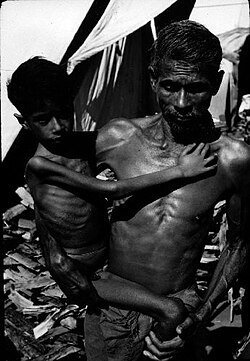
Thomas Malthus's Essay on the Principle of Population has made popular the theory of the Malthusian catastrophe—that many famines are caused by imbalance of food production compared to the large populations of countries[205] whose population exceeds the regional carrying capacity.[206] However, anthropologist Alex de Waal, executive director of the World Peace Foundation,[207] refutes the Malthus theory, looking instead to political factors as major causes of recent (over the last 150 years) famines.[205] Historically, famines have occurred from agricultural problems such as drought, crop failure, or pestilence. Changing weather patterns, the ineffectiveness of medieval governments in dealing with crises, wars, and epidemic diseases such as the Black Death helped to cause hundreds of famines in Europe during the Middle Ages, including 95 in Britain and 75 in France.[208] In France, the Hundred Years' War, crop failures and epidemics reduced the population by two-thirds.[209] Economist Amartya Sen has also argued that sustained famines historically have been caused by political instability and repressive political regimes rather than overpopulation.[210][211]
The failure of a harvest or change in conditions, such as drought, can create a situation whereby large numbers of people continue to live where the carrying capacity of the land has temporarily dropped radically. Famine is often associated with subsistence agriculture. The total absence of agriculture in an economically strong area does not cause famine; Arizona and other wealthy regions import the vast majority of their food, since such regions produce sufficient economic goods for trade.
Famines have also been caused by volcanism. The 1815 eruption of the Mount Tambora volcano in Indonesia caused crop failures and famines worldwide and caused the worst famine of the 19th century. The current consensus of the scientific community is that the aerosols and dust released into the upper atmosphere causes cooler temperatures by preventing the sun's energy from reaching the ground. The same mechanism is theorized to be caused by very large meteorite impacts to the extent of causing mass extinctions.
State-sponsored famines
In certain cases, such as the Great Leap Forward in China (which produced the largest famine in absolute numbers), Francoist Spain's years of hunger,[212][213][214][215][216]North Korea in the mid-1990s, or Zimbabwe in the early-2000s, famine can occur because of government policy.
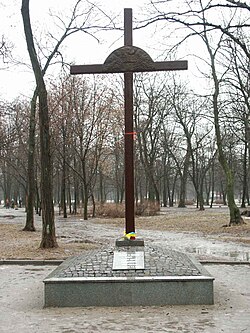
According to Simon Payaslian, a tentative scholarly consensus classifies the Soviet famine (at least in Ukraine where 2.5 to 4 million perished[217]) as a genocide,[218] although some scholars say that it remains a significant issue in modern politics and dispute whether Soviet policies would fall under the legal definition of genocide.[219][220] Several scholars have disputed that the famine was a genocidal act by the Soviet government, including J. Arch Getty,[221]Stephen G. Wheatcroft,[222]R. W. Davies,[223] and Mark Tauger.[224] Getty says that the "overwhelming weight of opinion among scholars working in the new archives ... is that the terrible famine of the 1930s was the result of Stalinist bungling and rigidity rather than some genocidal plan."[221] Wheatcroft says that the Soviet government's policies during the famine were criminal acts of fraud and manslaughter, though not outright murder or genocide.[225][note 2] In regard to the Soviet state's reaction to this crisis, Wheatcroft comments: "The good harvest of 1930 led to the decisions to export substantial amounts of grain in 1931 and 1932. The Soviet leaders also assumed that the wholesale socialisation of livestock farming would lead to the rapid growth of meat and dairy production. These policies failed, and the Soviet leaders attributed the failure not to their own lack of realism but to the machinations of enemies. Peasant resistance was blamed on the kulaks, and the increased use of force on a large scale almost completely replaced attempts at persuasion."[226] Wheatcroft says that Soviet authorities refused to scale down grain procurements despite the low harvest,[222] and that "[Wheatcroft and his colleague's] work has confirmed – if confirmation were needed – that the grain campaign in 1932/33 was unprecedentedly harsh and repressive."[227]
Joseph Stalin biographer Stephen Kotkin supports a similar view, stating that while "there is no question of Stalin's responsibility for the famine" and many deaths could have been prevented if not for the "insufficient" and counterproductive Soviet measures, there is no evidence for Stalin's intention to kill the Ukrainians deliberately.[228] While Mark Tauger considers the famine to be the result of natural factors stating that "the harsh 1932–1933 procurements only displaced the famine from urban areas" but the low harvest "made a famine inevitable". Ultimately concluding that it is difficult to accept the famine "as the result of the 1932 grain procurements and as a conscious act of genocide" he still concurs with Wheatcroft that "the regime was still responsible for the deprivation and suffering of the Soviet population in the early 1930s", and "if anything, these data show that the effects of [collectivization and forced industrialization] were worse than has been assumed."[229]
In 1958 in China, Mao Zedong's Communist Government launched the Great Leap Forward campaign, aimed at rapidly industrializing the country.[230] The government forcibly took control of agriculture. Barely enough grain was left for the peasants, and starvation occurred in many rural areas. Exportation of grain continued despite the famine and the government attempted to conceal it. While the famine is attributed to unintended consequences, it is believed that the government refused to acknowledge the problem, thereby further contributing to the deaths. In many instances, peasants were persecuted. Between 20 and 45 million people perished in this famine, making it one of the deadliest famines to date.[231]
Historian and journalists, such as Seumas Milne and Jon Wiener, have criticized the emphasis on communism when assigning blame for famines. In a 2002 article for The Guardian, Milne mentions "the moral blindness displayed towards the record of colonialism", and he writes: "If Lenin and Stalin are regarded as having killed those who died of hunger in the famines of the 1920s and 1930s, then Churchill is certainly responsible for the 4 million deaths in the avoidable Bengal famine of 1943.[232] Weiner makes a similar assertion while comparing the Holodomor and the Bengal famine of 1943, stating that Winston Churchill's role in the Bengal famine "seems similar to Stalin's role in the Ukrainian famine".[233] Historian Mike Davis, author of Late Victorian Holocausts, draws comparisons between the Great Chinese Famine and the Indian famines of the late 19th century, arguing that in both instances the governments which oversaw the response to the famines deliberately chose not to alleviate conditions and as such bear responsibility for the scale of deaths in said famines.[234] According to Jason Hickel and Dylan Sullivan, the number excess deaths during the apex of British colonialism in India rise to around 100 million.[235][236]
Malawi ended its famine by subsidizing farmers despite the strictures imposed by the World Bank.[237] During the 1973 Wollo Famine in Ethiopia, food was shipped out of Wollo to the capital city of Addis Ababa, where it could command higher prices. In the late-1970s and early-1980s, residents of the dictatorships of Ethiopia and Sudan suffered massive famines, but the democracy of Botswana avoided them, despite also suffering a severe drop in national food production. In Somalia, famine occurred because of a failed state.
The famine in Yemen is a direct result of the Saudi Arabian-led intervention in Yemen and the blockade imposed by Saudi Arabia and its allies, including the United States.[238][239] According to the UN, 130 children under five years of age were dying from starvation and starvation related diseases every day by the end of 2017, with 50,000 dead for the year. As of October 2018, half the population is at risk of famine.[240]
Israel's blockade of Gaza and the war between Israel and Hamas led to a famine in the Gaza Strip in 2024.[241] On 16 January 2024, UN experts accused Israel of "destroying Gaza's food system and using food as a weapon against the Palestinian people".[242] The UN-backed IPC confirmed famine is taking place in Gaza on 22 August 2025.[106]
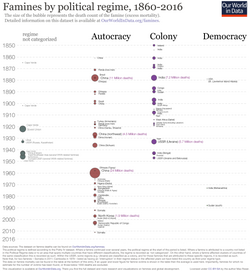
According to Amartya Sen (1999), "there has never been a famine in a functioning multiparty democracy". Hasell and Roser have demonstrated that while there have been a few minor exceptions, famines rarely occur in democratic systems but are strongly correlated with autocratic and colonial systems.[243]
Economic sanctions
Economic sanctions are state or UN sanctioned measures to pressure a targeted country to submit to political demands. Because such measures often involve limiting imports and exports to "crash" or inflict pain on the targeted nation's economy. This can restrict the targeted nation's economic development and make it more difficult for their population to access food.[244][245] Economic sanctions have been blamed for contributing to the North Korean famine in the 1990s.[246] The effects of sanctions against Iraq in the 1990s on mortality are disputed.[247] Following the Taliban's takeover of Afghanistan in August 2021, Human Rights Watch warned that Afghanistan was at risk of famine and urged the UN, World Bank, US and other countries to modify their sanctions to help prevent famine.[248]
Famine prevention
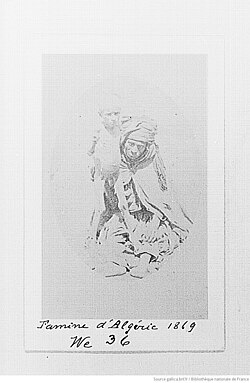
Relief technologies, including immunization, improved public health infrastructure, general food rations and supplementary feeding for vulnerable children, has provided temporary mitigation to the mortality impact of famines, while leaving their economic consequences unchanged, and not solving the underlying issue of too large a regional population relative to food production capability. Humanitarian crises may also arise from genocide campaigns, civil wars, agro-terrorism, refugee flows and episodes of extreme violence and state collapse, creating famine conditions among the affected populations.[249]
Despite repeated stated intentions by the world's leaders to end hunger and famine, famine remains a chronic threat in much of Africa, Eastern Europe, the Southeast, South Asia, and the Middle East. In July 2005, the Famine Early Warning Systems Network (FEWS NET) labelled Niger with emergency status, as well as Chad, Ethiopia, South Sudan, Somalia and Zimbabwe. In January 2006, the United Nations Food and Agriculture Organization warned that 11 million people in Somalia, Kenya, Djibouti and Ethiopia were in danger of starvation due to the combination of severe drought and military conflicts.[250] In 2006, the most serious humanitarian crisis in Africa was in Sudan's region Darfur.[251]
Frances Moore Lappé, later co-founder of the Institute for Food and Development Policy (Food First) argued in Diet for a Small Planet (1971) that vegetarian diets can provide food for larger populations, with the same resources, compared to omnivorous diets.
Noting that modern famines are sometimes aggravated by misguided economic policies, political design to impoverish or marginalize certain populations, or acts of war, political economists have investigated the political conditions under which famine is prevented. Economist Amartya Sen[note 3] states that the liberal institutions that exist in India, including competitive elections and a free press, have played a major role in preventing famine in that country since independence. Alex de Waal has developed this theory to focus on the "political contract" between rulers and people that ensures famine prevention, noting the rarity of such political contracts in Africa, and the danger that international relief agencies will undermine such contracts through removing the locus of accountability for famines from national governments.
The demographic impacts of famine are sharp. Mortality is concentrated among children and the elderly. A consistent demographic fact is that in all recorded famines, male mortality exceeds female, even in those populations (such as northern India and Pakistan) where there is a male longevity advantage during normal times. Reasons for this may include greater female resilience under the pressure of malnutrition, and possibly female's naturally higher percentage of body fat. Famine is also accompanied by lower fertility. Famines therefore leave the reproductive core of a population—adult women—lesser affected compared to other population categories, and post-famine periods are often characterized a "rebound" with increased births.
Even though the theories of Thomas Malthus would predict that famines reduce the size of the population commensurate with available food resources, in fact even the most severe famines have rarely dented population growth for more than a few years. The mortality in China in 1958–61, Bengal in 1943, and Ethiopia in 1983–85 was all made up by a growing population over just a few years. Of greater long-term demographic impact is emigration: Ireland was chiefly depopulated after the 1840s famines by waves of emigration.
Overall food production

Globally, the amount of food produced per person has kept rising, despite a growing world population. A local crop failure does not cause a famine unless there is also a lack of money to buy food from elsewhere. A war or political oppression can also disrupt distribution of otherwise adequate global supplies.[253]
Food security
Long term measures to improve food security, include investment in modern agriculture techniques, such as fertilizers and irrigation,[254] but can also include strategic national food storage.
World Bank strictures restrict government subsidies for farmers, and increasing use of fertilizers is opposed by some environmental groups because of its unintended consequences: adverse effects on water supplies and habitat.[237][255]

The effort to bring modern agricultural techniques found in the Western world, such as nitrogenfertilizers and pesticides, to the Indian Sub-continent, called the Green Revolution, resulted in decreases in malnutrition similar to those seen earlier in Western nations. This was possible because of existing infrastructure and institutions that are in short supply in Africa, such as a system of roads or public seed companies that made seeds available.[256] Supporting farmers in areas of food insecurity, through such measures as free or subsidized fertilizers and seeds, increases food harvest and reduces food prices.[237][257]
The energy for the Green Revolution was provided by fossil fuels in the form of fertilizers (natural gas), pesticides (oil), and hydrocarbon fueled irrigation.[258][259] The development of synthetic nitrogen fertilizer has significantly supported global population growth — it has been estimated that almost half the people on the Earth are currently fed as a result of synthetic nitrogen fertilizer use.[260][261]

The World Bank and some rich nations press nations that depend on them for aid to cut back or eliminate subsidized agricultural inputs such as fertilizer, in the name of privatization even as the United States and Europe extensively subsidized their own farmers.[262]
Relief
There is a growing realization among aid groups that giving cash or cash vouchers instead of food is a cheaper, faster, and more efficient way to deliver help to the hungry, particularly in areas where food is available but unaffordable.[263] The United Nations World Food Programme, the biggest non-governmental distributor of food, announced that it will begin distributing cash and vouchers instead of food in some areas, which Josette Sheeran, WFP's former executive director, described as a "revolution" in food aid.[263][264] The aid agency Concern Worldwide is piloting a method through a mobile phone operator, Safaricom, which runs a money transfer program that allows cash to be sent from one part of the country to another.[263]
However, for people in a drought living a long way from and with limited access to markets, delivering food may be the most appropriate way to help.[263]Fred Cuny stated that "the chances of saving lives at the outset of a relief operation are greatly reduced when food is imported. By the time it arrives in the country and gets to people, many will have died."[265] US Law, which requires buying food at home rather than where the hungry live, is inefficient because approximately half of what is spent goes for transport.[266] Fred Cuny further pointed out "studies of every recent famine have shown that food was available in-country—though not always in the immediate food deficit area" and "even though by local standards the prices are too high for the poor to purchase it, it would usually be cheaper for a donor to buy the hoarded food at the inflated price than to import it from abroad."[267]
Deficient micronutrients can be provided through fortifying foods.[268] Fortifying foods such as peanut butter sachets (see Plumpy'Nut) have revolutionized emergency feeding in humanitarian emergencies because they can be eaten directly from the packet, do not require refrigeration or mixing with scarce clean water, can be stored for years and, vitally, can be absorbed by extremely ill children.[269]

WHO and other sources recommend that malnourished children—and adults who also have diarrhea—drink rehydration solution, and continue to eat, in addition to antibiotics, and zinc supplements.[270][271][272] There is a special oral rehydration solution called ReSoMal which has less sodium and more potassium than standard solution. However, if the diarrhea is severe, the standard solution is preferable as the person needs the extra sodium.[271] Obviously, this is a judgment call best made by a physician, and using either solution is better than doing nothing. Zinc supplements often can help reduce the duration and severity of diarrhea, and Vitamin A can also be helpful.[273] The World Health Organization underlines the importance of a person with diarrhea continuing to eat, with a 2005 publication for physicians stating: "Food should never be withheld and the child's usual foods should not be diluted. Breastfeeding should always be continued."[270]
Ethiopia has been pioneering a program that has now become part of the World Bank's prescribed recipe for coping with a food crisis and had been seen by aid organizations as a model of how to best help hungry nations. Through the country's main food assistance program, the Productive Safety Net Program, Ethiopia has been giving rural residents who are chronically short of food, a chance to work for food or cash. Foreign aid organizations like the World Food Program were then able to buy food locally from surplus areas to distribute in areas with a shortage of food.[274]
The Green Revolution was widely viewed as an answer to famine in the 1970s and 1980s. Between 1950 and 1984, hybrid strains of high-yielding crops transformed agriculture around the globe and world grain production increased by 250%.[275] Some criticize the process, stating that these new high-yielding crops require more chemical fertilizers and pesticides, which can harm the environment.[276] Although these high-yielding crops make it technically possible to feed more people, there are indications that regional food production has peaked in many world sectors, due to certain strategies associated with intensive agriculture such as groundwateroverdrafting and overuse of pesticides and other agricultural chemicals.
Levels of food insecurity

In modern times, local and political governments and non-governmental organizations that deliver famine relief have limited resources with which to address the multiple situations of food insecurity that are occurring simultaneously. Various methods of categorizing the gradations of food security have thus been used in order to most efficiently allocate food relief. One of the earliest were the Indian Famine Codes devised by the British in the 1880s. The Codes listed three stages of food insecurity: near-scarcity, scarcity and famine, and were highly influential in the creation of subsequent famine warning or measurement systems. The early warning system developed to monitor the region inhabited by the Turkana people in northern Kenya also has three levels, but links each stage to a pre-planned response to mitigate the crisis and prevent its deterioration
The experiences of famine relief organizations throughout the world over the 1980s and 1990s resulted in at least two major developments: the "livelihoods approach" and the increased use of nutrition indicators to determine the severity of a crisis. Individuals and groups in food stressful situations will attempt to cope by rationing consumption, finding alternative means to supplement income, etc., before taking desperate measures, such as selling off plots of agricultural land. When all means of self-support are exhausted, the affected population begins to migrate in search of food or fall victim to outright mass starvation. Famine may thus be viewed partially as a social phenomenon, involving markets, the price of food, and social support structures. A second lesson drawn was the increased use of rapid nutrition assessments, in particular of children, to give a quantitative measure of the famine's severity.
Since 2003, many of the most important organizations in famine relief, such as the World Food Programme and the U.S. Agency for International Development, have adopted a five-level scale measuring intensity and magnitude. The intensity scale uses both livelihoods' measures and measurements of mortality and child malnutrition to categorize a situation as food secure, food insecure, food crisis, famine, severe famine, and extreme famine. The number of deaths determines the magnitude designation, with under 1000 fatalities defining a "minor famine" and a "catastrophic famine" resulting in over 1,000,000 deaths.
Society and culture
Famine personified as an allegory is found in some cultures: Famine is one of the Four Horsemen of the Apocalypse in Christian tradition, a man riding a black horse holding a balance scale; the fear gorta of Irish folklore; or the Wendigo of Algonquian tradition.
Effects on society
A 2023 systematic review and meta-analysis has shown that prenatal famine exposure is associated with an increased risk of mental disorders (such as depression and schizophrenia) and changes in DNA methylation, that is further exacerbating the impact of famine on human health and nutrition.[277]
See also
- Famine food
- 2007–2008 world food price crisis
- Agriculture and population limits
- Atmit (a porridge used to fight famine)
- Democide
- Famine Early Warning Systems Network
- Food prices
- Food race
- Food security
- Global Hunger Index
- History of food
- Integrated Food Security Phase Classification
- List of famines
- Malthusianism
- Overpopulation
- Global catastrophic risk
- Starvation
- Subsistence crisis
- World Vision Famine events
Footnotes
- ↑Initial reports erroneously gave the year 2035 rather than the correct 2350.
- ↑"We may well ask whether having revolutionarily high expectations is a crime? Of course it is, if it leads to an increase in the level of deaths, as a result of insufficient care being taken to safeguard the lives of those put at risk when the high ambitions failed to be fulfilled, and especially when it was followed by a cover-up. The same goes for not adjusting policy to unfolding evidence of crisis. But these are crimes of manslaughter and fraud rather than of murder. How heinous are they in comparison, say, with shooting over 600,000 citizens wrongly identified as enemies in 1937–8, or in shooting 25,000 Poles identified as a security risk in 1940, when there was no doubt as to the outcome of the orders? The conventional view is that manslaughter is less heinous than cold blooded murder."[225]
- ↑Sen is known for his assertion that famines do not occur in democracies in much the same way that Adam Smith is associated with the "invisible hand" and Joseph Schumpeter with "creative destruction".[252]
- ↑"Fighting famine". wfp.org. World Food Programme. Archived from the original on 21 December 2022. Retrieved 6 May 2021.
- ↑Kelly, James (May 1992). "Scarcity and Poor Relief in Eighteenth-Century Ireland: The Subsistence Crisis of 1782–4". Irish Historical Studies. 28 (109): 38–62. doi:10.1017/S0021121400018575. JSTOR 30008004. S2CID 163962983.
- 12"Famines". Our World in Data.
- ↑"Famine prevention". wfp.org. World Food Programme. Archived from the original on 17 February 2021. Retrieved 15 February 2021.
- ↑"When a food security crisis becomes a famine". UN News. 21 July 2011. Archived from the original on 11 May 2022. Retrieved 28 May 2021.
- ↑"IPC and Famine". Integrated Food Security Phase Classification. 2013. Retrieved 11 February 2021.
{{cite web}}: CS1 maint: deprecated archival service (link) - ↑"What is a famine? Criteria, declaration and controversies". Salud everywhere - Online learning in humanitarian health and international cooperation. Retrieved 21 April 2026.
- ↑"South Sudan declares famine in Unity State". BBC News. 20 February 2017. Archived from the original on 22 July 2018. Retrieved 20 February 2017.
- ↑de Zwarte, Ingrid; de Waal, Alex; Lumey, L H (2026). "Rethinking current famine classification: insights from history". The Lancet. 407 (10530): 755–757. doi:10.1016/S0140-6736(26)00214-X. ISSN 0140-6736.
- ↑Bieleman, Jan. "Dutch Agriculture in the Golden Age, 1570–1660"(PDF). Archived from the original(PDF) on 1 April 2010.
- ↑Curtler, W.H.R. (2005). "ch. 11". A Short History of English Agriculture. Etusevi Company. ISBN 978-1-4505-1503-0.
- ↑Burns, William E. (2001). The Scientific Revolution: An Encyclopedia. ABC-CLIO. p. 7. ISBN 978-0-87436-875-8. Archived from the original on 16 September 2023. Retrieved 15 November 2015.
- ↑Lyons, Francis Stewart Leland (1973), Ireland since the famine, Fontana, p. 30
- ↑Kinealy 1995, p. 38.
- ↑Blake, Robert (1967), Disraeli, University paperbacks, St. Martin's Press, p. 221, LCCN 67011837, archived from the original on 16 September 2023, retrieved 15 November 2015
- ↑Blake 1967, pp. 221–241.
- ↑Woodham-Smith, Cecil (1962), The Great Hunger, pp. 78–86
- ↑Ross, David (2002), Ireland: History of a Nation, New Lanark: Geddes & Grosset, pp. 224, 311, ISBN 978-1-84205-164-1
- 12Brennan, L (1984), "The development of the India Famine Codes: personalities, policies and politics", in Currey, Bruce; Hugo, Graeme (eds.), Famine as a geographical phenomenon, GeoJournal library, vol. 1 (Illustrated ed.), Springer, pp. 91–110, ISBN 978-90-277-1762-7
- ↑"Historical responses to famine". Encyclopædia Britannica Online. Retrieved 8 October 2009.
- ↑Reza, A.; Tomczyk, B.; Aguayo, V. M; Zagre, N. M; Goumbi, K.; Blanton, C.; Talley, L. (2 October 2008). "Retrospective determination of whether famine existed in Niger, 2005: two stage cluster survey". BMJ. 337 (oct02 1) a1622. doi:10.1136/bmj.a1622. PMC 2658864. PMID 18832413.
- "Retrospective determination of whether famine existed in Niger". Field Exchange 35: 9. 3 January 2009. Archived from the original on 20 April 2019. Retrieved 20 April 2019.
- ↑Drèze, Jean; Sen, Amartya Kumar (1991), Hunger and Public Action, Studies in Development Economics, Oxford; New York: Clarendon Press, p. 98, ISBN 978-0-19-828365-2, LCCN 89025504
- ↑"Famine in the Twentieth Century"(PDF). IDS. 16 February 1993. Archived(PDF) from the original on 6 April 2012. Retrieved 21 November 2011.
- ↑Huff, Gregg (2019). "Causes and consequences of the Great Vietnam Famine, 1944–5". The Economic History Review. 72 (1): 286–316. doi:10.1111/ehr.12741. ISSN 1468-0289.
- ↑Sen, Amartya (1981a). Poverty and Famines: An Essay on Entitlement and Deprivation. New York: Oxford University Press. Chapter 6: "The Great Bengal Famine". ISBN 978-0-19-828463-5.
- ↑"Live Aid concert". HISTORY.com. 13 July 1985. Archived from the original on 5 November 2021. Retrieved 14 September 2018.
- ↑Hickman, John (4 May 2019). "Major famines as geopolitical strategies". Comparative Strategy. 38 (3): 224–233. doi:10.1080/01495933.2019.1606663. ISSN 0149-5933. S2CID 201340371.
- ↑"Famine Trends Dataset, Tables and Graphs – World Peace Foundation". sites.tufts.edu. 14 April 2017. Archived from the original on 11 June 2022. Retrieved 15 October 2017.
- 12Pilling, David (22 March 2017). "As democracy retreats, famine makes a comeback". Financial Times. Archived from the original((registration required)) on 10 December 2022. Retrieved 1 April 2017.
- ↑Johnson, Sarah (20 April 2021). "'People are not starving, they're being starved': millions at risk of famine, NGOs warn". The Guardian. Archived from the original on 27 April 2021. Retrieved 28 April 2021.
- ↑"45 million people 'teetering on the edge of famine' globally – WFP". Premium Times. 8 November 2021. Archived from the original on 25 November 2021. Retrieved 25 November 2021.
- ↑"45 million people at risk of famine require urgent intervention". World Food Programme. 8 November 2021. Archived from the original on 8 March 2022. Retrieved 25 November 2021.
- ↑"Famine confirmed in Sudan's North Darfur, confirming UN agencies worst fears". www.unicef.org. Archived from the original on 3 January 2025. Retrieved 7 January 2025.
- ↑"Sudan's worsening famine: Conflict puts millions at risk | UN News". news.un.org. 24 December 2024. Retrieved 7 January 2025.
- ↑"Sudan: Acute Food Insecurity Situation - Updated Projections and FRC conclusions for October 2024 to May 2025 | IPC - Integrated Food Security Phase Classification". www.ipcinfo.org. Retrieved 7 January 2025.
- ↑"Sudan faces one of the worst famines in decades, warn UN experts". OHCHR. Retrieved 7 January 2025.
- ↑"Famine in Gaza: 'A failure of humanity itself', says UN chief | UN News". news.un.org. 22 August 2025. Retrieved 22 August 2025.
- ↑"Famine confirmed for first time in Gaza | World Food Programme". www.wfp.org. 22 August 2025. Retrieved 22 August 2025.
- 123456"GAZA STRIP: Famine confirmed in Gaza Governorate, projected to expand". Archived from the original on 22 August 2025. Retrieved 22 August 2025.
- ↑"Famine confirmed for first time in Gaza | World Food Programme". www.wfp.org. 22 August 2025. Retrieved 10 February 2026.
- ↑"Len Milich: Anthropogenic Desertification vs 'Natural' Climate Trends". Ag.arizona.edu. 10 August 1997. Archived from the original on 11 February 2012. Retrieved 1 February 2016.
- ↑Quataert, Donald (2005). The Ottoman Empire, 1700–1922. Cambridge University Press. p. 115. ISBN 978-0-521-83910-5.
- ↑Manning, Joseph G.; Ludlow, Francis; Stine, Alexander R.; Boos, William R.; Sigl, Michael; Marlon, Jennifer R. (17 October 2017). "Volcanic suppression of Nile summer flooding triggers revolt and constrains interstate conflict in ancient Egypt". Nature Communications. 8 (1): 900. Bibcode:2017NatCo...8..900M. doi:10.1038/s41467-017-00957-y. PMC 5645420. PMID 29042538.
- "Icelandic Volcano Caused Historic Famine In Egypt, Study Shows". ScienceDaily (Press release). 22 November 2006.
- ↑Nancy Elizabeth Gallagher (2002). Medicine and Power in Tunisia, 1780–1900. p. 25. Cambridge University Press. ISBN 0-521-52939-5. Archived 12 July 2014 at the Wayback Machine
- ↑Daniel Panzac (2005). Barbary Corsairs: the end of a legend, 1800–1820. p. 309. ISBN 90-04-12594-9. Archived 16 September 2023 at the Wayback Machine
- ↑Suraiya Faroqhi, Halil İnalcık, Donald Quataert (1997). An economic and social history of the Ottoman Empire. Cambridge University Press. p. 651. ISBN 0-521-57455-2. Archived 16 September 2023 at the Wayback Machine
- ↑John Iliffe (2007). Africans: the history of a continent. Cambridge University Press. p. 68. ISBN 0-521-68297-5
- 12Miller, Joseph C. (January 1982). "The Significance of Drought, Disease and Famine in the Agriculturally Marginal Zones of West-Central Africa". Journal of African History. 23 (1): 17–61. doi:10.1017/S0021853700020235. PMID 11632226. S2CID 7601465.
- 12Masci, David (8 November 2002). "Famine in Africa". CQ Researcher. 12 (39). Archived from the original on 9 March 2022. Retrieved 27 November 2011.
- ↑Dummett, Mark (24 February 2004). "King Leopold's Legacy of DR Congo Violence". BBC News. Archived from the original on 25 March 2022. Retrieved 27 November 2011.
- ↑Papaioannou, Kostadis J. (January 2016). "Climate shocks and conflict: Evidence from colonial Nigeria". Political Geography. 50: 33–47. Bibcode:2016PolG...50...33P. doi:10.1016/j.polgeo.2015.07.001. hdl:1874/318818.
- ↑Wolde-Georgis, Tsegay. "El Niño and Drought Early Warning in Ethiopia". www.ccb.ucar.edu. Archived from the original on 11 September 2007.
- ↑Iliffe, John (1995). Africans: The History of a Continent. Cambridge.
- ↑"Food and bulletin volume 9, number 1, march 1987". www.unu.edu. Archived from the original on 26 December 2010. Retrieved 28 November 2018.
- ↑B. E., Spiers. "Famine in Africa". Archived from the original on 23 August 2012. Retrieved 27 November 2011.
- ↑"Ethiopia in Crisis: Famine and Its Aftermath 1984–1988". U.S. Library of Congress. Archived from the original on 12 October 2011. Retrieved 29 November 2011.
- ↑Masci, David (8 November 2002). "Famine in Africa". CQ Researcher. 12 (39). Archived from the original on 9 March 2022. Retrieved 29 November 2011.
- ↑"Hunger is spreading in Africa". Christian Science Monitor. 1 August 2005. Archived from the original on 23 November 2010. Retrieved 1 February 2016.
- ↑See, for example, Andrey Korotayev and Daria KhaltourinaSecular Cycles and Millennial Trends in Africa. Moscow: 2006. ISBN 5-484-00560-4. Archived 16 February 2020 at the Wayback Machine
- ↑"Africa may be able to feed only 25% of its population by 2025". Mongabay. Archived from the original on 27 November 2011.
- ↑"One year on, thousands flee Somalia every month, but successes too". Unhcr. Archived from the original on 5 June 2012. Retrieved 5 June 2012.
- ↑"The worst drought in 60 years in Horn Africa". Africa and Europe in Partnership. Archived from the original on 2 November 2011. Retrieved 2 August 2011.
- ↑"Fatal Failure: Did Aid Agencies Let Up To 100,000 Somalis Die in 2011?"Archived 11 November 2024 at the Wayback Machine . Time. 18 January 2012.
- ↑Warah, Rasna (2 October 2011). "Manufacturing a famine: How Somalia crisis became a fund-raising opportunity". The East African. Archived from the original on 24 October 2012. Retrieved 16 March 2013.
- ↑"Methodists make appeal for famine threatened West Africa". Ekklesia. 6 July 2010. Archived from the original on 7 March 2012. Retrieved 1 February 2016.
- ↑"Famine in Africa, A Failure of the World System?". Poverties. poverties.org. Archived from the original on 25 May 2016. Retrieved 26 April 2016.
- ↑The Christian Science Monitor (24 July 2007). "Rising food prices curb aid to global poor". The Christian Science Monitor. Archived from the original on 23 October 2019. Retrieved 14 September 2007.
- ↑"Community Area-Based Development Approach (CABDA) Programme. An alternative way to address the current African food crisis?". Overseas Development Institute. Overseas Development Institute. November 2008. Archived from the original on 25 December 2009.
- ↑Al-Kout, Bashir. (1987) "African Unity in the 20 century" :Cairo
- ↑Walter H. Mallory, China: Land of famine (1926) p.1
- ↑"FAEC — FEARFUL FAMINES OF THE PAST". Mitosyfraudes.org. Archived from the original on 15 April 2011. Retrieved 1 February 2016.
- ↑Carol H. Shiue, "The political economy of famine relief in China, 1740–1820." Journal of Interdisciplinary History 36.1 (2005): 33–55. online
- ↑Pierre-Etienne Will, Bureaucracy and Famine
- ↑Richard Hooker (14 July 1999). "Ch'ing China: The Taiping Rebellion". Archived from the original on 14 April 2011.
- ↑Dimensions of need – People and populations at riskArchived 10 October 2017 at the Wayback Machine. Food and Agriculture Organization of the United Nations (FAO).
- ↑Chang, Gene Hsin; Wen, Guanzhong James (October 1997). "Communal Dining and the Chinese Famine of 1958–1961". Economic Development and Cultural Change. 46 (1): 1–34. doi:10.1086/452319. S2CID 154835645.
- ↑Gráda, Cormac Ó (January 2011). "Great Leap into Famine". ResearchGate. p. 9.
- ↑Dikötter, Frank. Mao's Great Famine: The History of China's Most Devastating Catastrophe, 1958–62. Walker & Company, 2010. p. xii. ISBN 0-8027-7768-6.
- ↑Smil, V. (18 December 1999). "China's great famine: 40 years later". British Medical Journal. 319 (7225): 1619–1621. doi:10.1136/bmj.319.7225.1619. PMC 1127087. PMID 10600969.
- ↑Woo, Meredith Jung-En (2007). Neoliberalism and Institutional Reform in East Asia: A Comparative Study. Springer. ISBN 978-0-230-59034-2.
- ↑Sugihara, Kaoru; Robb, Peter G.; Yanagisawa, Haruka (27 July 1996). Local Agrarian Societies in Colonial India: Japanese Perspectives. Psychology Press. ISBN 978-0-7007-0471-2. Archived from the original on 16 September 2023. Retrieved 15 November 2015– via Google Books.
- ↑Shawcross, William, The Quality of Mercy: Cambodia, Holocaust and Modern Conscience, Touchstone, 1985, pp. 115–116.
- ↑Kaplan, Robert D., The Ends of the Earth, Vintage, 1996, p. 406.
- ↑Spoorenberg, Thomas; Schwekendiek, Daniel (March 2012). "Demographic Changes in North Korea: 1993–2008". Population and Development Review. 38 (1): 133–58. doi:10.1111/j.1728-4457.2012.00475.x. hdl:10.1111/j.1728-4457.2012.00475.x.
- ↑Moon, William J. (2009). "The Origins of the Great North Korean Famine: Its Dynamics and Normative Implications". North Korean Review. 5 (1): 105–122. doi:10.3172/NKR.5.1.105. JSTOR 43910265. SSRN 1580198.
- ↑"North Korea faces worst drought since 2001". Financial Times. Archived from the original on 10 December 2022.
- ↑Seabrook, Ben (21 July 2017). "North Koreans undernourished, in worst drought in 16 years". The Sydney Morning Herald. Archived from the original on 22 July 2017. Retrieved 21 July 2017.
- ↑HUFF, GREGG (2018). "Causes and consequences of the Great Vietnam Famine, 1944–5". The Economic History Review. 72: 286–316. doi:10.1111/ehr.12741. ISSN 1468-0289.
- ↑Chisholm, Hugh, ed. (1911). . Encyclopædia Britannica. Vol. 10 (11th ed.). Cambridge University Press. p. 176.
- ↑Davis, Mike. Late Victorian Holocausts. 1. Verso, 2000. ISBN 1-85984-739-0 p. 7
- ↑Davis, Mike. Late Victorian Holocausts. 1. Verso, 2000. ISBN 1-85984-739-0 p. 173
- ↑Dyson, Tim; Maharatna, Arup (September 1991). "Excess mortality during the Great Bengal Famine: A Re-evaluation". The Indian Economic and Social History Review. 28 (3): 281–97. doi:10.1177/001946469102800303. S2CID 143627077.
- ↑Craig A. Lockard (2010). Societies, Networks, and Transitions, Volume 3. Cengage Learning. p. 610. ISBN 1-4390-8534-X. Archived 26 March 2023 at the Wayback Machine
- ↑Climate and Food Security: Papers Presented at the International Symposium on Climate Variability and Food Security in Developing Countries. International Rice Research Institute. 1987. p. 379. ISBN 978-971-10-4210-3. Archived from the original on 16 September 2023. Retrieved 31 October 2014.
- ↑Yeroushalmi, David (2009). The Jews of Iran in the nineteenth century: aspects of history, community. Brill. p. 327. ISBN 978-90-04-15288-5. Archived from the original on 16 September 2023. Retrieved 15 November 2015.
- ↑Christoffel Anthonie Olivier Nieuwenhuijze (1977). Commoners, Climbers and Notables: A Sampler of Studies on Social Ranking in the Middle East. Brill Archive ISBN. p. 213. ISBN 90-04-05065-5
- ↑Knutson, Jacob (11 April 2024). "U.S. aid official says famine has begun in northern Gaza". Axios. Archived from the original on 12 April 2024. Retrieved 24 April 2024.
- ↑"The Guardian view on famine in Gaza: a human-made catastrophe". The Guardian. 19 March 2024. Archived from the original on 10 May 2024. Retrieved 22 March 2024.
- ↑"Imminent famine in northern Gaza is 'entirely man-made disaster': Guterres". UN News. 18 March 2024. Archived from the original on 24 March 2024. Retrieved 3 April 2024.
- ↑Kourdi, Eyad; Said-Moorhouse, Lauren (9 July 2024). "Famine has spread throughout Gaza, say UN experts". CNN. Retrieved 10 July 2024.
- ↑"U.N. experts say Gaza children dying in Israeli 'targeted starvation campaign'". CBS News. CBS/AFP. 9 July 2024. Retrieved 10 July 2024.
- ↑"UN experts say Israel carrying out 'targeted starvation campaign' in Gaza". Al Jazeera. Retrieved 10 July 2024.
- ↑"UN experts declare famine has spread throughout Gaza strip". Office of the United Nations High Commissioner for Human Rights. 9 July 2024.
- ↑"Israel rejects accusations by UN rights experts that it weaponized starvation in Gaza". The Times of Israel. 9 July 2024.
- ↑"Humanitarian Situation Update #200 Gaza Strip". OCHA. United Nations. 5 August 2024. Retrieved 17 August 2024.
- 12Nichols, Michelle (22 August 2025). "Famine has struck Gaza, says global hunger monitor". Reuters. Retrieved 22 August 2025.
- ↑Tétrault-Farber, Gabrielle (19 March 2024). "Israel's restrictions to Gaza aid may be war crime, says UN rights office". Reuters.
- ↑Beaumont, Peter (20 March 2024). "'Man-made famine' charge against Israel is backed by mounting body of evidence". The Guardian. Archived from the original on 10 May 2024. Retrieved 21 March 2024.
- ↑Solomon, Erika (13 June 2024). "The U.N. Report on Israeli and Palestinian War Crimes: What We Know". The New York Times. Archived from the original on 26 June 2024. Retrieved 21 June 2024.
- ↑Murphy, Brett (24 September 2024). "Israel Deliberately Blocked Humanitarian Aid to Gaza, Two Government Bodies Concluded. Antony Blinken Rejected Them". ProPublica. Retrieved 25 September 2024.
- ↑Corder, Mike (18 March 2024). "Israel asks UN court to reject South Africa's request for interim orders to prevent starvation in Gaza". PBS Newshour. Archived from the original on 21 March 2024. Retrieved 21 March 2024.
- ↑Halabi, Einav (24 February 2024). "COGAT:'There is no limit to the amount of aid that can enter Gaza'". Ynetnews. Archived from the original on 21 March 2024. Retrieved 21 March 2024.
- ↑
- Larson 2024
- Brown 2024
- "Oxfam Says Israel 'Deliberately' Blocking Aid To Gaza". Barron's. Agence France-Presse. Archived from the original on 21 March 2024. Retrieved 21 March 2024.
- Wintour 2024
- "UN aid chief says Israel needs to lift all impediments to Gaza aid". The Jerusalem Post. Reuters. 22 March 2024. Archived from the original on 24 March 2024. Retrieved 24 March 2024.
- ↑"UN official urges Israel to lift 'cruel' aid blockade on Gaza". euronews. 1 May 2025. Retrieved 3 May 2025.
- ↑"'No humanitarian aid will enter Gaza,' Israel defence minister says". France 24. 16 April 2025. Retrieved 3 May 2025.
- ↑DeYoung, Karen; Hudson, John (15 January 2024). "Despite U.S. pressure on Israel, casualty count in Gaza remains high". The Washington Post. Retrieved 19 January 2024.
- ↑"UN chief blames Israeli 'obstacles, chokepoints' for looming famine in Gaza Strip". The Times of Israel. Archived from the original on 25 March 2024. Retrieved 25 March 2024.
- ↑Magid, Jacob. "US envoy says Israel has yet to provide 'specific evidence' that Hamas is stealing humanitarian aid". The Times of Israel. Archived from the original on 25 March 2024. Retrieved 25 March 2024.
- ↑Batrawy, Aya (21 November 2024). "In Gaza Organized Gangs Make a Bad Situation Even Worse". NPR.
- ↑Brian Igoe (2009). The Story of Ireland. p. 49. Archived from the original on 16 September 2023. Retrieved 15 November 2015.
- ↑David Hackett Fischer (1999). The Great Wave. Oxford University Press. p. 38. ISBN 978-0-19-512121-6. Archived from the original on 16 September 2023. Retrieved 17 October 2020.
- ↑Bartholomew, James (8 August 2004). "Poor studies will always be with us". Telegraph.co.uk. Archived from the original on 1 March 2016. Retrieved 1 February 2016.
- ↑Basu, Kaushik. "famine". Britannica.com. Archived from the original on 7 May 2015. Retrieved 1 February 2016.
- ↑Alan Macfarlane (1997). The savage wars of peace: England, Japan and the Malthusian trap. Wiley. p. 66. ISBN 978-0-631-18117-0.
- ↑Kaplan, Steven. The Famine Plot Persuasion in Eighteenth-Century France. Pennsylvania: Diane Publishing Co, 1982. ISBN 0-87169-723-8
- ↑"FINNISH ENVIRONMENTAL HEALTH ACTION PLAN"(PDF). www.euro.who.int. Archived from the original(PDF) on 9 October 2009.
- ↑Ó Gráda, Cormac; Chevet, Jean-Michel (2002). "Famine And Market In Ancient Régime France"(PDF). The Journal of Economic History. 62 (3): 706–33. doi:10.1017/S0022050702001055. hdl:10197/368. PMID 17494233. S2CID 8036361. Archived(PDF) from the original on 23 September 2019. Retrieved 23 September 2019.
- ↑Anderson, Michael (1988). Population change in North-western Europe, 1750–1850. Macmillan Education. p. 9. ISBN 978-0-333-34386-9.
- ↑"Finland and the Swedish Empire". Federal Research Division, Library of Congress. Archived 9 October 2017 at the Wayback Machine
- ↑Karen J. Cullen (2010). Famine in Scotland: The 'Ill Years' of the 1690s. Edinburgh University Press. p. 20. ISBN 0-7486-3887-3. Archived 16 September 2023 at the Wayback Machine
- ↑Alan Macfarlane (1997). The savage wars of peace: England, Japan and the Malthusian trap. p. 63. ISBN 0-631-18117-2. Archived 28 January 2022 at the Wayback Machine
- ↑Davis, Late Victorian Holocausts, p. 281.
- ↑Cormac Ó Gráda (2009). Famine: a short history. Princeton University Press. p. 18. ISBN 0-691-12237-7. Archived 26 March 2023 at the Wayback Machine
- ↑Susan Scott, Christopher John Duncan (2002). Demography and nutrition: evidence from historical and contemporary populations. John Wiley and Sons. p. 45. ISBN 0-632-05983-4. Archived 26 March 2023 at the Wayback Machine
- ↑E. E. Rich, C. H. Wilson, M. M. Postan (1977). The Cambridge economic history of Europe: The economic organization of early modern Europe. p. 614. ISBN 0-521-08710-4
- ↑Alan Macfarlane (1997). The savage wars of peace: England, Japan and the Malthusian trap. p. 64. ISBN 0-631-18117-2. Archived 16 September 2023 at the Wayback Machine
- ↑Dyson, Stephen L.; Rowland, Robert J. (2007). Archaeology and history in Sardinia from the Stone Age to the Middle Ages: shepherds, sailors & conquerors. Philadelphia: UPenn Museum of Archaeology, 2007. p. 136. ISBN 978-1-934536-02-5.
- ↑Henry Oliver Lancaster (1990). Expectations of life: a study in the demography, statistics, and history of world mortality. Springer. p. 399. ISBN 0-387-97105-X. Archived 12 May 2015 at the Wayback Machine
- ↑Rubinstein, W. D. (2004). Genocide: a history. Pearson Education. p. 85. ISBN 978-0-582-50601-5. Archived from the original on 16 September 2023. Retrieved 15 November 2015.
- ↑Alan Macfarlane. "The Dimension of Famine" (PDF). Archived 17 May 2011 at the Wayback Machine
- ↑Stéphane Courtois, Mark Kramer. Livre noir du Communisme: crimes, terreur, répressionArchived 16 September 2023 at the Wayback Machine. Harvard University Press, 1999. p. 206. ISBN 0-674-07608-7
- ↑Ellman, Michael (1 September 2000). "The 1947 Soviet famine and the entitlement approach to famines". Cambridge Journal of Economics. 24 (5): 603–30. doi:10.1093/cje/24.5.603. S2CID 45613622.
- ↑The Russian Academy of Science Rossiiskaia Akademiia nauk. Liudskie poteri SSSR v period vtoroi mirovoi voiny: sbornik statei. Saint Petersburg 1995 ISBN 5-86789-023-6
- ↑Titova, Irina (29 January 2008). "Last Battle of Siege of Leningrad Re-Enacted". The St. Petersburg Times. Archived from the original on 18 August 2014. Retrieved 1 February 2016.
- ↑Technology, Disease, and Colonial Conquests, Sixteenth to Eighteenth Centuries: Essays Reappraising the Guns and Germs Theories. George Raudzens (2003). Brill. p. 190. ISBN 0-391-04206-8. Archived 26 March 2023 at the Wayback Machine
- ↑Richardson Benedict Gill (2000). The great Maya droughts: water, life, and death. UNM Press. p. 123. ISBN 0-8263-2774-5. Archived 26 March 2023 at the Wayback Machine
- ↑Sousa, Anastácio Q.; Pearson, Richard (2009). "Drought, Smallpox, and Emergence of Leishmania braziliensis in Northeastern Brazil". Emerging Infectious Diseases. 15 (6). Centers for Disease Control and Prevention (CDC): 916–921. doi:10.3201/eid1506.071331. PMC 2727349. PMID 19523291.
- ↑"Sample Chapter for Ó Gráda, C.: Famine: A Short History". Press.princeton.edu. 6 February 2009. Archived from the original on 12 January 2016. Retrieved 1 February 2016.
- ↑"Inland fishery enhancements". www.fao.org. Archived from the original on 6 March 2014. Retrieved 28 November 2018.
- ↑Bo Rothstein (2005). Social traps and the problem of trust. Cambridge University Press. p. 20. ISBN 0-521-84829-6
- ↑Patrick Vinton Kirch (1989). The Evolution of the Polynesian Chiefdoms. Cambridge University Press. p.
- ↑Andrew Shryock, Daniel Lord Smail (2011). Deep History: The Architecture of Past and Present. University of California Press. p. 139. ISBN 0-520-27028-2. Archived 26 March 2023 at the Wayback Machine
- ↑Hezel, Francis X. (1983). The First Taint of Civilization: A History of the Caroline and Marshall Islands in Pre-colonial Days, 1521–1885. Pacific Islands Monograph Series. Honolulu: University of Hawaii Press. pp. 92–94. ISBN 978-0-8248-1643-8.
- ↑yaleclimateconnections.org/2022/01/un-report-the-worlds-farms-stretched-to-a-breaking-point 19 January 2022 Dana Nuccitelli
- ↑"Hunger numbers stubbornly high for three consecutive years as global crises deepen: UN report". www.who.int. Retrieved 27 November 2024.
- ↑"2008 the Year of Global Food Crisis (From Sunday Herald)". www.sundayherald.com. Archived from the original on 22 August 2009.
- ↑"The global grain bubble"Archived 30 November 2009 at the Wayback Machine, Christian Science Monitor
- ↑"The cost of food: Facts and figures". BBC News. Archived from the original on 20 January 2009. Retrieved 1 February 2016.
- ↑The New York Times (2007 September) At Tyson and Kraft, Grain Costs Limit ProfitArchived 27 June 2017 at the Wayback Machine
- ↑Watts, Jonathan (4 December 2007). "Riots and hunger feared as demand for grain sends food costs soaring". The Guardian. Archived from the original on 1 September 2013. Retrieved 11 December 2016.
- ↑"Environment". The Times. Archived from the original on 14 August 2011. Retrieved 1 February 2016.
- ↑Borger, Julian (26 February 2008). "Feed the world? We are fighting a losing battle, UN admits". The Guardian. Archived from the original on 25 December 2016. Retrieved 11 December 2016.
- ↑"Millions face famine as crop disease rages". The Guardian. 22 April 2007. Archived from the original on 10 May 2019. Retrieved 11 December 2016.
- ↑"Billions at risk from wheat super-blight". New Scientist (2598): 6–7. 3 April 2007. Archived from the original on 15 January 2023. Retrieved 19 April 2007.
- ↑"Shrinking African Lake Offers Lesson on Finite ResourcesArchived 30 April 2001 at the Wayback Machine". National Geographic News.
- ↑David Pimentel, Mario Giampietro 1994. Food, Land, Population and the U.S. Economy. Carrying Capacity Network, 1994. Book, online at http://www.dieoff.com/page55.htmArchived 31 August 2019 at the Wayback Machine with highlights at http://www.dieoff.com/page40.htmArchived 16 April 2015 at the Wayback Machine
- ↑"The Oil Drum: Europe — Agriculture Meets Peak Oil: Soil Association Conference". Europe.theoildurm.com. Archived from the original on 29 December 2015. Retrieved 1 February 2016.
- ↑"India grows a grain crisis". Asia Times. Archived from the original on 19 August 2006. Retrieved 1 February 2016.
- ↑"greatlakesdirectory.org". greatlakesdirectory.org. Archived from the original on 13 July 2009. Retrieved 1 February 2016.
- ↑"Vanishing Himalayan Glaciers Threaten a Billion". Planetark.com. 26 May 2014. Archived from the original on 29 April 2016. Retrieved 1 February 2016.
- ↑Bagla, Pallava (5 December 2009). "Himalayan glaciers melting deadline 'a mistake'". BBC. Archived from the original on 12 May 2011. Retrieved 12 December 2009.
- ↑"Peopleandplanet.net". www.peopleandplanet.net. Archived from the original on 19 August 2007.
- ↑"Glaciers melting at alarming speed". English.peopledaily.com.cn. Archived from the original on 23 September 2013. Retrieved 1 February 2016.
- ↑"Ganges, Indus may not survive: climatologists". Rediff.com. Archived from the original on 11 October 2017. Retrieved 1 February 2016.
- ↑"Himalaya glaciers melt unnoticed". BBC News. Archived from the original on 25 February 2020. Retrieved 1 February 2016.
- ↑Fraser, E. 2007a. Travelling in antique lands: Studying past famines to understand present vulnerabilities to climate change. Climate Change 83:495–514.
- ↑Fraser, E. 2003. Social vulnerability and ecological fragility: building bridges between social and natural sciences using the Irish Potato Famine as a case study. Conservation Ecology 7:9 (online).
- ↑Papaioannou, Kostadis (June 2017). "Weather shocks and agricultural commercialization in colonial tropical Africa: did cash crops alleviate social distress?". World Development. 94 (3): 346–365. doi:10.1016/j.worlddev.2017.01.019. Archived from the original on 30 April 2019. Retrieved 9 December 2019.
- ↑Fraser, Evan D.G. (December 2006). "Food system vulnerability: Using past famines to help understand how food systems may adapt to climate change". Ecological Complexity. 3 (4): 328–335. Bibcode:2006EcoCm...3..328F. doi:10.1016/j.ecocom.2007.02.006.
- ↑Simelton, Elisabeth; Fraser, Evan D.G.; Termansen, Mette; Forster, Piers M.; Dougill, Andrew J. (June 2009). "Typologies of crop-drought vulnerability: an empirical analysis of the socio-economic factors that influence the sensitivity and resilience to drought of three major food crops in China (1961–2001)". Environmental Science & Policy. 12 (4): 438–452. Bibcode:2009ESPol..12..438S. doi:10.1016/j.envsci.2008.11.005.
- ↑Simelton, Elisabeth; Fraser, Evan D. G.; Termansen, Mette; Benton, Tim G.; Gosling, Simon N.; South, Andrew; Arnell, Nigel W.; Challinor, Andrew J.; Dougill, Andrew J.; Forster, Piers M. (6 March 2012). "The socioeconomics of food crop production and climate change vulnerability: a global scale quantitative analysis of how grain crops are sensitive to drought". Food Security. 4 (2): 163–179. doi:10.1007/s12571-012-0173-4. S2CID 17190790.
- ↑Fraser, Evan D.G.; Simelton, Elisabeth; Termansen, Mette; Gosling, Simon N.; South, Andrew (March 2013). "'Vulnerability hotspots': Integrating socio-economic and hydrological models to identify where cereal production may decline in the future due to climate change induced drought". Agricultural and Forest Meteorology. 170: 195–205. Bibcode:2013AgFM..170..195F. doi:10.1016/j.agrformet.2012.04.008.
- ↑Harvey, Fiona (21 April 2020). "Coronavirus pandemic 'will cause famine of biblical proportions'". The Guardian. ISSN 0261-3077. Archived from the original on 12 July 2020. Retrieved 14 July 2020.
- ↑"UN food agency chief: World on brink of 'a hunger pandemic'". ABC News. Archived from the original on 24 December 2021. Retrieved 14 July 2020.
- ↑"COVID 19 Today and China's Great Famine". The Globalist. 16 May 2020. Archived from the original on 20 June 2020. Retrieved 14 July 2020.
- ↑Harvey, Fiona (21 April 2020). "Coronavirus crisis could double number of people suffering acute hunger – UN". The Guardian. ISSN 0261-3077. Archived from the original on 16 June 2020. Retrieved 14 July 2020.
- ↑"Afghanistan: Can the Taliban avert a food crisis without foreign aid?". Deutsche Welle. 11 November 2021. Archived from the original on 26 December 2022. Retrieved 13 November 2021.
- ↑"Taliban blames U.S. as 1 million Afghan kids face death by starvation". CBS News. 20 October 2021. Archived from the original on 12 May 2022. Retrieved 13 November 2021.
- ↑"Is the United States Driving Afghanistan Toward Famine?". The New York Times. 29 October 2021. Archived from the original on 13 December 2022. Retrieved 13 November 2021.
- ↑"Afghanistan's hunger crisis is a problem the U.S. can fix". MSNBC. 10 November 2021. Archived from the original on 13 December 2022. Retrieved 13 November 2021.
- ↑"'Countdown to catastrophe': half of Afghans face hunger this winter – UN". The Guardian. 25 October 2021. Archived from the original on 9 June 2022. Retrieved 13 November 2021.
- ↑"Afghanistan Facing Famine: UN, World Bank, US Should Adjust Sanctions, Economic Policies". Human Rights Watch. 11 November 2021. Archived from the original on 12 May 2022. Retrieved 13 November 2021.
- ↑"This Day in History 1941: Siege of Leningrad begins". www.history.com. Archived from the original on 11 February 2010.
- ↑Blix & Svensk näringsforskning 1971.
- ↑Brown & Eckholm 1974.
- ↑Scrimshaw 1987.
- ↑Ravallion 1996, p. 2.
- ↑Cuny & Hill 1999.
- ↑Encyclopædia Britannica 2010.
- 1234Chaudhari 1984, p. 135.
- ↑"Climate Change and Famine". Physicians for Social Responsibility. 15 March 2013. Archived from the original on 13 April 2013. Retrieved 23 March 2013.
- ↑"'Top 10 culprits' for Horn of Africa hunger". BBC News. 26 July 2011. Archived from the original on 21 January 2016. Retrieved 1 February 2016.
- ↑Ravallion 1996, p. 1.
- ↑"FEWSNET report: 260,000 people died in the Somalia famine | Oxfam International". 18 May 2014. Archived from the original on 12 November 2020. Retrieved 16 May 2017.
- 12de Waal, Alex (January 2018). "The end of famine? Prospects for the elimination of mass starvation by political action". Political Geography. 62: 184–195. Bibcode:2018PolG...62..184D. doi:10.1016/j.polgeo.2017.09.004.
- ↑"What Causes a Famine to Break Out?". science.howstuffworks.com. 5 July 2011. Archived from the original on 22 February 2019. Retrieved 21 February 2019.
- ↑"Alex de Waal | The Fletcher School". fletcher.tufts.edu. Archived from the original on 23 February 2019. Retrieved 24 February 2019.
- ↑"Poor studies will always be with us"Archived 23 May 2018 at the Wayback Machine, The Telegraph
- ↑Don O'Reilly, "Hundred Years' War: Joan of Arc and the Siege of OrléansArchived 9 November 2006 at the Wayback Machine", TheHistoryNet.com
- ↑Sen, Amartya (1982) [1981]. Poverty and Famines: An Essay on Entitlement and Deprivation (Reprint ed.). Oxford, England: Oxford University Press. ISBN 978-0-19-828463-5.
- ↑Sen, Amartya (2001) [1999]. Development As Freedom (2nd ed.). Oxford, England: Oxford University Press. ISBN 978-0-19-289330-7.
- ↑Del Arco Blanco, Miguel (2020). "Famine in Spain During Franco's Dictatorship, 1939–52". Journal of Contemporary History. 56: 3–27. doi:10.1177/0022009419876004. hdl:10481/65285. S2CID 213559342.
- ↑Román Ruiz, Gloria (16 October 2020). "The Hunger Years: History and Memory of the Francoist Post-War Period: New Research". Radboud University. Radboud University. Retrieved 10 June 2025.
- ↑Román Ruiz, Gloria; del Arco Blanco, Miguel Ángel (16 November 2022). "The silenced famine of the Spanish post-war period finds a voice in new exhibition". The Conversation. Retrieved 10 June 2025.
- ↑Santiago Díaz, Gregorio (2023). Franquismo patógeno: hambruna, enfermedad y miseria en la posguerra española (1939–1953) (in Spanish). Granada, Spain: Editorial Universidad de Granada. p. 356. ISBN 978-84-338-7115-2.
- ↑del Arco Blanco, Miguel Ángel; Anderson, Peter, eds. (2021). Franco's Famine: Malnutrition, Disease and Starvation in Post-Civil War Spain. London: Bloomsbury Publishing. p. 280. ISBN 978-1-350-17465-8.
- ↑Andriewsky, Olga (2015). "Towards a Decentred History: The Study of the Holodomor and Ukrainian Historiography". East/West: Journal of Ukrainian Studies. 2 (1): 28. doi:10.21226/T2301N. Archived from the original on 12 November 2021. Retrieved 8 January 2022.
- ↑Payaslian, Simon (11 January 2021). "20th Century Genocides". International Relations. Oxford University Press. doi:10.1093/OBO/9780199743292-0105. ISBN 978-0-19-974329-2. Archived from the original on 24 March 2020. Retrieved 26 November 2021– via Oxford Bibliographies Online.
- ↑Marples, David R. (30 November 2005). "The great famine debate goes on..."Edmont Journal. University of Alberta. Archived from the original on 15 June 2008. Retrieved 28 November 2021– via ExpressNews.
- ↑Kulchytsky, Stanislav (17 February 2007). "Holodomor 1932–1933 rr. yak henotsyd: prohalyny u dokazovii bazi" Голодомор 1932 — 1933 рр. як геноцид: прогалини у доказовій базі[Holodomor 1932–1933 as genocide: gaps in the evidence]. Den (in Ukrainian). Archived from the original on 2 December 2020. Retrieved 19 January 2021.
- 12Getty, J. Arch (1 March 2000). "The Future Did Not Work". The Atlantic. Retrieved 2 March 2021.
Similarly, the overwhelming weight of opinion among scholars working in the new archives (including Courtois's co-editor Werth) is that the terrible famine of the 1930s was the result of Stalinist bungling and rigidity rather than some genocidal plan.
- 12Wheatcroft, Stephen G. (August 2018). "The Turn Away from Economic Explanations for Soviet Famines". Contemporary European History. 27 (3). Cambridge University Press: 465–469. doi:10.1017/S0960777318000358. hdl:10536/DRO/DU:30116832. Retrieved 26 November 2021– via ResearchGate.
- ↑Davies, Robert W.; Wheatcroft, Stephen (2009). The Industrialisation of Soviet Russia Volume 5: The Years of Hunger: Soviet Agriculture 1931–1933. Palgrave Macmillan UK. p. xiv. ISBN 978-0-230-27397-9.
- ↑Tauger, Mark (1 July 2018). "Review of Anne Applebaum's 'Red Famine: Stalin's War on Ukraine'". History News Network. George Washington University. Archived from the original on 19 January 2020. Retrieved 22 October 2019.
- 12Wheatcroft, Stephen G. (August 2020). "The Complexity of the Kazakh Famine: Food Problems and Faulty Perceptions". Journal of Genocide Research. 23 (4): 593–597. doi:10.1080/14623528.2020.1807143. S2CID 225333205.
- ↑Davies, Robert W.; Wheatcroft, Stephen G. (2009). The Years of Hunger: Soviet Agriculture 1931–1933. Palgrave Macmillan. p. xv. doi:10.1057/9780230273979. ISBN 978-0-230-23855-8.
- ↑Davies, Robert W.; Wheatcroft, Stephen G. (2004). The Years of Hunger: Soviet Agriculture 1931–1933. Palgrave Macmillan. pp. 436–441. ISBN 978-0-333-31107-3.
- ↑Kotkin, Stephen (8 November 2017). "Terrible Talent: Studying Stalin". The American Interest (Interview). Interviewed by Richard Aldous. Retrieved 26 November 2021.
- ↑Tauger, Mark (1991). "The 1932 Harvest and the Famine of 1933". Slavic Review. 50 (1): 70–89. doi:10.2307/2500600. JSTOR 2500600.
- ↑"The Great Leap Backward". The New York Times. 16 February 1997. Archived from the original on 13 November 2012. Retrieved 22 October 2011.
- ↑Akbar, Arifa (17 September 2010). "Mao's Great Leap Forward 'killed 45 million in four years'". The Independent. London. Archived from the original on 11 May 2020. Retrieved 20 September 2010.
- ↑Milne, Seumas (12 September 2002), "The battle for history", The Guardian, London, retrieved 12 May 2010
- ↑Wiener, Jon (15 October 2012), How We Forgot the Cold War: A Historical Journey Across America, University of California Press, ISBN 978-0-520-27141-8 p. 38
- ↑Day, Meagan (23 October 2018), "Mike Davis on the Crimes of Socialism and Capitalism", Jacobin, retrieved 25 October 2018
- ↑Sullivan, Dylan; Hickel, Jason (2023). "Capitalism and extreme poverty: A global analysis of real wages, human height, and mortality since the long 16th century". World Development. 161 106026. Bibcode:2023WoDev.16106026S. doi:10.1016/j.worlddev.2022.106026. S2CID 252315733.
- ↑Sullivan, Dylan; Hickel, Jason (2 December 2022). "How British colonialism killed 100 million Indians in 40 years". Al Jazeera. Archived from the original on 15 January 2023. Retrieved 13 December 2022.
- 123"Ending Famine, Simply by Ignoring the Experts", The New York Times, 2 December 2007, Archived 8 November 2017 at the Wayback Machine
- ↑Julian Borger (4 June 2016). "Saudi-led naval blockade leaves 20m Yemenis facing humanitarian disaster". The Guardian. Archived from the original on 5 June 2015. Retrieved 19 November 2017.
- ↑"Congress Votes to Say It Hasn't Authorized War in Yemen, Yet War in Yemen Goes On". The Intercept. 14 November 2017. Archived 7 January 2018 at the Wayback Machine
- ↑"Half the population of Yemen at risk of famine: UN emergency relief chief". UN News. 23 October 2018. Archived from the original on 26 October 2018. Retrieved 26 October 2018.
- ↑"More than 500,000 people in Gaza face 'catastrophic hunger': UNRWA". ABC News. 23 January 2024.
- ↑"Over one hundred days into the war, Israel destroying Gaza's food system and weaponizing food, say UN human rights experts". OHCHR. United Nations. 16 January 2024.
- ↑"Famines". Our World in Data. Archived from the original on 8 December 2017. Retrieved 8 December 2017.
- ↑admin (3 September 2019). "US Sanctions Are Designed to Kill". Center for Economic and Policy Research. Archived from the original on 27 August 2023. Retrieved 27 August 2023.
- ↑"Ineffective, Immoral, Politically Convenient: America's Overreliance on Economic Sanctions and What to Do about It". www.cato.org. Archived from the original on 13 August 2023. Retrieved 27 August 2023.
- ↑Haggard, Stephan; Noland, Marcus (2007). Famine in North Korea: Markets, Aid, and Reform. Columbia University Press. p. 38. ISBN 978-0-231-51152-0. Archived from the original on 6 April 2023. Retrieved 28 August 2023.
The failure of the International Atomic Energy Agency, South Korea, and the United States to resolve the crisis in a timely manner and the tightening of sanctions against the country constituted an important background condition for the famine.
- ↑Dyson, Tim; Cetorelli, Valeria (1 July 2017). "Changing views on child mortality and economic sanctions in Iraq: a history of lies, damned lies and statistics". BMJ Global Health. 2 (2) e000311. doi:10.1136/bmjgh-2017-000311. ISSN 2059-7908. PMC 5717930. PMID 29225933.
- ↑"Afghanistan Facing Famine". Human Rights Watch. 11 November 2021. Archived from the original on 12 May 2022. Retrieved 27 August 2023.
- ↑"Technology helps countries win the battle against hunger". Richard van Hooijdonk Blog. 10 February 2020.
- ↑"Millions of people are on the brink of starvation in the Horn of Africa". Fao.org. Archived from the original on 24 May 2011. Retrieved 1 February 2016.
- ↑"'The World's Worst Humanitarian Crisis': Understanding the Darfur Conflict". Origins. 9 February 2009.
- ↑Massing 2003, p. 1.
- ↑Charles, Dan (4 August 2020). "Food Is Growing More Plentiful, So Why Do People Keep Warning Of Shortages?". NPR. Archived from the original on 3 September 2020. Retrieved 2 September 2020.
- ↑"Obama enlists major powers to aid poor farmers with $15 billion", The New York Times, 9 July 2009, Archived 8 November 2017 at the Wayback Machine
- ↑"Forgotten Benefactor of Humanity". The Atlantic. 5 January 2016. Retrieved 1 February 2016.
- ↑"In Africa, Prosperity From Seeds Falls Short". The New York Times. 10 October 2007. Archived from the original on 27 June 2017. Retrieved 7 February 2017.
- ↑The Christian Science Monitor (18 June 2008). "How a Kenyan village tripled its corn harvest". The Christian Science Monitor. Archived from the original on 19 May 2009. Retrieved 3 July 2008.
- ↑Eating Fossil Fuels. EnergyBulletin. Archived 11 June 2007 at the Wayback Machine
- ↑"Soaring fertilizer prices put global food security at risk". Axios. 6 May 2022. Archived from the original on 25 May 2022. Retrieved 15 May 2022.
- ↑Erisman, Jan Willem; Sutton, Mark A.; Galloway, James; Klimont, Zbigniew; Winiwarter, Wilfried (October 2008). "How a century of ammonia synthesis changed the world". Nature Geoscience. 1 (10): 636–639. Bibcode:2008NatGe...1..636E. doi:10.1038/ngeo325. S2CID 94880859. Archived from the original on 23 July 2010.
- ↑"Fears global energy crisis could lead to famine in vulnerable countries". The Guardian. 20 October 2021. Archived from the original on 9 January 2022. Retrieved 15 May 2022.
- ↑"Zambia: Fertile but hungry". BBC News. Archived from the original on 19 October 2017. Retrieved 1 February 2016.
- 1234The Christian Science Monitor (4 June 2008). "UN aid debate: Give cash, not food?". The Christian Science Monitor. Archived from the original on 3 July 2009. Retrieved 14 August 2008.
- ↑"WFP: Cash roll-out to help hunger hot spots | WFP - Latest news - News - Press Releases". www.wfp.org. Archived from the original on 12 February 2009.
- ↑Andrew S. Natsios (Administrator U.S. Agency for International Development)
- ↑"Begley: Let Them Eat Micronutrients". Newsweek.com. 20 September 2008. Archived from the original on 17 July 2009. Retrieved 1 February 2016.
- ↑memorandum to former Representative Steve Solarz (United States, Democratic Party, New York) – July 1994
- ↑Anderson, Tatum (24 June 2009). "Firms target nutrition for the poor". BBC News. Archived from the original on 8 November 2017. Retrieved 1 February 2016.
- 12"The Treatment of Diarrhoea, a Manual for Physicians and Other Senior Health Workers"(PDF). World Health Organization. 2005. p. 10 (14 in PDF). Archived from the original(PDF) on 19 October 2011.
The aim is to give as much nutrient rich food as the child will accept. Most children with watery diarrhoea regain their appetite after dehydration is corrected, whereas those with bloody diarrhoea often eat poorly until the illness resolves. These children should be encouraged to resume normal feeding as soon as possible.
See also "8. Management of Diarrhoea with Severe Malnutrition", pp. 22–24 (26–28 in PDF). - 12"National Guidelines for the Management of Severely Malnourished Children in Bangladesh"(PDF). Institute of Public Health Nutrition, Directorate General of Health Services, Ministry of Health and Family Welfare, Government of the People's Republic of Bangladesh. May 2008. pp. 21–25. Archived from the original(PDF) on 19 October 2011.
- ↑"Community Health Worker Training Materials for Cholera Prevention and Control"(PDF). CDC. 17 November 2010. p. 7. Archived from the original(PDF) on 20 October 2011.
Continue to breastfeed your baby if the baby has watery diarrhea, even when traveling to get treatment. Adults and older children should continue to eat frequently.
- ↑Walt, Vivienne (17 August 2009). "Diarrhea: The Great Zinc Breakthrough". Time. Archived from the original on 8 August 2009. Retrieved 1 February 2016.
- ↑Nicholas Benequista (6 May 2008). "Ethiopia: A model of African food aid is now in trouble". The Christian Science Monitor. Archived from the original on 5 July 2009. Retrieved 14 August 2008.
- ↑"Special Reports – The limits of a Green Revolution?". BBC News. 29 March 2007. Archived from the original on 28 July 2011. Retrieved 1 February 2016.
- ↑Pimentel, David (September 1996). "Green revolution agriculture and chemical hazards". Science of the Total Environment. 188: S86–S98. Bibcode:1996ScTEn.188S..86P. doi:10.1016/0048-9697(96)05280-1. PMID 8966546– via Elsevier Science Direct.
- ↑Eichenauer, Heike; Ehlert, Ulrike (16 September 2023). "The association between prenatal famine, DNA methylation and mental disorders: a systematic review and meta-analysis". Clinical Epigenetics. 15 (1): 152. doi:10.1186/s13148-023-01557-y. ISSN 1868-7083. PMC 10505322. PMID 37716973.
Sources and further reading
- Alfani, Guido; Ó Gráda, Cormac (2018). "The timing and causes of famines in Europe". Nature Sustainability. 1 (6): 283–288. Bibcode:2018NatSu...1..283A. doi:10.1038/s41893-018-0078-0. S2CID 134922211.
- Arnold, David. Famine: Social Crisis and Historical Change (Basil Blackwell, 1988).
- Ashton, Basil, et al. "Famine in China, 1958–61." in The Population of Modern China (Springer, Boston, MA, 1992) pp. 225–271.
- Asimov, Isaac, Asimov's New Guide to Science, pp. 152–53, Basic Books, Inc. : 1984.
- Bhatia, B.M. (1985) Famines in India: A Study in Some Aspects of the Economic History of India With Special Reference to Food Problem (Delhi: Konark Publishers).
- Blix, Gunnar; Svensk näringsforskning, Stiftelsen (1971), Famine: A symposium dealing with nutrition and relief operations in times of disaster, vol. 9, Sweden: Almqvist & Wiksell
- Brown, Benjamin (18 March 2024). "'Trucks are stopped, people are dying': Top EU diplomat claims Israel is using starvation as weapon of war". CNN. Archived from the original on 21 March 2024. Retrieved 21 March 2024.
- Brown, Lester Russell; Eckholm, Erik P. (1974). By Bread Alone. Praeger. ISBN 978-0-275-63640-1.
- Campbell, David. "The iconography of famine." in Picturing Atrocity: Photography in Crisis (2012): 79–92 online.
- Chaudhari, B. B (1984). Desai, Meghnad; Rudolph, Susanne Hoeber; Rudra, Ashok (eds.). Agrarian power and agricultural productivity in South Asia. Vol. 1. University of California Press. ISBN 978-0-520-05369-4. Retrieved 1 October 2010.
- Conquest, Robert. The Harvest of Sorrow: Soviet Collectivization and the Terror-Famine (Oxford University Press, 1986).
- Cuny, Frederick C; Hill, Richard B (1999), Famine, Conflict, and Response: a Basic Guide, West Hartford, Conn.: Kumarian Press, ISBN 978-1-56549-090-1
- Davis, Mike, Late Victorian Holocausts: El Niño Famines and the Making of the Third World, London, Verso, 2002
- De Waal, Alexander. Famine Crimes: Politics & the Disaster Relief Industry in Africa (Indiana University Press, 1997).
- De Waal, Alexander. Famine that Kills: Darfur, Sudan (2nd ed. 2005) online
- Dikötter, Frank. Mao's Great Famine: The History of China's Most Devastating Catastrophe, 1958–62 (2011) online
- Dutt, Romesh C. Open Letters to Lord Curzon on Famines and Land Assessments in India, first published 1900, 2005 edition by Adamant Media Corporation, Elibron Classics Series, ISBN 1-4021-5115-2.
- Dutt, Romesh C. The Economic History of India Under Early British Rule, first published 1902, 2001 edition by Routledge, ISBN 0-415-24493-5
- Edgerton-Tarpley, Kathryn, and Cormac O'gr. Tears from Iron: Cultural Responses to Famine in Nineteenth-Century China (U of California Press, 2008).
- Fegan, Melissa. Literature and the Irish Famine 1845–1919 (Clarendon Press, 2002).
- Encyclopædia Britannica (2010). "Food-availability decline". Encyclopedia Britannica. Retrieved 1 October 2010.
- Ganson, Nicholas, The Soviet Famine of 1946–47 in Global and Historical Perspective. New York: Palgrave Macmillan, 2009. (ISBN 0-230-61333-0)
- Genady Golubev and Nikolai Dronin, Geography of Droughts and Food Problems in Russia (1900–2000), Report of the International Project on Global Environmental Change and Its Threat to Food and Water Security in Russia (February 2004).
- Gráda, Cormac Ó. Famine: A Short History (Princeton University Press, 2009).
- Greenough, Paul R., Prosperity and Misery in Modern Bengal. The Famine of 1943–1944 (Oxford University Press, 1982).
- Haggard, Stephan, and Marcus Noland. Famine in North Korea: Markets, Aid, and Reform (Columbia University Press, 2007).
- Harrison, G. Ainsworth. Famine, Oxford University Press, 1988.
- Iliffe, John. "Famine in Zimbabwe, 1890–1960". (1987).
- Jordan, William Chester. The Great Famine: Northern Europe in the Early Fourteenth Century. (Princeton University Press, 1997).
- Keen, David. The Benefits of Famine: A Political Economy of Famine and Relief in Southwestern Sudan 1983–89 (James Currey, 2008).
- Kinealy, Christine (1995). This Great Calamity: The Irish Famine 1845–52. Dublin: Gill & Macmillan. ISBN 1-57098-034-9.
- Larson, Nina (19 March 2024). "Israel May Be Using Starvation As 'Weapon Of War': UN". Barron's. Agence France-Presse. Archived from the original on 21 March 2024. Retrieved 21 March 2024.
- LeBlanc, Steven, Constant Battles: The Myth of the Peaceful, Noble Savage, St. Martin's Press (2003) argues that recurring famines have been the major cause of warfare since paleolithic times. ISBN 0-312-31089-7
- Lassa, Jonatan (3 July 2006). "Famine, drought, malnutrition: Defining and fighting hunger". The Jakarta Post. Archived from the original on 16 February 2009.
- Li, Lillian M. Fighting Famine in North China: State, Market, and Environmental Decline, 1690s–1990s (Stanford UP), 2007 ISBN 978-0-8047-5304-3.
- Lucas, Henry S. "The great European famine of 1315, 1316, and 1317." Speculum 5.4 (1930): 343–377.
- Mallory, Walter H. China: Land of famine (1926) online.
- Marcus, David. "Famine crimes in international law." American Journal of International Law (2003): 245–281. onlineArchived 15 April 2021 at the Wayback Machine
- Massing, Michael (2003). "Does Democracy Avert Famine?". The New York Times. Retrieved 27 September 2010.
- Mead, Margaret. "The Changing Significance of Food". American Scientist. (March–April 1970). pp. 176–89.
- Meng, Xin, Nancy Qian, and Pierre Yared. "The institutional causes of China's great famine, 1959–1961". Review of Economic Studies 82.4 (2015): 1568–1611. online
- Ray, James Arthur; Sivertsen, Linda (2008). Harmonic Wealth: The Secret of Attracting the Life You Want. Hyperion. ISBN 978-1-4013-2264-9.
- Mishra, Vimal; et al. (2019). "Drought and Famine in India, 1870–2016". Geophysical Research Letters. 46 (4): 2075–2083. Bibcode:2019GeoRL..46.2075M. doi:10.1029/2018GL081477. S2CID 133752333.
- Moon, William. "Origins of the Great North Korean Famine". North Korean Review
- Newby, A.G. Finland's Great Famine, 1856-68 (Palgrave Macmillan, 2023).
- Padmanabhan, S. Y. "The great Bengal famine." Annual Review of Phytopathology 11.1 (1973): 11–24 onlineArchived 26 January 2021 at the Wayback Machine.
- Ravallion, Martin (1996), Famines and economics, World Bank, Policy Research Dept., Poverty and Human Resources Division, CiteSeerX 10.1.1.18.1618
- Roseboom, Tessa, Susanne de Rooij, and Rebecca Painter. "The Dutch famine and its long-term consequences for adult health." Early human development 82.8 (2006): 485–491. online
- Sen, Amartya, Poverty and Famines: An Essay on Entitlements and Deprivation, Oxford, Clarendon Press, 1982 via Oxford Press
- Scrimshaw, Nevin S. (1987). Food Protection in the Americas. National Academy Press. Bibcode:1987nap..book18912N.
- Shipton, Parker (1990). "African Famines and Food Security: Anthropological Perspectives". Annual Review of Anthropology. 19: 353–94. doi:10.1146/annurev.an.19.100190.002033.
- Smil, V. (1999). "China's great famine: 40 years later". BMJ. 319 (7225): 1619–1621. doi:10.1136/bmj.319.7225.1619. PMC 1127087. PMID 10600969.
- Sommerville, Keith. Why famine stalks Africa, BBC, 2001
- Srivastava, H.C., The History of Indian Famines from 1858–1918, Sri Ram Mehra and Co., Agra, 1968.
- Vaughan, Megan. The Story of an African Famine: Gender and Famine in Twentieth-Century Malawi (Cambridge University Press, 1987).
- Webb, Patrick. Famine. In Griffiths, M (ed.). Encyclopaedia of International Relations and Global Politics. London: Routledge, 2005, pp. 270–72.
- Wemheuer, Felix. Famine Politics in Maoist China and the Soviet Union (Yale University Press, 2014).
- Wintour, Patrick (21 March 2024). "David Cameron accuses Israel of blocking key aid crossing in Gaza". The Guardian. Archived from the original on 22 March 2024. Retrieved 23 March 2024.
- Woo-Cumings, Meredith, "The Political Ecology of Famine: The North Korean Catastrophe and Its Lessons"(PDF). 22 January 2015. Archived from the original(PDF) on 18 March 2006. Retrieved 30 December 2005. (807 KB), ADB Institute Research Paper 31, January 2002.
- Zhou, Xun, ed. The Great Famine in China, 1958–1962: A Documentary History (Yale University Press, 2012).
External links
- 1980s Drought and Subsequent Food Crisis from the Dean Peter Krogh Foreign Affairs Digital Archives
- Morning Star Fishermen And The Race Against Hunger
- United Nations World Food Programme Hunger relief against poverty and famine
- International Food Policy Research Institute Sustainable solutions for ending hunger
- Cohne, Josh (28 February 2012). "Arable Land Shortage and the Case for Agriculture and Farmland Investing". Technorati.
- "In Depth: Africa's Food Crisis". BBC News. 21 September 2007.
- Dugger, Celia W. (31 March 2006). "Overfarming African Land Is Worsening Hunger Crisis". The New York Times.
- "Food Security: A Review of Literature from Ethiopia to India" (Geopolicity)
- Marcus, David (2003). "Famine Crimes in International Law". The American Journal of International Law.
- Sachs, Jeffrey (26 October 1998). The Real Causes of Famine". Time.